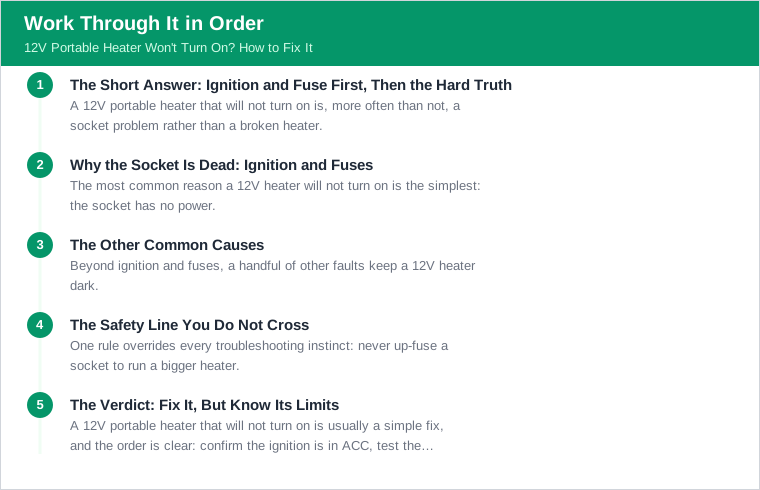
The Short Answer: Ignition and Fuse First, Then the Hard Truth
A 12V portable heater that will not turn on is, more often than not, a socket problem rather than a broken heater. On most vehicles the 12V accessory socket, the cigarette-lighter port, is only powered when the ignition key is in ACC or ON; with the car fully off the socket is dead. So a heater that seems broken is often just plugged into an unpowered outlet, which is the single most common cause.
The next most common cause is a blown socket fuse, usually from the heater drawing more current than the circuit is rated for. Between the ignition position and the fuse, those two account for most dead 12V heaters, and both are quick, cheap checks. The full fix order below walks them in sequence so you find the problem without guessing.
But before you spend an evening troubleshooting, here is the hard truth a budget-minded camper should hear: a 12V socket heater delivers almost no usable heat, so the honest fix is sometimes to stop using it. This guide covers how to revive a dead unit and, just as importantly, when the money is better spent on a tool that actually keeps you warm.
The Best Car Camping Heaters covers real car-camping heat options, and this guide covers the specific dead-heater symptom. Work the checks in order, understand why the socket limits the heat so severely, and you will either have a working heater or a clear-eyed reason to switch to something better. Both are useful outcomes for the night you are cold in a parking lot.
The Reality Nobody Sells You: 180 Watts Is Almost No Heat
Start with the physics, because it reframes the whole repair. A standard 12V accessory socket circuit is commonly fused at 10A, about 120 watts maximum, and higher-rated circuits at 15A, about 180 watts maximum. That 180-watt ceiling is the most heat a socket can deliver, and it is tiny. In heat terms, 180 watts is only roughly 614 BTU per hour, about a tenth of a hair dryer's output.
That is why 12V cigarette-lighter heaters are widely regarded as near-useless for actually heating a cabin. They are marginally helpful for defrosting or de-fogging a small patch of windshield, but for warming a person or a space, the numbers simply are not there. A camper expecting a cold van to warm up from one of these is going to be disappointed no matter how well it works.
The crucial part for a budget wrench is that this ceiling cannot be fixed by fitting a larger fuse. The socket wiring itself is not rated for more current, and up-fusing it creates a fire hazard. So there is no clever workaround that turns a 12V socket heater into a real heat source; the 180-watt wall is built into the wiring, not the heater.
Keep this in mind as you troubleshoot, because it changes the value calculation. Reviving a dead 12V heater is worth a few minutes of checks, but it is not worth an expensive rabbit hole, because even a perfectly working unit barely heats. If the fixes below do not quickly bring it back, the false economy is fighting the heater instead of switching tools.
Why the Socket Is Dead: Ignition and Fuses
The most common reason a 12V heater will not turn on is the simplest: the socket has no power. On most vehicles the 12V accessory socket is only powered when the ignition is in ACC or ON, so with the car fully off, nothing reaches the heater even though the heater and its wiring are perfectly fine. Turn the key to ACC and the dead heater often springs to life.
The second reason is a blown accessory-socket fuse. A blown fuse looks broken, discolored, or dark inside its glass or plastic body, and it cuts all power to the socket. Fuses blow for a reason, usually because something drew more current than the circuit allows, so a blown fuse on a heater circuit is a hint that the heater is over-rated for that socket, which the next section explains.
These two causes are worth checking first because they are free and fast, and because they account for most dead heaters. Before you assume the unit itself has failed, confirm the socket is live and the fuse is intact. It is genuinely common to spend twenty minutes suspecting a heater that was never the problem, when the key was simply not in ACC.
There is a simple test that settles it. Plug a known-good device, like a phone charger, into the same socket, or check the socket with a multimeter, which should read about 12 to 14 volts. If the charger is dead too, the problem is the socket or fuse, not the heater. If the charger works and the heater does not, then you move on to the heater's own possible faults.
The Fuse Math: Why a Heater Blows the Socket
Here is the arithmetic that explains most blown fuses on heater circuits. A 150-watt 12V heater draws about 12.5 amps at 12 volts, because 150 watts divided by 12 volts is 12.5 amps. That draw exceeds a 10A fuse outright and sits right at the limit of a 15A fuse, so an over-rated heater will blow the socket fuse or trip the circuit's protection.
This is why matching the heater to the circuit matters. If your socket is on a 10A circuit, about 120 watts, then a 150-watt heater is simply too much for it and will keep blowing fuses no matter how many times you replace them. The fuse is not failing; it is doing its job, protecting wiring that cannot carry the heater's current.
The fix is to match the amperage, never to exceed it. When you replace a blown socket fuse, match the original amp rating exactly, 10A or 15A, and never up-size it. A bigger fuse does not give you more heat; it removes the protection and lets the undersized wiring overheat, which is a fire risk rather than a solution. The Best Portable Power Station Car Camping covers proper power sources when a socket cannot supply what a device needs.
If the heater keeps blowing an appropriately-rated fuse, the honest conclusion is that the heater draws more than that socket can safely provide, and the socket is not the right power source for it. That is not a repair you force; it is a mismatch you respect. Either run the heater from a source rated for its draw or, more sensibly given the weak heat, switch to a lower-draw warming method.
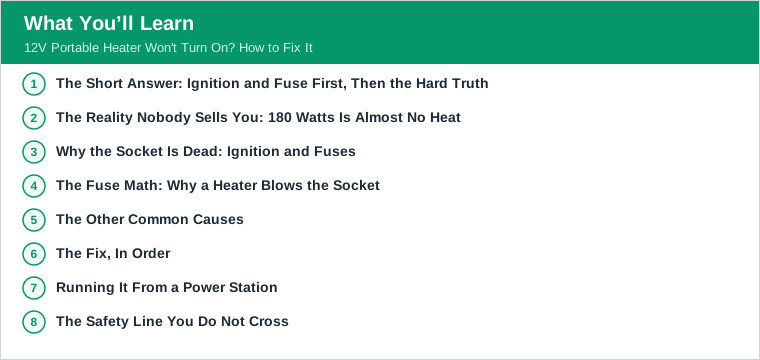
The Other Common Causes
Beyond ignition and fuses, a handful of other faults keep a 12V heater dark. Corroded, dirty, or loose socket contacts are common, because dirt, lint, paper, or a stuck coin in the socket can block contact or short the fuse. A blast of canned air into the socket clears debris and often restores a connection that looked like a dead heater.
Thermal protection is another frequent culprit. Many 12V heaters have a tripped thermal cutoff or overheat protection inside; if the unit overheated from blocked vents, dust, or a covered inlet, it shuts off all power until it cools. A heater that ran, got hot, and died may simply be in thermal timeout rather than broken, and it will recover once it cools.
The tip-over safety switch catches people too. Many units have a switch on the base that must be fully depressed for the heater to run, so on a soft or uneven surface the heater stays dead. A firm, flat surface is required, and a heater sitting on a sleeping bag or a cushion may refuse to power on for exactly this reason, with nothing actually wrong.
Finally, check the basics of polarity and the plug. Reversed polarity, a low-battery voltage cutoff, or a damaged plug or cord, a cracked tip, a broken center pin, or a frayed wire, will all keep a heater off. These are quick visual checks, and a bent or weak center spring in the socket, or a cracked plug tip, is a common and easily missed cause of no power.
The Fix, In Order
Work these steps in sequence and you will find the fault efficiently. Step one: confirm the socket is live by putting the ignition in ACC or ON, or running the engine, before assuming the heater is broken. This single step resolves a large share of dead heaters and costs nothing, so it always comes first.
Step two: test the socket with a multimeter, which should read about 12 to 14 volts, or plug in another known-good device to confirm power is present. Step three: check and replace the socket fuse, matching the original amp rating exactly, 10A or 15A, and never up-sizing it. If a correctly-rated fuse blows again immediately, the heater draws too much for that socket.
Step four: clean the socket contacts with canned air and inspect for debris or a bent, weak center spring; a socket with power present but no output has failing internal contacts and needs replacement. Step five: if overheat protection tripped, unplug the heater and let it cool 20 to 30 minutes; a resettable thermal switch recovers on its own, but a one-time thermal fuse blown from severe overheat must be replaced.
Step six: inspect the plug and cord for damage and confirm the tip-over switch is fully seated on a hard, flat surface. Run through those six steps and you will either revive the heater or confirm it is either faulty or mismatched to the socket. Either way, you will know, and you will not have thrown money at a heater that was never the real problem.
Running It From a Power Station
A common next move when the car socket cannot supply a heater is to run it from a portable power station, and that comes with its own math. Many 12V heaters draw more current than a car port or a small power station's 12V output can supply, so running one from an inverter or power station requires the unit to have real wattage headroom above the heater's rated draw.
That means checking two numbers before you plug in. Compare the heater's rated wattage against the power station's continuous output rating, and leave margin, because a station running near its ceiling can trip its own protection. A 150-watt heater needs a station comfortably rated above 150 watts on the relevant output, whether that is the 12V port or the inverter.
Here the false economy resurfaces. Running a weak 180-watt-class heater off an expensive power station drains the battery quickly to produce very little heat, which is a poor use of stored energy. The 12V Fridge Low Voltage Protection Cutoff Fix covers how low-voltage protection cutoffs stop devices when a battery runs down, and a heater is one of the fastest ways to reach that cutoff for almost no warmth in return.
So the power-station route works electrically if you size it right, but it rarely makes sense economically for a heater this weak. The stored energy in a power station is precious in a car-camping setup, and spending it on 180 watts of resistive heat that barely warms the air is exactly the kind of false economy worth avoiding. The last section covers where that energy is better spent.
The Safety Line You Do Not Cross
One rule overrides every troubleshooting instinct: never up-fuse a socket to run a bigger heater. The 180-watt power ceiling cannot be fixed by fitting a larger fuse, because the socket wiring itself is not rated for more current, and up-fusing it creates a fire hazard. A bigger fuse does not give you more heat; it removes the protection that keeps undersized wiring from overheating.
This is the mistake that turns a weak heater into a dangerous one. Someone frustrated that a 150-watt heater keeps blowing a 10A fuse swaps in a 20A fuse to make it stop, and now the wiring carries current it was never designed for. The fuse stopped blowing because the safety device is gone, not because the problem is solved, and the wire is now the thing that overheats.
The broader safety picture reinforces it. 12V heaters, and especially higher-watt 120V heaters run through an inverter, can overload sockets and wiring, so never leave a portable heater running unattended in a vehicle. Overloaded circuits and covered heaters are a fire risk, and a heater left on while you sleep is exactly the unattended, covered scenario to avoid.
So the safety line is simple and absolute: match the fuse, never exceed it, and never run a heater unattended. If a correctly-fused socket cannot power your heater, that is the wiring telling you the heater does not belong on that circuit. Respect it, because the alternative, forcing more current through wiring rated for less, trades a cold night for a fire risk, which is never a good trade.
What to Buy Instead: The False Economy
Here is where the budget wrench earns his keep, because the smartest fix for a weak 12V heater is often to stop buying heat by the socket. For staying warm while car camping, a 12-volt heated blanket is a far better use of the same 12V power than a resistive space heater. A blanket warms you directly and efficiently, where the heater spreads a useless 180 watts uselessly into the air.
The efficiency gap is enormous. A heated blanket draws a small fraction of a heater's current to warm your body directly, while the 12V heater's roughly 180 watts of resistive heat is spread into the cabin air where most of it is lost. Warming the person instead of the air is the whole trick, and it is why experienced car campers rarely bother with 12V socket heaters at all.
For genuinely cold nights, a good sleeping bag rated for the temperature does more than any 12V heater ever could, and it needs no power at all. The false economy is spending on a heater that barely works and then spending again on power to run it, when insulation and a low-draw blanket deliver real warmth for less money and less battery. The Best Car Camping Inverter for Power Tools covers inverters and power tools for when you do need real wattage.
So treat a dead 12V heater as a prompt to reconsider, not just a thing to fix. If the six-step check revives it, fine, use it for defogging. But if you were counting on it to keep you warm, the honest budget move is to redirect that money to a heated blanket, a better sleeping bag, and proper insulation, all of which beat 180 watts of socket heat every single time.
The Verdict: Fix It, But Know Its Limits
A 12V portable heater that will not turn on is usually a simple fix, and the order is clear: confirm the ignition is in ACC, test the socket, check and correctly re-fuse it, clean the contacts, let a tripped thermal cutoff cool, and inspect the plug and tip-over switch. Most dead heaters come back at one of those steps, and none of them costs more than a fuse and a few minutes.
The number to remember is 180 watts. A 12V socket delivers at most about 180 watts, roughly 614 BTU, which is almost no heat, and that ceiling cannot be raised by up-fusing without creating a fire hazard. So even a perfectly working 12V heater barely warms a cabin, and a 150-watt unit drawing about 12.5 amps will blow a 10A fuse trying to deliver that little.
That reality should shape how much effort the repair is worth. Run the quick checks, respect the fuse rating, and never leave the heater unattended, but do not pour money into reviving a tool that barely heats when it works. The physics of the socket, not the quality of the heater, is what caps the warmth, and no repair changes the physics.
So fix it if it is quick, and switch if it is not. A 12-volt heated blanket, a temperature-rated sleeping bag, and good insulation deliver real warmth for less money and less battery than a socket heater, and they are the honest answer for staying warm in a car overnight. The dead heater is a fine excuse to stop fighting 180 watts and start sleeping warm instead.