
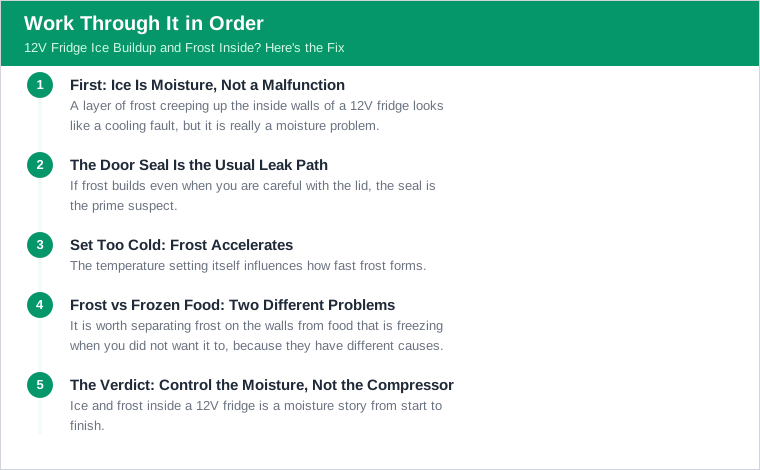
First: Ice Is Moisture, Not a Malfunction
A layer of frost creeping up the inside walls of a 12V fridge looks like a cooling fault, but it is really a moisture problem. Frost and ice inside a compressor fridge come mainly from humid air entering through an open lid or a worn or dirty door seal, then condensing and freezing on the cold interior walls. The cold surfaces are doing their job; they are just pulling the water out of any damp air that gets inside.
That reframing points the fix in the right direction. Nothing in the sealed refrigeration system causes frost - the compressor and refrigerant loop simply make surfaces cold. The frost is the visible record of humid air meeting those cold surfaces, so the cure is to keep moist air out and let any water that does condense drain away, rather than to touch the cooling system at all.
An installer thinks about it as air paths and water paths. Where is humid air getting in - the lid, the seal, the way it is loaded? And where can the resulting meltwater go - a drain hole, or nowhere? Answer those two questions and you have found nearly every frost problem, because both are about the box's seams and habits, not its compressor.
The Main Source: Humid Air Getting In
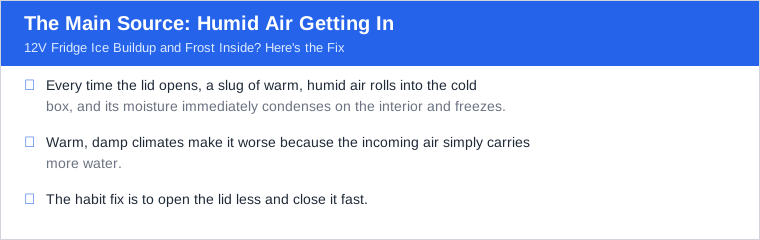
Every time the lid opens, a slug of warm, humid air rolls into the cold box, and its moisture immediately condenses on the interior and freezes. Open the fridge often, leave it open while you decide what to grab, or pack it in a humid environment, and you are feeding it water with every cycle. The frost you see is that moisture, deposited a little at a time.
Warm, damp climates make it worse because the incoming air simply carries more water. A fridge opened repeatedly on a humid coast frosts up far faster than the same fridge in dry desert air, even though nothing about the unit changed. The interior temperature is well below the dew point of that humid air, so condensation is guaranteed the instant the two meet.
The habit fix is to open the lid less and close it fast. Decide what you want before you open it, take it in one motion, and shut it promptly rather than browsing with the lid up. Pre-chilling contents so the box does not have to fight both warm items and warm air helps too. Less lid-open time means less humid air, which means less frost - the cheapest fix there is.

The Door Seal Is the Usual Leak Path
If frost builds even when you are careful with the lid, the seal is the prime suspect. A worn, dirty, warped, or crushed door seal lets humid air trickle in continuously, so the box frosts up without the lid ever being opened. Unlike the occasional gulp of air from opening the lid, a leaking seal is a steady, all-day supply of moisture - and it often concentrates the frost near the leak.
Check the seal like an installer checks any gasket. Run a finger around it for cracks, grit, flat spots that no longer spring back, or a section that has taken a set from being latched crooked. A classic test is to close the lid on a slip of paper and pull - if it slides out with no drag at some point around the perimeter, the seal is not gripping there, and that gap is your moisture path.
Clean the gasket first, since grit and grime alone can hold it open, and work out any warp so it seats square. If a section is cracked, hardened, or permanently deformed, replace it - a replacement gasket is a cheap part next to a fridge. A seal that grips evenly all the way around cuts off the steady air leak and, with it, most stubborn frost.
The Frozen Drain Hole
Most portable fridges have a small drain hole, usually at the bottom of the interior, meant to let condensation and defrost water escape. When it clogs, the water has nowhere to go. A blocked or frozen drain hole traps meltwater that then re-freezes, so clearing the drain is part of the ice-buildup fix - and a plugged drain turns a little condensation into a growing sheet of ice on the floor of the box.
The cycle is self-reinforcing. Water pools because the drain is blocked, that pool freezes, the ice further blocks the drain, and the next round of condensation adds to it. You end up with a slab of ice in the bottom that looks like a serious cooling problem but is really just trapped water that could never drain away. Food debris, a stray label, or ice itself is usually the plug.
Find the drain hole and make sure it is clear. Clear it of any debris or ice so condensation can escape instead of pooling, and check that whatever the drain empties into - a tray or a routed tube on some models - is not itself blocked or positioned so water backs up. A fridge whose drain flows freely sheds its condensation quietly instead of banking it as ice.
Set Too Cold: Frost Accelerates
The temperature setting itself influences how fast frost forms. Setting the temperature colder than needed accelerates frost accumulation, because colder walls condense and freeze incoming moisture more aggressively and hold it as frost rather than letting any of it stay liquid and drain. A fridge cranked far below what the contents actually need frosts faster for no benefit.
These units have a wide range - many Alpicool models specify a setpoint from about -20C to 20C (-4F to 68F), covering both freezer and refrigerator use - so it is easy to set one much colder than the job requires. If you only need drinks and food cold, a fridge setpoint does the work; running it near freezer temperatures just to be safe turns every bit of incoming humidity into frost on contact.
So match the setpoint to the need. Set it to the warmest temperature that still keeps your contents properly cold, rather than defaulting to the coldest number available. Easing the setting from a needlessly deep freeze up to a sensible fridge temperature both slows frost formation and saves power - two wins from turning one dial to where it actually belongs.
How to Defrost Properly
Once ice has built up, remove it the right way, because the wrong way damages the fridge. The normal remedy for ice is to unplug the unit, let it fully defrost, and wipe the interior dry - never chip at the ice. The interior walls and the cooling surfaces are thin and can be punctured or dented by a knife, screwdriver, or ice pick, and a punctured cooling surface is a dead fridge.
Patience is the whole technique. Power the unit down, open the lid, and let the ice melt on its own in the ambient warmth; you can speed it with a bowl of warm water set inside or a cloth, but not with a sharp tool or a heat gun that could warp the plastic. As the ice releases, it turns back into the water the drain was supposed to handle, so keep a towel ready.
Then dry it out completely before restarting. Wipe every surface dry, clear and check the drain while you are in there, and make sure no standing water remains to flash-freeze the moment you plug it back in. A fridge defrosted gently and dried thoroughly comes back like new; one attacked with a blade may never cool again.
Keep It Out: Habits That Prevent Frost
Prevention beats defrosting, and it is mostly about controlling moisture. Open the lid deliberately and briefly, pre-chill contents so the box is not fighting warm, damp items, and avoid loading the fridge in the most humid part of the day where you can. Every one of those reduces the amount of water that ever enters the box, which is the only thing frost is made of.
Keep the seal healthy as a matter of routine, not just when frost appears. A quick wipe of the gasket to clear grit, and an occasional check that it still grips a slip of paper all the way around, keeps the steady-leak path closed before it starts banking ice. Seals degrade slowly, so a fridge that never frosted can begin to as its gasket ages - catching that early prevents the slab.
And keep the drain clear as part of normal cleaning. A drain that flows means the small amount of condensation any fridge produces leaves quietly instead of freezing. Between a good seal, a clear drain, sensible lid habits, and a setpoint no colder than needed, most fridges stay essentially frost-free without any special effort - the frost only wins when one of those slips.

Frost vs Frozen Food: Two Different Problems
It is worth separating frost on the walls from food that is freezing when you did not want it to, because they have different causes. Frost on the interior is condensed moisture from air leaks and lid-opening, addressed by seals, drains, and habits. Food freezing is a temperature problem - the setpoint or the thermostat is running the box colder than intended - and it is fixed at the dial or in the cooling behavior, not at the seal.
The two can appear together, which is where confusion comes in. A fridge set far too cold both freezes the food and frosts faster, so easing the setpoint helps both. But a fridge at a correct temperature can still frost up purely from a leaking seal, with the food perfectly fine - proof that frost is about moisture ingress, not about the box being too cold.
Diagnose which you actually have. If your drinks and food are the right temperature but the walls carry frost, chase the moisture path - seal, drain, lid habits. If the contents are freezing solid, that is a temperature issue to solve at the setting first. Knowing which problem you are looking at stops you from adjusting the wrong thing and chasing your tail.
When Ice Signals Something Else
Occasionally frost is a symptom of a component that genuinely needs attention rather than just a habit to fix. A door seal that is cracked, hardened, or permanently crushed will not seal no matter how well you clean it, and that is a part to replace, not a maintenance chore. Likewise a drain that is blocked by design or damage - not just debris - may need the routing cleared or corrected so water actually escapes.
The way to tell is that the frost keeps returning quickly after a proper defrost, on a fridge you are opening carefully and running at a sensible temperature. If you have cleaned the seal, cleared the drain, eased the setpoint, and moderated your lid habits, and heavy frost still builds within a day, then a failed gasket or a genuinely obstructed drain is the likely culprit - both fixable, but as repairs rather than routine.
What frost almost never means is a failed sealed refrigeration system. That kind of failure shows up as a fridge that will not get cold, not one that is cold enough to grow ice. So heavy frost is actually reassurance that the cooling works - the job is simply to stop feeding it moisture and to replace the seal or clear the drain if maintenance alone does not hold.
The Verdict: Control the Moisture, Not the Compressor
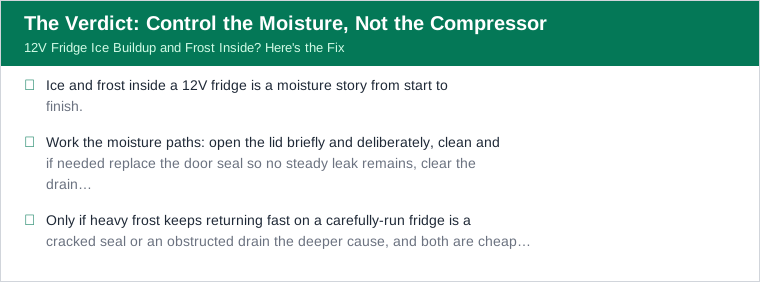
Ice and frost inside a 12V fridge is a moisture story from start to finish. Humid air enters past an open lid or a worn seal and freezes on the cold walls; a blocked drain traps the meltwater so it re-freezes; and a needlessly cold setpoint speeds the whole thing up. None of it comes from the sealed cooling system, which is why the fixes all live at the seams and settings.
Work the moisture paths: open the lid briefly and deliberately, clean and if needed replace the door seal so no steady leak remains, clear the drain hole so condensation escapes, and ease the setpoint to the warmest temperature that still keeps contents cold within the -20C to 20C (-4F to 68F) range. When you do defrost, unplug and let the ice melt - never chip it - then dry the interior fully.
Only if heavy frost keeps returning fast on a carefully-run fridge is a cracked seal or an obstructed drain the deeper cause, and both are cheap repairs. Control the moisture and the frost simply stops coming back - and the fact that the box can grow ice at all is proof the cooling was never the problem.