
The most likely cause: the setpoint is simply too low
Start with the dial before you assume anything's broken. A portable 12V compressor fridge is usually a single-zone box with one temperature sensor, and it will freeze whatever sits nearest the cold source to hit the number you set. If your fridge is freezing everything, the setting is likely below the safe fridge range - TCL notes that a temperature set too low is the first and most common reason a fridge freezes food, and the recommended fridge zone is around 34 to 40 degrees Fahrenheit, per Wil Prep Kitchen.
The quick check: raise the setpoint a few degrees toward the upper 30s Fahrenheit and give it several hours to stabilize. On many 12V units the display number is the target, not the coldest spot inside, so nudging it up is often the entire fix - and it costs you nothing.
Verify the real temperature before you chase anything
Here's the step I never skip, because it stops you from fixing the wrong problem: don't trust the fridge's own display. On a lot of portable 12V units the number you set is a target the controller aims for, not a live reading of the air inside, and the actual temperature at your food can sit several degrees colder. The only way to know what your food is really experiencing is to put a cheap thermometer in there with it.
Set a fridge thermometer like the Taylor 5924 on the middle shelf, run the fridge for a few hours, and read the real number. If the display says 37 but the thermometer reads 30 degrees Fahrenheit, your setpoint is lying to you and the fix is simply to raise it - not to tear into the seal or the board. And if the setpoint and the thermometer agree at a safe 34 to 40 degrees but food still freezes in one spot, you've just proven the problem is placement or airflow, not the thermostat. That one cheap reading is the difference between a five-minute fix and a weekend of guessing.
The cold plate: keep food off the back and bottom
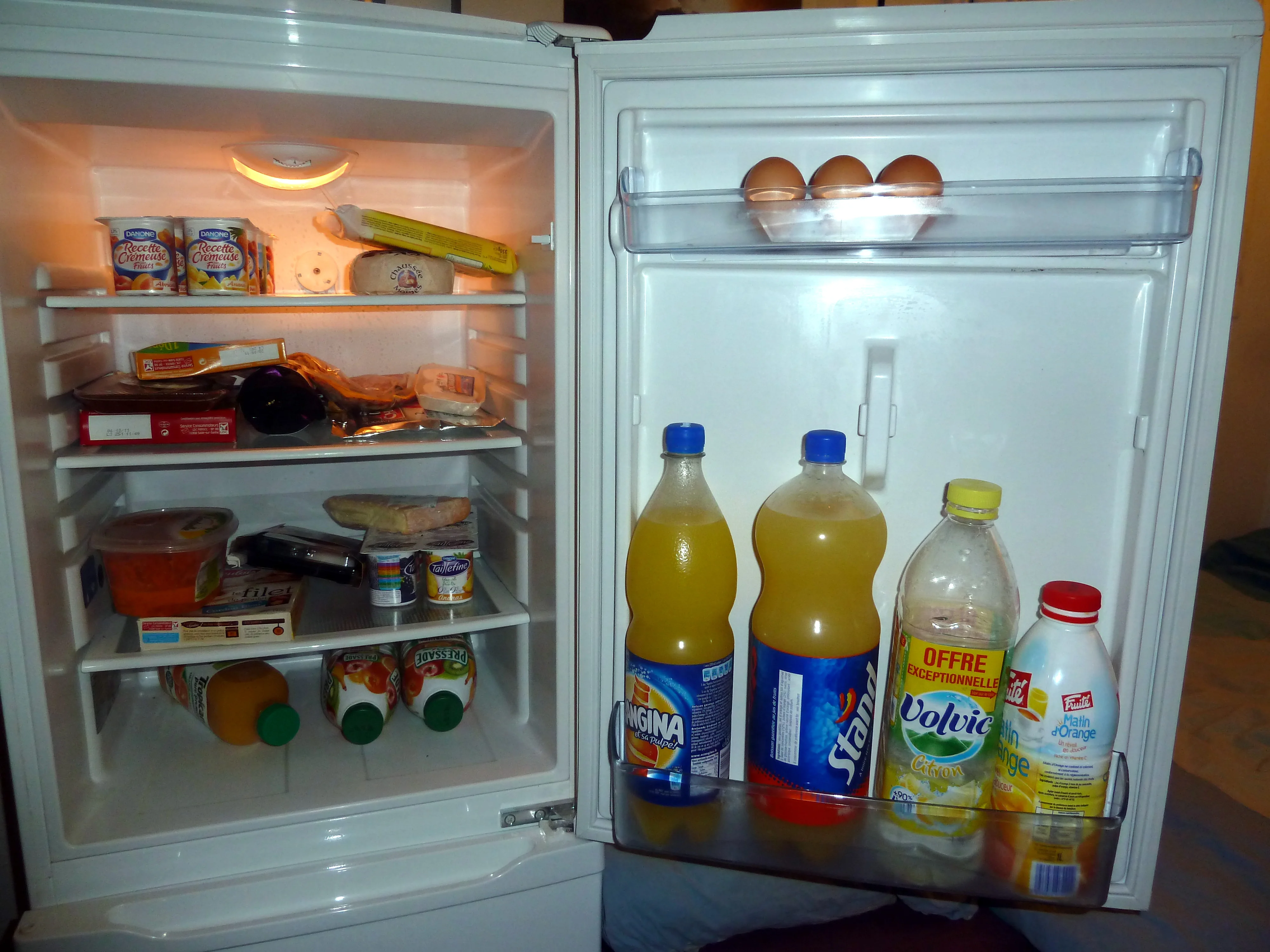
Here's the mechanical reality that surprises first-time 12V fridge owners: the cooling in most portable units comes from an evaporator plate on the back wall or floor, and anything pressed against that plate freezes solid regardless of your setpoint. Food at the bottom freezing first is a classic sign that cold is pooling against the plate instead of circulating, per Inlander's 12V troubleshooting guide.
The fix is free: leave a small gap between your produce and the back and floor of the cabinet, and put delicate items (lettuce, eggs, drinks you don't want slushy) higher and toward the front, away from the plate. Rearranging the load so nothing touches the cold surface solves a surprising number of 'my fridge freezes my food' complaints on its own.
A simple habit makes this stick: treat the back wall and floor as a no-go zone for anything you don't want frozen. Line the bottom with a thin cutting board or a folded towel so cans and bottles can sit hard against the cold while your greens ride above it. Freezing only hurts the foods that can't take it - a frozen soda is a mess, a frozen block of cheese is fine - so the goal isn't to stop the plate from being cold, it's to keep the delicate stuff out of the coldest few inches. That reframing alone fixes most complaints without touching a setting, and it's the single change I recommend first to anyone whose only problem is frozen produce sitting against a perfectly healthy cold plate.
The diagnosis tree: work down it in order
If the setpoint and the cold plate weren't it, run the rest in likelihood order - each has a distinct tell:
- Only the bottom or back freezes -> blocked airflow. Overpacking stops cold air moving evenly, so it pools low, per Inlander and TCL.
- Frost around the vents or a wet-then-frozen back wall -> a leaking door seal. Warm, humid air sneaks in and freezes; TCL and Wil Prep Kitchen both flag a worn seal.
- Thick ice on the back wall that keeps returning -> a defrost or moisture cycle. Moisture freezes, melts, and refreezes continuously, per Inlander.
- Everything freezes no matter the setting -> a faulty sensor or control board. The honest hardware case, covered last.
Overpacking: airflow is doing more than the dial
A 12V fridge cools by moving cold air around the cabinet, and when you cram it full, that air can't circulate. Cold then pools in one spot - usually the bottom near the plate - and freezes whatever's there while the top stays merely cool. TCL and Inlander both list blocked or overfilled airflow as a direct cause of uneven freezing, with food at the bottom freezing first as the giveaway.
Fix it by loading lighter and leaving channels for air to move, especially around any internal vents. This matters more in a small portable box than in a home fridge because there's simply less room for air to find its way around a packed load, and it's the reason the same fridge can freeze food on a packed grocery run but behave perfectly when it's half full on a road trip.
Eco and battery-saver modes can quietly over-cool
One cause people miss entirely lives in the settings menu: many portable 12V fridges have a MAX (or TURBO) mode and an ECO mode, plus a battery-protection cutoff, and the wrong combination makes the compressor run harder than the food needs. MAX mode tells the compressor to pull the box down as fast and as cold as it can, and if you left it there after a hot-day cooldown, it will happily freeze everything on a mild setpoint.
Know the three settings that interact here:
- MAX / TURBO - pulls the box down as cold and fast as possible; fine for the first chill, a freezer if left on.
- ECO / normal - the everyday mode that holds a set band without over-cooling.
- Battery-protection cutoff - shuts the compressor at a low-voltage threshold; unrelated to freezing, but people blame it.
The fix is a 20-second settings check: switch out of MAX/TURBO into ECO or normal for everyday use, and only reach for MAX when you're first chilling warm groceries or drinks. Then confirm the actual temperature with your thermometer, because a mode change can swing the real internal temp by several degrees. This is a free fix that hides in plain sight - I've seen a 'broken' fridge turn out to be nothing more than a MAX button someone bumped weeks earlier.
Single-zone reality: why one number can't please every shelf
It helps to understand what you're actually working with, because it reframes half these fixes. A home fridge has fans and ducting that even out the temperature; a portable 12V box usually doesn't. It has one compressor, one evaporator plate, and one sensor, so there is always a cold zone right at the plate and a warmer zone at the far corner, and the single setpoint can only aim for one of them.
Stop expecting a single-zone cooler to behave like a two-drawer kitchen fridge. Your job isn't to make every cubic inch the same temperature - it's to keep the coldest spot above freezing while the sensor's spot stays in the safe band.
That's why the real fixes are about placement and airflow as much as the dial: you're managing where the cold pools, not just how cold it gets. Once you see the box as one cold plate trying to chill a whole cabinet, keeping delicate food away from the plate and giving air room to move stops being a chore and starts being the obvious move - and it's why two people with the identical fridge can have wildly different freezing complaints.
The door seal: warm moist air is sneaking in
If you see frost building specifically around the vents or the lid, suspect the seal. When a door or lid seal is cracked, loose, or dirty, warm outside air leaks in, its moisture turns to frost around the vents, and that disrupts circulation until parts of the fridge over-freeze - a chain TCL lays out directly, and Wil Prep Kitchen lists a worn seal among its top causes.
The tell that separates a seal problem from a setpoint problem: setpoint-too-low freezes food evenly toward the target number; a seal leak makes frost and ice appear in specific spots near the gap where air gets in. Match the pattern to the cause before you touch anything.
Clean the seal with warm water first - grit alone can hold it open. If the rubber is cracked or deformed, it needs replacing, but that's a cheap gasket, not a new fridge. In a vehicle, also make sure the fridge is sitting level and the lid isn't being held ajar by an overpacked load, which fakes a seal leak.
Frost and ice buildup: break the moisture cycle
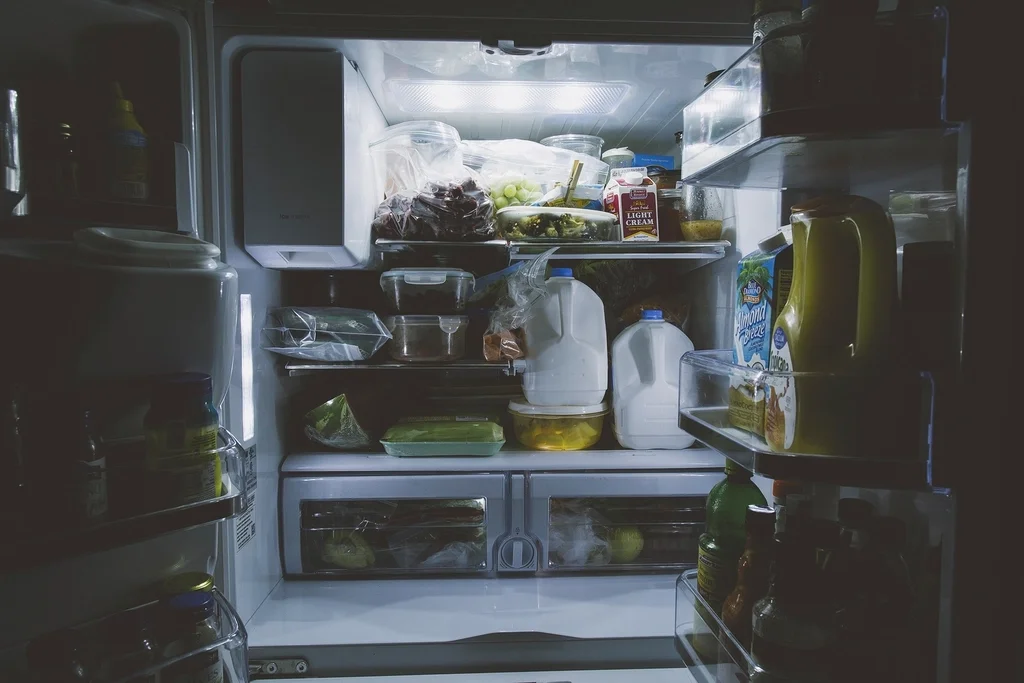
Persistent ice on the back wall that returns after you scrape it is a moisture cycle: water condenses on the cold plate, freezes, partly melts, and refreezes over and over as the fridge runs, which Inlander describes as a common 12V fridge behavior. Left alone, that ice layer insulates the plate and blocks the vents, which then makes the over-freezing and the uneven cooling worse.
The reset is free and worth doing before any deeper diagnosis: unplug the fridge, open it, and let it fully defrost - iFixit's appliance thread walks through letting a frosted-up unit thaw completely and catching the meltwater with towels before running it again. Once it's clear, keep moisture down by not putting warm or uncovered wet food inside, and by minimizing how often and how long you open the lid in humid conditions.
Leveling and vibration: the moving-vehicle wildcard
A cause that only shows up in a car or camper, and never gets mentioned in home-fridge guides: how the unit is sitting. A portable compressor fridge is designed to run within a few degrees of level, and parking on a slope for a night, or wedging it at an angle in a trunk, shifts where the cold air and any condensation pool. Suddenly one corner is a freezer and the opposite one is a cooler, even though nothing about the settings changed.
The fix is to sit the fridge as flat as you reasonably can and, on a long stop, level the vehicle or the fridge itself. Road vibration plays in too: it can settle a loosely-packed load down against the cold plate over a few hours of driving, which is why food that was fine when you packed it is frozen solid when you arrive. If your freezing complaint tracks with travel days and not with the dial, this is the first thing to suspect - re-level, re-pack off the plate, and re-check the thermometer.
How to confirm you actually fixed it
Freezing fixes are easy to fool yourself on, because a fridge takes hours to settle and you'll open it long before then. Do it properly: make one change at a time - raise the setpoint, OR re-pack off the plate, OR switch out of MAX mode - then leave it closed for several hours with the thermometer inside, and read the real number before you conclude anything. Changing three things at once tells you nothing about which one mattered.
Aim for a stable 34 to 40 degrees Fahrenheit at the thermometer, with no ice forming on items you care about. If the number holds in that band and delicate food stays unfrozen for a full day, you've fixed it. If it still dips below freezing on any setting after you've ruled out the setpoint, placement, airflow, mode, seal, and level, then - and only then - you're looking at the sensor or board below. Confirming with a real reading rather than a guess is what keeps you from returning a perfectly good fridge.
The honest hardware failure: a faulty sensor or control board
If you've raised the setpoint, kept food off the plate, loaded it lighter, cleaned the seal, and defrosted it, and the fridge still freezes everything on any setting, then the temperature sensor (thermistor) or the control board is likely the problem. When that sensor misreads or the board fails to regulate, the compressor keeps running past the target and overcools - Wil Prep Kitchen names a faulty thermistor as a direct cause of a fridge freezing everything, and iFixit's thread ends with an owner resolving a temperature fault by replacing thermistors after professional diagnosis.
This is the honest dead-end for a DIY fix on a sealed portable unit. A misreading sensor or a failed control board isn't a setting you can adjust from the outside, so the right move is a warranty claim if the fridge is still covered, or contacting the maker's service for the part. Reaching this point after the free checks is a real diagnosis - you've ruled out everything a user can fix.
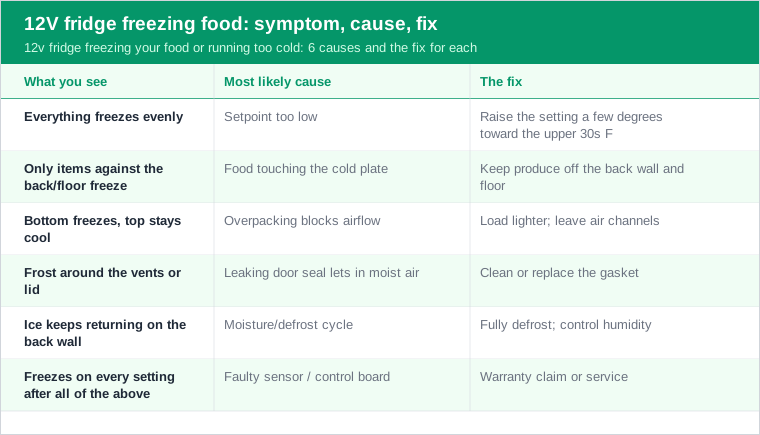
Quick reference: match the symptom to the fix
The short version, so you can act without re-reading:
- Everything freezes evenly - raise the setpoint a few degrees.
- Only items against the back/floor freeze - keep food off the cold plate.
- Bottom freezes, top stays cool - stop overpacking; let air circulate.
- Frost around the vents/lid - clean or replace the door seal.
- Ice keeps returning on the back wall - fully defrost and control moisture.
- Freezes on every setting after all of the above - faulty sensor/board: warranty or service.
Almost every over-freezing 12V fridge is a setting, a loading habit, or a seal - all free to fix. If your problem is the opposite and the fridge isn't getting cold enough, that's a different tree; see our fix for a fridge not cooling. And if you're trying to budget the amp-hours either way, our note on its energy consumption covers how hard the compressor works to hold temperature.