
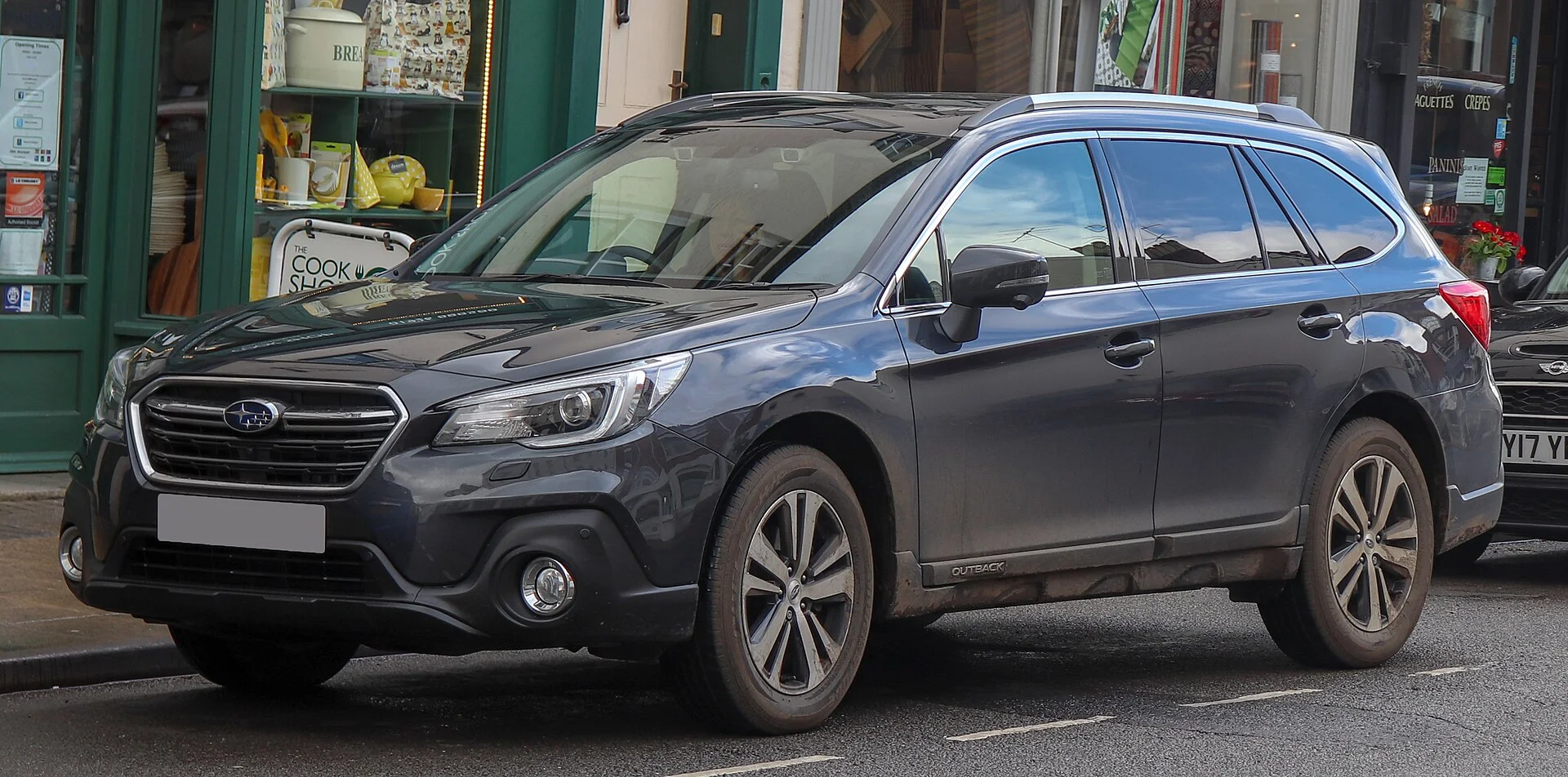
The Honest Answer: No, and Don't Waste the Money
A standard queen air mattress will not fit flat in a Subaru Outback, and buying one to try is the kind of false economy this whole site exists to talk you out of. The Outback's cargo bay is a long, low wagon floor - generous on length, tight on width - and a queen fails on the dimension that matters most.
The numbers are not close. A queen measures 60 inches wide by 80 inches long. The Outback's flat folded floor runs roughly 75 inches from the tailgate to the back of the front seats, and the usable width between the rear wheel wells is only about 41.5 to 43 inches. So a queen is over on both counts: too wide by a lot, and a little too long.
The good news is that the right answer is cheaper than the wrong one. A twin air mattress fits the Outback almost perfectly, costs less than a queen, and inflates faster. Spend the money on the mattress that fits instead of the one that drapes over the wheel wells, and the Outback is a genuinely comfortable one-person bed.
Where the Queen Fails: Width Is the Wall
The wheel wells are where the queen dream dies, and it is worth seeing exactly how much. The Outback's load floor is about 44 inches wide at its widest point, but the usable span narrows to roughly 41.5 to 43 inches between the rear wheel wells depending on model year. That narrow number is the one a mattress actually has to fit within.
A 60-inch-wide queen misses that space by roughly 17 to 18.5 inches. That is not a mattress that sits a little snug; that is a mattress whose outer third has nowhere to go but up and over the wheel wells, leaving you sleeping in a shallow valley with the edges curling toward the ceiling. Air mattresses do not tolerate that - they bulge, they slide, and the seam ends up under your hip.
This is the classic case where the spec that matters is not the one people check. Buyers look at the long cargo-volume number - 75.7 cubic feet with the seats down - and assume big means a big mattress fits. But volume is not width, and on a wagon the width between the wheel wells is the hard wall. The Outback is long; it is not wide.


The Length Problem Nobody Mentions
Even if you could somehow solve the width, the queen still loses on length, and this is the part the listings never mention. The Outback's folded floor runs about 75 inches front to back, and a queen is 80 inches long. That is roughly 5 inches of mattress with no floor under it, pushing up against the front seatbacks or the tailgate.
Five inches does not sound like much until you are the one lying on it. The overhang means either the head or the foot of the mattress rides up an incline, which for an air mattress means air migrating to the low end and a firm ridge where the floor stops. You do not get a flat bed; you get a bed with a built-in slope you did not ask for.
So the queen is not a near-miss you can fudge with a little angling. It is over on width by nearly a foot and a half and over on length by about 5 inches at the same time. When a mattress fails on both dimensions, there is no clever diagonal that saves it - it simply is not the right size for this vehicle.
The Full-Size Trap
The natural next thought is to step down one size to a full, or double, and it is worth heading that off because it is the same mistake in a smaller package. A full mattress is 54 inches wide, and the Outback's usable width between the wheel wells is still only about 41.5 to 43 inches. The full misses by roughly 11 to 12.5 inches.
That is better than the queen's 17-to-18.5-inch overhang, but better is not the same as fits. A full still rides up on the wheel wells with its outer edges, still bulges, and still gives you a valley to sleep in rather than a flat surface. You have spent more than a twin costs to get most of the same problem.
This is where the value logic gets clear. The full looks like a reasonable compromise - a bit more sleeping surface without going all the way to a queen - but it does not actually fit the Outback's width. Paying for a full is paying for inches the vehicle cannot use. The line where a mattress stops fitting this wagon is 44 inches, and only one common size lands under it.

Why a Twin Is the Right Buy
The twin is the size that actually fits, and it fits with room to spare. A twin is 38 inches wide, which drops into the Outback's roughly 41.5-to-43-inch width with about 3.5 to 5 inches of clearance - enough that it lies flat between the wheel wells without fighting them, and enough that it does not slide around every time you shift your weight.
Length is where the twin really shines in an Outback. A twin is 75 inches long, and the folded floor is about 75 inches too - a near-exact match. That means the mattress lies fully supported from tailgate to seatbacks with no overhang and no slope, which is exactly the flat, honest bed a queen can never deliver here. For a person up to about six feet tall, that is full stretch-out room.
And it is the cheaper answer. a twin air mattress costs less than a full or queen, packs down smaller, and inflates in less time. This is the rare case where the size that fits the vehicle is also the one that costs the least - so there is no trade-off to agonize over. Buy the twin and stop looking.
If You Want Every Last Inch of Length
For a taller sleeper who wants the maximum, there is one option worth knowing and one to skip. The twin XL is 38 inches wide - same easy width fit as a regular twin - but 80 inches long. In the Outback's roughly 75-inch floor, that extra length is about 5 inches with no floor under it, so the twin XL fits on width but overhangs on length the way the queen does.
Whether that overhang is worth it depends on you. Some tall sleepers accept a slight rise at the head or feet in exchange for the extra length; most are better served by a regular twin that lies dead flat and, if needed, sliding the front seats forward to reclaim a couple of inches for their feet. The regular twin is the no-compromise pick; the twin XL is a length-versus-flatness judgment call.
What you should not do is chase length by going wider. The temptation is always to buy up a size for more room, but on this wagon width is the wall and length is nearly solved. The smart move for a tall camper is a regular twin plus a seat adjustment, not a bigger mattress that reintroduces the exact problem the twin avoids.

One Sleeper, Not Two - The Width Reality
It is worth being blunt about a hope the long cargo floor encourages: two adults sleeping side by side. In an Outback that does not work flat, and the reason is the same width wall. The usable span between the wheel wells is about 41.5 to 43 inches, and two adults need far more than that to lie side by side without stacking on each other.
Two twins will not fit either - two 38-inch pads is 76 inches of width in a 43-inch space. The Outback is a committed one-person sleeper on its flat floor, and pretending otherwise leads to a miserable night with someone half on the wheel well. If two people need to sleep, the honest options are a rooftop tent, a ground tent, or a different, wider vehicle.
None of that is a knock on the Outback - it is a wagon, and a wagon trades width for a low, long, easy-loading floor. For a solo camper it is close to ideal: long enough to stretch out, low enough to climb into, and exactly wide enough for the one mattress that belongs in it. Just size the plan to one person and the vehicle delivers.
Getting the Mattress In: The Tailgate Opening
One practical wrinkle that catches people on setup night: the tailgate opening is narrower than the interior. The Outback's rear liftgate opening measures about 43 inches wide by 29 inches high, while the cargo area itself is about 30 inches tall to the ceiling. That is fine for a deflated mattress, but bulky, pre-inflated bedding has to be angled in.
The easy workaround is to inflate the mattress inside the vehicle, not outside it. Slide the flat, rolled twin through the opening, then run the pump once it is lying on the floor where it will live. Trying to muscle a fully inflated mattress through a 43-inch-wide, 29-inch-high opening is a wrestling match you can skip entirely by changing the order of operations.
It is a small thing, but it is the kind of small thing that turns a smooth night into an annoying one. Plan to inflate inside, keep the pump reachable, and the twin goes from bag to bed in a couple of minutes. The opening is another quiet argument for the twin, too - a smaller mattress is simply easier to handle through a wagon's modest hatch.
The Money Math, Start to Finish
Add it all up the way a budget-minded camper should, and the Outback mattress decision is refreshingly one-sided. A queen costs the most, does not fit on width or length, and gives you a sloped valley to sleep in. A full costs more than a twin, still overhangs the wheel wells by roughly a foot, and buys you inches the vehicle cannot use. Neither is a deal at any price if it does not lie flat.
A twin costs the least of the three, fits the width with clearance to spare, and matches the 75-inch floor length almost exactly. It is the cheapest option and the best-fitting option at the same time, which almost never happens in gear shopping - so when it does, take the win and do not overthink it.
The one upgrade worth considering is quality, not size: a slightly better twin with a flocked top and a sturdier pump will outlast a bargain-bin one and hold air better on a cold night, which is where cheap air mattresses fail. Spend the small premium on a durable twin rather than a larger mattress that does not fit, and the Outback rewards you with a flat, warm, one-person bed for years.
The Verdict: Twin Fits, Queen Doesn't, Save the Difference
The bottom line on a Subaru Outback is simple and it saves you money: a queen air mattress does not fit, and the twin that does costs less. The queen is over the roughly 41.5-to-43-inch width between the wheel wells by 17 to 18.5 inches and over the 75-inch floor length by about 5 inches - it fails on both dimensions, so there is no angle or trick that makes it work.
The twin is the honest buy. At 38 by 75 inches it clears the width with a few inches to spare and matches the floor length almost exactly, giving a person up to six feet a flat, fully supported bed. The full-size middle option is a trap - it costs more than a twin and still overhangs the wheel wells by roughly a foot. Skip it.
So for a solo camper the Outback is close to ideal, and the buying decision is done: get a good-quality twin, plan to sleep one, inflate it inside through the modest tailgate opening, and put the money you would have spent on a queen toward a better bag or a real night's insulation. The size that fits is also the cheap one - that is the whole answer.