
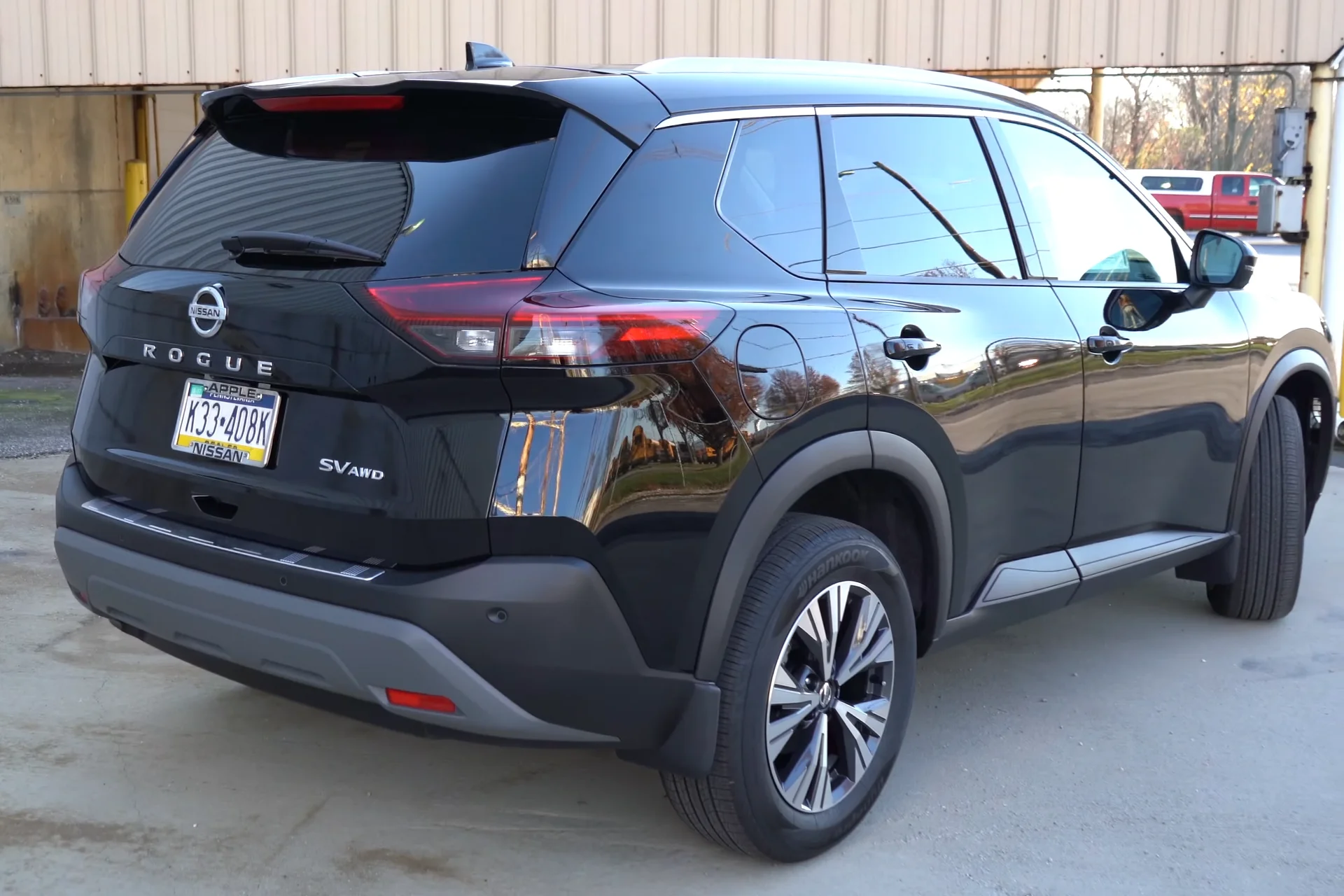
The Bottom Line: A Queen Won't Lie Flat
Here is the false economy nobody mentions: buying a queen air mattress for a Rogue because it is the size you already own. It will not lie flat, and forcing it in wastes the money you spent on it. A standard queen measures 60 inches wide by 80 inches long. The Nissan Rogue's folded cargo floor is only about 72 inches long and about 43 inches between the wheel wells. The queen loses on both measurements.
Because a queen is both wider and longer than the flat floor, it only fits at an angle, with its edges riding up the wheel wells rather than lying flat and square. You end up sleeping on a sloped, bowed surface that pushes you toward the low middle all night - the opposite of the comfortable flat bed the box photo promised. That is not a setup worth paying extra for.
The good news is that the right size costs the same or less and actually works. A twin fits the Rogue's floor flat, and knowing that before you buy is the whole point of this guide. Below is the Rogue's real cargo math and exactly which mattress to spend on - because the cheapest mistake to avoid here is buying the wrong size twice.
The Rogue's Cargo Numbers That Decide It
Every mattress verdict comes down to two Rogue measurements, so start there. On the 2021-to-2026 Rogue, the cargo length with the rear seats folded down is about 72 inches front to back. The cargo width ranges from about 43 inches between the wheel wells to about 54 inches at its widest point. The cargo height is about 33 inches, and it can vary slightly by trim - a panoramic moonroof, for example, trims a bit of headroom.
The volume backs it up: the Rogue offers 74.1 cubic feet of maximum cargo space with the second-row seats folded, dropping to 36.5 cubic feet with the second row upright. With the seats up, cargo length is only about 36 inches - nowhere near enough to sleep in, which is why folding the seats is mandatory for any camping setup.
The two numbers to burn into memory are 72 inches long and 43 inches wide between the wheel wells. That 43-inch figure is the real constraint, because a mattress has to fit between the wheel-well humps to lie flat - the 54-inch widest measurement is up higher, above the humps, and does not help a mattress sitting on the floor. Measure every mattress against 43 by 72 inches and the answers get simple.
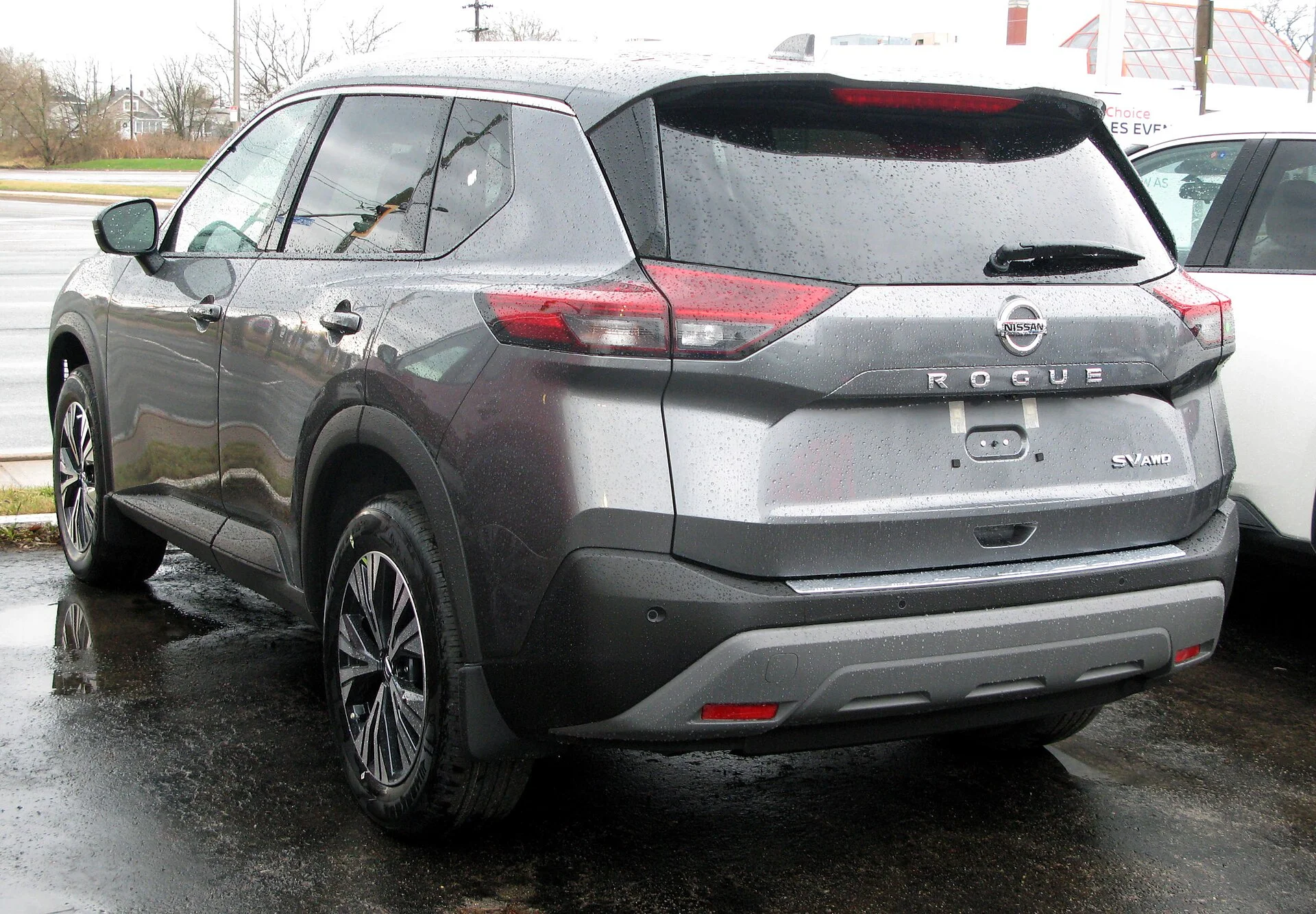
Why a Queen Overhangs on Both Axes
Walk the queen through those numbers and the double failure is obvious. A queen is 60 inches wide, but the Rogue load floor is only about 43 inches between the wheel wells, so a queen is far too wide to lie flat between the wells. Its outer 17-ish inches per side have nowhere to go but up onto the wheel-well humps, tilting the whole mattress inward.
Then the length. A queen is 80 inches long, but the Rogue's folded cargo floor is only about 72 inches long, so the queen also overruns the straight floor length by roughly 8 inches. Even if width were not a problem, the queen would jam against the front seatbacks and buckle. Both dimensions are over the limit at once, which is what forces the diagonal, edges-up shape.
The plain-English verdict: because a queen at 60 by 80 inches is both wider than the roughly 43-inch space between the wells and longer than the roughly 72-inch floor, it only fits at an angle with its edges riding up the wheel wells - not flat and square. You are paying queen-size money for a bed that sleeps worse than a properly fitted twin. That is the false economy in one sentence.

The Twin Is the Smart Buy
Here is where the money should go: a twin. A standard twin air mattress measures 38 inches wide by 75 inches long. At 38 inches wide, a twin fits within the Rogue's roughly 43-inch space between the wheel wells, so it lies flat between the wells instead of climbing them. That flat fit is the entire difference between a good night and a night sliding toward the middle.
The only minor catch is length, and it is easily handled. A twin is 75 inches long versus the roughly 72-inch flat floor, so it is slightly longer and may need to angle up a touch or press toward the front seats. That is a three-inch overrun you solve by sliding the front seats forward - not a reason to size up to something that does not fit the width.
So for a mostly flat fit inside a Rogue, a twin at 38 by 75 inches is the best match to the roughly 43 by 72-inch load floor; a queen at 60 by 80 inches is simply too wide and too long. Spend on a good twin sized for a vehicle floor, not a bigger mattress you will fight every night. A well-chosen twin car-camping air mattress is the value pick that actually matches the Rogue.
Full-Size: Fits Wide, Rides the Wheel Wells
A full-size is the tempting middle option, and it is worth being honest about what you get. A standard full (double) mattress measures 54 inches wide by 75 inches long. At 54 inches wide, a full fits the Rogue's roughly 54-inch widest cargo width - but it exceeds the roughly 43-inch space between the wheel wells, so its edges rest on the wheel-well humps rather than lying perfectly flat.
That is the trade in a nutshell: a full uses the wider upper measurement, so it does not overhang the vehicle, but the parts of the mattress over the humps are not fully supported from below. You gain sleeping width over a twin and give up a truly level surface. For a broader sleeper who prioritizes width and does not mind the edges riding up, that can be an acceptable compromise.
Length is the same story as the twin. A full is 75 inches long versus the roughly 72-inch flat floor, so it is slightly longer than the straight floor length and needs the same small front-seat adjustment. The honest read: a full is the width-first compromise, a twin is the flat-fit pick, and a queen is neither. Match the choice to whether you value width or a level surface more.
The Wheel-Well Problem, Explained
The wheel wells are the hidden villain in every SUV mattress question, so it is worth understanding why. The Rogue's cargo width is about 43 inches between the wheel wells but about 54 inches at its widest point above them. A mattress lying on the floor is constrained by the narrow 43-inch measurement, because the humps intrude into the space exactly where the mattress wants to sit flat.
This is why the widest number on a spec sheet is misleading for sleeping. Marketers and optimistic forum posts quote the 54-inch figure, but that width only exists higher up, above the humps. Down at floor level, where your body weight presses the mattress, you have about 43 inches of flat space. Anything wider than that has its edges unsupported, resting on the sloped humps and pushing you toward the center.
The practical rule that falls out of this: buy for the between-the-wheel-wells number, not the widest number. For the Rogue that means sizing to 43 inches, which is why a 38-inch twin lies flat and a 54-inch full does not. Understanding the wheel-well constraint is what keeps you from paying for width you cannot actually sleep on - the core value lesson in fitting any mattress to a crossover.

Adding Length With the Seats
The roughly 72-inch floor is the tightest length in this class, but it is not a hard wall. Sliding the Rogue's front seats forward can add a few inches of usable sleeping length beyond the 72-inch cargo floor. You are reclaiming the space ahead of the folded seatbacks, which is exactly the few inches a 75-inch twin or full needs to lie straight instead of jamming against the seats.
It matters here more than in some rivals because the Rogue's 72-inch folded length is on the short side - the roughly 72-inch load length is close to the 75-inch length of a twin or full mattress, so most standard mattresses run a few inches longer than the flat floor and need slight angling. That small gap is precisely what the front-seat slide closes.
The value takeaway: do not size up your mattress to solve a length problem you can fix for free. A twin that is a few inches too long becomes a flat fit once the front seats move forward, whereas a wider mattress bought to feel roomier just reintroduces the wheel-well problem. Use the seats to buy length; use the right width to buy comfort. Both are free once you know the trick.
Solo Camper vs Two People
Who is the Rogue actually good for as a camper? Mostly the solo traveler, and it is good at that. With 74.1 cubic feet of seats-down cargo room, the Rogue has ample volume for a solo camper on a twin mattress plus gear. One person on a flat twin, with room left over for a cooler and a duffel, is a genuinely comfortable setup in this vehicle.
Two people is where the honest limits show. The Rogue has ample volume, but not for a flat two-person queen bed - the floor is too narrow between the wheel wells for a queen to lie flat, so two adults are looking at a twin or a compromised full oriented front to back. It works for a night in a pinch, but it is snug, and nobody is getting a spacious flat bed for two back there.
So spend according to how you camp. If you are a solo camper, a twin plus the Rogue's generous cargo volume is an excellent, inexpensive setup - no reason to overbuy. If you regularly camp two-up and want real flat space, the Rogue is not the vehicle, and a bigger mattress will not fix a floor that is only 43 inches wide between the humps. Match the spend to the use, and you never waste money.

Where the Rogue Stands as a Camper
Zooming out past mattresses, the Rogue is a competent compact-crossover camping base with the usual class limits. It rides on a 106.5-inch wheelbase with an exterior length of about 183 inches and a width of about 72.4 inches, and it has about 8.2 inches of ground clearance - enough for maintained dirt roads and campground access, though not serious off-road terrain. It gets you to most campsites without drama.
Inside, the 74.1 cubic feet of folded cargo space and near-flat floor make it a usable sleeper for one, which is the realistic use case. The height of about 33 inches means you can sit up but not stand, and a panoramic moonroof shaves a little of that, so factor trim into your comfort expectations if you are tall or claustrophobic.
The value verdict on the vehicle mirrors the mattress verdict: the Rogue is a smart, affordable solo car-camping platform if you size your gear to it, and a frustrating one if you fight its dimensions. Buy the twin, use the front seats for length, and enjoy a floor that clears the wheel wells - and the Rogue delivers a comfortable night without asking you to spend a dollar more than you need to.
The Verdict: Twin, Not Queen
Here is the money-saving summary. A queen air mattress does not lie flat in a Nissan Rogue - at 60 by 80 inches it is too wide for the roughly 43-inch space between the wheel wells and too long for the roughly 72-inch floor, so it only fits at an angle with its edges riding up the humps. Buying a queen for a Rogue is paying more for a worse bed.
The size to buy is a twin. At 38 by 75 inches it lies flat between the wheel wells and needs only a small front-seat slide to handle its length - the best match to the Rogue's 43-by-72-inch floor and the value pick for a level solo bed. A full at 54 by 75 inches works if you want width and accept the edges riding the humps, but it is a compromise, not an upgrade over a twin.
Remember the wheel-well rule that drives all of it: buy for the 43-inch between-the-wells width, not the 54-inch widest number, and use the front seats to add length for free. Do that and the Rogue's 74.1 cubic feet of cargo make a comfortable, affordable solo camper - no queen required, and no money wasted on a mattress you would have returned.