The Short Answer: Yes, Easily
Yes, a paddleboard fits easily on a Toyota 4Runner, and this is the rare roof carry where capacity is a non-issue. The board is light and the factory rails plus crossbars far exceed its weight, so the only real tasks are adding crossbars or pads and running bow and stern lines for the board's length. The 4Runner is over-built for a SUP.
That is not the usual answer in a roof-fit guide, where weight and capacity often dominate. On a 4Runner with a paddleboard, the weight math is so lopsided that it barely deserves attention. A single SUP is a fraction of what the roof carries, which means the entire job is about the board's length and the tie-down, not about whether the roof can bear it.
So set the worry aside and focus on the two things that matter: getting crossbars or pads on the roof, and running end lines for the overhang. Both are easy on a 4Runner, which ships with raised rails on nearly every trim. This is one of the most forgiving vehicles in this whole series for carrying a long, light load like a paddleboard.
The Toyota 4Runner Roof Rack Weight Capacity details the 4Runner's roof ratings, and this guide puts them in perspective: comfortably over-built for a board. The rest is about doing the simple things well, because even an easy carry needs its end lines. But you can approach a 4Runner SUP carry with confidence that nothing you strap up top is going to challenge the roof.
A Paddleboard Barely Registers on the Roof
Start with the board's dimensions, because they are the numbers that actually matter here. A typical recreational SUP is about 10.5 feet long, or 126 inches, 32 inches wide, and 5 inches thick. That is a long, wide, but very light object, and its length is the only dimension that creates any work on a 4Runner roof.
The weight is trivial. A hard epoxy SUP in the 10-to-11-foot range weighs roughly 25 to 35 pounds, and a 10-foot by 32-inch board is about 28 pounds. Against any roof rack, that is a rounding error, and against the 4Runner's ratings it disappears entirely. Weight is simply not a factor you need to plan around for a single board.
Even adding the mounting hardware changes nothing. A single SUP at about 30 pounds plus pads and straps at roughly 5 pounds is still a rounding error against the 4Runner's dynamic factory-rail rating. You could carry the board and never approach a capacity concern, which frees all your attention for the length and the strapping.
The width is the one board dimension besides length worth a thought, and only for the pads. A 32-inch board is wider than a surfboard, so a SUP-specific foam rack is made wider and thicker to support that extra width. That is a gear-selection detail, not a capacity one; the board's mass never troubles the roof.
The 4Runner's Roof Is Over-Built
Now the roof numbers, which are the reason this carry is so relaxed. Toyota specifies a maximum factory side-rail load of 135 pounds while moving, the dynamic rating, on the 5th-generation 4Runner. That is many times the weight of a single SUP, so a board plus pads sits at a small fraction of the roof's driving capacity.
Other references are even more generous. Thule's fit guide caps the 4Runner at 110 pounds on the factory rails or 165 pounds using a bare-roof rack setup, still far above a roughly 30-pound board. And the 2025-and-later 6th-generation 4Runner is quoted at 770 pounds static and 165 pounds dynamic, with the dynamic figure alone dwarfing a SUP.
This is the reality-grounding note worth stating: the 4Runner has genuinely strong static capacity, up to about 600 to 770 pounds depending on generation, and solid dynamic ratings, so it is over-built for a paddleboard. Weight is a non-issue here, unlike the tent-on-a-mid-size-SUV case where the dynamic limit actually bites. On a 4Runner, a board never gets close.
The practical upshot is that you could stack several boards before nearing the limit. A single SUP leaves so much margin that the capacity question is genuinely closed, and no rack upgrade is needed to carry one. The 4Runner's roof is built for far heavier overland loads, so a light board rides on it with room to spare in every rating.
The Rating Spread Worth Noting
For completeness, it is worth knowing that the 4Runner's roof figures vary across sources, because an overlander learns not to trust a single forum number blindly. Older and aftermarket references cite up to 300 pounds dynamic and 600 pounds static, but figures are disputed across owner manuals, so the sensible move is to defer to your specific model-year manual.
That spread does not change the paddleboard answer, since even the most conservative number is far above a board's weight. But the habit of checking your own manual matters for heavier loads you might carry later, like a rooftop tent or a loaded cargo box, where the difference between a 110-pound and a 300-pound dynamic figure genuinely decides what is safe.
The reason the numbers disagree is a mix of measurement basis, generation, and whether a figure describes the factory rails or an aftermarket rack. None is necessarily wrong; they describe different setups. For a paddleboard you can ignore the spread, but knowing it exists is what keeps you honest when you scale up to a load that actually tests the roof.
So for the board, take the friendly reading and move on: the roof is over-built, the weight is nothing, and the exact rating hardly matters. Save the careful manual-reading for the day you carry something heavy. A paddleboard is the kind of load where the 4Runner's generous capacity means you simply do not have to worry about the number.

Raised Rails Make Crossbars Easy
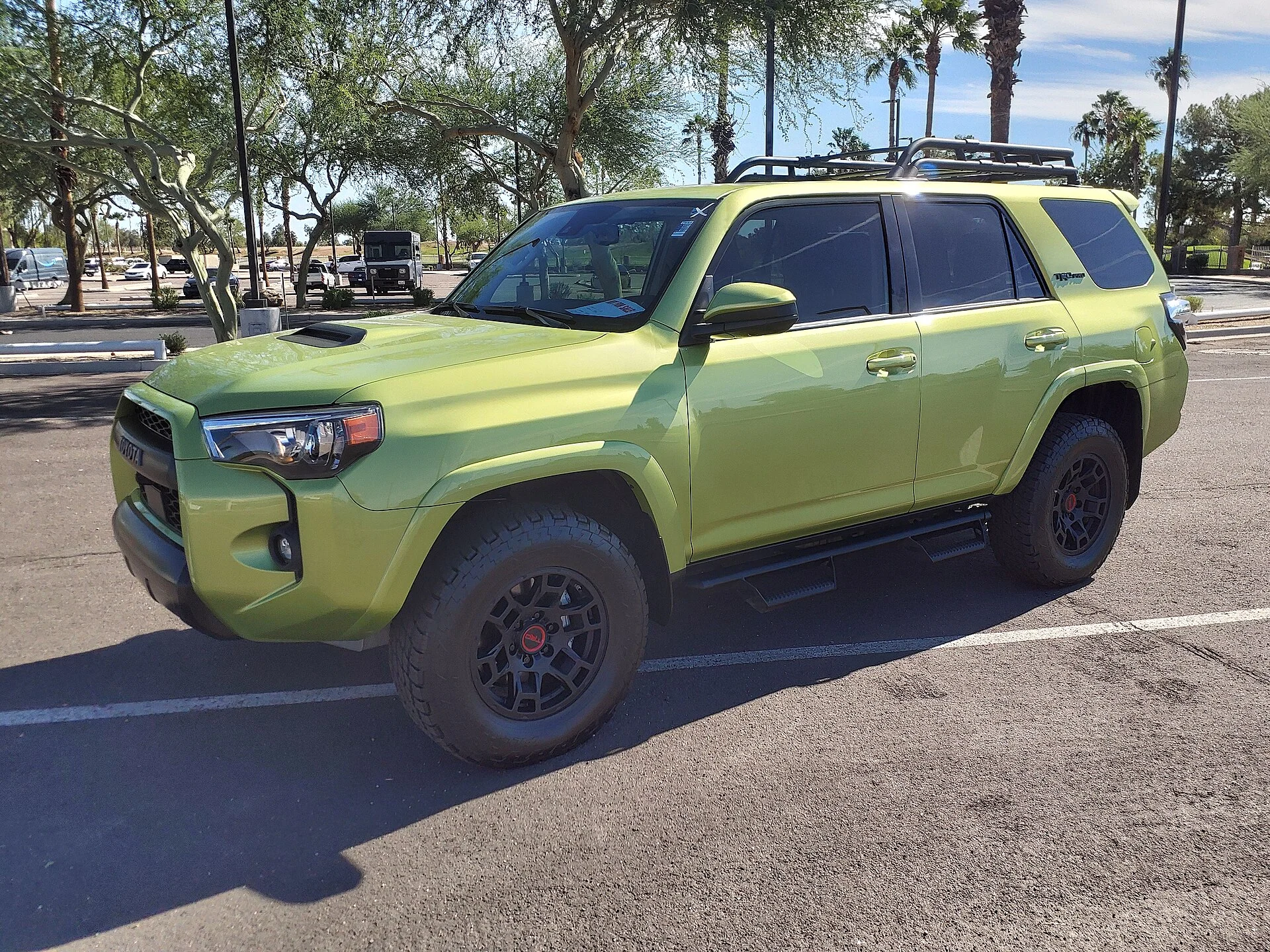
One of the 4Runner's quiet advantages for roof carrying is its rails. The 4Runner ships with factory raised roof rails on nearly every trim, so it is one of the easiest platforms for adding crossbars, with no bare-roof clamp kit needed. That raised-rail head start is a real convenience compared to vehicles with flush rails that demand fiddlier fitment.
Adding crossbars is straightforward and strong. Aftermarket flat-bar or t-slot crossbars for the factory rails typically carry about 200 pounds per bar and bolt on with no drilling, vastly more than any SUP needs. So the crossbar step is easy, non-permanent, and over-specced for a board, which fits the whole theme of this carry.
The raised rails also give you clean anchor points and a sensible bar spread out of the box. Where a short-spread vehicle makes you work to stabilize a long load, the 4Runner's proportions and solid rails give a board a stable base with minimal fuss. It is a vehicle designed to carry gear, and it shows in how little effort a paddleboard setup takes.
If you carry a board only occasionally, you do not even need crossbars. Soft roof pads over the raised rails or the bare roof, with straps through the doors, carry a SUP fine for a few trips a year. The 4Runner accommodates both the permanent crossbar route and the quick pad route easily, so you can match the setup to how often you paddle.
Length, Not Weight, Is the Only Task
With weight off the table, the board's length is the one thing that actually needs managing, and it is modest. A 126-inch board overhangs the crossbar spread, and any long load cantilevered off two bars wants end lines to control it. That is the whole task on a 4Runner: not carrying the weight, but stabilizing the length.
The overhang is far less dramatic than a canoe or a long touring kayak, since a 126-inch board is shorter and lighter than those hulls. But it is still long enough that highway wind can generate 40 to 60 pounds of upward lift on a long board, and that lift acts on the overhanging ends. The end lines are what counter it, the same physics as any long roof load.
Because the board is light, the consequences of getting the length wrong are smaller than with a heavy boat, but they are not zero. A board that lifts and shifts at speed can loosen its straps and become a hazard, so the length still deserves respect even on an over-built roof. The margin in capacity does not excuse skipping the end lines.
So think of a 4Runner SUP carry as an easy weight and a small length task. Center the board, strap it to the bars, and add bow and stern lines for the overhang. That is the entire job, and it is genuinely quick on a vehicle with raised rails and capacity to spare. The Will a Kayak Fit on a Toyota 4Runner covers carrying a kayak on the same roof, where the length task grows with a longer hull.
Bow and Stern Lines for the Overhang
Even on an over-built roof, the overhang means bow and stern lines are recommended, and the reason is the lift already noted. Highway wind can generate 40 to 60 pounds of upward lift on a long board, acting on the ends that hang past the crossbars. The end lines resist that lift and stop the board sliding fore and aft under braking.
They do a different job than the cross straps. The two cam-buckle straps over the board between the crossbars hold it down to the bars; the bow and stern lines hold the overhanging ends against lift and slide. On a light board the cross straps do most of the holding, but the end lines are the cheap insurance that keeps a gust from lifting a tip.
Orientation helps too. A SUP rides deck-up, or fins-up-and-forward, which keeps the fin from catching wind awkwardly and presents a clean profile to the airflow. Combined with the end lines, that orientation makes a 126-inch board ride quietly even at highway speed, with none of the flutter a poorly-oriented board can develop.
Run the bow line to the front tow points or hood loops and the stern line to the rear, each snug enough to remove slack. It takes a couple of minutes, and on a board it is genuinely quick because there is so little weight to wrangle. The end lines are the one non-negotiable on an otherwise effortless carry, and they cost almost nothing to add.
Mounting Options: Pads, Saddles, or J-Carriers
The 4Runner accepts every common SUP mount, so the choice is about frequency and preference. Soft roof pads or foam blocks with straps are the budget option for occasional carries, cradling the board on the crossbars or the bare roof and cinching through the doors. SUP roof-rack pads and straps in this configuration is the cheapest way to carry a board a few times a season.
For frequent use, dedicated SUP saddles or J-style carriers on the crossbars are worth the cost. They cradle the board securely, load faster, and free roof width for a second board or other gear. On a 4Runner's raised rails and strong crossbars, either carrier mounts easily and holds far more than a light board requires, so the choice is about convenience.
Whichever you pick, the SUP-specific gear accounts for the board's width. A heavy-duty SUP foam roof rack is made wider and thicker than a surfboard soft rack specifically to support the extra 32-inch board width, so buy SUP pads rather than repurposing narrower surf pads. It is a small detail that keeps the board supported evenly across its width.
The standard tie-down is the same across mounts: two cam-buckle straps over the board between the crossbars, plus bow and stern lines to the tow points, deck-up or fins-up-and-forward. That short kit carries a paddleboard securely on a 4Runner, and the Toyota 4Runner Awning Size Guide covers the vehicle's other gear-carrying accessories for building out a full trip setup.
Setting Up the 4Runner to Carry a Board
The setup sequence is quick and forgiving. First, add crossbars to the raised rails, or lay SUP pads on the rails or roof for an occasional carry. The raised rails make this the easy step it should be, with bolt-on bars that need no drilling and carry about 200 pounds each, far more than the board asks.
Second, place the board deck-up and centered fore and aft so the overhang is balanced, then run two cam straps over it to the crossbars and snug them firmly. A board is light and stiff enough to hold securely with modest tension, and there is no need to over-crank straps against a foam-cored board, which can dent under excessive pressure.
Third, tie the bow and stern lines to the front and rear tow points, each removing slack. These control the 40-to-60-pound highway lift on the overhanging ends and stop fore-aft slide under braking. On a 4Runner this is the one step you do not skip, precisely because the easy capacity can tempt people into a lazy, line-free strap job.
Finally, do a quick highway re-check after the first few miles, since straps settle as the board seats. The Can You Sleep in a Toyota 4Runner Car Camping Setup covers turning the 4Runner into a full camping and sleeping setup once your board is up top. Do the bars, the straps, the end lines, and the re-check, and a paddleboard rides the over-built 4Runner roof about as effortlessly as any load can.
The Verdict: Over-Built for the Job
A paddleboard fits on a Toyota 4Runner easily, and the verdict is that the roof is over-built for the load. A 126-inch, 25-to-35-pound board is a rounding error against the 135-pound dynamic factory-rail rating, and the 4Runner's static capacity of up to about 770 pounds on the newest generation puts the weight question thoroughly to rest. Capacity is simply not a concern.
That leaves length as the only real task, and it is a small one. A 126-inch board overhangs the crossbar spread, and highway wind can lift the ends by 40 to 60 pounds, so bow and stern lines are recommended alongside the two cross straps. The board is light enough that this is quick, but the end lines remain the one step worth doing every time.
Mounting is as easy as the capacity. The 4Runner's raised rails on nearly every trim make crossbars a bolt-on job, and those bars carry about 200 pounds each, or you can use SUP pads for occasional carries. Buy SUP-specific pads to support the board's 32-inch width, and the setup is done in minutes.
So carry a board on a 4Runner with confidence. The weight never challenges the roof, the raised rails make mounting simple, and the only real work is centering the board and running the end lines for its length. Of all the roof carries in this series, the paddleboard on a 4Runner is among the most effortless, precisely because the vehicle is built for far more.