The Big Picture
Choosing the right hammock for car camping isn't rocket science, but it can feel like it with all the options out there. Think of it like picking your favorite pair of sweatpants: you want comfort, but you also don't want to trip over them. For car camping, the main players are gathered-end hammocks, bridge hammocks, and those weird ones that hang inside your car. A cheap, unbranded hammock snagged online for $20 rarely lasts.
The real move is to understand what makes a hammock comfortable and durable when you're not worried about shaving ounces.Outdoor Gear Lab, The Ultimate Hang.
The Core Answer
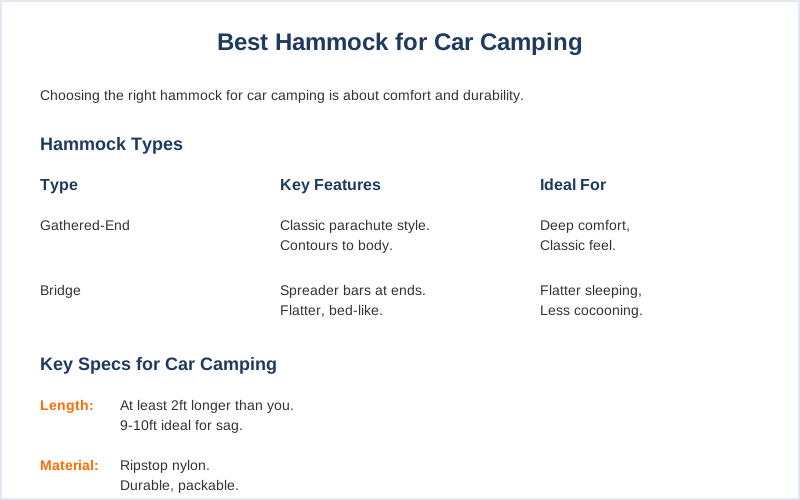
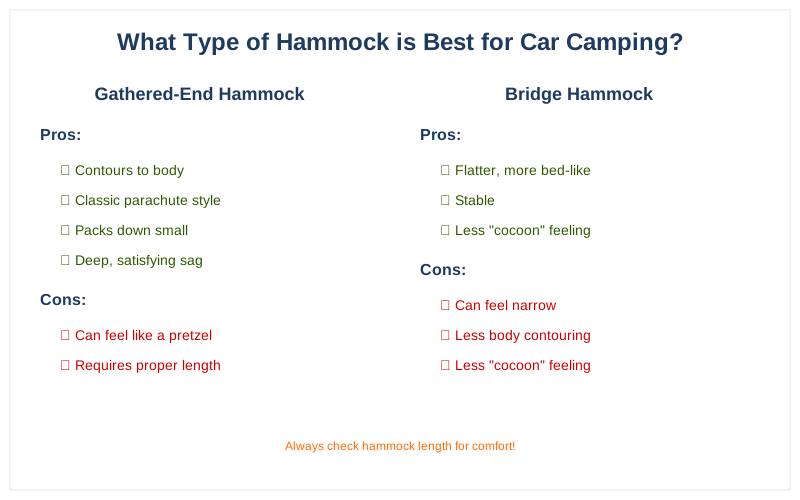
For car camping, a gathered-end hammock is usually the way to go. These are the classic parachute-style hammocks, often made from ripstop nylon. They pack down small, which is nice, but the real win is how they contour to your body. REI Expert Advice
A solid first hammock is a $60 model about 9 feet long. It worked, but I felt like a pretzel trying to get comfortable. The honest version: you need a hammock that's at least 2 feet longer than you are. So, if you're 6 feet tall, aim for at least an 8-foot hammock, but 9-10 feet is even better for that deep, satisfying sag. CleverHiker
Bridge hammocks are a different beast. They have spreader bars at either end, which keeps them flatter and more like a bed. Some hammocks are stable but feel a bit like sleeping in a narrow canoe. They're less likely to give you that 'cocoon' feeling, which some people hate. Outdoor Gear Lab
Then there are the 'car hammocks.' These are designed to hang inside your vehicle, using straps that go around the windshield and rear hatch. His Civic looked like a wounded spider. It's a niche thing, best for those who want to sleep fully enclosed and protected from critters, but headroom is a major issue. The Ultimate Hang
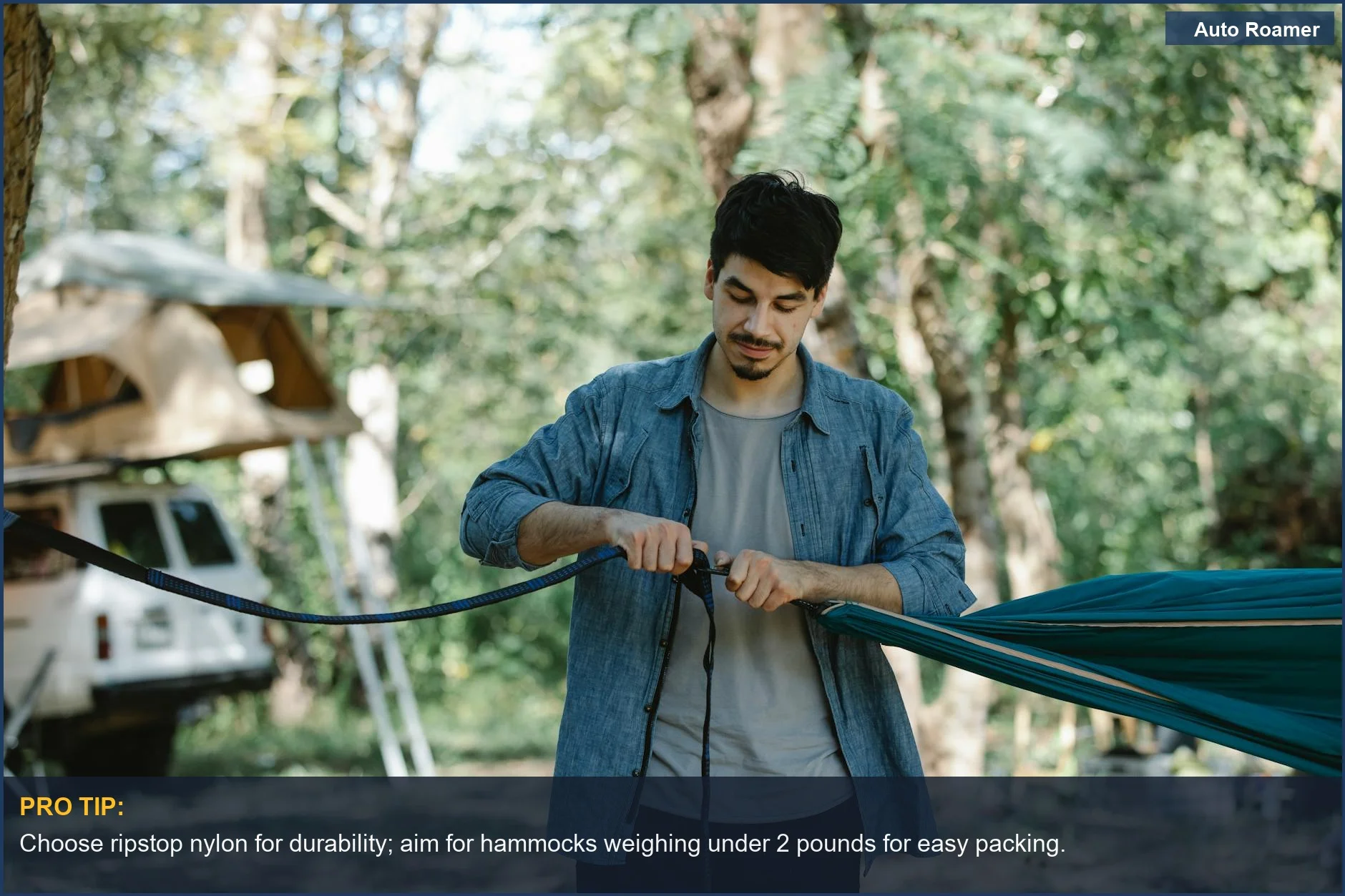
When it comes to materials, nylon is king for car camping. It's durable, dries fast, and is generally pretty comfortable. Polyester is also an option, but it can be a bit stiffer. Look for ripstop nylon; it's got little squares woven in to prevent tears from spreading. My cheapo hammock ripped on day two. Rookie mistake.
The suspension system is just as important as the hammock itself. You'll see whoopie slings, daisy chains, and carabiners. For beginners, a simple daisy chain strap with carabiners is usually easiest. You just loop it around a tree and clip in. Whoopie slings are more adjustable but have a learning curve. A first attempt at setting up whoopie slings can take 45 minutes and a lot of tangled cordage.
Don't forget about getting in and out. A hammock that's too low to the ground is a pain, especially if you've got gear around. Aim for a hang height where you can sit down and then swing your legs in. Hilarious, but not recommended.
Ultimately, for car camping, a good, long gathered-end hammock with a simple suspension system is your best bet. It's comfortable, versatile, and you can find solid options for under $100. That $50 version might seem tempting, but trust me, it's worth spending a little more for comfort and durability. Reddit
Why This Matters for Your Setup
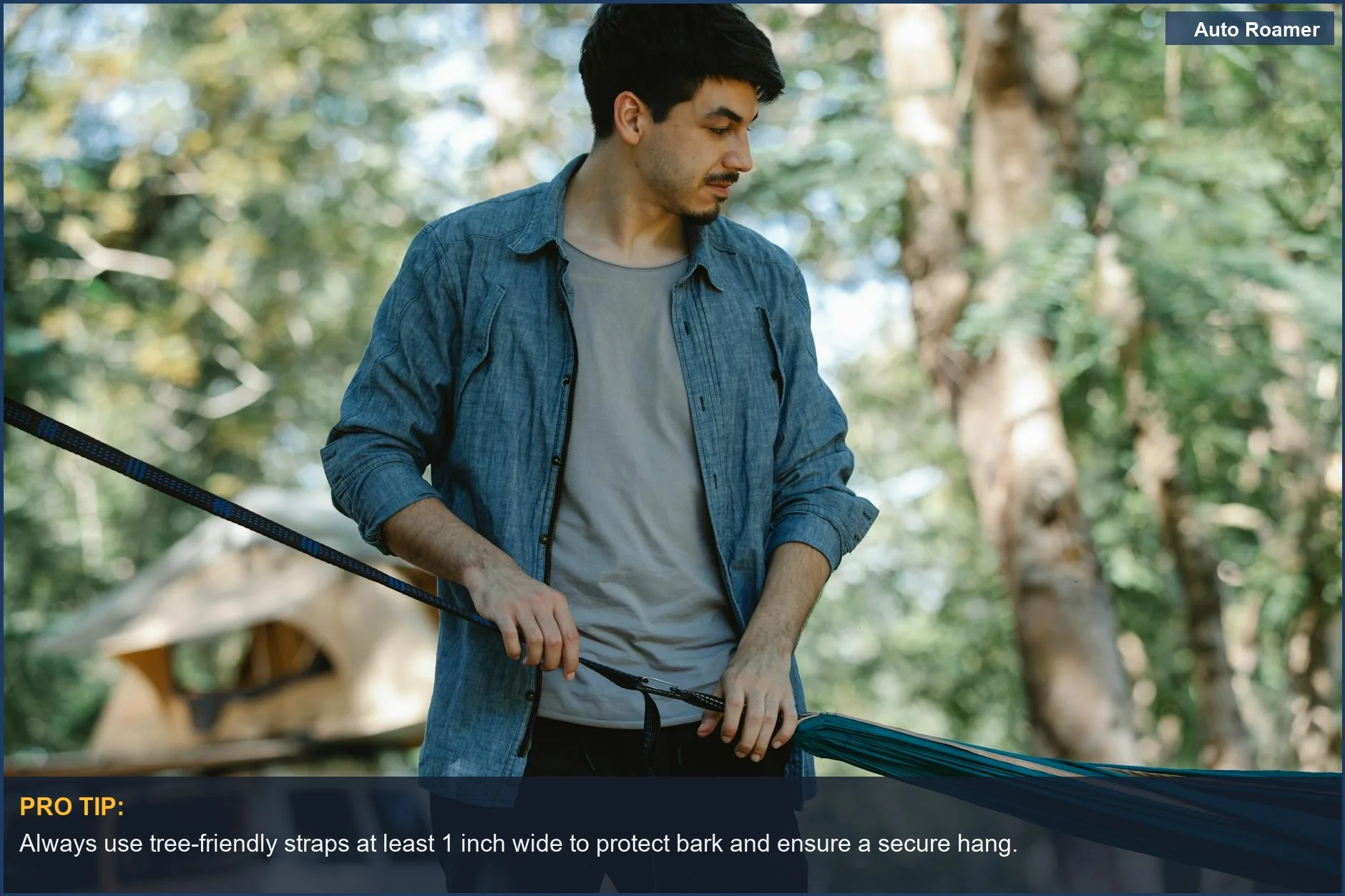
- Suspension is Key: Those straps that hold your hammock up? They're critical. For car camping, you'll want something easy to use, often involving straps that wrap around trees. The result was a hammock that sagged like a wet dish RAG and a very uncomfortable night.
- Tree Huggers: If you're hanging between trees, wide tree-saver straps are your friend. They're usually 1-2 inches wide and prevent the straps from digging into the bark. Thin webbing is hard on trees and on the hammock. A little kindness goes a long way.
- Ground Game: What if there are no trees? This is where car camping hammock stands come in.
- Bug Protection: If you're camping in the summer, bugs can ruin everything. Many gathered-end hammocks come with integrated bug nets. If yours doesn't, you can buy a separate net that drapes over.
- Underquilt for Warmth: Don't think you can just use a sleeping bag in a hammock when it gets cold. Your body weight compresses the insulation, making it useless. You need an underquilt, which hangs underneath your hammock. Toughing out a cold November night with just a sleeping bag under a hammock is miserable.
Look for systems with adjustable buckles or whoopie slings for a better hang.
These are metal frames that your hammock attaches to. They're bulkier, but they give you freedom to set up almost anywhere you can park. A receiver hitch mount on a truck can make an incredibly solid setup. Gink and Gasoline, Facebook
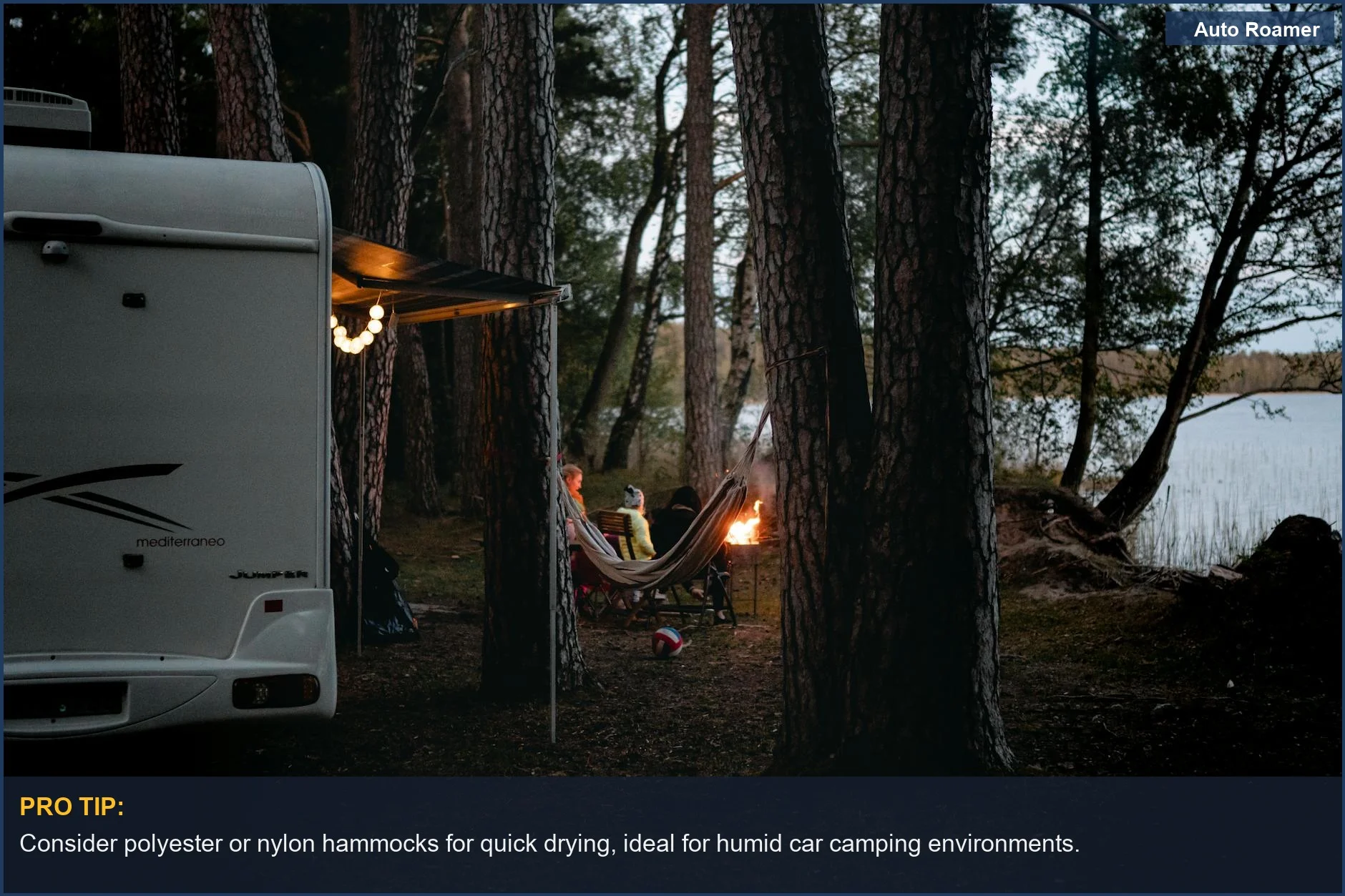
This matters most on a humid evening full of bugs. I woke up covered in mosquito bites. It was not a good look.
The fix was a $150 underquilt that made all the difference.
Making the Right Choice
- Think About Your Space: Are you car camping at a designated campsite with trees, or are you planning to pull off into a more remote spot? This will dictate whether you need a tree-based suspension or a standalone stand.
- Your Height Matters: Don't be tempted by those short, cheap hammocks. Longer is better for comfort.
- Consider the Extras: A bug net and an underquilt are not strictly necessary for a casual summer afternoon hang, but if you plan on sleeping in your hammock, they're game-changers. Skipping the bug net makes early trips miserable.
- Test Drive (If Possible): If you can, try out a friend's hammock or hang one at an outdoor store.
- It's Not About the 'Ultimate': The best hammock is the one that works for you and your specific car camping adventures. Don't get bogged down by expert reviews. What feels comfortable and is easy to set up is the real win. Gink and Gasoline, YouTube
Aim for at least 9 feet for most folks.
Getting a feel for different styles and suspension systems will save you headaches later.