The Short Version
My first car camping stove was a $25 propane burner I grabbed at Walmart. It worked fine for boiling water, but the whole canister thing felt like a hassle. Then I saw some fancy Jetboil setups that cost $150 and looked like rocket launchers. I figured there had to be a middle ground, and honestly, the fuel type is more important than the stove itself for a beginner.
You don't want to be fighting with your food prep after a long day of setting up camp.
This whole fuel situation can seem overwhelming with all the different types and jargon. But for car camping, it boils down to a few simple choices that won't break the bank or your brain. Let's get this figured out so you can focus on the s'mores.
After a few trips, I learned that the simplest fuel often means the most enjoyable weekend. My goal is always to make things easy, not complicated. No need for a chemistry degree here.
The Core Answer
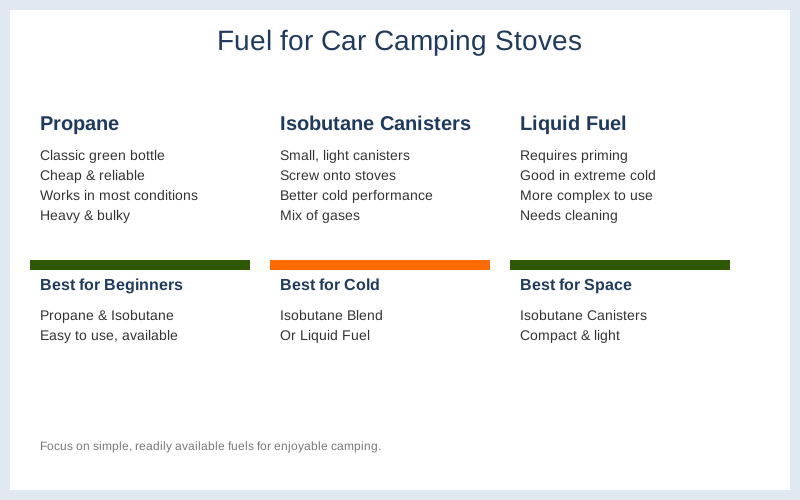
The honest version is that for most car camping beginners, propane or isobutane canisters are your best bet. They're foolproof and readily available. I learned this the hard way at a campsite in the Poconos when my fancy liquid fuel stove decided to impersonate a flamethrower because I didn't clean it properly.
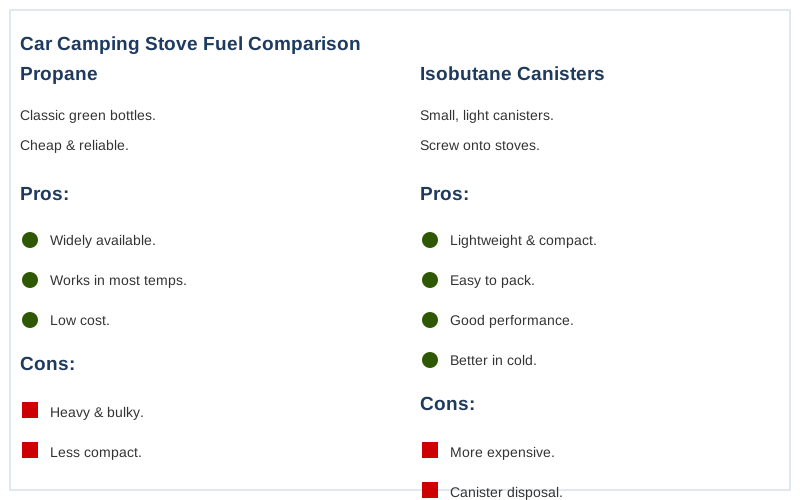
Propane is the classic green bottle you see everywhere. It's cheap and works great in most conditions. My first car camping trip used one of these, and it fired right up. The downside? Those green bottles are heavy and not exactly compact if you're trying to save space in your Civic hatchback.
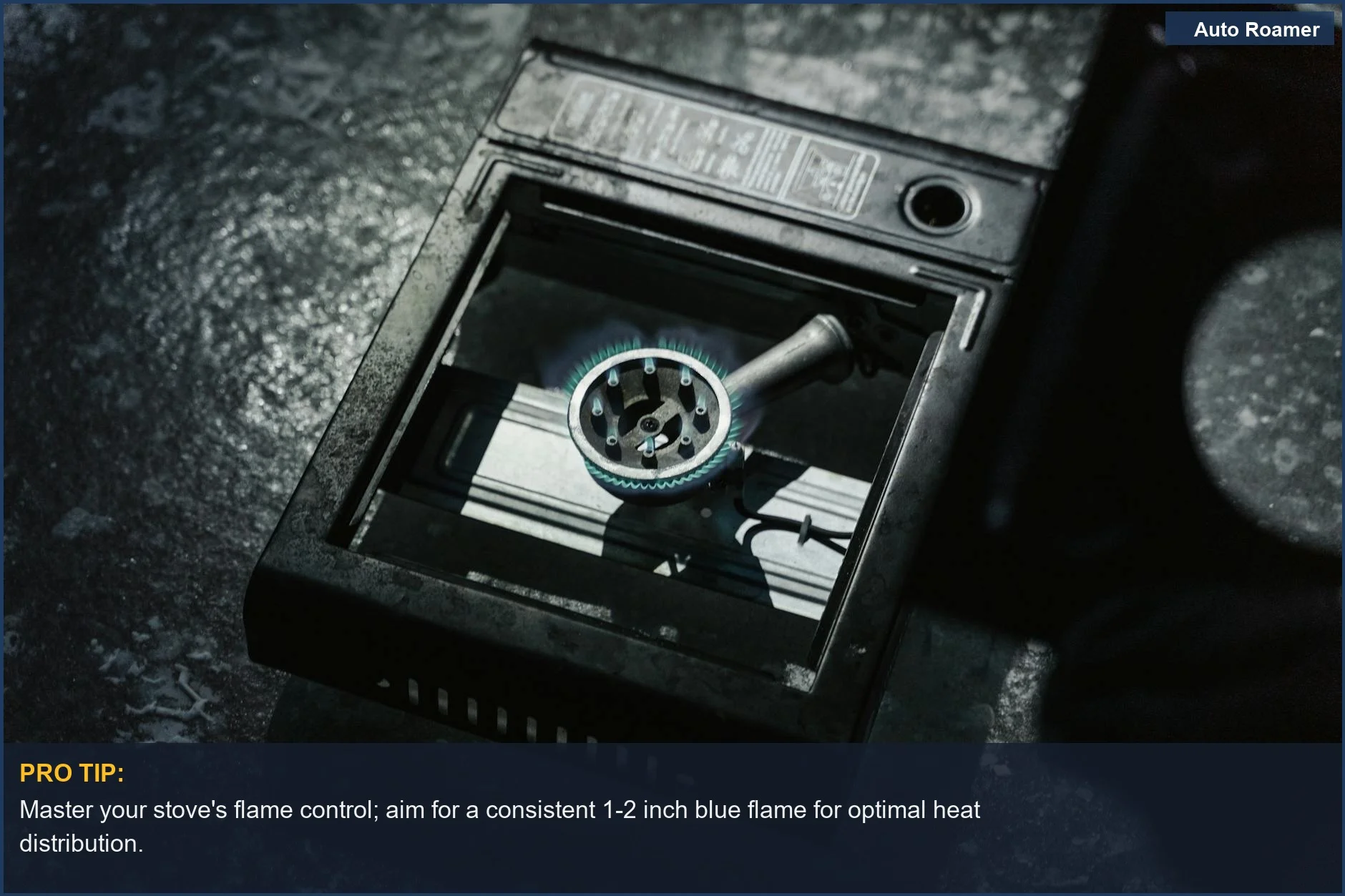
Isobutane canisters, often called 'gas' or 'all-season' fuel, are smaller, lighter, and screw directly onto many modern camping stoves. Think of your Jetboil or MSR PocketRocket. They're a mix of isobutane, propane, and butane. This blend is key because it performs better in colder temperatures than pure butane.
A common rookie mistake is thinking butane alone is great for everything. Pure butane struggles when it gets below freezing, and trust me, mountain nights get cold, even in summer. I once tried to make coffee with a pure butane canister at 30 degrees F, and it just sputtered like a dying cough Jetboil fuel guide.
While liquid fuel stoves (like those using white gas or even unleaded gasoline) offer more versatility and can be cheaper in the long run because you can refill bottles, they are NOT for beginners. They require priming, more maintenance, and can be finicky. I've seen friends wrestle with them, smelling like a gas station, when all I wanted was a quick meal. Stick to canisters for ease.
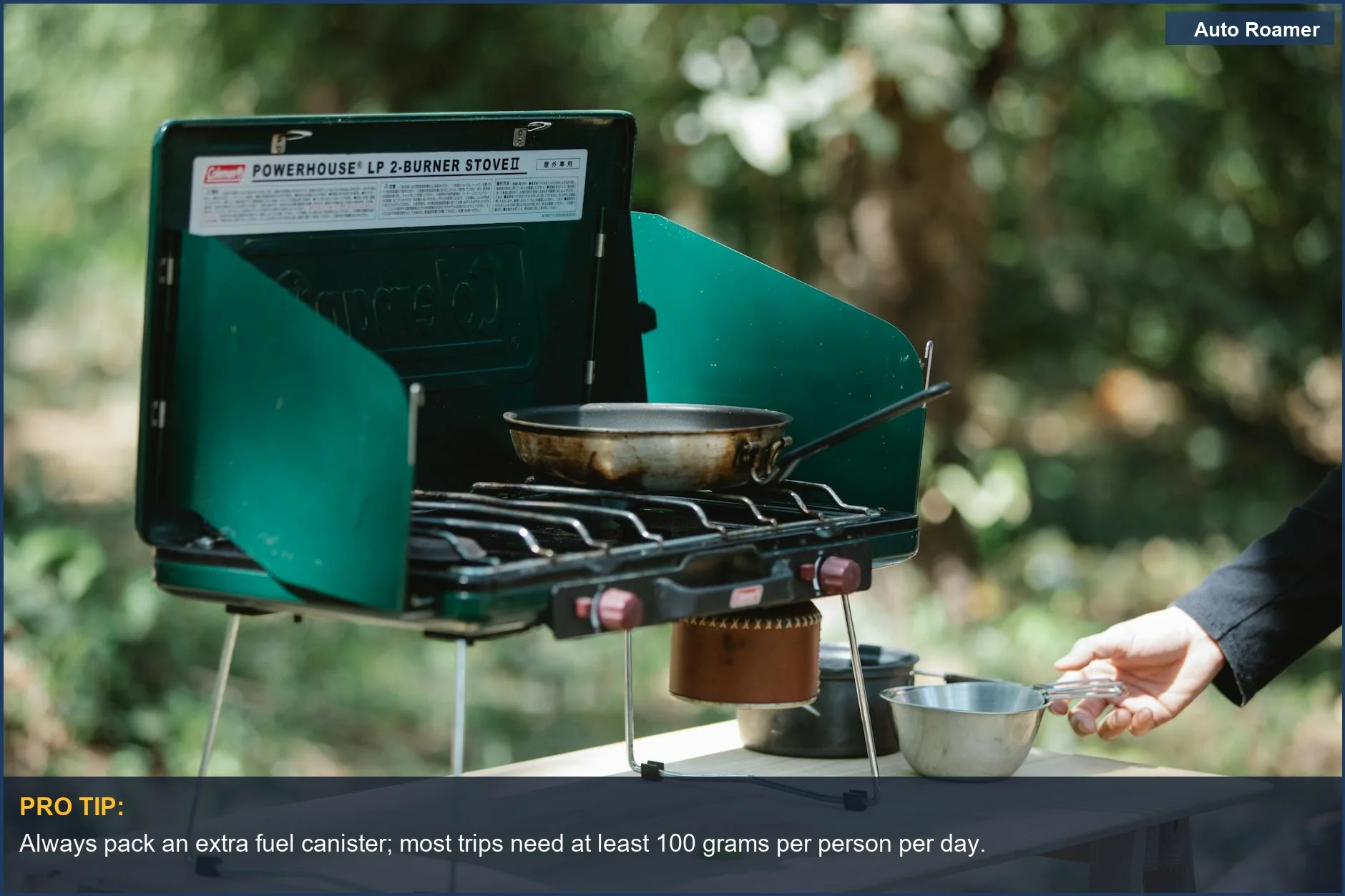
For a 3-day trip for two people, one medium-sized isobutane canister (around 8 ounces) is usually more than enough. These typically cost between $5 and $8. Propane tanks are more like $4-$6 for a 1-pound cylinder. The $50 version of a stove often comes with a propane adapter, which is a good deal to start Fire Maple Gear.
White gas, often sold as Coleman fuel, is another liquid option. It burns cleaner than regular gasoline and is popular with the old-school crowd. However, it still requires more effort than just screwing on a canister. The smell of Coleman fuel, for some, is nostalgic, but I prefer not smelling like a mechanic's RAG Classic Camp Stoves.
Why This Matters for Your Setup
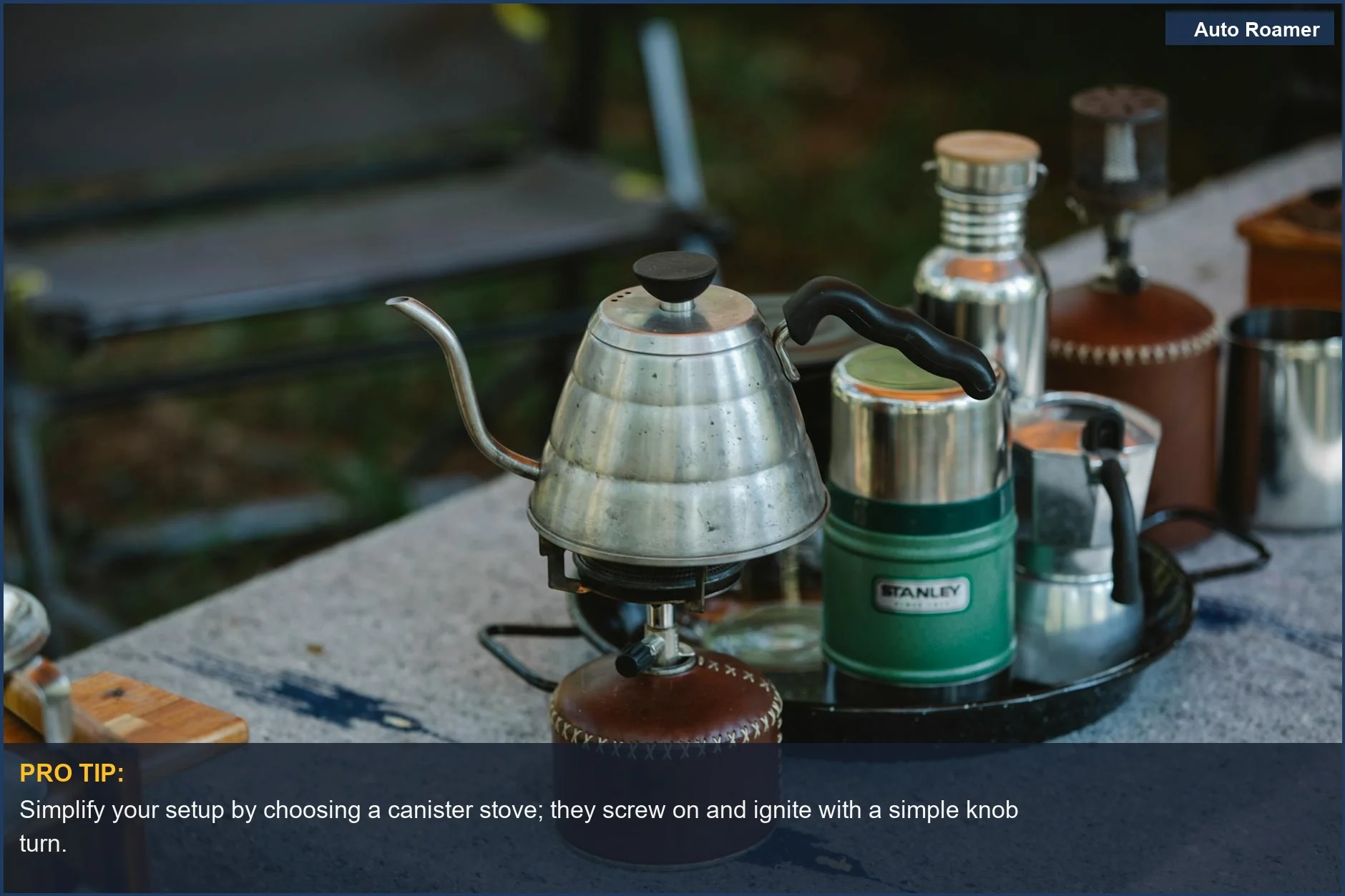
- Ease of Use: The real move for car camping is simplicity. Canister stoves screw on, you turn a knob, and boom - fire. My first time with a liquid stove, I spent 10 minutes trying to figure out how to 'prime' it without setting my tent on fire.
- Weight and Bulk: Propane tanks are bulky. If you're packing for a family and your trunk is already full of coolers and chairs, those big green bottles eat up valuable real estate. Isobutane canisters are way more compact.
- Temperature Performance: This is where isobutane shines over pure butane. If you camp in anything other than the dead of summer, a good isobutane blend will keep you cooking. I learned this lesson trying to melt snow for water at 15 degrees F with a pure butane canister; it was not pretty.
- Fuel Availability: Propane is everywhere. You can find it at almost any gas station or big box store. Isobutane canisters are also widely available at outdoor retailers and many grocery stores, especially in tourist areas.
- Stove Compatibility: Most modern, lightweight camping stoves are designed for isobutane canisters. If you buy one of those popular $40-$80 stoves, it's almost certainly going to be a canister stove. Trying to adapt a liquid fuel stove to a canister, or vice-versa, is usually a headache Stack Exchange.
Making the Right Choice
For your first few car camping trips, I highly recommend sticking with isobutane canisters. They are the most user-friendly option, offering a reliable flame without a steep learning curve. My second trip, I ditched the propane and went with a small isobutane stove, and it was a game-changer for cooking.
If you're camping in consistently warm weather and space is your absolute top priority, pure butane can work, but the risk of it failing in cooler temps is real. The added propane in isobutane blends is worth the small extra cost.
Don't overthink it. Grab a stove that uses isobutane canisters, and you'll be cooking dinner in minutes. The $50 version of a stove with a canister setup is perfectly adequate for learning the ropes REI.
Liquid fuel is for when you've done this a hundred times and want to tinker. For now, let's keep it simple and focus on enjoying the outdoors.