
How to Set Up a Hammock for Car Camping Safely
Setting up a hammock for car camping involves more than just tying it between two trees. It's about understanding how to distribute weight and protect both your gear and the environment. I learned this the hard way after a branch snapped on my second trip, sending me and my air mattress onto the forest floor.
Setting up a hammock for car camping involves more than just tying it between two trees. It's about understanding how to distribute weight and protect both your gear and the environment. I learned this the hard way after a branch snapped on my second trip, sending me and my air mattress onto the forest floor. That little incident at a campground in the Smokies taught me the importance of picking the right anchor points and using the right hardware.
It's not rocket science, but there are definitely some rookie mistakes to avoid if you want to sleep soundly and wake up without tree bark in your hair. camping hammocks are amazing for comfort, but only if they're hung right. It's about physics, really, but explained with actual dirt and occasional curses.
The Core Answer
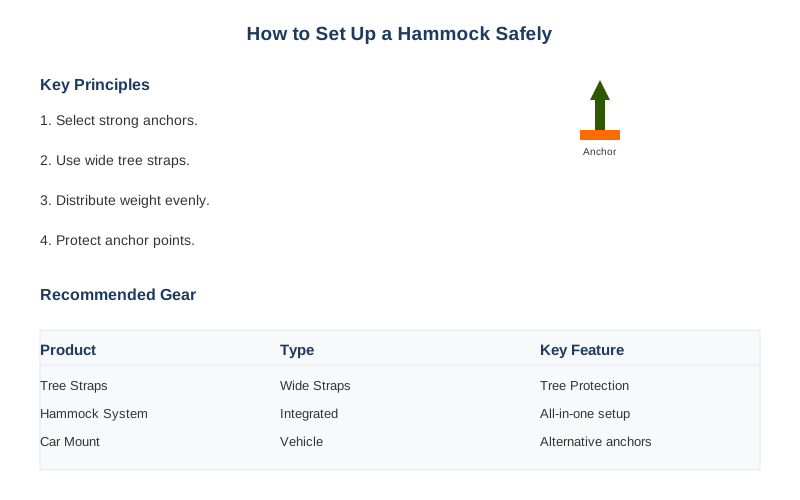
The core of a safe hammock setup for car camping comes down to your anchor points and how you connect to them. Forget about rough rope that bites into trees; that's a fast track to damaged bark and angry park rangers. The real move is using wide straps, usually around 1 inch or more. These spread the load, which is way better for the tree. I saw a guy once try to use paracord on some skinny saplings in Joshua Tree National Park; by morning, the paracord had cut halfway through the bark. Not pretty. Wide straps are your friend here. They look like big, flat belts and distribute pressure across a larger surface area, minimizing damage. Think of it like wearing a backpack versus carrying a single strap - way more comfortable for the tree. You'll typically need two anchor points, which can be trees or even sturdy car bumpers if you're using a vehicle-mounted system, though I've only ever used trees. Vehicle-mounted systems exist, but I stick to trees. My first attempt involved just tying knots directly around the trees, and my back still aches thinking about it. The straps usually have loops sewn into them, making it easy to clip your hammock's suspension system. The goal is to get your hammock hanging at a comfortable tension. Too tight, and it's like sleeping in a guitar string. Too loose, and you'll sag to the ground. A good rule of thumb is to have the bottom of your hammock about 18 inches off the ground when you're sitting in it. Hang it so the bottom hovers about 18 inches from the ground when in use. This usually means your anchor points should be about 10-15 feet apart, depending on the height of your straps. The angle of your suspension lines is also key. Aim for a roughly 30-degree angle from the strap on the tree down to your hammock. Too steep, and you'll be pulling too hard on your anchor points. Too shallow, and you'll feel like you're sliding out. Your goal is about a 30-degree angle between the strap and the ground. It sounds complicated, but after a couple of tries, you get a feel for it. My first time, I hung it way too high, and getting out involved a clumsy leap of faith. The honest version: it's mostly about finding two solid trees and using wide straps. Everything else is just fine-tuning for maximum chill. If you're using a tarp for rain protection, that also needs to be rigged with its own straps or cordage, ensuring it doesn't interfere with your hammock's suspension or the tree itself. This keeps you dry and also adds another layer of insulation.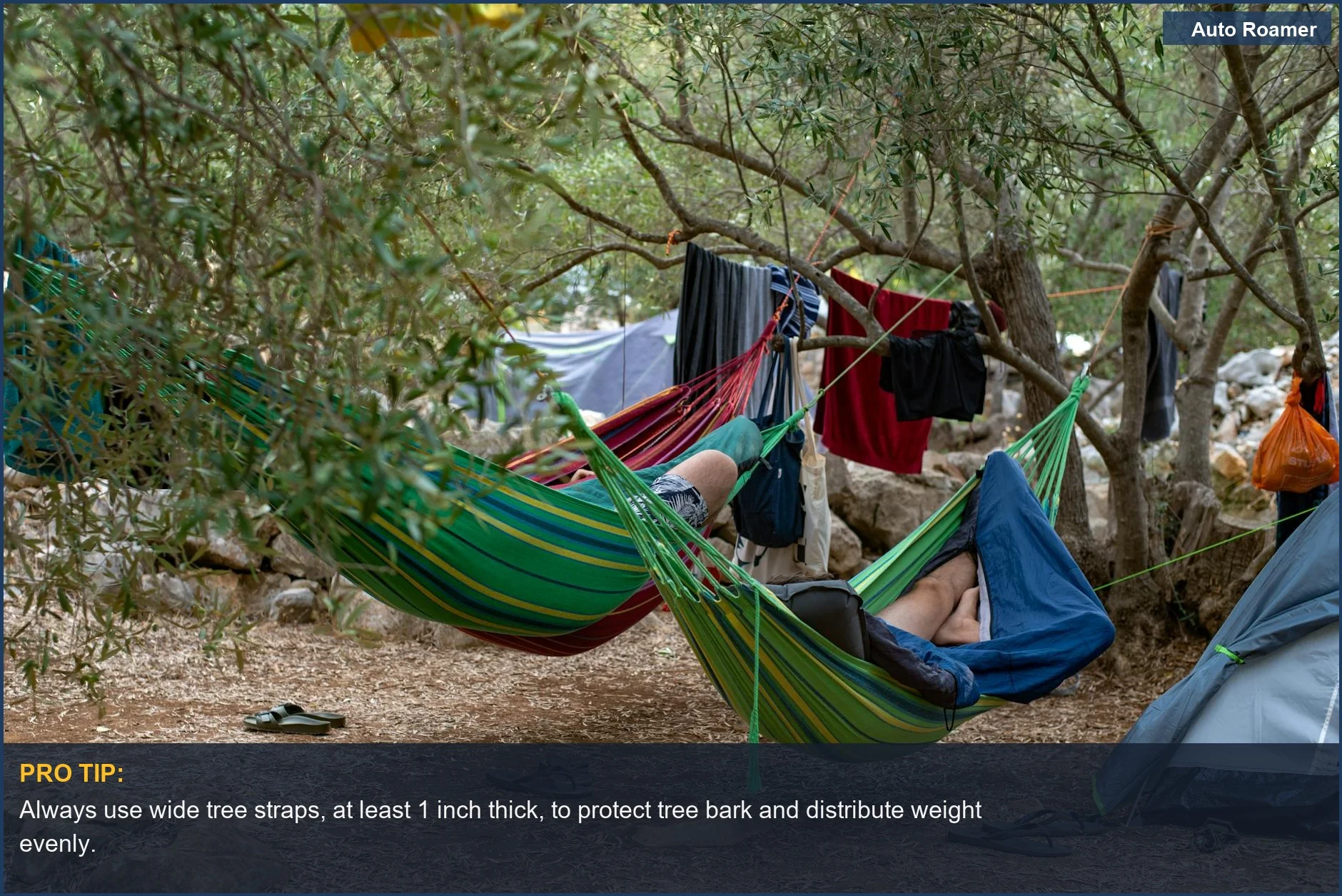
Why This Matters for Your Setup
Why does all this strap-angle-stuff even matter? Because a bad setup means a bad night's sleep, or worse, a trip to the emergency room. I once camped in Big Basin Redwoods State Park, and I thought I was being clever by using some old climbing rope I had lying around. Big mistake. The rough rope chewed into the bark all night, and by morning, my hammock was sagging like a wet dishrag. Not to mention the tiny trees I picked were bending like they were auditioning for Cirque du Soleil. It's easy to set up, but you gotta do it right. The real move is to prevent damage and ensure you don't end up on the ground. Here's the field notes breakdown:- Tree Health: Always pick healthy, mature trees. Avoid anything that looks diseased, has obvious rot, or is a young sapling. I've seen folks try to hang from dead snags, and that's just asking for trouble. One time, a whole tree came down in a windstorm while I was sleeping in my hammock nearby. Spooky stuff.
- Strap Width: As mentioned, wide straps (1 inch or more) are critical. They distribute weight and protect the bark. Trying to save a few bucks on cheap, narrow straps is a rookie mistake that costs trees their lives.
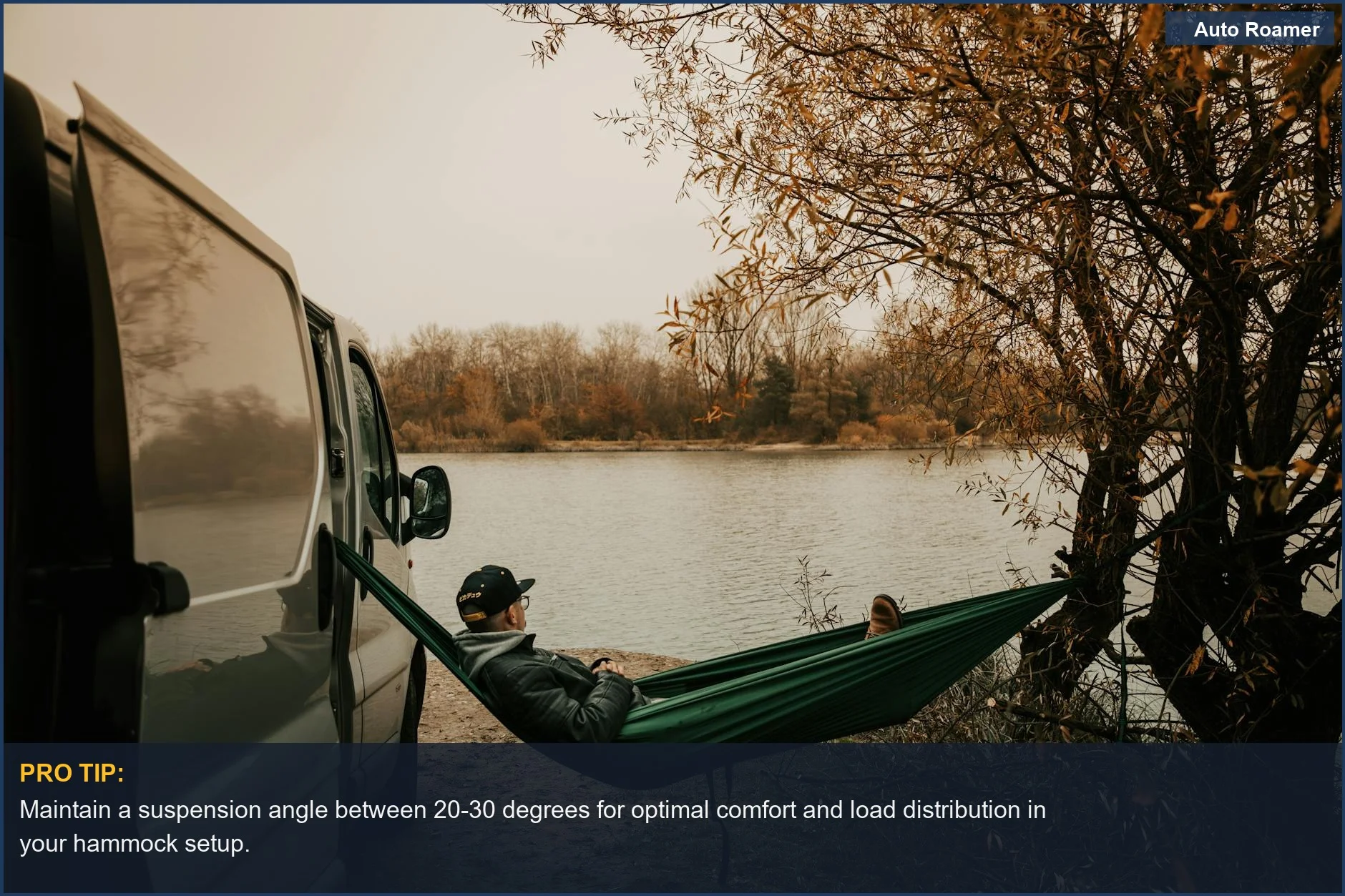
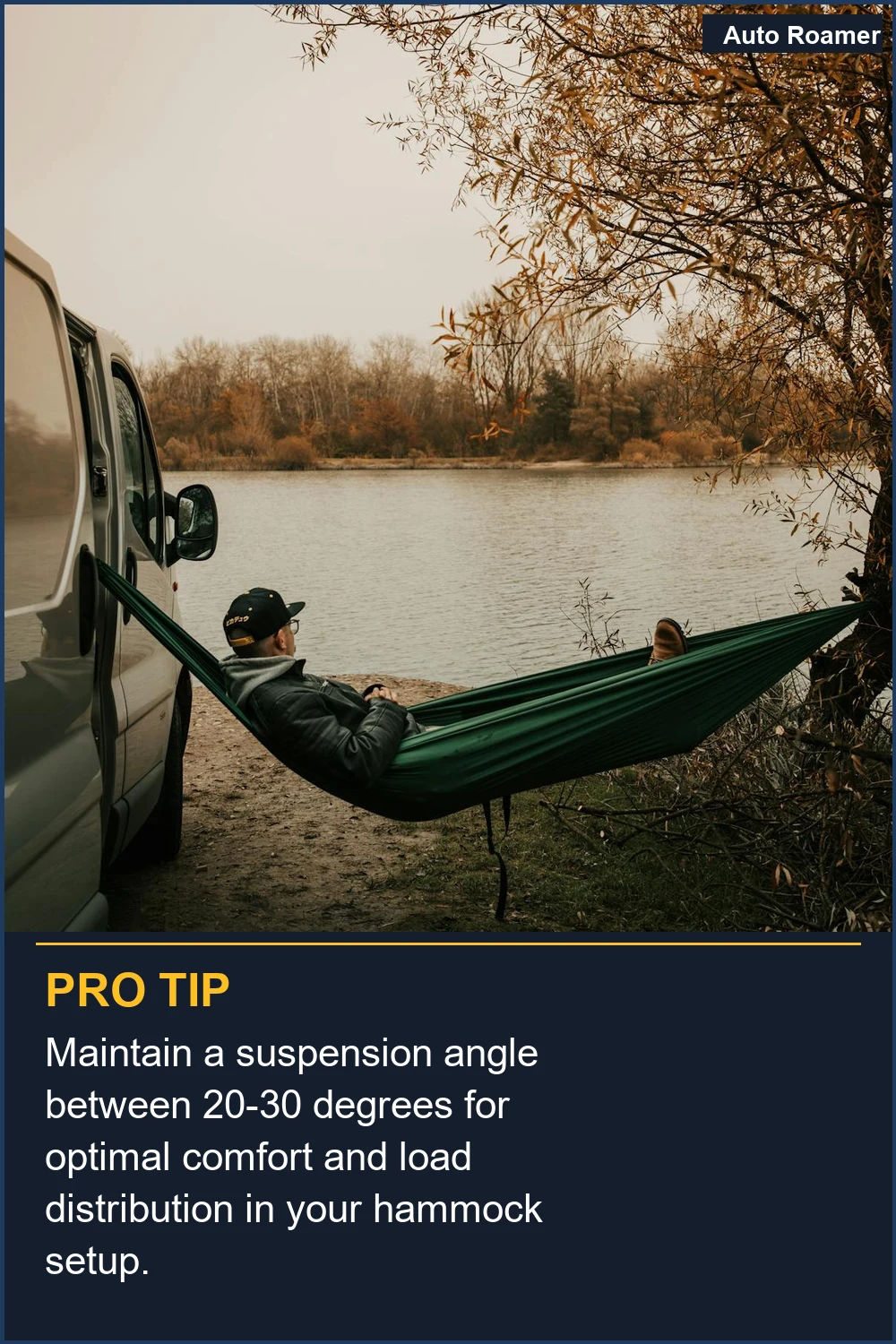
- Suspension Angle: Aim for that 30-degree angle. It's a sweet spot for comfort and load distribution. Too steep, and you're stressing the anchor points. Too flat, and you'll feel like you're sliding out of bed.
- Hammock Height: About 18 inches off the ground when you're in it. This makes getting in and out safe and easy. I've seen people hang their hammocks so high they needed a ladder to get in. Brilliant engineering, that.
- Ground Clearance: Ensure your hammock, and any gear you hang under it, doesn't drag on the ground, especially if it might rain. Nothing worse than waking up to a damp sleeping bag because your hammock was too low.
Making the Right Choice
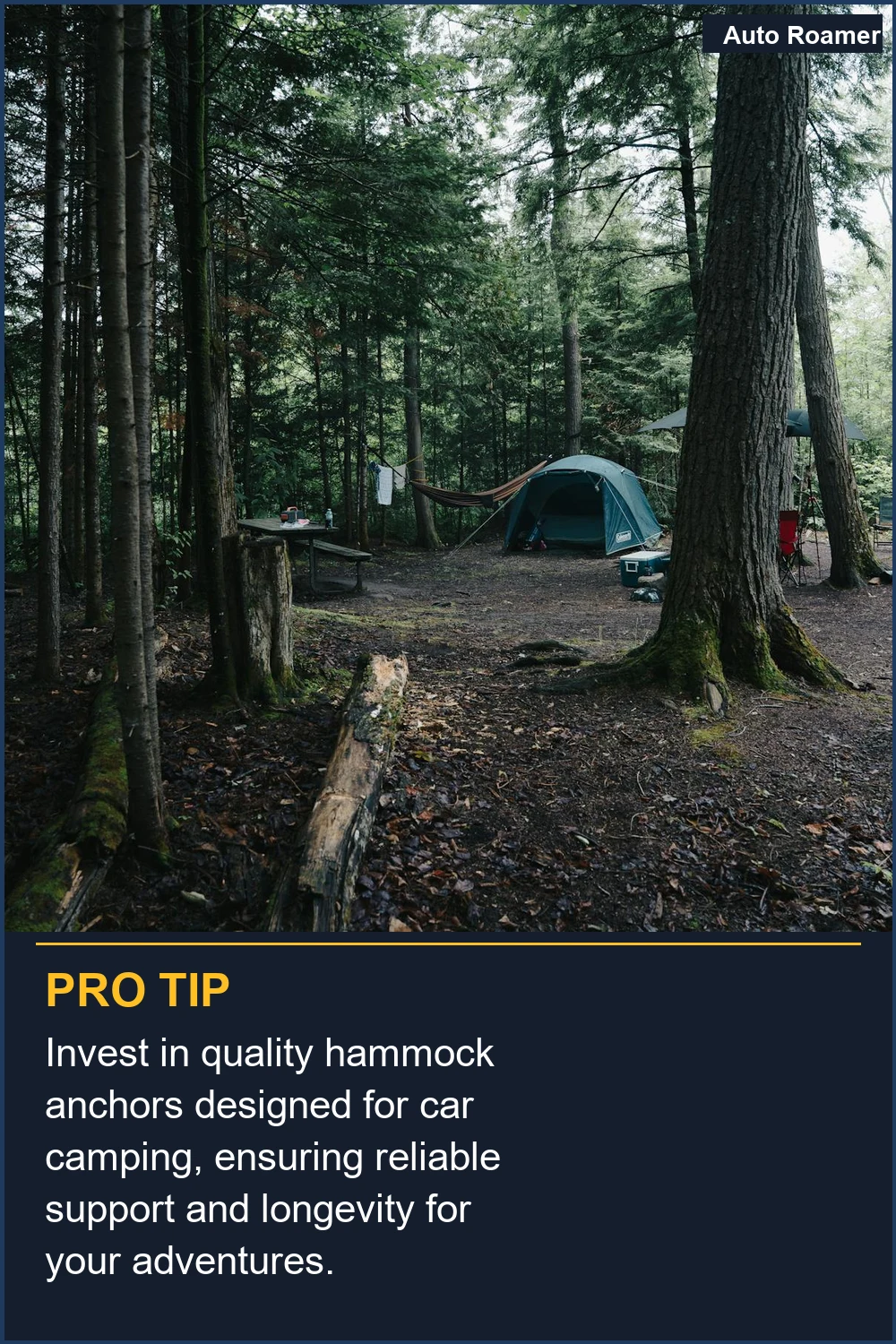
Choosing the right hammock setup is all about balancing comfort with responsibility. It's not about having the most expensive gear, but the right gear for the job. My first setup was a $50 hammock and some cheap straps I bought online. It worked, but it wasn't ideal. Later, I invested in some decent tree straps, and the difference was night and day. You need sturdy anchor points, and wide straps are the best way to connect to them. The honest version: you don't need a $300 hammock system to start. A decent hammock and a good pair of tree straps will get you going. Hanging your hammock responsibly means thinking about the trees and your own safety. It's about enjoying the outdoors without leaving a mess or damaging the environment. So, next time you're heading out, skip the elaborate setup and focus on the basics: solid trees, wide straps, and a comfortable hang. Your back, and the forest, will thank you.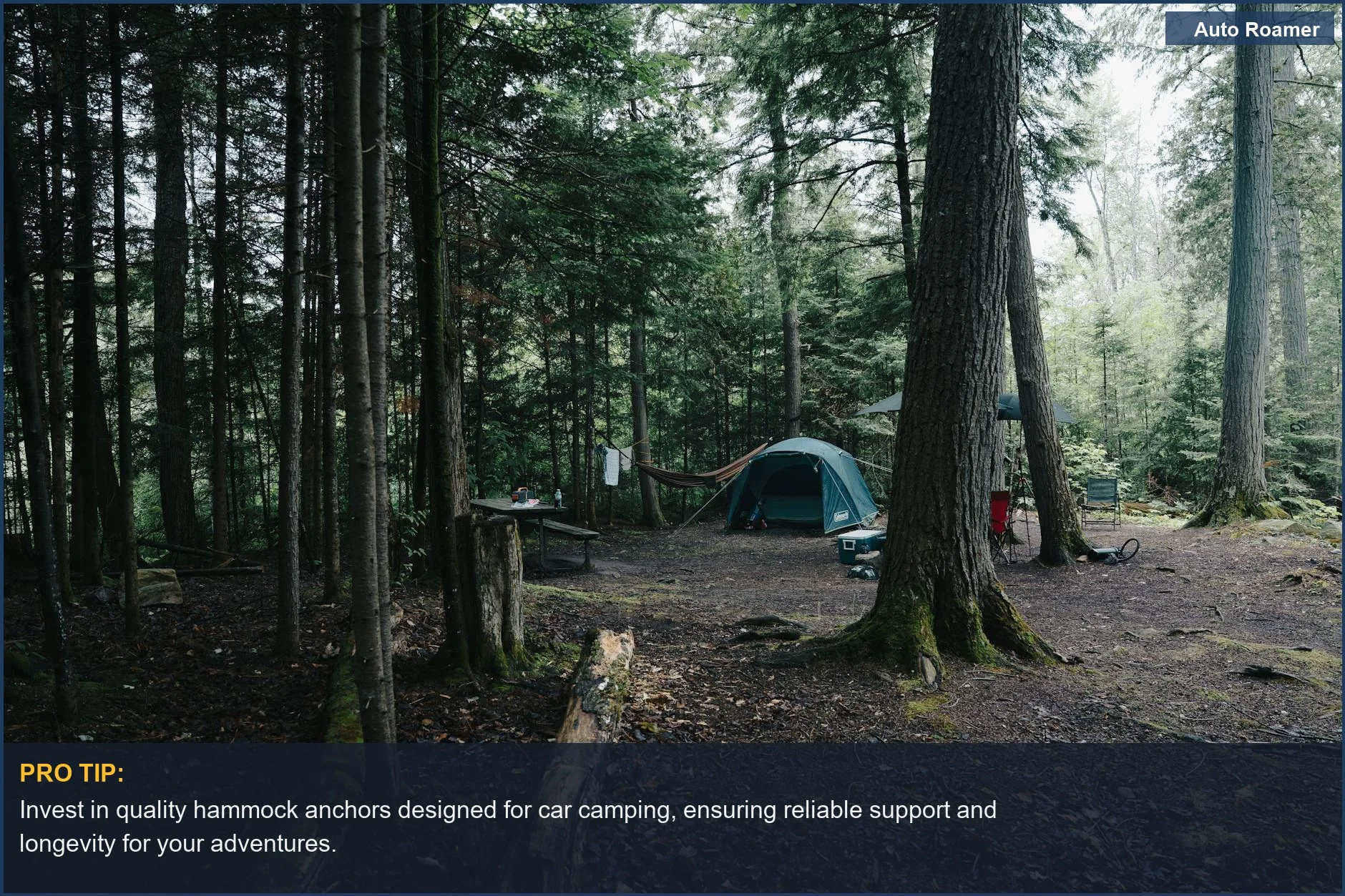
Frequently Asked Questions
If I buy cheap tree straps online for $15, how much am I saving compared to a $40 set from a reputable camping store?
Do I really need a special tool to measure the strap angle, or can I just eyeball it?
What if I hang my hammock, and it feels like I'm sinking way too low, almost touching the ground, even after adjusting the straps?
Can using the wrong kind of rope or straps permanently damage the trees I'm using?
I heard you can just tie your hammock directly to your car's roof rack. Is that a good idea?
🏅 Looking for Gear Recommendations?
Check out our tested gear guides for products that work with this setup: