General Camping

What to Do If You Encounter a Bear While Camping (2026 Complete Guide)

Auto Roamer
13 min read
Prices verified February 2026
Includes Video

The crackle of the campfire dies down as a twig snaps nearby. You freeze, heart pounding. Through the dim light, a dark shape emerges from the trees - a bear. This isn't a movie scene; it's happening *now*, and your camping trip has just taken a critical turn.

The crackle of the campfire dies down as a twig snaps nearby. You freeze, heart pounding. Through the dim light, a dark shape emerges from the trees - a bear. This isn't a movie scene; it's happening now, and your camping trip has just taken a critical turn. Your immediate actions could determine the outcome of this bear encounter camping. Running is never the answer; it can trigger a chase response American Bear Association. Instead, assess the situation calmly. Is the bear aware of you? What is its demeanor? Understanding how to react to a bear sighting while camping is paramount for your safety and the animal's well-being U.S. National Park Service. This guide will equip you with the knowledge to navigate this high-stakes scenario, turning potential panic into decisive action.

The sudden appearance of a bear can induce immediate fear, but it's crucial to remember that most bears wish to avoid confrontation. Your initial response should focus on de-escalation and demonstrating that you are not a threat, nor are you prey. If the bear has not noticed you, the best course of action is to slowly and quietly back away, giving the animal plenty of space and an unobstructed escape route. If the bear is aware of your presence, it's vital to remain calm and avoid sudden movements. Speak in a low, calm voice to identify yourself as human and not an animal. Making yourself appear larger is also recommended; this can involve standing tall and slowly waving your arms. Remember, the goal is to signal your presence without provoking the animal. Different bear species may require slightly different responses, so knowing whether you are in black bear or grizzly country can influence your strategy REI Expert Advice.

Bear encounter infographic: safety tips for campers.
Key specifications for What to Do If You Encounter a Bear While Camping

The Short Answer

The core principle of bear encounters while camping is to avoid surprising the animal and to remain calm if you do see one. Your goal is to de-escalate the situation by clearly identifying yourself as human and making yourself appear non-threatening, or if necessary, a threat that is not worth engaging.

If you encounter a bear while camping, the immediate priority is to stay calm and do NOT run. Running can trigger a chase response in bears American Bear Association. Instead, identify yourself as human by speaking in a calm, assertive voice. Wave your arms slowly to appear larger and more noticeable. If the bear seems curious and stands on its hind legs, it's likely trying to get a better smell or look, not necessarily preparing to attack U.S. National Park Service.

When you see a bear, your next step is to slowly and calmly move away. Do not make direct eye contact, as this can be perceived as a challenge. If possible, move sideways, putting distance between yourself and the bear without turning your back. Always monitor the bear's reaction to your movements BearVault. Remember that your campsite setup, especially food storage, plays a massive role in preventing encounters. Ensure all food and scented items are stored in bear-proof containers or locked vehicles, well away from your tent BearWise.

If a bear approaches you aggressively, the response depends on the species. For black bears, fight back aggressively, aiming for the eyes and nose. Do not play dead, as this signals you are prey REI Expert Advice. However, if you are attacked by a brown/grizzly bear, play dead. Lie flat on your stomach with your hands clasped behind your neck, leaving your pack on for protection U.S. National Park Service. Having bear spray readily accessible and knowing how to use it is crucial; aim for the face when the bear is 20-30 feet away and use short bursts Montana Knife Company.

To enhance your camping experience and minimize bear encounters, it’s crucial to understand food storage safety.
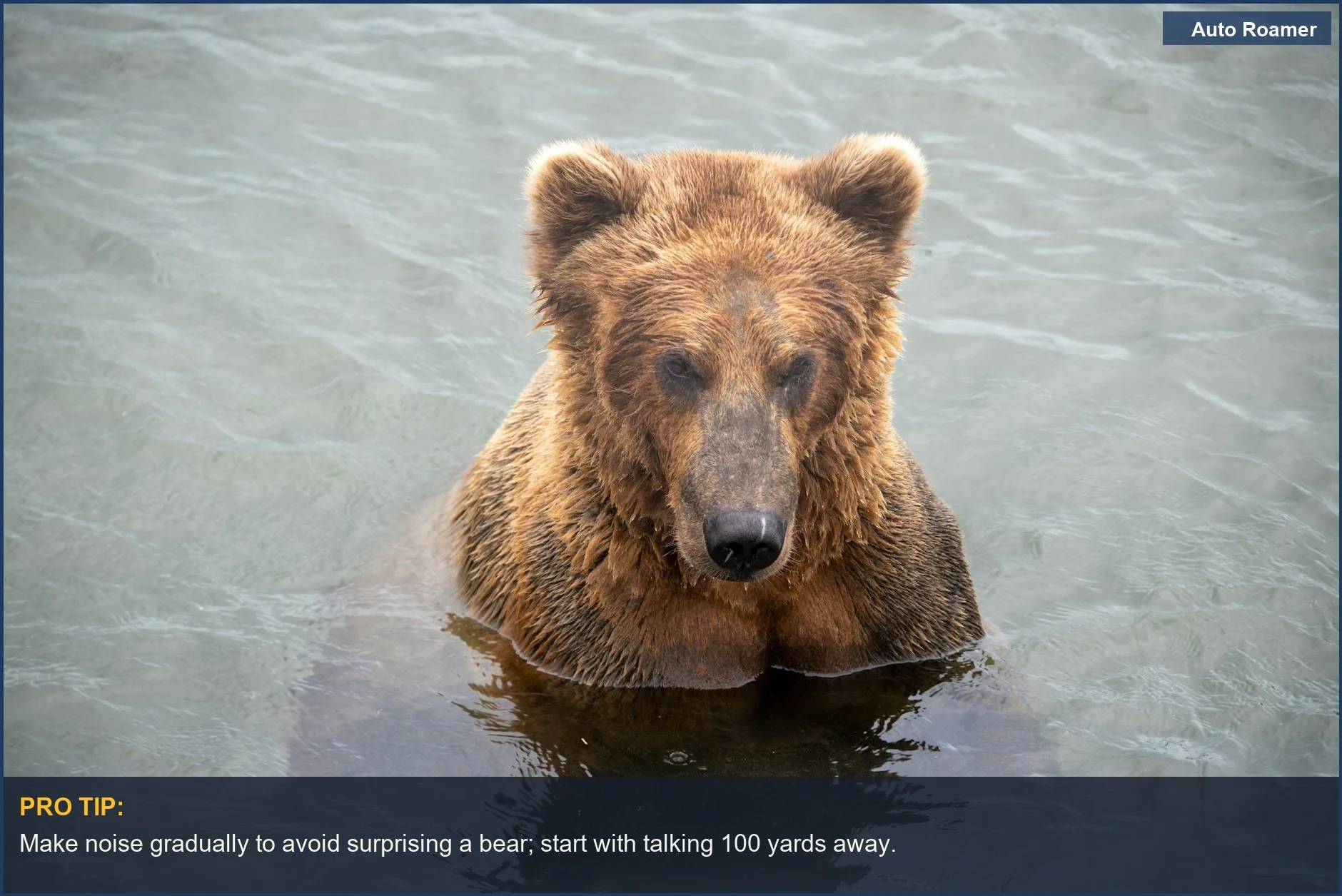
Make noise gradually to avoid surprising a bear; start with talking 100 yards away.
Encountering a bear while camping requires immediate calm. This brown bear shows the importance of respecting their space and understanding their behavior during a bear encounter camping. | Photo by Jan Tang

What You Need to Know

1
Stay Calm and Assess - The absolute first rule in a bear encounter, whether you're in a sedan, SUV, truck, or van, is to remain calm. Do NOT run; this can trigger a chase response in the bear. American Bear Association emphasizes that running is one of the worst things you can do. Observe the bear's behavior from a safe distance.
2
Identify Yourself and Make Yourself Known - Speak in a calm, normal voice to let the bear know you are human and not prey. Waving your arms slowly can help the bear recognize you. Bears may stand on their hind legs to get a better look or smell, which is usually a sign of curiosity, not aggression, according to the U.S. National Park Service. Do not make direct eye contact, as this can be perceived as a threat.
3
Create Space Slowly - If the bear doesn't leave, slowly back away while continuing to talk calmly. Move sideways if possible, as this is less confrontational than turning your back. Avoid moving towards the bear. If you are in a vehicle, stay inside and keep windows rolled up. A locked vehicle, whether it's a sedan, SUV, truck, or van, provides a secure barrier.
4
Defend Yourself if Necessary - If a bear charges, the response depends on the species. For black bears, fight back aggressively. Use anything available - rocks, sticks, or your fists - aiming for the bear's eyes and nose. Never play dead with a black bear; it perceives you as prey, as noted by REI Expert Advice. If you are attacked by a brown or grizzly bear, play dead. Lie flat on your stomach with your hands clasped behind your neck, leaving your pack on for protection.
5
Bear Spray Deployment - If you carry bear spray, know how to use it. Aim below the bear's face. You have about 7-9 seconds of total spray and should deploy it when the bear is 20-30 feet away. Always try to stay upwind of the bear to prevent the spray from blowing back at you. This is a critical defense tool for any bear encounter.
6
Vehicle Specifics and Campsite Management - When camping, proper food storage is paramount. Store all attractants out of sight in a locked vehicle with windows rolled up; this applies to sedans, SUVs, trucks, and vans alike. BearWise advises cooking downwind from your tent. Never leave food or backpacks unattended at your campsite. Select campsites away from known bear feeding zones like berry patches and salmon streams, and stay at least 100 yards from game trails.
To ensure a successful trip, avoid common pitfalls by learning about beginner camping mistakes.
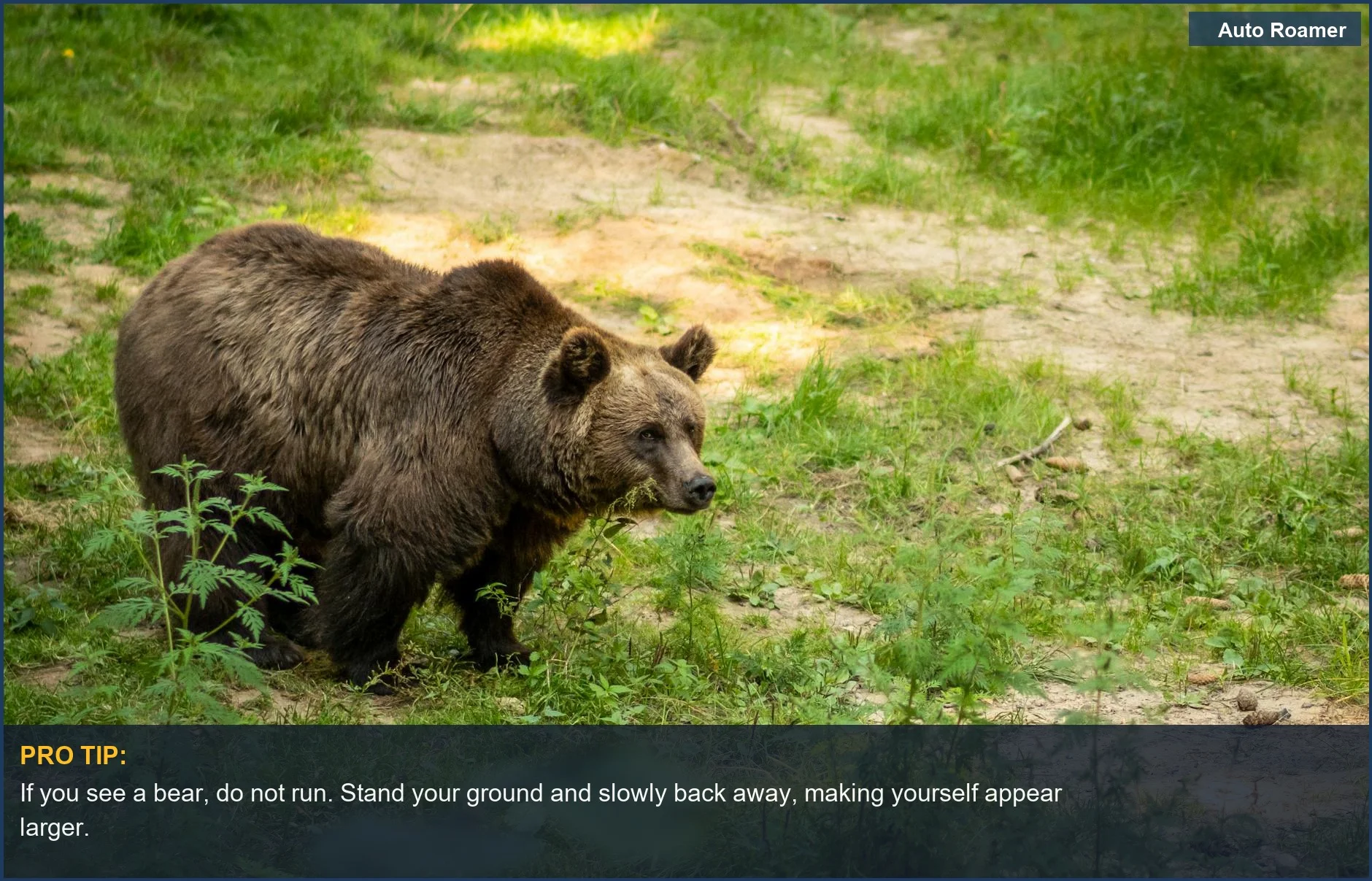
If you see a bear, do not run. Stand your ground and slowly back away, making yourself appear larger.
When you see a bear camping, remember to assess the situation from a distance. This majestic brown bear highlights the wild beauty you might encounter and the need for preparedness. | Photo by Andrey Dvoretskiy

How to Handle This

1
Let the bear know you're there - Speak in a calm, firm voice. This identifies you as a person, not prey, and can de-escalate the situation. In dense areas or near loud streams, bears are less likely to hear or smell you, increasing the chance of a surprise encounter. Most bear 'attacks' are caused by surprising a bear and usually can be prevented. Hiking & Camping in Black Bear Country - American Bear Association
2
Assess the situation and stand your ground - If the bear notices you, remain calm and avoid sudden movements. Wave your arms slowly and continue talking. Bears often stand on their hind legs to get a better look or smell, which is usually curiosity, not aggression. Running can trigger a chase response. Help the bear recognize you as a human. Staying Safe Around Bears - Bears (U.S. National Park Service)
3
Prepare to use bear spray - If the bear continues to approach or shows signs of aggression, get your bear spray ready. Aim to deploy it when the bear is 20-30 feet away, directing a 1-2 second burst at its face. You have about 7-9 seconds of total spray, so timing is critical. Position yourself upwind to avoid the spray blowing back into your face. How to Stay Safe From Bears While Camping: Defense Tools and ...
4
Know your bear and react accordingly - If it's a black bear attack, fight back aggressively, targeting the eyes and nose. Do NOT play dead. If you're facing a grizzly or brown bear attack, play dead. Lie flat on your stomach with your hands clasped behind your neck, and leave your pack on for protection. A black bear sees you as prey if it attacks, while a grizzly might be defending its space. Backpacking & Camping in Bear Country | REI Expert Advice
5
Disengage and retreat slowly - If the bear is not showing aggression and has stopped approaching, slowly back away. Move sideways if possible, as this can make you appear less threatening. Never turn your back and run. If you need to move from your campsite due to bear activity, do so cautiously, making noise and ensuring you're not leaving behind any attractants. What to Do If You See a Bear: A Complete Guide
If you're considering an outdoor adventure, it's wise to know what to do if your car breaks down while camping, as detailed in this helpful guide.
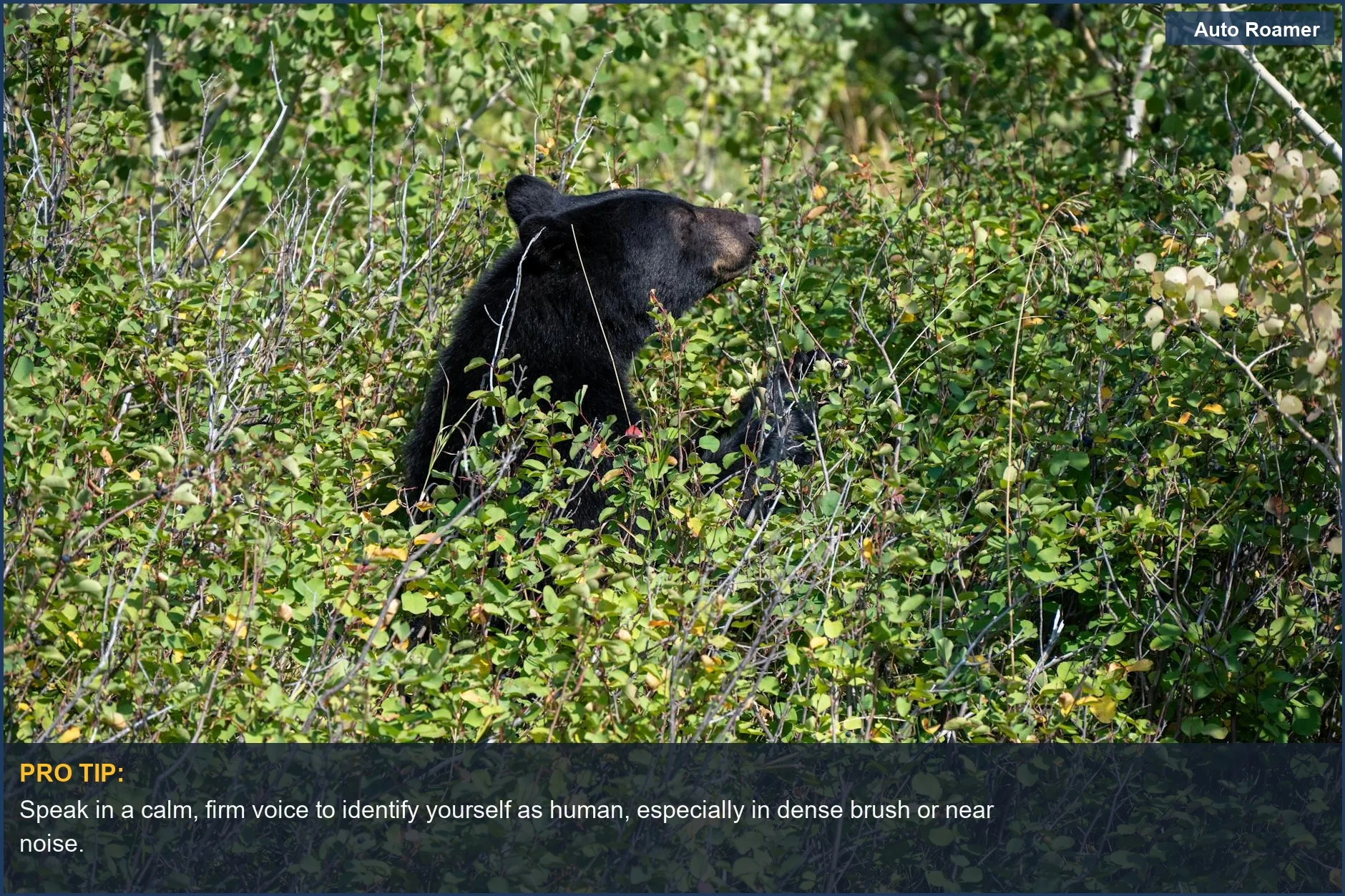
Speak in a calm, firm voice to identify yourself as human, especially in dense brush or near noise.
Learning what to do if you see a bear camping is vital. This black bear, camouflaged in its habitat, emphasizes the need to be aware and announce your presence calmly. | Photo by Melanie Lamere

What This Looks Like in Practice

  • Winter Mountain Pass in a Subaru Outback: Encountered a curious black bear near our parked vehicle at a remote trailhead in Colorado. The bear approached the Outback, sniffing around the tires. We stayed inside the car, remaining quiet and still. The bear eventually lost interest and ambled off into the woods. Keeping food securely stored inside the locked vehicle with windows fully rolled up prevented it from becoming a more significant issue BearWise.
  • Summer Desert in a Honda Civic: While stopped on a scenic overlook in Utah, a young black bear emerged from the scrub brush and approached our Civic. It seemed drawn by the smell of snacks left on the dashboard. We immediately rolled up all windows and honked the horn repeatedly. The bear startled and retreated quickly. This aggressive noise deterrence worked effectively Facebook.
  • Late Autumn Forest in a Pickup Truck: Camping in Montana, a grizzly bear entered our campsite while we were preparing dinner. It approached our pickup truck, which had camping gear visible in the bed. We immediately retrieved our bear spray and made ourselves appear large and loud. The bear, likely a sow with cubs nearby, initially stood its ground. Fortunately, it eventually moved away without direct confrontation. Leaving attractants out in the open is a critical mistake; proper food storage is paramount American Bear Association.
  • Spring River Valley in an SUV: During a spring camping trip in Alaska, we spotted a brown bear foraging near a salmon stream. We maintained a significant distance, using binoculars to observe. The bear was aware of our presence but seemed unconcerned. We slowly and deliberately backed away, talking calmly to identify ourselves as humans. Never run from a bear; it can trigger a predatory chase response Islands.com.
As you prepare for your first camping experience, understanding what to expect can help ease any anxieties.
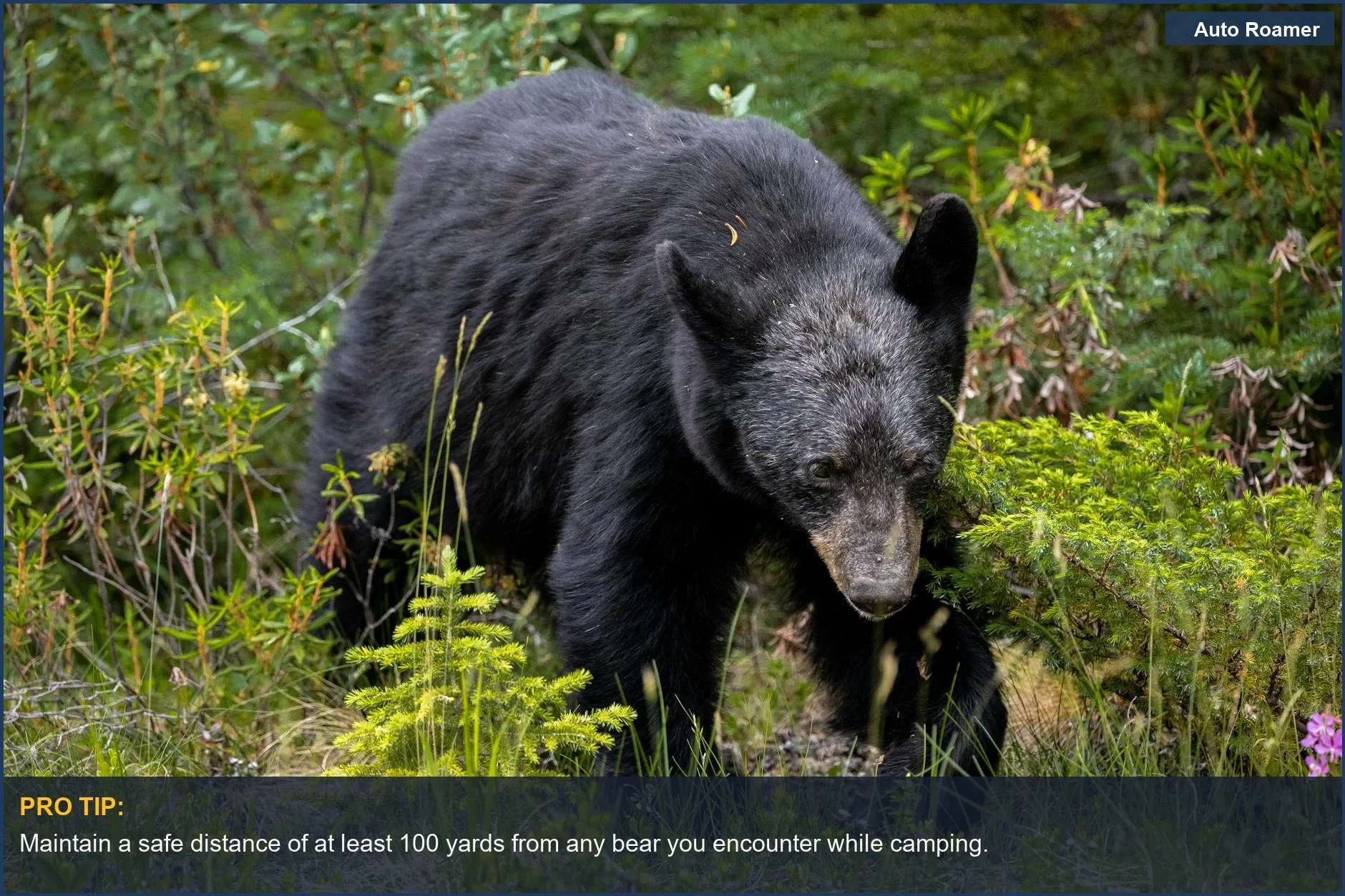
Maintain a safe distance of at least 100 yards from any bear you encounter while camping.
Exploring national parks means respecting wildlife. This black bear in Jasper National Park serves as a reminder for bear encounter camping, urging preparedness and safe observation practices. | Photo by Aaron Brewer

Mistakes That Cost People

Mistake Running away from a bear.
Why people make it Instinct; the primal urge to flee. Movies often depict running.
What actually happens Running triggers a bear's predatory chase instinct. Bears are faster than humans; you will not outrun them. This is a critical error.
The fix Stand your ground. Talk calmly to identify yourself as human, not prey. Wave arms slowly to appear larger. American Bear Association emphasizes not running, as it may elicit a chase response.
Mistake Playing dead with a black bear.
Why people make it Confusing black bear advice with grizzly bear advice. The "play dead" strategy is generalized.
What actually happens If a black bear attacks, it's likely treating you as prey. Playing dead will not deter it and may encourage further attack. This is a dangerous misconception.
The fix If a black bear attacks, fight back aggressively. Use any available object, targeting eyes and nose. REI Expert Advice states not to play dead with a black bear.
Mistake Not securing food and scented items properly.
Why people make it Underestimating a bear's sense of smell or believing a car offers protection without proper sealing.
What actually happens Bears are attracted to odors and can break into vehicles if food and scented items are left accessible, leading to encounters and danger.
The fix Store all food, garbage, and scented items in bear-resistant containers or properly sealed canisters. If using a vehicle, ensure windows are completely rolled up and store items in the trunk, out of sight. BearWise recommends locking items out of sight in a locked vehicle.
Mistake Making sudden, loud noises or dropping items when a bear is spotted.
Why people make it A panicked reaction to scare the bear away.
What actually happens Sudden noises can startle a bear, potentially leading to a defensive charge. The goal is to make the bear aware of your presence without provoking it.
The fix Speak in a calm, firm voice to let the bear know you are human. Avoid direct eye contact. Slowly back away, giving the bear space. U.S. National Park Service advises identifying yourself by talking calmly.
Mistake Assuming all bears behave the same.
Why people make it Generalizing bear behavior based on limited experience or media.
What actually happens Different bear species have distinct defensive and aggressive behaviors. Misapplying advice for one can be dangerous.
The fix Understand the specific bear species in the area. For grizzly/brown bears, play dead if attacked. For black bears, fight back. This distinction is crucial for bear safety.
To keep your campfire alive during chilly nights, consider our tips for car camping in winter.
Bear encounter infographic: pros/cons of camping safety actions.
Product comparison for What to Do If You Encounter a Bear While Camping

Key Takeaways

  • When a bear encounter happens, stay calm and never run. Running can trigger a chase response, turning a curious bear into a threat American Bear Association. Your goal is to de-escalate the situation by letting the bear know you are human, not prey.
  • Make yourself known by talking calmly and waving your arms slowly U.S. National Park Service. If the bear stands on its hind legs, it's likely curious, not aggressive. Back away slowly and sideways if you need to move, always keeping the bear in sight Islands.com.
  • Remember the crucial difference between bear types: for a black bear attack, fight back aggressively, targeting its eyes and nose with any available tools REI Expert Advice. For a brown/grizzly bear attack, play dead, leaving your pack on for protection and lying flat on your stomach U.S. National Park Service.
  • Bear spray is your most effective defense. Know how to use it; aim for the face and deploy for 1-2 seconds when the bear is 20-30 feet away, as you have only about 7-9 seconds of spray montanaknifecompany.com.
  • The single most important thing to remember for any bear encounter camping is: DO NOT RUN. Your safety hinges on remaining calm and letting the bear know you are not a threat or prey.
When you're stuck, it's important to stay prepared for any situation, especially if you're considering car camping in the rain.

Frequently Asked Questions

Help! I'm camping and just saw a bear. What's the first thing I should do?
If you encounter a bear while camping, the most important thing is to stay calm and do NOT run, as this can trigger a chase response in the bear. Instead, let the bear know you're there by talking in a calm voice, and slowly wave your arms to help it recognize you as a human. Avoid direct eye contact, as this can be perceived as a threat.
I'm worried about running into bears while camping. What are some basic safety tips to avoid them?
To avoid bear encounters while camping, always store food and scented items securely in bear-resistant containers or a locked vehicle, and never leave food or backpacks unattended. Choose a campsite away from known bear feeding areas like berry patches or animal trails, and make noise while hiking and setting up camp to alert any nearby bears of your presence. Research local bear activity before your trip and check with park officials for specific recommendations.
If a bear approaches my campsite, should I try to scare it away or just leave it alone?
If a bear approaches your campsite, stay calm and try to make yourself look larger by standing tall and waving your arms slowly. Talk to the bear in a calm, firm voice to let it know you are human. If the bear continues to approach, you may need to make yourself even more intimidating by shouting and appearing aggressive, but avoid sudden movements or direct confrontation if possible.
What's the difference in how I should react if I see a black bear versus a grizzly bear?
If a black bear attacks, fight back aggressively, targeting its eyes and nose with anything available like sticks or rocks. If you are attacked by a brown/grizzly bear, play dead by laying flat on your stomach with your hands clasped behind your neck to protect your vital areas. In both scenarios, do not run; stand your ground initially and assess the bear's behavior.
I'm going camping in bear country. What gear should I absolutely have for bear safety?
For bear safety while camping, carrying bear spray is highly recommended; ensure it's easily accessible and you know how to use it, as it typically provides about 7-9 seconds of spray. Bear bells can also help alert bears to your presence, though their effectiveness is debated. Proper food storage containers are essential to prevent attracting bears to your campsite.

Sources

Related Articles