Car Camping

Understanding Watt-Hours vs. Watts: What Matters Most for Car Camping Power

Casey - The Weekend Warrior
5 min read
Includes Video

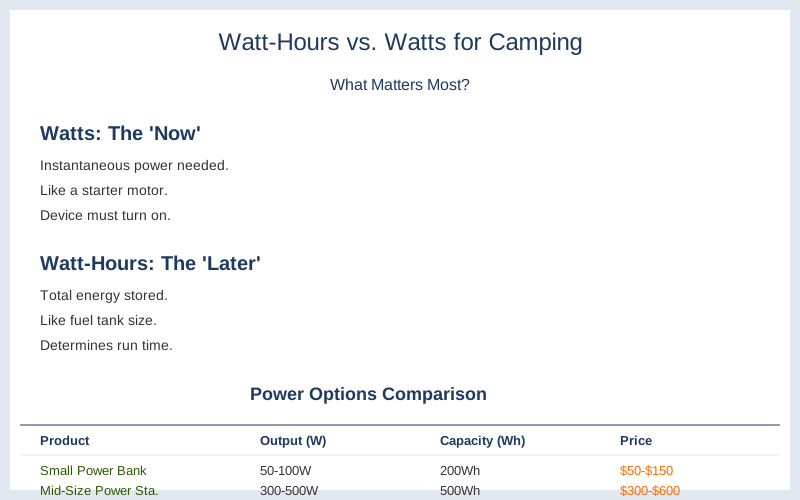
Understanding watt-hours versus watts is the first step to not freezing or running out of power in the middle of nowhere. Watts measure the instantaneous power a device needs to run, like how much gas your car sucks down on a steep hill.

Understanding watt-hours versus watts is the first step to not freezing or running out of power in the middle of nowhere. Watts measure the instantaneous power a device needs to run, like how much gas your car sucks down on a steep hill. Watt-hours measure the total energy a device uses over time, kind of like your car's odometer - it tells you how far you've gone.

Getting this wrong means your phone stays dead or your fridge turns into a very expensive cooler.
Understanding Watt-Hours vs. Watts: What Matters Most for Car Camping Power — Key Specifications Com
Key specifications for Understanding Watt-Hours vs. Watts: What Matters Most for Car Camping Power

The Core Answer

Look, nobody tells you this upfront, but Watts are about the 'now' and Watt-hours are about the 'later'. My first trip to Shenandoah, I bought a power station because my phone died. It had a decent Watt rating, but I forgot to check the Watt-hours. I thought I'd be able to charge my phone and run a small fan for a weekend. Rookie mistake. Watts tell you if your device will even turn on. Think of it like a starter motor. If a coffee maker needs 1500 Watts to heat up, your power station needs to be able to deliver at least that much power *at that exact moment*. If it can't, nothing happens. My first power station had a 500W output, which was fine for charging my phone, but it couldn't even power a small electric kettle. Brilliant engineering, that. Watt-hours are the real game-changer for camping. This number tells you the total energy stored. It's like the size of your gas tank. A 1000 Watt-hour (Wh) battery can theoretically power a 100 Watt device for 10 hours (100W x 10h = 1000Wh). This is what determines how long you can actually run your stuff. The odometer, not the speedometer. So, when you're looking at power stations, you need to consider both. First, can it deliver the peak Watts your appliances need? Second, how many Watt-hours does it have to last you through the night, or the whole trip? My $400 power station had plenty of Watts to charge my phone, but only 200Wh, meaning it died after about 2 phone charges and a few hours of my headlamp. Half the price, half the juice. I learned to check the Wh number religiously after that. The honest version: most beginners get hung up on the Watt number because it sounds impressive. But for actual camping, where you're not running a microwave, the Watt-hours are king. You need enough stored energy to get you through the night, or the whole trip, without a wall outlet. It's the total energy budget. Don't be like me and buy a fancy paperweight. Check the Watt-hours. A 1000Wh battery is vastly different from a 200Wh battery, even if they have the same Watt output. The $50 version of a power bank might charge your phone twice, while a $500 one might charge it 20 times. It's all about that stored energy. Figure out your total daily Wh needs. My mistake in Shenandoah cost me a few nights of dead phone service and a lot of anxiety. I ended up buying a second, larger battery pack for that same trip because the first one was so puny in terms of total energy. That was a $150 lesson I didn't need to learn the hard way. Watts get it started, Watt-hours keep it going.
To ensure you have the right setup, consider what type of power source suits your needs by checking out the best power source.
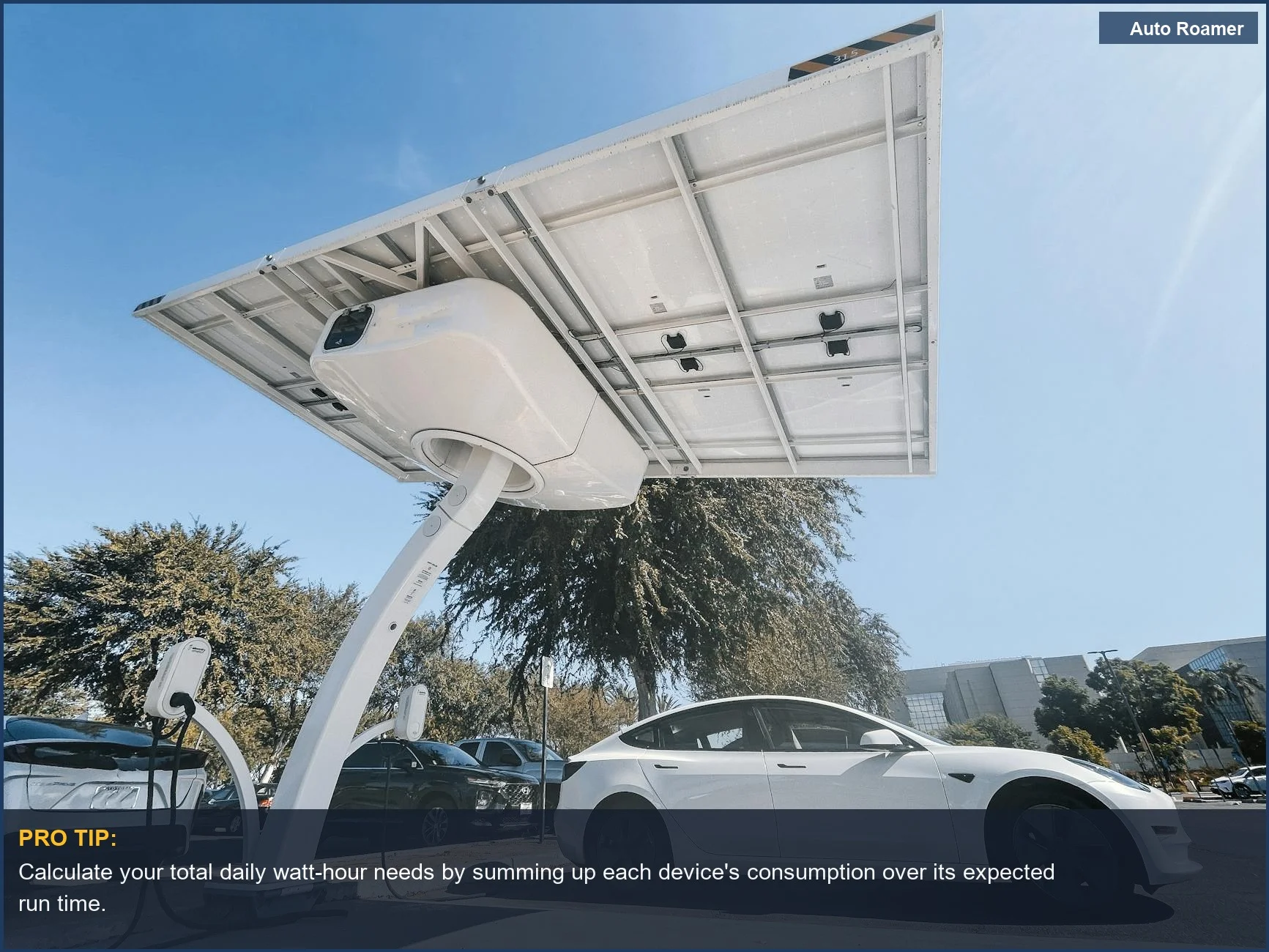
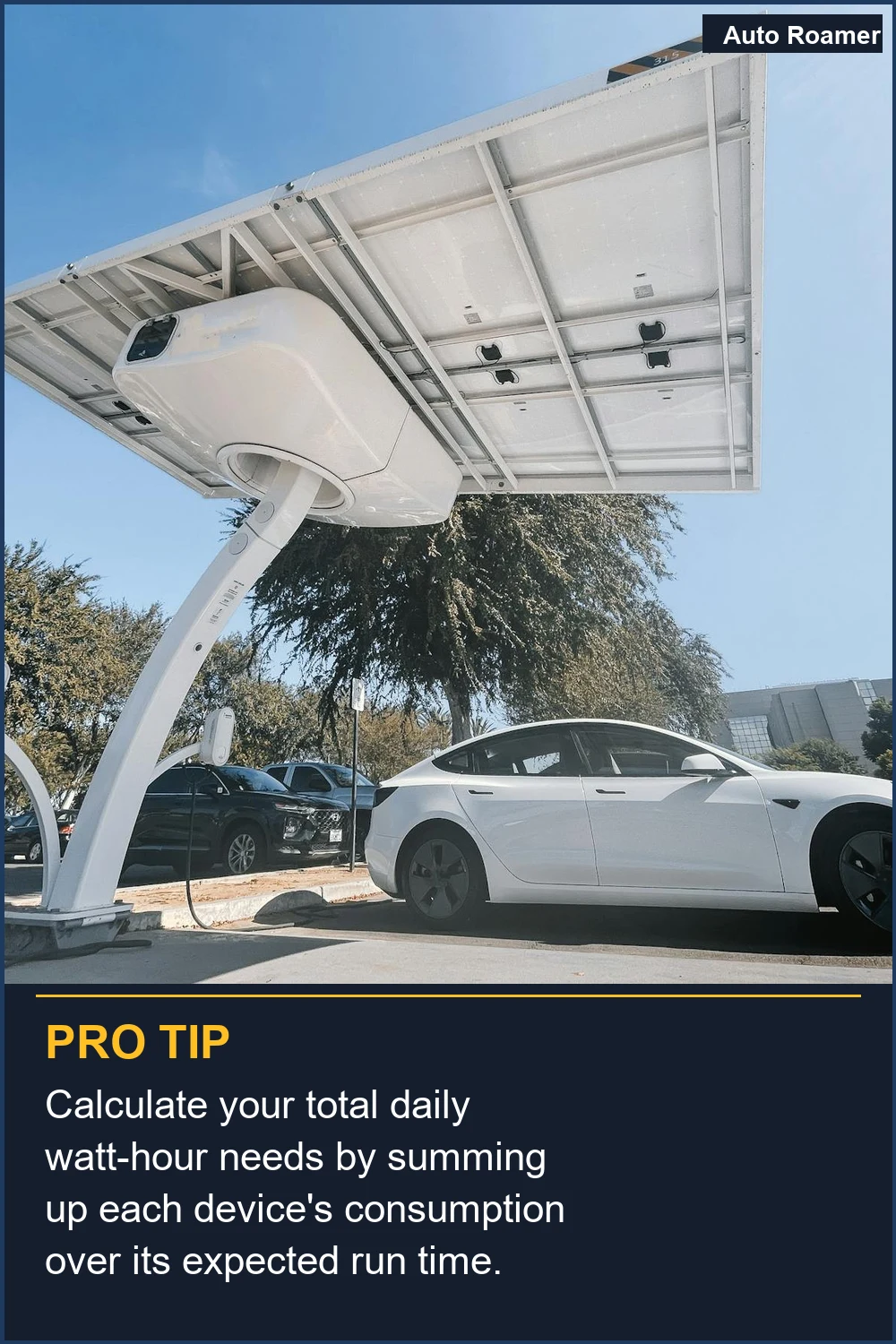
Calculate your total daily watt-hour needs by summing up each device's consumption over its expected run time.
Modern solar technology powers electric vehicles, highlighting how watt hours determine the duration of your car camping power supply. | Photo by Kindel Media

Why This Matters for Your Setup

  • The 'Turn-On' Power (Watts): This is crucial for devices that have a high initial power draw. My portable blender needs a good punch of Watts to get the blades spinning. If the power station can't deliver, it just sits there, mocking me. It's the initial surge requirement.
  • The 'Run Time' Power (Watt-hours): This is what you'll use 90% of the time. Charging your phone, running LED lights, or keeping a small cooler cold. You need enough Watt-hours to last for your trip. My 3-day trip in Big Bend required about 800Wh of total energy, so my 200Wh brick was useless. Multiply appliance wattage by usage time.
  • Comparing Apples to Oranges: You can't just look at Watt ratings. A 1000W device will need a power station with at least 1000W output. But if it runs for 5 hours, that's 5000Wh of energy. A 1000W power station with only 500Wh capacity will die in about an hour. Watt-hours are better for comparing different voltage batteries.
  • Battery Chemistry Matters: While not directly Watts vs. Watt-hours, the type of battery (like Lithium vs. Lead Acid) affects how much of the *rated* Watt-hours you can actually use safely. Lead-acid batteries degrade faster and can't be fully drained without damage. Lithium batteries are generally more efficient and last longer. My first lead-acid battery pack felt like it was half-empty after just a few uses. Capacity is measured in Watt-hours.
  • To maximize efficiency in your setup, it's essential to understand battery capacity and its impact on performance.
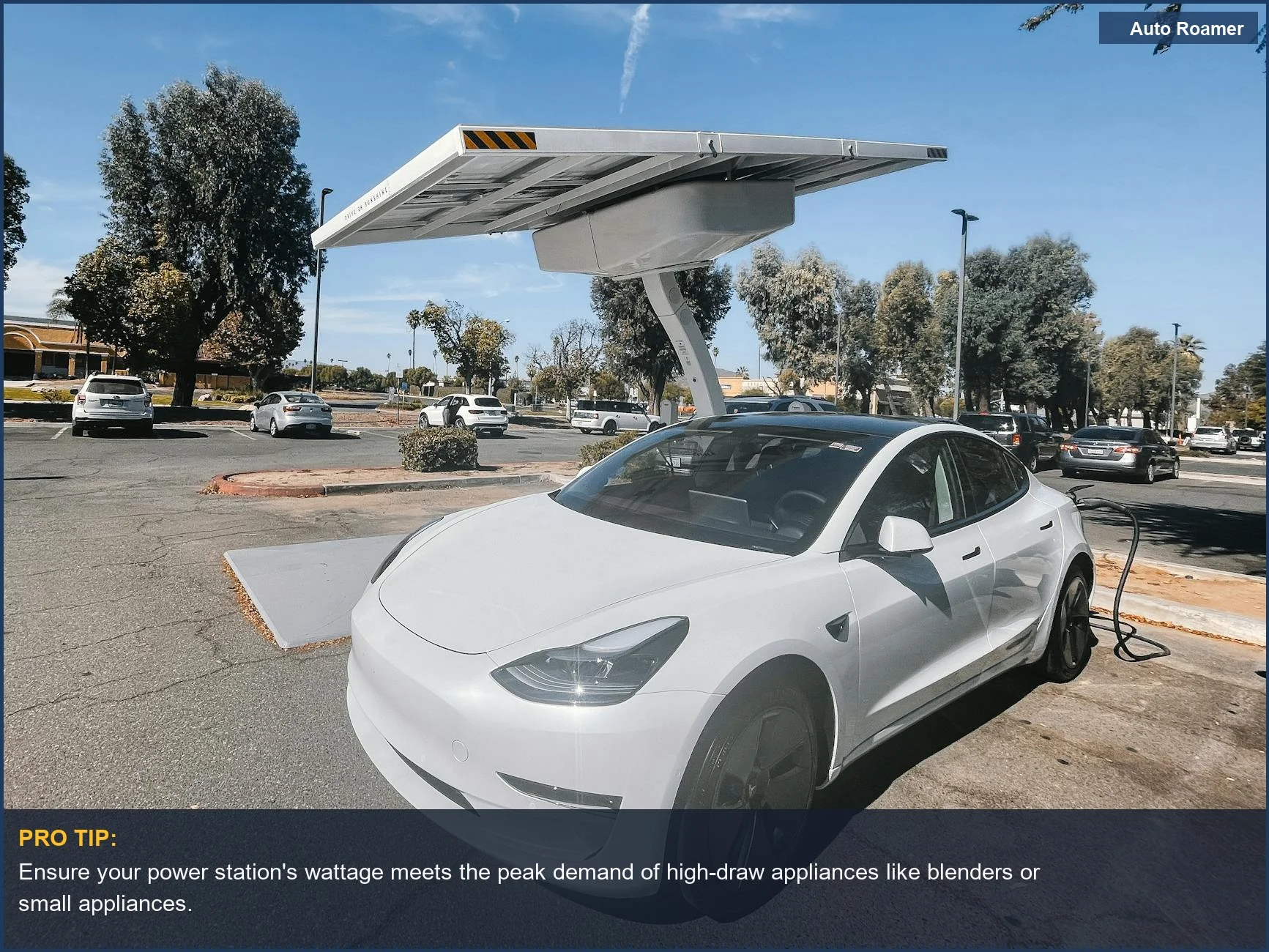
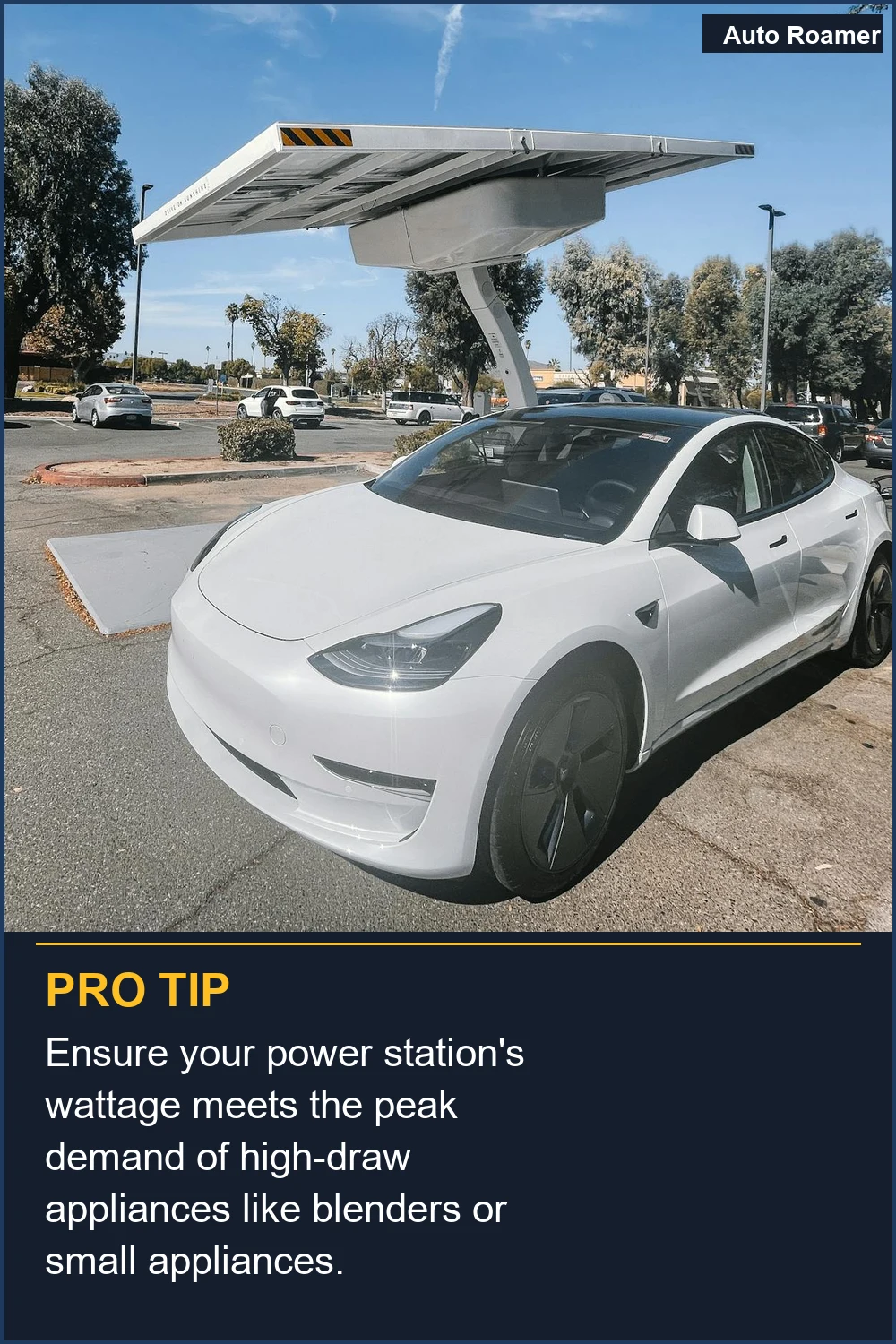
    Ensure your power station's wattage meets the peak demand of high-draw appliances like blenders or small appliances.
    Sunny parking lots with solar panels showcase the immediate power delivery of watts, essential for devices needing a strong start. | Photo by Kindel Media

    Making the Right Choice

  • Identify Your Needs First: Sit down and list everything you want to power. Then, find the Watt draw for each item. My headlamp uses 5W, my phone charger uses 10W, and my portable fridge uses 40W. This is step one.
  • Calculate Your Total Daily Watt-hours: Multiply each device's Watt draw by how many hours you expect to use it per day. Add them all up. For a 3-day trip, multiply that daily total by 3. My weekend trip needed about 1200Wh total. It's a simple calculation.
  • Check the Power Station's Specs: Look for a power station that can meet your peak Watt requirement (for turning things on) and has at least your calculated total Watt-hours for your trip. Don't get fooled by just the Watt number. It's about total energy storage.
  • The $50 Version vs. The $500 Version: A cheap power bank might have 100Wh and cost $50. A more robust power station might have 1000Wh and cost $500. The $500 one will last you 10 times longer on a charge. It's about value for your camping dollar. Match the capacity to your trip length.
  • To ensure you have enough power, it's essential to understand your options for inverter wattage when camping.
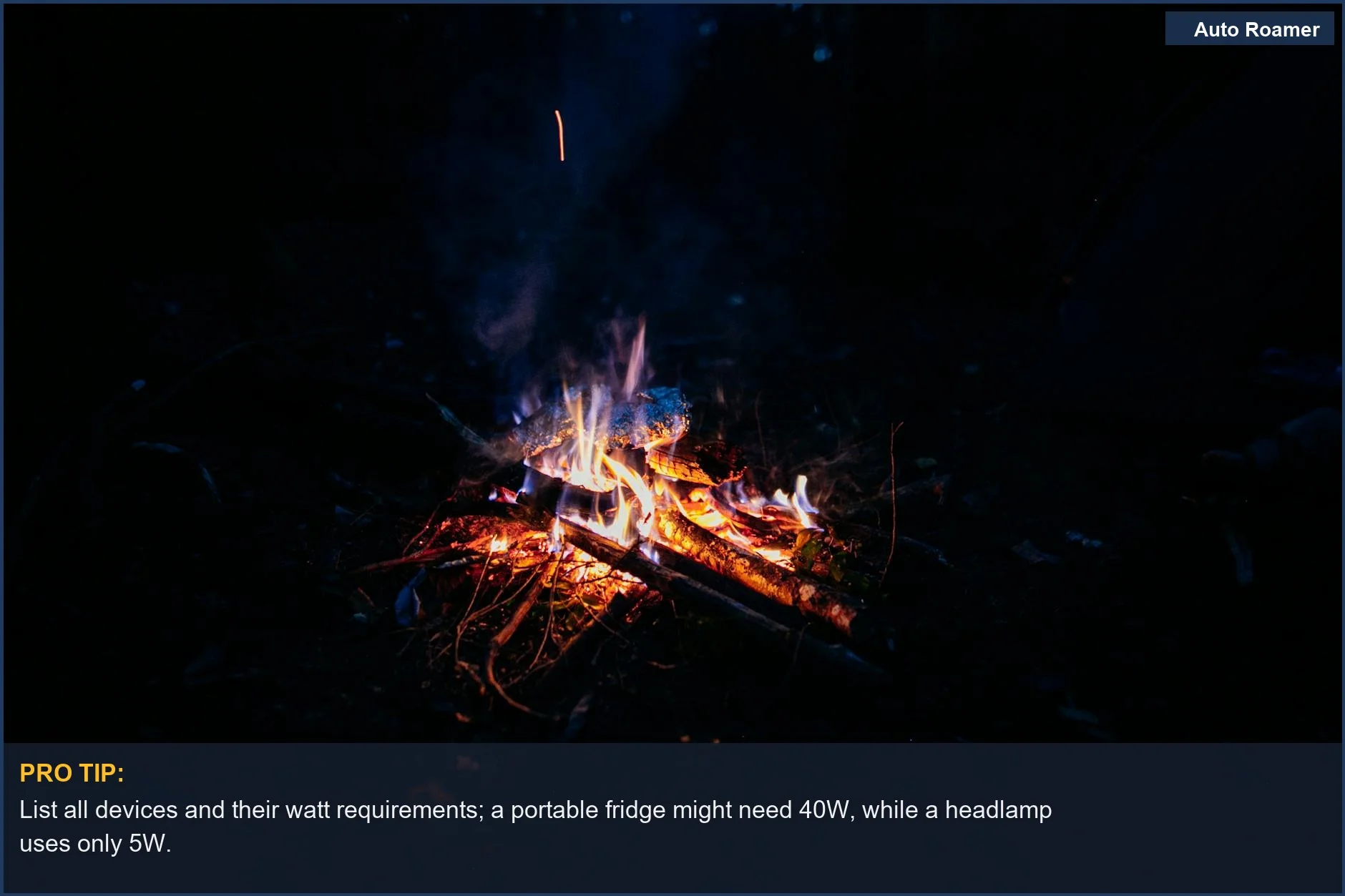
    List all devices and their watt requirements; a portable fridge might need 40W, while a headlamp uses only 5W.
    A glowing campfire in the woods emphasizes the need to identify individual device wattages before selecting your car camping power station. | Photo by Kelly

    Frequently Asked Questions

    I saw a fancy power station online for $1000 that claims to have 1500 Watts. My mechanic friend said fixing my car's alternator would cost about $600. Is it ever worth it to just buy the big power station instead of dealing with car issues?
    That's a classic rookie mistake, thinking a fancy gadget can replace fundamental maintenance. A 1500 Watt power station is for running appliances, not for starting a dead car engine. Fixing your alternator is about getting your vehicle running, which is a completely different beast. Stick to using power stations for camping gear, not for automotive repairs. It's like using a fork to hammer a nail – just doesn't work.
    Do I really need a multimeter to check the Watts or Watt-hours of my devices and power station?
    Absolutely not. You're not building a spaceship, you're going camping. Most devices have their power draw listed on a sticker or in the manual. For power stations, the Watt-hours are clearly printed on the unit or in the product specs. A multimeter is for electrical engineers, not for figuring out if your headlamp will last the night. Trust the labels.
    What if I buy a power station that I think has enough Watt-hours, but it still dies halfway through my trip?
    This usually means your Watt-hour calculation was off, or you underestimated how much power some devices actually use. My first camping fridge was way thirstier than advertised. The fix is to either bring a smaller solar panel to top it up during the day, or plan for less power-hungry devices next time. Or, pack more snacks and enjoy the quiet. Double-check your math.
    Can running a power station completely empty, like to zero Watt-hours, permanently damage it?
    Yes, for some types of batteries, draining them completely can shorten their lifespan significantly. Lithium batteries are generally more forgiving than older lead-acid types, but it's still best practice not to run them completely dead. Most power stations have a low-voltage cutoff to protect the battery, but consistently pushing it to that limit isn't ideal. Think of it like redlining your car's engine every day.
    I heard that Watt-hours are just Amp-hours multiplied by voltage, so why bother with both terms? Aren't they the same thing?
    They're related, but not interchangeable. While Watt-hours (Wh) = Volts (V) x Amp-hours (Ah), the voltage can vary between devices and battery systems. Watt-hours give you a universal measure of total energy storage that works across different voltages, making it easier to compare different battery capacities. It's the most useful metric for comparing.

    🏅 Looking for Gear Recommendations?

    Check out our tested gear guides for products that work with this setup:

    C

    Casey - The Weekend Warrior

    Weekend car camper and road trip enthusiast. Focuses on practical, budget-friendly solutions for families and first-time campers.

    Sources

    Related Articles