How to Choose the Right Water Capacity for a Portable Camping Shower

Casey - The Weekend Warrior
5 min read
Includes Video

My first portable camping shower was a $25 behemoth from Amazon that weighed more than my dog. It promised a "spa-like experience" but delivered lukewarm dribbles for 3 minutes before sputtering out. I learned that day that size matters, but not always in the way the marketing makes you think.

My first portable camping shower was a $25 behemoth from Amazon that weighed more than my dog. It promised a "spa-like experience" but delivered lukewarm dribbles for 3 minutes before sputtering out. I learned that day that size matters, but not always in the way the marketing makes you think.

Choosing the right water capacity for your camping shower isn't just about how long you can stand under it; it's about practicality, weight, and not hauling unnecessary water miles into the backcountry. Let's talk about what actually works in the real world, not just in glossy brochures. overland travel guides often gloss over this. The honest version: you need enough water to get clean, not to reenact a car wash.

Forget fancy features for now. Your priority is water. How much? That's the million-dollar question, or in my case, the $25 question that ended up costing more in frustration. daily water usage can be surprisingly low if you're smart about it.
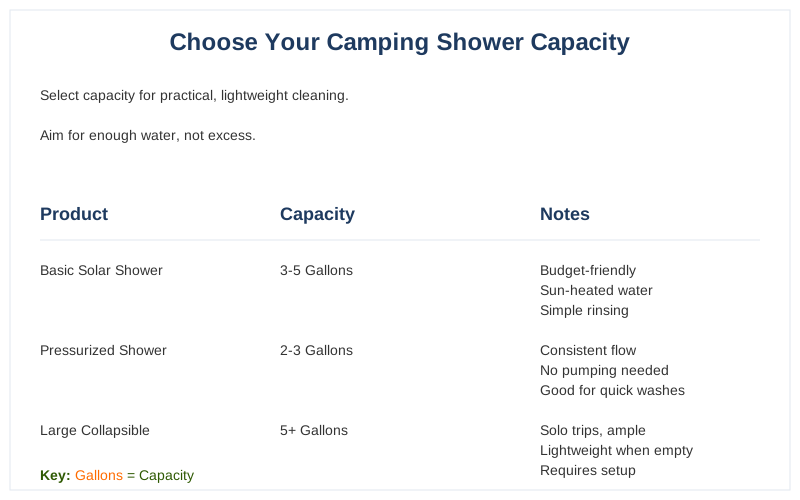
How to Choose the Right Water Capacity for a Portable Camping Shower — Key Specifications Compared
Key specifications for How to Choose the Right Water Capacity for a Portable Camping Shower

The Core Answer

The real move for choosing a portable camping shower's water capacity comes down to a few key factors, none of which involve bubble levels or engineering degrees. Think about how much water you actually need for a quick rinse, not a full-on scrub-down. A gallon of water per minute is a common rate for these things, so a 5-minute shower eats up 5 gallons. That sounds like a lot, but it's not. water flow rate.

For a solo trip, I've found that a 5-gallon (about 19-liter) tank is usually plenty for a solid, no-rush rinse. That's enough for about 5 minutes of continuous flow, which is more than enough to get soap off and feel human again. I learned this the hard way at a campsite in the Adirondacks after a particularly muddy hike; I thought 3 gallons would be enough and ended up doing a half-soap rinse. Rookie mistake.

If you're camping with a partner or a small family, you'll want to bump that up. A 10-gallon (about 38-liter) tank is a good starting point for two people. This gives you about 10 minutes of shower time, or enough for two decent 5-minute rinses. For a family of four, you might be looking at 20 gallons (76 liters) or more, especially if the kids are prone to long showers. rough guide.

Don't forget to factor in water for rinsing off gear or washing dishes. If you're in a dry camping situation with no water hookups, every drop counts. A 5-gallon tank might be fine for your shower, but if you also need to wash your muddy boots and cook dinner, you'll need extra. This is where larger tanks or a separate water jug become game-time decisions.

I once tried to get by with a 3-gallon shower bag for a 3-day trip with my wife. Let's just say we alternated between "mostly clean" and "authentically rustic." We ended up using a lot more wet wipes than planned. The fix? A 10-gallon pressurized shower system that we still use today. Brilliance.
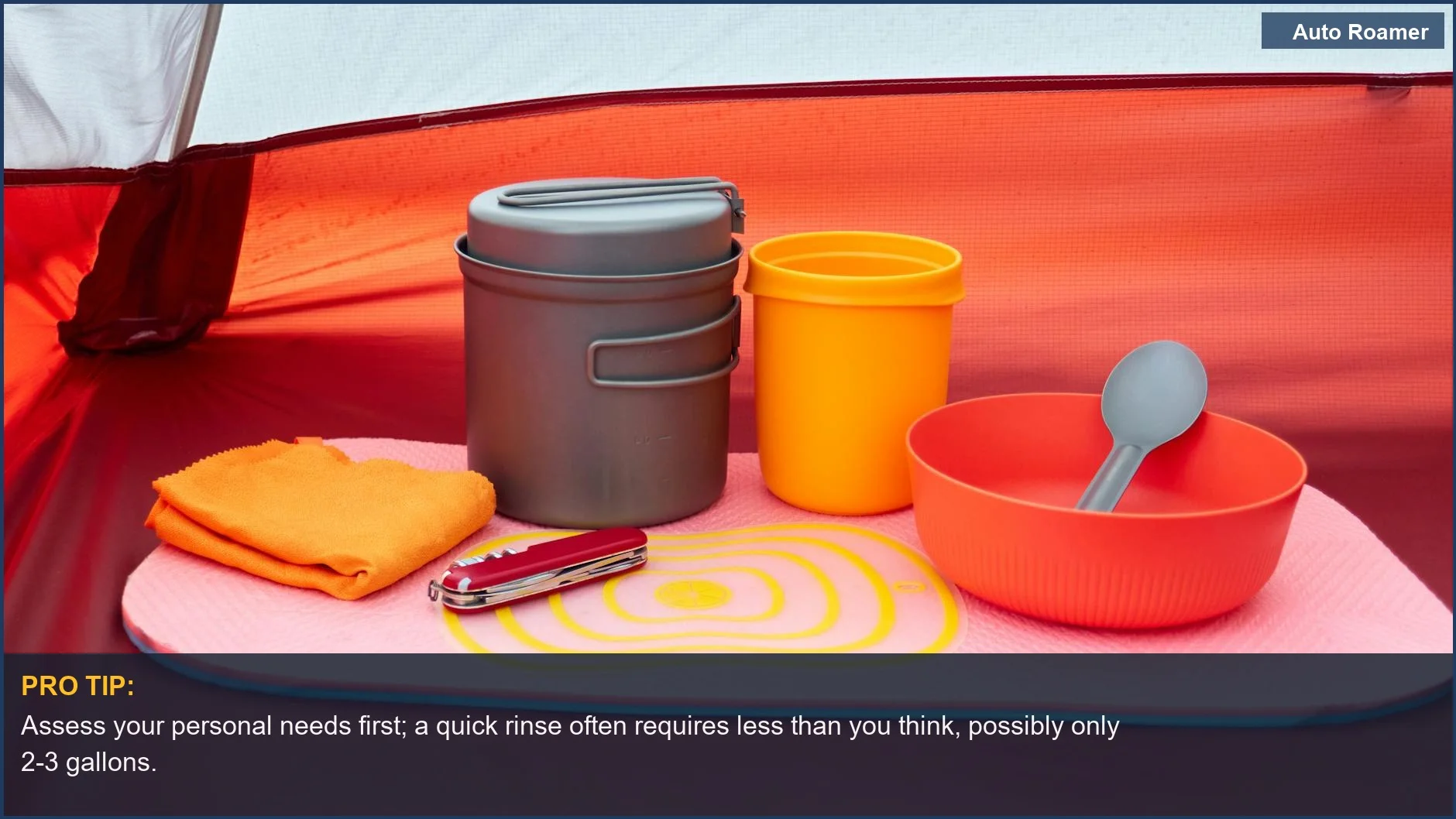
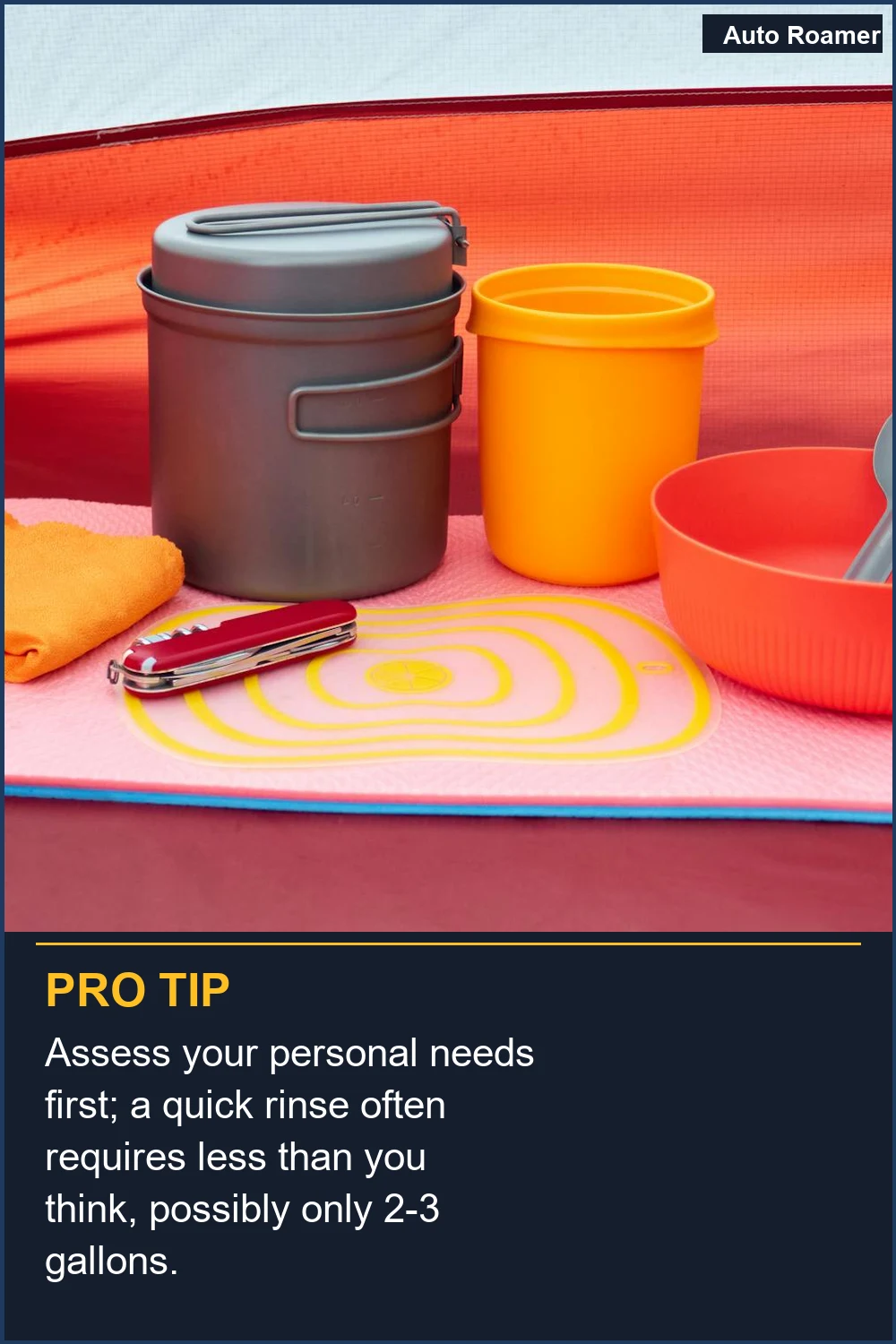
Assess your personal needs first; a quick rinse often requires less than you think, possibly only 2-3 gallons.
Neatly arranged camping cookware and utensils suggest a well-organized trip. When choosing your portable camping shower water capacity, consider how much water you truly need for a refreshing rinse. | Photo by Mykhailo Petrushchak
## Why This Matters for Your Setup Why does this matter? Because hauling 20 gallons of water feels a lot different than hauling 5. My first car camping setup involved a Subaru Outback, and I quickly learned that every cubic inch counted. Stuffing a massive, full water tank into the back made it impossible to reach anything else. * Weight is Real: Water is heavy. 5 gallons is about 40 pounds. 20 gallons is 160 pounds. That's a significant chunk of your vehicle's payload and your own lifting capacity. 4L water/person/day is a rule of thumb, but that doesn't include showers. * Storage Space: Bigger tanks take up more room. If you're car camping in a sedan, a giant tank might mean leaving your tent behind. Choose a size that fits your vehicle and your other gear. * Refill Frequency: A smaller tank means more frequent trips to a water source. If you're at a remote campsite with no spigots, this can be a pain. A 5-gallon tank might be fine for a quick rinse if you can easily refill it. A 20-gallon one might let you go a few days without refilling. * Shower Type: Some showers are pressurized (meaning you pump them up) and use water more efficiently. Others are gravity-fed and can feel like a weak trickle. A 5-gallon pressurized shower might feel more substantial than a 10-gallon gravity one. small tank will suffice for a quick rinse.
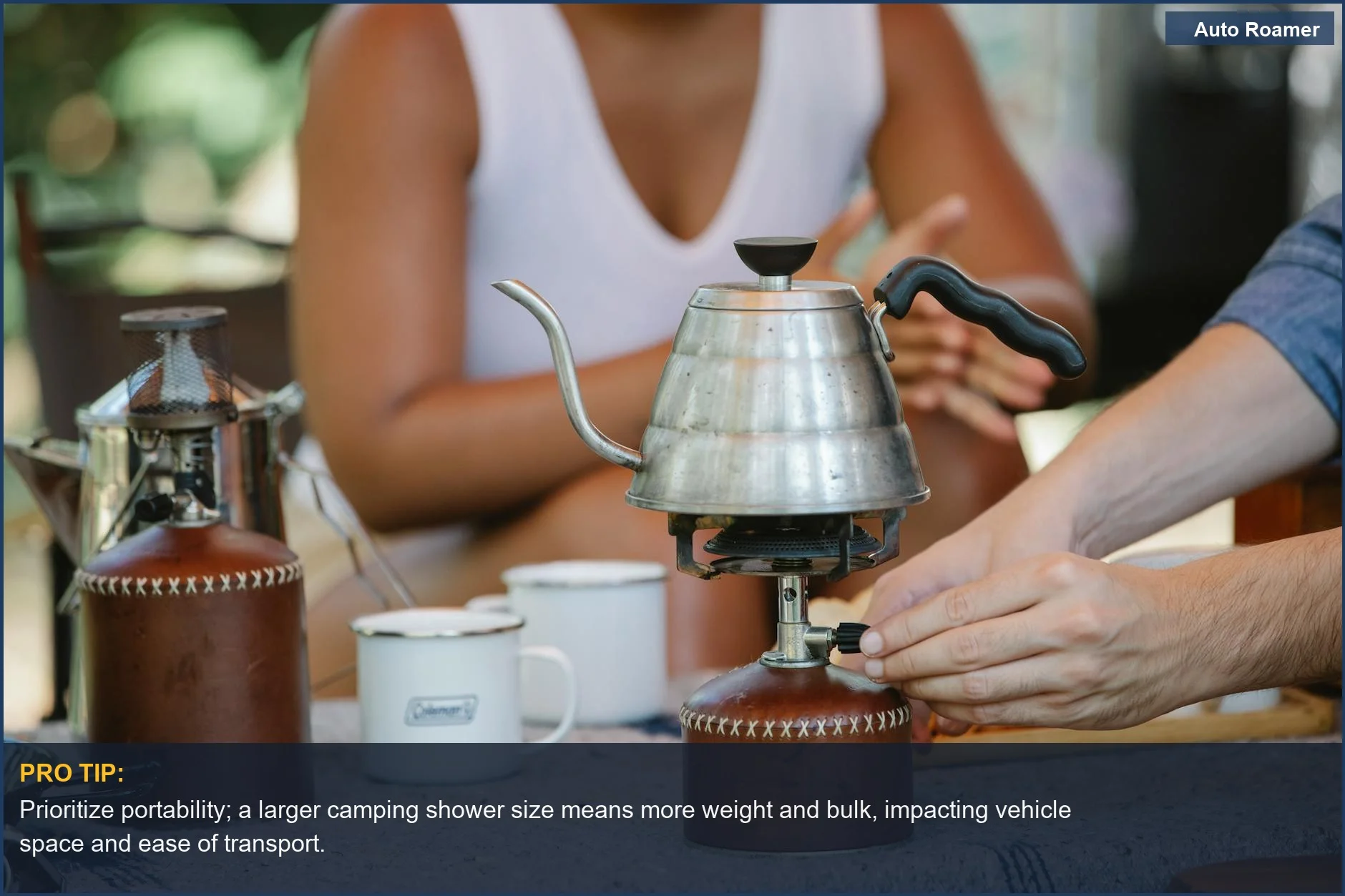
Prioritize portability; a larger camping shower size means more weight and bulk, impacting vehicle space and ease of transport.
Enjoying coffee outdoors with a portable stove shows the spirit of adventure. Understanding camping shower size is crucial for balancing convenience with your vehicle's storage capacity. | Photo by Uriel Mont
## Making the Right Choice So, the $50 version of this advice is: start small and scale up. For a solo weekend warrior, a 5-gallon (19-liter) shower is usually the sweet spot. For a couple, aim for 10 gallons (38 liters). If you've got a whole crew, you might need 20 gallons (76 liters) or more, but always consider how you'll transport and store that much water. * Solo Traveler: 5 gallons (19 liters) is your best bet. It's manageable, light, and usually enough for a solid rinse. I still use a 5-gallon pressurized shower for most of my solo trips. * Couple or Small Family: 10 gallons (38 liters) offers a good balance between capacity and portability. This was my upgrade after the "mostly clean" trip with my wife. * Larger Groups: 20 gallons (76 liters) or more might be necessary, but only if you have the space and strength to move it. Consider multiple smaller tanks if portability is an issue. * Don't Forget Other Water Needs: Always pack extra water for drinking, cooking, and cleaning. The shower is a luxury; hydration is non-negotiable. elevate your camping experience is nice, but staying alive comes first.
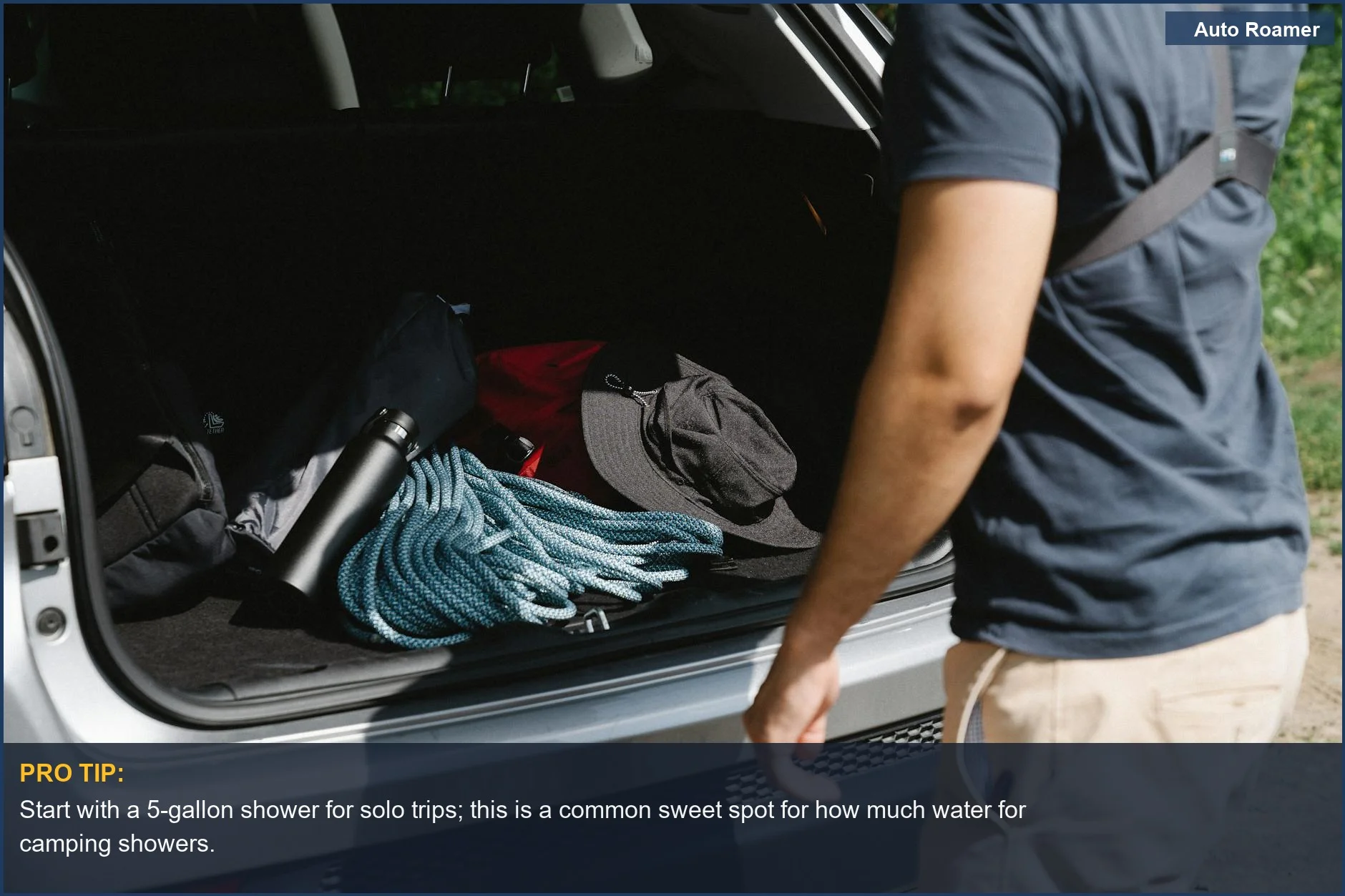
Start with a 5-gallon shower for solo trips; this is a common sweet spot for how much water for camping showers.
Organizing camping gear in a car trunk emphasizes packing efficiency. Determining how much water for a camping shower is essential, especially for maximizing available space on your adventure. | Photo by Katya Wolf

Frequently Asked Questions

I saw a fancy pressurized shower system online for $300, but I can get a basic gravity bag for $20. Is it worth spending the extra cash on a bigger, fancier shower?
Honestly, for most first-timers, the $20 gravity bag is where you should start. I tried a $25 Amazon special that was a glorified plastic bag and it was awful. If you find yourself needing more water or better pressure after a few trips, then maybe consider the $300 rig. But for now, stick to the budget option and see if you even like showering in the woods.
Do I really need a special 'camping shower' or can I just use a big water jug with a hole in it?
You *could* use a jug, but you'll probably end up with a pathetic dribble and a lot of frustration. Those cheap camping showers, even the basic gravity-fed ones, are designed to give you a decent flow rate. My first attempt at a DIY shower involved a milk jug and a prayer; it was less a shower and more a sad baptism.
What if I buy a 5-gallon shower, but it's not enough water? Can I just refill it mid-shower?
Good luck with that. Trying to refill a pressurized shower mid-use is a recipe for disaster and a soggy mess. You're better off bringing a separate 5-gallon water jug to top off your tank *before* you start showering, or just accepting that you'll have a shorter shower. I made that mistake once in Big Bend, ended up smelling like dust and regret.
If I use a solar shower that just heats water in a black bag, can that permanently damage my water supply or make my car smell weird?
Nah, you're good. Solar showers are pretty low-tech. The main thing is to rinse the bag out thoroughly after use and let it dry completely to prevent mildew. I left mine in the sun too long once and the plastic got a little soft, but no weird smells or damage. Just make sure it's clean before storing it.
Everyone says you need a shower tent for privacy, but isn't that just extra gear to carry? Can't I just shower behind my car?
You *can*, but you'll likely be met with confused stares from other campers or, worse, the park ranger giving you the 'friendly' reminder about public decency. A shower tent isn't strictly necessary if you're in a truly remote spot, but for most campgrounds, it's the difference between a refreshing rinse and an awkward public performance. My first few showers were 'behind the car' sessions, and let me tell you, the squirrels had a better view than I did.
C

Casey - The Weekend Warrior

Weekend car camper and road trip enthusiast. Focuses on practical, budget-friendly solutions for families and first-time campers.

Sources

Related Articles