Why sports gear needs a different organizer
Most trunk organizers are designed for groceries and tidy road-trip supplies — light, dry, regular-shaped items. Sports gear is the opposite: bulky balls, hard cleats, long bats, wet jerseys and muddy boots that roll, poke and soak. A soft fabric cube that works fine for shopping bags collapses the moment a basketball leans on it, and the contents end up loose in the trunk again.
This guide covers what actually matters for athletic gear — rigid structure, adjustable dividers and washable, waterproof materials — then matches it to the best picks with honest trade-offs and a head-to-head. Get the structure and the liner right and one organizer corrals a whole season's worth of kit; get them wrong and you are back to a trunk full of rolling balls and damp shirts.
It is worth naming who this is for. Parents shuttling kids between practices, weekend-league players, gym-goers who keep a kit in the car, and anyone hauling muddy boots after a Saturday match all share the same core problem and benefit from the same handful of features. Once you see what separates a true sports organizer from a generic divided box, the rest of the decision gets simple.
What to look for: the buying criteria
Structure comes first. Rigid or stiff-walled organizers stay upright under a loose ball or a bat bag; floppy fabric cubes do not. Adjustable dividers are next — they keep cleats, balls and a glove from burying each other and let you reshape the bay for a different sport. Material and cleanability: coated polyester or molded plastic wipes down; bare fabric absorbs mud, sweat and odor.
A waterproof or sealed compartment is the difference-maker for muddy boots and wet jerseys you do not want soaking everything else. Anchoring rounds it out: non-slip feet or tie-down straps keep the organizer from launching forward in a hard stop. We weighted structure, dividers and a wet compartment most heavily, because those are what separate a sports organizer from a generic one.
- Rigid or stiff walls that hold shape under load
- Adjustable dividers for multi-sport flexibility
- Waterproof/sealed bay for muddy, wet items
- Non-slip base or tie-downs so it stays put
Our top picks for sports gear
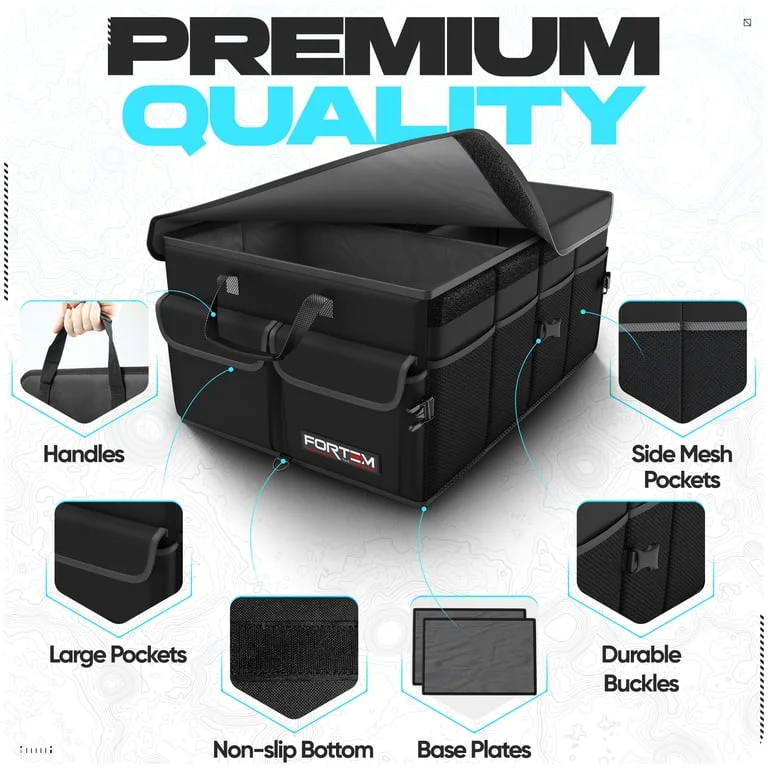
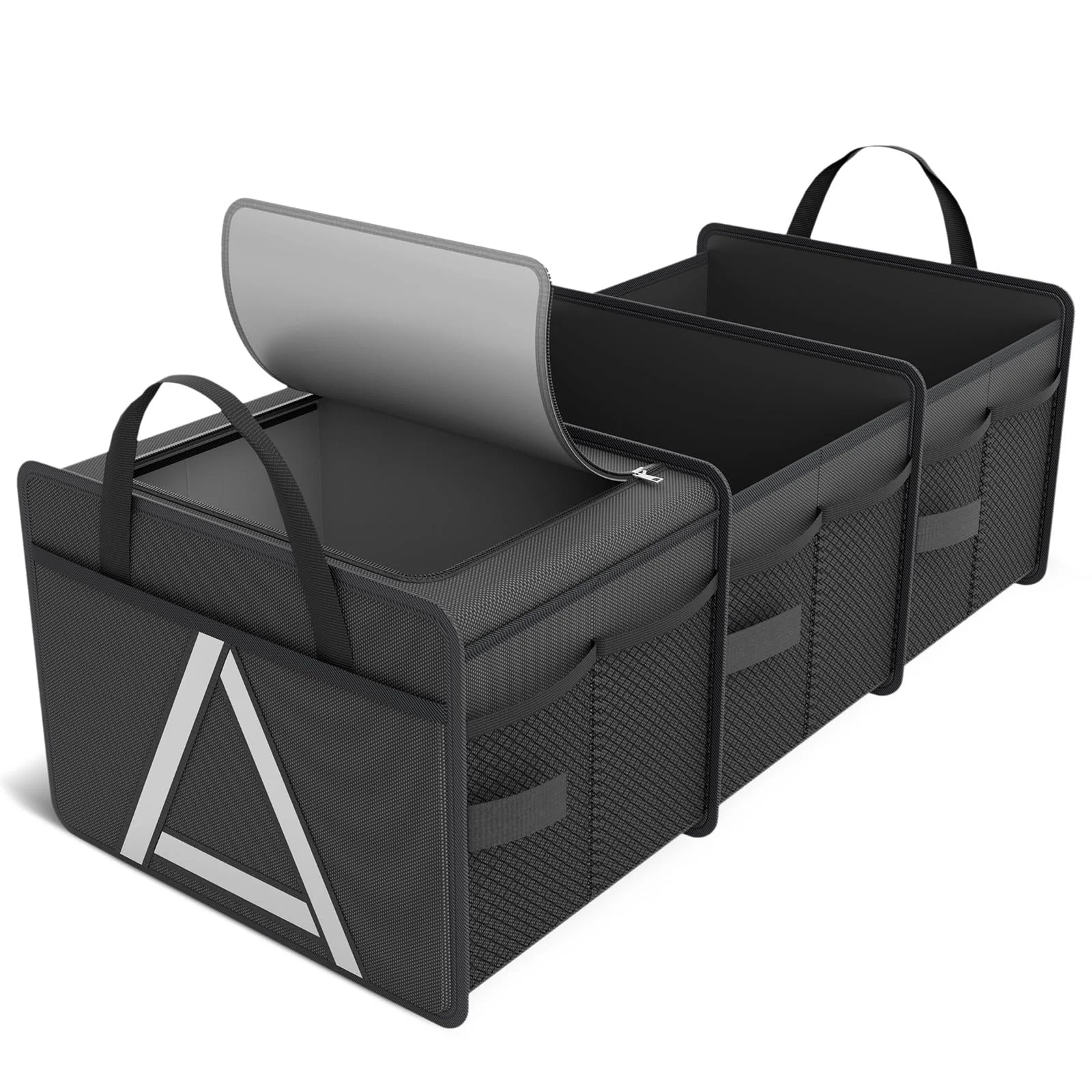
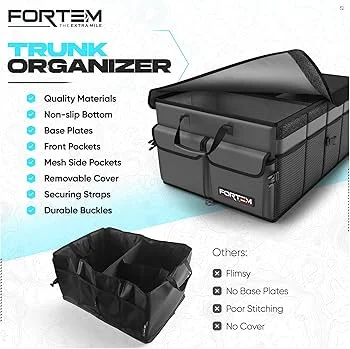
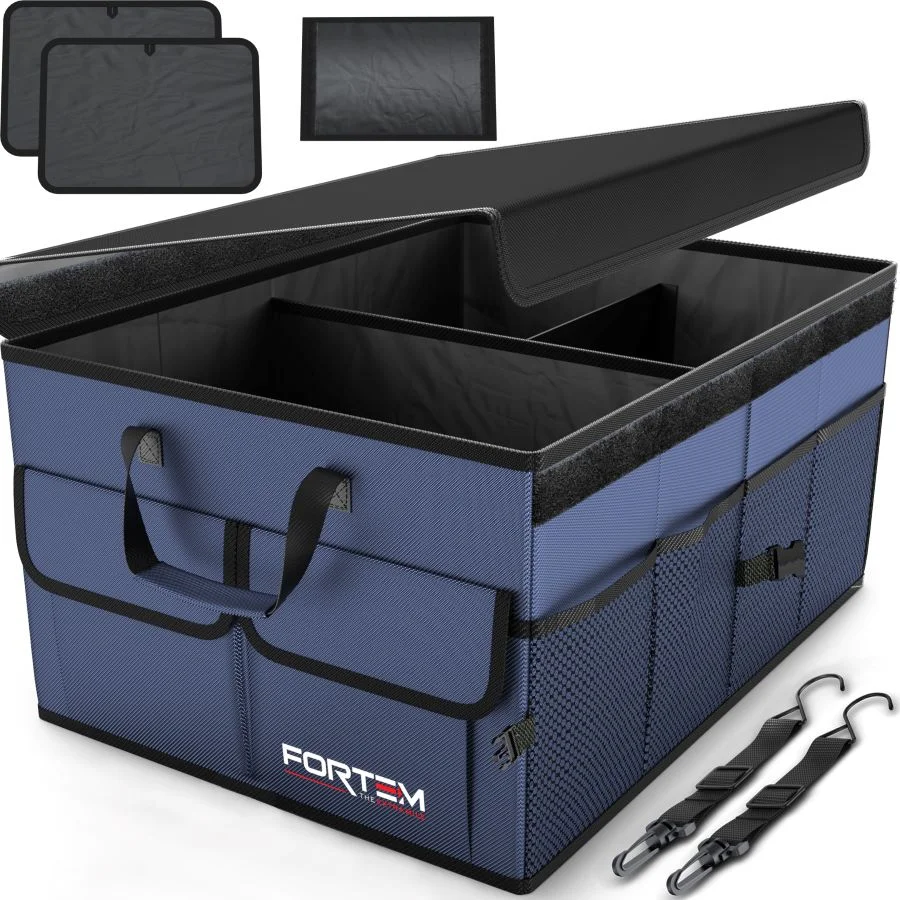
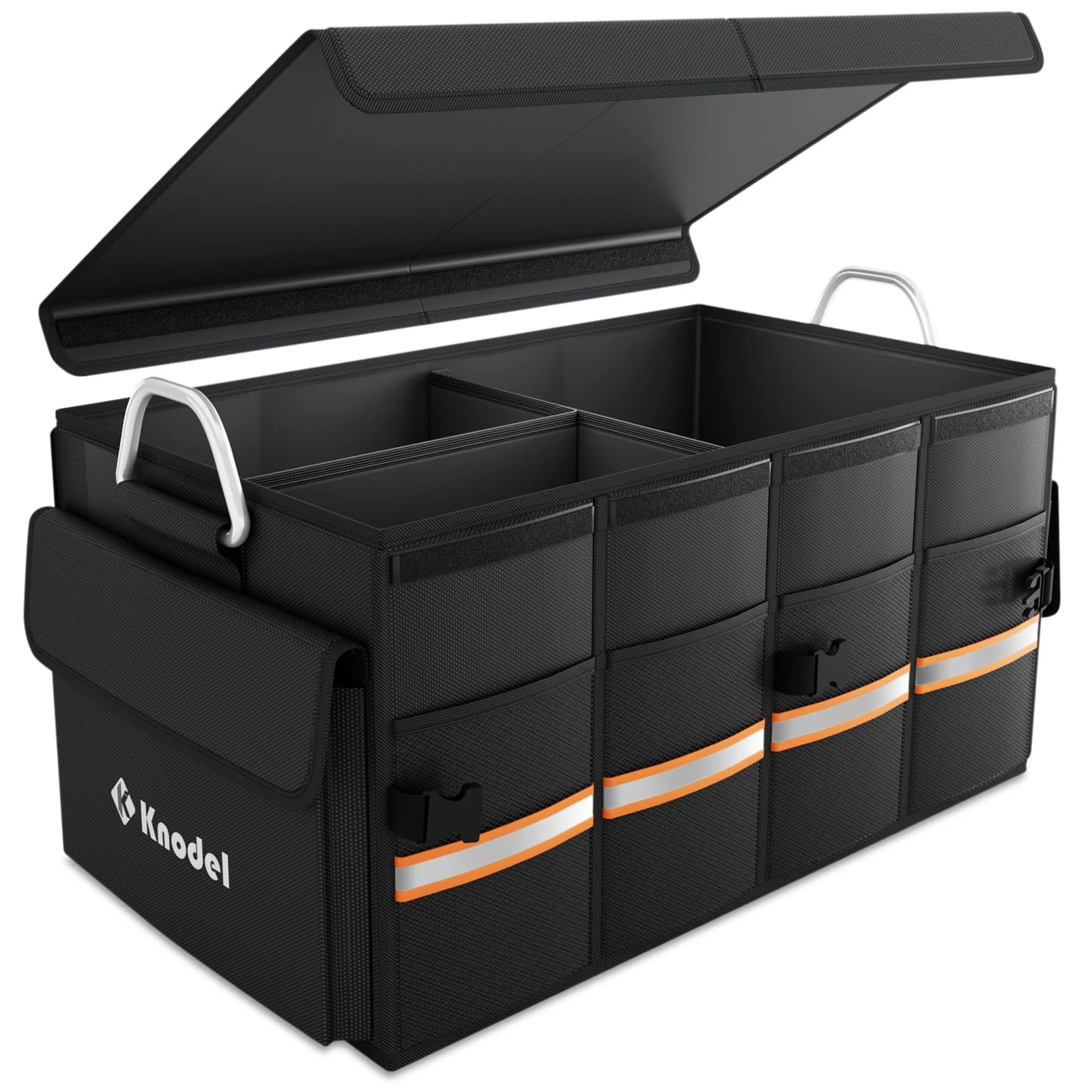
If you want a tall, structured bay for awkward items, the Fortem Trunk Organizer brings rigid walls, a leakproof cooler bag and straps that anchor to the cargo hooks. And for a budget multi-compartment option that still stands up under balls and boots, the K KNODEL Sturdy Car Trunk Organizer gives you stiffened walls and dividers without a premium price. Each is named for the sports-gear job it does best.
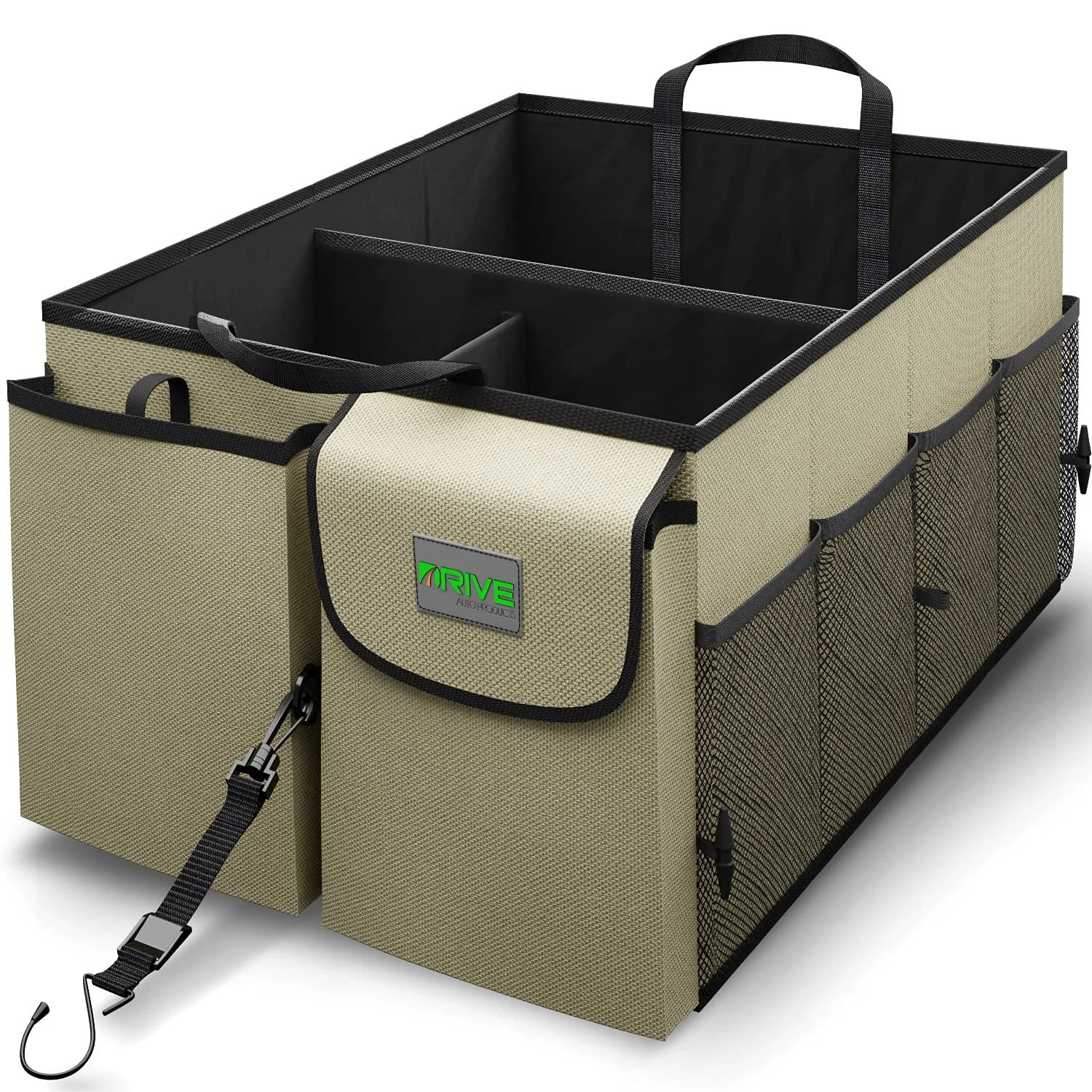
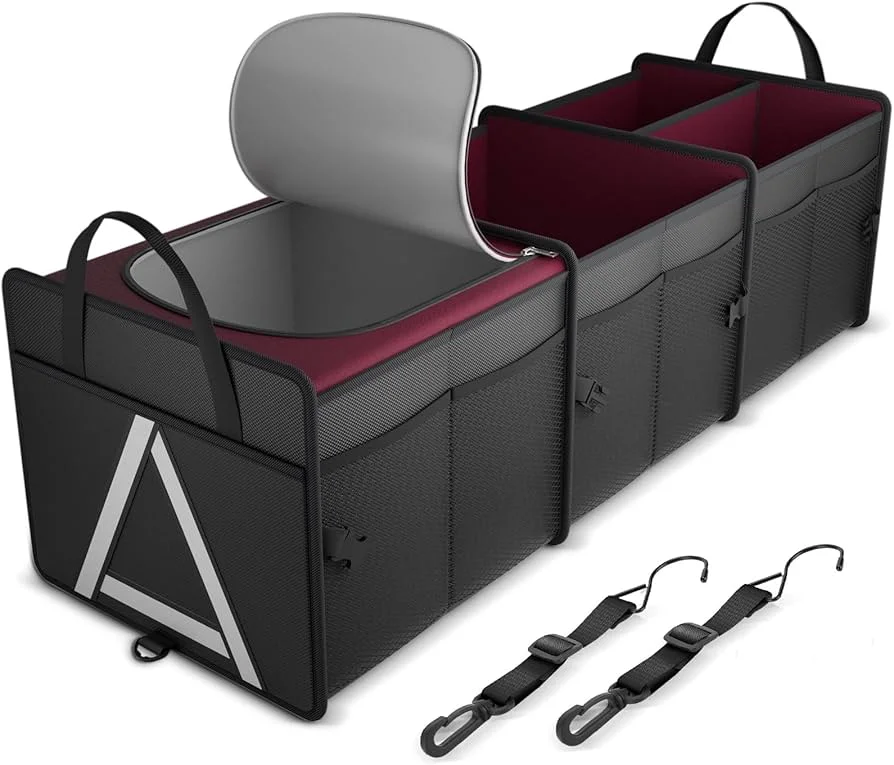
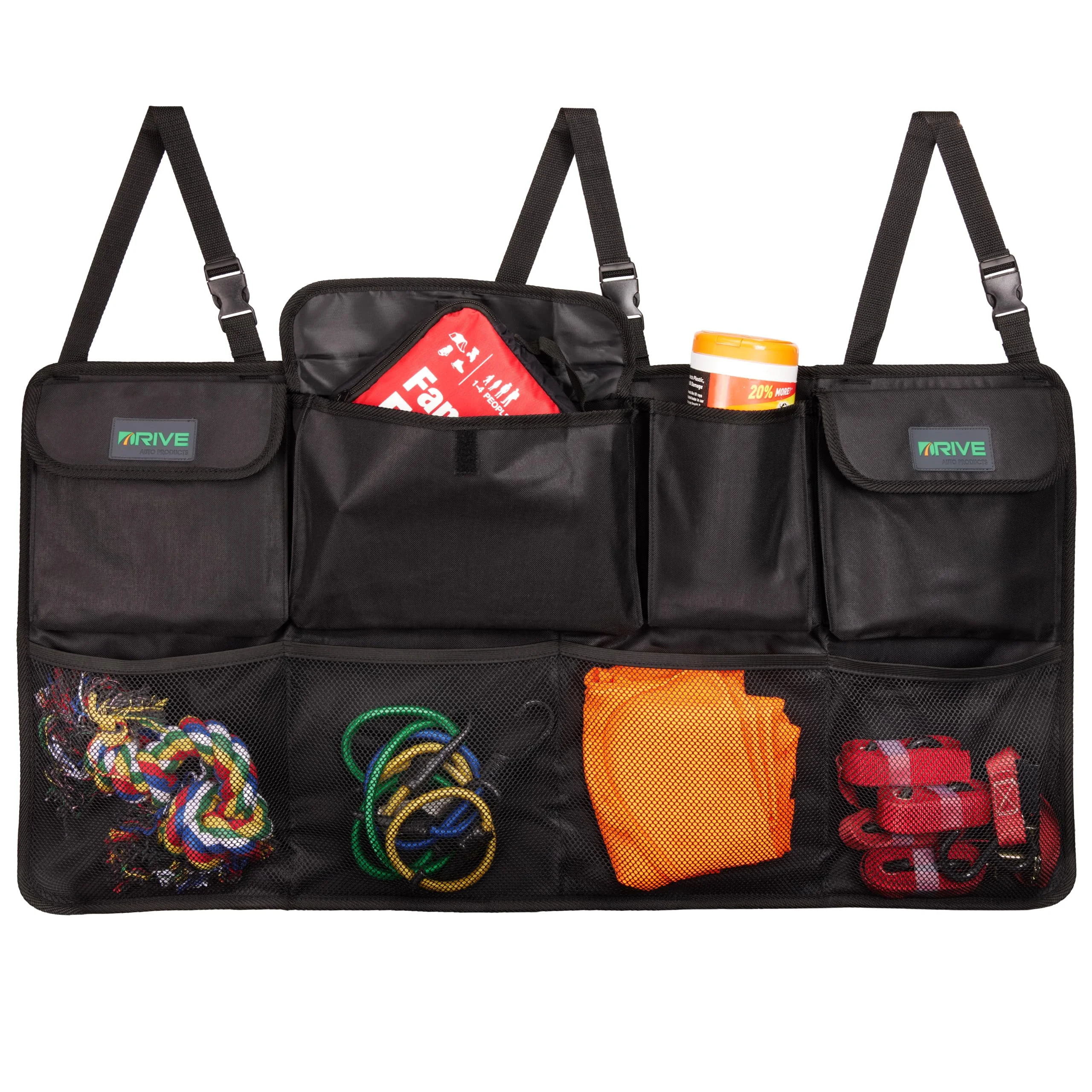
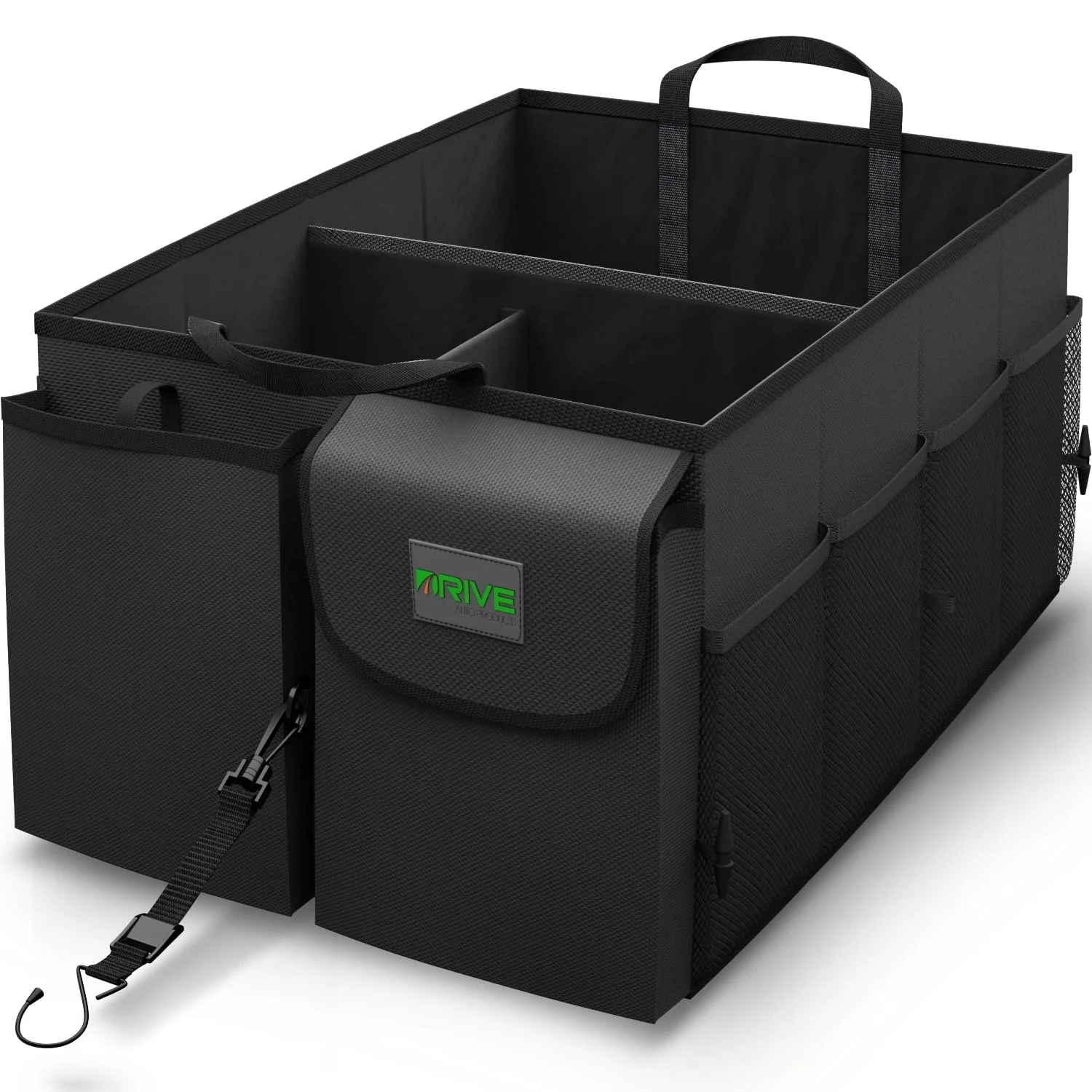
Quick pick: rigid all-rounder, the Drive Auto Trunk Organizer; muddiest family loads, the Trunkcratepro Collapsible Organizer; awkward tall gear, the Fortem Trunk Organizer; best value, the K KNODEL Sturdy Car Trunk Organizer.
Head-to-head: which organizer for which athlete
The Fortem Trunk Organizer takes the prize for awkward, tall items and food-on-the-go (the leakproof cooler bag doubles for post-game snacks), at a slightly higher price. The K KNODEL Sturdy Car Trunk Organizer is the value pick — sturdier than its price suggests and great for a household juggling several kids' kits — though its materials are less premium. There is no universal winner; match the organizer to your sport, your mess and your trunk.
Sizing it to your trunk and your sport
Measure your trunk's flat floor before buying anything. An organizer that does not sit flat slides around and spills, defeating its purpose. For one athlete's gear — cleats, a ball, a bottle, a change of clothes — a single large-bay organizer around 20 inches wide is plenty. For a family hauling two or three kids' kits, look at a long multi-compartment model like the K KNODEL Sturdy Car Trunk Organizer or run two organizers side by side.
- One athlete: single large-bay organizer ~20 in wide
- Multiple kids' kits: long multi-compartment or two units
- Long-handled gear: tall walls or an open end
Match the shape to the sport, too. Long-handled gear (bats, lacrosse sticks, hockey sticks) wants a tall organizer or one with an open end so the handle can stick up; round-ball sports want deep bays with dividers so balls do not roll out. The Fortem Trunk Organizer's tall rigid walls suit the awkward-shape crowd, while the Drive Auto Trunk Organizer's divider grid suits round-ball multi-sport households.
Keeping wet, muddy gear from ruining everything
The fastest way to wreck a trunk organizer is to dump muddy cleats and a sweaty jersey straight into the main bay. Mud stains and odor soak into bare fabric, and the damp spreads to clean clothes and electronics. The fix is separation: keep the dirtiest items in a waterproof compartment or a wet bag inside the organizer, and reserve a dry bay for clean clothes, snacks and devices.
Whatever you choose, wipe the base after dirty sessions and air it out so it does not develop a permanent locker-room smell. Coated polyester and molded plastic clean up; raw fabric never fully does.
Anchoring it so it doesn't launch in a stop
Loaded with sports gear, an organizer can weigh 20 to 40 pounds, and in a hard stop that mass keeps moving — straight toward the back of your rear seats. Beyond the mess, an unanchored organizer is a safety issue: a 30-pound bin of bats and balls becomes a projectile in a collision. Look for non-slip rubber feet or a grippy base for light loads, and tie-down straps or hook-and-loop tabs that anchor to your trunk's factory cargo hooks for heavier ones. If your vehicle has a flat, slick cargo floor, add a rubber cargo mat underneath — it dramatically increases the friction holding the organizer in place.
If your organizer lacks them, a couple of cheap ratchet or hook straps through the handles and around the cargo anchors do the job for a few dollars. A secured organizer is safer in a crash, quieter on rough roads, and keeps your carefully sorted gear sorted all the way to the field instead of sliding into a heap behind the rear seats.
Materials and durability: what survives a season
Sports gear is hard on an organizer — cleats scrape, bats press, and wet kit invites mildew — so material is not a detail. Look for a heavy denier fabric (600D polyester or higher) on the walls, which resists abrasion from spikes and hard edges, and reinforced stitching at the handles and corners where the load concentrates. A molded-plastic or PVC base is far more puncture-resistant than thin fabric for the bottom, which takes the brunt of cleats and gravel.
Equally important is how the structure is built. Removable fiberglass-rod or plywood-panel stiffeners are what let a collapsible organizer stand rigid yet fold flat — cheaper models skip them and sag. The Fortem Trunk Organizer and Drive Auto Trunk Organizer use structured panels for exactly this reason. Check that the liner is genuinely wipeable PEVA or coated polyester rather than raw fabric, because a sports organizer absorbs odor fast otherwise. Spend a little more on materials up front and the organizer survives multiple seasons of cleats and wet jerseys instead of fraying by playoffs.
Rule of thumb: if the base is thin uncoated fabric and the walls have no removable stiffeners, it will not survive a season of real sports gear — keep looking.
Common mistakes buying a sports-gear organizer
The third is sizing wrong — too small for a family's multiple kits, or too big to sit flat in a compact trunk. Measure first. The fourth is skipping anchoring, then cleaning up spilled gear after every hard stop; a model with tie-down straps like the Fortem Trunk Organizer avoids it. Choose for structure, a wet bay, the right size and anchoring, and you buy once instead of three times.
Verdict
Measure your trunk, match the organizer to your sport and your mess, anchor it to the cargo hooks, and one good organizer keeps a whole season's gear sorted and your trunk clean. Skip the structure and the waterproof bay, and you will be back shopping by mid-season.