Title Washing How Wrecked Cars Get Clean Titles and End Up on Dealer Lots (2026 Complete Guide)
Auto Roamer
13 min read
Prices verified February 2026
Includes Video
You're driving home, the engine humming, when a nagging thought surfaces: was that "great deal" on the used SUV too good to be true? That unsettling feeling is the first sign you might be staring down the barrel of a title washing car scam.
You're driving home, the engine humming, when a nagging thought surfaces: was that "great deal" on the used SUV too good to be true? That unsettling feeling is the first sign you might be staring down the barrel of a title washing car scam. Behind the polished chrome and clean interiors of many dealerships lurks a darker reality: wrecked cars, declared total losses by insurance companies, are being laundered through a system designed to hide their damaged past. This isn't just about cosmetic issues; it's about vehicles that have sustained severe damage, potentially compromising their safety and reliability. The goal of title washing is simple: to erase the "salvage" or "rebuilt" designation from a car's title, transforming it into a seemingly clean slate. This practice is not only illegal but incredibly dangerous, as it allows fundamentally unsafe vehicles to re-enter the market Car Buyers Beware: How to Spot Title Washing | KTSM 9 News. Many buyers are unaware that the car they just purchased might have a history of being totaled due to flood damage or severe accidents, a history that drastically reduces its value and poses significant risks What Is Title Washing?. This guide will equip you with the knowledge to spot these compromised vehicles before they end up on your driveway.
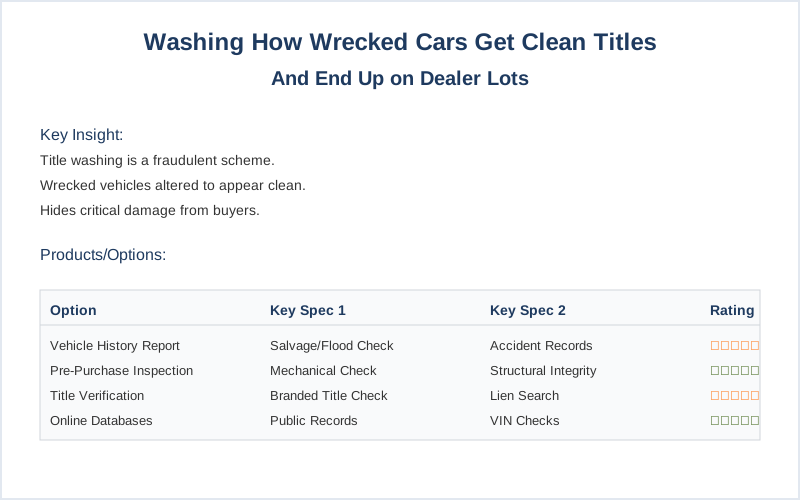
Key specifications for Title Washing How Wrecked Cars Get Clean Titles and End Up on Dealer Lots
The Short Answer
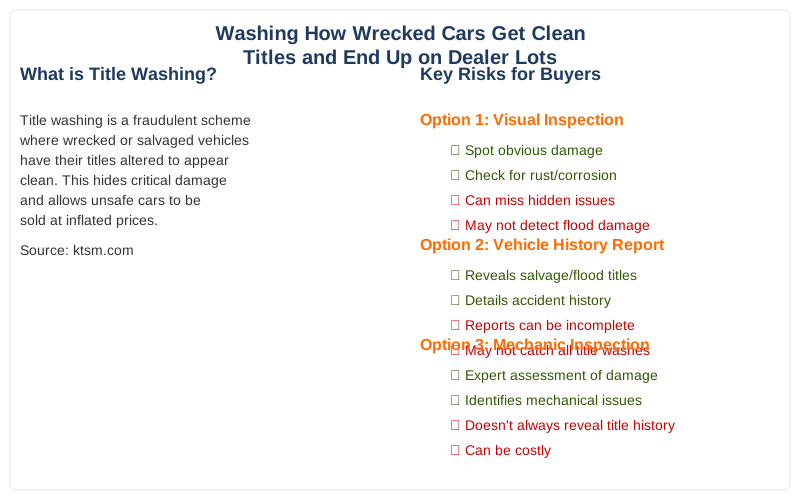
Title washing is a fraudulent scheme where wrecked or salvaged vehicles have their titles altered to appear clean, allowing them to be sold at inflated prices and hiding critical damage from unsuspecting buyers.
This practice is essentially a title washing car scam designed to deceive consumers. When a vehicle is declared a total loss due to severe damage, such as from floods or major accidents, it's supposed to receive a "branded" title, often labeled "salvage" or "flood." This branding significantly reduces the vehicle's value, sometimes by 50% or more Car Buyers Beware: How to Spot Title Washing | KTSM 9 News. Title washing circumvents this by moving the vehicle to a state with less stringent regulations, where the damaged history isn't properly recorded or transferred, effectively granting it a clean title.
The motivation is clear: to make significantly more money on a car that would otherwise be worth much less. This is particularly prevalent with salvage title hidden from buyer vehicles, especially those damaged by natural disasters like hurricanes. For instance, following major storms, hundreds of thousands of water-damaged cars can return to the road Beware a Flood of Flooded Cars. The process often involves getting a "rebuilt" title after repairs, but title washing takes it a step further by making the history disappear entirely.
This manipulation is not just unethical; it's a rebuilt title fraud and a felony in every state, potentially leading to federal charges What Is Vehicle Title Washing?. The FBI considers it fraudulent and corrupt Storm Surge: Beware of Title-Washed Cars - NOTFEA. While some states have stricter rules, the core issue is that a car with a branded title, even after repairs, may still have underlying safety concerns or diminished structural integrity that aren't apparent with a seemingly clean title.
The FBI estimates that title washing could affect nearly 800,000 motor vehicles on U.S. roads Storm Surge: Beware of Title-Washed Cars - NOTFEA. States like Mississippi have a high density of title-washed cars, with about 1 in every 44.6 used cars bearing such a title Storm Surge: Beware of Title-Washed Cars - NOTFEA. This highlights the widespread nature of the problem and the importance of knowing how to check if car has salvage title, often through vehicle history reports.
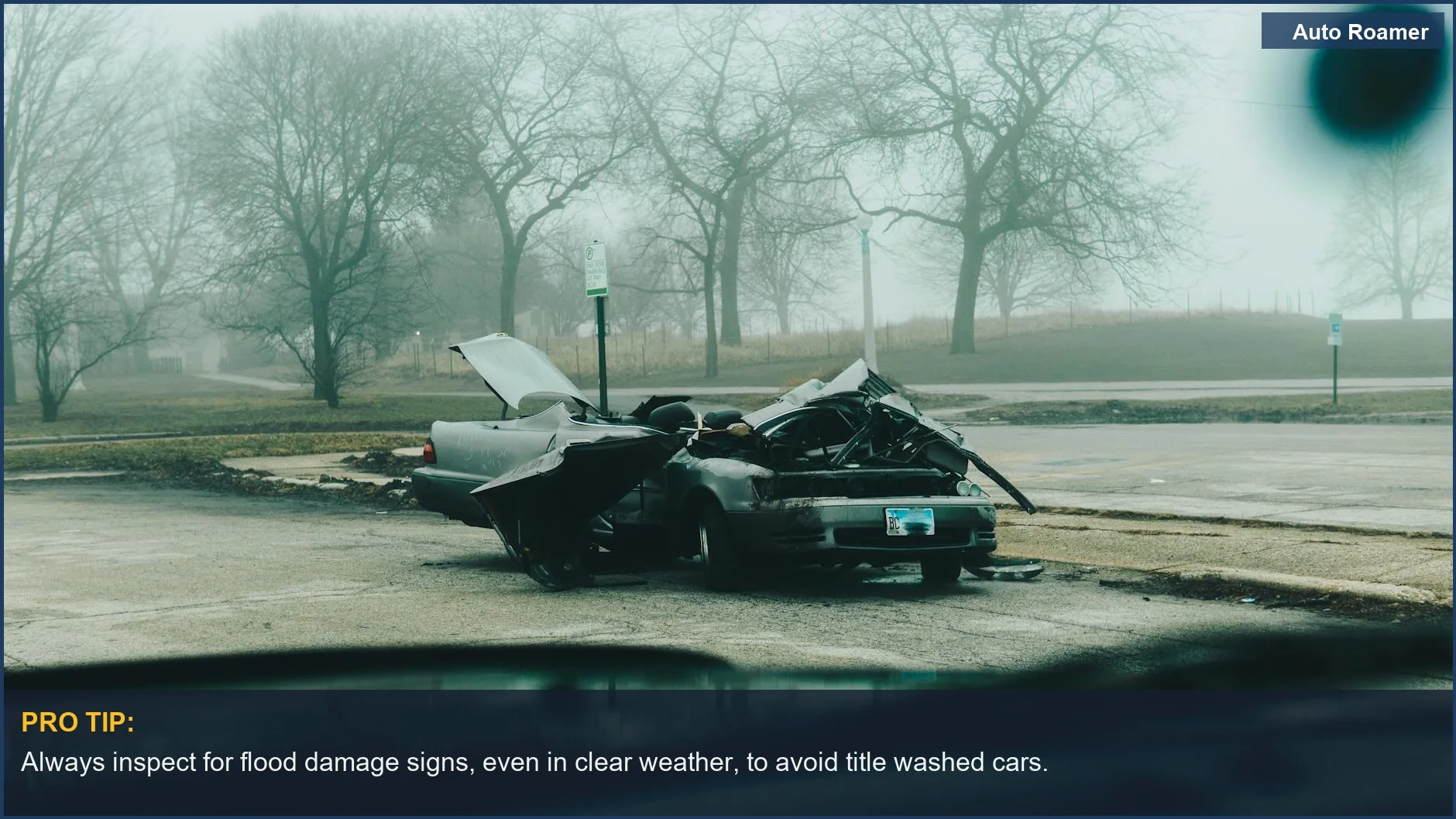
When considering purchasing a washed title vehicle, it's important to understand the potential risks associated with salvage title cars.
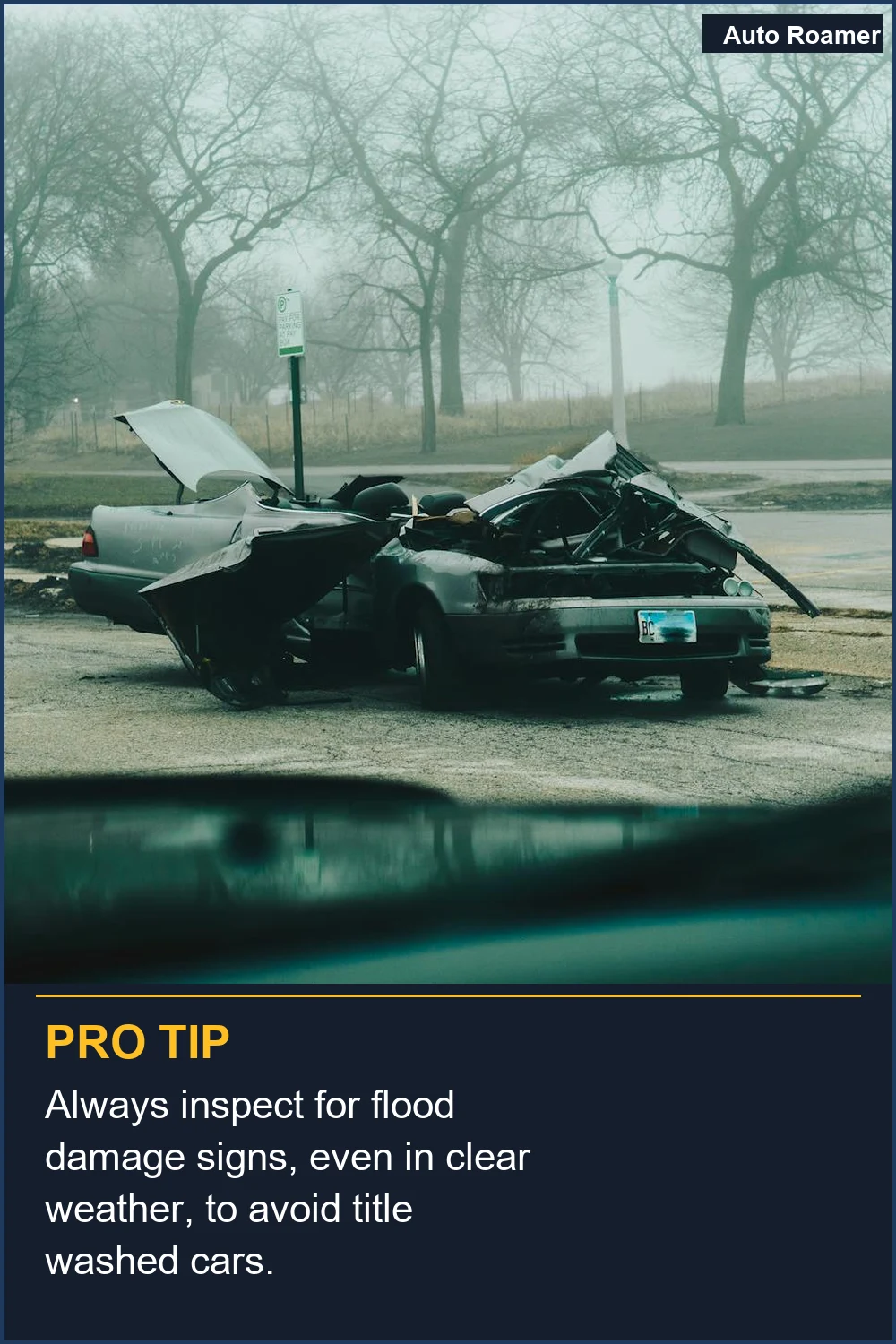
A foggy morning reveals a heavily damaged car, a stark reminder of how title washing car scams operate, concealing severe issues.
| Photo by Karl Solano
A foggy morning reveals a heavily damaged car, a stark reminder of how title washing car scams operate, concealing severe issues.
| Photo by Karl Solano
What You Need to Know
1
Title washing is a felony. It's the illegal or fraudulent act of removing critical damage history from a vehicle's title, often to disguise a salvage or flood-damaged car as having a clean record. This practice can lead to federal wire and mail fraud charges, hefty fines, and prison time What Is Vehicle Title Washing?. The goal is simple: to make a vehicle that's lost significant value due to damage seem like a pristine used car, thereby defrauding buyers.
2
Scammers exploit varying state laws. The most common method involves taking a vehicle with a branded title (like "salvage") to a state with less stringent regulations regarding title branding or disclosure. For example, Texas law has been cited as allowing vehicles with accident damage to retain a clean title without mandatory proof of critical safety repairs Title Washing: What You Need to Know. This allows the vehicle to be re-titled with a "clean" status, effectively washing away its damaging history before being sold.
3
Flood-damaged cars are prime targets. After major storms, thousands of vehicles are damaged. While insurance companies declare them total losses and issue salvage titles, these cars don't always end up in junkyards. Some are repaired and transported to other states, far from the storm's origin, where buyers might be less aware of the signs of flood damage Beware a Flood of Flooded Cars. CarFax estimates that 482,000 water-damaged cars returned to the road in 2025 alone.
4
The financial incentive is huge. A vehicle's value can drop by 50% or more when it has a branded title ktsm.com. Title washing allows unscrupulous sellers to recoup much of that lost value. This is particularly true as the market shifts and dealerships face fewer affordable used vehicles, leading some to consider selling branded-title cars As vehicle market shifts, some dealerships are retailing salvaged titles.
5
Identifying a salvage title hidden from a buyer is challenging. While some states clearly brand titles, others use obscure codes. Mississippi has the highest density of title-washed cars, with 1 in every 44.6 used cars bearing such a title, far above the national average Storm Surge: Beware of Title-Washed Cars - NOTFEA. Buyers must perform thorough due diligence, including vehicle history reports and pre-purchase inspections, to uncover a potentially washed title and avoid a salvage title hidden from buyer scams.
Understanding the importance of vehicle history can help you avoid issues like pet damage, so consider checking used car history before purchasing.
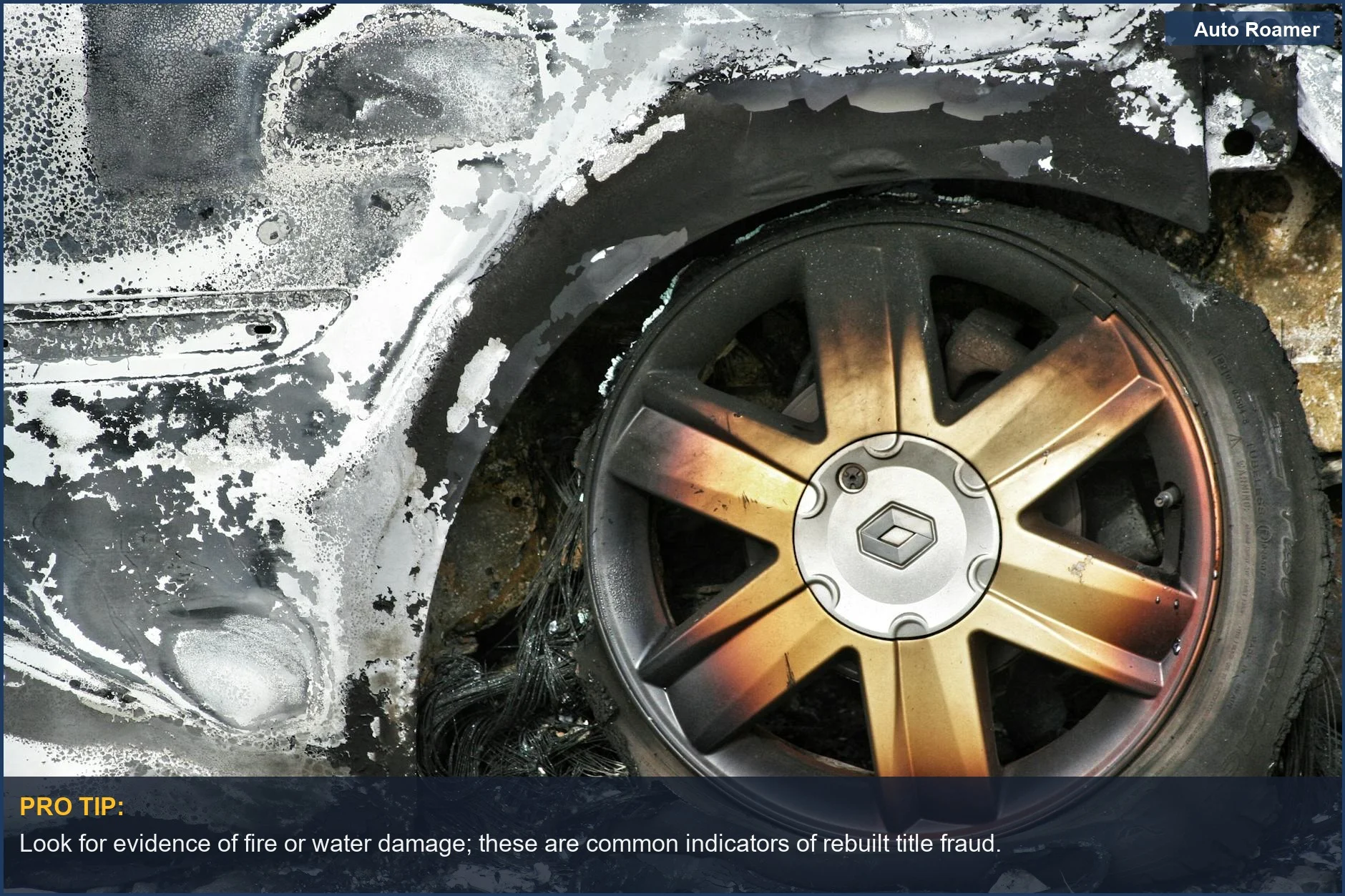
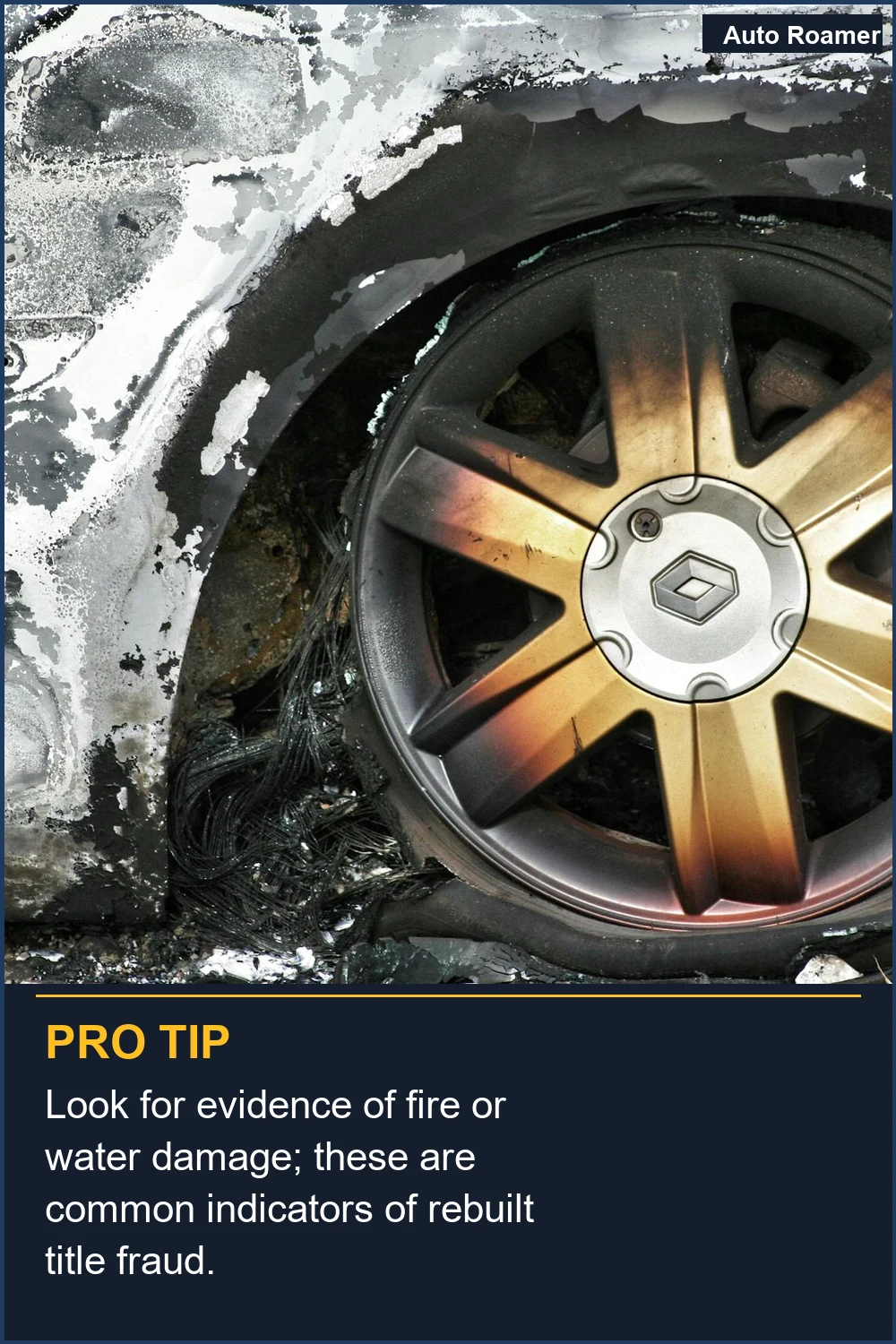
The charred remains of a car wheel with a rusty rim and damaged tire illustrate the extreme damage often hidden by rebuilt title fraud.
| Photo by Sue Rickhuss
The charred remains of a car wheel with a rusty rim and damaged tire illustrate the extreme damage often hidden by rebuilt title fraud.
| Photo by Sue Rickhuss
How to Handle This
1
Run a Vehicle History Report (VHR) - Do this BEFORE you even set foot on the lot. A VHR from services like Carfax or AutoCheck is your first line of defense against a salvage title hidden from buyer schemes. It flags previous salvage, flood, or fire damage, and attempts to trace the vehicle's title history across states.
2
Scrutinize the Physical Inspection - Look for signs of major repairs that might indicate a previous rebuilt title fraud. Check for mismatched paint, uneven panel gaps, or rust in unusual places, especially around door sills and undercarriage, which are common indicators of flood damage Beware a Flood of Flooded Cars. A "rebuilt" title means it was salvaged and repaired, but a "washed" title might hide this entirely.
3
Verify the Title Documentation Meticulously - Compare the VIN on the title to the VIN on the car and any VHR you have. Look for inconsistencies, corrections, or signs of tampering. Some states have looser regulations, making them common destinations for title washing Storm Surge: Beware of Title-Washed Cars. Mississippi has a higher density of title-washed cars, with 1 in every 44.6 used cars bearing one, compared to the national average of 1 in 324.9 Storm Surge: Beware of Title-Washed Cars. If the seller is evasive about showing the title or claims it's "pending," that's a massive red flag.
4
Test Drive Under Diverse Conditions - Take the car on the highway to check for steering issues at speed, listen for unusual noises, and feel for vibrations. Test all electronic systems, including infotainment, climate control, and safety features. If the car was flood-damaged, electrical gremlins can surface long after the initial sale Beware a Flood of Flooded Cars.
Understanding your warranty rights can help you avoid falling victim to other dealership practices, such as yo-yo financing scams.
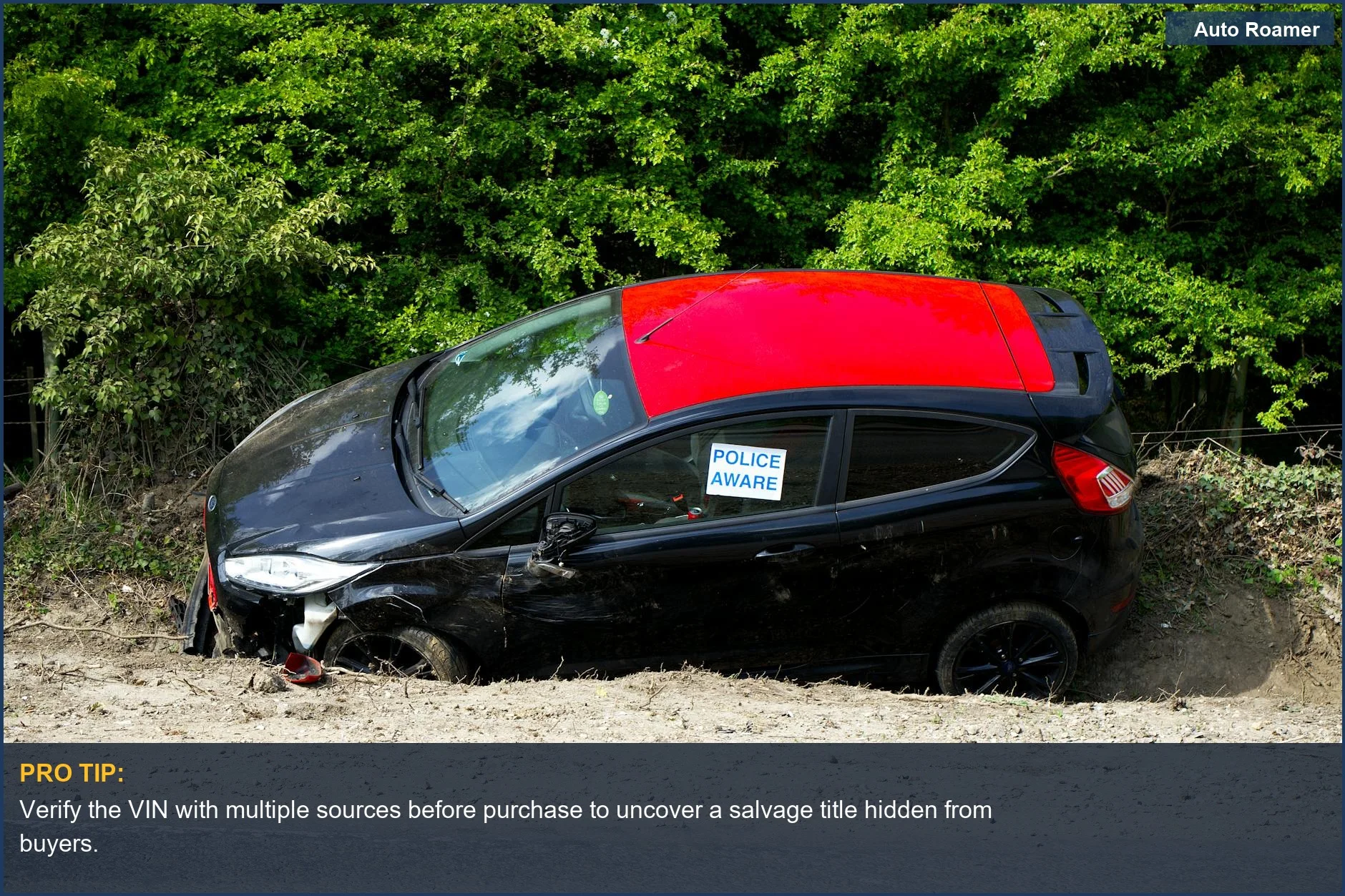
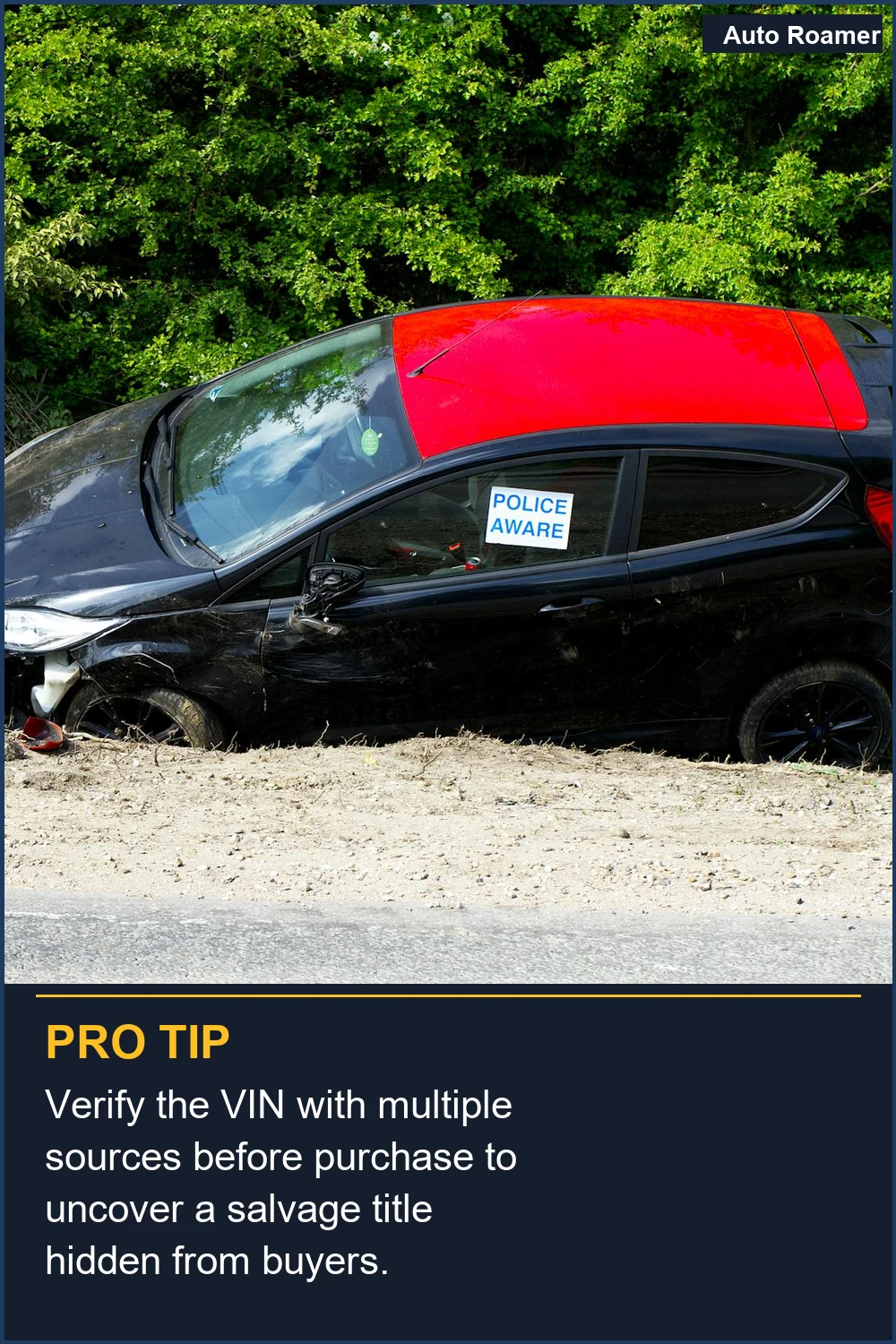
An abandoned car marked by police serves as a visual warning about the dangers of a salvage title hidden from unsuspecting buyers.
| Photo by Mike Bird
An abandoned car marked by police serves as a visual warning about the dangers of a salvage title hidden from unsuspecting buyers.
| Photo by Mike Bird
What This Looks Like in Practice
Flood Damage Title Shuffle A common scam involves cars damaged by major storms, like Hurricanes Katrina and Rita which impacted 600,000 vehicles Storm Surge: Beware of Title-Washed Cars - NOTFEA. These vehicles, often declared total losses and assigned salvage titles, are transported to states with less stringent titling laws. Texas, for example, has allowed vehicles with accident damage to retain a clean title without proof of critical safety repairs Title Washing: What You Need to Know, allowing them to be resold with a seemingly clean title, hiding extensive water damage and potential mechanical failures.
Rebuilt Title Obfuscation Title washing aims to obscure a vehicle's history, even after significant repairs following a total loss. This often involves moving a vehicle from a state that brands titles (like California, which issues a clean title by default) to one that does not. This practice allows a vehicle that should have a salvage or rebuilt title to be advertised and sold as having a clean title, hiding its true history from buyers How are lots able to sell cars that have been clearly salvaged at .... A 2015 Toyota 4-runner, for instance, was sold seven times in five years across different states, each time with a clean title, despite missing vital safety features like side airbags Title Washing: What You Need to Know.
Auction House Loopholes Unscrupulous dealers exploit the titling process at salvage auctions. Crooked operators acquire vehicles with salvage titles and move them to states where the title can be "cleaned" or re-registered without the original branding. This is prevalent as dealers seek to expand into "once untouchable inventory" As vehicle market shifts, some dealerships are retailing salvaged titles. The goal is to sell these vehicles for significantly more than their value, as a branded title can reduce a car's worth by 50% or more Car Buyers Beware: How to Spot Title Washing | KTSM 9 News.
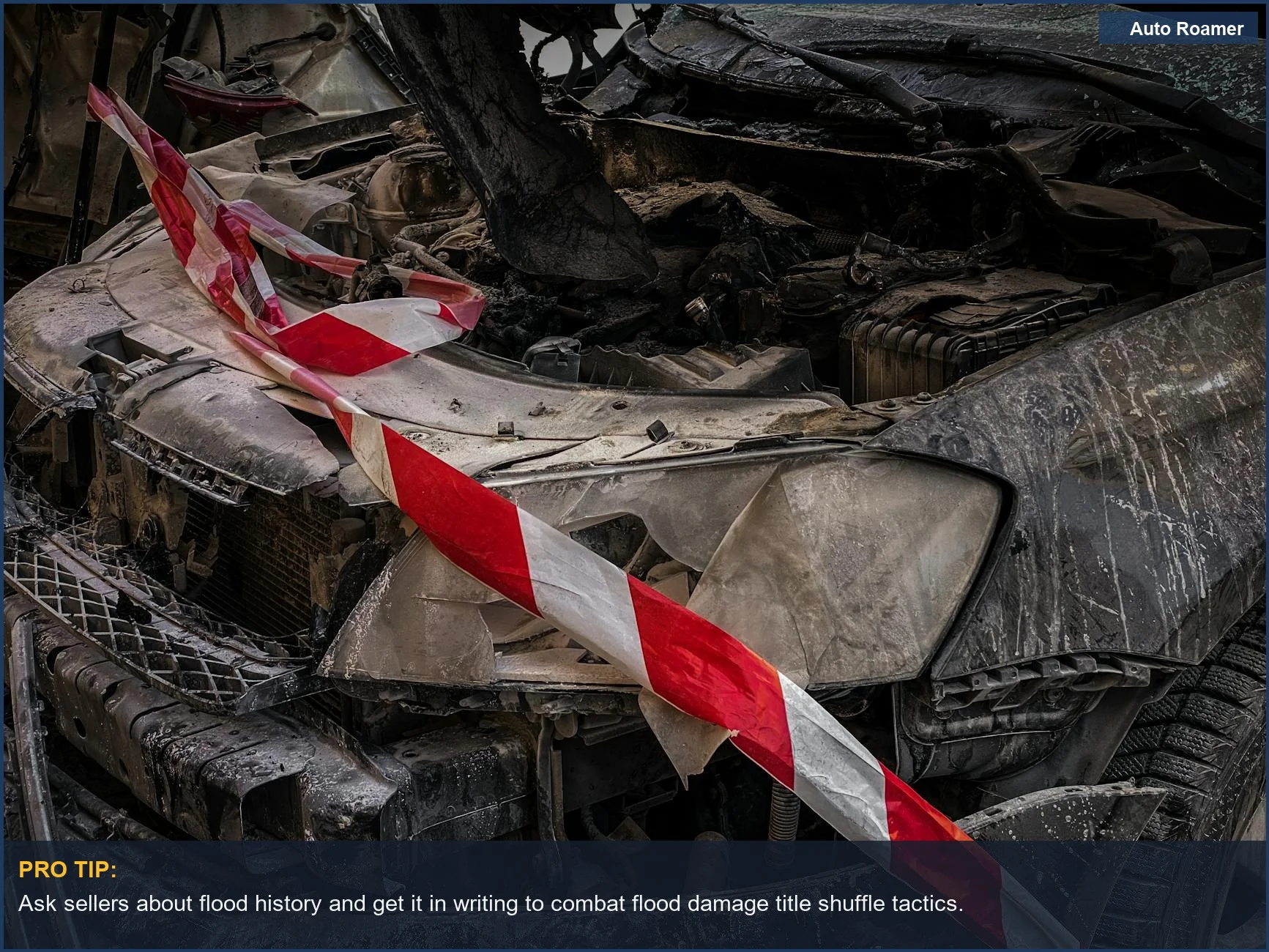
To ensure your family car is safe, it's also wise to look into its accident history.
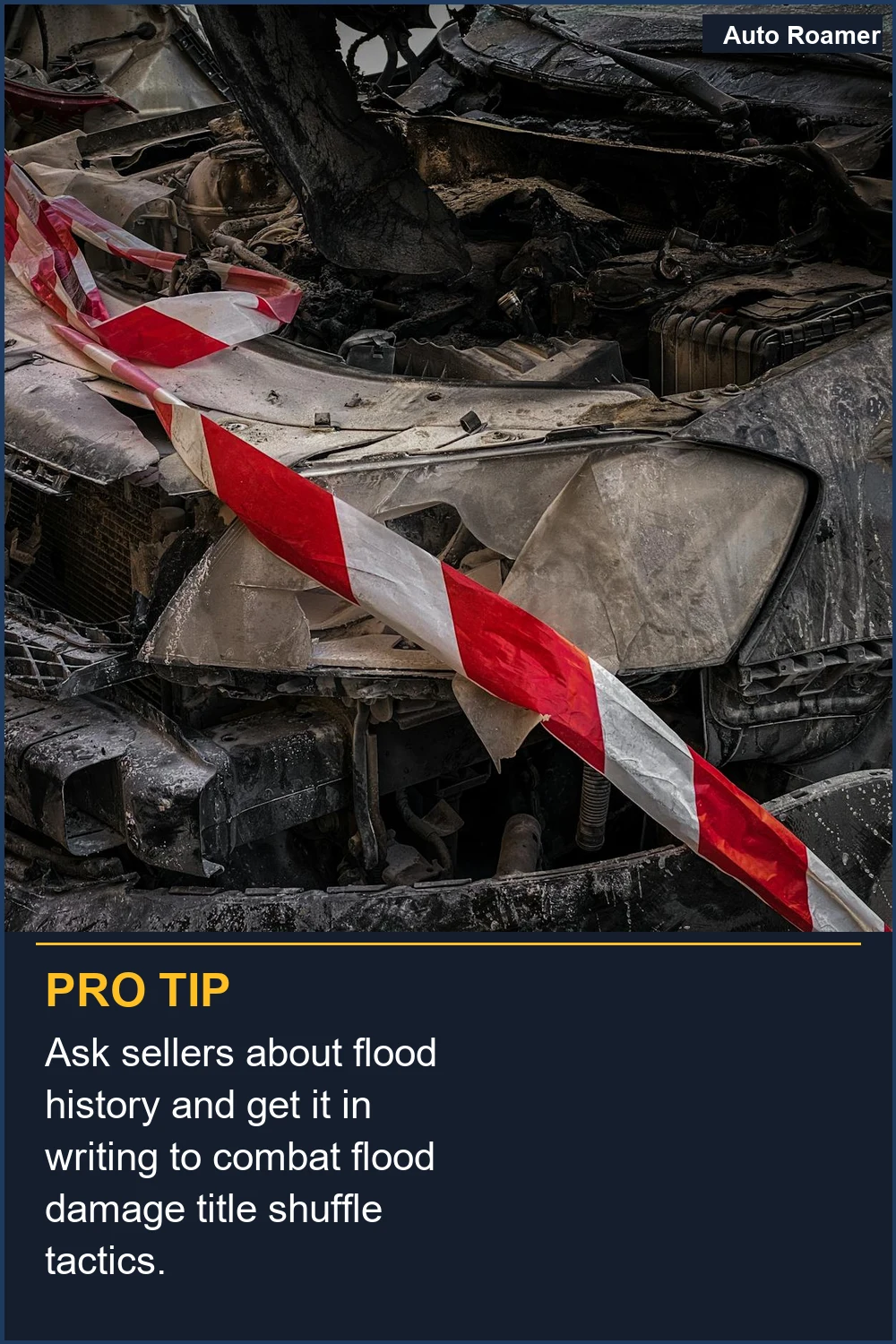
Safety tape encircling a wrecked car in Ukraine underscores the risks associated with the flood damage title shuffle scam.
| Photo by Алесь Усцінаў
Safety tape encircling a wrecked car in Ukraine underscores the risks associated with the flood damage title shuffle scam.
| Photo by Алесь Усцінаў
Mistakes That Cost People
Mistake
Assuming a vehicle history report is foolproof.
Why people make it
Many buyers believe a Carfax or similar report is the ultimate truth, unaware these reports rely on submitted data that can be incomplete or manipulated.
What actually happens
Title washing scammers exploit reporting gaps or lax disclosure laws to create a seemingly clean history. This allows cars with significant salvage titles hidden from buyer eyes to appear legitimate, obscuring true damage history like flood or severe accident.
The fix
Always combine a vehicle history report with an independent pre-purchase inspection. Ask for seller documentation directly and cross-reference it. Don't rely solely on one source to check if car has salvage title.
Mistake
Believing a "rebuilt" title status always indicates repair quality.
Why people make it
The term "rebuilt" implies repair, leading people to assume safety and soundness without understanding its nuances.
What actually happens
A rebuilt title means a car was declared a total loss (due to salvageable damage like flooding or major accidents) and repaired to be roadworthy Beware a Flood of Flooded Cars. Repair quality varies; some are professional, others shoddy, hiding issues. This enables rebuilt title fraud with subpar repairs.
The fix
Always get a pre-purchase inspection from an independent mechanic familiar with structural and flood damage. Inquire about the specific nature of the "rebuild" and replaced components. A rebuilt title doesn't guarantee a safe vehicle.
Mistake
Ignoring title history implications across states, especially for flood-damaged cars.
Why people make it
Buyers assume uniform title laws, not realizing a salvage title in one state can be re-titled as "clean" or "rebuilt" in another with less stringent regulations.
What actually happens
This is the core of title washing car scam. Scammers move damaged vehicles from disaster-prone states to those with looser laws. The vehicle then receives a new title that doesn't reflect prior damage, appearing clean caredge.com, allowing them to sell unsellable cars at full market value.
The fix
Always run a comprehensive VIN check spanning multiple states if possible. Note the vehicle's origin state and any registration history in areas prone to natural disasters. Documenting the vehicle's state-to-state journey is crucial.
Mistake
Assuming newer cars are less susceptible to title washing.
Why people make it
Newer cars' advanced electronics and complex systems seem less likely to be totaled and poorly repaired for resale.
What actually happens
The high cost of repairing modern vehicle electronics means newer cars are more likely declared total losses for moderate damage As vehicle market shifts, some dealerships are retailing salvaged titles. This creates a larger pool for title washing schemes. A 2020 Toyota 4Runner with damaged airbags can be washed like an older sedan.
The fix
Be diligent when inspecting newer used vehicles. Focus on electronic systems, sensors, and signs of recent, unusual repairs. The potential financial loss from a washed newer car can be substantial.
Mistake
Trusting a dealer's verbal assurance of a "clean" title without verification.
Why people make it
Many buyers assume licensed dealerships are completely transparent and honest, or feel pressured to buy quickly.
What actually happens
While many dealers are honest, title washing is perpetrated by unscrupulous individuals who may operate legitimate-looking dealerships caredge.com. A dealer might claim a clean title because their *current* title is clean, but it may have been previously salvaged or branded How are lots able to sell cars that have been clearly salvaged at .... This leads to selling a salvage title hidden from buyer knowledge.
The fix
Always demand to see the physical title document. Obtain a vehicle history report yourself and have it cross-referenced by your mechanic. Never buy a car based solely on a salesperson's word.
Understanding how to retrieve crucial evidence, like dashcam footage, can help clarify vehicle history and prevent costly mistakes. For more information, see how to retrieve dashcam footage.
Product comparison for Title Washing How Wrecked Cars Get Clean Titles and End Up on Dealer Lots
When a vehicle is declared a total loss, it should receive a branded title like "salvage" or "flood." However, unscrupulous sellers exploit differences in state laws, moving these vehicles to states with looser regulations to obtain a clean title Title Washing: What You Need to Know.
The single most important thing to remember is to always verify a vehicle's history report and be wary of deals that seem too good to be true, as a salvage title hidden from buyer is a major red flag for rebuilt title fraud.
As you evaluate a used car's history, it's also wise to consider water damage checks for your camping plans.
Frequently Asked Questions
What exactly is 'title washing' when it comes to cars?
Title washing is a fraudulent practice where unscrupulous sellers illegally remove information from a car's title to hide its damaged history, such as a 'salvage' or 'flood' brand. This is done to make a severely damaged vehicle appear to have a clean title, allowing it to be sold for a much higher price than it's actually worth.
How do people manage to get a clean title for a car that was previously salvaged?
Scammers often 'wash' a title by taking a vehicle with a branded title (like salvage) to a state with less stringent regulations regarding title branding. They then obtain a new, seemingly 'clean' title in that state, effectively hiding the car's past damage before bringing it back to a state where it can be sold.
Why would someone go through the trouble of title washing a car?
The primary motivation is financial gain. A vehicle with a salvage title can be worth 50% or more less than a comparable vehicle with a clean title. By washing the title, sellers can disguise major damage, such as from accidents or floods, and deceive buyers into paying a significantly inflated price.
Are there legal ways for a car with a salvage title to end up with a clean title on a dealer lot?
Yes, a car with a salvage title can legally become a 'rebuilt' title. This happens after significant repairs are made to the vehicle, and it passes a thorough inspection by state officials. However, a rebuilt title is still a branded title and should be disclosed; it's different from a fraudulent 'washed' title.
How can I check if a used car I'm interested in might have a hidden salvage title?
Always get a vehicle history report from reputable services like CarFax or AutoCheck, as these often flag branded titles. Additionally, carefully examine the physical title for any unusual markings or inconsistencies, and consider getting a pre-purchase inspection from an independent mechanic who can identify potential hidden damage.
What are the risks of buying a car with a washed title?
Buying a car with a washed title is a serious risk. You could end up with a vehicle that has underlying structural damage, faulty safety systems, or recurring mechanical issues, leading to expensive and dangerous repairs. It's essentially a car scam designed to defraud unsuspecting buyers.
Is title washing a serious offense?
Yes, title washing is a felony in every state and can lead to federal charges like wire fraud and mail fraud. Those caught can face significant prison time and hefty fines, often in the six figures. It's a criminal act aimed at deceiving consumers.