
Understanding Tesla Model Y's Power Capabilities for Extended Stays
Understanding how much juice your electric vehicle can safely provide for extended periods is key to ditching the campground grid. My first attempt at car camping in my electric sedan involved running a small fan overnight and waking up to a car that wouldn't even unlock.
Understanding how much juice your electric vehicle can safely provide for extended periods is key to ditching the campground grid. My first attempt at car camping in my electric sedan involved running a small fan overnight and waking up to a car that wouldn't even unlock. That was a rookie mistake I learned from, and it taught me a lot about what these battery packs can actually do.
It's not just about getting from A to B anymore; it's about turning your vehicle into a mobile basecamp. Six years of Tesla travel taught me this firsthand. The real question isn't if you can use your car's power, but how to do it without leaving yourself stranded miles from the nearest charger. Your owner's manual has the official word, but the field notes are where the real lessons are learned.
The Core Answer
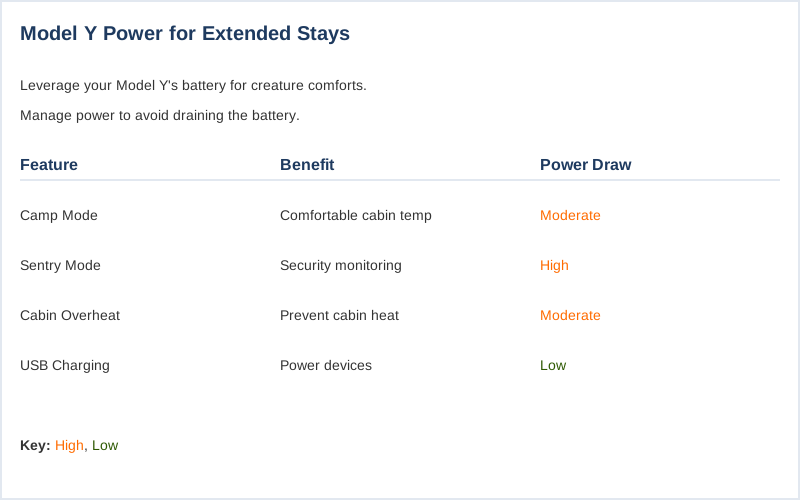
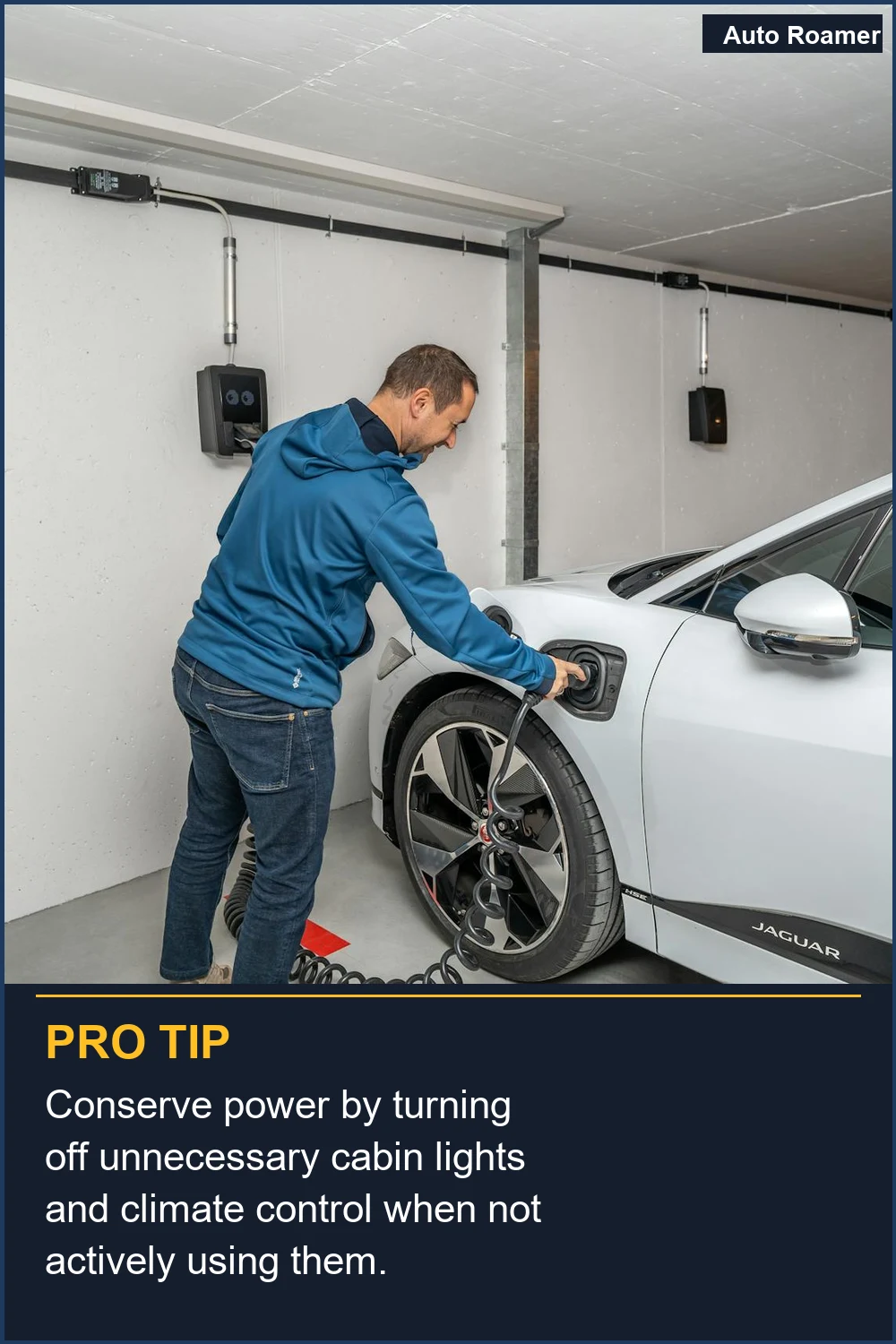
Here's the honest version: your electric car's battery is a massive power bank, but it's not infinite. Think of it like a giant smartphone. You can run apps, charge other devices, and even power small appliances, but you have to manage that battery like it's your last dollar. For extended stays, the game-time decision is how much power you're willing to sacrifice for creature comforts. Leaving features like Sentry Mode or Cabin Overheat Protection on when you're parked for days is a surefire way to drain your battery faster than you can say 'tow truck.' I learned that the hard way at a remote campsite in Colorado. Woke up to a dead car because Sentry Mode thought a squirrel was a threat. Brilliant engineering. The real move is to shut down non-essential power draws. You can still use things like the AC or heat if you enable 'Camp Mode' or a similar feature. This keeps the cabin temperature comfortable and your USB ports powered, so you can still charge your phone and run a small fan. It's designed to minimize battery drain while keeping you comfortable. Tesla's summer driving tips are a good starting point for understanding this. Without it, running the AC all night could easily cost you 20-30 miles of range. That might be fine if you're in a parking lot, but out in the sticks, it's a problem. The vehicle's main battery powers everything, including the climate control and infotainment system. So, every minute you're running those, you're depleting your 'driving range.' You can monitor your battery percentage in the car and on your phone app, which is crucial. Using the navigation system can also help you estimate your range and power needs. It's a balancing act. You want to be comfortable, but you also need enough juice to get home. For extended stays, turning off all the 'smart' features that constantly monitor your surroundings or maintain temperature when you're not actively in the car is the smartest play. My second trip had half the gear and was twice as comfortable because I wasn't worried about waking up to a dead car.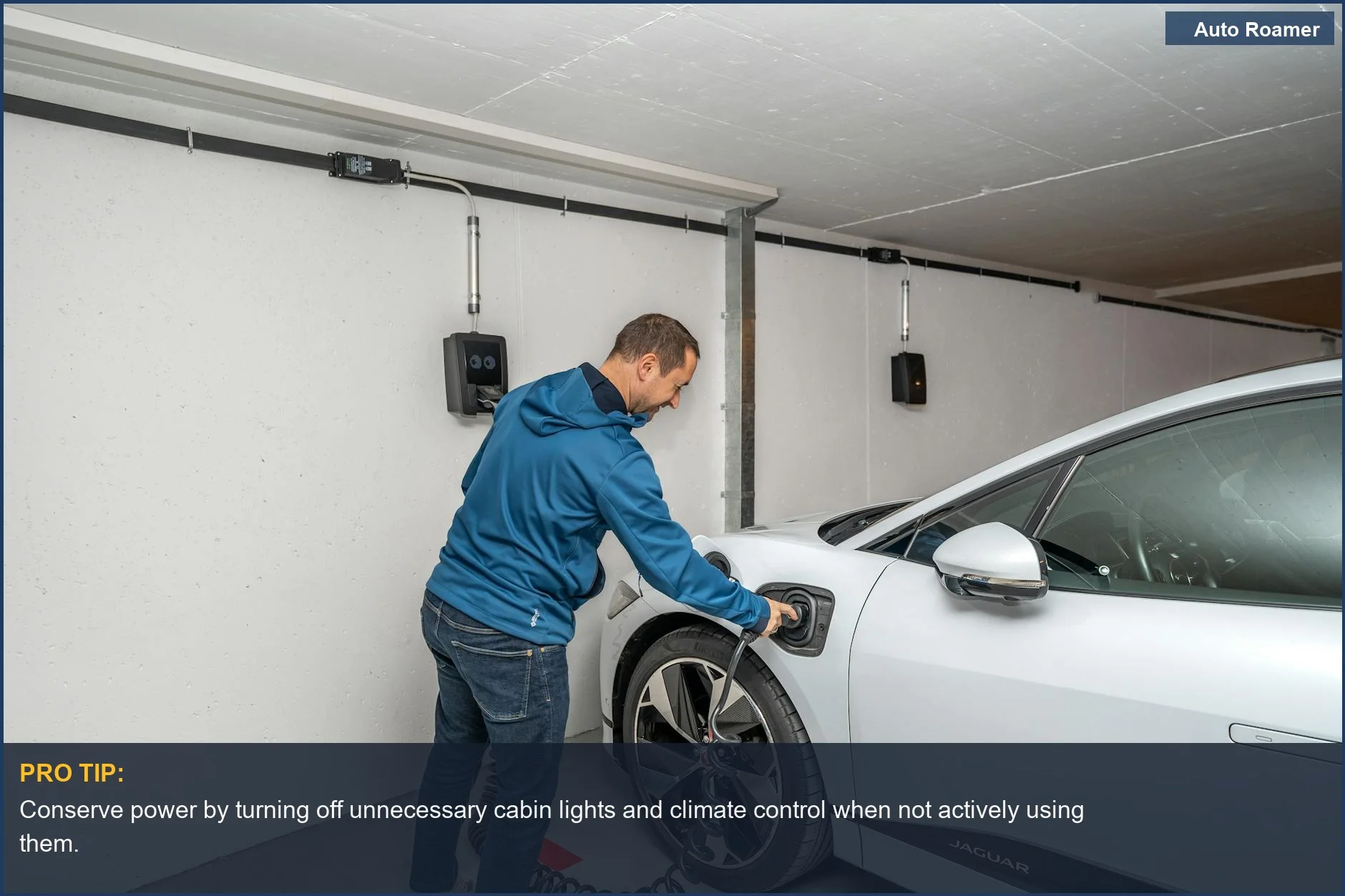
Why This Matters for Your Setup
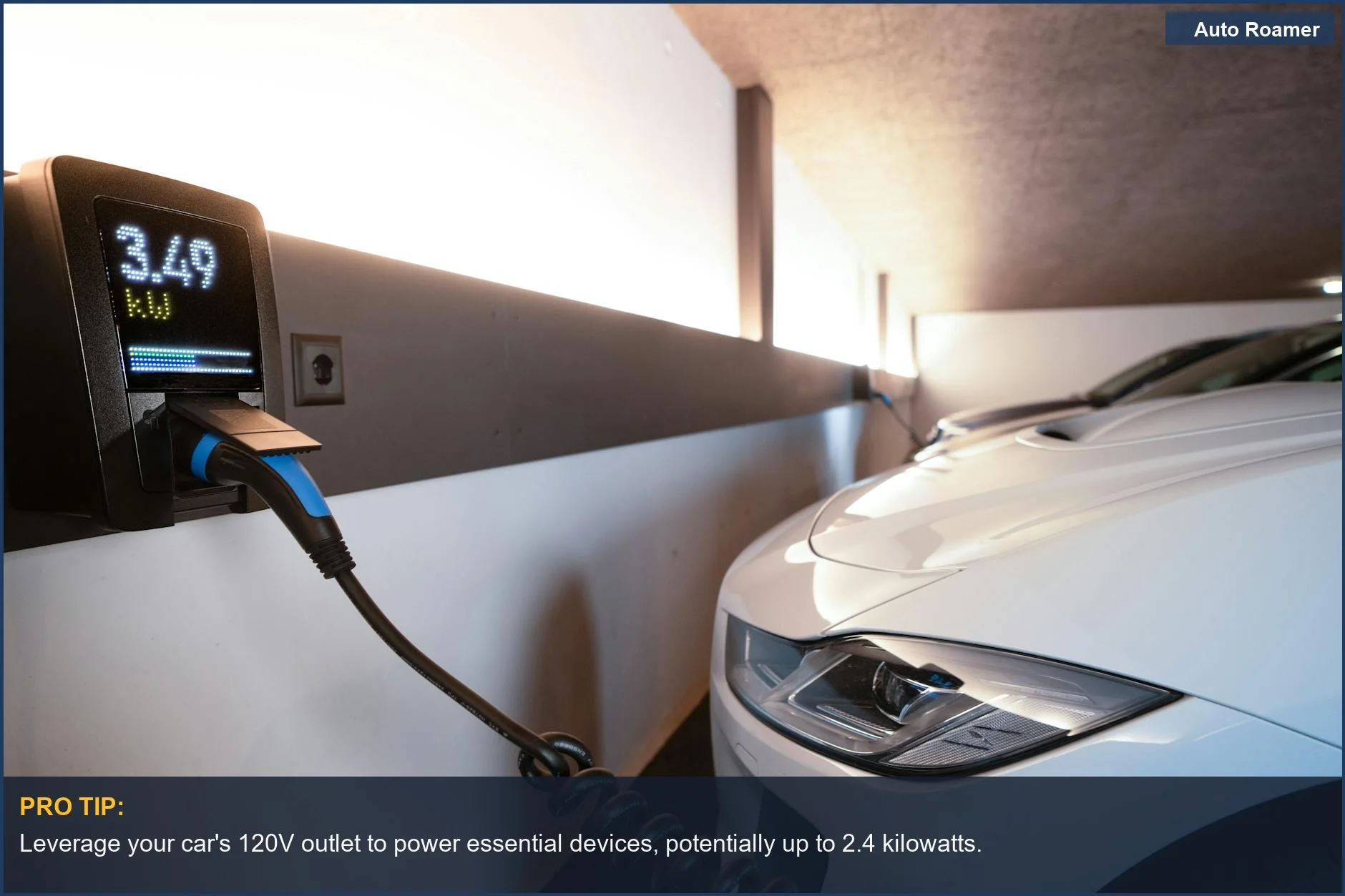
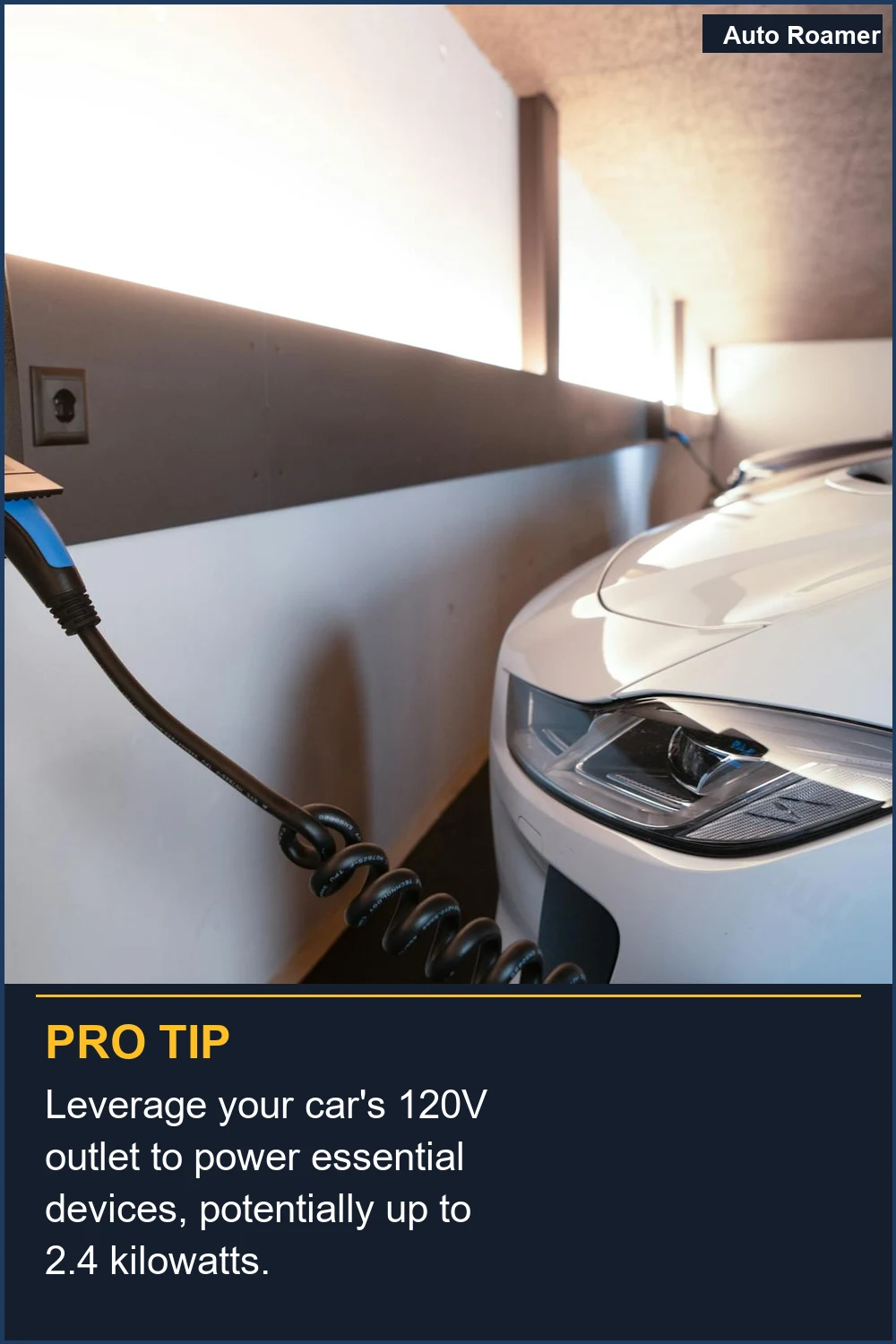
Why does all this battery talk matter when you're just trying to make coffee? Because your car is now your power grid.- You can power small appliances like coffee makers or blenders if your vehicle supports it, usually through a 120V outlet. Some models can output up to 2.4 kilowatts, which is enough for a decent amount of gear. This is a game-changer for ditching the noisy generators.
- Keeping your phone, tablet, or laptop charged is easy with the car's USB or 12V outlets. I always pack a power bank as backup, but the car is the primary source. Camp Mode keeps these powered without draining your main battery too quickly.
- Running a small fan or even the climate control for a few hours overnight is possible. This is where understanding your car's 'sleep mode' and 'low power mode' becomes critical. Low Power Mode is specifically designed to reduce vampire drain when parked for longer periods, like a vacation.
- You need to be aware of how much power each device draws. A simple LED lantern uses next to nothing, while a portable fridge can be a significant drain.
Making the Right Choice
Making the right choice for your extended stay means understanding your vehicle's power limitations.- Don't assume your car can run everything indefinitely. It's a battery, not a perpetual motion machine.
- Prioritize what you *actually* need. A headlamp and a charged phone are essential. A portable espresso machine? Maybe not for the first trip.
- Turn off unnecessary features when parked for long periods. Sentry Mode is great for security, but not for overnight camping.
- Familiarize yourself with your car's power management features, like Camp Mode or Low Power Mode. These are your best friends for extended stays. Low Power Mode can be set to activate automatically at a certain battery percentage, which is a smart way to ensure you always have enough for the drive home.
- Always have a backup plan. A small portable power bank can be a lifesaver if you miscalculate your needs.
Frequently Asked Questions
If I want to run a small portable fridge for a weekend, is it cheaper to just buy a $500 battery pack, or will using my car's power save me money in the long run?
Do I need a fancy voltage meter to figure out how much power I'm using, or can I just trust the car's display?
What if I forget to turn off Sentry Mode and wake up with a dead car in the middle of nowhere?
Can running things from my car's battery for extended periods permanently damage it?
Is it true that the car's battery degrades faster if you use it for camping?
🏅 Looking for Gear Recommendations?
Check out our tested gear guides for products that work with this setup:
Sources
- Unlock MAXIMUM Range With These Tesla Settings - YouTube
- Summer Driving Tips | Tesla Support
- The New Tesla Model Y Performance Can Finally Power Your ...
- Tesla's 'Low Power Mode': Everything It Does
- Hot Weather Best Practices - Tesla
- Sleeping in the Refreshed Model Y: Quick, Practical Setup - YouTube
- Best practices for leaving model y when on vacation? : r/TeslaModelY