
The Short Answer: Bigger Bed vs Better Trail Access
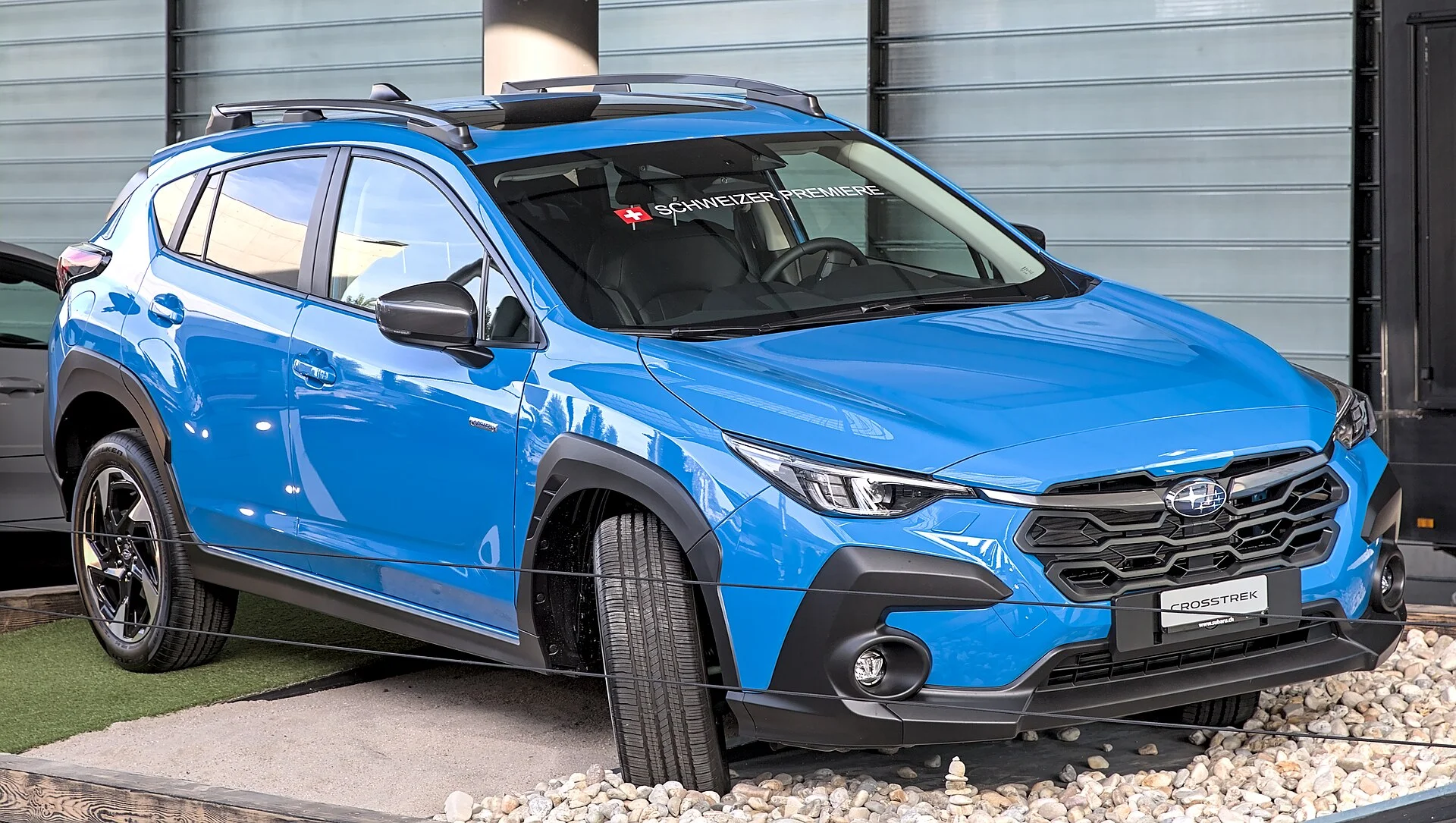
Strip the marketing off this pairing and it comes down to one honest trade. The Toyota RAV4 is the bigger vehicle to sleep in, and the Subaru Crosstrek is the better tool for reaching a rough trailhead. Everything else is close enough that these two axes decide it. If you know which one you value, the choice is nearly made.
The size gap is real and worth verifying rather than taking on faith. The RAV4 offers up to 69.8 cubic feet of maximum cargo with the rear seats folded; the Crosstrek offers 54.7 cubic feet. That is roughly 15 cubic feet more room in the RAV4 - a genuinely bigger sleeping box that lets a taller adult lie flatter.
The Crosstrek's counter is capability, and it is standard. Every Crosstrek comes with Symmetrical All-Wheel Drive and 8.7 inches of ground clearance, while the gas RAV4 is front-wheel drive standard with all-wheel drive as a roughly $1,400 option, and it sits a bit lower at about 8.4 inches. So the skeptic's framing is clean: buy the RAV4 for sleeping room, buy the Crosstrek for getting there. The rest of this guide checks that trade against the specs.
The Size Gap Is Real: 69.8 vs 54.7 Cubic Feet
Start with the claim that actually holds up under scrutiny: the RAV4 is meaningfully bigger inside. With the rear seats folded, the RAV4 provides up to 69.8 cubic feet of cargo volume against the Crosstrek's 54.7 cubic feet. That roughly 15-cubic-foot difference is not marketing fluff - it is the space that turns a tight solo bed into a roomier one.
For sleeping, that volume translates to a longer, wider load floor. The RAV4's bigger box lets a taller adult - roughly five-foot-ten and up - lie flatter than the smaller Crosstrek allows. If you are tall, or you want to sleep two, the RAV4's extra room is the single most important difference between these two for car camping, and it is verifiable on the spec sheet.
The Crosstrek is not cramped, but it is firmly the smaller platform. At 54.7 cubic feet it suits a solo sleeper, ideally a shorter one, on a twin-scale pad. It works, and plenty of people camp happily in one, but it asks you to use the space more carefully. If maximum sleeping room is the priority, the numbers point clearly at the RAV4 - no skepticism required, because the claim is true. The practical test is your own height and how you sleep: a shorter solo camper on a compact pad will barely notice the difference, while a taller camper who wants to stretch out fully will feel it every single night. Buy the box that fits your body, not the one that looks biggest in a brochure photo.
Behind the Seats: Nearly Double the Daily Space
The gap widens when you look at everyday cargo, seats up. The RAV4 holds 37.5 cubic feet behind its upright rear seats; the Crosstrek holds about 20.8 cubic feet. That is nearly double the space in the RAV4 for the gear you carry without folding anything down - a real advantage on trips where the back seat stays up for passengers.
Why this matters for camping: not every night is a sleep-in-the-back night. On a road trip with people aboard, the seats-up cargo hold is what swallows coolers, bins, and duffels while everyone rides. The RAV4's 37.5 cubic feet handles a family's worth of gear with the seats up, where the Crosstrek's 20.8 fills quickly and pushes overflow onto laps or a roof box.
The skeptic's read is that this is the same size story told twice - the RAV4 is simply the larger vehicle, seats up or down. If your camping mixes passenger trips with sleeping trips, the seats-up number matters as much as the folded one, and both favor the RAV4. The Crosstrek buyer is accepting less cargo in exchange for what the next sections cover: capability and value. That is a coherent trade, not a compromise forced on them - the smaller vehicle is easier to park, cheaper to buy, and better in the dirt, and for many campers those wins outweigh a cargo number they will never fully use.
The Crosstrek's Answer: Standard AWD and More Clearance
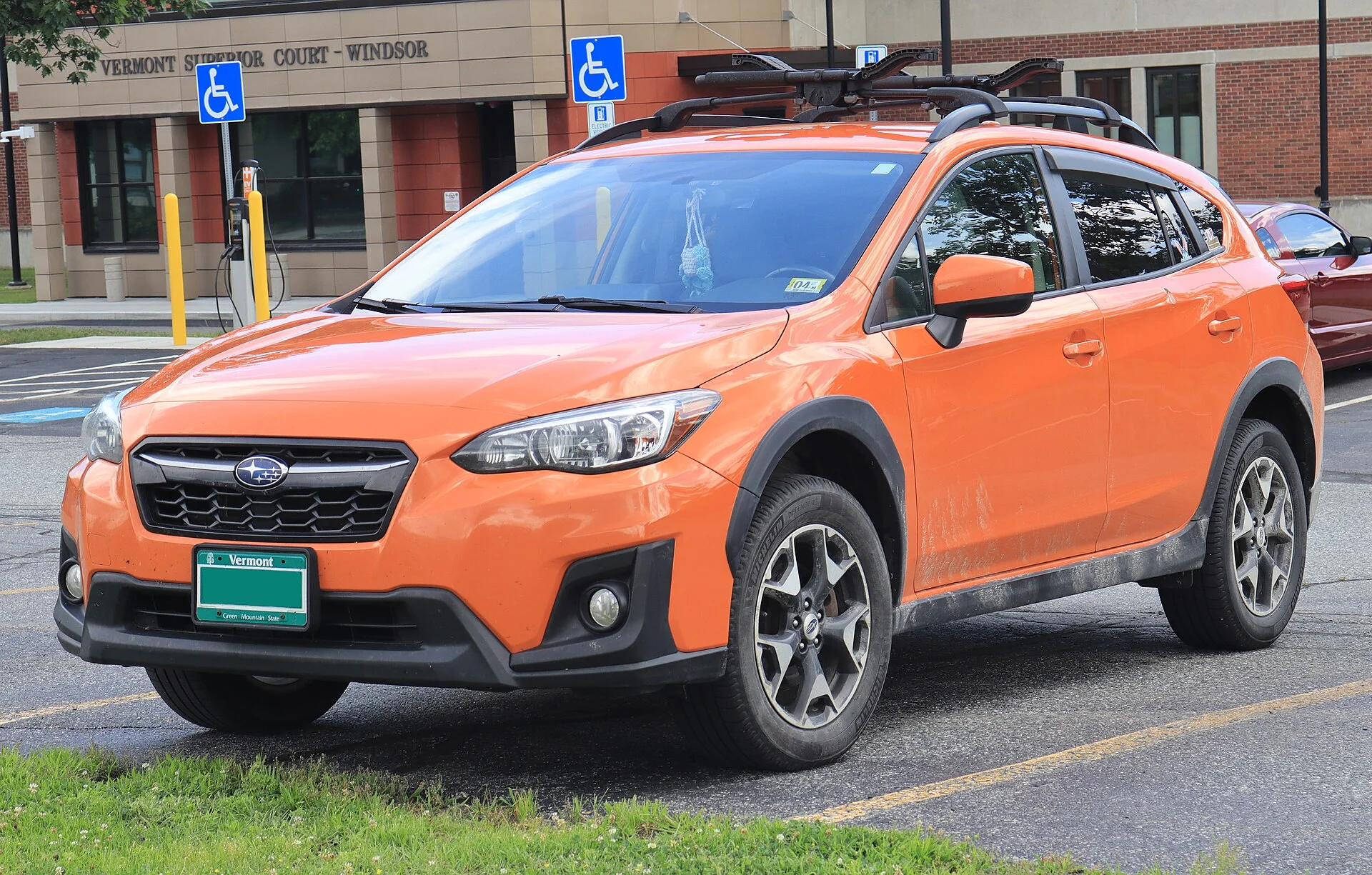
Here is where the Crosstrek earns its keep, and it is not a small thing. Every Crosstrek comes standard with Subaru Symmetrical All-Wheel Drive on every trim - a full-time system, not a reactive one. The gas RAV4, by contrast, is front-wheel drive standard, with all-wheel drive an option that costs about $1,400 more. To match the Crosstrek's traction, you pay extra on the RAV4.
Clearance goes the Crosstrek's way too. The Crosstrek has 8.7 inches of ground clearance, rising to 9.3 inches on the Wilderness trim, while the RAV4 sits at about 8.4 inches and as low as 8.1 on some trims. It is not a huge gap, but combined with standard all-wheel drive it means the Crosstrek reaches rougher, less-maintained campsites with more confidence out of the box.
The honest framing is that the Crosstrek is the more capable trailhead tool as delivered, and the RAV4 needs its optional all-wheel drive to close the gap. For a camper whose sites are down rutted forest roads, the Crosstrek's standard traction and higher clearance are the specs that matter - and they are exactly the ones the RAV4's bigger box makes you trade away, or pay to recover.
Range: The Crosstrek Goes Farther Between Fills
Remote camping rewards range, and the Crosstrek quietly wins here. It carries a 16.6-gallon fuel tank supporting a driving range of over 540 miles, while the RAV4 LE holds 14.5 gallons. That bigger tank means fewer fuel stops on a long haul to the backcountry and more margin when the next station is a long way off.
For a camper who ventures far from services, that range difference is practical, not academic. Over 540 miles between fills covers a lot of dirt road and a lot of nights without a gas station, which is exactly the situation the Crosstrek's standard all-wheel drive is built for. The two capabilities reinforce each other - the Crosstrek is the go-far, go-rough choice.
The RAV4's smaller tank is a minor knock, not a dealbreaker, and it is efficient enough to have competitive total range. But if you regularly drive deep into areas where fuel is scarce, the Crosstrek's extra tank capacity is one more point in its favor. The skeptic tallies it on the capability side of the ledger, alongside the traction and clearance. Add them up and a clear pattern emerges: nearly every point that helps you reach and survive a remote site lands in the Crosstrek's column, while nearly every point about comfort once you arrive lands in the RAV4's.
Power and Efficiency: A Near-Wash
Neither vehicle is quick, and for camping duty both are plenty. The Crosstrek's base 2.0-liter Boxer makes 152 horsepower and 145 lb-ft of torque, with an available 2.5-liter Boxer making 182 horsepower and 178 lb-ft. The RAV4's 2.5-liter four-cylinder makes 203 horsepower and 184 lb-ft - the strongest of the bunch, so the RAV4 is the more powerful vehicle, especially against the base Crosstrek.
Efficiency is close enough to call a wash. The Crosstrek earns up to an EPA-estimated 26 mpg city and 33 highway with the 2.0-liter, and the gas RAV4 earns 27 city and 35 highway with front-wheel drive, 27 and 34 with all-wheel drive. The RAV4 is marginally thriftier per gallon, but the Crosstrek's bigger tank gives it the longer legs between stops despite that.
The skeptic's verdict on the powertrains is that they do not decide anything. The RAV4 has more power on paper, the Crosstrek offers an engine upgrade to nearly match it, and fuel economy is a rounding difference. Unless you specifically want the RAV4's stronger base engine, power and efficiency are a near-tie that pushes the decision back to size versus capability.
Price: The Crosstrek Starts Lower - But Check AWD Parity
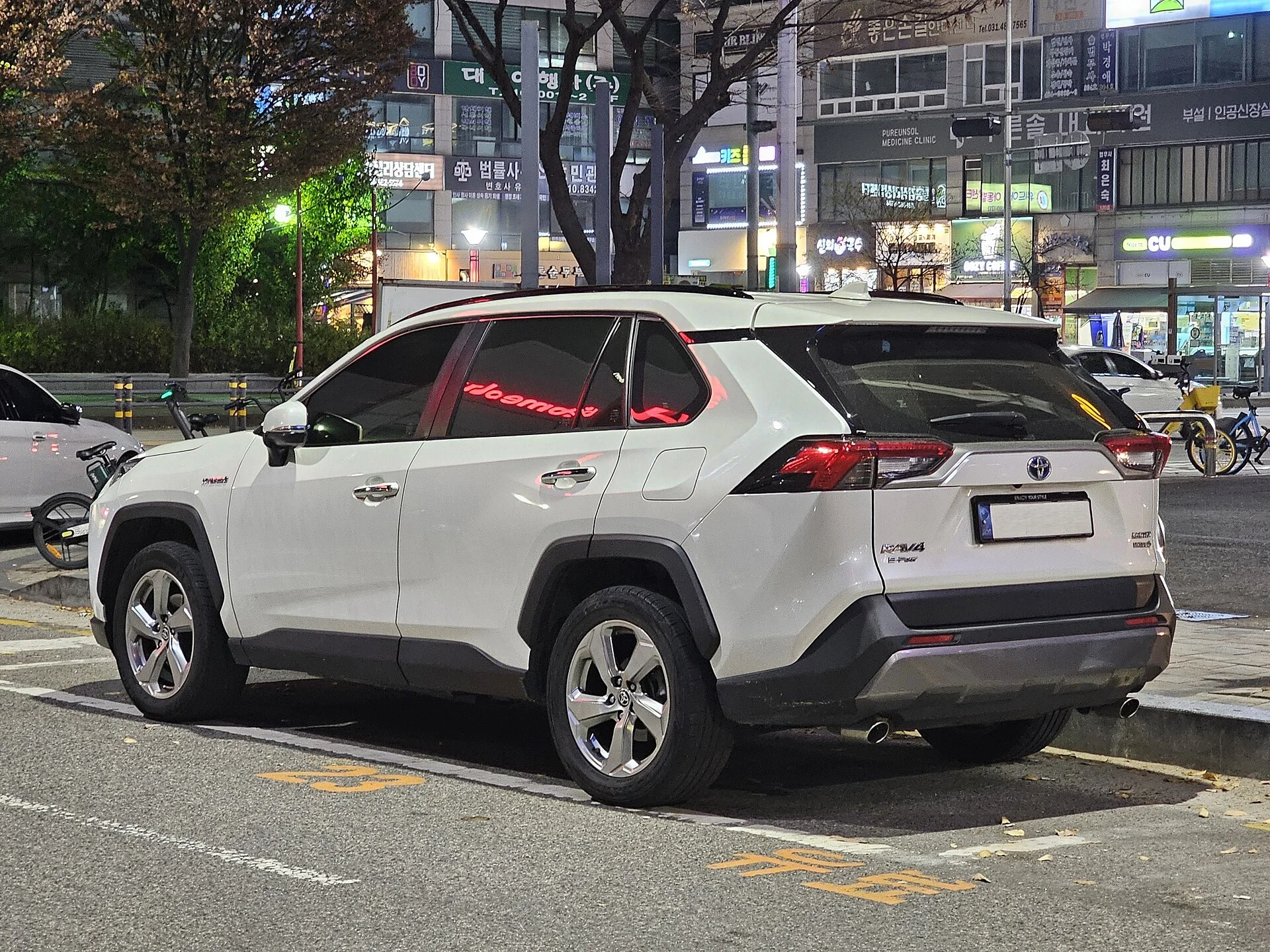
On sticker price the Crosstrek opens lower, and this is where a skeptic reads the fine print. The 2025 Crosstrek starts at $26,560 and runs to $33,360 for the Wilderness, all with standard all-wheel drive. The 2025 RAV4 starts at about $29,250 for the front-drive LE, with all-wheel drive bringing the base to roughly $30,650.
The apples-to-apples comparison is the one that matters. A base Crosstrek with all-wheel drive at $26,560 undercuts an all-wheel-drive RAV4 at roughly $30,650 by about four thousand dollars - and the Crosstrek's AWD is standard while the RAV4's is a paid add-on. If you want all-wheel drive, which most campers should, the Crosstrek is clearly the cheaper way to get it.
The RAV4's premium buys the bigger box and the stronger engine, and for a camper who prioritizes sleeping room, that may be worth it. But do not compare a front-drive RAV4 price against a standard-AWD Crosstrek and conclude they are close - that is the comparison that flatters the RAV4. Spec both with all-wheel drive, and the Crosstrek's value advantage is real and sizable.
Who Should Buy the Crosstrek
The Crosstrek is the right pick for the camper who prioritizes getting there over sprawling out. If your sites are down rough forest roads, if you want all-wheel drive without paying extra for it, and if you value the higher 8.7-inch clearance and 540-plus-mile range, the Crosstrek is the smarter buy. It is the trailhead tool of the two, standard.
It is also the value pick for a solo or budget-minded camper. At a $26,560 starting price with standard all-wheel drive, it undercuts a comparably equipped RAV4 meaningfully, and a shorter solo sleeper simply will not miss the roughly 15 cubic feet of extra room the RAV4 offers. For one person and a twin-scale pad, 54.7 cubic feet is enough.
The Crosstrek's ceiling is space, and for the right camper that ceiling never gets in the way. If you camp alone or as a close pair who do not mind snug, chase rough and remote sites, and want the most capability per dollar, the Crosstrek is the buy. You give up sleeping room and gain trail access, range, and value - a good trade for a lot of people.
Who Should Buy the RAV4
The RAV4 earns its premium for anyone who prioritizes the sleeping space. That is taller campers who want a genuinely flatter, longer bed, couples who want to share the 69.8-cubic-foot box, and gear-heavy campers who fill 37.5 cubic feet behind the seats without trying. For these buyers, the extra room is the whole reason to pick the bigger vehicle.
It is also the pick for a camper who wants more power and does not need maximum off-pavement capability. The RAV4's 203-horsepower engine is the strongest here, and if your sites are reached by decent roads rather than rough two-tracks, its standard front-wheel drive - or optional all-wheel drive - is plenty. You are buying room and power, not rock-crawling ability.
Just go in clear-eyed on the trade. To match the Crosstrek's traction you add about $1,400 for all-wheel drive, and even then you sit a little lower and carry less fuel. For a camper who values sleeping room and passenger cargo above trailhead access, that is a fair exchange, and the RAV4 is the more comfortable home base. A good car camping mattress for an SUV in that 69.8-cubic-foot box makes a genuinely roomy bed.
The Verdict: Room vs Reach
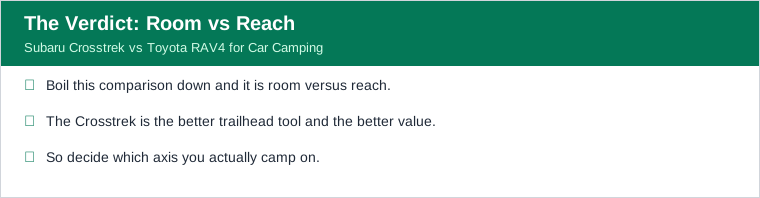
Boil this comparison down and it is room versus reach. The RAV4 is the bigger sleeper - 69.8 cubic feet folded and 37.5 behind the seats, with the strongest engine of the two - so a taller camper or a couple lies more comfortably in it. If sleeping room is your top priority, the RAV4 is the honest pick, and the size claim holds up on the spec sheet.
The Crosstrek is the better trailhead tool and the better value. Standard Symmetrical All-Wheel Drive on every trim, 8.7 inches of clearance, and a 16.6-gallon tank for over 540 miles of range make it the go-rough, go-far choice - and at $26,560 with AWD standard, it delivers that capability for less than an all-wheel-drive RAV4 costs.
So decide which axis you actually camp on. Bigger box and more power, or better traction, more clearance, longer range, and a lower price for all-wheel drive. There is no wrong answer here - both are proven, all-weather crossovers that reach a campsite and last for years. Match the vehicle to whether you value stretching out or reaching farther, and buy accordingly - because on this pairing, the honest answer really is that different, and knowing your own camping style settles it faster than any spec chart.