Road Trip Gear

Understanding Solar Panel Wattage for Charging Your Generator

Casey - The Weekend Warrior
4 min read
Includes Video

My first portable solar panel was a 100-watt foldable unit I snagged on Amazon for $150. I figured more watts meant faster charging for my cheap power station. Turns out, that number is more of a suggestion from the manufacturer.

My first portable solar panel was a 100-watt foldable unit I snagged on Amazon for $150. I figured more watts meant faster charging for my cheap power station. Turns out, that number is more of a suggestion from the manufacturer. I was out at Big Meadows campground in Shenandoah, the sun was blazing, and my power station was barely ticking up. The honest version: that 100W panel was realistically spitting out maybe 60W on a good day.

It took me 12 hours of prime sunshine to get a full charge. That's a rookie mistake I won't make again. Understanding solar panel wattage isn't rocket science, but it's definitely not as simple as the box claims.
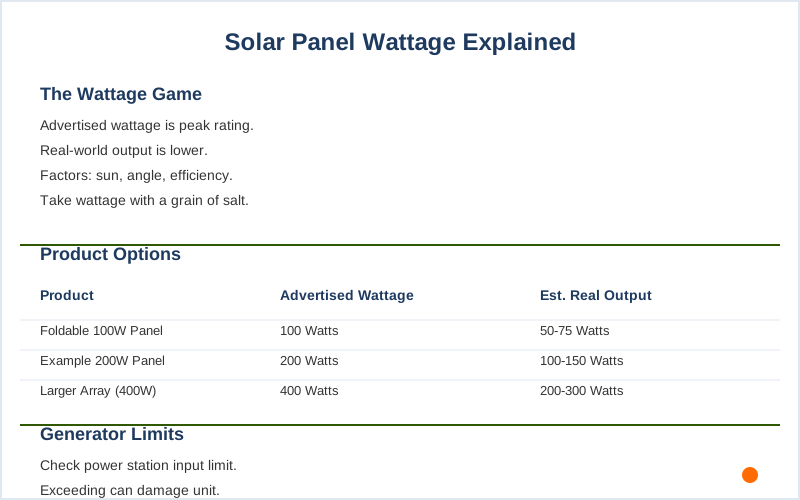
Understanding Solar Panel Wattage for Charging Your Generator — Key Specifications Compared
Key specifications for Understanding Solar Panel Wattage for Charging Your Generator

The Core Answer

The Wattage Game

The number you see on a solar panel, like 100W or 200W, is its peak rating under perfect conditions. Think of it as the best-case scenario, like a car manufacturer claiming 50 miles per gallon. In the real world, you're rarely going to hit that number consistently. My 100W panel, which I bought for $150, often delivered closer to 50-75% of its advertised wattage. That means a 100W panel might actually give you 50 to 75 watts of power in good sunlight. Popular Mechanics explains this is due to factors like sunlight intensity, angle, and panel efficiency. It's not a scam, but it's definitely a number to take with a grain of salt. The real move is to understand that your actual output will be lower. If your power station has a 200W solar input limit, plugging in a 400W panel array won't make it charge faster. In fact, it could potentially damage the unit. Always check the solar input limit on your power station. Natures Generator points out that exceeding this limit can fry the charge controller. So, more watts isn't always better if your generator can't handle it. You need to match your panel wattage to your generator's input capacity. A 100W panel is a good starting point for most smaller power stations, giving you a decent charge time in good sun. For faster charging, you'll need higher wattage panels, but make sure your generator can accept the higher input. OUPES says the more powerful the panel, the faster it charges. It's a balancing act. My mistake was buying the biggest panel I could find without checking if my budget generator could even use all that power. The honest version: aim for panels that are rated slightly higher than your generator's input limit, but don't go crazy. For example, if your generator accepts 200W, a 220W or 250W panel might be your sweet spot. This gives you a little buffer for less-than-ideal conditions. Reddit users often discuss this, noting that solar wattage dictates charge speed and output wattage dictates discharge speed. You want your input to match your needs and your generator's capabilities.
Understanding wattage is crucial, especially when considering how long your solar generator can last on a single charge; learn more about it here.
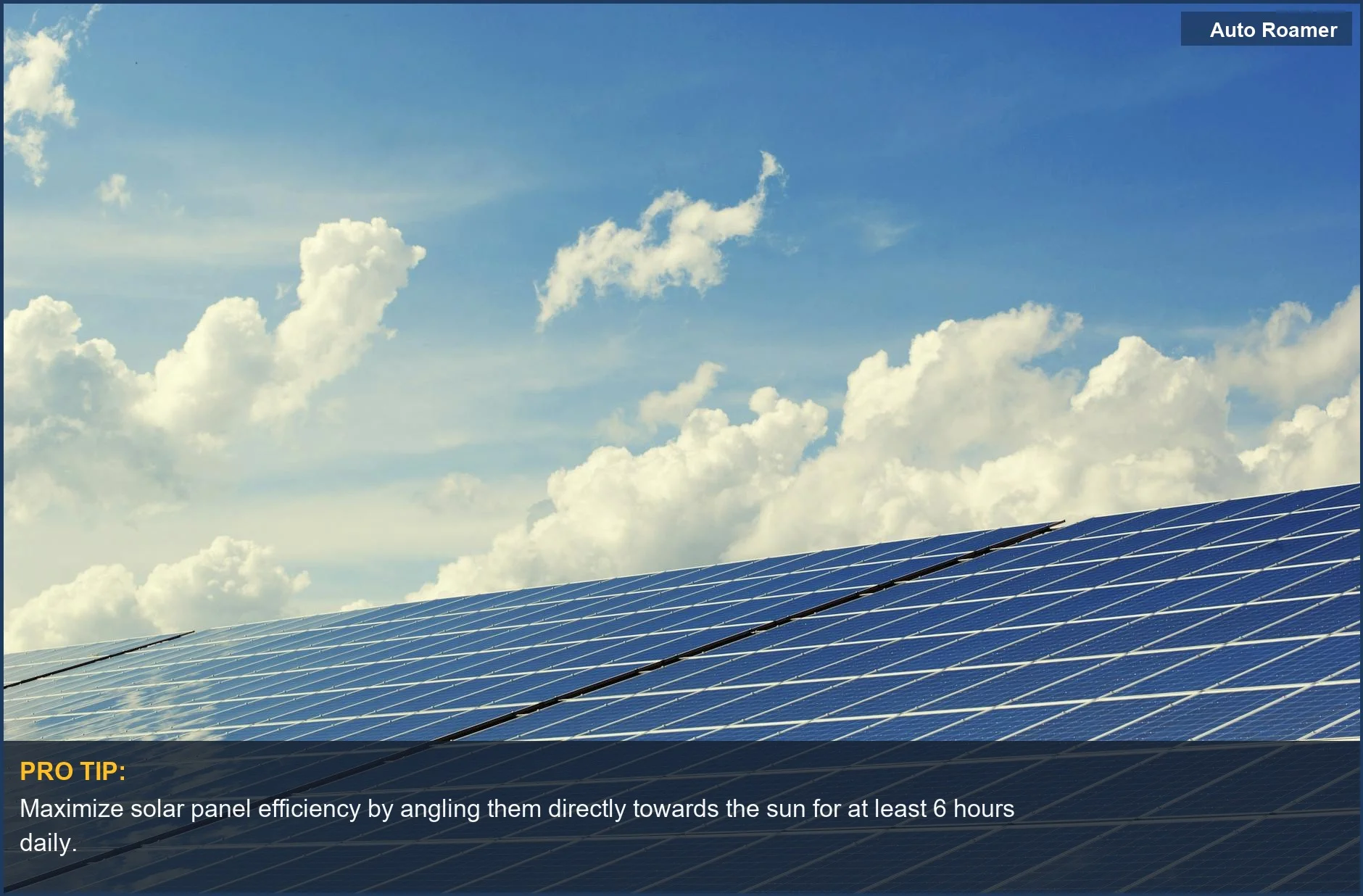
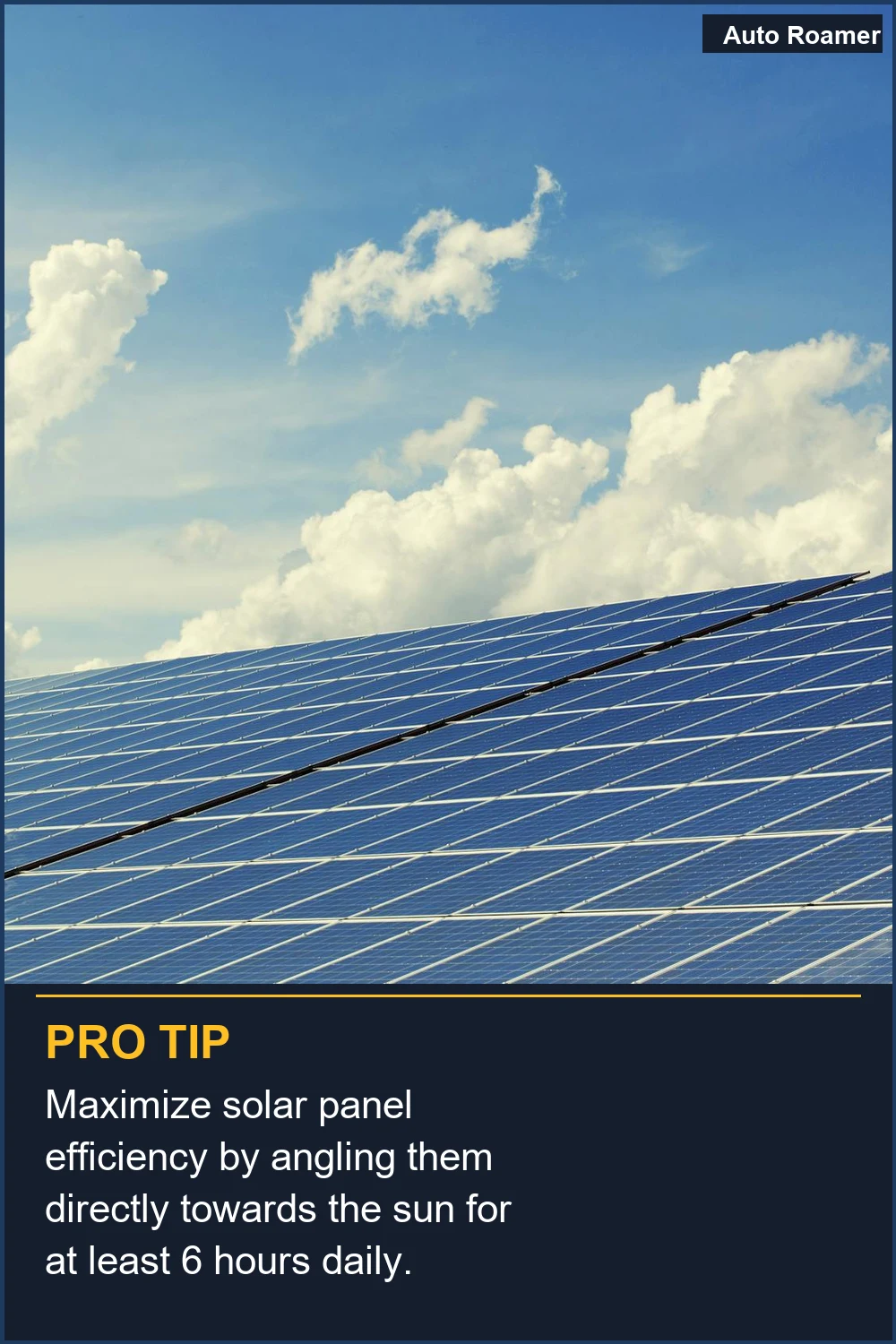
Maximize solar panel efficiency by angling them directly towards the sun for at least 6 hours daily.
Sleek solar panels symbolize clean energy. Understanding peak wattage helps estimate solar generator charging speed, but real-world output varies. | Photo by Pixabay

Why This Matters for Your Setup

  • Realistic Charging Times: Don't expect your $200, 100W panel to fully charge a 500Wh power station in a single afternoon. My first attempt at camping at a state park in Pennsylvania took 1.5 days to get my power station back to 100% with a 100W panel, and that was with clear skies. Anern Store mentions a 1000Wh generator can power a 100W device for about 10 hours. Your charging input needs to be significant to keep up.
  • Avoiding Damage: Overpowering your generator's solar input is a genuine risk. I've seen folks on Facebook groups fry their charge controllers because they hooked up too many panels without understanding the voltage and wattage limits. It's like trying to fill a teacup with a fire hose.
  • Budgeting Your Setup: If you're aiming for a quick charge, you'll need more wattage, which means more panels and a higher cost. A 200W panel setup will cost more than a 100W setup, but it will charge your generator significantly faster. For example, a decent 200W foldable panel might run you $300-$400, whereas a 100W unit can be found for $150-$200. It's a trade-off between upfront cost and charging speed.
  • Understanding how wattage impacts your setup will also help you consider the factors affecting solar panel efficiency.
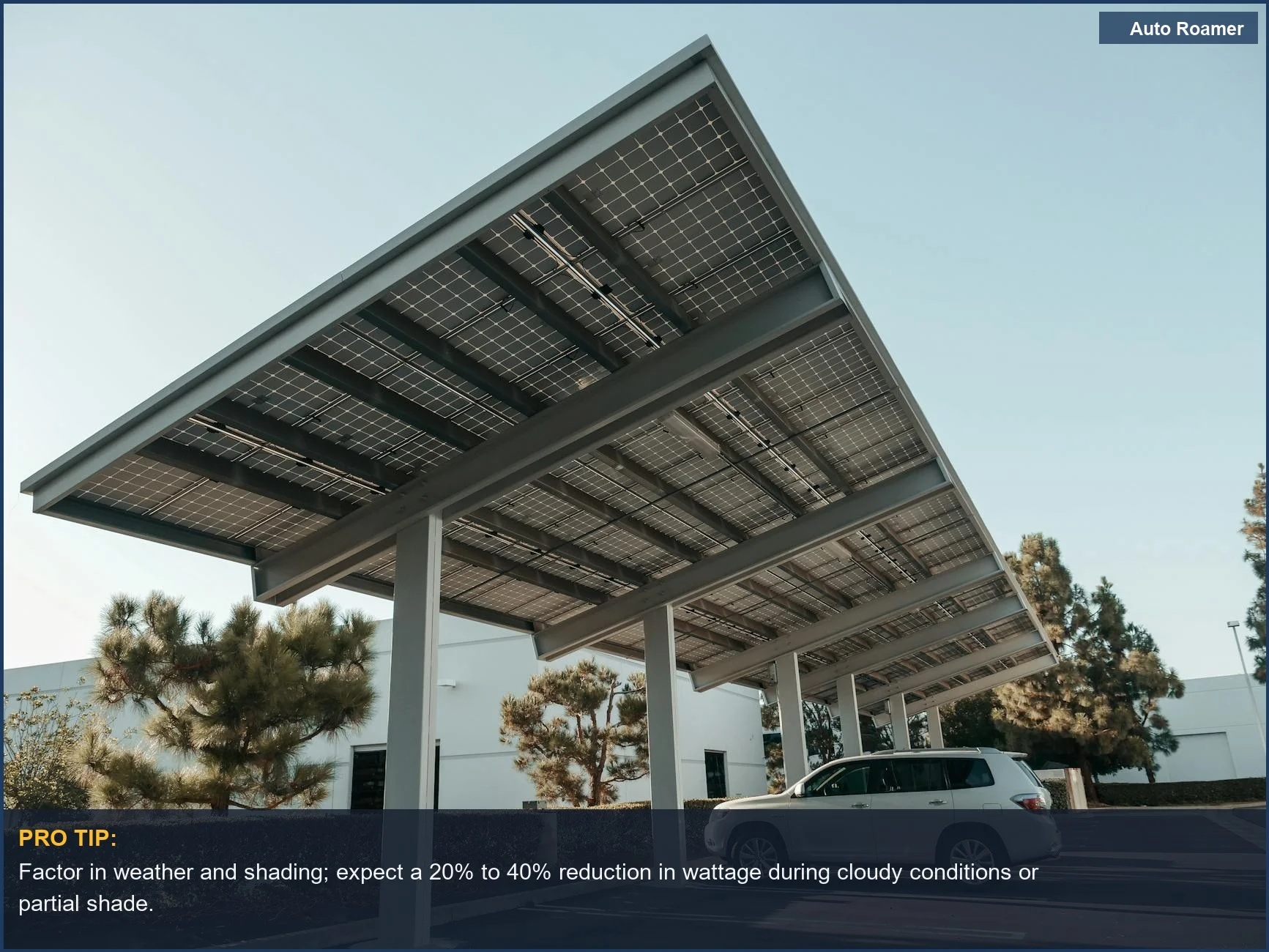
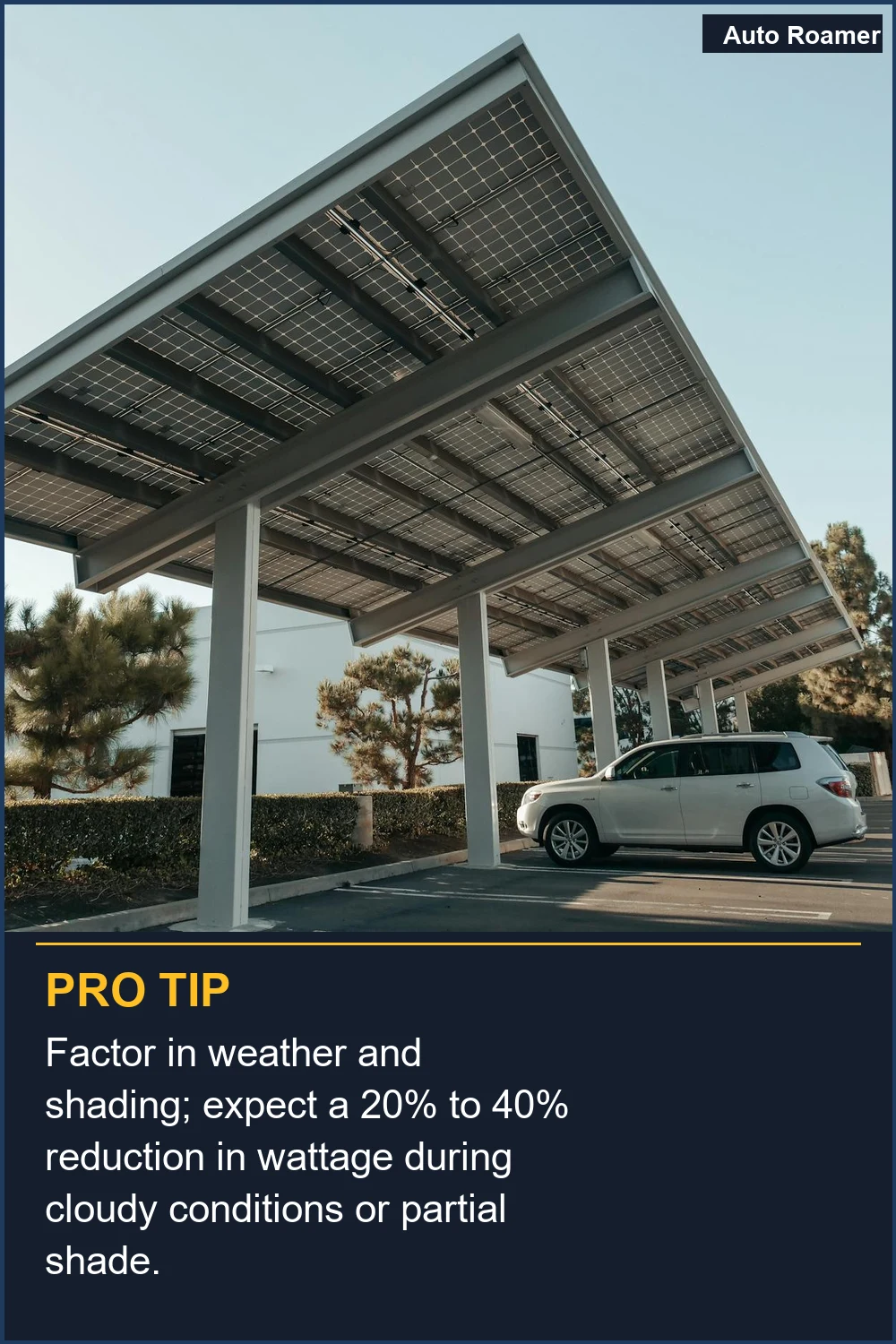
    Factor in weather and shading; expect a 20% to 40% reduction in wattage during cloudy conditions or partial shade.
    Urban solar carports showcase clean energy. This setup highlights how solar panels can power devices, crucial for understanding generator charging. | Photo by Kindel Media

    Making the Right Choice

  • Don't Get Fooled by the Sticker: That wattage number on the box is a starting point, not a guarantee. My $150 100W panel was a lesson in managing expectations. Real-world output is almost always lower. GreenLancer notes that STC (Standard Test Conditions) are used for ratings, not your actual campsite.
  • Match Panel to Generator: This is the most critical rule. Check your generator's maximum solar input wattage. Trying to feed it more power than it can handle is a recipe for disaster. I learned this the hard way when my first generator just wouldn't charge efficiently, even with a big panel. Anern Store clearly defines these specs.
  • Consider Your Needs: If you're just topping off a phone and a small speaker, a single 100W panel might be fine. If you're running a small fridge or need to recharge a larger power station quickly, you'll need to invest in higher wattage panels and potentially multiple panels. The goal is to have enough power generation to meet your actual usage.
  • YouTube has plenty of examples of people building custom setups, but for beginners, stick to reputable brands and understand the specs.
    To maximize your energy efficiency, consider what appliances a solar generator can power while camping by exploring solar generator capabilities.
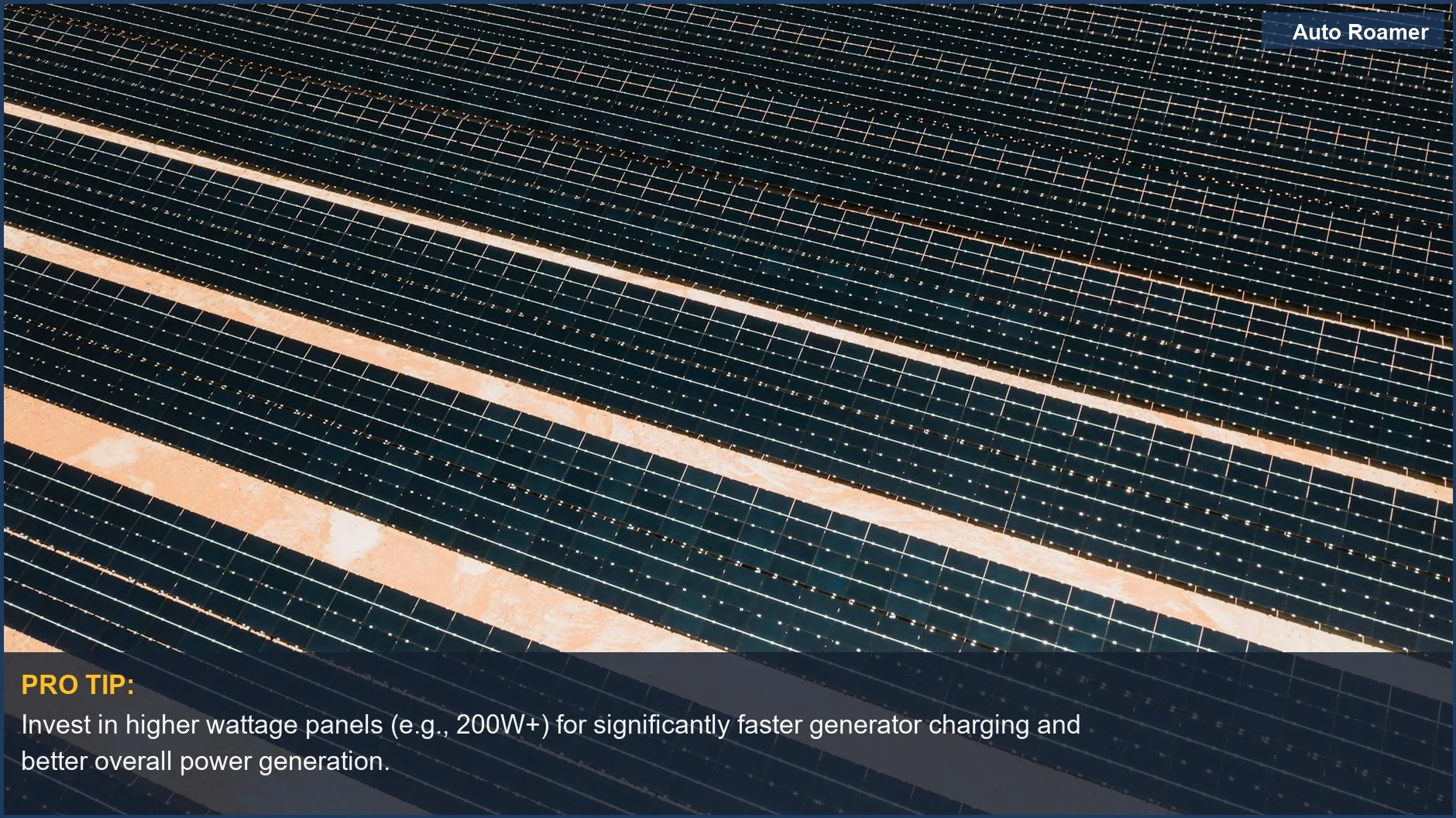
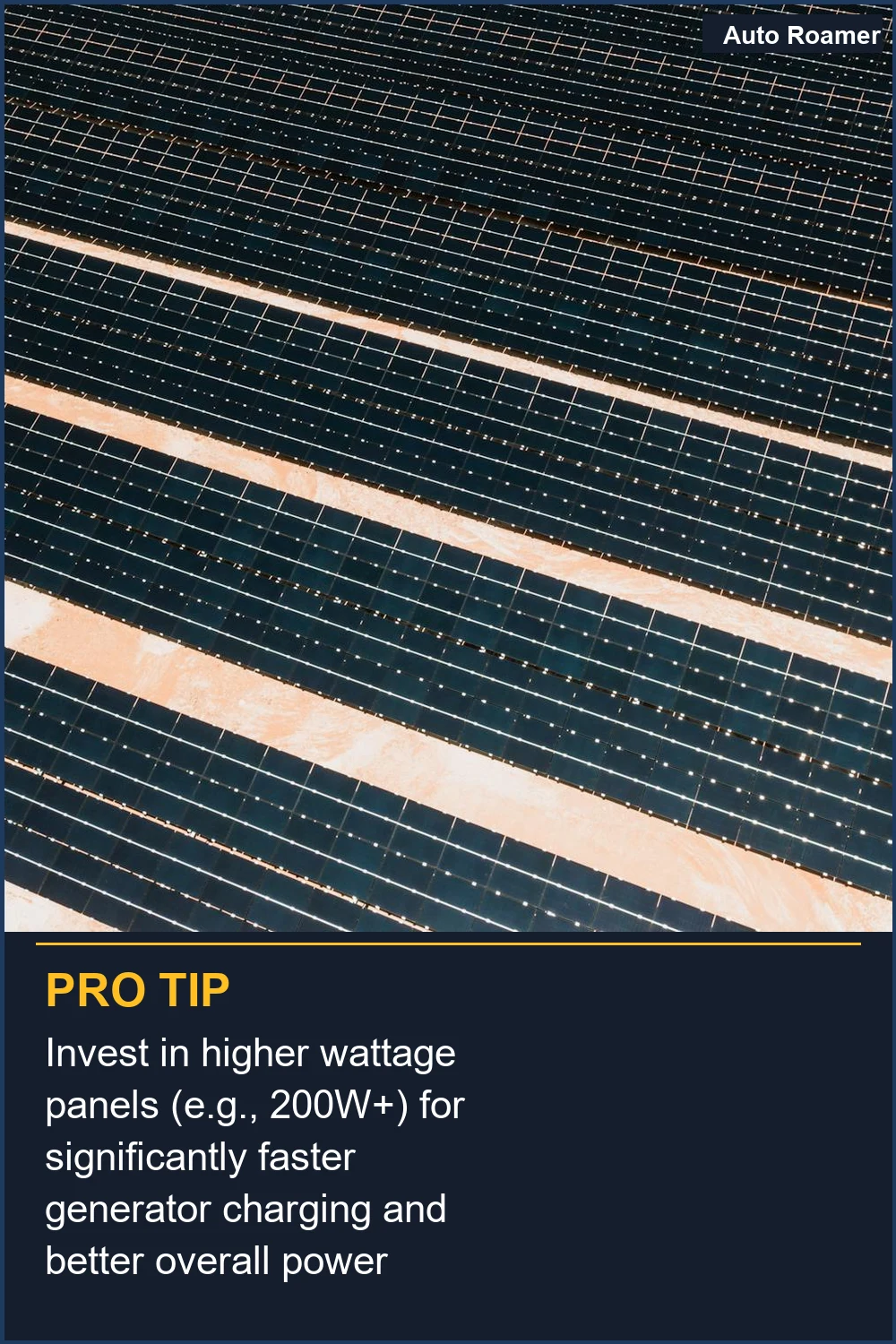
    Invest in higher wattage panels (e.g., 200W+) for significantly faster generator charging and better overall power generation.
    Rows of solar panels efficiently harness energy. When selecting panels for your generator, consider wattage as a guide for charging speed. | Photo by Kelly

    Frequently Asked Questions

    I found a guy selling a used 300W solar panel for $150. My power station's max solar input is 200W. Should I just buy it and only hook up enough panels to get to 200W?
    Absolutely not. This is a classic rookie mistake. Trying to 'throttle' a panel's output by only connecting part of it isn't how it works and could still fry your generator's charge controller. You need panels specifically designed to output within your generator's input limits, or use a charge controller that can manage the excess. Just buy a panel rated for 200W or slightly above, like 220W, and be done with it. My first 100W panel cost $150, so $150 for a 300W panel sounds suspicious anyway.
    Do I really need to buy a fancy solar panel connector, or can I just strip some wire and use electrical tape?
    For the love of all that is holy, NO. Use the proper connectors. My first setup at Ricketts Glen State Park involved some iffy connections that sparked more than my campfire. The connectors are designed for weather resistance and a secure fit, preventing power loss and potential shorts. Buy the right adapter for your panel and generator, usually around $20. It's not worth the risk of a fire or damaging your gear for a few bucks saved.
    What if I buy a 200W panel, but it only ever outputs 100W even on the sunniest days?
    That's pretty common, actually. As I've said, the advertised wattage is a best-case scenario. If your 200W panel is consistently giving you 100W, that's still within the realm of normal performance variation. It means your charging time will be longer, but it's not necessarily 'broken.' Just make sure the panel's voltage is within your generator's acceptable range. My 100W panel often produced closer to 60W, and I just factored that into my trip planning.
    Can using a solar panel that's too powerful for my generator permanently damage the generator's battery?
    Yes, absolutely. If you connect a panel that far exceeds your generator's input limit, you can easily blow the internal charge controller, which is the brain that manages charging. This can prevent the generator from charging at all, or worse, it can damage the battery over time due to improper charging. My friend blew the charge controller on his $500 power station by plugging in a massive array without checking the specs. It was a $50 lesson he wishes he hadn't learned.
    I heard that solar panels don't work when it's cloudy. Is that true?
    Not entirely. They work, but they're significantly less efficient. Think of it like trying to read a book in dim light versus bright sunshine. You can still read, but it's much harder. My 100W panel at Shenandoah would still trickle charge my power station on overcast days, but it would take days instead of hours. The wattage output drops considerably, but it's not a complete shutdown unless it's pouring rain or completely dark. Popular Mechanics notes that sunlight intensity is a key factor, so clouds definitely impact it.

    🏅 Looking for Gear Recommendations?

    Check out our tested gear guides for products that work with this setup:

    C

    Casey - The Weekend Warrior

    Weekend car camper and road trip enthusiast. Focuses on practical, budget-friendly solutions for families and first-time campers.

    Sources

    Related Articles