
What Are the Signs My Brakes Are About to Fail?
My first car camping trip was a $47 experiment in a Honda Civic hatchback in Shenandoah Valley. Mid-October. I had a Walmart foam pad, a sleeping bag rated to 40F, and zero idea that the temperature drops 15 degrees after midnight in the mountains.
My first car camping trip was a $47 experiment in a Honda Civic hatchback in Shenandoah Valley. Mid-October. I had a Walmart foam pad, a sleeping bag rated to 40F, and zero idea that the temperature drops 15 degrees after midnight in the mountains. By 2AM I was wearing every piece of clothing in my bag and still shivering. The fix was a $12 fleece liner from Amazon that turned my 40F bag into a 25F bag.
Three years later I still use that same liner on every trip.
When your car's brakes start acting weird, it's like your trusty camping tent suddenly decides to become a sieve. You don't want to be miles from civilization when that happens. Ignoring the little noises or feelings your car gives you is a rookie mistake that can turn a fun road trip into a terrifying ordeal.
The honest version: your brakes are literally the only thing between you and a very bad day, so pay attention to the signs they're starting to fail.
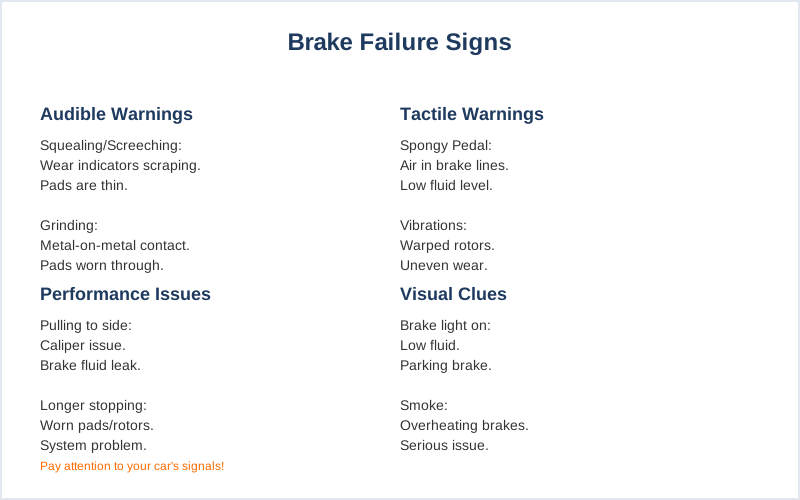
The Core Answer
The core answer to knowing if your brakes are about to fail is listening to your car and feeling what it tells you. It's not rocket science, it's just paying attention to what nobody tells beginners. Think of it like noticing your tent zipper is sticking before a big storm. You wouldn't wait until the wind rips it open, right? First up, noises. The most common sign is squealing or screeching when you brake. Most brake pads have little metal tabs called wear indicators. When the pad material wears down, these tabs start scraping against the rotor, making that awful high-pitched noise they need replacement. It's your car's way of shouting, 'Hey, I'm getting thin!'. Then there's grinding. If that squealing turns into a horrible metal-on-metal scraping sound, you've probably worn through the pads completely. Now the metal backing of the pad is grinding against your brake rotors. This is a game-changer, and not in a good way. It means you've likely damaged your rotors too, which makes the repair bill jump from a $50 pad job to potentially $200-$400 for pads and rotors costly repairs. Feel it in the pedal. If you notice a vibration or pulsation through the brake pedal or even your steering wheel when you brake, it's usually a sign of warped rotors or uneven pad wear feel wobbling or vibration. It feels like the car is shaking itself apart. This is your car telling you it can't stop smoothly anymore. Another big one is a sinking brake pedal. If you press the brake pedal and it feels soft, spongy, or sinks further towards the floor than usual, that's a major red flag. It could mean air in the brake lines or a leak in the hydraulic system. I once had a pedal sink on me going down a steep hill in the Rockies; let's just say my heart rate spiked higher than my car's RPMs reduced responsiveness. Finally, the dashboard warning light. That little red or yellow symbol that looks like a circle with an exclamation mark inside or the word 'BRAKE' is not for decoration. If it comes on while you're driving, it means something is wrong. It could be low brake fluid, a parking brake issue, or a more serious system problem warning light on dashboard. Don't ignore it, just like you wouldn't ignore a 'check engine' light on a long trip.Why This Matters for Your Setup
Why this matters for your setup is pretty simple: your car is your campsite shuttle, your grocery getter, and your escape route if a bear decides your cooler looks like a buffet. If your brakes are toast, none of that works.Making the Right Choice
Making the right choice about your brakes is about prioritizing safety over convenience. It's easy to put off car repairs, especially when things seem to be 'working,' but brake issues are not the place to gamble.Frequently Asked Questions
How much does it usually cost to fix squealing brakes versus taking it to a dealership?
Do I need any special tools to check my brakes at home, or can I just eyeball it?
What if I hear a squeal, but the brakes still feel okay and stop the car? Can I ignore it for a little while?
Can I permanently damage my car's brake system by driving with bad brakes for too long?
I heard that some squealing is normal when it's wet outside. Is that true?
🏅 Looking for Gear Recommendations?
Check out our tested gear guides for products that work with this setup: