
What R-Value Do You Need for Your Car Camping Sleeping Pad?
R-value is the temperature resistance rating for your sleeping pad. Think of it like the R-value in your house walls, but for your sleeping setup. It tells you how well that pad is going to keep you from losing body heat to the cold ground below.
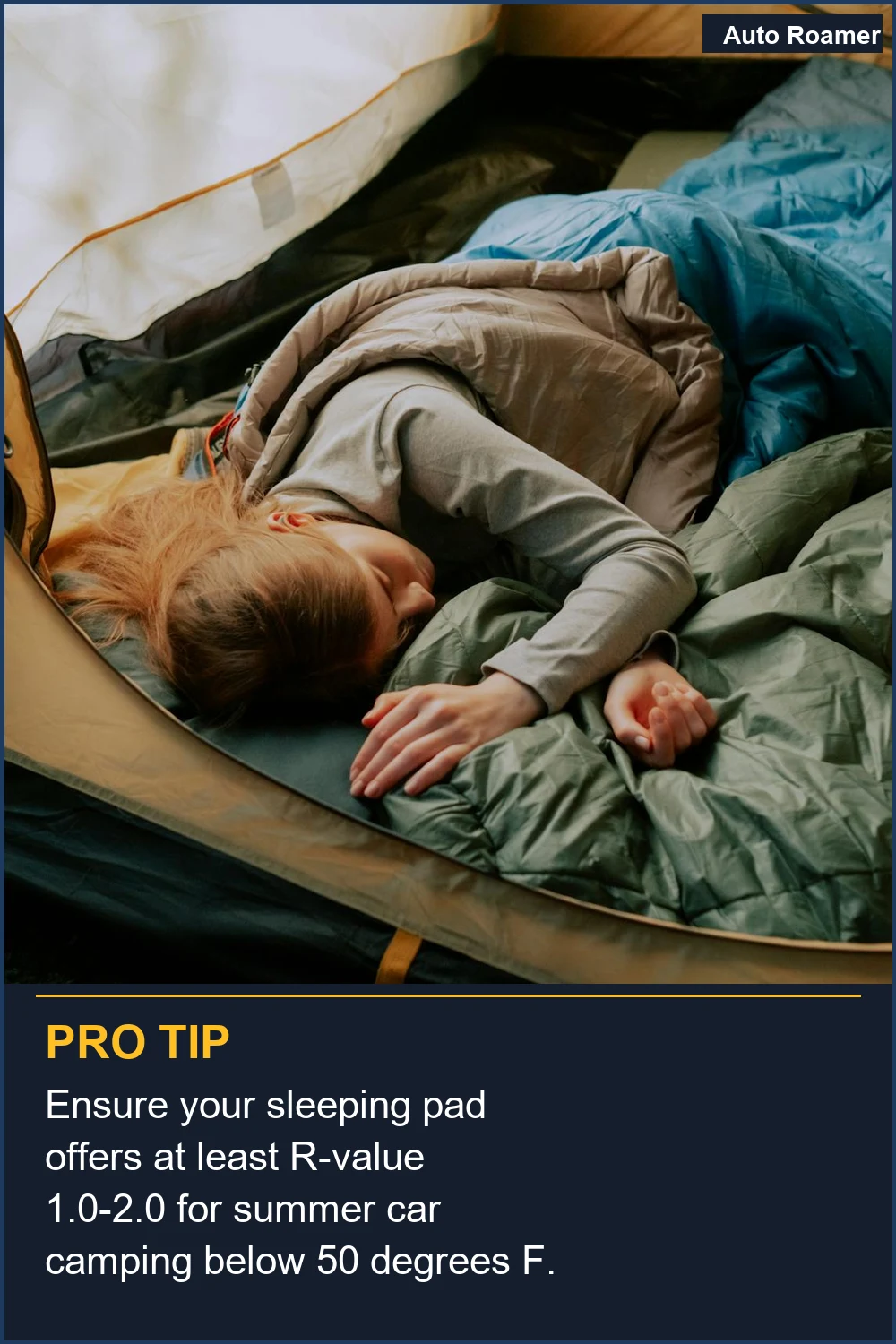
R-value is the temperature resistance rating for your sleeping pad. Think of it like the R-value in your house walls, but for your sleeping setup. It tells you how well that pad is going to keep you from losing body heat to the cold ground below. This number is crucial because even on a mild night, the ground can suck the warmth right out of you. Without the right R-value, your fancy sleeping bag is fighting a losing battle.
I learned this the hard way when I woke up shivering at 3 AM in Joshua Tree, even though the air temperature was a balmy 50 degrees F. My cheap, thin pad had an R-value of maybe 0.5, max. It was basically a glorified yoga mat.
The Core Answer
The honest version: you don't need to be a physicist to pick a sleeping pad. You just need to know what R-value you need for where you're going to camp. For warm summer nights, when it's not dipping below 50 degrees F, a pad with an R-value of 1.0 to 2.0 is usually enough. That's your basic warm-weather setup. If you're going for three-season camping, meaning spring, summer, and fall, and you might hit temperatures down to freezing (32 degrees F), you'll want to bump that up. Aim for an R-value between 2.0 and 4.0. This covers most of the camping I do from April through October. This is your versatile sweet spot. Now, if you're serious about car camping in the cold, or even just want to be extra cozy on those chilly fall nights, you need more insulation. For winter camping or situations where temps drop below 20 degrees F, you're looking at an R-value of 4.0 and up. Some folks even go for 5.0 or higher for serious winter conditions. I've heard from people in upstate New York who swear by R-values of 5 or more for their car camping trips, even in a vehicle. What nobody tells beginners is that R-value is additive. If you have a pad with an R-value of 3.0 and stack another pad with an R-value of 2.0 on top, you effectively have an R-value of 5.0. This is a game-time move for when you want extra warmth without buying a whole new pad. I did this during a surprisingly cold trip to the Smokies in late September and it saved my night. So, the real move is to match the R-value to the expected conditions. Don't overbuy for summer trips, but definitely don't skimp if you plan on cold nights. It's about smart insulation, not just having the thickest pad.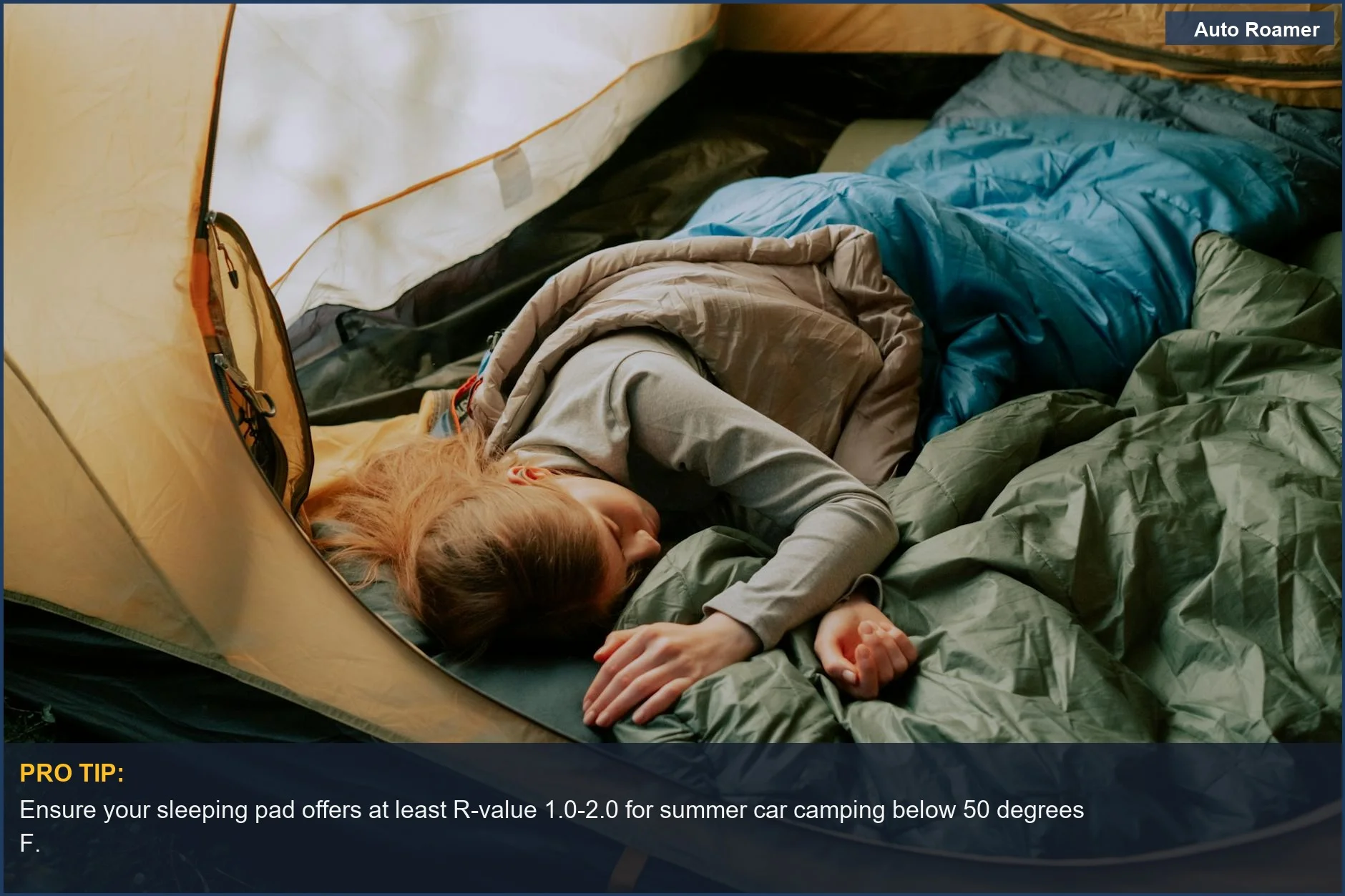
Why This Matters for Your Setup
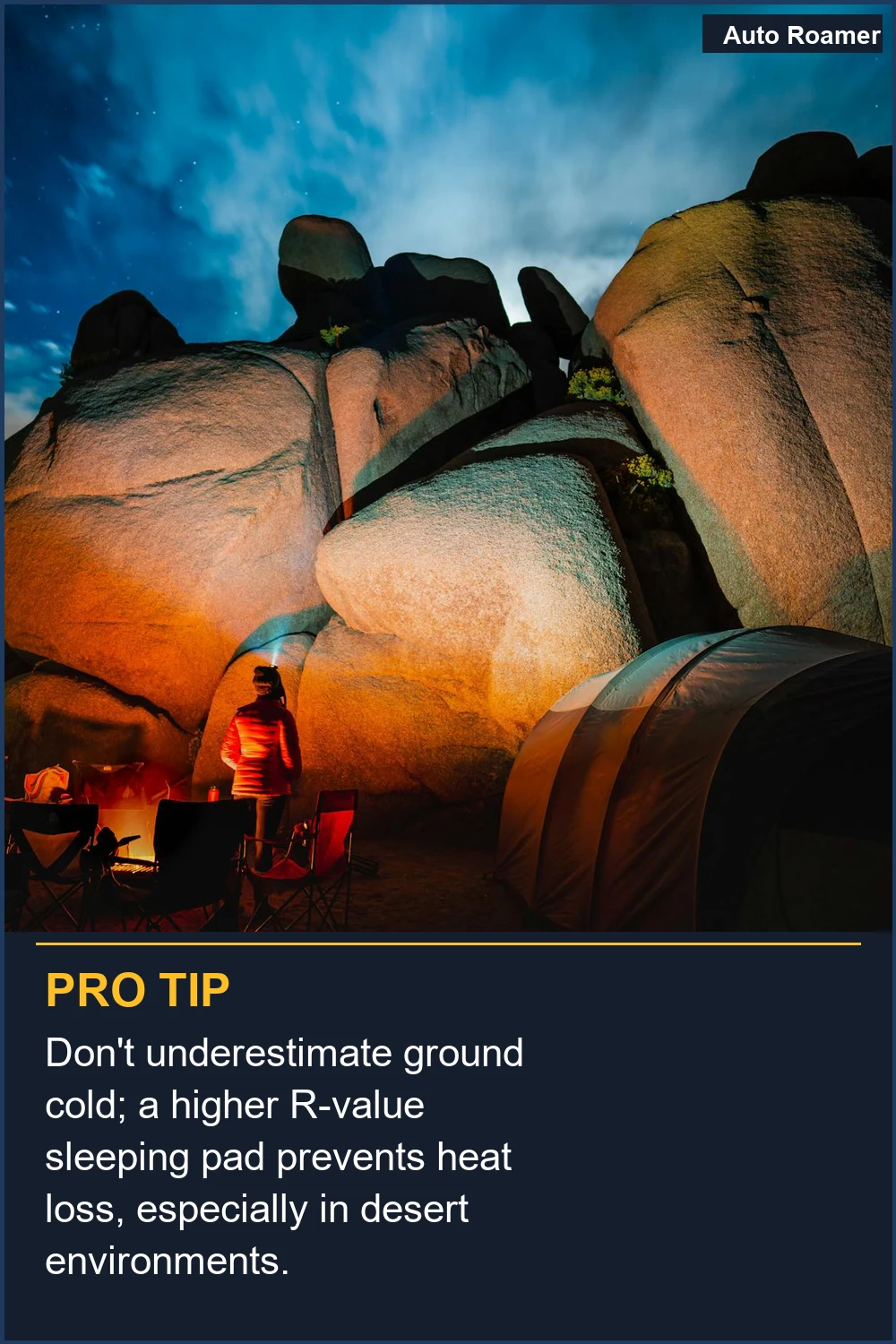
Why does this R-value number even matter for your actual setup? Because the ground is a massive heat sink. I learned this at a campsite in Big Bend National Park. It was supposed to be mild, but at 3 AM, the desert floor was radiating cold like a meat locker. My sleeping bag was rated for it, but my feet were numb. Here's the breakdown:
Making the Right Choice
Choosing the right R-value is less about fancy gear and more about being smart with your money and comfort. You don't need the most expensive pad if you're only camping in July. Here's the quick take: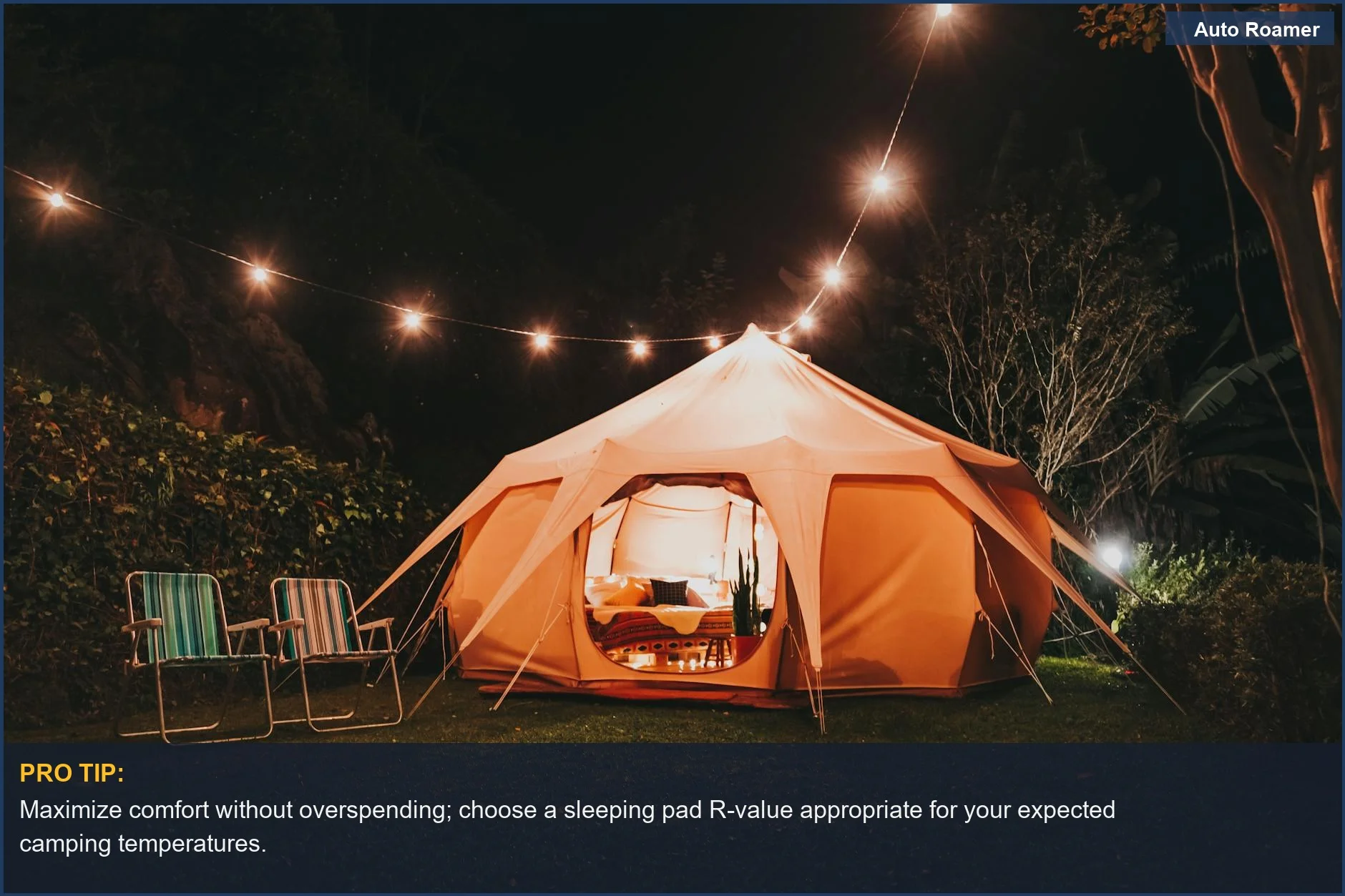
Frequently Asked Questions
So, if I buy a cheap foam pad for $20 and stack it with my $100 inflatable pad, I'm basically getting the warmth of a $120 pad?
Do I need one of those fancy R-value testers to check my sleeping pad?
What if I buy a pad with an R-value of 4.0 for winter, but it's still not warm enough?
Will using a really low R-value pad damage my sleeping bag?
I heard you can just use a bunch of blankets instead of a sleeping pad. Is that true?
🏅 Looking for Gear Recommendations?
Check out our tested gear guides for products that work with this setup:
Sources
- What does R-Value Mean and Why Does it Matter When Camping?
- R-Value Ratings Explained: How to Choose the Right Sleeping Pad.
- Car Camping R Value : r/CampingGear - Reddit
- What is a good R value for a four-season sleeping pad?
- what-is-a-good-r-value-for-a-sleeping-pad?srsltid=AfmBOooVLLPHbCL-avKKQo-JZzV8W-j1QRn1f-4aje0NT4Ue-7-gaFJ_
- Sleeping Pad R-Value Explained With Chart - Alton Goods
- What is R-Value in Camping Mattresses - Luno
- How to Choose a Sleeping Pad for Camping and Backpacking - REI