Car Camping

Powering Your Portable Washing Machine on a Car Camping Trip

Casey - The Weekend Warrior
5 min read
Includes Video

My first portable washing machine was a $150 gamble I picked up on Amazon, powered by a $300 power station. I figured, why not wash my clothes at the campsite? I had visions of sparkling clean socks after a muddy hike in the Adirondacks.

My first portable washing machine was a $150 gamble I picked up on Amazon, powered by a $300 power station. I figured, why not wash my clothes at the campsite? I had visions of sparkling clean socks after a muddy hike in the Adirondacks. Turns out, powering that little spinner is more involved than just plugging it in. It's not like your home outlet just magically appears in the woods.

These mini washers are great because they use less water, but they still need juice. I learned this the hard way when my power station died halfway through a load. Rookie mistake, for sure.
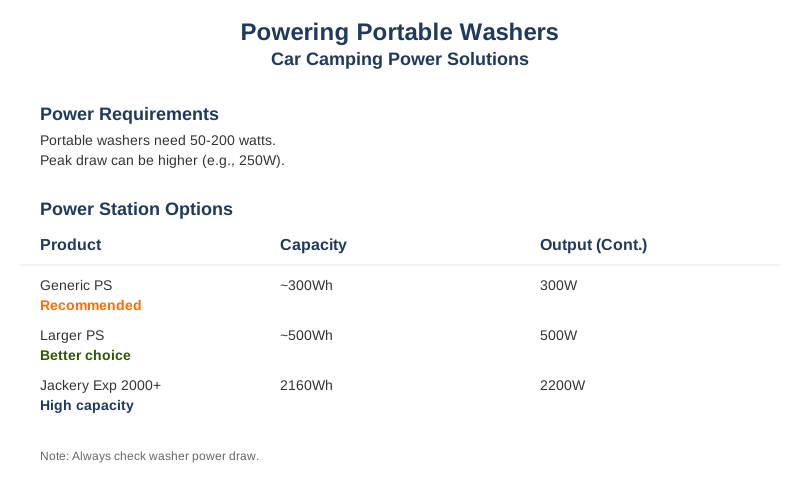
Powering Your Portable Washing Machine on a Car Camping Trip — Key Specifications Compared
Key specifications for Powering Your Portable Washing Machine on a Car Camping Trip

The Core Answer

So, you want to wash clothes while camping without hauling them to a laundromat? Smart. The real move here is understanding your portable washing machine's power draw. Most of these little guys, the ones that actually spin and drain, pull somewhere between 50 and 200 watts while running. For example, the Deodap portable washing machine I saw online is rated at 250 watts, but that's peak. Portable power stations are your best bet for this kind of thing. Forget trying to run it off your car's cigarette lighter; that's a recipe for a dead battery and a long walk. A dedicated power station is designed for this. My first attempt involved a cheap 100-watt power bank I used for my phone. It lasted about 10 minutes before sputtering out. I was trying to wash a single pair of hiking socks at a state park in Ohio. The honest version: you need something with a bit more grunt. Look for a power station with at least a 300-watt continuous output. A 500-watt unit is even better, giving you some breathing room. I've been using my Jackery Explorer 2000+ for this, and it's overkill but fantastic. It can run my washer for hours. What nobody tells beginners is that the wattage number on the washer isn't the whole story. You also need to consider the amp-hours (Ah) or watt-hours (Wh) of your power station. This tells you how long it can *sustain* that power. A 500-watt machine running on a 500Wh battery will last you about an hour. If your washer pulls 100 watts, a 500Wh battery will give you roughly 5 hours of run time. Simple math, but important. Washing machines in campers often need an inverter, which is basically what a power station is. It converts DC power to AC power your appliance needs. The $50 version of this is trying to do laundry by hand in a stream. The $300-$500 version is a portable power station that can handle it. I paid $300 for my first decent one, and it's been worth every penny not having to smell my own funk for a week. You can wheel it over to a water source, but you still need to power it. Don't skimp here, or you'll end up with damp, half-washed clothes. My buddy tried to run his washer off a car battery. Brilliant engineering. He ended up needing a jump start before his clothes were even clean. The car alternator isn't designed to constantly supply that much power without the engine running, and even then, it's a gamble. Stick to a dedicated power station. It's the game-time decision that saves you hassle. Remember, a portable washer is a luxury, so power it like one.
You might also be curious about what appliances you can power with a portable power station on a car camping trip, too; explore that here.
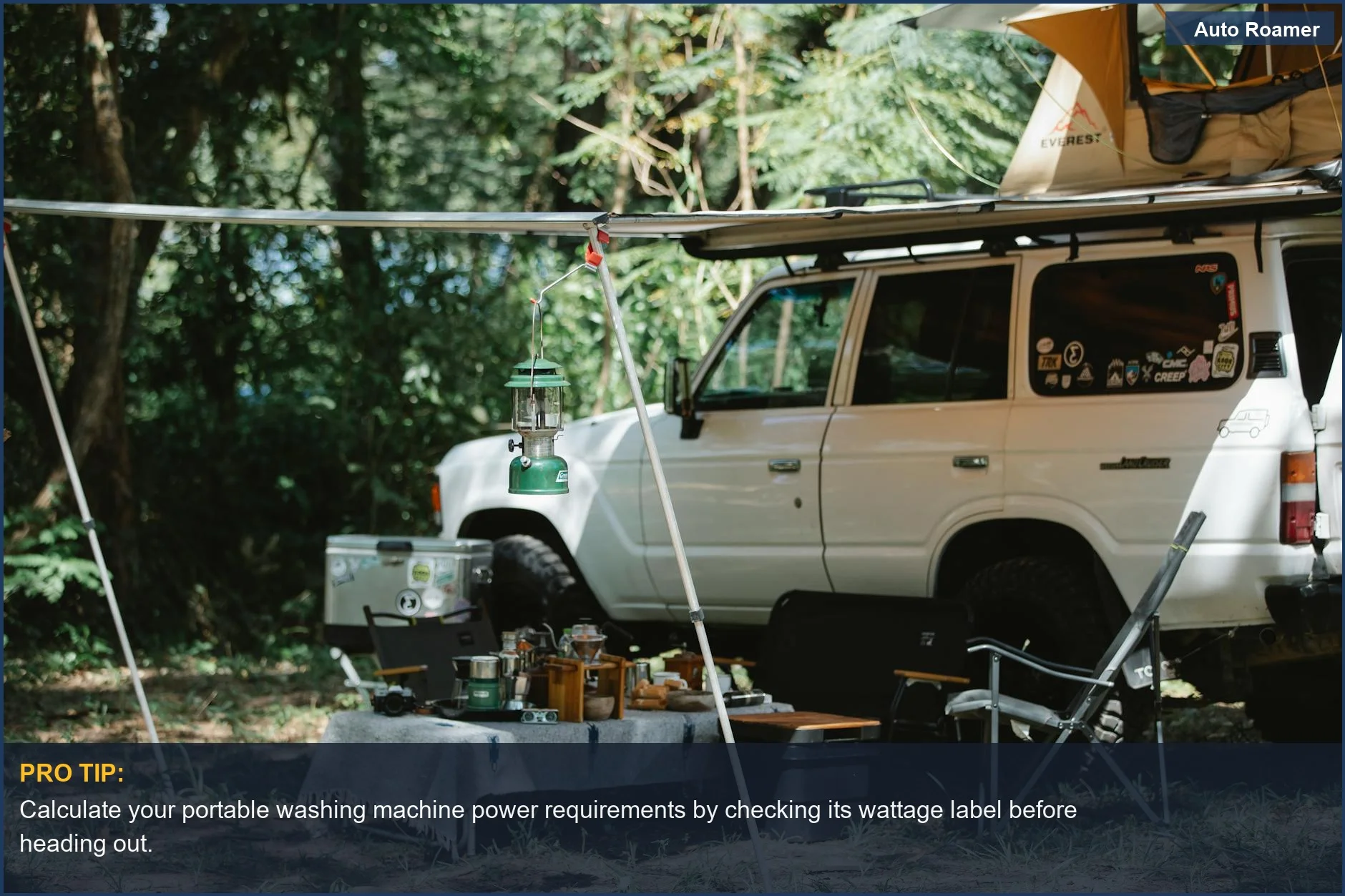
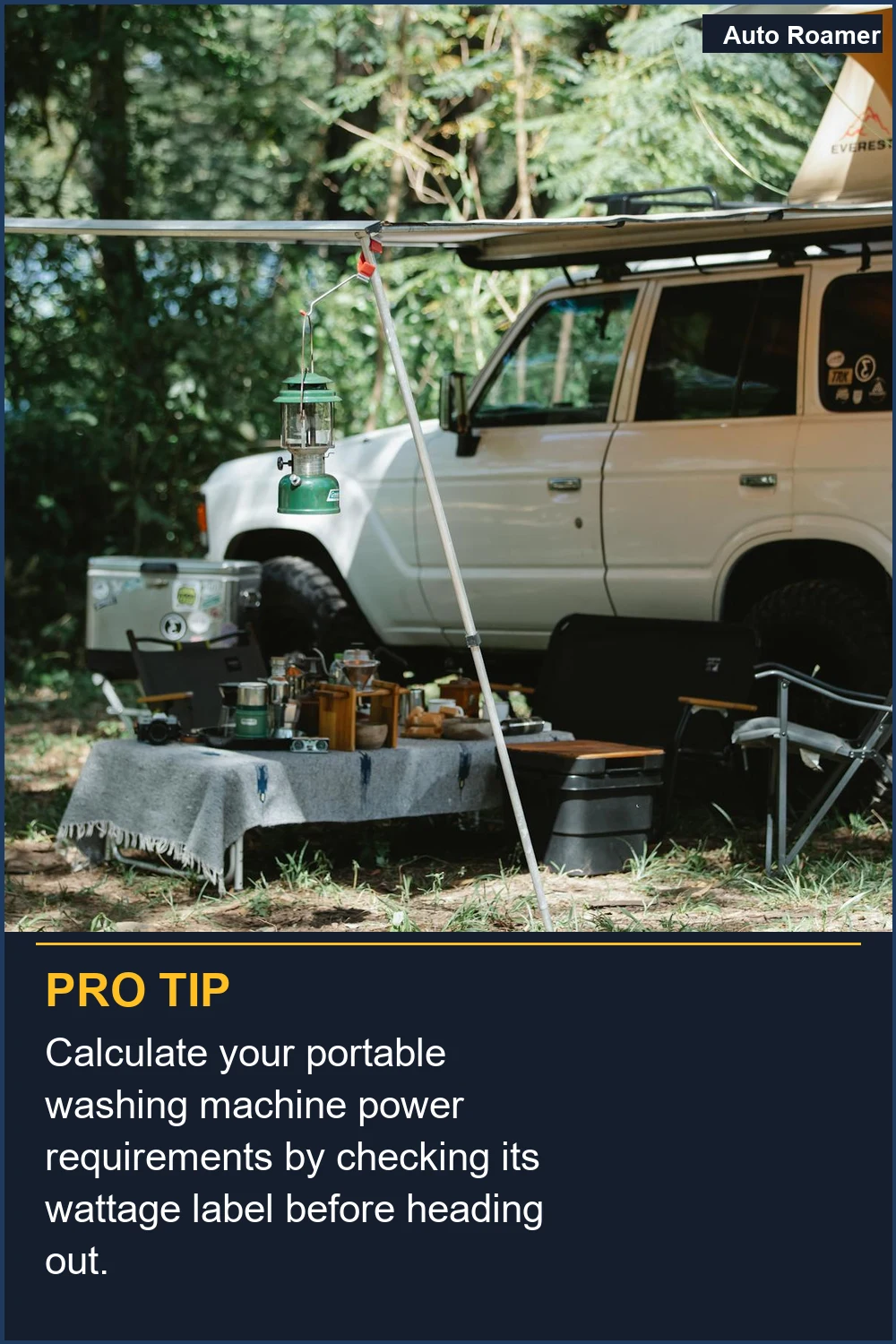
Calculate your portable washing machine power requirements by checking its wattage label before heading out.
Enjoying the great outdoors with your camper setup. Understanding your portable washing machine's power requirements is key for convenient car camping. | Photo by Uriel Mont

Why This Matters for Your Setup

  • Power Station Capacity: You need a power station that can handle the continuous wattage of your washer. A 100-watt washer needs at least a 150-watt continuous output, but I'd go for 300+ watts to be safe. My first washer was rated at 120W, and my old 200W power station would cut out. Power cuts are a big problem, even with a power station if it's too small.
  • Run Time: Check the watt-hours (Wh) of your power station.
  • A 300Wh battery might power a 100W washer for about 3 hours. If you plan on doing multiple loads or washing bigger items, you'll need more juice. Using a Jackery Explorer 2000+ (2000Wh) means I can do laundry for days.
  • Inverter Requirements: Some portable washers might require a pure sine wave inverter if they have sensitive electronics, though most small camping models are pretty basic. Power stations with AC outlets generally have this built-in.
  • Campers often need an inverter for 12V systems, so this is similar.
  • Weight and Portability: If you're car camping, a heavier power station is fine. If you're backpacking (which I don't recommend for washing machines), you're in the wrong game. My 50lb power station stays in the Subaru.
  • The benefit is you can wheel it to a water source, but you still need to haul the power.
  • Cost: A decent 300-500Wh power station will run you $200-$400. Cheaper ones exist, but they often underperform or lack the ports you need. It's an investment, but cheaper than a week of hotel laundry. There are travel wash lines, but you still need to wash the clothes first.
  • To ensure a seamless experience, it's important to choose the right portable washing machine size for your needs.
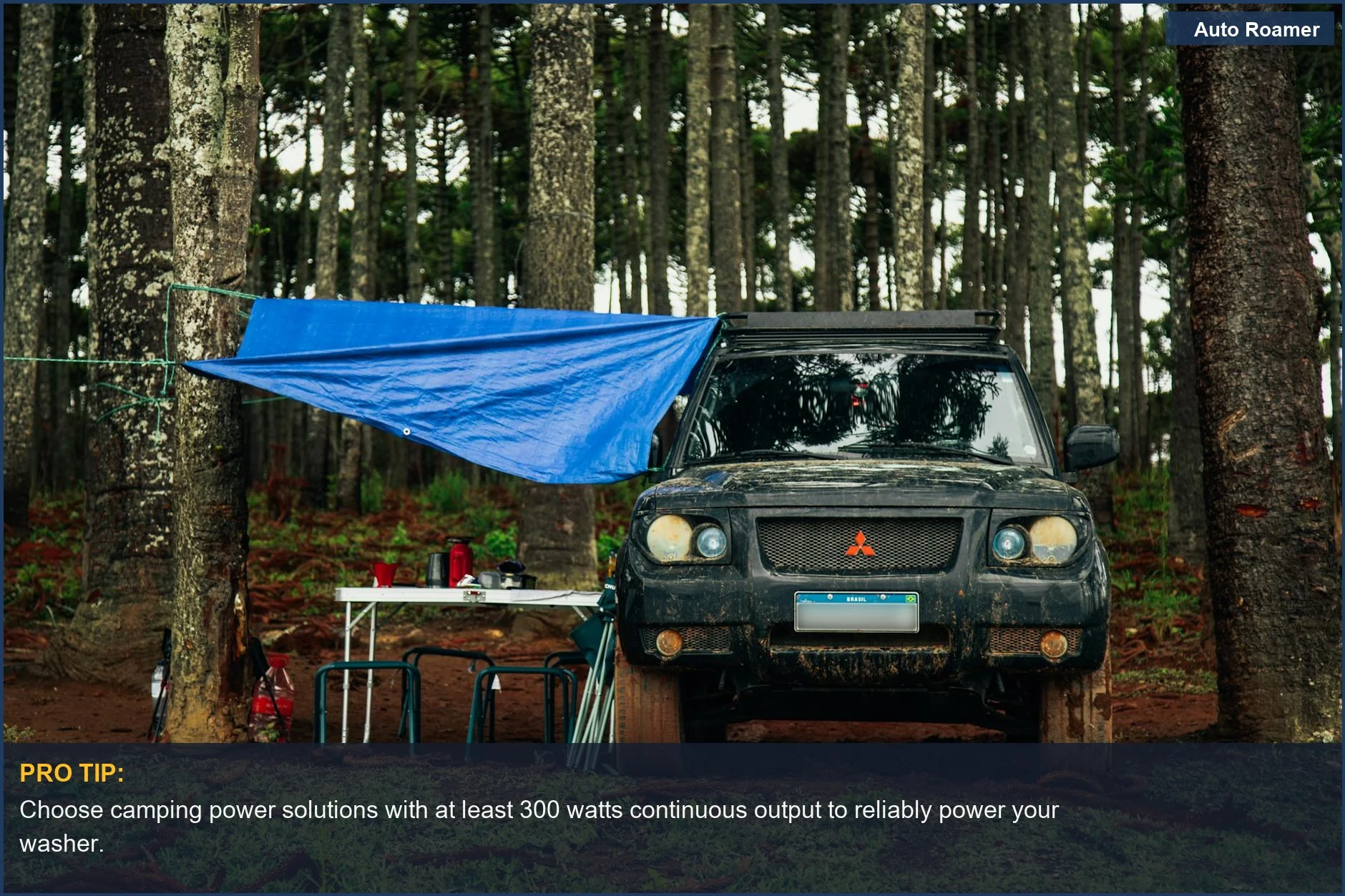
    Choose camping power solutions with at least 300 watts continuous output to reliably power your washer.
    A well-equipped campsite in the woods. Selecting the right camping power solutions ensures your appliances run smoothly for longer trips. | Photo by Matheus Bertelli

    Making the Right Choice

  • Don't Overthink It: You don't need a full-blown generator. A good portable power station is the way to go. Mine cost me $300, and it powers my washer and my phone for a long weekend. Jackery is a solid brand, but others work too.
  • Check the Specs: Always look at the continuous wattage your washer needs and match it with your power station's output. Watt-hours tell you how long it'll run.
  • This thing far exceeded my expectations, but only after I got the power right.
  • Test Before You Go: My biggest rookie mistake was not testing my setup at home. I got to the campsite in Colorado, fired up the washer, and watched my power station dip to 10% in 15 minutes.
  • Upgrade your van life, or car camping life, by testing first.
  • Consider Your Needs: If you're just washing socks and underwear, a smaller power station might suffice. If you're trying to wash a whole week's worth of clothes, you'll need something beefier. These mini washers are energy-efficient, but they add up.
  • Real-World Value: Is a portable washer a necessity? No. Is it a nice-to-have that makes longer trips way more comfortable? Absolutely.
  • Just make sure you have the power to back it up. The benefit is less laundry when you get home.
    To ensure you have enough power for your needs, learn about what appliances you can power while camping.
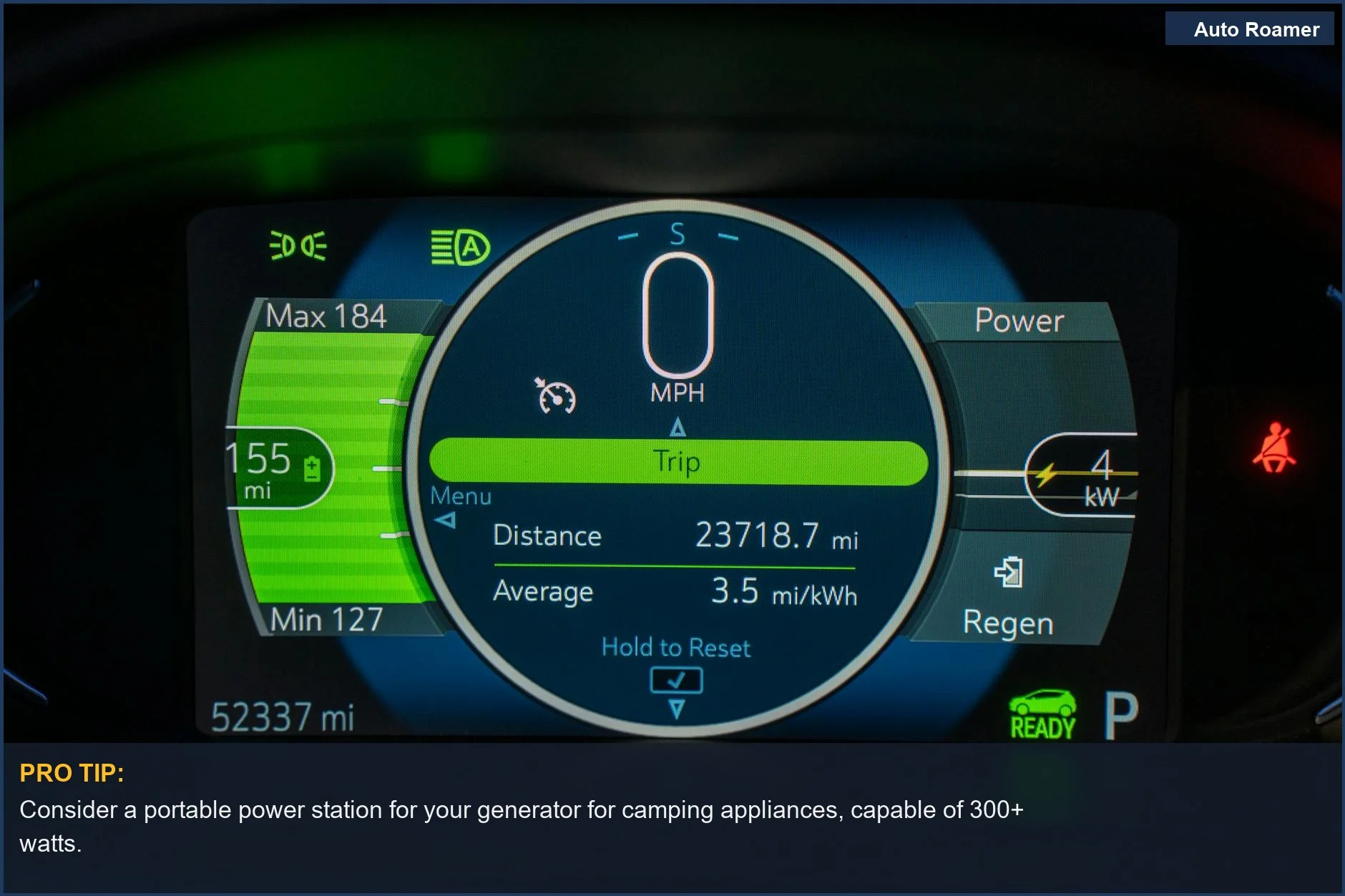
    Consider a portable power station for your generator for camping appliances, capable of 300+ watts.
    Monitoring power metrics on an EV dashboard. A portable power station can serve as an efficient generator for camping appliances. | Photo by Tom Fisk

    Frequently Asked Questions

    Is it cheaper to buy a portable power station and a portable washer, or just pay for laundromats on my trip?
    Honestly, for a single trip, laundromats are probably cheaper. A decent 300Wh power station is around $200, and a good portable washer is another $150. That's $350 upfront. If you only camp a couple of times a year, that's a lot. But if you camp a lot, or do long road trips like I do, the convenience and the ability to wash clothes anywhere makes it worth it in the long run. I've saved myself a ton of quarters and hassle.
    Do I really need a multimeter to figure out if my power station can run my washer?
    Nah, you don't need a multimeter. The manufacturers list the power draw in watts (W) for the washer and the output in watts (W) and watt-hours (Wh) for the power station. Just compare those numbers. If the washer's peak wattage is higher than your power station's continuous output, it's not going to work. Physics doesn't need a fancy tool to tell you that.
    What if my portable washer just keeps stopping mid-cycle, even with a big power station?
    That sounds like you might be overloading it. Some washers have a 'max load' capacity, and if you stuff too many clothes in, the motor will strain and trip its safety breaker, or your power station will shut down. Try washing smaller loads, or check if your washer has different cycle settings. Also, make sure the water isn't too high or too low, as that can affect how the motor works.
    Can running a portable washing machine off a power station mess up the power station long-term?
    Generally, no. If you're within the power station's rated output (wattage), it's designed to handle that load. The biggest thing that can degrade a power station's battery over time is extreme temperatures or constantly running it at its absolute maximum limit. A little bit of laundry duty is usually fine. I've been using mine for laundry loads and it's still going strong.
    I heard you can just use your car's inverter to power a portable washer. Is that true?
    Technically, some car inverters *can* power small appliances, but it's a terrible idea for a washing machine. Most portable washers draw more power than a cheap, plug-in car inverter can reliably provide without overheating or shutting down. Plus, running it for a full wash cycle will drain your car battery faster than you can say 'tow truck.' Stick to a dedicated power station; it's safer and actually works. Power cuts are a big problem, and your car battery is a prime culprit if you abuse it.
    C

    Casey - The Weekend Warrior

    Weekend car camper and road trip enthusiast. Focuses on practical, budget-friendly solutions for families and first-time campers.

    Sources

    Related Articles