
Powering Your Portable Car Cooler: Understanding Your Options
My first portable car cooler was a $150 gamble that I plugged directly into my RAV4's 12V outlet for a weekend camping trip in Big Bend. I figured, 'Easy, right?' Turns out, running a cooler that draws about 40 watts for more than a few hours without the engine on is a rookie mistake.
My first portable car cooler was a $150 gamble that I plugged directly into my RAV4's 12V outlet for a weekend camping trip in Big Bend. I figured, 'Easy, right?' Turns out, running a cooler that draws about 40 watts for more than a few hours without the engine on is a rookie mistake. By day two, my ice packs were sweating, and I was sweating worse, wondering if I'd need a jump start.
The honest version: you need to understand how these things actually sip power, not just assume your car's battery is an infinite well. KelyLands lays out the basics, but the real education comes from the field, or in my case, the dusty parking lot of a Texas state park. This isn't rocket science, but it is basic physics you can't ignore. BougeRV talks about options, but let's get real about what works when you're miles from anywhere.
You bought the cooler to keep things cold, not to buy a new car battery. Bodega Cooler knows this, and so should you. It's about smart power, not just plugging things in.
The Core Answer
Powering Your Portable Car Cooler
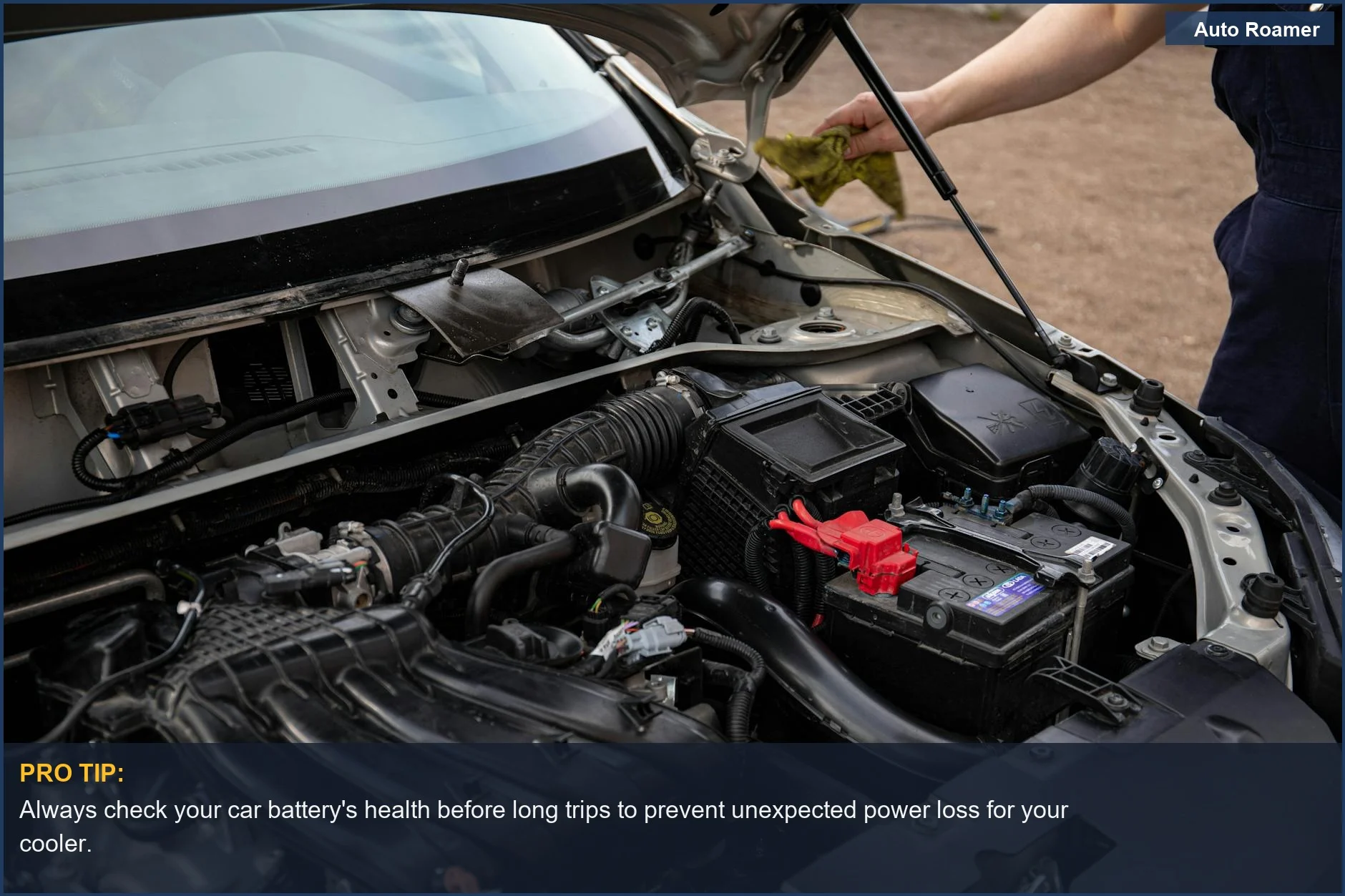
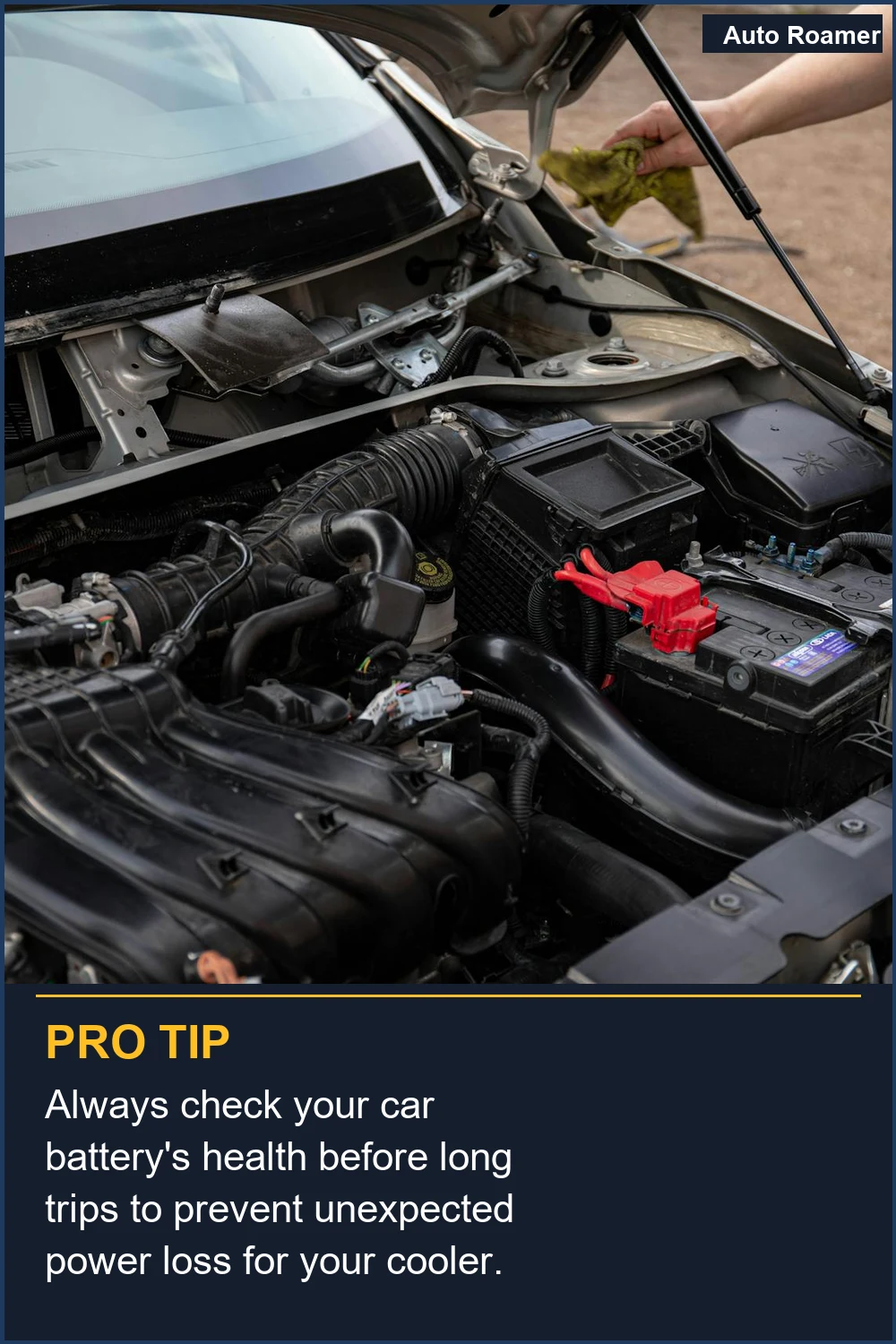
The simplest way to power your portable fridge is by plugging it directly into your vehicle's 12V accessory socket, often called the cigarette lighter. Most car coolers draw around 40 watts of power KelyLands. This sounds like nothing, but it adds up. Your car's battery is designed to start the engine, not run a constant load for hours. If your engine is off, that 40-watt draw will drain your car's starter battery pretty quickly. I learned this the hard way when I left my cooler plugged in overnight at a campground in Utah. By morning, my Subaru wouldn't even grunt. The real move here is to only run it off the car's 12V socket when the engine is running. This way, your alternator is replenishing the power the cooler is using. BougeRV mentions this, and it's critical. For longer trips or when you're parked for extended periods, you need a dedicated power solution. This is where portable power stations or deep-cycle batteries come into play. A deep-cycle battery, like a 100 Ah lithium battery, is built for sustained power delivery. You could hook a cooler up to that and it'd run for days without killing anything. Reddit's vandwellers group often talks about these setups. Portable power stations are basically big batteries with built-in inverters and multiple outlets. Think of them as a portable wall outlet for your campsite. Some can even be charged by solar panels, giving you truly off-grid power. A BLUETTI power station, for example, can keep a cooler running for a long time and you can recharge it from your car when you're driving. Some coolers have low-voltage cutoff features, which is a smart safety net. This prevents the cooler from draining your car battery completely, shutting off before you get stranded. It's not a substitute for understanding your power needs, but it's a good backup. KelyLands highlights this feature, and it's a lifesaver for us forgetful types. Another option is a dual battery system in your vehicle, but that's more involved than most weekend warriors need. For most of us, it's about choosing between the car's 12V (engine on!) or a portable power solution. Kia EV Forums mention 120V outlets in some vehicles, which is great if you have one, but most standard car coolers run on 12V DC. Don't forget to factor in how often the compressor runs. Most coolers cycle on and off, so they aren't drawing 40 watts 100% of the time. But on a hot day, it'll run a lot more. YouTube videos often show how much power these things actually use in real-world conditions. It's usually about one-third of the time, but that's still a significant drain over a full day.
Why This Matters for Your Setup
Making the Right Choice
Ultimately, powering your car cooler comes down to understanding its draw and matching it with a power source that won't leave you stranded. For short trips, running it off your car's 12V outlet while the engine is running is perfectly fine. It's the $50 version of keeping your drinks cold, and it works. BougeRV agrees this is the easiest start. If you're going on longer adventures or want true off-grid capability, investing in a portable power station or a dedicated deep-cycle battery is the way to go. My $150 cooler with a $300 power station is way more reliable than that initial gamble. BLUETTI offers solid options here. It's the game-time upgrade that makes a huge difference. Don't forget to check your cooler's specifications for its exact power draw (watts or amps) and look for features like low-voltage cutoff. KelyLands has tips on how to read these specs. It's not just about buying the coolest-looking cooler; it's about understanding its energy appetite. Bodega Cooler emphasizes this. My field notes say: for a weekend, use the car (engine on). For anything more, consider a power station. It's the honest version of what works without breaking the bank or your car's battery. YouTube tutorials often show complex setups, but start simple and upgrade as needed.
Frequently Asked Questions
If I wanted to power a 50-watt cooler for 24 hours using a portable power station, what's a rough cost comparison between buying a decent station and, say, just running my car constantly?
Do I really need a fancy multimeter to figure out if my car's 12V outlet is even working?
What if I plug my cooler into the car's 12V outlet, my engine is running, and it's still not getting cold?
Can leaving my cooler plugged into the car battery overnight permanently damage my car's battery?
I heard that running a cooler off a portable power station will wear out the power station faster than running it off my car.
🏅 Looking for Gear Recommendations?
Check out our tested gear guides for products that work with this setup:
Sources
- 3 Best Ways To Power a Camping Fridge - YouTube
- The Ultimate Guide to Car Fridges - BLUETTI AU
- How to Use and Power Car Coolers on Road Trips
- Power options for electric cooler/ freezer question - Kia EV Forum
- How to Run a Car Fridge? - BougeRV
- How to Run a 12V Fridge While Camping - BODEGA cooler
- What do I need to do to power a 42L fridge/freezer and box fan in my ...