
Road Trip Gear

How to Power a Dual Zone Portable Fridge on Your Overlanding Trip

Casey - The Weekend Warrior
5 min read
Includes Video

Keeping a dual zone portable fridge powered on an overlanding trip isn't as complicated as the internet makes it seem, but it does require understanding the basics of your vehicle's electrical system. You're basically trying to run a mini-fridge for days without draining your main car battery flat and leaving yourself stranded.

Keeping a dual zone portable fridge powered on an overlanding trip isn't as complicated as the internet makes it seem, but it does require understanding the basics of your vehicle's electrical system. You're basically trying to run a mini-fridge for days without draining your main car battery flat and leaving yourself stranded.

It's a common point of confusion for beginners, and honestly, I learned this the hard way after a weekend trip where my drinks were lukewarm and my battery was dead. The good news is, you don't need a degree in electrical engineering to get this right. This guide breaks down the essential concepts to keep your food cold and your vehicle running.
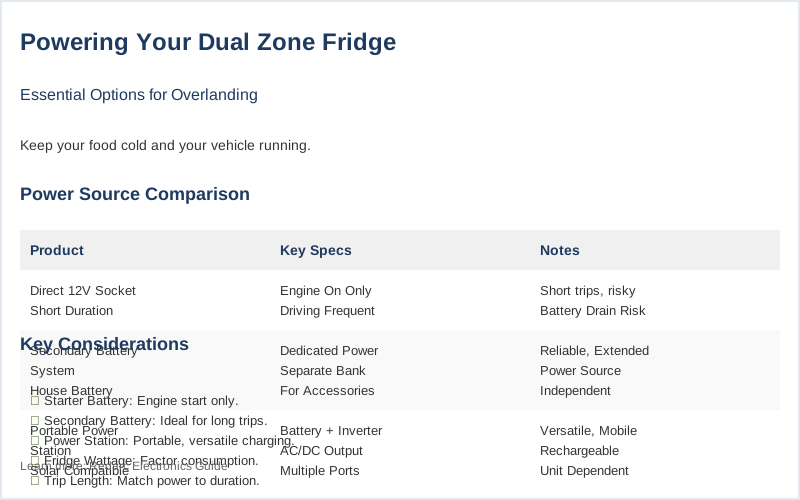
How to Power a Dual Zone Portable Fridge on Your Overlanding Trip — Key Specifications Compared
Key specifications for How to Power a Dual Zone Portable Fridge on Your Overlanding Trip

The Core Answer

The real move for powering a dual zone portable fridge on an overlanding trip is to understand that your vehicle's starter battery is for starting, not for constant power draw. Trying to run a fridge off it for extended periods is a rookie mistake that can leave you high and dry. For short trips, maybe one or two nights, you *can* get away with plugging directly into your car's 12v socket, especially if you're driving a lot. The fridge draws power when the engine is running, and you can disconnect it overnight. However, this is risky business. I once tried this on a three-day trip in Big Bend National Park, and by the second night, my headlights were dimming. The fridge was still cold, but my car wasn't starting. The honest version is, if you want reliable power for more than a quick overnight, you need a dedicated power source. This usually means a secondary battery system. Think of it as a bank account for your fridge and other accessories, separate from your engine's checking account. This secondary system is often called a 'house battery.' It's a deep-cycle battery, designed for slow, steady power output, unlike your starter battery which is built for a quick, massive burst. People on forums are constantly asking about this because it's a common pain point. To charge this house battery while you're driving, you'll need a DC-to-DC charger. This device takes the power from your alternator, manages it, and sends it to your house battery. It prevents overcharging and ensures your starter battery isn't drained while you're on the move. This setup is the game-time move for serious overlanders. Another option, though often more expensive upfront, is a portable power station. These are essentially big lithium-ion batteries with built-in inverters and chargers. They're easy to use - just plug in your fridge and go. You can recharge them from your car, solar panels, or even a wall outlet at home. I saw a buddy use one on a trip to Moab, and it was incredibly convenient, though he did complain about the price tag. The key takeaway: your car's starter battery is for starting. For anything else that draws significant power over time, like a dual zone fridge, you need a separate, dedicated power solution. It's not about fancy gear; it's about understanding how your power is being used and ensuring you have enough to go around.
To maximize your food storage options, consider the benefits of a dual zone fridge for your overlanding trips.

Why This Matters for Your Setup

  • Don't Kill Your Starter Battery: This is the big one. Relying solely on your vehicle's starter battery for your fridge means you risk not being able to start your rig. I learned this lesson the hard way on a trip to Joshua Tree; my beers were ice cold, but my truck was just a very expensive paperweight until I could get a jump.
  • Extended Trips Require More Power: For anything more than an overnight jaunt, you're going to need a robust power solution. Imagine going out for three days and having to pack out spoiled food because your battery died on day two. Not fun.
  • Protecting Your Investment: Portable fridges aren't cheap. You want to ensure you have a reliable power source that won't damage the fridge or your vehicle's electrical system. Proper power management is key to longevity.
  • Off-Grid Freedom: The whole point of overlanding is getting away from it all. A reliable power system for your fridge means you can pack fresh food, keep medications cold, and enjoy your trip without constantly worrying about your battery level. People are always asking how to keep their fridges running for extended periods off the beaten path.
  • Peace of Mind: Knowing your fridge has a dedicated power source, separate from your starting battery, is a massive stress reliever. No more second-guessing if you can run the fridge overnight.
  • To enhance your overlanding experience, consider the features of the best dual zone portable fridge.

    Making the Right Choice

  • Understand Your Needs: A quick overnight trip might be manageable with careful planning using just your car's 12v socket. For anything longer, start thinking about a dedicated power system. Don't underestimate the power draw of these fridges, especially the dual zone models.
  • Consider a House Battery: The most common and reliable solution involves a deep-cycle secondary battery. It's designed for the kind of sustained power draw your fridge needs. This is the real move for serious overlanders.
  • DC-to-DC Charger is Your Friend: To effectively charge that house battery from your alternator while driving, a DC-to-DC charger is essential. It's not just about getting power; it's about getting it safely and efficiently. These setups are becoming standard for a reason.
  • Portable Power Stations as an Alternative: If you want simplicity and are willing to pay a premium, a portable power station can be a great option. They offer flexibility but can be pricier than a custom battery setup.
  • Do Your Research: Before you buy anything, figure out the amp-hour draw of your specific fridge and how long you plan to be off-grid. This will dictate the size of battery and charging system you'll need. My first attempt was guesswork and resulted in a very cold fridge and a very dead car.
  • To ensure you select the best option, consider choosing the right size for your vehicle.

    Frequently Asked Questions

    I saw a kit online for $150 that claims to power a fridge. Is that enough, or do I need to spend $1000 on a fancy dual-battery setup?
    Look, that $150 kit probably involves just a wire and a hope. For a dual zone fridge that draws serious power, you're likely looking at a minimum of $300-$500 for a decent deep-cycle battery and a basic DC-to-DC charger. Anything less and you're probably just delaying the inevitable dead-battery situation. I've seen guys try the cheap route and end up stranded, calling for a tow truck which costs way more than the original 'savings'.
    Do I really need one of those fancy meters to see how much power my fridge is using?
    Honestly, for a beginner, no. The fridge itself usually has a label stating its amp draw. If you're just plugging into your car's cigarette lighter for a short trip, you just need to know that it *will* drain your battery if the engine is off. If you're setting up a dual battery system, then yeah, a voltmeter becomes your best friend to monitor your house battery's health. But for game-time decisions, just look at the fridge's sticker.
    What if I hook up a second battery and it still drains my main battery? Did I wire it wrong?
    It's possible you wired it wrong, or maybe your second battery is ancient and can't hold a charge. The most common culprit, though, is that you're drawing more power than your alternator can replenish while driving, especially if you have a lot of accessories running. Make sure your DC-to-DC charger is properly sized for your needs. I once had a setup where my alternator was just barely keeping up, and on long drives with the fridge running, my starter battery still dipped lower than I liked.
    Can running a fridge off my car's starter battery permanently damage my car's alternator?
    Yes, absolutely. Your alternator is designed to recharge the starter battery and run your vehicle's basic systems. If it's constantly struggling to keep up with the massive draw of a fridge *and* recharge a depleted starter battery, it can overheat and burn out. I've heard horror stories of alternators failing mid-trip because they were overworked trying to power a fridge overnight. It's like asking a marathon runner to sprint a mile every hour – eventually, they break down.
    I heard solar panels can power a fridge directly. Is that true?
    That's a myth that gets passed around way too much. Solar panels are chargers, not power sources. They generate electricity to charge a battery, and *that battery* then powers your fridge. You can't just plug a fridge directly into a solar panel and expect it to run continuously, especially not a dual zone fridge which needs a consistent power supply. Think of it like this: the solar panel is a water pump, but you need a tank (the battery) to store the water (power) for when the pump isn't running.
    C

    Casey - The Weekend Warrior

    Weekend car camper and road trip enthusiast. Focuses on practical, budget-friendly solutions for families and first-time campers.

    Sources

    Related Articles