Car Camping

Powering Your Car Refrigerator Freezer: Understanding Power Consumption and Options

Casey - The Weekend Warrior
5 min read
Includes Video

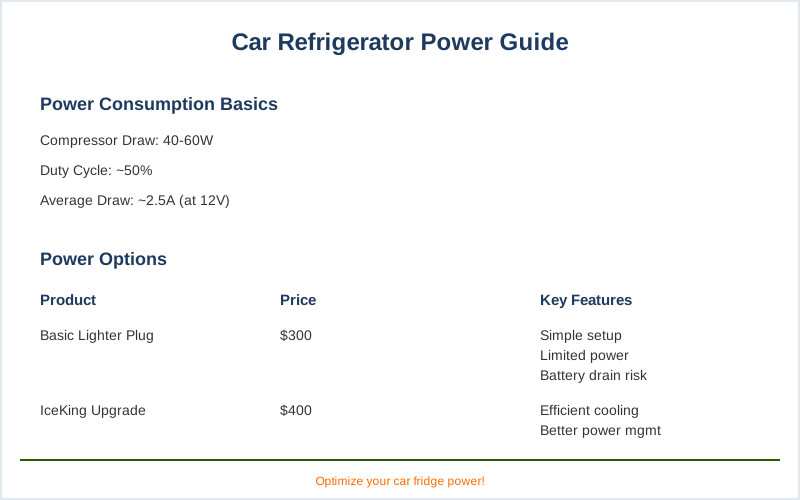
My first car fridge was a $300 gamble that plugged into my Honda Civic's cigarette lighter. I figured, 'How hard can it be to keep some beers cold?' Turns out, a lot harder than I thought. On my first weekend camping trip to the Delaware Water Gap, I woke up to warm soda and a dead battery.

My first car fridge was a $300 gamble that plugged into my Honda Civic's cigarette lighter. I figured, 'How hard can it be to keep some beers cold?' Turns out, a lot harder than I thought. On my first weekend camping trip to the Delaware Water Gap, I woke up to warm soda and a dead battery. That little blue light on the fridge was mocking me. The culprit?

My car battery had about 4 hours of juice before it gave up the ghost, leaving me with lukewarm disappointment. This whole power thing isn't just about plugging something in; it's about understanding what's actually happening under the hood.Understanding Power Consumption in Car Refrigerators
Powering Your Car Refrigerator Freezer: Understanding Power Consumption and Options — Key Specificat
Key specifications for Powering Your Car Refrigerator Freezer: Understanding Power Consumption and Options

The Core Answer

So, you want to run a fridge in your car without killing your battery? The honest version is that it's not just about the fridge itself, but how you're powering it. Most portable fridges, like the one I eventually upgraded to (a $400 IceKing that's a beast), pull about 40-60 watts when the compressor is actually running How Much Power Does This 12 Volt Refrigerator Really Use?. That sounds like not much, right? But here's the kicker: it doesn't run all the time. Your fridge cycles on and off to maintain temperature. Think of it like your house AC - it kicks on, chills things down, then takes a break. A good rule of thumb is that it might run about 50% of the time, depending heavily on how hot it is outside and how cold you've set it 10 Ways to Power Your 12V Fridge for Longer. This means if your fridge is rated at 5 amps (which is about 60 watts at 12 volts), and it runs 50% of the time, you're looking at an average draw of 2.5 amps per hour. For a typical car battery, which might have around 50 amp-hours of usable capacity, that means you've got about 20 hours before you're in trouble if you're just running it straight from the car battery with the engine off What Is The Best Way To Run A Car Fridge 12v?. This is the rookie mistake I made at the Delaware Water Gap. I figured I had hours. Nope. The real move for longer trips or when you plan to turn the engine off is to have a dedicated power source. This is where a portable power station or a secondary battery system comes in. These are designed to handle continuous draws without killing your primary car battery, so you don't end up stranded with melted ice cream. For a weekend trip, a decent portable power station with at least a 500Wh capacity should be plenty to keep a mid-sized fridge running overnight. These can often be recharged via solar or your car's alternator while you're driving How to Run a Car Fridge?. And don't forget the ambient temperature. If you're camping in Death Valley in August, your fridge is going to work a lot harder than if you're in the mountains in October. More work means more power drawn. It's basic physics, but it hits your battery hard Understanding Power Consumption in Car Refrigerators. The $50 version of this advice? If you plan to camp more than one night or want zero anxiety about your car starting, you need more than just your car's cigarette lighter. It's the difference between cold drinks and a very expensive paperweight.
To enhance your camping experience, explore different methods for powering your portable fridge effectively.
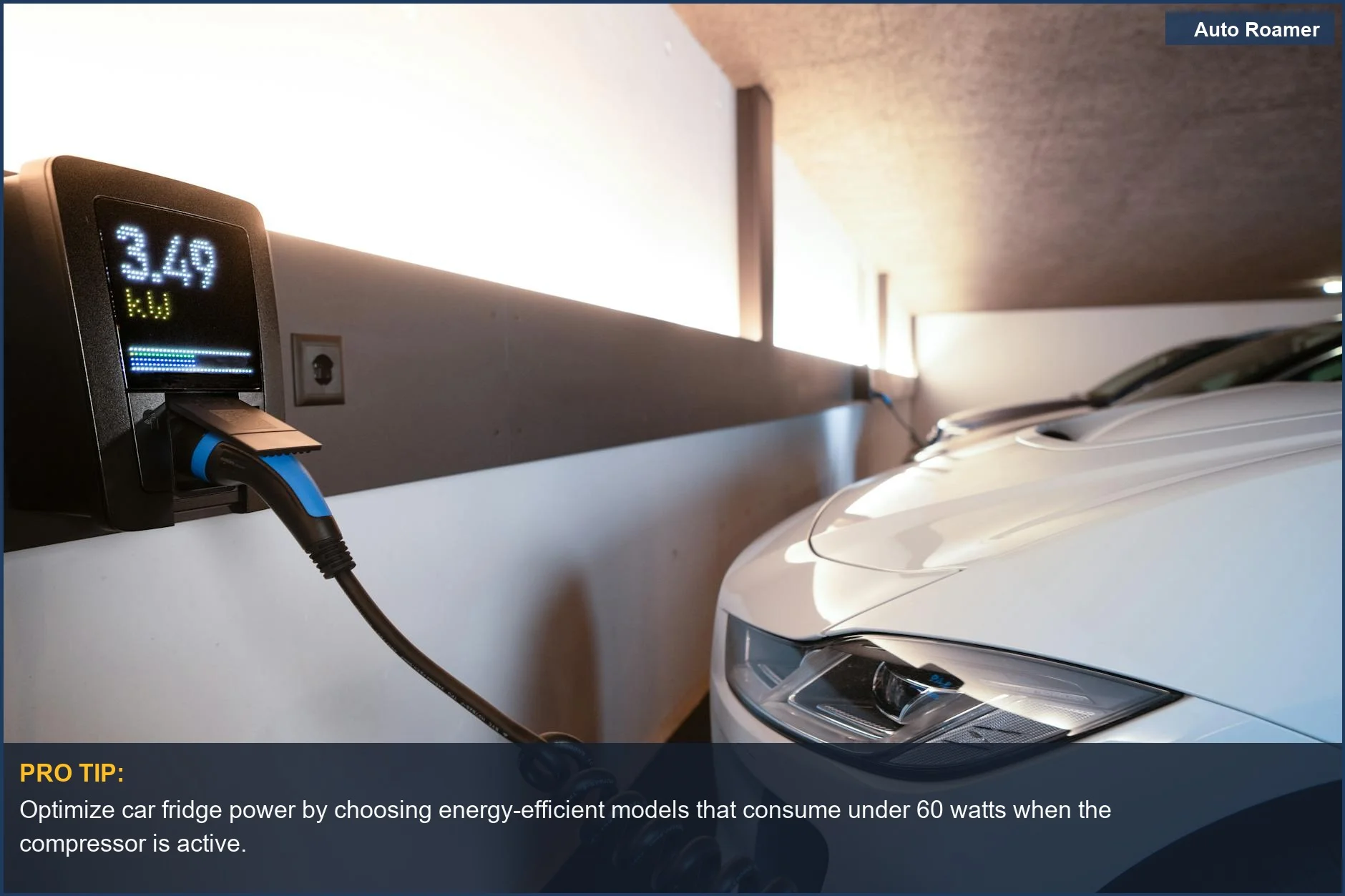
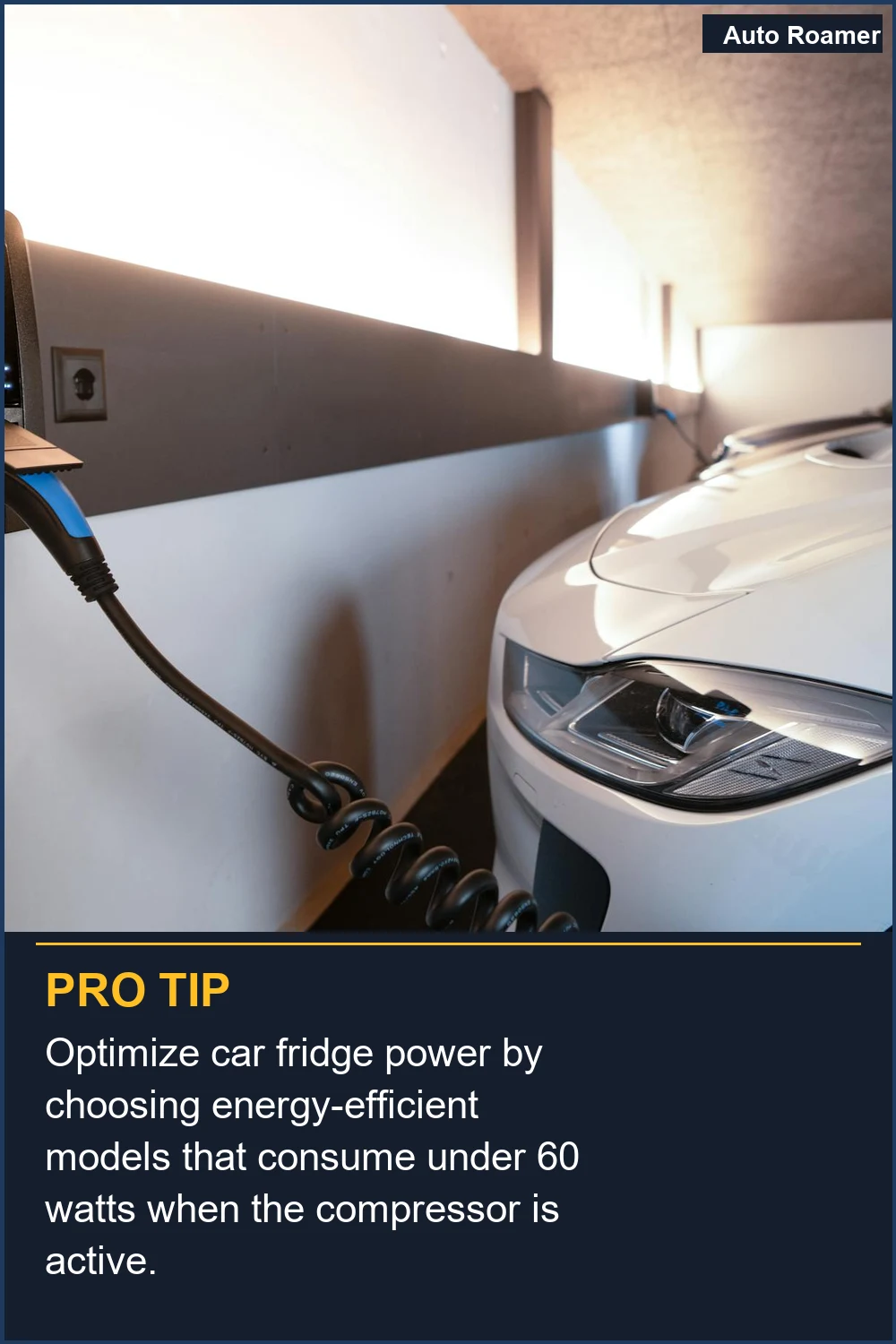
Optimize car fridge power by choosing energy-efficient models that consume under 60 watts when the compressor is active.
This electric car charging highlights sustainable energy, a key consideration when powering your portable car fridge freezer for extended trips. | Photo by smart-me AG

Why This Matters for Your Setup

  • Don't be me: My first car camping trip involved a $300 fridge and a dead car battery by morning. I woke up to lukewarm water and a sinking feeling. That's the direct result of not understanding how much juice your fridge actually needs versus what your car battery can give.
  • The real move is to match your power source to your trip length and fridge usage How to Run a Car Fridge?.
  • The $50 power station test: For a 2-day trip, I found a 300Wh power station was enough to keep my small 30L fridge running overnight without worry. It cost me about $150, but it saved me from a potential roadside emergency.
  • It's cheaper than a tow truck.
  • Temperature is everything: I learned this the hard way in Moab. It was 100 degrees F outside, and my fridge was working overtime just to keep things cool. It felt like it was running constantly, draining power way faster than I expected.
  • If you're camping in the heat, plan for significantly higher power draw 10 Ways to Power Your 12V Fridge for Longer.
  • Door openings = power draws: Every time you open that lid, cold air escapes and the compressor has to work harder to get back down to temp. I used to be a 'grab-and-go' person, but now I plan my fridge access to minimize openings.
  • It's a small habit that saves a surprising amount of battery life Understanding Power Consumption in Car Refrigerators.
    To maximize your cooler's efficiency, consider exploring different methods for powering your portable car cooler.
    Avoid a dead car battery by understanding your portable freezer battery needs and ensuring it doesn't exceed your car's capacity.
    A Tesla charging in the city demonstrates the importance of robust power solutions, essential for preventing a dead car battery with your fridge. | Photo by DaeYeoung Ahn

    Making the Right Choice

  • Your car's cigarette lighter is for short trips: Think a few hours, not overnight, especially if the engine is off. It's fine for keeping drinks cold on a day trip, but don't push it for extended camping. My initial $47 Walmart foam pad was probably more reliable than my battery was for overnight fridge duty.
  • Invest in a power station or secondary battery: This is the game-time decision for any serious car camping.
  • A 500Wh power station can often be found for around $300-$400 and is a solid investment. It's the difference between enjoying your cold food and eating warm sandwiches.
  • Consider your fridge size and climate: A huge dual-zone fridge in the desert will need a much beefier power setup than a small single-zone unit in the mountains.
  • Do your homework on the fridge's actual wattage and your expected usage Understanding power supply for fridge and other devices?.
  • Don't forget the sun: If you're going to be out for more than a couple of days, a portable solar panel can keep your power station topped up. A 100W panel can cost around $100-$150 and is a lifesaver for longer adventures.
  • To ensure your car fridge stays powered during longer excursions, consider these tips on powering a 12V car fridge.
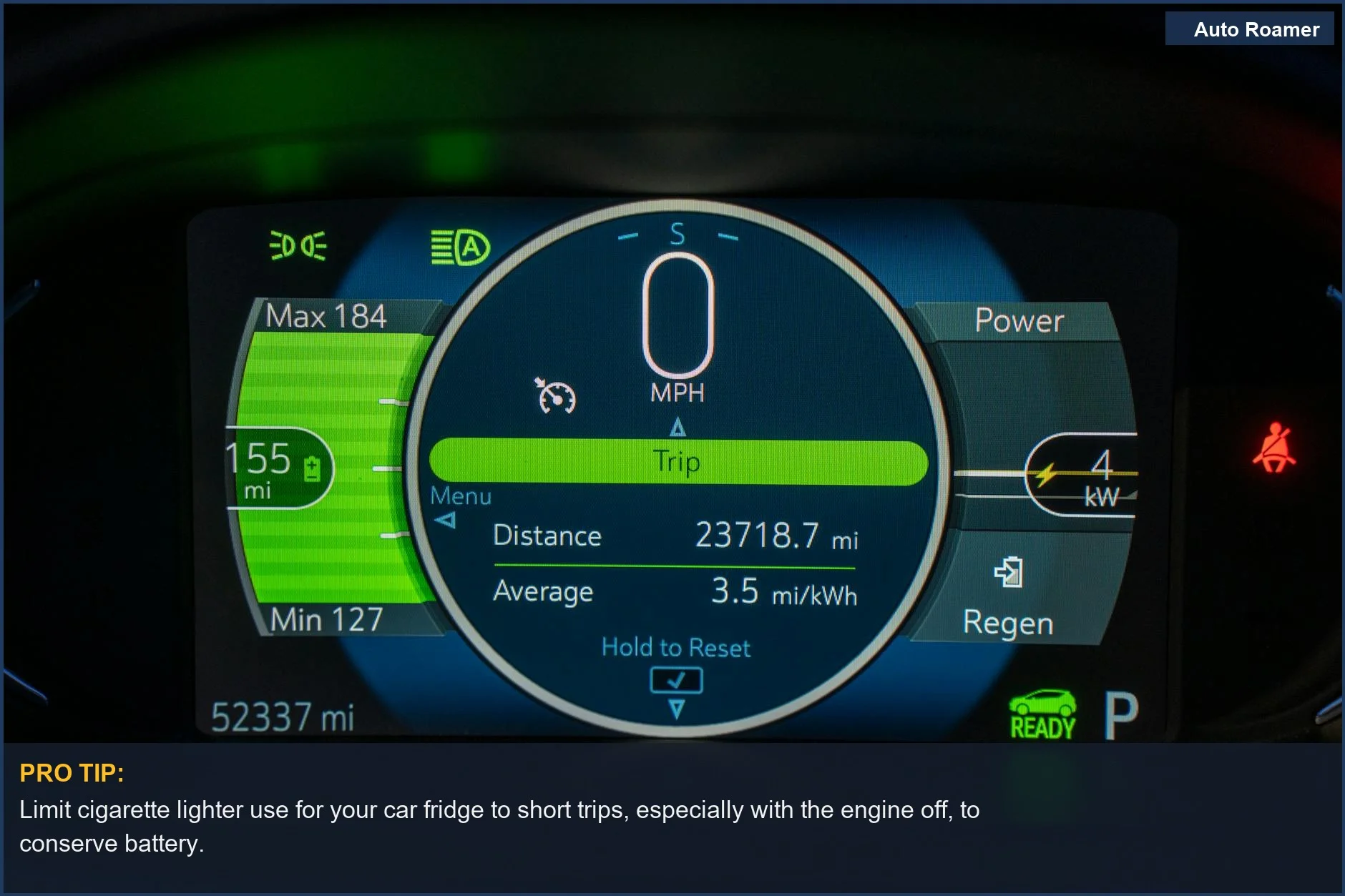
    Limit cigarette lighter use for your car fridge to short trips, especially with the engine off, to conserve battery.
    This detailed car dashboard shows power metrics, crucial for managing your 12v fridge power consumption on shorter journeys. | Photo by Tom Fisk

    Frequently Asked Questions

    I saw a 100W solar panel for $80 online, but the fancy camping store sells them for $150. Is it worth paying extra for the 'camping' brand, or can I just grab the cheap one?
    Honestly, for a basic 100W panel, the cheap ones are usually fine. I picked up a $90 panel from Amazon for my setup, and it works just as well as the $150 ones I saw. Just make sure it's got decent reviews and the right connectors. It’s not rocket science, it’s just capturing sunlight.
    Do I really need a multimeter to figure out if my fridge is draining my battery too fast?
    Nah, not really. Unless you're trying to troubleshoot a wiring issue, you don't need a multimeter for basic fridge power management. Just pay attention to how long your fridge runs and what your car battery capacity is. Most fridges will tell you their wattage, and you can do the math from there. The real move is observation, not complicated tools.
    What if I plug my fridge directly into my car's cigarette lighter, and my car battery dies anyway? Can I just jump-start my car and be fine?
    You can jump-start it, sure, but that's a band-aid. If you consistently drain your battery by running a fridge too long, you're stressing the battery and potentially the alternator. It’s like running your phone on 1% all day – eventually, it’s going to give up. The better fix is to get a power station or a secondary battery so you’re not reliant on your main car battery.
    Can running a portable fridge directly from my car's 12V outlet for too long permanently damage my car's battery?
    Yes, absolutely. Consistently draining your car battery below a certain threshold—especially below 50% charge—can permanently shorten its lifespan. It's like overworking a muscle; it loses its ability to perform. For extended use, a dedicated power source like a portable power station is the way to go to protect your car's primary battery.
    I heard you can just hook up a small 12V fridge directly to a deep-cycle marine battery and it'll last forever. Is that true?
    That's a common misconception. While a deep-cycle battery is better suited for sustained power draw than a standard car battery, 'lasting forever' is a bit of a stretch. You still need to calculate your amp-hour needs and the battery's capacity. A deep-cycle battery is a step up, but it doesn't magically solve the power consumption equation.

    🏅 Looking for Gear Recommendations?

    Check out our tested gear guides for products that work with this setup:

    C

    Casey - The Weekend Warrior

    Weekend car camper and road trip enthusiast. Focuses on practical, budget-friendly solutions for families and first-time campers.

    Sources

    Related Articles