
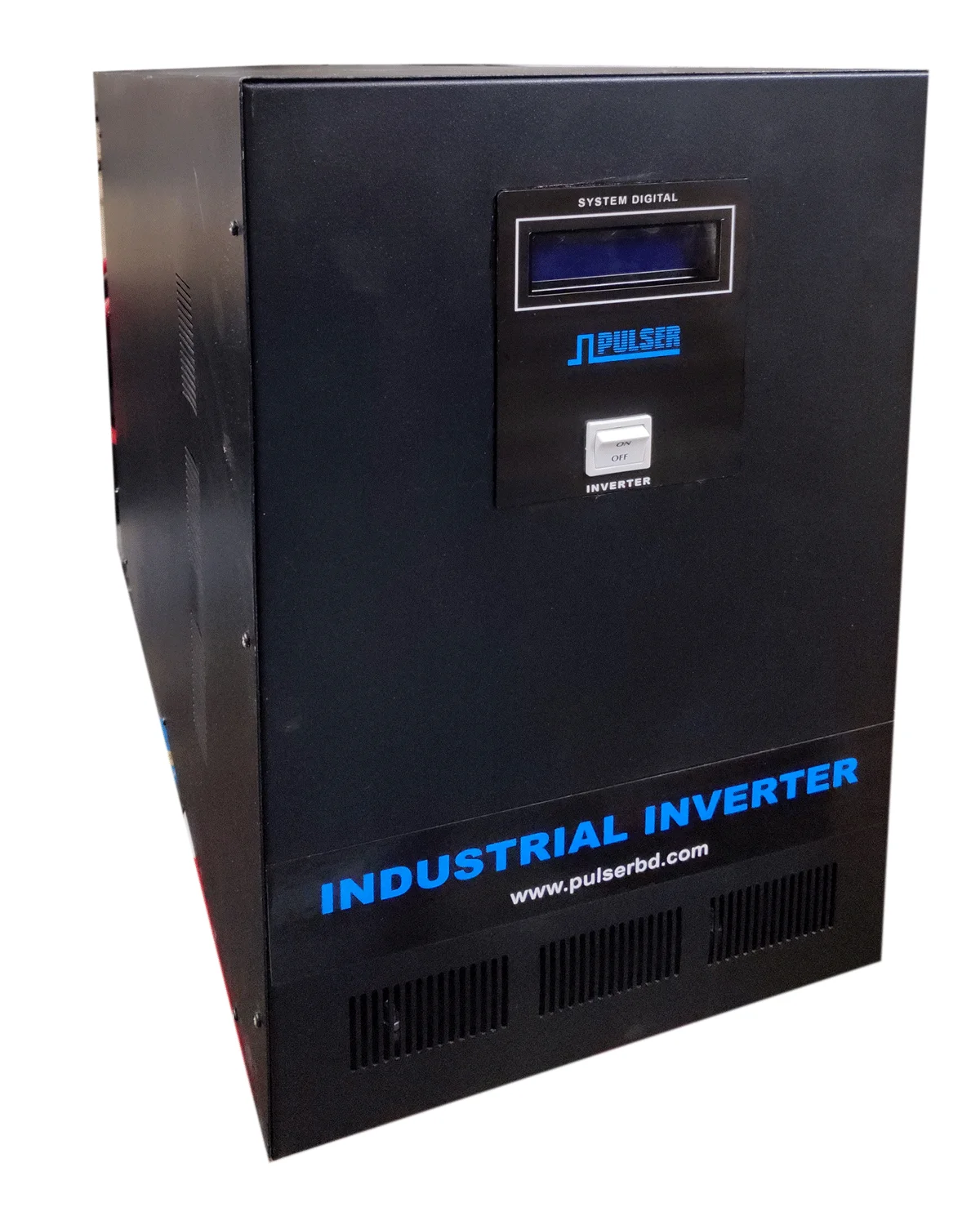
First: A Running Fan Is Cooling, Not a Fault
An inverter whose fan spins up loud is not misbehaving - it is doing exactly what it was built to do. The cooling fan is temperature- and load-activated rather than always-on, so when the fan runs hard it is because there is heat to move. A fan that comes on under a big load and quiets when the load eases is a healthy cooling system responding to demand, not a defect.
The reason this matters is that people reach for the wrong conclusion. A loud fan feels like a warning that something is wrong, when in most cases it is the sign that the inverter is correctly shedding the heat a heavy load creates. The real questions are how much heat the load is making and whether the fan can actually move it - both of which come down to load size and airflow, not a broken part.
So the plan is to manage the heat rather than silence the fan. Understand where the heat comes from, keep the load sensible, and give the inverter the airflow it needs, and the fan settles and the overheating stops. Only a fan that runs flat out on a cool, lightly-loaded inverter with clear vents - or one that grinds - points at a genuine fault, and that is the last thing to check.
Where the Heat Comes From
An inverter makes heat as an unavoidable byproduct of converting DC to AC. Inverter conversion efficiency is generally about 85-90%, and the 10-15% of input power not converted is dissipated as heat that the cooling fan must remove. Every watt the inverter delivers to your appliance comes with a fraction of a watt lost to heat inside the unit - and the bigger the load, the more heat there is to shed.
This is why a lightly-loaded inverter runs cool and quiet while a heavily-loaded one runs hot and loud. Powering a phone charger produces a trickle of waste heat the fan barely needs to touch; running a power tool or a microwave near the inverter's rating produces a real thermal load the fan has to work hard to remove. The noise and the heat both scale with how much you are asking the inverter to convert.
Understanding that fixes the expectation. A hot, loud inverter under a big load is normal physics, not a fault - the fan is moving the 10-15% that did not make it through as clean AC power. The job is to keep that heat within what the fan can handle, which means watching the load and the airflow rather than worrying about the fan simply doing its work.
The Fan Turns On With Temperature and Load
Inverter fans are thermostatically controlled, and knowing the trigger points explains a lot of behavior. On the Ampeak 2000W the fan starts when internal temperature exceeds 122F (50C), and many inverters switch the fan on around 105F (about 40C). Below those temperatures the fan may be off or slow; cross them and it ramps up. So a fan that kicks in partway through a job is just the internal temperature reaching the threshold.
This is why the fan can cycle. A moderate load warms the inverter slowly until it hits the fan's turn-on point, the fan runs and cools it back down, and the cycle repeats - producing a fan that comes and goes even though the load is steady. On a heavy load the temperature stays above the threshold continuously, so the fan simply runs the whole time. Both are the thermostat working correctly.
So do not read a fan turning on and off as a fault. It is the same logic as any thermostat-controlled cooling: run when hot, rest when cool. An infrared thermometer on the case shows the temperature climbing toward the fan's trigger and falling once it runs, which turns a mysterious cycling fan into an obvious, healthy pattern.
Running Near the Rating Keeps It Loud
The surest way to keep an inverter's fan pinned is to run it near its maximum. Running an inverter continuously near its rated capacity keeps waste-heat generation high, so the fan runs at or near full speed and the unit is most prone to thermal shutdown. At full load the 10-15% loss is at its largest in absolute terms, and the fan has no quiet moments because the heat never lets up.
This also explains inverters that overheat and cut out under sustained heavy use. An inverter sized just barely big enough for a job runs at the top of its range constantly, generating maximum heat with no headroom, and in a warm environment the fan cannot keep up - so it climbs to the shutdown threshold. The same appliance on a larger inverter, loafing at half its rating, runs cooler and quieter with margin to spare.
The practical fix is headroom. Size the inverter well above the continuous load rather than right at it, so it spends most of its time in the cool, quiet part of its range. Remember surge matters too - inverter surge power is commonly about twice the continuous rating, so an Ampeak rated 2000W continuous peaks at 4000W - but for sustained loads, running comfortably below the continuous number is what keeps the fan calm and the unit cool.
Ventilation: The 4-to-6-Inch Rule
Even a sensibly-loaded inverter overheats if it cannot breathe. Manufacturers typically require ventilation clearance of about 4-6 inches (roughly 100-200mm) on all sides to maintain airflow, and blocked vents are a leading cause of overheating and continuous fan operation. The fan can only cool the inverter if it can pull cool air in one side and push hot air out the other; crowd it and it just recycles its own heat.
This is the mistake that turns a healthy inverter hot. Tucking it into a tight console, burying it under gear, setting it on carpet that blocks bottom vents, or shoving it against a wall all choke the airflow. The fan runs harder and harder trying to move air it cannot get, the internal temperature climbs anyway, and eventually the inverter shuts down - all from placement, not a fault.
Give it the clearance. Leave 4-6 inches around every vented side, set it on a hard flat surface rather than soft material, and keep gear away from the intake and exhaust. Mounting it where cabin airflow can reach it helps further. An inverter that stops overheating once it has room to breathe was suffocating, and the fix cost nothing but space.
Dust and Blocked Vents
Over time, the airflow that keeps an inverter cool gets choked from the inside by dust. Blocked vents or dust-clogged fans are a leading cause of overheating and continuous fan operation, because a fan clogged with dust and lint moves far less air than a clean one, and grit in the vents restricts the path further. The inverter runs hotter for the same load simply because its cooling has silted up.
Vehicle and worksite environments make this worse. An inverter living in a truck, a garage, or a dusty job site pulls that dust straight through its intake, where it collects on the fan blades and the internal heatsinks. A unit that used to run cool and quiet under a given load, and now runs hot and loud under the same load, has very often just accumulated enough dust to matter.
Clean it as maintenance. With the inverter off and disconnected, blow the dust out of the intake, exhaust, and fan with compressed air so the fan moves full airflow again. Keeping the vents clear and the unit out of the dirtiest spots slows the buildup. A hot, loud inverter that comes back to cool and quiet once its vents are blown clean was choked by its own dust, not failing.
Modified Sine Wave Adds Heat on Motors
The waveform your inverter produces can quietly raise the heat on certain loads. Motor loads run on a modified sine wave draw about 20% more power than on a pure sine wave, because the higher-frequency content in the modified waveform cannot be used by the motor and increases waste heat. So a fridge, pump, or power tool on a modified-sine inverter runs hotter - for the motor and the inverter both - than the same load on a pure-sine unit.
This shows up as an inverter that runs surprisingly hot on a load that seems well within its rating. The nameplate wattage of the appliance does not tell the whole story on a modified-sine unit driving a motor; the effective draw and the heat are higher. If a modified-sine inverter overheats on motor-driven gear that should be easy for it, the waveform penalty is part of why.
The fix is either headroom or a better waveform. Give a modified-sine inverter extra capacity margin when running motors, or use a pure-sine inverter for motor-heavy loads so the appliance draws only what it should. Matching the waveform to the load keeps both the motor and the inverter cooler, and removes a heat source that is easy to overlook.
Over-Temperature Shutdown
When cooling cannot keep up, the inverter protects itself by shutting down, and that is a feature, not a failure. Over-temperature shutdown thresholds are commonly set between about 55C and 65C, because internal component temperatures run hotter than the ambient air. When the inverter reaches that internal ceiling it cuts the output to avoid damaging its electronics, then typically restarts once it cools.
A thermal shutdown is the end of the chain the earlier sections describe: too much load, too little airflow, dust, or a hot environment drives the internal temperature past the ceiling, and the inverter stops rather than cook itself. It is telling you the heat exceeded what the cooling could remove - a condition to fix, not a broken part. An inverter that shuts down, cools, and restarts fine is behaving correctly.
So treat a thermal shutdown as a prompt to address the heat. Reduce the load, improve the ventilation, clean the dust, and get the unit out of a hot spot, and it will stay below the 55-65C ceiling and keep running. Repeated shutdowns on a light load with clear, clean vents in cool air are the exception that points to a real fault - everything else is the protection doing its job.
When the Fan or Inverter Is Actually Failing
Only after load, ventilation, dust, and waveform are addressed is a genuine fault the honest suspect. The clearest sign is an inverter that overheats or shuts down on a light load, in cool air, with 4-6 inches of clearance and clean, unobstructed vents. If it is not being asked to make much heat and it still cannot stay cool, the cooling system itself - the fan or the thermal design - is the likely problem, not the environment.
Listen to the fan, too. A fan that has failed silent while the inverter runs hot means no active cooling at all; a fan that grinds, rattles, or spins slowly has a worn bearing and is not moving its rated airflow. Either explains an inverter that overheats under loads it used to handle, and both are the fan itself failing rather than a load or placement issue you can fix from outside.
At that point it is a repair-or-replace decision. On many inverters the cooling fan is a serviceable component; on sealed units, a failed fan or a thermal fault means replacement or manufacturer support. Reaching this only after ruling out the load-and-airflow causes means you are not discarding an inverter that was simply overloaded or choked - you are replacing one whose cooling has genuinely given out.
The Verdict: Manage the Heat, Free the Airflow
A loud or overheating inverter is almost always heat and airflow, not a broken box. An inverter is 85-90% efficient, so 10-15% of the input becomes heat the fan must move, and the fan runs harder as the load and temperature climb - turning on around 40-50C and staying on near the rating. That is normal cooling responding to demand.
So manage the heat. Give the inverter headroom by sizing it well above the continuous load, since running near the rating keeps the fan pinned and invites a thermal shutdown around 55-65C. Leave 4-6 inches of clearance on every vented side, keep it off soft surfaces, blow the dust out of its vents and fan, and use a pure-sine unit or extra margin for motor loads that a modified-sine inverter runs 20% harder.
Only an inverter that overheats on a light load, in cool air, with clear clean vents - or whose fan is silent, grinding, or slow - is a genuine cooling fault to repair or replace. Ease the load and free the airflow, and the fan quiets and the shutdowns stop, because the noise and heat were only ever the inverter shedding the load's waste heat.