Car Accessories

How to Measure Your SUV Cargo Space for a Liner

Casey - The Weekend Warrior
5 min read
Includes Video

My first attempt at fitting a cargo liner into my old Honda CR-V involved just eyeballing it. I bought a generic one for $35 online, figured it would just lay flat. Wrong. It bunched up like a cheap suit in the corners, and the dog slid around like he was on an ice rink.

My first attempt at fitting a cargo liner into my old Honda CR-V involved just eyeballing it. I bought a generic one for $35 online, figured it would just lay flat. Wrong. It bunched up like a cheap suit in the corners, and the dog slid around like he was on an ice rink. Turns out, your SUV's cargo space isn't just a big empty rectangle.

There are curves, wheel wells, and sometimes even weird little cubbies that manufacturers don't tell you about. Getting this right means a cleaner car and a happier camping trip. It saved me a headache and a second liner purchase, which would have been another $35 down the drain.
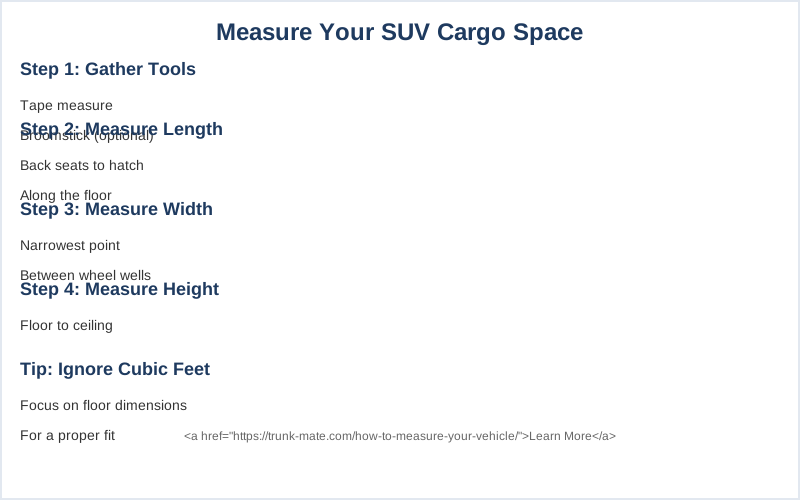
How to Measure Your SUV Cargo Space for a Liner — Key Specifications Compared
Key specifications for How to Measure Your SUV Cargo Space for a Liner

The Core Answer

The real move for measuring your SUV cargo space for a liner isn't about cubic feet. That's what the car companies use to brag, but it's not helpful for buying a liner. You need to measure the actual dimensions of the floor space you want to cover. First, grab a tape measure. The cheap plastic ones from a dollar store work fine. You don't need a fancy laser gizmo. What you will need is the tape, maybe a broomstick if you have a really deep cargo area, and your brain. Seriously, that's it. Measure the length from the back of your second-row seats (or third-row, if you have one) all the way to the back hatch. Do this along the floor. This is your primary length. This is what people call the 'red line', from wheel well to wheel well. Next, measure the width. This is usually the trickiest part. You need to find the narrowest point between your wheel wells. Sometimes it's right at the floor, sometimes it's a little higher up. Get down there and look. This is where the real-world space is, not some theoretical ceiling height. Then, measure the height. This is usually from the floor of the cargo area straight up to the closed hatch. If you have a liner that goes up the sides, you'll need to account for that. Some liners have a lip, so measure the height of that lip too. They measure to the tops of seatbacks, which is not what you want for a liner. Don't forget to measure with your seats in the position you'll actually use them for camping. If you always fold down the second row, measure with them down. If you sometimes use the third row, measure that configuration too. A liner that fits perfectly with the seats up might be useless with them down. Finally, check the liner's specifications. They usually list the dimensions. Compare your measurements to theirs. If a liner says it's 60 inches long by 40 inches wide, and your space is 58 by 38, you're probably good. If it's 62 by 42, it's going to be a tight squeeze or won't fit at all. This is about practical fit, not abstract volume. My rookie mistake was buying a liner that was too big. It bunched up and looked terrible. The fix was buying a slightly smaller one that hugged the contours of my trunk. It cost me another $40, but the peace of mind was worth it.
To maximize your SUV's versatility, consider how to choose the right size car air mattress for added comfort.
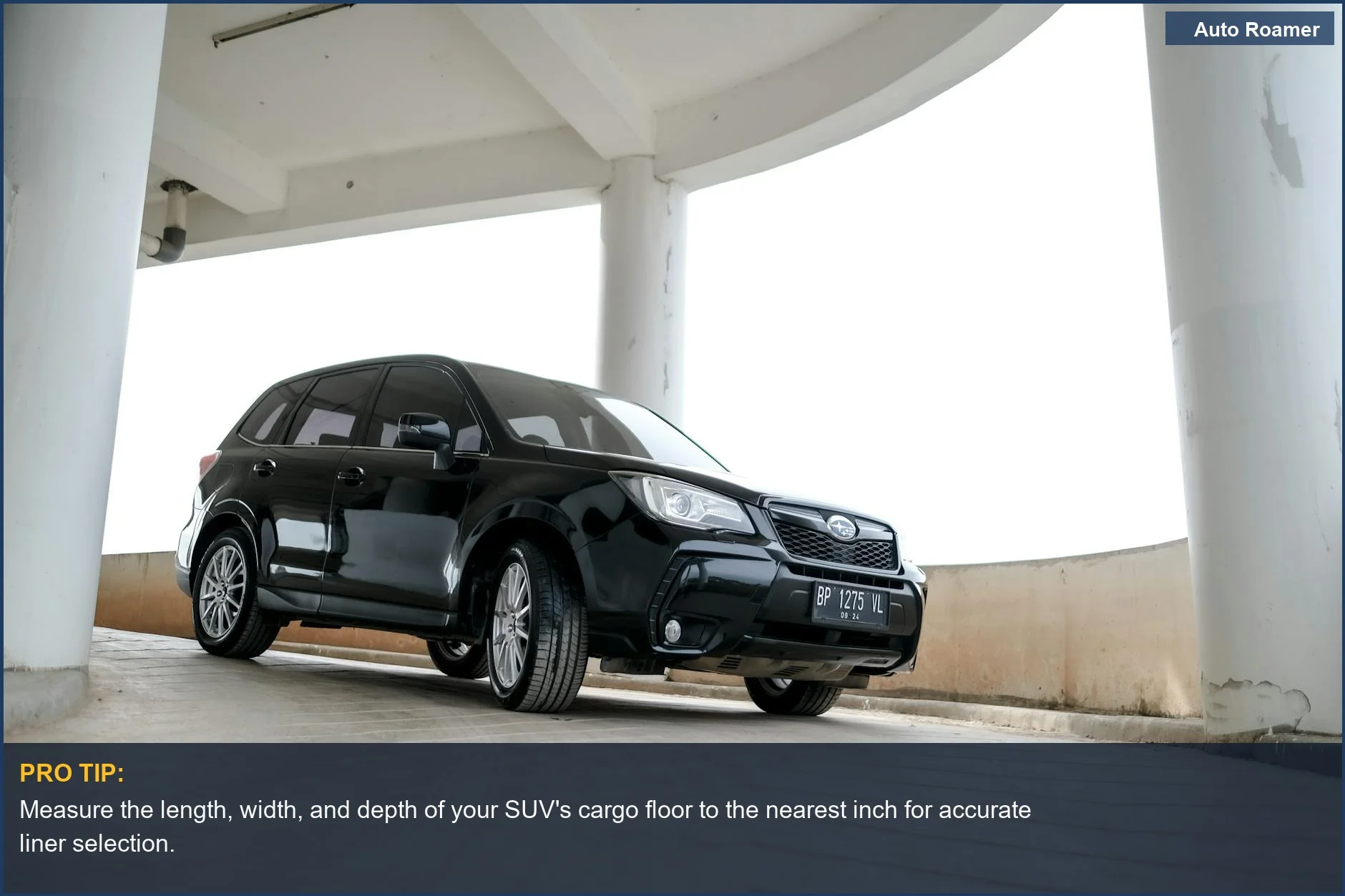
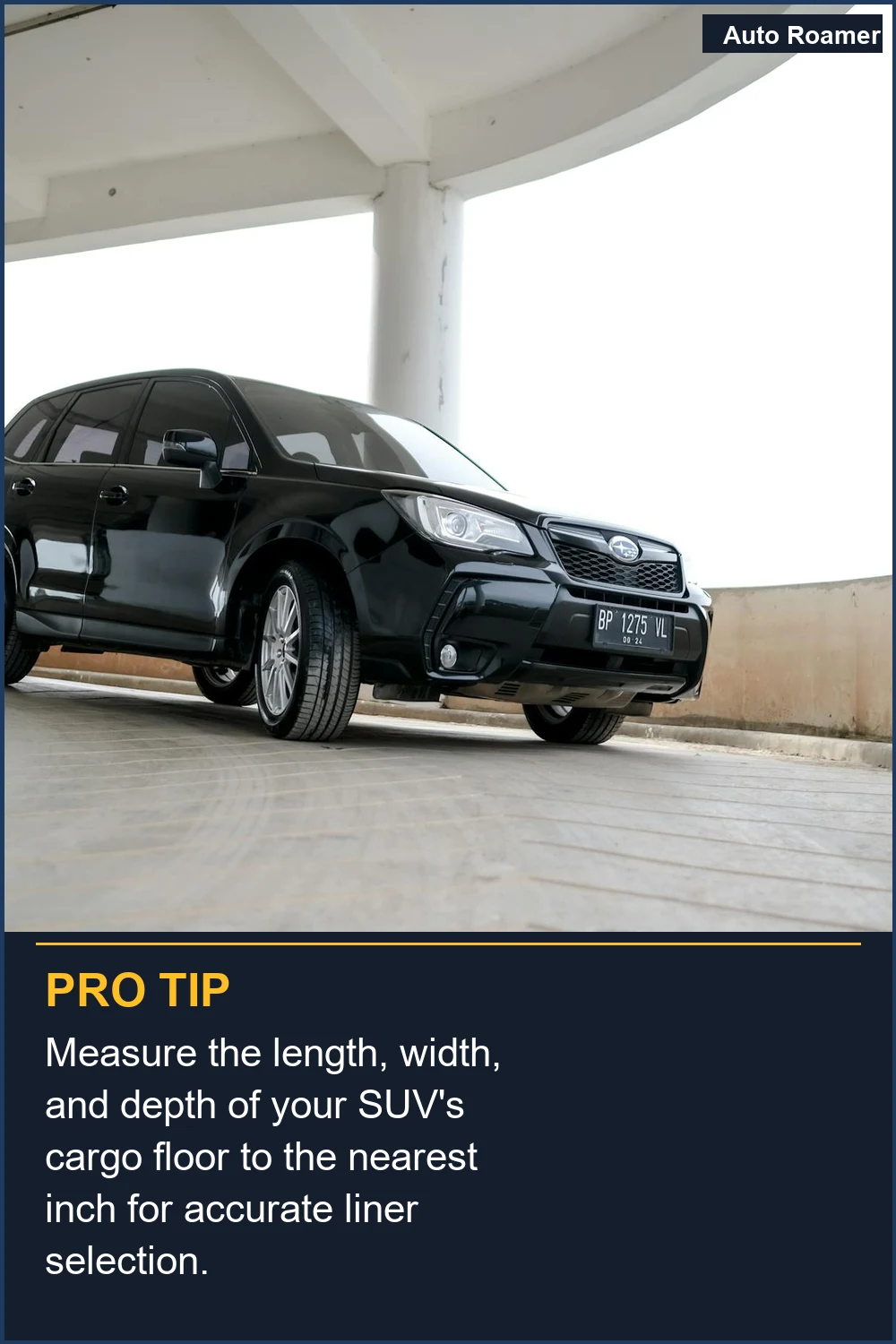
Measure the length, width, and depth of your SUV's cargo floor to the nearest inch for accurate liner selection.
Precisely measure your SUV cargo area floor dimensions to ensure your new liner fits like a glove. Accurate measurements are key for a snug fit. | Photo by Ayyeee Ayyeee

Why This Matters for Your Setup

  • No More Shifting Gear: I learned this the hard way on a trip to the Adirondacks. My cooler slid into my tent bag and ripped it open. A well-fitting liner keeps everything in place, so your camping gear doesn't become a projectile.
  • Spill Protection is Key: My first car camping trip involved a leaky water jug. The mess seeped into the carpet and smelled for weeks. A good liner acts as a barrier. It's a cheap insurance policy against mud, spilled drinks, and whatever else life throws at your car.
  • Easier Cleanup: After a muddy hike, your boots and gear are going to be filthy. A liner means you can just pull it out and hose it off. No more scrubbing your carpet with a toothbrush. Trust me, I've been there.
  • Protecting Your Resale Value: This might seem like overkill, but keeping your car's interior pristine matters if you ever decide to sell it. A liner protects against scratches, stains, and wear and tear. It's the $50 version of a permanent car detailing.
  • Creating a Level Surface: Some liners are designed to help create a more level surface in your cargo area, especially if you plan to sleep in the back of your SUV. This is crucial for comfort. It's about making your space functional for more than just groceries.
  • To keep your cargo area clean after trips, consider our tips for cleaning your cargo liner.
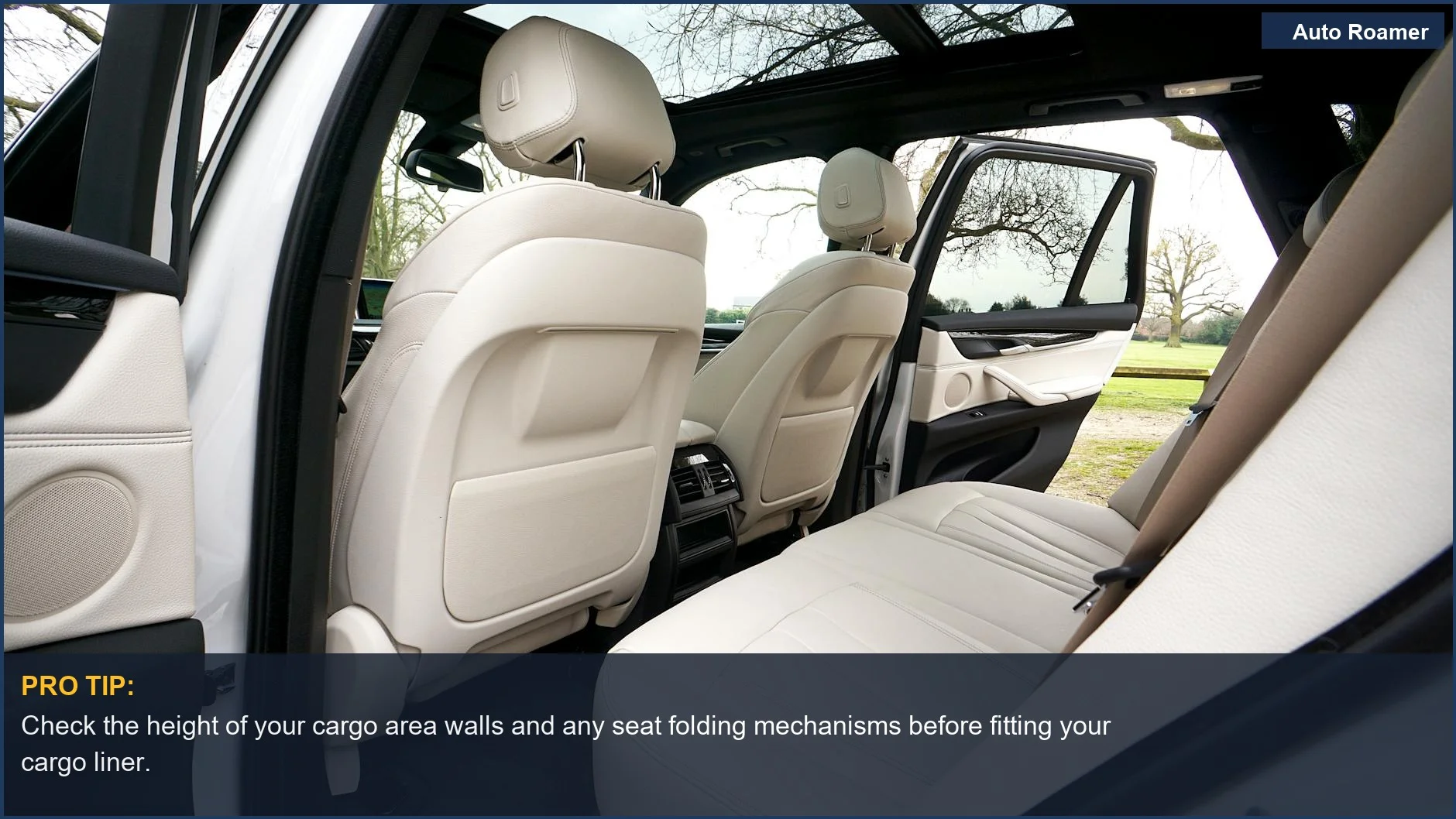
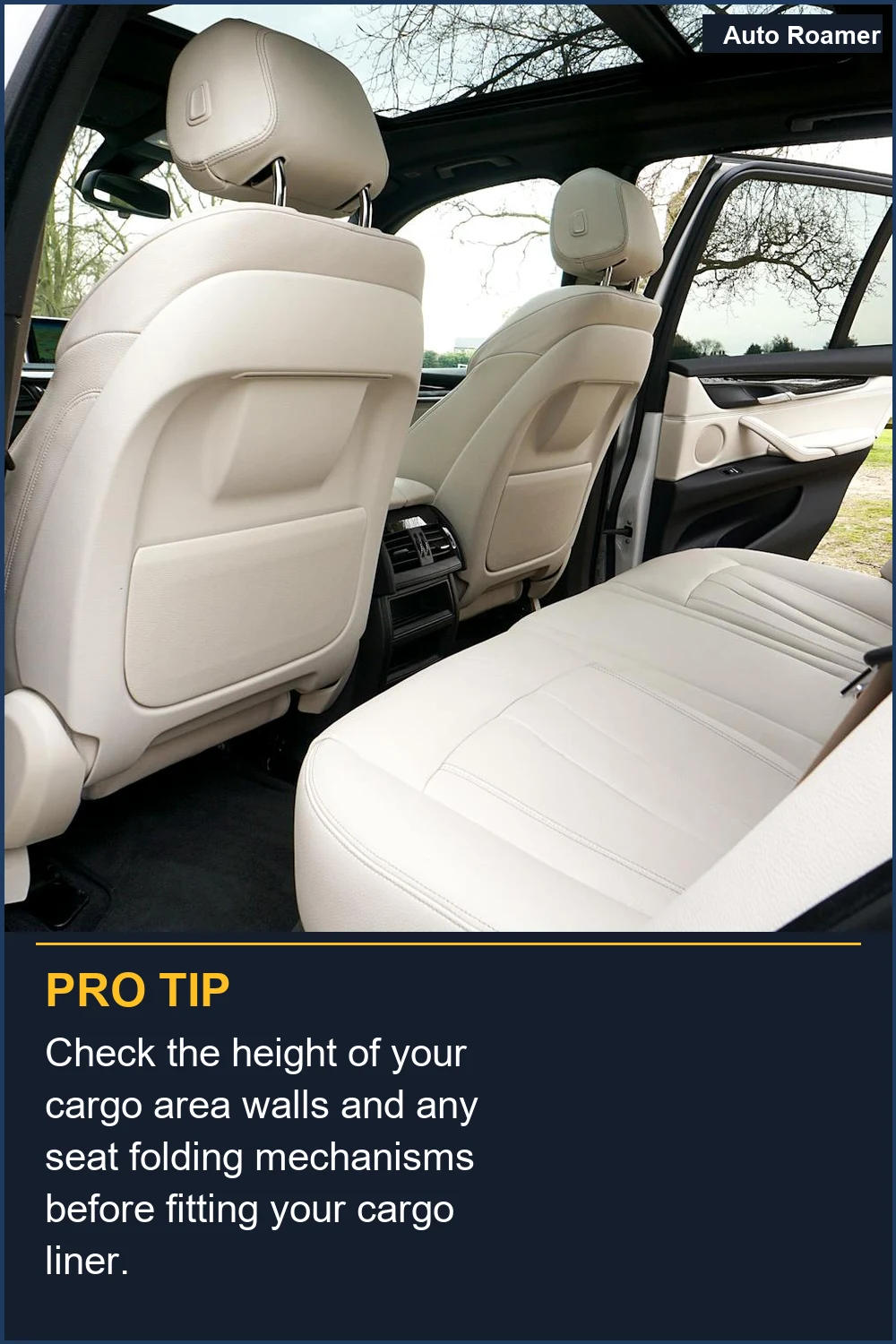
    Check the height of your cargo area walls and any seat folding mechanisms before fitting your cargo liner.
    Inside a luxurious SUV, imagine the benefits of a well-fitting cargo liner protecting pristine leather seats. Prevent spills and keep gear secure. | Photo by Mike Bird

    Making the Right Choice

  • Measure Twice, Buy Once: Don't just trust the manufacturer's cubic feet. Get out there with a tape measure. It takes 10 minutes and saves you the $40 mistake I made. Accurate measurements are the game-time decision.
  • Consider the Lip: If you want to contain spills, look for a liner with a raised lip. It might add a few inches to your height measurement, but it's worth it for peace of mind. Real-world dimensions matter.
  • Check Reviews for Fit: Even with measurements, sometimes a liner just doesn't fit certain car models perfectly. Read reviews from people who have your exact SUV. They'll tell you if it bunches up or fits like a glove.
  • Don't Overthink It: You don't need a bubble level or a physics degree. Just a tape measure and common sense. The goal is a liner that fits snugly and protects your car. It's about practicality.
  • The Honest Version: A well-fitting liner will make your car feel cleaner and your camping trips less stressful. It's a small investment for a big upgrade. My second liner cost $55, and it's still going strong three years later.
  • Once you've measured your cargo space, consider how a suitable cargo organizer can enhance your SUV's functionality.
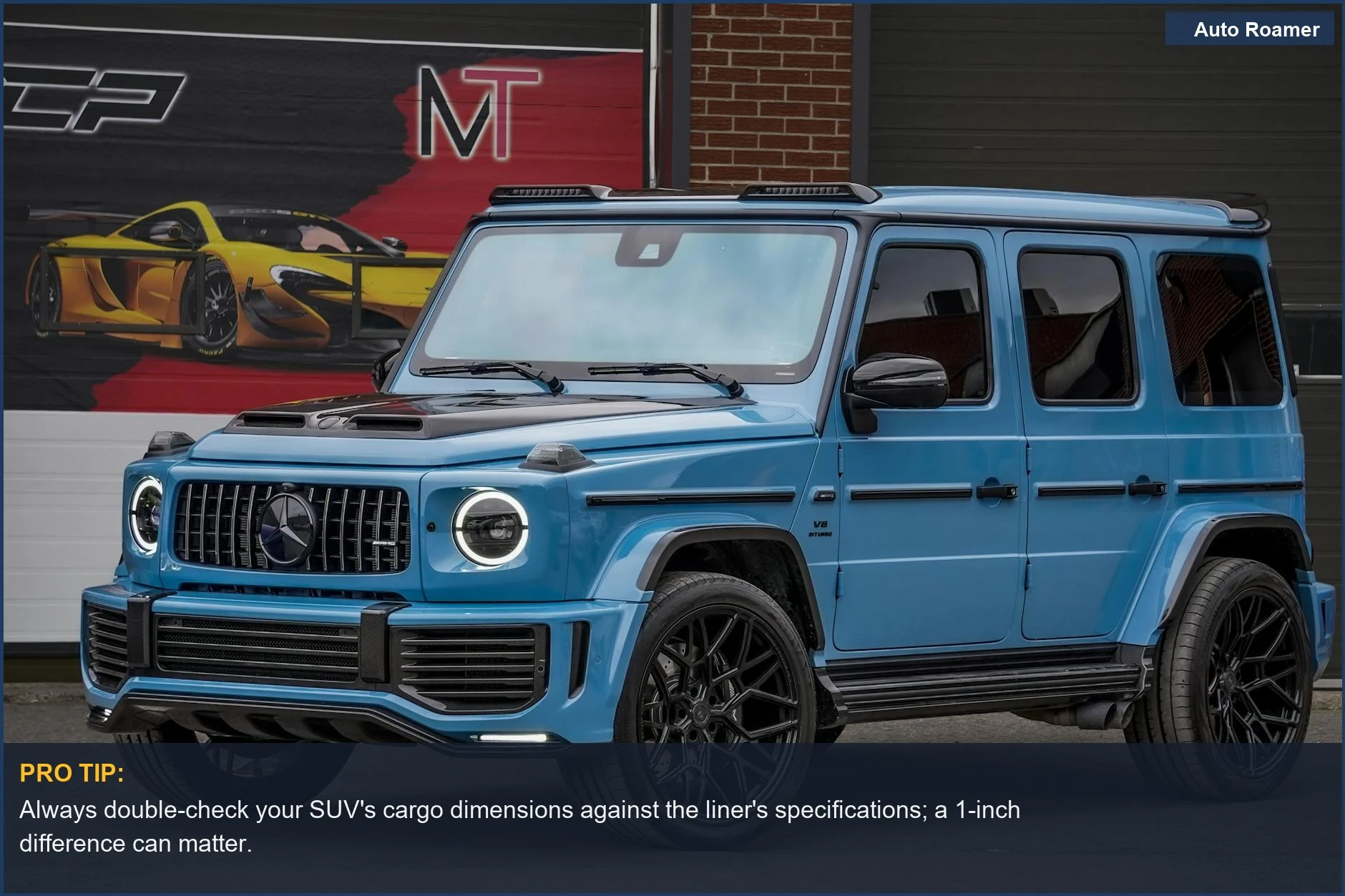
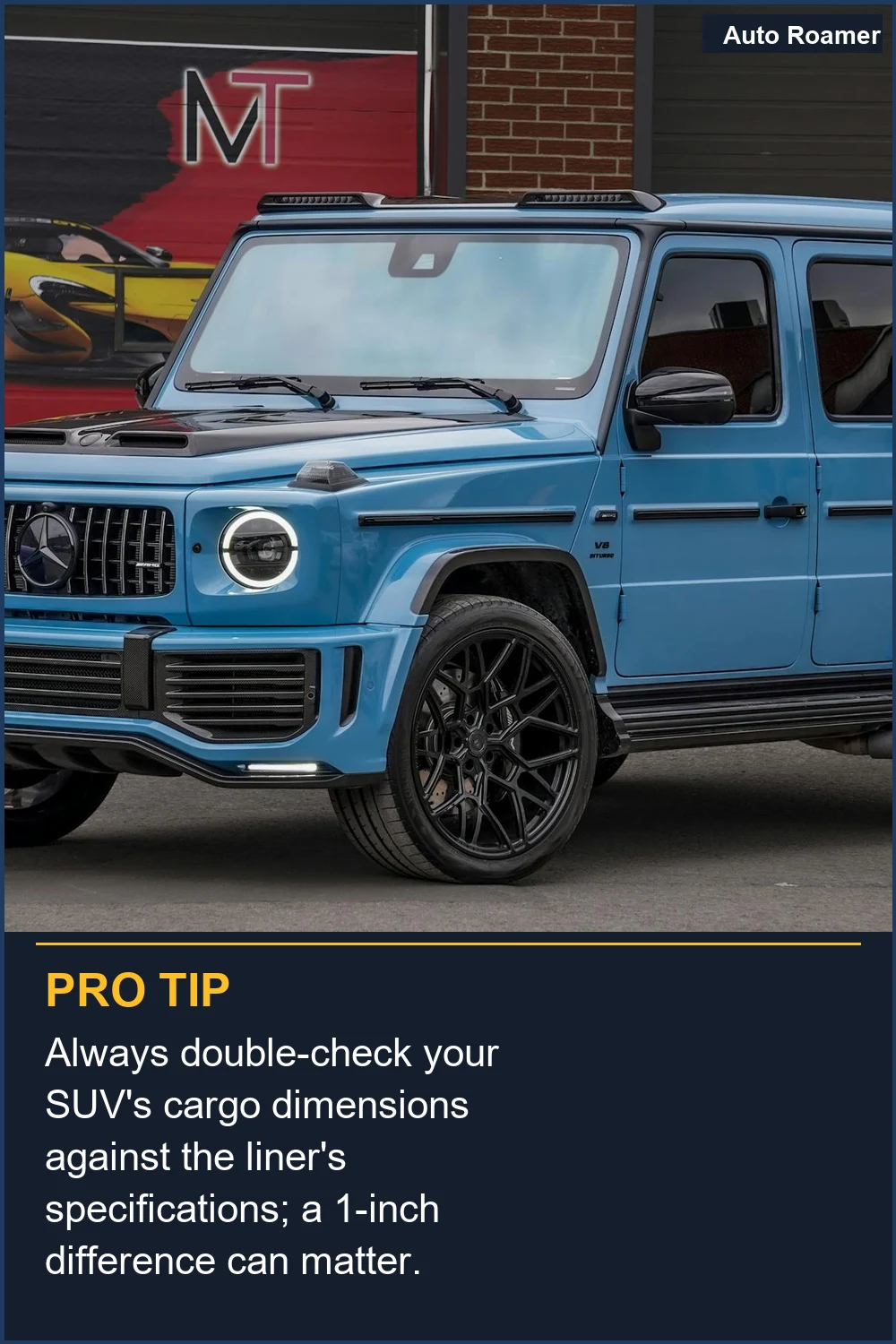
    Always double-check your SUV's cargo dimensions against the liner's specifications; a 1-inch difference can matter.
    This sleek blue SUV highlights the need for the right SUV cargo liner size. Measure twice to avoid costly mistakes and ensure a perfect fit. | Photo by Sara Mashhadawi

    Frequently Asked Questions

    I saw a custom-fit liner for $150. Can I just get away with one of those cheap $35 ones and save money?
    You absolutely can use a cheaper liner, but don't expect it to fit like a glove. My $35 liner from Amazon bunched up in the corners like a cheap suit. The real move is to spend maybe $50-$75 for a decent one that actually matches your SUV's shape. It'll save you hassle and look way better.
    Do I really need a special tool to measure my SUV cargo space, or can I just use my phone's camera?
    Hold up. A phone camera? That's a new one. You do not need a special tool. Just a standard tape measure. If your phone has a measuring app, fine, but a physical tape measure is more reliable for getting those exact inches. It's not rocket science, just basic geometry.
    What if I measure my cargo space carefully, buy a liner that's supposed to fit, and it still doesn't lie flat?
    That's a rookie mistake that happens. Sometimes the manufacturing tolerances are a little off, or the shape of your specific vehicle has a quirk. If it's just a little bunched, try leaving it in the sun for a few hours; heat can make some liners more pliable. If it's way off, contact the seller. Most reputable ones will offer an exchange if it's truly not fitting correctly.
    Can having a poorly fitting cargo liner actually damage my SUV's interior over time?
    A poorly fitting liner itself probably won't damage your SUV. However, if it causes things to slide around more, you could get scratches on your plastic trim or scuffs on your carpet. If it traps moisture because it's not sealed well, that could lead to mold or mildew, which is a bigger problem. A good fit prevents those issues.
    I heard that cargo space is measured in cubic feet, so if I just find that number for my SUV, I can order any liner that fits that volume. Is that true?
    That's a common misconception. Cubic feet is how manufacturers brag about theoretical volume, not how a liner actually fits. Think of it like buying shoes – you need the actual length and width, not just the volume of your foot. Real-world dimensions are what matter for a liner that lays flat.

    🏅 Looking for Gear Recommendations?

    Check out our tested gear guides for products that work with this setup:

    C

    Casey - The Weekend Warrior

    Weekend car camper and road trip enthusiast. Focuses on practical, budget-friendly solutions for families and first-time campers.

    Sources

    Related Articles