
Maximizing Your Gear Haul: Tips for the 2026 Ford Explorer
Maximizing gear haul in a 2026 Ford Explorer means understanding its actual usable space, not just the glossy brochure numbers. Most of us aren't hauling a full crew of seven people plus camping gear for a week. We're usually just two or three people with a weekend's worth of stuff.
Maximizing gear haul in a 2026 Ford Explorer means understanding its actual usable space, not just the glossy brochure numbers. Most of us aren't hauling a full crew of seven people plus camping gear for a week. We're usually just two or three people with a weekend's worth of stuff. The reality is, that third row eats up volume faster than you'd think. It's geometry, not magic, dictating how much fits.
The Core Answer
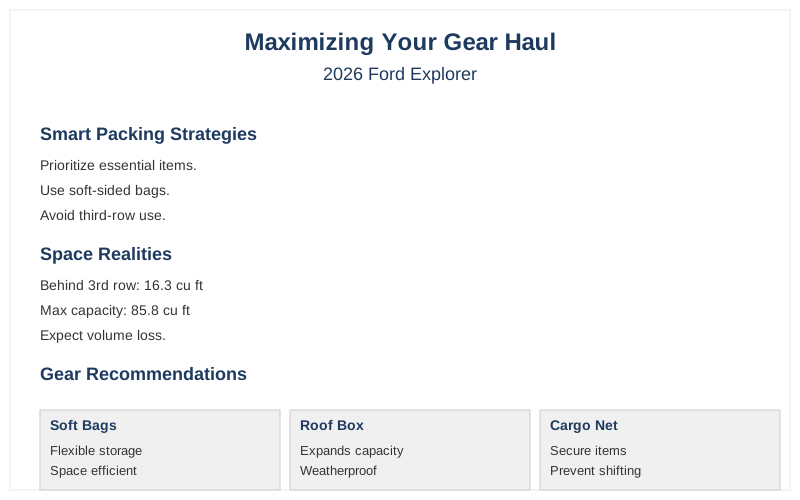
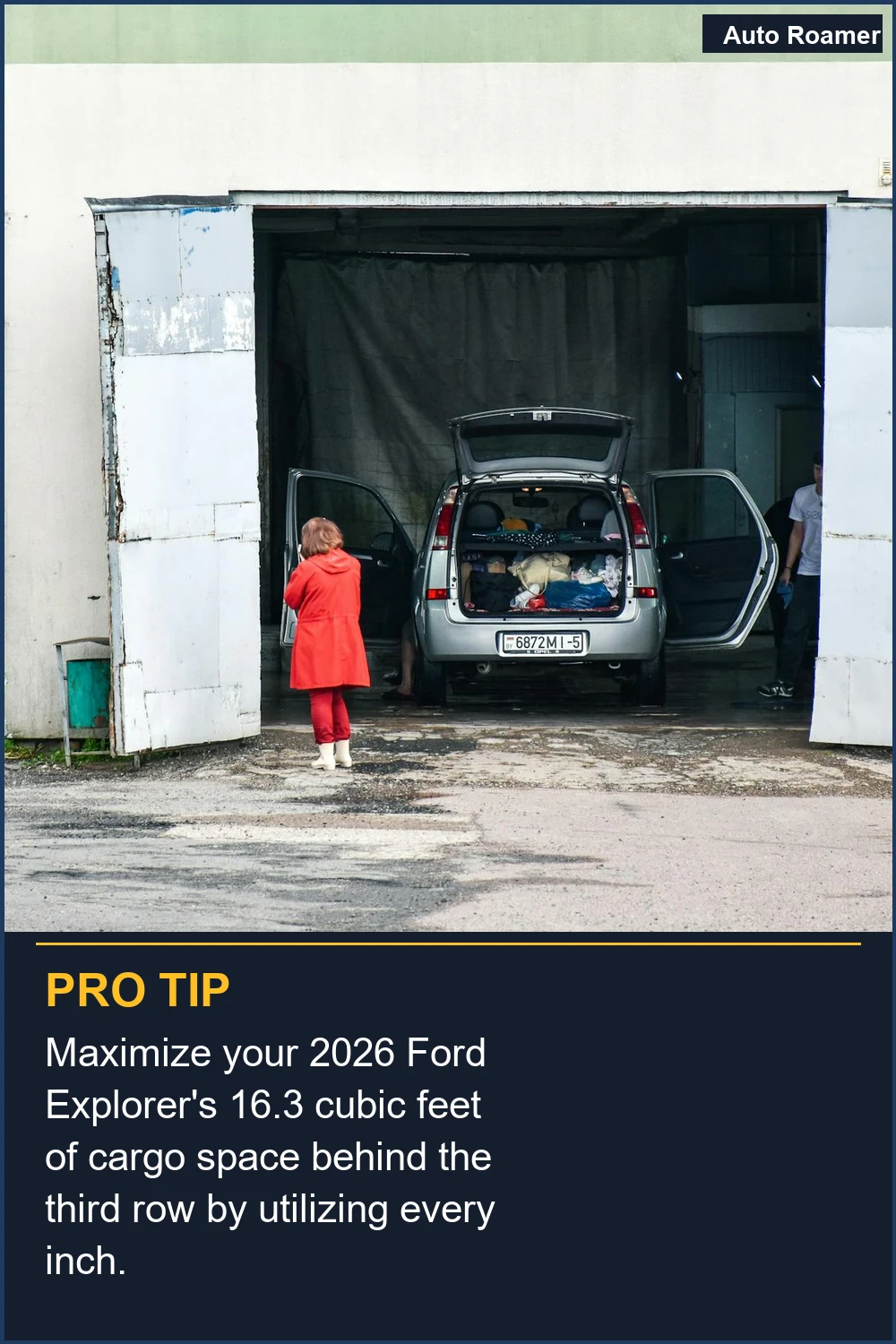
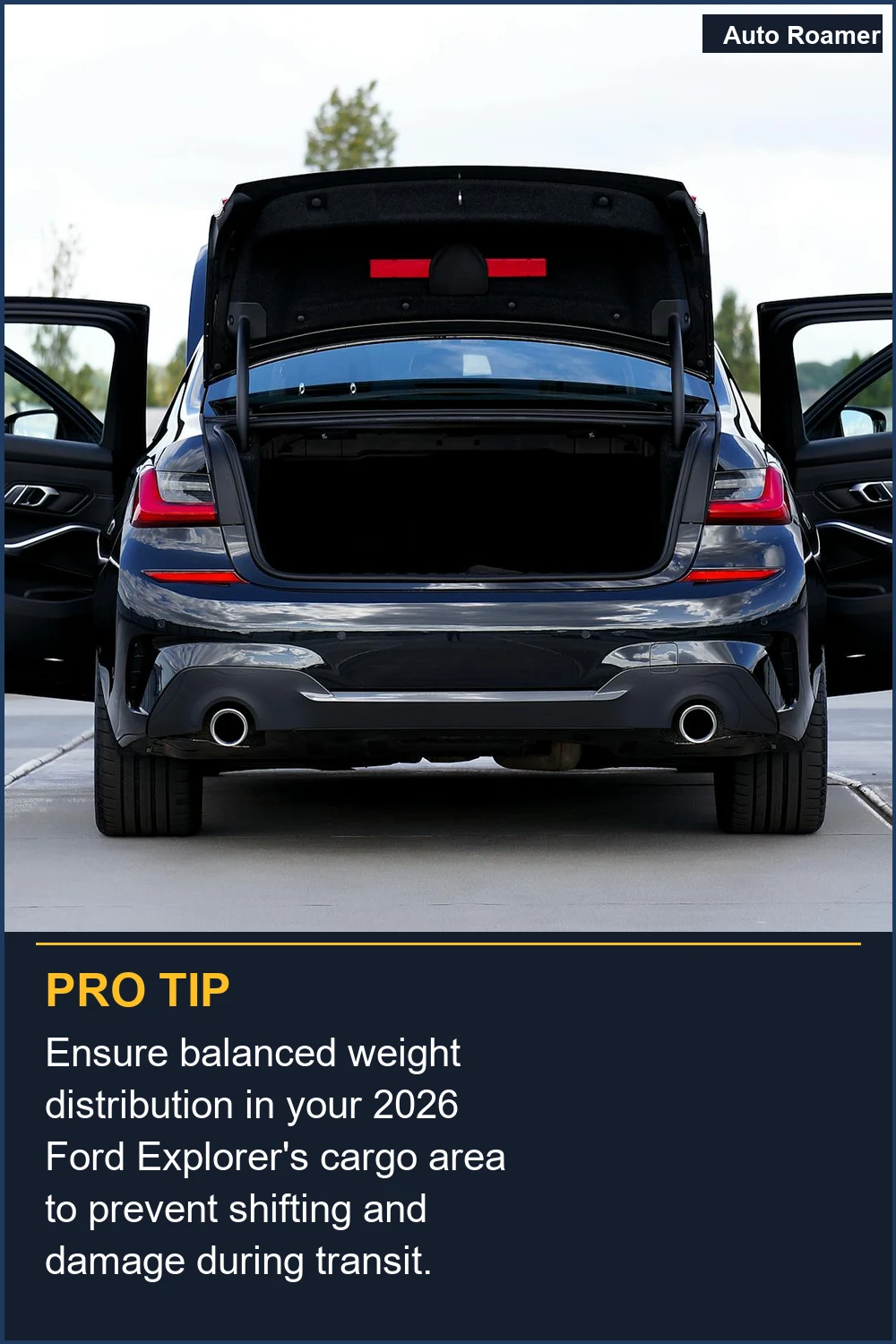
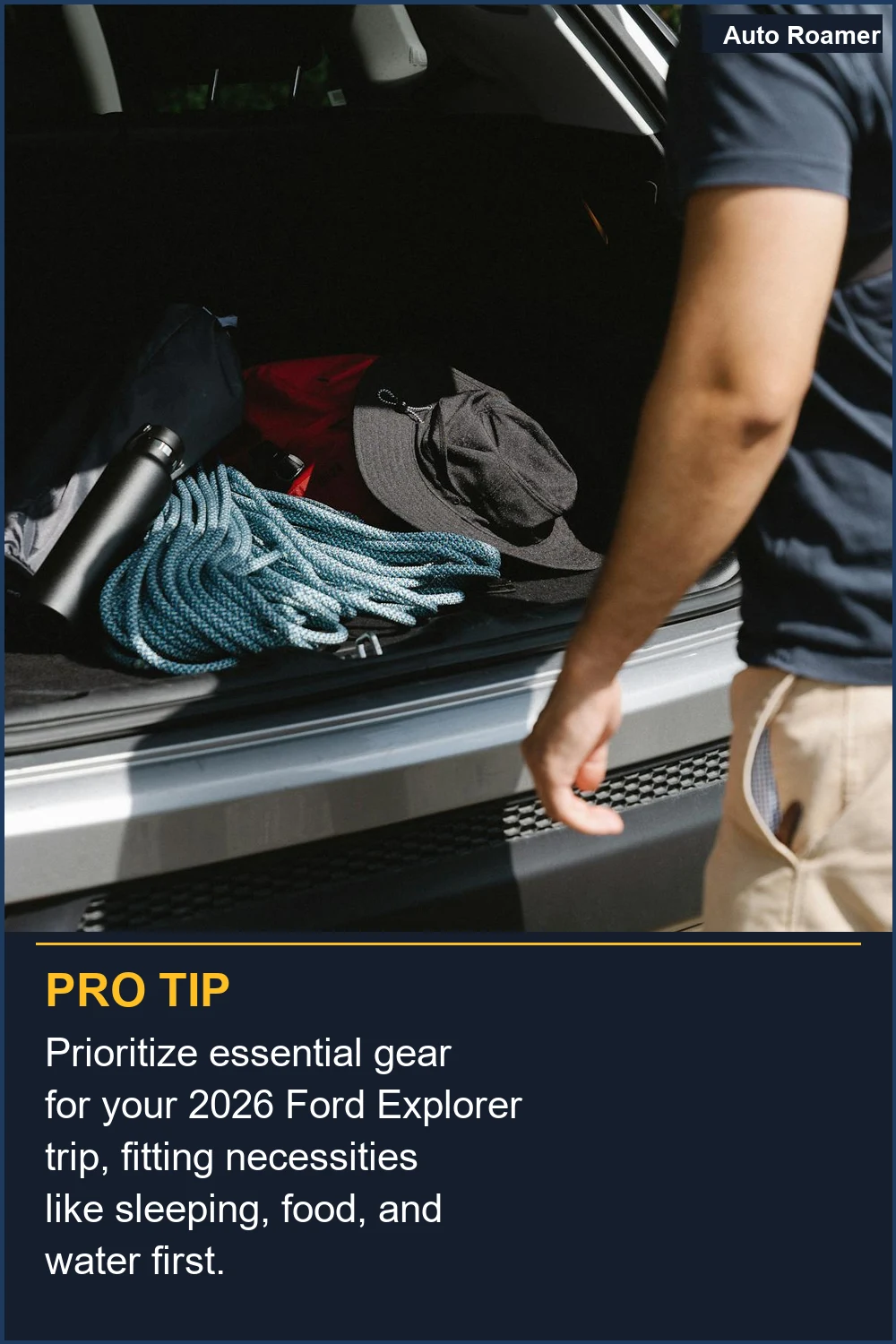
The real move for packing your 2026 Ford Explorer is to think smart, not just big. You've got about 16.3 cubic feet behind the third row according to Ford's own numbers. That's barely enough for a weekend grocery run, let alone a camping trip. My first attempt had me playing Tetris with sleeping bags and coolers, and I still couldn't see out the back window. The honest version is, if you're using the third row, your cargo space is severely limited. You'll be stacking things vertically, which is a rookie mistake for stability. That's how you end up with a cooler sliding into your passenger's head during a sudden stop. Physics doesn't care about your convenience. When those third-row seats are folded, you gain significantly more space, but it's still not a perfect cube. Wheel wells and seat mechanisms eat into that theoretical maximum of 85.8 cubic feet when everything's flat. Expect to lose about 10% of that volume to the vehicle's actual shape. My field notes say to prioritize what you *actually* need. For a weekend trip, that's usually a sleeping setup, food, water, and a light source. Everything else is optional until you've done a few trips and know what you use. Trying to pack like you're moving apartments is just asking for trouble. Consider soft-sided bags over hard suitcases. They conform to the awkward spaces better. Also, use the vertical space wisely. Things like sleeping pads or tent poles can often be slid into gaps between seats or along the sides. Weight distribution is game-time. Put the heaviest items, like your cooler or recovery gear, as low and as far forward as possible, ideally against the back of the second-row seats for better stability. This prevents the rear axle from getting overloaded and keeps the vehicle feeling planted, especially on rough roads or during braking. Don't underestimate the power of soft organizers or cargo nets. They keep smaller items from rolling around and making a racket. I used to have a whole drawer of miscellaneous camping gear rattling in the back. Now, it's all in labeled pouches secured with bungee cords. Brilliant engineering, that.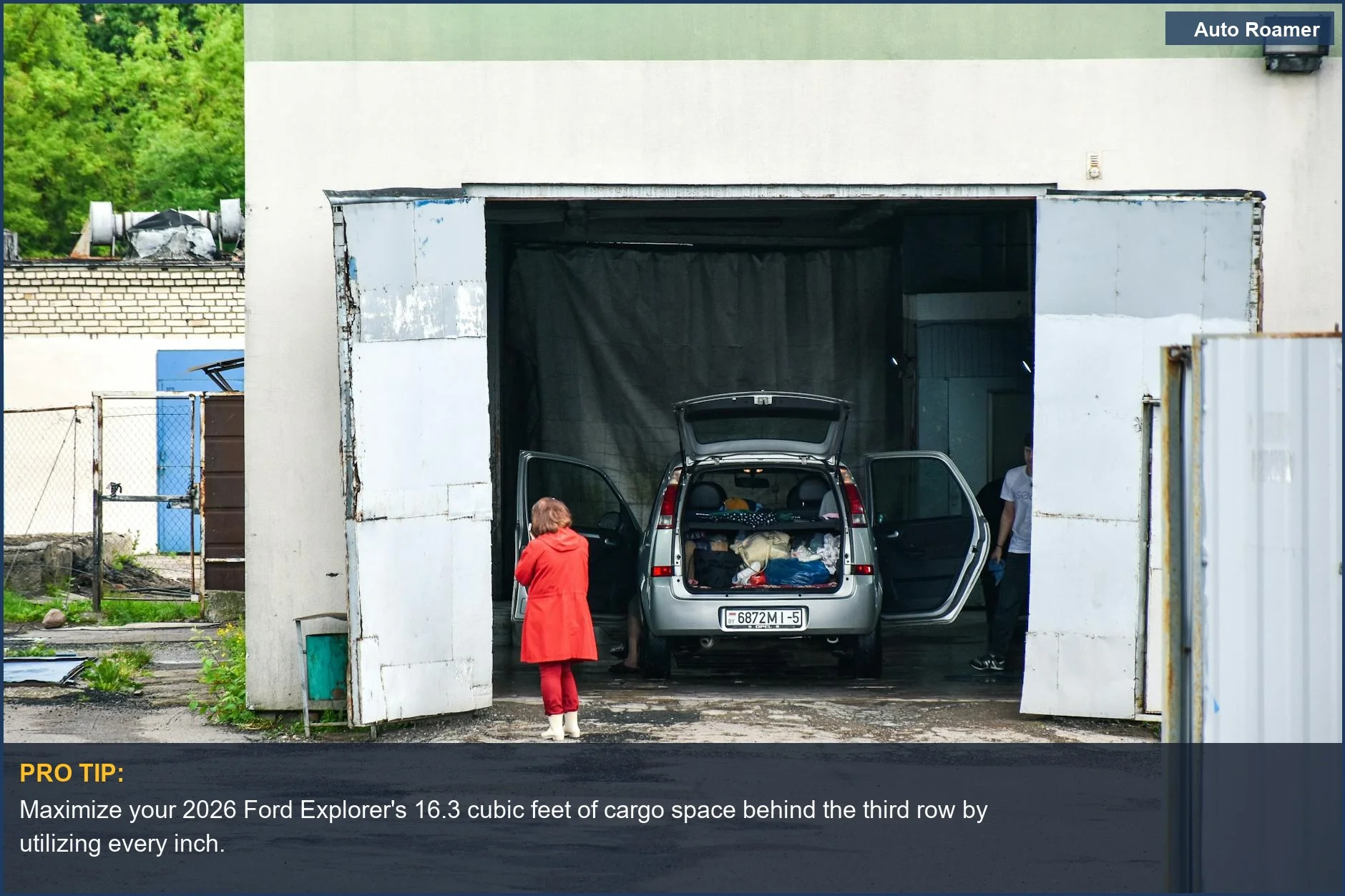
Why This Matters for Your Setup
Why does all this matter? Because a poorly packed vehicle is a recipe for disaster. I once had a full water jug shift and smash into my tent bag on a bumpy dirt road in Virginia. The $20 jug was ruined, and my tent had a nice new ventilation hole.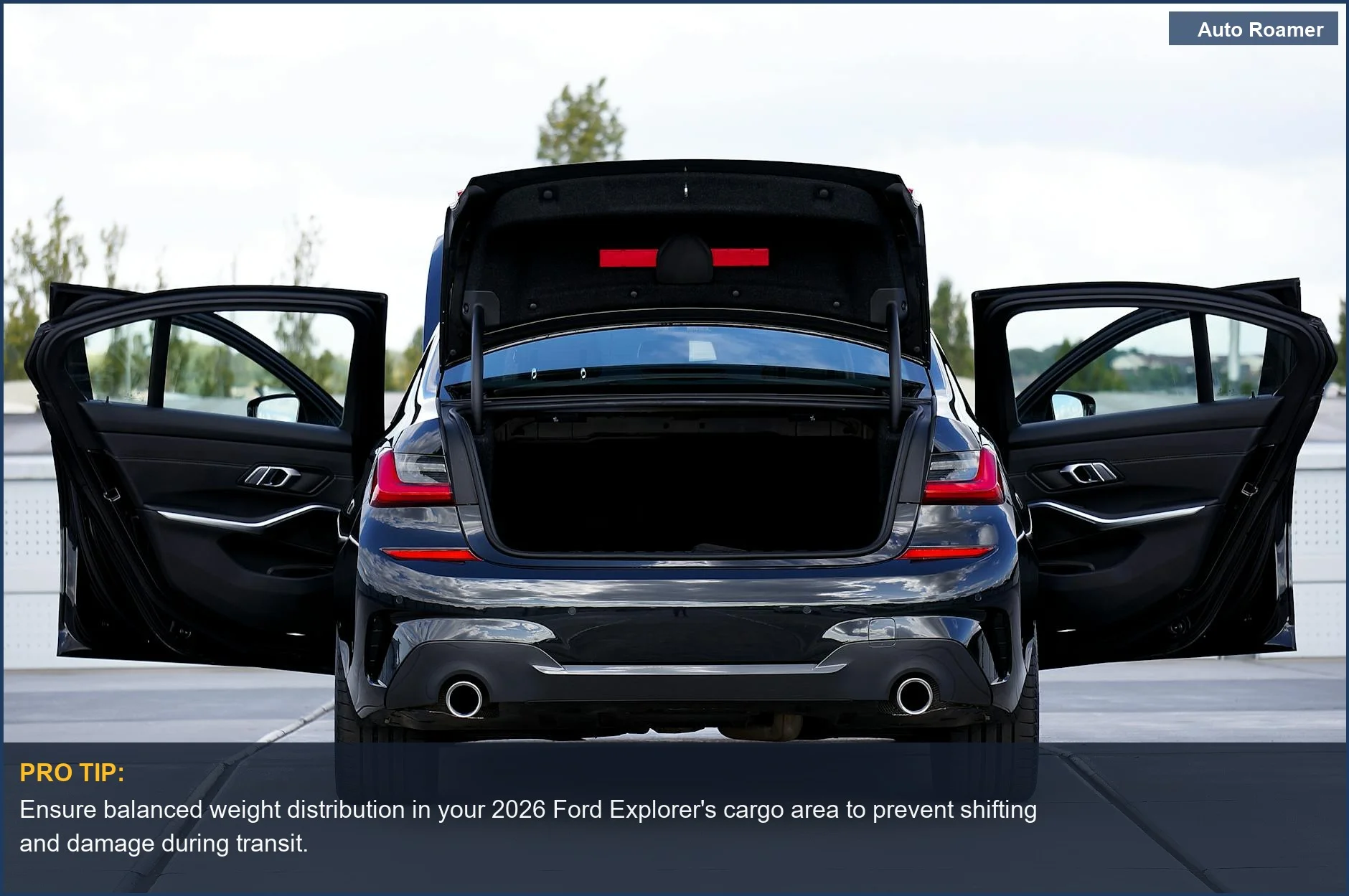
Making the Right Choice
Making the right choice about how you pack your 2026 Ford Explorer is all about real-world experience. Forget the fancy gear lists for a second. Focus on what you absolutely need and how to fit it safely.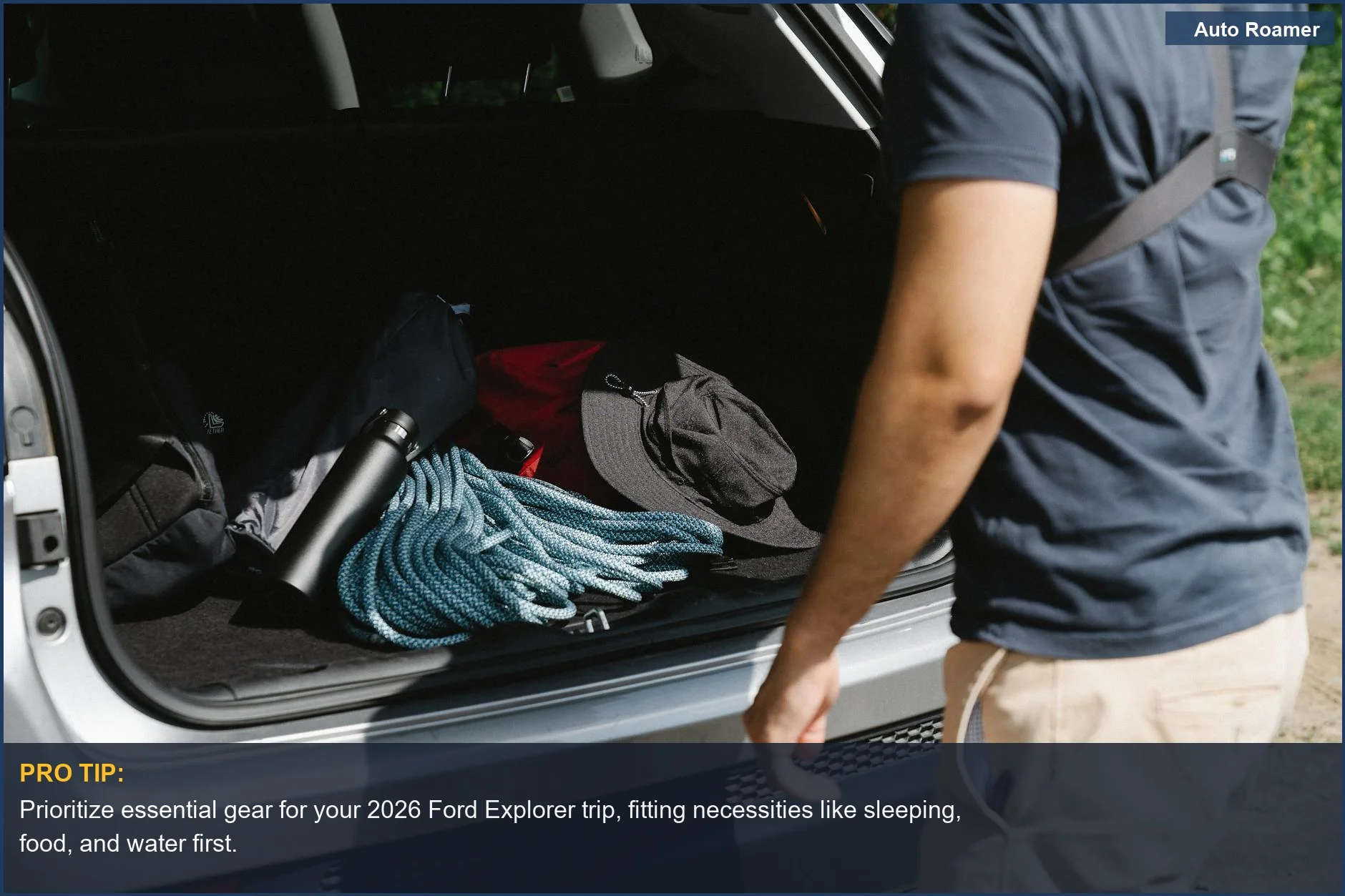
Frequently Asked Questions
If I want to add some extra storage bins to my Explorer, is it cheaper to buy them online or have a dealer install something fancy?
Do I really need one of those fancy cargo management systems, or can I just use some bungee cords and hope for the best?
What if I pack my Explorer perfectly, but then I hit a pothole the size of a small crater and everything goes flying?
Can overpacking my 2026 Ford Explorer for a long trip permanently damage the suspension?
I heard that putting heavy stuff in the back of an SUV makes it more likely to flip. Is that true?
🏅 Looking for Gear Recommendations?
Check out our tested gear guides for products that work with this setup: