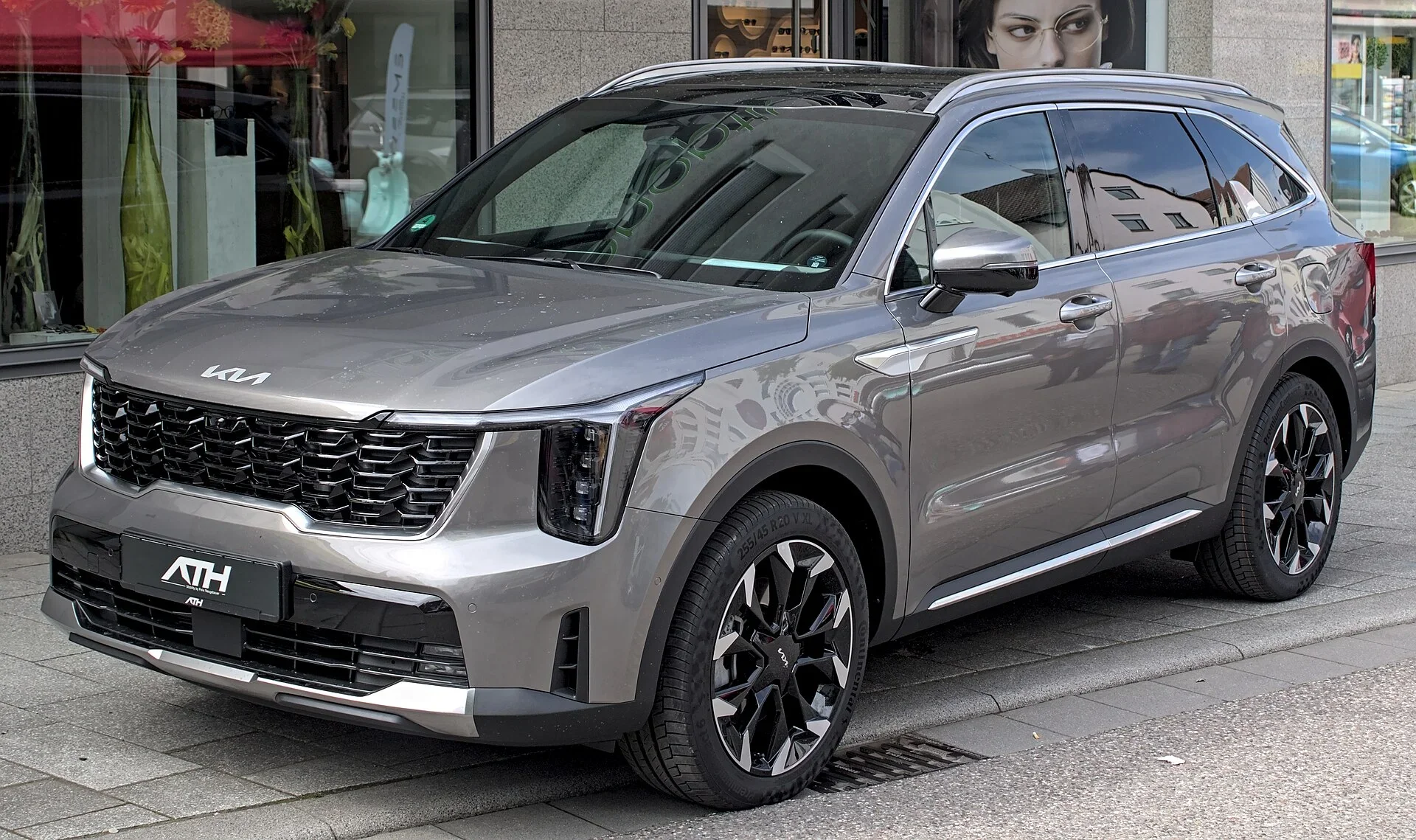
The Sorento's power, laid out for an installer
The install is where most camp-power setups go wrong, so let's map the Kia Sorento the way I'd map it before mounting anything. The Sorento (the current MQ4, 2021 and up) is more generous than most mid-size SUVs: 12V sockets in three places, a device ceiling of 180 watts, and - almost alone in its class - an available 115-volt household outlet. But every one of those circuits has a catch a careful installer needs to know before running a wire.
Here's the plan for this page. I'll place all three 12V sockets, explain the 115-volt outlet and exactly which two trims actually have it, give you the 180-watt device line, walk the fuse map with amp ratings and where each fuse lives, and then lay out the clean way to power a fridge overnight. Every fuse number here is aggregator-sourced rather than read off Kia's own printed diagram, so the one instruction I'll repeat is the installer's first rule: confirm it against the label on your own fuse-box lid before you pull a fuse or tap a circuit.
One more framing note before the sockets. The Sorento carries two fuse boxes, and the power circuits are split across both - the higher-amp outlet and inverter feeds live under the hood, while the low-amp USB and enable circuits sit in the interior box behind the dash. I've routed enough of these to know the mistake is assuming a dead socket means a blown fuse in the cabin box; on this MQ4 platform the outlet fuse is almost always the engine-bay one. Keep both lids in mind and you save yourself a needless teardown of the wrong panel.
Three sockets: front, rear, and the one in the cargo bay
The Sorento spreads its 12V power out well, which matters when you're deciding where a fridge or a fan lives.
- Front center console: a 12V socket plus the front USB ports - the everyday charging spot.
- Rear center console: a second 12V outlet on the back of the console, plus rear USB, and - if equipped - the 115-volt AC outlet on that same rear face.
- Cargo / luggage area: a 12V outlet back in the load space, labeled 'Luggage Power Outlet' in the fuse table - the one closest to where camp gear rides.
For a clean install, the cargo socket is the natural tap for a fridge because it keeps the wire short and out of the cabin. The catch that decides everything comes next - like the front and rear sockets, the cargo outlet is switched, so proximity doesn't help you overnight. Measure the run, but plan the power source before you commit to the location.
A word on where each socket draws from. The front and rear console sockets share the passenger-compartment feed, while the luggage socket runs its own #81 circuit back to the engine bay - which is exactly why the cargo outlet is the one I'd tap for a dedicated load rather than piggybacking off a console socket that shares its wiring with everyday charging. The rear-console USB on this platform sits on the higher-amp circuit (15 amps versus 10 up front per the fuse table), so it's the better port for a fast-charging phone once you've handed the fridge job to a station.
The 115-volt outlet only two Sorentos have
This is the Sorento's standout feature and its biggest trap, so read the trim line carefully. The Sorento offers a genuine 115-volt, 150-watt household AC outlet on the rear face of the center console - a real convenience no CR-V, Forester or CX-5 in this class matches. But it's 'if equipped,' and per Kia media and dealer specs that means only the SX Prestige gas trim and the Sorento PHEV. Every lower trim goes without.
Don't assume your Sorento has the 115-volt outlet - most don't. It's an SX Prestige and PHEV feature, it's rated at just 150 watts, and Kia's manual says do not use it with the engine off. It runs a laptop, not a fridge.
Two more installer notes. First, one owner reports the outlet 'didn't show up until 2023,' which conflicts with inverter fuses appearing in earlier maps, so the exact first model year is unconfirmed - verify on your specific car. Second, at 150 watts and engine-on-only, it's a phone-and-laptop convenience, not a camp-power solution. If you were counting on the Sorento's AC outlet to run real gear overnight, that plan needs a power station instead.
One practical detail for anyone chasing this outlet down at the fuse box: it's gated by a separate 7.5-amp enable fuse (#42 in the interior box) on top of the 30-amp main inverter feed (#37) under the hood, so a dead AC outlet on a Prestige or PHEV can be either fuse - check the small interior one first, since it's the cheaper and more common failure. And treat the 150-watt rating as a hard wall, not a target. A household-style outlet invites people to plug in a coffee maker or a heat gun, and those loads will trip the inverter or pop #42 long before they do a lick of useful work.
180 watts is the device line, not the fuse
Kia rates the Sorento's 12V sockets for devices drawing less than 15 amps, and states a 12V/180-watt maximum. That 180 watts is the number to build to. The outlet fuses are 20 amps, which looks like more headroom, but the fuse protects Kia's wiring - it is not your appliance's permission to pull 240 watts.
What 180 watts covers cleanly:
- A 12V compressor fridge (around 45 watts running) with room for a fan and charging alongside it.
- Lights and electronics - all comfortably inside the budget.
- Not a heating element - a 12V kettle or resistance heater is the load that trips the socket, fuse or no fuse.
The installer's discipline: size the load to the 180-watt rating, then pick a fuse that matches the wire, not the appliance. Getting those two numbers backward is how a socket circuit cooks itself while the fuse sits there looking innocent.
One more number that matters at install time: the gap between the 180-watt device ceiling and the 20-amp fuse is deliberate headroom for Kia's harness, not spare capacity for your gear. At 12 volts, 180 watts works out to right around 15 amps of draw, which is precisely why Kia phrases the limit as 'devices under 15 amps.' Daisy-chain a splitter and run a fridge plus a fan plus a charger off one socket, and you can sail under the 20-amp fuse while still baking the socket contacts. I'd meter the total draw at the plug before trusting any multi-outlet adapter.
Everything switches off with the engine, inverter included
Here's the trait that shapes the whole build: nothing on the Sorento is constant power. Kia's manual states the 12V outlets are inactive when the Engine Start/Stop button is off, and the 115-volt inverter carries the same rule - do not use it with the engine off. Pull the key, and every socket and the AC outlet go dark together.
What that rules out, and what it means for the install:
- No overnight fridge off a factory socket - it quits when the car's off, or drains the start battery if you cheat and leave it in accessory.
- No leaving the AC outlet feeding gear while you sleep - it's engine-on only by design.
- An always-on tap requires a modification - owners wire to the cargo-lamp circuit for constant power, but that's a change you make deliberately, not factory behavior.
The Sorento behaves like most of the segment here, not like the Mazda CX-5 with its documented constant socket. Plan around switched power from the start and the install stays clean.
There's a subtlety worth spelling out for the accessory-mode dodge. Leaving the Sorento in ACC to keep a socket live doesn't just risk the start battery - the MQ4 times the accessory circuit out on its own, so a fridge left that way can quit hours before dawn with no warning at all. If you're set on a constant tap, the cargo-lamp circuit is the lead owners have wired to, because it's a low-draw always-hot feed back in the load space, but it's rated for a lamp, not a compressor - fuse it for the wire and keep the load small.
The fuse map: two outlet fuses under the hood, USB in the cabin
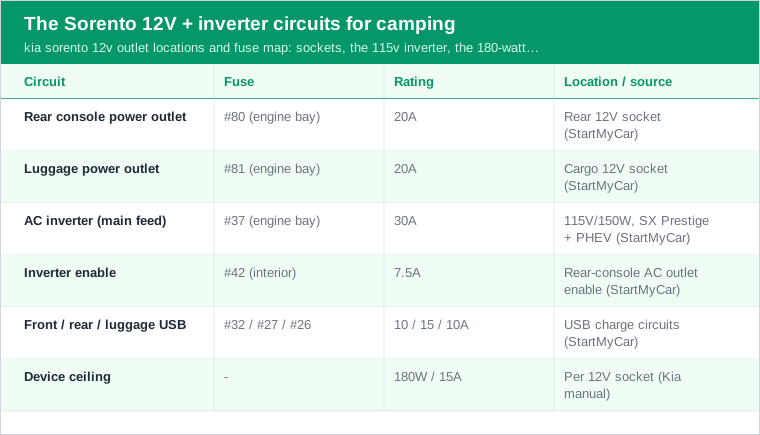
Here's the layout for the power circuits so you can find the right fuse on a dead socket. The Sorento splits them between the engine-bay box and the interior box (StartMyCar, 2021-2024 cars):
- Engine bay: #80 Rear Console Power Outlet (20A), #81 Luggage Power Outlet (20A), and #37 AC Inverter main feed (30A).
- Interior box: #42 inverter-enable (7.5A), plus the USB charge circuits - #32 front (10A), #27 rear console (15A), #26 luggage USB (10A).
Two honest caveats before you go pulling fuses. These numbers are StartMyCar's, not read off Kia's own diagram, and the 2025-26 refresh and the Hybrid relabel some of them ('Power Outlet 1/2,' a single 'USB Charger,' the inverter fuse sometimes moving to the interior box). Also note there is no separate cigarette-lighter fuse on the MQ4 - it uses Power Outlet circuits only, so don't go hunting for a 'CIGAR' fuse that isn't there. Match these to your fuse-lid label first.
Where the boxes physically sit: the engine-bay box lives driver's-side near the firewall, and the interior box hides behind a pop-off panel at the driver's end of the dash, each with a printed legend on the underside of its lid. A spare-fuse puller usually clips inside one of them. When you're reading the 2025-26 or Hybrid legend, expect the outlet fuses to read as 'Power Outlet 1' and 'Power Outlet 2' rather than the Rear-Console and Luggage names StartMyCar lists - same circuits, different words - so match by amp rating and position, not by the label text alone.
Wiring a fridge the clean way: the cargo circuit
If you want the fridge hardwired rather than run off a portable battery, here's the clean-install version for a Sorento. Because the luggage socket on fuse #81 is switched, a proper fridge line goes direct to the battery, not to the socket - a fused lead from the battery back to the cargo area, through a low-voltage cutoff.
- Fuse it at the battery: an inline fuse within a few inches of the positive terminal - the step everyone skips, and the reason a chafed wire becomes a fire.
- Add a low-voltage cutoff: it shuts the fridge off before it pulls the start battery too low, so you always crank in the morning.
- Route it clean: along an existing harness path, grommeted through the firewall, secured every foot so it doesn't rattle loose or chafe - a rushed run is the one you re-do in three weeks.
- Size the wire, not just the fuse: a compressor fridge on a long pull to the load space wants 10-gauge to hold voltage over the distance - undersized wire drops volts, and the fridge cycles hard fighting to hold temperature.
If you'd rather that direct line still respect the ignition, a low-current relay triggered off a switched circuit lets the heavy feed come straight from the battery while the key decides when it's live - the best of both, and the way I'd route it for someone who wants factory-style on-with-the-engine behavior but more than 180 watts on tap.
Honest scope: this is the right call for a dedicated sleep build. For an occasional camper, it's more wire and risk than the job needs, and the power station below does the same thing with zero cutting.
The overnight power plan: station over socket
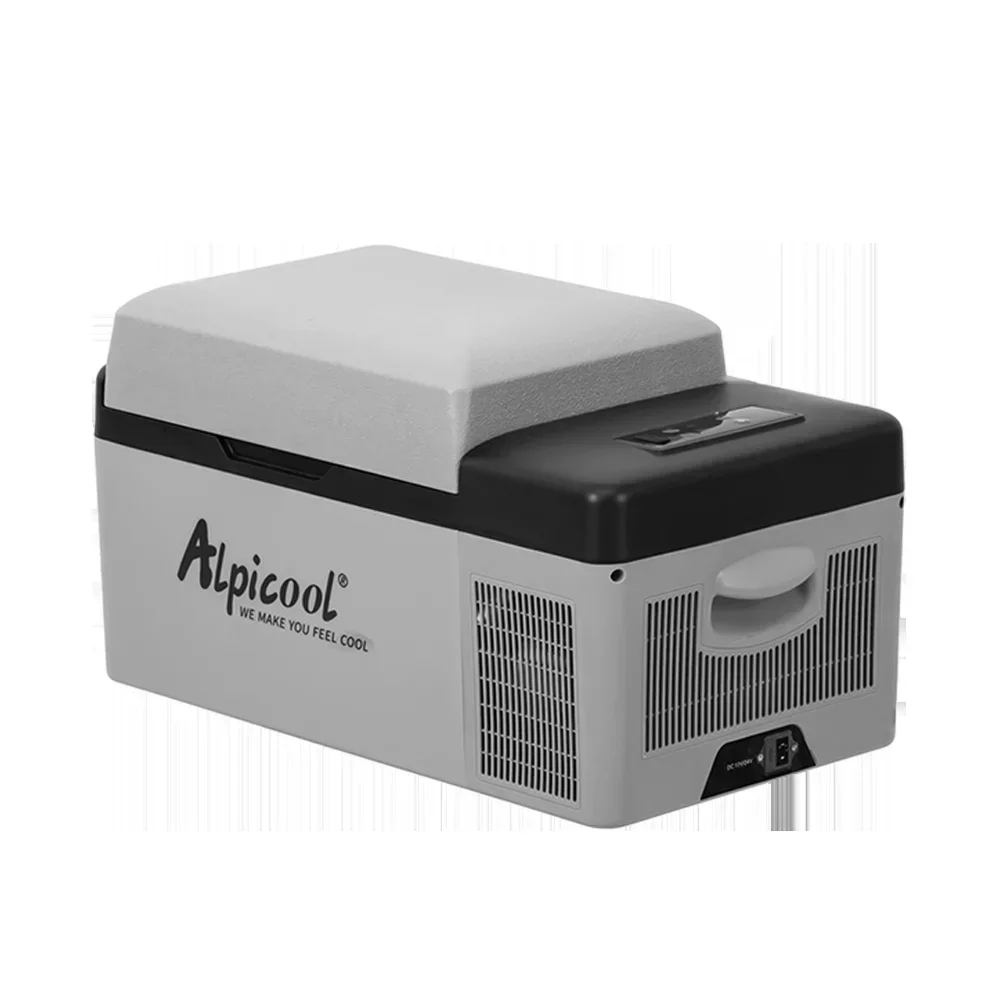
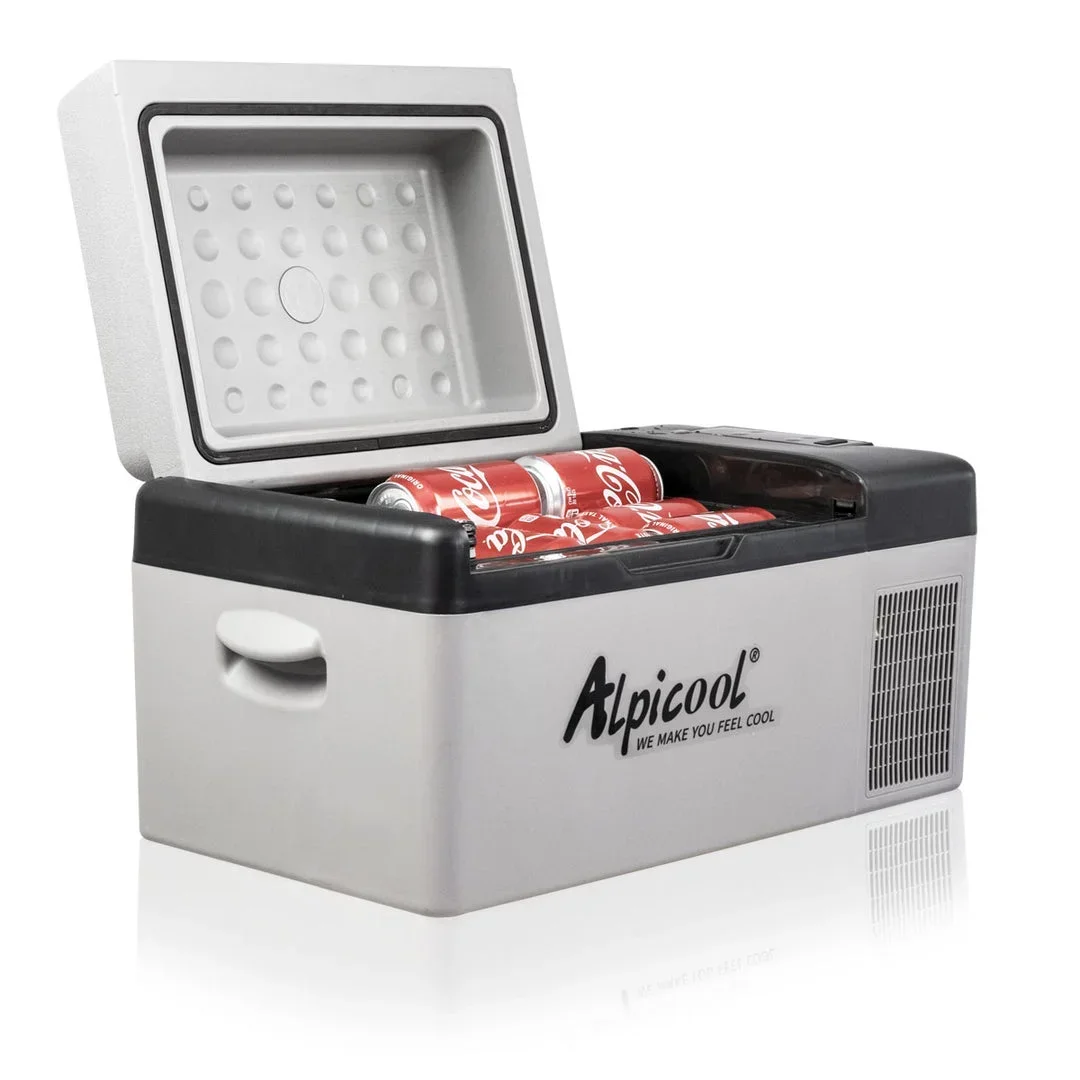
For most Sorento owners, the cleanest install is no install. Since every factory socket and the 115-volt outlet die with the engine, running an Alpicool C20 fridge overnight off the car is the setup that ends in a warm fridge or a dead battery.
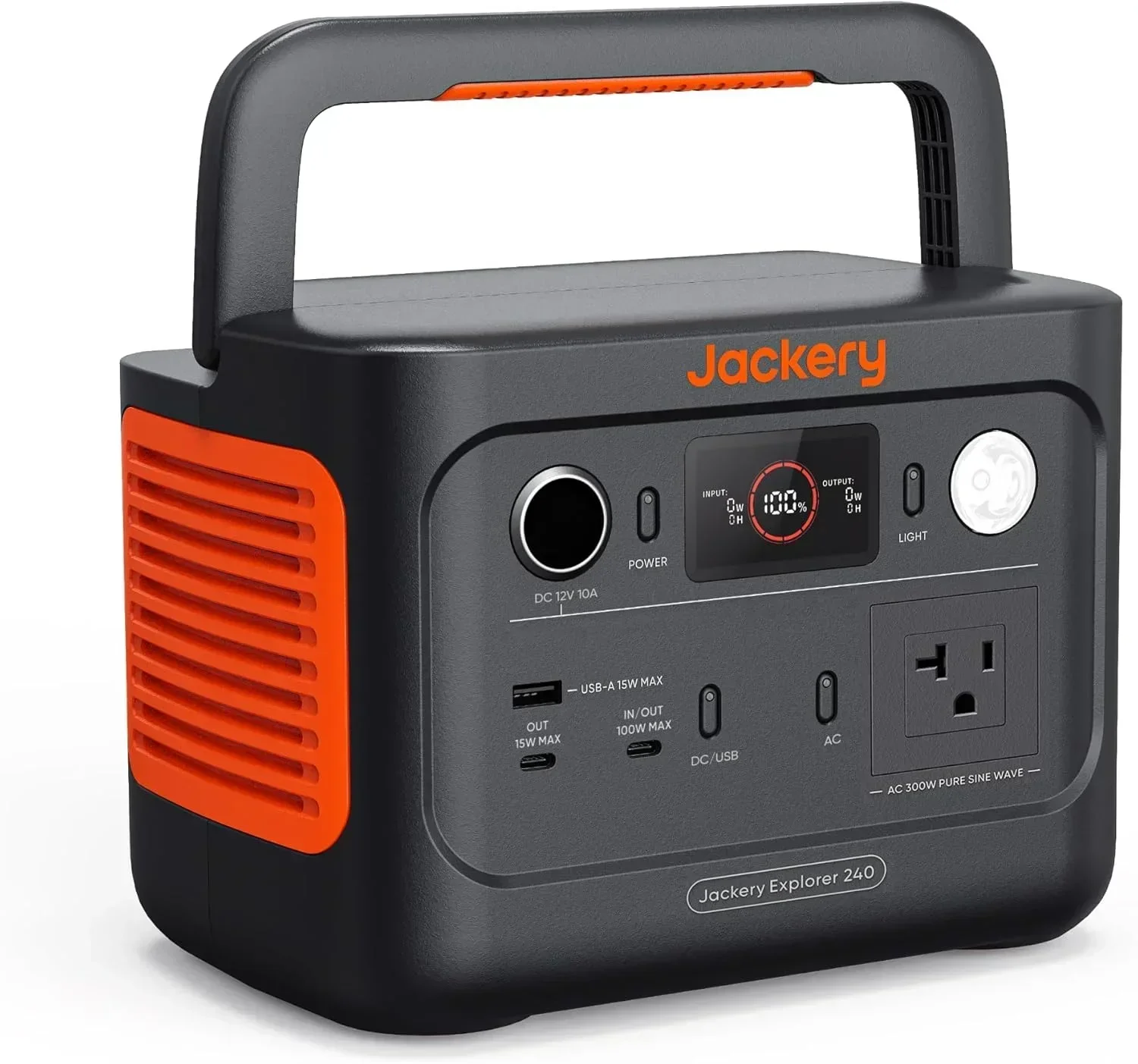
The plan I'd fit to a Sorento: a Jackery Explorer 240 v2 power station runs the fridge, a fan and a night of charging off its own 256 watt-hours, then recharges from the 12V socket while you drive - independent of the switched sockets, the 180-watt cap, and the two-trim AC outlet. It's the setup that works on any Sorento, SX Prestige or base, gas or hybrid, with no wiring at all. The full build lives in our Kia Sorento camping guide, and if you're weighing the sleep space too, the sleeping in a Sorento breakdown covers the bed.
One sizing note so the station actually keeps up: topping a 256 watt-hour Explorer back up off the Sorento's 12V outlet as you drive is a slow refill, so on a multi-day trip I'd pair the drive-charging with a solar input or step up to a larger station rather than expecting the socket alone to fill it overnight. The socket's own 180-watt cap limits how fast you can push that charge back in - the same ceiling that hems in a hardwired fridge now working quietly in your favor.
The verdict on Sorento camp power
The Kia Sorento is one of the better-equipped mid-size SUVs for camp power, with one big asterisk. You get three 12V sockets, a 180-watt device ceiling, outlet fuses #80 and #81 under the hood, and a genuine 115-volt AC outlet - but that outlet is SX Prestige and PHEV only, rated at 150 watts, and engine-on only, and every circuit switches off with the key.
Treat the Sorento's factory power as daytime convenience, not an overnight supply. The 115-volt outlet is a nice laptop charger on two trims; a power station is what actually runs a fridge through the night.
Confirm which trim and outlets you actually have, keep 12V loads under 180 watts, and bring a standalone battery for anything overnight, and the Sorento handles a weekend cleanly. If you cross-shopped it for that 115-volt outlet, now you know its real limits - and that a station makes the trim question disappear. For a car that runs its inverter with the engine on, our Toyota 4Runner 12V and fuse-map guide covers a similar setup.
If you're still shopping, the one line to carry into the dealership is that the 115-volt outlet is not a Sorento feature - it belongs to the SX Prestige and the PHEV, full stop. Look at the exact car in front of you, spot the AC receptacle low on the rear console panel, and don't take a brochure's 'available' as proof the unit on the lot actually has it. On the trims that carry it, the outlet is a genuine convenience; on the ones that don't, a power station closes the gap and then some.
Related on Auto Roamer: Kia Sorento camping setup.