
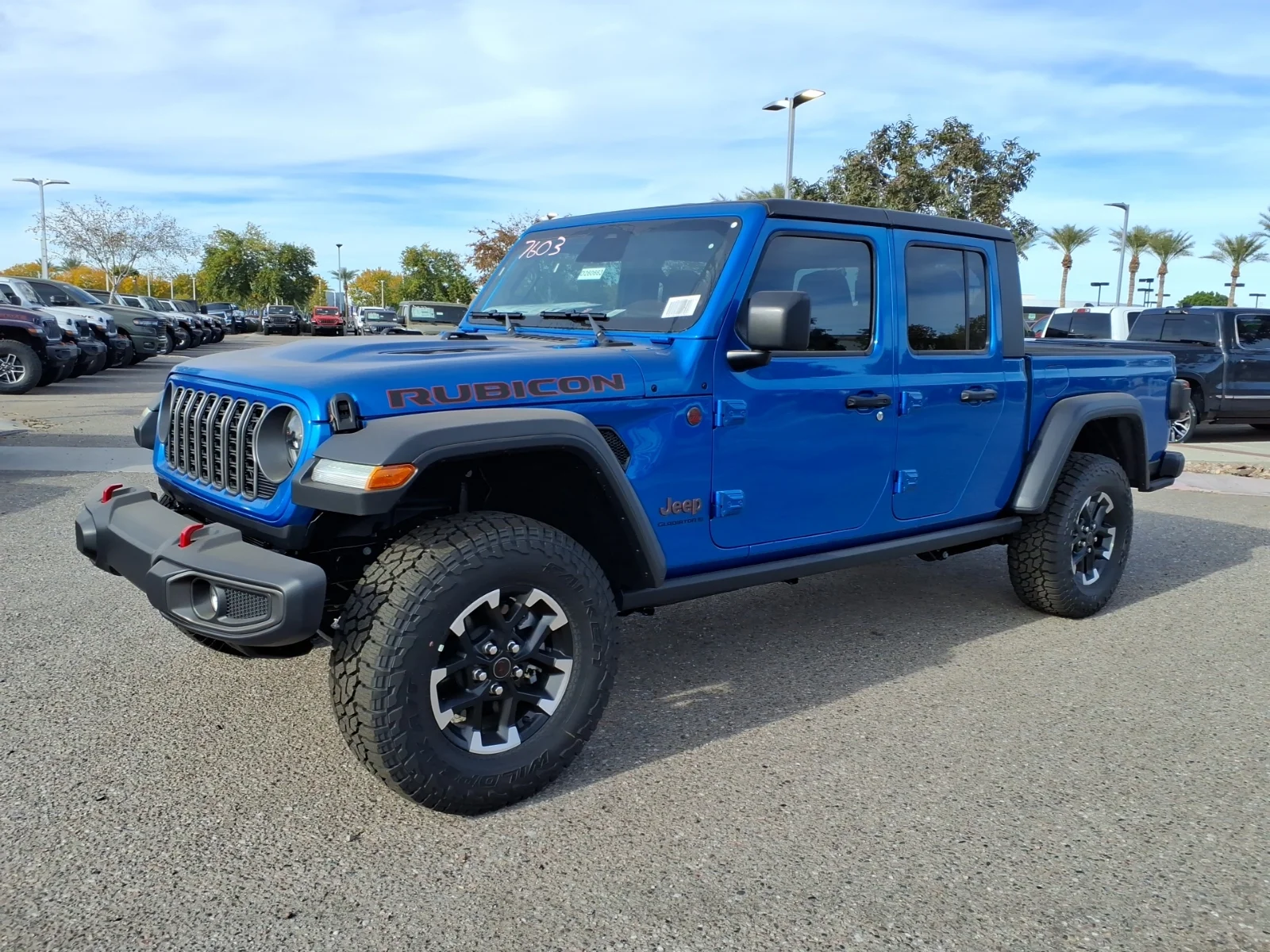
Geometry Is What Gets You Home
After 140,000 overland miles I have learned that horsepower gets you to the trailhead and geometry gets you home. The 2025 Jeep Gladiator Rubicon is a genuinely capable overland platform, but its capability is not one number — it is four, and they do not all point the same direction. Read them together and you know exactly where this truck shines and the one place it will scrape when a shorter rig would clear.
The numbers that matter are 11.1 inches of ground clearance, a 43.4-degree approach angle, a 20.3-degree breakover angle, and a 26.0-degree departure angle, plus up to 31.5 inches of water fording. Each describes a different way the trail can stop you, and the Gladiator is excellent at some and merely adequate at one.
I test gear and vehicles the slow, brutal way — heat, dust, cold starts, and a long way from a parts store — so I care less about the brochure superlatives than about which spec fails first when the trail gets ugly. On a body-on-frame pickup with a bed, that answer is written in the geometry, and it is honest if you know how to read it.
This is the overlander's tour of the Gladiator Rubicon's off-road numbers: what each one buys you, how they trade against each other, and the single compromise the truck's shape forces that no amount of trail skill fully erases. Everything here traces to Jeep's published figures for the Rubicon.
Ground Clearance: 11.1 Inches and What It Buys
Ground clearance is the most quoted off-road number and the most misunderstood. The Gladiator Rubicon's 11.1 inches is the gap between the lowest fixed point of the undercarriage and the ground, and it is the margin you have before a rock, a rut, or a high center strands the truck with its wheels spinning in the air.
What 11.1 inches buys is confidence over obstacles that sit between the tires: rocks, logs, and the raised crown of a washed-out two-track. The higher the belly, the taller the obstacle you can straddle without the frame or a skid plate taking the hit. It is the number that keeps the truck moving when the trail surface itself is the problem.
But clearance is a static measurement, and trails are dynamic. The instant the truck tips onto an obstacle, the angles take over, and a rig with generous clearance can still hang up if its approach, breakover, or departure geometry runs out first. Clearance sets the ceiling; the angles decide whether you reach it.
For overlanding specifically, 11.1 inches is a strong, usable number that handles rough forest roads, moderate rock, and deep ruts without drama. It is not the tallest figure in the segment, but paired with the Rubicon's hardware it is enough clearance for the vast majority of the terrain an overland trip actually crosses. The limit you will meet first is usually an angle, not the belly height.
Approach Angle: 43.4 Degrees at the Nose
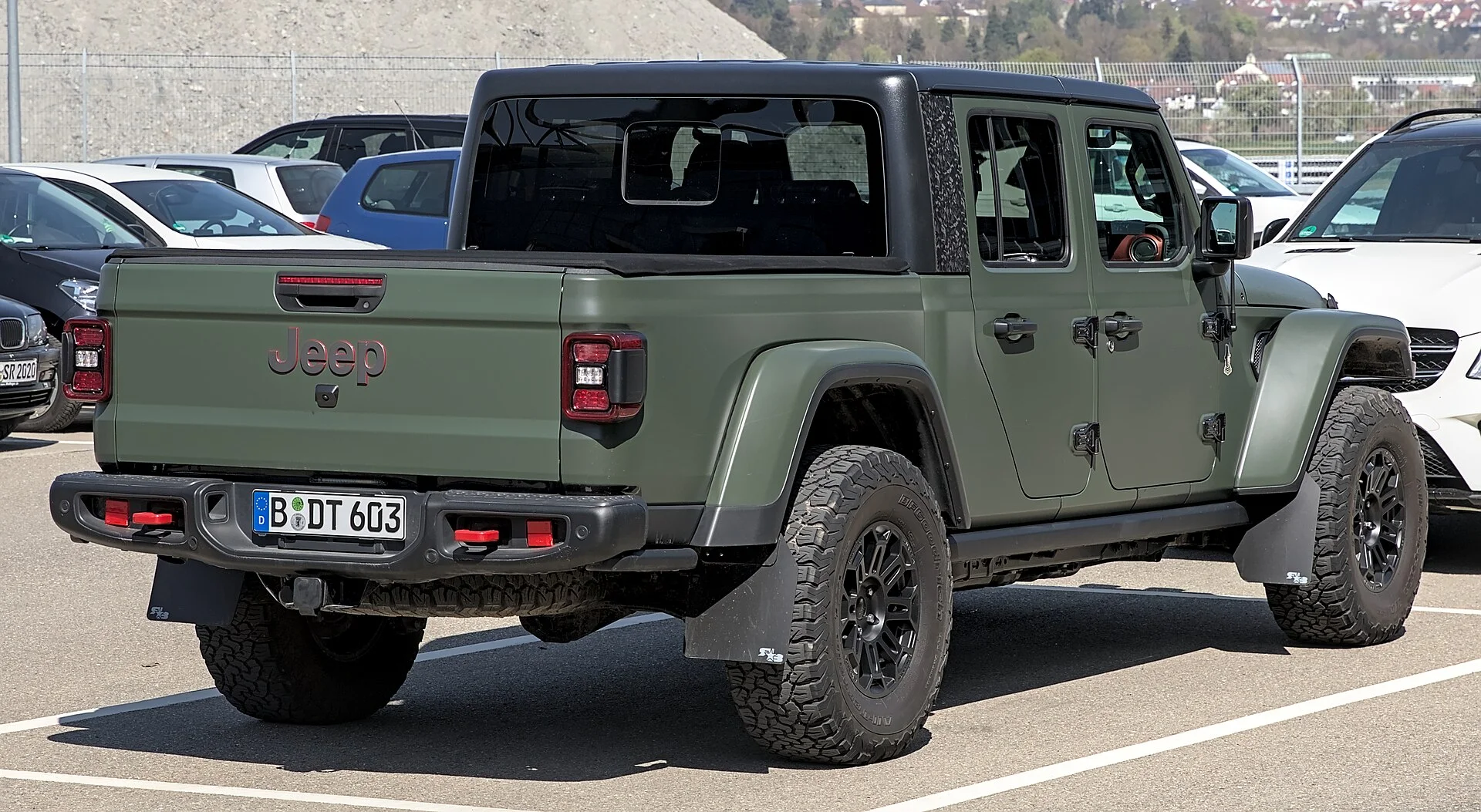
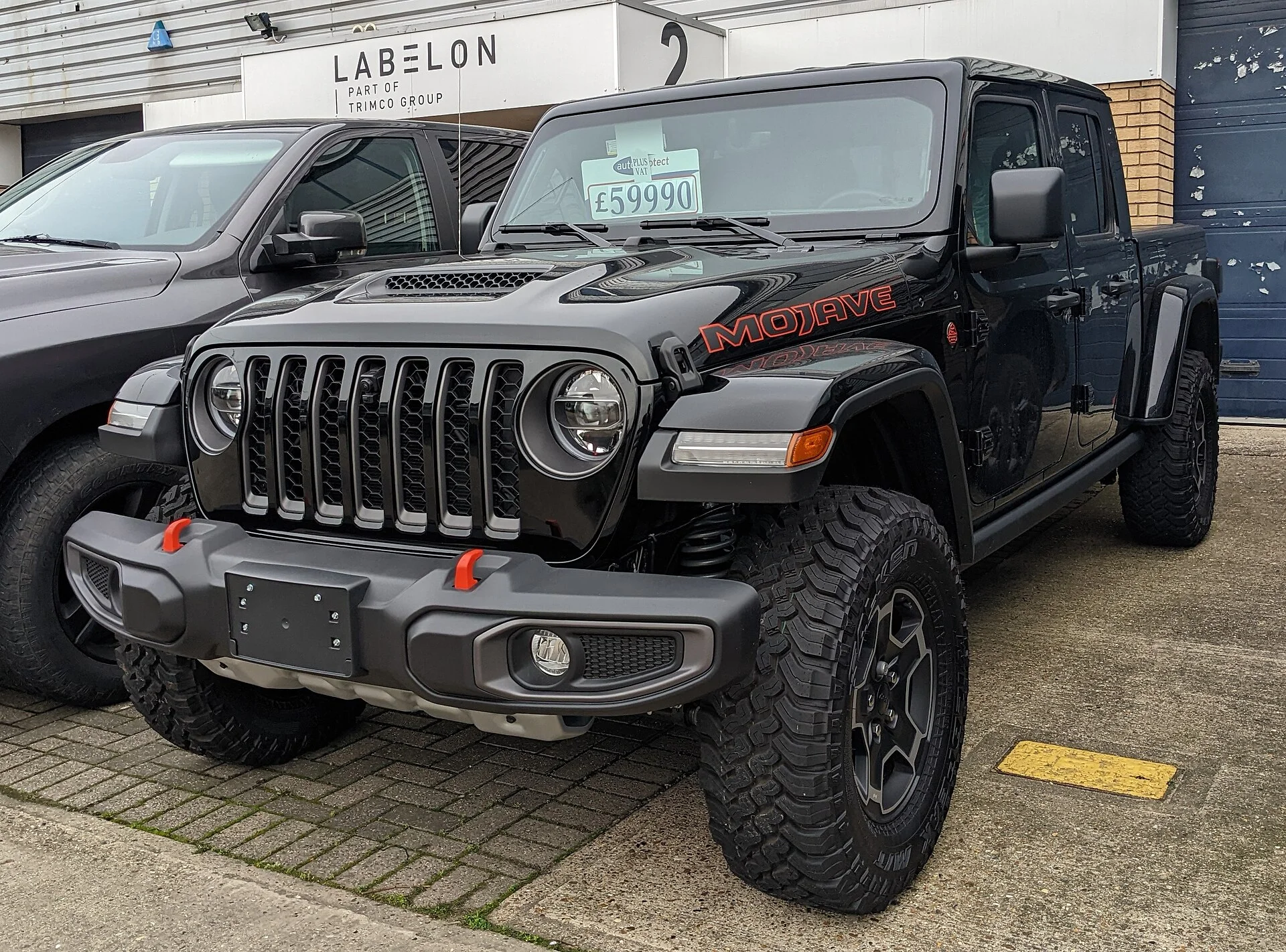
Approach angle is the steepest ramp the front of the truck can climb into before the front bumper or air dam touches, and the Gladiator Rubicon's 43.4 degrees is the standout number in its geometry. This is where the truck feels genuinely aggressive, letting you drive the nose up ledges and steep entries that would stop a lesser-shaped vehicle at the bumper.
The mechanism is the short front overhang and the tucked-up bumper the Rubicon package provides. Less sheet metal hanging past the front wheels means the tires reach the obstacle before the body does, and 43.4 degrees is a steep enough entry that you rarely think about the front end on a trail. It is the angle that makes the Gladiator's front feel fearless.
In practice, a strong approach angle is what lets you tackle steep climbs, rock ledges, and the abrupt lip where a trail drops into a wash. The front tires make contact and start pulling before the bumper can catch, which keeps momentum on your side instead of stopping you cold at the base of an obstacle.
This is the Gladiator's best trick, and it comes directly from the Wrangler DNA up front. Where the truck differs from its shorter sibling is not the nose — it is the middle, and that is the number the next section is about, because the same platform that gives the Gladiator a fearless front end gives it a cautious belly.
The Gladiator's Weak Spot: 20.3-Degree Breakover
Every vehicle has a spec that is its honest compromise, and on the Gladiator it is breakover. The breakover angle — 20.3 degrees on the Rubicon — is the shallowest ridge the truck can crest before the middle of the underbody high-centers on it. Compared with the aggressive 43.4-degree nose, 20.3 degrees is a modest number, and it is the one that will catch you.
The cause is simple physics: the Gladiator pickup has a noticeably longer wheelbase than a two-door Wrangler, and a longer wheelbase reduces breakover angle. The extra length between the axles that makes the truck stable and gives it a bed is the same length that makes its belly hang lower over a sharp crest. You cannot have the bed and the short wheelbase at once.
On the trail this shows up on ridgelines, ditch crossings, and the peaked crowns of rutted roads — anywhere the ground rises to a point under the truck's midsection. A shorter rig crests and rolls over; the Gladiator can settle onto its belly or a rock slider if you take the same line without thinking about its length.
The overlander's fix is line choice, not horsepower. Approach a sharp crest at an angle so one wheel climbs at a time, keep the truck's centerline off the peak, and let the geometry work rather than fighting it. Respect the 20.3-degree number and it is a manageable trait; ignore it and it is the spec that leaves you perched and calling for a strap.
Departure Angle: 26 Degrees and the Long Tail
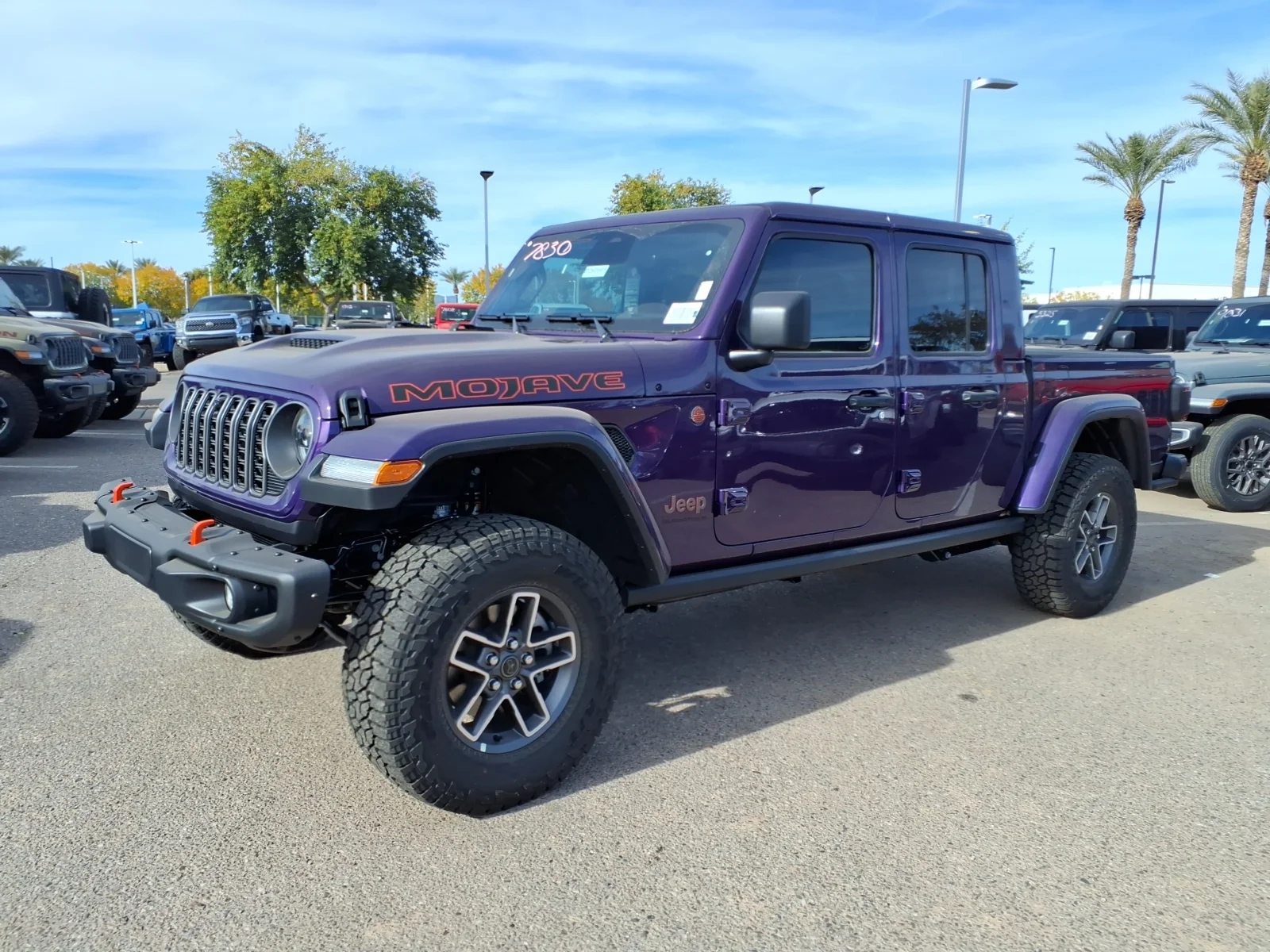
Departure angle is the mirror of approach at the back of the truck: the steepest drop-off the rear can clear before the bumper or hitch drags as you leave an obstacle. The Gladiator Rubicon's 26.0 degrees is a solid, workable number, though it sits well below the fearless 43.4 degrees at the nose.
The reason the rear number is lower is the same length story as breakover. A pickup bed and a rear bumper hang behind the rear axle, and that overhang is what the ground catches when you crest an obstacle and the back of the truck rotates down toward it. 26.0 degrees is what the Gladiator's bed and tail leave you after that overhang is accounted for.
Where this matters is exiting steep obstacles and climbing out of ditches and washes. As the front lifts over the lip, the rear drops, and if the drop-off behind you is steeper than 26.0 degrees the hitch or bumper can dig in. It is the number that governs the back half of every obstacle you drive over, not just the ones you climb.
For most overland terrain 26.0 degrees is enough, and the practical guidance is to watch your exits as carefully as your entries. A trip-mounted set of recovery traction boards is cheap insurance for the rare time the tail does hang up, giving the rear tires something to bite instead of spinning on the obstacle you just half-cleared.
Water Fording: 31.5 Inches and the Rule That Keeps It Safe
Water crossings are where overlanding gets its best photos and its worst recovery bills, and the Gladiator's 31.5 inches of water fording is a real, usable figure — with a hard caveat. That number is the depth the truck is engineered to cross, not an invitation to drive into every river you meet at speed.
The 31.5-inch rating reflects where the critical intake and electrical components sit relative to the waterline. Cross deeper than that and you risk drawing water into the engine, which is catastrophic and not covered by optimism. The rating is a ceiling to stay under with margin, not a target to hit.
The rule every overlander learns, ideally before a flooded engine teaches it, is to walk the crossing first. Wade it if you safely can, read the depth against the truck's known 31.5-inch limit, check the bottom for holes and boulders, and pick your line before the tires ever touch the water. Moving water also pushes, so current changes the calculation beyond depth alone.
Cross slow and steady to make a small bow wave that keeps water away from the engine bay, and never stop midstream. Treated with that discipline, 31.5 inches opens up crossings that turn a trip back for many vehicles. Treated casually, the same number is how a great day becomes a very long wait for a tow that may not be coming.
Reading the Numbers as a System
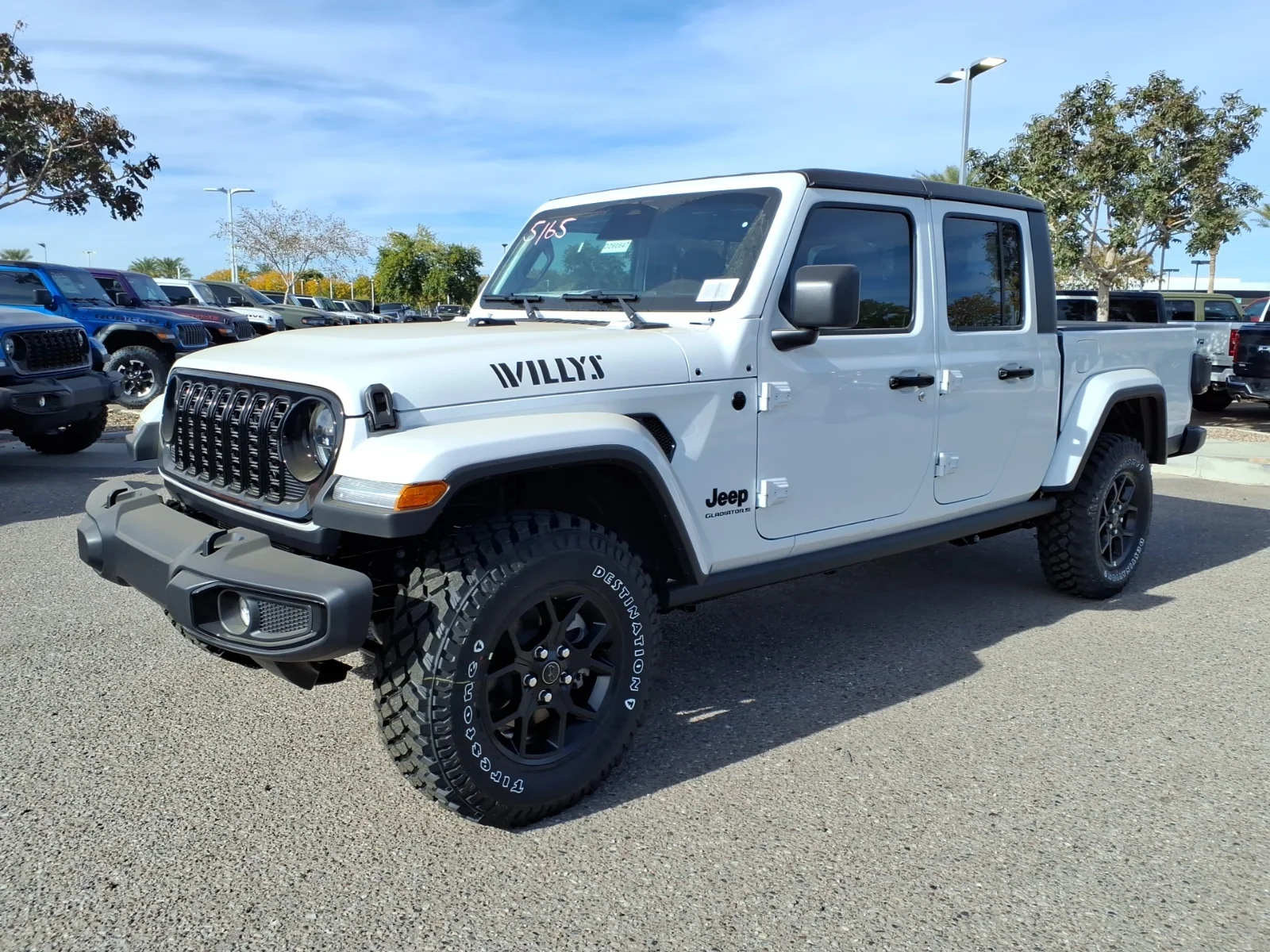
The mistake beginners make is shopping one number. Overlanders read all of them together, because the trail rarely tests just one. A single obstacle can demand approach angle to climb into it, ground clearance to straddle it, breakover to crest it, and departure to leave it — in that order, in the space of a truck length.
The Gladiator's profile, read as a system, is a rig with a fearless front, a strong belly and rear, and a cautious middle. The 43.4-degree approach and 11.1 inches of clearance let you attack obstacles the tail-end 26.0-degree departure then handles, while the 20.3-degree breakover is the quiet governor that decides which crests and ridges you take straight and which you have to finesse.
This is why the truck's real-world capability is higher than its lowest number suggests. A skilled driver manages the weak breakover with line choice and pace, using the strong approach and clearance to keep momentum, so the Gladiator crosses terrain its 20.3-degree figure would seem to forbid. Geometry sets the possibilities; the driver spends them wisely.
The takeaway for a buyer is to match the numbers to your terrain honestly. If your trips are steep climbs, rock, and water, the Gladiator's strengths are exactly aligned. If they are tight, ledgy, high-crown trails that punish a long wheelbase, that 20.3-degree breakover is the number you will meet most, and it is worth knowing that before the trail teaches it.
Loading and Tires: How Overlanders Change the Geometry
Here is the part the spec sheet never mentions: the numbers above describe a stock Rubicon, and the moment you build an overland rig you change them. Every pound of gear, water, and recovery equipment you load lowers the truck on its springs, and a lower truck has less of every clearance number than the brochure promised.
A bed loaded with a rooftop tent, water tanks, and a season of gear squats the rear, which shaves the 26.0-degree departure angle and drops the belly closer to the obstacles the 11.1 inches was meant to clear. Overlanders routinely erase a meaningful chunk of their geometry this way without noticing, then wonder why the truck scrapes where it did not before.
Tires cut the other way. Taller tires physically raise the axles and the frame, recovering ground clearance and improving the breakover and departure angles that a heavy load stole back. This is why a serious build pairs a load with a tire and suspension setup that restores the geometry the gear took away, rather than just piling weight on a stock truck.
The overlander's discipline is to build the whole system, not one part of it. Know your loaded geometry, not your brochure geometry, because the trail measures the truck as it sits that day — heavy, packed, and riding lower than the 11.1 inches on the spec sheet. Plan the tires and suspension around the load, and you keep the capability you paid for.
The Verdict: A Capable Rig With One Honest Compromise
The 2025 Jeep Gladiator Rubicon is a legitimately capable overland truck, and its geometry tells a coherent, honest story. The 43.4-degree approach angle and 11.1 inches of ground clearance are genuine strengths, the 26.0-degree departure is solid, and the 31.5 inches of water fording opens crossings that stop lesser vehicles. This is a rig built to go a long way from pavement.
The one compromise is the 20.3-degree breakover angle, and it is not a flaw so much as the price of the bed. The longer wheelbase that makes the Gladiator useful and stable is the same length that lowers its belly over a sharp crest, and no trim or tire fully erases that. It is the truck's one honest weakness, and it is knowable in advance.
For an overlander the verdict is straightforward: buy the Gladiator for its strengths, drive it around its one weakness, and build it so a loaded rig keeps the geometry the spec sheet advertises. Manage the breakover with line choice, respect the fording limit, and this truck earns its reputation across the terrain that matters.
Match the numbers to your terrain, load it thoughtfully, and read the four angles as one system rather than chasing a single headline figure. Do that and the Gladiator is exactly what an overland platform should be: not perfect at everything, but honest about the one thing it trades away, and formidable at the rest. That honesty is worth more on a remote trail than any single best-in-class number, because the trail does not care about marketing — it cares about whether the truck's real geometry, loaded and sitting low, clears what is in front of it. Know your numbers, drive to them, and the Gladiator will keep getting you home.