
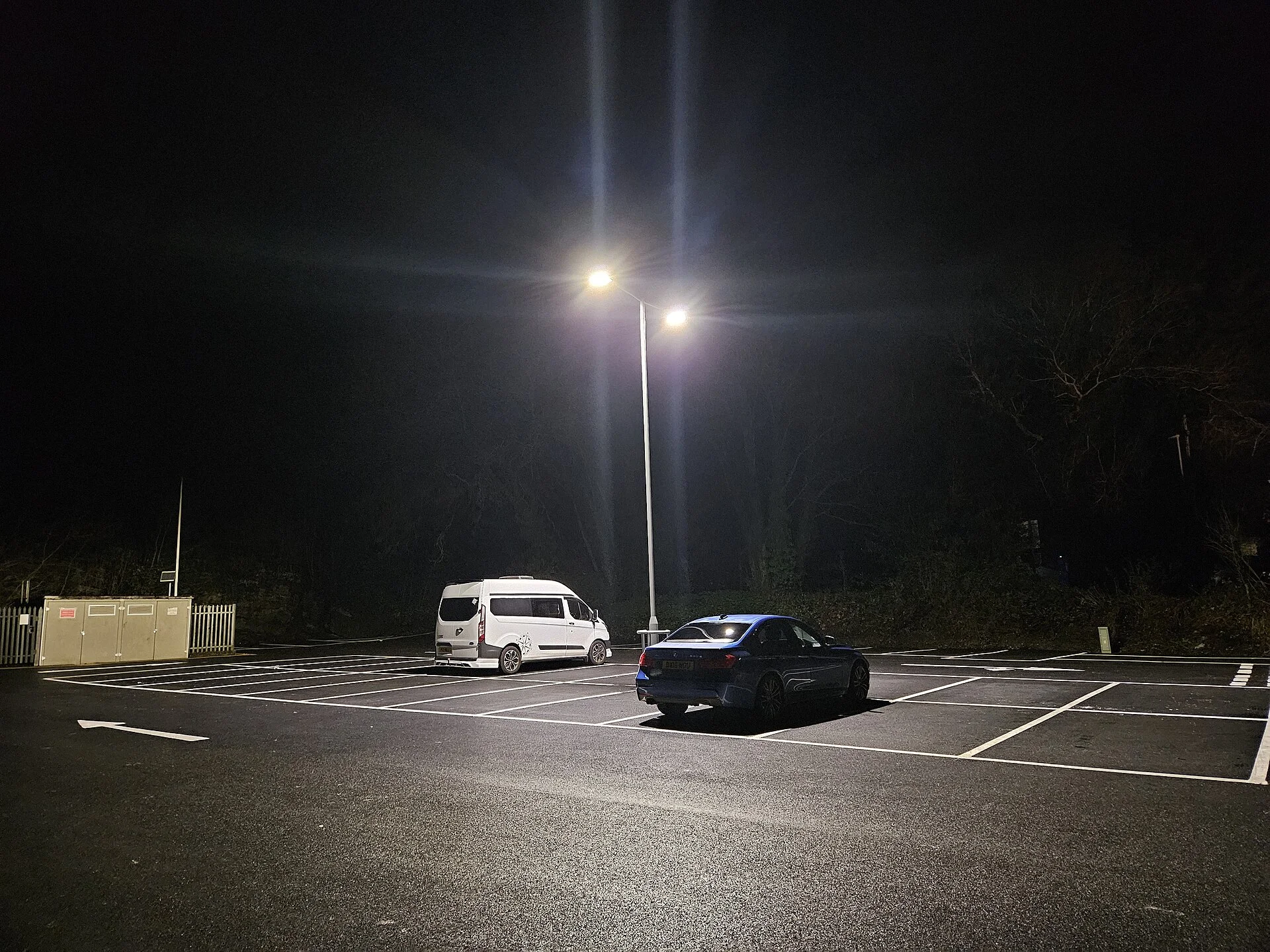
The Short Answer: You Won't Suffocate, but Windows Up Has Real Risks
If your worry is running out of air, you can relax: a parked car with the engine off is nowhere near airtight, and a healthy person sleeping with the windows fully up will not suffocate or run out of oxygen. Cars are built to leak. Air seeps in and out constantly around the doors, through the cabin vents, and past dozens of small gaps you never think about. The dramatic mental image — quietly using up all the oxygen until you don't wake up — is essentially a myth for an engine-off vehicle.
But that is only half of an honest answer, and safety writing should give you the whole thing. "Windows up" is perfectly safe for oxygen and genuinely dangerous for other reasons, and people mix the two up all the time. The things that actually hurt or kill sleepers in closed cars are heat in summer, carbon monoxide when something is burning, cold in winter, and a slow build-up of stale, stuffy air that ruins your sleep long before it does anything worse. Knowing which fear is real changes what you do about it.
One honesty note up front: this is a research-based explainer built from basic physiology, how cabin ventilation and air leakage work, and well-documented public-health guidance on heat and carbon monoxide — not a test where someone sealed themselves in a car and measured the oxygen until it got dangerous. Where a number is a general rule of thumb rather than something measured in your specific vehicle, this guide says so plainly.
The Suffocation Myth: Why a Parked Car Won't Run Out of Oxygen
The fear of suffocating in a closed car is one of the most common questions new car campers ask, and it makes intuitive sense — the windows are up, the doors are shut, it feels sealed. But "feels sealed" and "is airtight" are very different things, and a passenger vehicle is firmly in the first camp.
A car is not a submarine or a vacuum flask. It is a metal box with rubber door seals that are designed to keep out rain and wind noise, not to be hermetic. Air moves through the cabin air vents even when the fan is off, around the edges of the doors and the trunk, through the firewall where wiring and pedals pass into the engine bay, and through drain holes and body seams. This is why a car warms up and cools down with the outside air, why it fogs up from your breath and then clears, and why smells drift in from outside. All of that is air exchange, and it never stops.
The amount of oxygen a sleeping adult uses is also far smaller than people imagine. At rest, your body consumes only a modest fraction of the oxygen in each breath, and the cabin holds a large volume of air relative to that slow draw. Between the size of the air reservoir and the constant trickle of fresh air leaking in, the oxygen level in a normal parked car simply does not fall to a dangerous point overnight. The classic suffocation scenario requires a truly sealed space, which a car is not.
There are narrow real-world exceptions worth naming so this isn't read as a blanket all-clear: a small child or a pet left in a car is endangered by heat, not oxygen, and far faster than an adult; and any situation where a flame or an engine is consuming oxygen and producing carbon monoxide is a completely different and genuinely lethal problem covered below. For a healthy adult sleeping with the engine off and nothing burning, though, the oxygen will be fine.
How Leaky Your Car Really Is (the Part That Reassures You)
It helps to picture exactly where the air gets in, because once you see how many paths there are, the suffocation fear dissolves on its own. Your car is exchanging air with the outside through more openings than almost anyone realizes.
Start with the cabin ventilation system. Most cars have fresh-air intake vents at the base of the windshield (the cowl) and low-pressure exhaust vents hidden behind the rear bumper or in the trunk area. These create a slow passive flow even with the fan completely off and the climate control set to recirculate — the system is built so the cabin can breathe. Then add the door seals: rubber weatherstripping is good, but it is a gasket squeezed between two painted surfaces, not a welded joint, and it passes a small amount of air by design so the doors aren't impossible to close against a pressurized cabin.
Layer on everything else — the small openings that quietly add up:
- rubber grommets and pass-throughs in the firewall;
- gaps around the gear shifter and pedals;
- seams where body panels meet;
- drain channels under the doors and sunroof;
- and the wear that comes with age — an older car with tired seals is leakier still.
The practical upshot is that even with every window up, your cabin is doing a slow, continuous swap with outside air. That same leakiness is exactly why you can still get cold in winter and hot in summer with the windows closed: the outside is always reaching you.
The Real Danger #1: Heat (the Risk Windows-Up Actually Kills With)
If there is one genuine, well-documented killer associated with closed-up cars, it is heat — and it is the risk people underestimate the most because they are busy worrying about oxygen instead. A car in the sun is a greenhouse: sunlight pours in through the glass, heats the interior surfaces, and the heat cannot escape, so the cabin temperature climbs well above the outside air.
The numbers are stark and come from heat-safety research that public-health and safety agencies cite every summer. On a warm day, the inside of a parked car can climb dozens of degrees above the outdoor temperature within an hour, and most of that rise happens in the first twenty to thirty minutes. Cracking the windows barely slows it. This is the mechanism behind the tragedies involving children and pets left in cars, and it is exactly why those warnings are framed around heat, not air. A sleeping adult in a closed car on a hot night faces the same physics on a slower clock: the cabin holds the day's heat, your own body adds more, and heat exhaustion or heatstroke becomes the threat long before anything else does.
This is why, in warm weather, windows up is the wrong call and ventilation stops being optional. You want real cross-flow — windows cracked on opposite sides, a roof vent or vent fan moving air — to keep the cabin from becoming an oven. If you are trying to figure out how to sleep through a hot night in a vehicle, the entire game is moving air and shedding heat, not sealing yourself in.
Closed windows make a hot car more dangerous, full stop, and no amount of being tired is worth that gamble.
The Real Danger #2: Carbon Monoxide (Only If Something Is Burning)
The second real danger is the one people confuse with suffocation, and the distinction is life-or-death. Carbon monoxide does not come from you breathing in a closed space — it comes from combustion. As long as the engine is off and nothing is burning inside or near the car, closed windows do not create a carbon monoxide problem. The danger appears the moment a fuel is being burned.
The classic deadly scenario is running the engine for heat or air conditioning while you sleep. Exhaust contains carbon monoxide, and it can seep back into the cabin through a worn seal, a rusted floor, a leaking exhaust system, or — the winter killer — a tailpipe buried in snow or mud that forces the fumes back under the car. With the windows up, any carbon monoxide that gets in has no easy way out, so the closed cabin concentrates it fast. The same goes for any fuel-burning heater, a camp stove used inside, or even a generator or a neighbor's idling vehicle close by. If you want the full picture of how that gas harms you and why sleep is the trap, the dedicated guide to carbon monoxide poisoning while sleeping in a car walks through the symptoms and the physiology.
So the rule is simple: closed windows are safe for air when nothing is burning, and dangerous when something is. If you ever run the engine, a heater, or a stove in or near the vehicle, you need real ventilation and ideally a detector — this is the one case where "windows up" turns a non-issue into a fatal one. Carbon monoxide is colorless and odorless, so your senses give you no warning at all, which is why it gets treated as a separate, non-negotiable hazard rather than lumped in with stuffiness.
The Real Danger #3: Cold, and Why Windows Up Doesn't Save You
In winter the instinct is the opposite of summer: seal everything to trap warmth. But the same leakiness that keeps you from suffocating also means a parked car is a poor insulator, and closed windows do far less to keep you warm than people hope. Glass and thin metal shed heat quickly, and the cabin tracks the outside temperature with only a small lag once the engine's warmth is gone.
The danger here is not dramatic in the way carbon monoxide is, but cold is a steady, serious threat to a sleeper. Your body cools fastest while you are asleep and least able to respond, and a cabin that started comfortable can drop to the outside temperature over the night. The honest fix is insulation and the right sleep system, not sealing the windows: a properly rated sleeping bag or quilt, an insulating pad between you and the cold seat or floor, window covers to slow heat loss, and warm layers. If you want a clear sense of where the line is, the guide to how cold is too cold to sleep in a car covers the safe-temperature thresholds and how to read them.
The trap in winter is that the cold pushes people toward the one thing they should not do: run the engine or a fuel heater in a sealed car to stay warm. That swaps a manageable cold problem for a lethal carbon monoxide one. The right answer is always to add insulation and ventilation together — stay warm without combustion, and keep a little air moving even when it is freezing.
The Real Nuisance: Stuffiness, CO2, and Ruined Sleep
Below the level of true danger there is a real, everyday downside to windows up that is worth understanding because it is the thing you will actually notice: the air gets stuffy. Even though you won't run out of oxygen, the carbon dioxide you exhale does build up in a closed cabin faster than the slow leakage can clear it, and rising carbon dioxide is what makes a closed room feel stale and headache-inducing.
In a small sealed cabin with one or two sleepers, carbon dioxide can climb well above comfortable indoor levels over a night. This is not the same as suffocation — the oxygen is still fine — but elevated carbon dioxide is associated with that thick, drowsy, unrefreshing feeling, a dull headache on waking, and poorer sleep quality. If you have ever woken up groggy and foggy in a closed car and blamed the bad sleep surface, stale air was very likely part of it. The exact levels depend on cabin size, how many people are inside, and how leaky the car is, so treat this as a comfort and sleep-quality issue rather than a precise measurement.
The stuffiness comes with a companion problem: condensation. The moisture in your breath has nowhere to go in a closed car, so it settles on the cold glass as fog and damp, leaving you with wet windows and a clammy interior by morning. The fix for both the stale air and the wet windows is the same small habit — a little ventilation — which is the subject of the next section, and is covered in depth in the guide to reducing condensation when sleeping in a car.
Why Cracking a Window Is Still the Smart Move
So if you won't suffocate with the windows up, why does nearly every experienced car camper crack a window anyway? Because the small amount of airflow it adds solves the real problems — heat, stuffiness, and condensation — for almost no cost, and it adds a margin of safety against the combustion risk if your plans change. Cracking a window is not about avoiding suffocation; it is about sleeping better and safer.
The key is that the ventilation has to be real, which means cross-flow, not a single gap. Two windows cracked an inch on opposite sides of the car let air actually move through the cabin; one window cracked on its own does very little because the air has no path.
Even a small opening on each side does three things at once:
- it dramatically lowers how hot the cabin can get;
- it flushes out the carbon dioxide so the air stays fresher;
- it carries away the moisture that would otherwise fog your glass.
On a buggy night you can keep the gaps small and add screens so you get the airflow without the mosquitoes.
The trade-offs people worry about — security, rain, noise, bugs — are all manageable with an inch or two of gap rather than a wide-open window. A one-inch crack is too small for a hand to reach through, rarely lets rain in if angled away from the weather, and is plenty for ventilation. The takeaway: windows fully up will not asphyxiate you, but a small, deliberate crack on two sides is the easy upgrade that makes the night cooler, fresher, drier, and more forgiving.
When Windows-Up Is Genuinely Fine (and When It Isn't)
Putting it all together, there are nights when sleeping with the windows completely up is perfectly reasonable, and nights when it is a mistake. The deciding factors are temperature and whether anything is burning — not oxygen, which is fine either way.
Windows up is genuinely fine when the weather is mild to cool, nothing is combusting (engine off, no heater, no stove), and you simply want security, quiet, or protection from rain and bugs. On a cool night with a healthy adult and no flames, a sealed cabin is safe; you may wake a little groggy from stale air, but nothing more. It is also reasonable for a short nap, where stuffiness and heat have less time to build, as long as it is not hot out.
Windows up is a mistake when it is warm or hot, when you are running the engine or any fuel-burning device, when children or pets are in the car, or when you will be inside for many hours and want decent sleep quality. In every one of those cases the fix is the same cheap habit — crack two windows for cross-flow, or run a vent fan — and in the combustion case you also need a carbon monoxide alarm. When in doubt, default to a little ventilation; the downside of an inch of open window is almost nothing, and the upside covers every real risk on the list.
How to Sleep Safely With the Windows Mostly Up
If you like the security and quiet of closed windows, you can keep almost all of that and still cover the real risks. The goal is not to choose between sealed and wide open, but to take the cheap middle path that removes the danger while keeping the comfort.
- Start with airflow. Crack two windows about an inch on opposite sides so air can actually cross the cabin, and add mesh screens if bugs are a concern so you don't trade one problem for another.
- Match your setup to the season. In heat, park in shade, use reflective window covers to block the sun, and favor a vent fan; in cold, insulate hard with a rated bag, a pad under you, and window covers, and resist the urge to run the engine for warmth.
- Treat any flame as a separate act. If you ever run an engine, heater, or stove, keep it supervised and well-ventilated, with a carbon monoxide detector in your breathing zone.
Finally, build the small habits that make closed-window sleeping comfortable: park level and somewhere legal and safe, manage moisture so you don't wake to fogged glass, and give yourself real cross-ventilation as the default rather than the exception. None of this is about fear of running out of air — it is about heat, carbon monoxide, cold, and sleep quality, the things that actually matter. For the wider set of common questions about doing this right, the car-camping sleep questions hub pulls the rest together.
The Bottom Line
Is it safe to sleep in a car with the windows up? For oxygen, yes — a parked car with the engine off is far too leaky for a healthy adult to suffocate or run out of air, and the suffocation fear is essentially a myth. You can put that worry down. What you should not put down is the awareness that closed windows carry other, very real risks that have nothing to do with oxygen.
Heat is the genuine killer in warm weather, turning a sealed car into an oven; carbon monoxide is lethal whenever the engine or a flame is running; cold is a steady threat in winter that sealing the windows won't fix; and stale, carbon-dioxide-heavy air will quietly wreck your sleep even when nothing is dangerous. The single habit that addresses all of them is cheap and easy: crack two windows an inch on opposite sides for real cross-flow, match your insulation and shade to the season, and never burn anything in a sealed cabin without ventilation and a detector. Do that, and you get the security and quiet of windows up without any of the real dangers that the suffocation myth was distracting you from.