
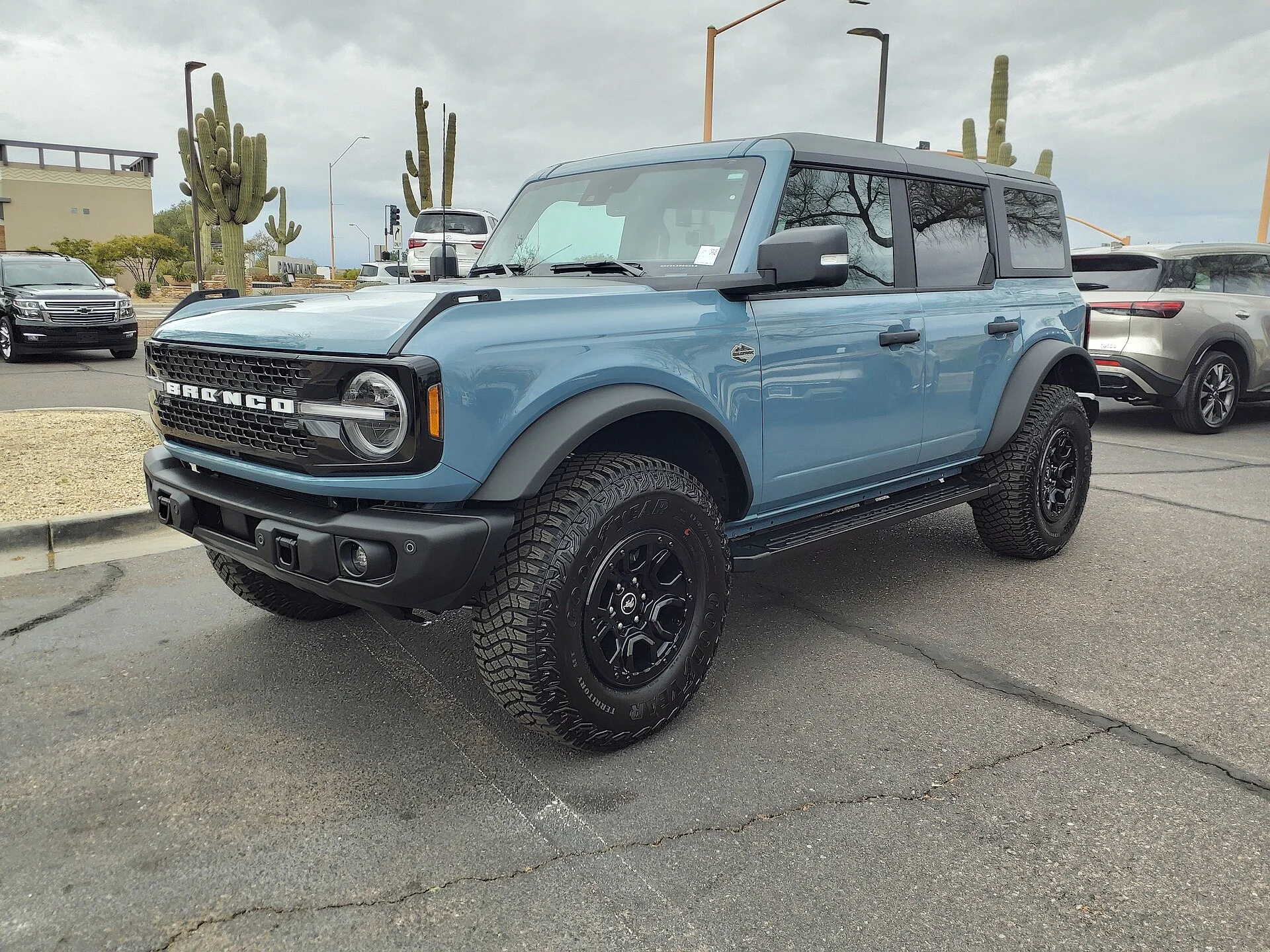
The Short Answer: No, and the Bronco Makes It Riskier Than Most
The honest answer, from someone who camps far from the nearest town: no, do not leave a Ford Bronco idling unattended all night just to run the heater while you sleep. The Ford Bronco is a gasoline-powered SUV, so heating the cabin overnight means keeping the engine idling to make heat - and that's a hazard in any vehicle.
But the Bronco is a worse candidate than a typical sedan or crossover, and it's worth being clear about why. An idling gasoline engine produces carbon monoxide, a gas that is odorless, colorless, and tasteless and cannot be detected by a sleeping person. That's the baseline risk. The Bronco stacks two extra hazards on top: an exhaust system built for off-road abuse, and a body designed to come apart.
Those two traits - a trail-worn exhaust that can leak, and removable panels that give fumes more ways in - make the Bronco leakier than a sealed commuter, exactly when you least want it. Combine that with the remote places a Bronco tends to take you, and the case against unattended idling is even stronger here than usual. The vehicle's strengths are, ironically, what raise the stakes.
It's Gas, So Heat Means Idling
Start with the basic setup. The Ford Bronco is a gasoline-powered SUV, so heating the cabin overnight means keeping the engine idling to make heat. The warmth comes from the running engine; there's no separate heat source, so overnight heat means overnight combustion, just like any gas vehicle.
The Bronco's engines are stout. The base is a 2.3-liter EcoBoost four-cylinder rated at about 275 horsepower on regular fuel and up to 300 on premium, with an optional 2.7-liter EcoBoost V6 at about 315 horsepower and up to 330 on premium. Capable engines, but for this question the power doesn't matter - what matters is that either one burns gasoline continuously to make heat.
And burning gasoline means making exhaust. A modern gasoline engine burns roughly 0.15 gallons per hour per liter of displacement, so a 2.3-liter engine idles near 0.35 gallons per hour and a 2.7-liter V6 near 0.4 gallons per hour. Those are modest fuel numbers against the Bronco's tank, which is exactly the trap - fuel isn't the danger, the exhaust is, and the exhaust is produced the entire time the engine runs.

The Off-Road Exhaust Problem
Here's the first Bronco-specific hazard, and it comes straight from what the Bronco is built to do. The Bronco is built for off-road use, and a trail-worn or damaged exhaust system can leak carbon monoxide into or under the cabin. A vehicle that spends time on rocks, ruts, and water crossings takes underbody abuse a commuter never sees, and the exhaust is right in the firing line.
A dented pipe, a cracked joint, a loosened connection from a hard trail day - any of these can turn a sealed exhaust into a leaky one. On a sealed sedan you can reasonably assume the exhaust routes fumes out the back cleanly. On a Bronco that's seen real trails, that assumption is riskier, because the very use that makes the Bronco great is the use that beats up the exhaust.
This is a field-reliability point, not a scare tactic: gear and systems fail in the ways your use stresses them. A Bronco's exhaust is stressed by exactly the terrain it's designed for, so before trusting it near a sleeping space, it deserves a look. A leak you can't see or smell, feeding an enclosed cabin overnight, is precisely the failure mode that strands you - permanently.
Removable Tops and Doors: More Seams for Fumes
The second Bronco-specific hazard is its signature feature: the modular body. Bronco models with a removable soft top or removable doors and panels have more body seams and openings where exhaust fumes can seep into the cabin. Every seam that lets you take the Bronco apart is also a potential path for fumes to get in.
A fixed-roof, fixed-door vehicle is a relatively sealed box. A Bronco is deliberately not - it's engineered to come apart, which means more gaskets, latches, and joints than a unibody crossover, and each is a place where a perfect seal isn't guaranteed, especially as the vehicle ages or after the panels have been off and back on. A soft top is the leakiest of all.
Put the two Bronco traits together and the picture is clear: a trail-worn exhaust more likely to leak, feeding a body with more seams for that leak to enter through. Neither alone is catastrophic, but together they make the Bronco a leakier environment for exhaust than most vehicles - which is a serious problem when the exhaust in question contains an odorless, deadly gas and you're asleep inside.
Carbon Monoxide: The Odorless Killer
Understand the gas itself and the Bronco's extra risks come into focus. Carbon monoxide is created by the incomplete combustion of fuel such as the gasoline a Bronco engine burns, and it's odorless, colorless, and tasteless. There's no sensory warning - you can't smell a leak from a trail-worn exhaust or fumes seeping through a soft-top seam. It's invisible to you.
The toll is real and steady. The CDC estimates about 400 people die each year in the United States from unintentional, non-fire carbon monoxide poisoning. These are ordinary people making an ordinary-seeming choice - run the heat, get some sleep - not knowing the exhaust path had failed. On a leakier vehicle like a well-used Bronco, that failure is simply more likely.
Sleep is the dangerous part, and here's why. Because carbon monoxide has no smell, a sleeper can be overcome before waking, which makes unattended overnight idling the central hazard. Awake, you might catch a headache and act; asleep, you sleep through it. On a Bronco with more ways for fumes to enter, that silent, sleep-through-it failure has more openings to exploit.
The Snow-and-Trail Tailpipe Trap
On top of leaks, the Bronco faces the same blocked-tailpipe danger as any vehicle - with a trail twist. A tailpipe packed with snow, mud, or dirt from trail driving can force exhaust back toward the cabin instead of venting it away. A Bronco doesn't just risk snow packing the pipe; it can pick up mud and trail debris that a road car never would, adding another way to block the exhaust.
However the pipe gets blocked, the result is fast and lethal. In a real snow-obstructed idling car, researchers measured carbon monoxide reaching lethal levels within about 2.5 minutes with the windows closed. Two and a half minutes is far faster than a sleeper could notice and escape, and the Bronco's leakier body only makes the cabin easier to fill.
That's why the CDC advises clearing snow and debris away from the exhaust pipe before starting and running the engine. For a Bronco, extend that habit to trail mud and the underbody generally - the same terrain that can dent the exhaust can also pack the tailpipe. Out where a Bronco camps, a long way from help, this is not a margin you want to test.

The Cracked-Window Myth
The instinct to crack a window feels like a fix, and it isn't - the research is blunt. Cracking a window is not a reliable safeguard, because the same snow-obstructed study still hit dangerous carbon monoxide levels within about 5 minutes with a window open one inch. Five minutes with a window down is barely better than windows closed.
A one-inch gap can't vent carbon monoxide faster than a running engine produces it, particularly when a blocked or leaking exhaust is driving fumes toward the cabin. And on a Bronco, the fumes may not even be entering through the windows - they can seep through top and door seams, which a cracked window does nothing to address. The window trick is aimed at the wrong problem.
The overlander's take is to distrust any 'safety' step that doesn't remove the actual failure. Cracking a window trades warmth for a false sense of security, and on a leaky, trail-worn Bronco it's even less effective than usual because it ignores the seam leaks entirely. The only real safety is not running the engine unattended - and, if you must idle briefly, doing it awake with a confirmed-clear tailpipe and sound exhaust.
Far From Help: Why the Stakes Are Higher
Here's the part that matters most for how a Bronco actually gets used. Broncos go to remote places - that's the point of the capability - and a long way from the nearest town, a carbon monoxide incident isn't just dangerous, it's unsurvivable in a way it might not be near a hospital. The remoteness that makes the Bronco appealing is what raises the stakes on every safety call.
Think about the exposure numbers in that context. Most people feel no symptoms at roughly 1 to 70 parts per million, headache and nausea appear above 70, and at sustained levels above 150 to 200 parts per million, disorientation, unconsciousness, and death are possible. Even if a leak were slow enough to give you a chance, being far from help means less margin to recognize it, react, and get aid.
This is the field-reliability mindset applied to safety: judge the risk by what happens when it goes wrong where you actually are. A leaky idle in a suburban driveway is dangerous; the same leaky idle at a remote trailhead is potentially fatal with no one to find you. The Bronco camps in exactly those places, which is the strongest reason of all not to gamble on unattended overnight idling in one.
The Safe Way to Stay Warm
The good news is that staying warm without idling is straightforward and works anywhere, help nearby or not. Insulated sleeping gear does the real work: a cold-rated bag, insulated window covers, and a solid pad will carry most people through a cold night in a Bronco with the engine off and zero exhaust risk. This is the overlander's default because it never fails and needs no running engine.
Back it with a detector and an inspection. A battery-powered carbon monoxide alarm costs about 10 to 20 dollars and can be mounted in the cabin as a backup warning - cheap insurance that's non-negotiable in a leakier vehicle. A good portable carbon monoxide detector belongs in any Bronco you sleep in. And because the Bronco's risk includes leaks, inspect the exhaust and top seals before trusting the vehicle overnight.
If you idle at all, idle only in short bursts while awake with a clear tailpipe, and never idle a Bronco inside an enclosed or attached garage, where carbon monoxide can reach deadly levels quickly. For anyone who camps cold regularly, the real answer is a vented diesel heater: it makes dry heat from sealed combustion and vents exhaust outside the sleeping space, so there's no idling engine and no exhaust in the cabin - the safest heat, especially far from help.
The Verdict: A Capable Rig, But Not One to Idle Unattended
The verdict is a firm no with an extra warning: do not leave a Ford Bronco idling unattended all night to run the heater, and be aware the Bronco is riskier than most for exactly this. Heat means idling a gas engine that makes carbon monoxide, and the Bronco adds a trail-worn exhaust that can leak and a removable top and doors that give fumes extra seams to enter through.
The failure is fast and silent. A snow- or mud-blocked tailpipe pushed carbon monoxide to lethal levels in about 2.5 minutes in a real study, a cracked window doesn't fix it, and on a Bronco the fumes may enter through body seams a window can't help anyway. Worst of all, the Bronco camps far from help, where a carbon monoxide incident has the least margin for rescue.
So stay warm the reliable way: a cold-rated bag, insulated covers, and a good pad handle the cold with the engine off. Keep a ten-to-twenty-dollar carbon monoxide alarm mounted, inspect the exhaust and top seals, idle only in short bursts while awake with a clear tailpipe, and run a vented heater for regular winter trips. The Bronco is a superb remote-camping rig - just never one you idle unattended while you sleep. The same toughness that gets you to the far places is the toughness that beats up the exhaust, so respect the trade and heat the cabin another way.