

The Short Answer: A Capable Rig, With Homework
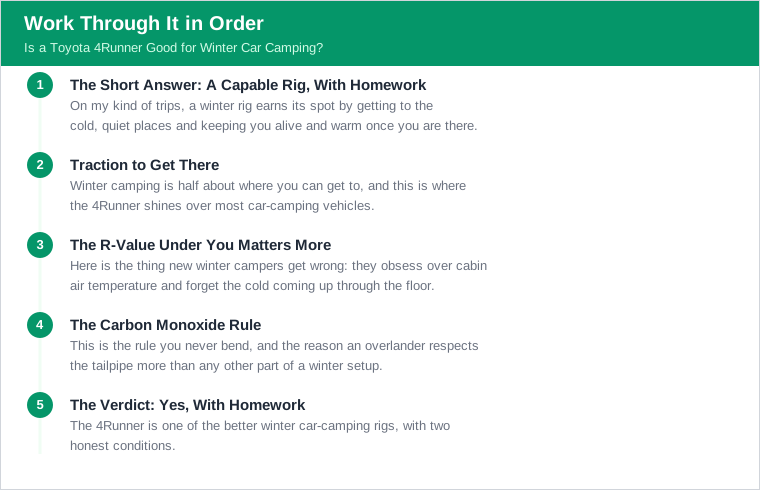
On my kind of trips, a winter rig earns its spot by getting to the cold, quiet places and keeping you alive and warm once you are there. The 4Runner does both well - it has the traction to reach a snowed-in site and a big, insulatable cabin that holds heat - but it is not a plug-and-play winter camper. It takes real homework, and one rule you never bend.
The strengths are genuine. The 4Runner offers 4WD for snow and ice, 9.6 inches of ground clearance on the 2024 model to clear packed snow and unplowed forest roads, and a two-row cabin with 89.7 cubic feet behind the folded second row. That large volume, about 90 cubic feet, heats slowly but holds heat well once you insulate it - the profile you want in the cold.
The homework is window insulation, a serious sleeping pad, and condensation management. The rule you never bend is the tailpipe: never sleep with the engine idling and the exhaust blocked by snow. Get the homework right and respect that rule, and the 4Runner is one of the better winter rigs you can sleep in. This guide covers all of it.
The Space and the Length Reality
Start with the honest dimensions, because winter is no time to discover your feet do not fit. The two-row 4Runner gives 47.2 cubic feet behind the rear seats and 89.7 cubic feet with the second row folded - roomy for a midsize SUV. But the number that governs sleeping is length, and owners on the 4Runner forums measure the flat load floor at roughly 66 inches with the second-row seats folded.
Sixty-six inches is tight-to-adequate. It is enough for a shorter sleeper to lie straight, but a taller person sleeps diagonally or drops their feet into the folded footwell. The load floor is about 44 inches wide between the wheel wells - owners report 42 to 43.5 inches in practice - which is roughly enough for a narrow double pad. Cargo height is about 32 inches above the folded seats, rising to about 36 inches at the hatch.
Plan your setup to those real numbers. The flat floor with the seats up is only about 59 inches, so you are folding the second row to camp, and the liftgate opening is 47 by 31 inches for loading gear. None of this is a dealbreaker - a diagonal layout or a footwell-filling platform handles the 66-inch length - but you want to know it before winter, not learn it at a frozen trailhead.

Traction to Get There
Winter camping is half about where you can get to, and this is where the 4Runner shines over most car-camping vehicles. It offers part-time and full-time 4WD systems on 4WD models, giving strong traction on snow and ice for reaching cold-weather campsites that a two-wheel-drive crossover simply cannot. When the goal is a quiet, snowed-in site well off the plowed road, that capability is the whole point.
Ground clearance backs it up. The 2024 4Runner has 9.6 inches of clearance, high enough to clear packed snow and unplowed forest roads without dragging. That combination - real 4WD plus genuine clearance - is what lets the 4Runner reach the cold, empty places where winter camping is actually worth doing, a long way from anyone else.
That reach is also a responsibility. The farther off the plowed road you get, the more self-sufficient you have to be, because help is not coming quickly in a snowstorm. So the traction that makes the 4Runner a great winter rig is exactly why the rest of the homework - insulation, warmth, and the tailpipe discipline - matters so much. Getting there is the easy part; being ready to sleep safely once there is the real work.
Insulating the Glass: Reflectix
Glass is where a cabin bleeds heat, and the 4Runner community has settled on a clear answer. Reflectix is the most-recommended window insulation on the forums: a roll costs about $18 and covers roughly two medium SUVs' worth of windows, so it is cheap and there is enough in a roll to do the whole truck with some to spare. It is the highest-value winter upgrade you can make.
The install trick avoids any damage. Owners cut the Reflectix panels slightly oversized so they wedge into the window frames with no adhesive or velcro, which means no residue on the interior liners and easy removal. Cut them a hair large, press them into each window, and they hold themselves in place. A Reflectix insulation roll and an afternoon with scissors gets you a full set.
The payoff is measurable. Field tests report reflective window panels, with the silver facing inward, raise interior temperature about 10 to 15 degrees for a solo sleeper, and more with two bodies. That is a serious swing for eighteen dollars. Be honest about the limit, though: Reflectix's rated R-value is low, about R-1 per layer, so for real cold, owners add rigid foam board at roughly R-3.6 to R-4.0 per inch or thicker window quilts on top.
The R-Value Under You Matters More
Here is the thing new winter campers get wrong: they obsess over cabin air temperature and forget the cold coming up through the floor. You lose more heat to conduction into the ground - or the cold metal floor of the truck - than to the air, so the pad under you is the single most important piece of winter kit. It matters more than the window insulation.
The target is a real number. Winter car campers aim for a mattress or pad R-value of 5.0 or higher, and 5.5 or more for well-below-freezing nights. That is a genuine winter pad, not a summer one - a summer pad's low R-value lets the cold floor pull heat out of you all night no matter how warm the cabin air is. Pads like the Exped MegaMat reach R-8.1, well into serious winter territory.
A field trick stacks the value cheaply: put a closed-cell foam pad under an air pad. R-values add together, so a modest foam layer plus your air pad reaches a higher combined R-value, and the foam also blocks the moisture that collects under the pad against the cold metal floor. That layered approach is how experienced winter campers hit a high R-value without buying the most expensive single pad. Insulate below you first; the cabin air is secondary.
Condensation: The Cold-Camp Enemy
The problem that catches people in the cold is not temperature - it is moisture. Condensation is the main cold-camping issue: a sleeping adult exhales a surprising amount of water overnight, and it fogs and freezes on single-pane glass, then drips back on you and your gear. A sealed, insulated cabin traps that moisture, and by morning everything is damp, which in winter means cold.
The counterintuitive fix is to let some cold air in. Owners crack a window behind the Reflectix panel for ventilation - the panel still insulates while a small gap lets the moist air escape rather than condensing on the glass. It feels wrong to open a window when you are trying to stay warm, but a slightly damp-free cabin is warmer than a sealed, foggy one because dry insulation and dry bedding actually work.
So build ventilation into the setup from the start: insulate the glass with Reflectix, but leave a deliberate crack behind one panel for airflow. That single habit is the difference between waking up dry and waking up in a frost-lined box. In winter, managing moisture is not optional - it is as important as managing temperature, and the two are linked, because damp gear cannot keep you warm.

Warming the Cabin: Remote Start and Fuel
For taking the edge off a cold cabin, the 4Runner gives you tools, with a fuel caveat. 5th-gen 4Runners with the Smart Key System include push-button start, and remote engine start - factory or add-on - lets you warm the cabin before you crawl out of the sleeping bag in the morning. That pre-warm is a real quality-of-life feature on a frozen morning.
The fuel math is worth respecting on a remote trip. The 4.0-liter V6 returns roughly 16 to 17 mpg city and 19 to 20 highway, so idle-warming burns fuel steadily, and range planning matters in the cold when the nearest station is far and you are relying on the tank for both driving and warmth. Budget your fuel for the whole trip, not just the miles.
A lower-impact option on some trims: heated seats on the Limited and TRD models add localized warmth without idling the engine at all. Warming the person directly, rather than the whole cabin's worth of air, is far more efficient, the same logic that governs any cold-weather power decision. Use remote start for a brief morning warm-up, heated seats for targeted heat, and lean on insulation and your pad for the overnight hours - not a running engine.
The Carbon Monoxide Rule
This is the rule you never bend, and the reason an overlander respects the tailpipe more than any other part of a winter setup. Never sleep with the engine idling and the tailpipe blocked by snow. The CDC warns that a snow-obstructed exhaust lets colorless, odorless carbon monoxide build up inside the vehicle and kill the occupants. It is the failure mode that strands you permanently, and it happens silently.
The danger is specific to winter camping because snow is the culprit. Drifting or plowed-up snow packs around a tailpipe you cannot see from inside, the exhaust has nowhere to go, and it backs up into the cabin - especially the sealed, insulated cabin you have carefully built for warmth. The very insulation that keeps heat in also keeps carbon monoxide in. That is why this rule outranks comfort.
If you must idle for heat in snow, do it safely: clear the tailpipe first, run the engine only sporadically - just long enough to warm up - crack a downwind window, and keep a battery-powered carbon monoxide detector inside the cabin. Better still, avoid idling for heat at all and rely on insulation, a high-R pad, and a proper sleeping bag. The 4Runner can keep you warm without a running engine; respecting the tailpipe is what keeps you alive to enjoy it.

Holding Heat: The Big Insulated Cabin
Here is where the 4Runner's size becomes an asset in winter, opposite to how it plays in summer. Because the cabin volume behind the seats is large - about 90 cubic feet - it heats slowly but holds heat well once insulated. In the cold, slow-to-warm-but-slow-to-cool is exactly the thermal behavior you want: the mass acts like a buffer against the night.
The strategy that exploits it: insulate the glass with Reflectix so the heat you generate stays in, warm the space briefly, then let the large insulated volume and your body heat hold a livable temperature through the night. Two bodies in an insulated 4Runner cabin, on high-R pads, generate and retain a surprising amount of warmth without any engine running at all. The insulation turns the big cabin from a space to heat into a space that stays heated.
That is the whole system working together: 4WD gets you to the cold site, Reflectix and foam board seal the glass, a high-R pad blocks the floor, a cracked panel manages moisture, and the large insulated cabin holds the warmth. Each piece supports the others, and none of them requires idling the engine overnight. Built that way, the 4Runner is a genuinely comfortable winter shelter, not just a vehicle you happen to sleep in.

The Verdict: Yes, With Homework
The 4Runner is one of the better winter car-camping rigs, with two honest conditions. It brings the things you cannot easily add - 4WD traction, 9.6 inches of clearance to reach snowed-in sites, and a large 89.7-cubic-foot cabin that holds heat once insulated. Those are real advantages over almost any crossover for genuine cold-weather, off-pavement camping.
The homework is non-negotiable but cheap and straightforward. Insulate the glass with Reflectix - about $18 a roll, worth 10 to 15 degrees of interior warmth - add rigid foam for real cold, sleep on a pad rated R-5.0 or higher, and crack a window behind a panel to manage condensation. The 66-inch load floor means taller sleepers go diagonal, so plan the layout in advance.
And the rule you never bend: never idle with a snow-blocked tailpipe, because carbon monoxide in a sealed winter cabin is the failure mode that kills silently. Insulate instead of idle, keep a CO detector inside, and respect the tailpipe. Do the homework and honor that rule, and the 4Runner earns a strong yes as a winter rig - capable of reaching the cold, quiet places and keeping you warm and safe once you are there.