
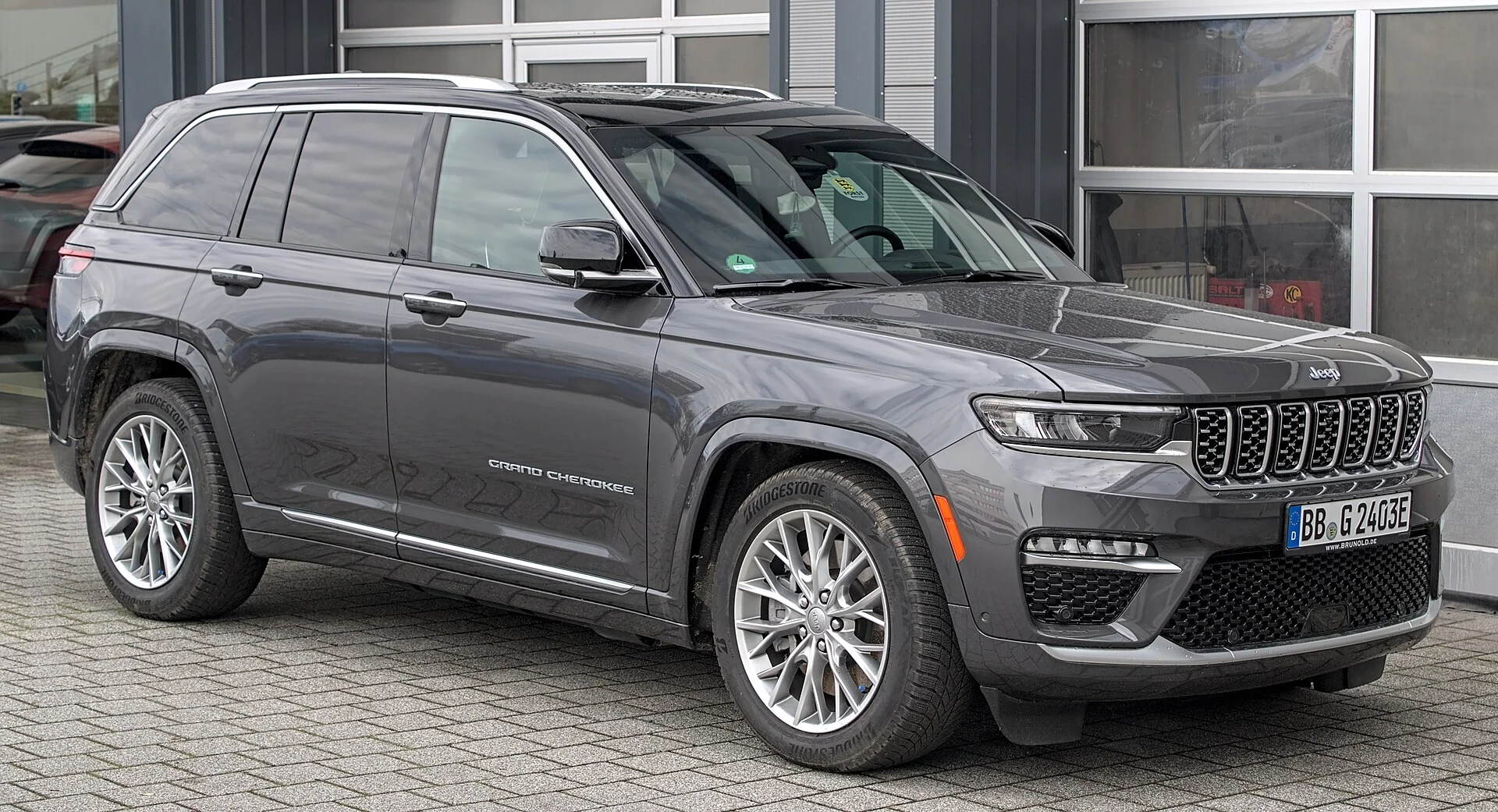
The Straight Answer: More Truck, With a Hidden Trick
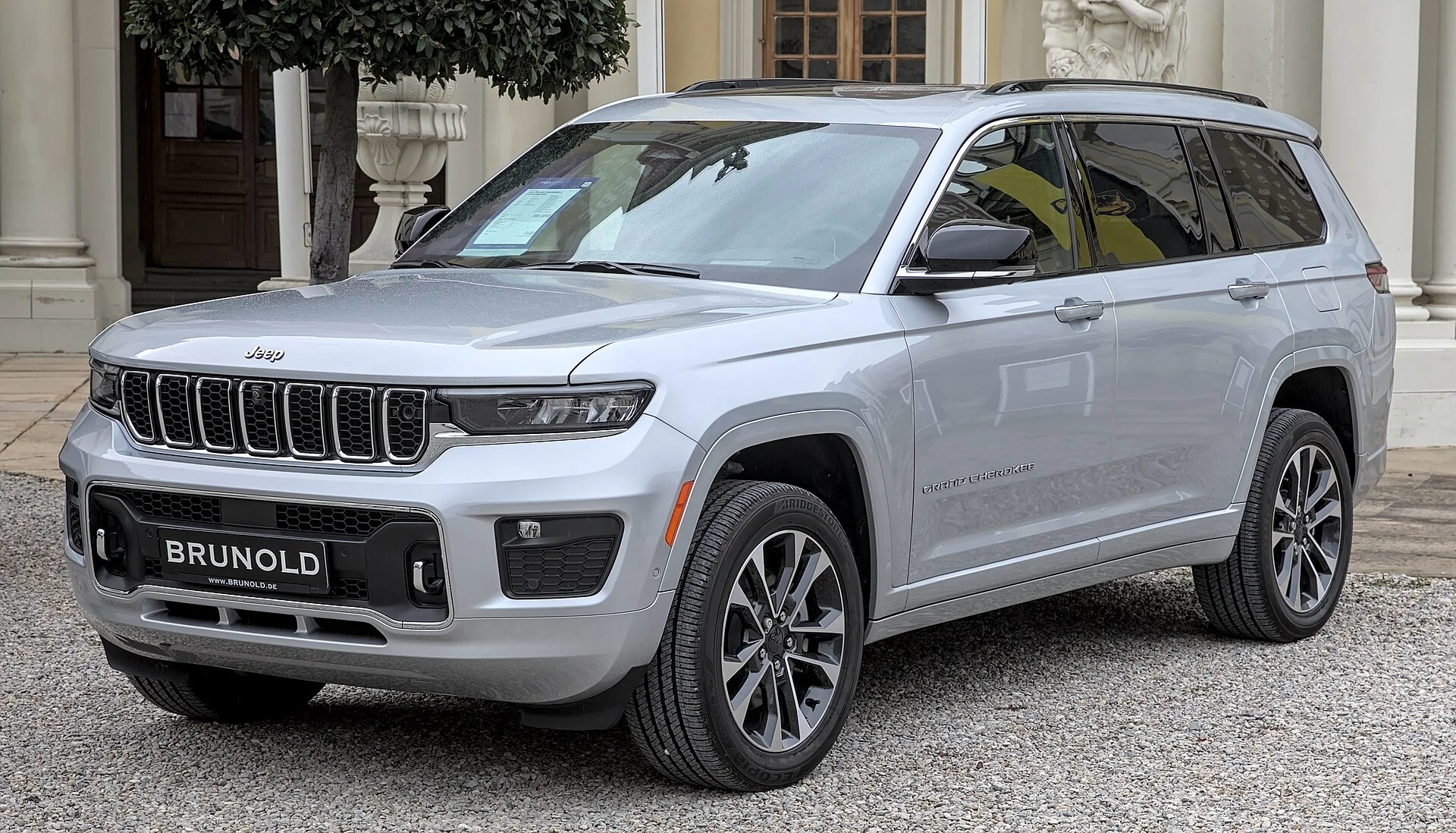
Open the question up and the Grand Cherokee gives a stronger winter answer than most crossovers - and the plug-in 4xe version hides a genuine advantage the others cannot touch. The short version: yes, it is a capable cold-weather camper, with more ground clearance and a taller, airier cabin than a compact wagon, and one configuration solves the hardest problem in winter car camping almost by accident.
The hardware is the obvious part. The Quadra-Lift air suspension delivers up to 10.9 inches of ground clearance, the rear seats fold flat into a level sleeping surface, and the cargo area includes a 12-volt auxiliary power outlet and four floor-mounted tie-down loops for building out a sleep setup. When properly configured it can even ford up to 24 inches of water, which speaks to how much clearance and sealing you are working with.
The hidden trick is the 4xe. Its high-voltage battery can supply cabin heat and 12-volt power without idling the gas engine - a real advantage for quiet overnight warmth. That single capability is the design choice that separates the 4xe from every gas SUV in this guide, because it makes heat the way an idling engine cannot: silently, and without pumping carbon monoxide out a tailpipe all night. The rest comes down to how you use it.
Clearance and the Air Suspension
Winter camping starts with reaching the site, and this is where the Grand Cherokee's chassis pulls ahead. The Quadra-Lift air suspension delivers up to 10.9 inches of ground clearance - more than most unibody crossovers offer even on their rugged trims - and it raises and lowers on command, so you get clearance over a snow berm when you need it and an easier step-in height when you are loading gear. That adjustability is a build detail that reveals real engineering, not just a spec.
The traction backs it up. The 4xe comes standard with the Quadra-Trac II four-wheel-drive system, which is well suited to snowy roads, and the platform's overall dimensions - 193.5 inches long, 77.5 inches wide, 70.8 inches tall without racks - give it a planted footprint. Add the 24-inch fording capability when properly configured, and unmaintained, slush-covered access roads stop being a gamble.
The trade-off to know is that clearance and air suspension add complexity. This is a heavier, more mechanically involved vehicle than a wagon - minimum curb weight is 4,238 pounds on the Laredo 2WD - so it is thirstier and there is more that can theoretically go wrong in deep cold. But for pure winter access, the tall stance and adjustable ride height are exactly what you want under you when the forecast turns.
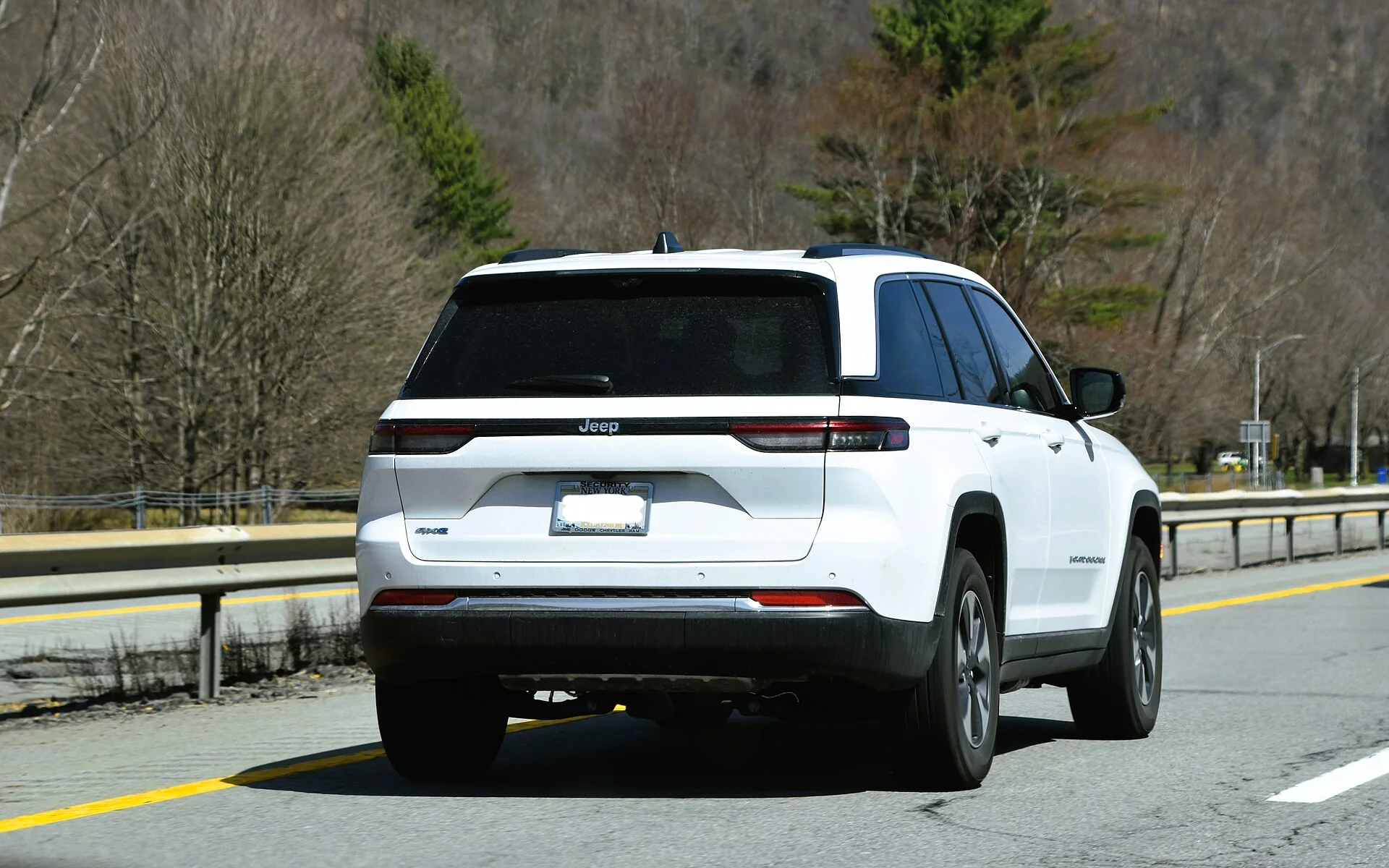
The 4xe's Secret Weapon: Heat Without Idling
Here is the part that makes a maker sit up: the 4xe can heat its cabin and run accessories off the battery, with the gas engine completely off. The 4xe uses a 2.0L turbocharged plug-in-hybrid powertrain making up to 375 horsepower and 470 lb-ft of torque, and it carries up to 25 miles of all-electric range and 56 MPGe combined. That same high-voltage battery is what can supply cabin heat and 12-volt power without idling.
Why that matters overnight is everything. Every gas vehicle in winter faces the same ugly choice - idle the engine and burn fuel while venting carbon monoxide, or add an aftermarket heater. The 4xe sidesteps it. Its battery can hold cabin warmth without combustion, which is the single most valuable thing an SUV can do for a winter camper: make quiet, fume-free heat without a separate device bolted in.
It is not infinite, and honesty matters here. The electric range and battery capacity are finite, so heat off the battery is a limited resource you manage, not a furnace you leave running for days. But for a night or two, the 4xe delivers what a diesel-heater upgrade gives other vehicles - dry, engine-off warmth - straight from the factory. If winter camping is why you are shopping, the 4xe is the trim that earns its price here.
The Flat Load Floor for Sleeping
Sleeping space is generous by the standards of this class. Cargo volume runs 37.7 cubic feet behind the second row and expands to 70.8 cubic feet with the rear seats folded down, and the rear seats fold flat to create a level surface for a sleeping platform. The standard Grand Cherokee offers about 68 inches of cargo length with the rear seats folded flat - workable for many adults, though tall sleepers will want to slide the front seats forward.
If you want more room, the body style matters. The three-row Grand Cherokee L opens up 84.6 cubic feet of cargo space with both the second and third rows folded, which is a meaningfully longer flat floor for anyone over six feet or a couple sharing the space. Rear-seat legroom of 38.2 inches also means the cabin does not feel cramped when you are sitting up waiting out a storm.
The build-out details are already there. The cargo area includes four floor-mounted cargo tie-down loops, a storage tray, and a 12-volt auxiliary power outlet - so anchoring a platform and running a fan or a light does not require improvising. Between the flat fold, the 68-inch length (or 84.6 cubic feet in the L), and the factory tie-downs, the Grand Cherokee is one of the more sleep-ready SUVs in its class before you add anything.
Idling a V6 for Heat: What It Costs
If you are in a gas Grand Cherokee rather than the 4xe, idling for heat is the fallback - and it is worth knowing the bill. A larger V6 or V8 engine idling for heat burns closer to 0.5 to 1.0 gallons of fuel per hour, more than a compact 4-cylinder. The base 3.6L Pentastar V6 produces 293 horsepower and 260 lb-ft of torque, and all that displacement is exactly why it drinks more at idle than a small engine would.
Fuel adds up fast at that rate. With a 23-gallon fuel tank on the V6 (the 4xe carries 19 gallons), a night of idling makes a real dent, and it means starting full if idling is your only heat plan. But fuel is the smaller concern. The real issue is the same for any combustion engine: idling overnight vents carbon monoxide, and a snow-blocked tailpipe or a bad seal can push it into the cabin.
So the rule for the gas Grand Cherokee is the rule for any gas vehicle - idle in short cycles while awake, keep the tailpipe clear, crack a window, and never treat it as a set-and-sleep heater. This is precisely the problem the 4xe avoids and the reason a dedicated heater exists. If you camp in a gas trim regularly, plan your heat around something other than the engine.
Diesel Heater vs Idling
For any gas Grand Cherokee, the upgrade that changes winter camping is a dedicated diesel heater, and the math is lopsided. A dedicated diesel heater burns only 0.1 to 0.5 gallons per hour - about 1 gallon per night - versus idling the engine all night at 0.5 to 1.0 gallons per hour. It makes heat as its sole job, so you are not burning a big V6's worth of fuel just to keep a cabin warm.
The quality of the heat is the bigger win. Diesel heaters use sealed combustion to make dry heat, avoiding the condensation that propane heaters add to the cabin. That sealed design vents exhaust outside and keeps moisture out of your sleeping space, which is the difference between a dry bag and a damp one after eight hours of breathing in a closed cabin. It solves warmth and condensation together.
The honest framing: a diesel heater brings a gas Grand Cherokee up to what the 4xe already does from the factory - quiet, dry, engine-off heat. If you own the 4xe, you may not need one at all for short trips. If you own a gas trim and camp in real cold, it is the highest-value addition you can make, far better than relying on the engine. Whatever the heat source, keep a battery carbon monoxide alarm (about $10 to $20) running.
Condensation and Ventilation
Every closed cabin in winter fights the same enemy: the moisture you breathe out. A tall, roomy cabin like the Grand Cherokee's has plenty of cold glass for that water to condense on, and two sleepers can fog and dampen the interior by morning. Left unmanaged, condensation turns a warm night into a wet, cold one - and a damp sleeping bag loses much of its insulating value.
The fix is the same discipline that governs the heat source: airflow. At least one window should be cracked for ventilation, which lets the humid air escape rather than settling on the windows and soft goods. It costs a little warmth and it prevents the wet-bag problem, and if you are running any combustion heat source or idling, that cracked window is also part of your carbon monoxide defense.
The heat source choice compounds here too. Because a diesel heater and the 4xe's electric heat both produce dry warmth - unlike a propane heater, which releases water vapor as it burns - they keep the moisture load low to begin with. Pair a dry heat source with a cracked window and the Grand Cherokee's big cabin stays comfortable instead of turning into a greenhouse of your own breath.
Insulating the Cabin
The Grand Cherokee's tall ground clearance and air suspension make it a capable deep-snow base, but its large glass area needs insulated window covers to hold heat. This is the quiet weak point on nearly every SUV: the windows. Glass conducts heat straight out, and a vehicle with as much window area as the Grand Cherokee will bleed warmth all night unless you cover it.
A set of insulated window covers and reflective panels are the cheap, high-return answer. They trap a layer of still air against each window and reflect radiant heat back inside, cutting the workload on whatever is making your heat - whether that is the 4xe battery, a diesel heater, or short engine cycles. Less heat lost means less runtime and less fuel or charge spent holding temperature between cycles.
Think of insulation as the multiplier on everything else. The 4xe's engine-off heat lasts longer in an insulated cabin; a diesel heater cycles less; even idling stretches further. On a vehicle whose main cold-weather weakness is its glass, covering the windows is the difference between a heat source that keeps up and one that falls behind. It is the least glamorous upgrade and one of the most effective.
Power and Tie-Downs for a Build
What makes the Grand Cherokee pleasant to actually live in is the built-in provisioning. The cargo area comes with four floor-mounted cargo tie-down loops, a storage tray, and a 12-volt auxiliary power outlet - the anchor points and power tap you need to secure a sleeping platform and run lights or a fan without jury-rigging. Those loops are what keep a platform from sliding on a slick, tilted forest pullout.
The 4xe extends the electrical story. Beyond the 12-volt outlet, its high-voltage battery is what allows cabin heat and accessory power without idling, and the powertrain's up to 25 miles of electric range and 56 MPGe rating hint at how much usable energy is on board. For a camper, that battery is a house battery you did not have to install - within limits, it runs your comfort systems overnight.
Remote start rounds it out on select trims, letting you preheat the cabin before getting in on a brutal morning. None of these features are exotic, but together they mean the Grand Cherokee arrives camp-ready: anchor points, 12-volt power, and on the 4xe, a real energy reserve. It is a vehicle you can build into a winter camper with very little added hardware.
The Verdict: Buy the 4xe if Winter Is the Point
Weigh it all and the Grand Cherokee is a strong winter car-camping choice, with a clear recommendation inside it. As a platform it brings more than most crossovers: up to 10.9 inches of clearance on the Quadra-Lift air suspension, Quadra-Trac II traction, a flat-folding floor about 68 inches long (or 84.6 cubic feet in the L), 24-inch fording when configured, and factory tie-downs plus a 12-volt outlet. It reaches winter sites and it sleeps two in reasonable comfort.
The recommendation is the 4xe. Its high-voltage battery supplying cabin heat and 12-volt power without idling is the single most useful winter-camping feature in this whole class - dry, quiet, fume-free heat from the factory, no aftermarket heater required for short trips. A gas V6 trim is still capable, but it inherits the universal idling problem and really wants a diesel heater added to camp well in the cold.
So the honest guidance: if winter camping is a nice-to-have, any Grand Cherokee works with insulation, a cracked window, and a smart heat plan. If winter camping is the reason you are buying, the 4xe is worth the premium, because it comes with the answer to the hardest question built in. Cover the glass, manage condensation, keep a carbon monoxide alarm running, and it is one of the best turnkey winter campers you can drive off a lot.