
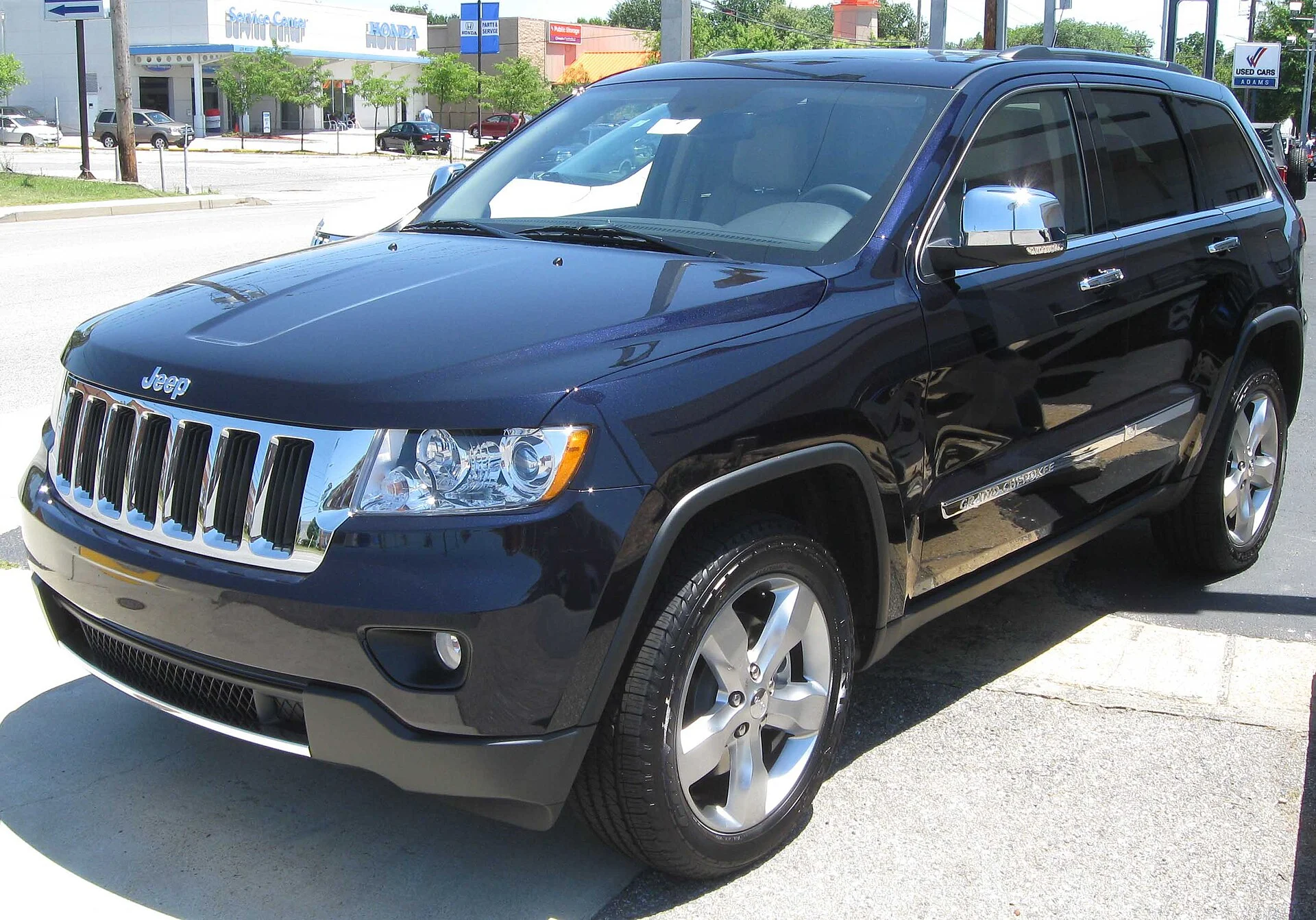
The Straight Answer for Anyone Under Six-Foot-Two
Yes — a Jeep Grand Cherokee sleeps one adult comfortably and two people at a squeeze, once you fold the 60/40 rear seats flat and reclaim a cargo floor that runs roughly 68 inches long on the current two-row model.
That figure describes the current-generation, two-row Grand Cherokee (the WL) with the second row folded down flat, not the longer three-row Grand Cherokee L, per a cargo-length breakdown of the model published by Jeep Corner.
Total cargo volume on that same two-row model tops out at 70.8 cubic feet with the rear seats folded, compared with 37.7 cubic feet when the second row is still upright, according to Jeep's published cargo-space guide.
Neither number tells the whole story, though. A cargo floor that is nominally 68 inches long is not automatically a mattress-ready 68 inches — the seatback seam, the wheel-well pinch, and your actual height all subtract from that headline figure before you ever unroll a sleeping pad.
The cargo floor gets close to flat once the second row folds, but "close" is doing real work here — the seam where the seatback meets the load floor and the narrow point between the wheel wells matter as much as the raw length number.
This guide breaks down exactly what determines whether you personally fit: your height against that floor length, the width you actually have to work with once the wheel wells intrude, the load-floor step that catches first-time sleepers off guard, how the two-row Grand Cherokee compares with the older WK2 generation (2011-2021) and the three-row Grand Cherokee L, whether you can run a fan or a small fridge off the cargo-area outlet, how to manage condensation overnight, and — just as important — who this vehicle is genuinely too small for.
If you are cross-shopping, the short version is this: a solo sleeper under about six feet tall gets a workable, if snug, night's sleep with minimal build-out. Two adults, taller sleepers, or anyone wanting to sit up and cook needs to either look at the Grand Cherokee L's larger footprint or plan a proper sleeping platform. The rest of this guide covers each of those tradeoffs one at a time.
The One Thing That Decides Whether You Fit: Your Height vs. the Cargo Floor
The single variable that determines whether sleeping in a Grand Cherokee works for you is simple: how your height compares to the roughly 68-inch cargo floor length on the two-row model once the rear seats are folded flat.
Owner reports on Jeep's forums give a real-world read on where that line falls. A 6-foot-tall owner described sleeping in the cargo area as uncomfortable, and a 6'2" poster in the same discussion doubted they could fully stretch out, per a Jeep Forum thread on which Jeeps are big enough to sleep in.
On the other side of that line, one owner reported sleeping comfortably in a Grand Cherokee's cargo area at 5 feet 8 inches tall, with the panoramic sunroof shade left open to see the stars, according to a build thread on the 4xe Forums.
That puts the practical ceiling somewhere between 5'8" and 6'0" for a genuinely comfortable stretch-out sleep without curling up, with 6'0"-plus sleepers needing to either angle their body diagonally, sleep with knees bent, or accept a night that is workable but not spacious.
Height alone does not tell the whole story, though — how you measure your own fit matters more than the catalog number. Rather than trusting the spec sheet, the more reliable method is to sit in the folded cargo area yourself with a tape measure: run it from the tailgate seal to the point where the folded seatback stops sitting flat, then compare that measured distance — not the published figure — to your height plus a few inches of margin for a pillow and blanket bunching at your feet.
For two sleepers, the math gets tighter still: side-by-side occupancy is capped less by length and more by the width between the wheel wells, covered in the next section — two average-height adults sleeping head-to-head or top-to-tail is more realistic than side-by-side in this vehicle.
This matters because the published cargo-length figure and the usable, genuinely flat sleeping length are not guaranteed to be identical — a theme the next few sections cover in detail, from the width between the wheel wells to the seam at the folded seatback.
Cargo Length Reality on the Current Grand Cherokee (WL)
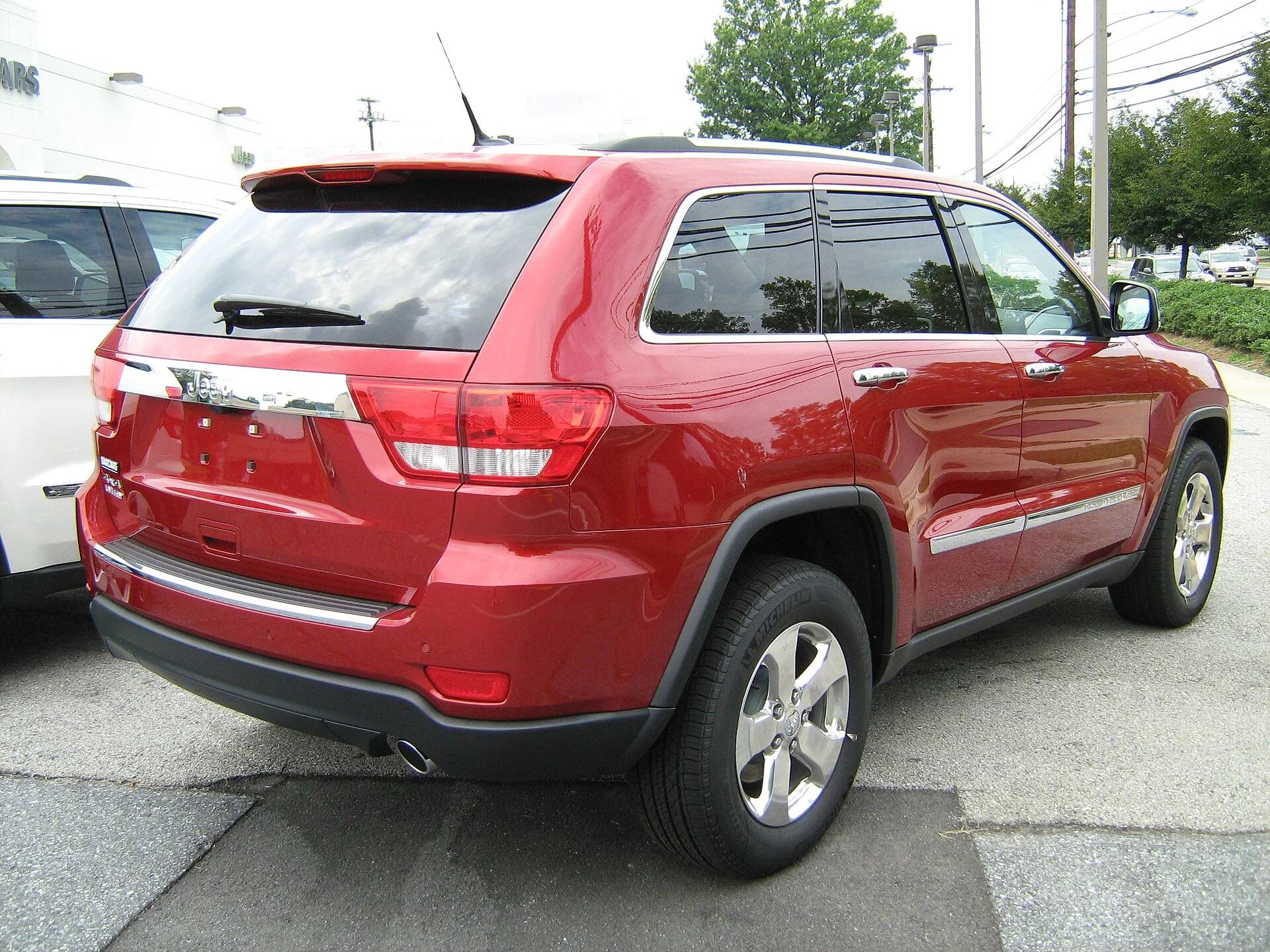
On the current two-row Grand Cherokee, the cargo floor runs about 68 inches with the rear seats folded flat, a figure drawn from a model-specific cargo-length breakdown rather than the headline cubic-footage spec Jeep advertises.
That 68-inch number sits alongside a maximum cargo volume of 70.8 cubic feet once the second row is down, and drops to 37.7 cubic feet with the second row left upright — the difference between a flat sleeping platform and a raised load floor with seatbacks in the way, per Jeep's cargo-space guide.
Sixty-eight inches is longer than most one-person sleeping pads, but it is measured from the tailgate to the front of the folded seatback — not to the dashboard. That means the number already accounts for the seats being down; there is no bonus length to gain by reclining the front seats unless you are willing to give up a usable driver's or passenger's seat position overnight.
- 68 inches — approximate cargo floor length, second row folded flat
- 70.8 cubic feet — maximum cargo volume, second row folded
- 37.7 cubic feet — cargo volume, second row upright
For context, the two-row Grand Cherokee's overall body length is 193.5 inches on a 116.7-inch wheelbase, according to a Grand Cherokee vs. Grand Cherokee L size comparison — meaning a large share of the vehicle's overall footprint is engine bay, cabin, and rear overhang rather than usable flat cargo floor.
The practical takeaway: the 68-inch figure is a reasonably honest number to sleep-plan against, but it is a floor measurement, not a mattress-clearance measurement — the seam described in a later section shaves off real usable length, and side intrusion from the wheel wells shaves off real usable width.
It also helps to remember what that 68 inches is measured against: a sleeping pad, not a person standing up. Because the figure already assumes the second row is folded flat, planning your gear layout around it means treating the cargo area as a fixed rectangle rather than something you can extend by reclining a front seat, since the front seats stay dedicated to driving and passenger duty on a car-camping trip rather than becoming part of the sleeping surface.
Anyone comparing that 68-inch figure against a specific sleeping pad or bag should also account for the tailgate seal and any cargo-area trim at the very back edge, since published cargo-length figures are typically measured to the structural opening rather than to the exact spot a mattress corner can safely sit without catching on trim.
Width Between the Wheel Wells
Width is the second constraint, and it is less forgiving than length. The narrowest point of the Grand Cherokee's cargo area — where the wheel wells intrude into the floor — measures approximately 44 inches, per the same cargo-dimensions breakdown from Jeep Corner.
Forty-four inches is wide enough for one adult lying flat with room to spare on either side, but it is not comfortably wide for two adults side by side — most standard sleeping pads run 20 to 30 inches wide each, so two pads plus the gap between the wheel wells starts to feel tight well before gear storage is factored in.
One owner's real-world build confirms the practical ceiling: a 25-inch-wide, 3-inch-thick air mattress fit neatly against one side of the folded 60/40 rear seat, leaving the other side of the cargo area free for gear rather than a second sleeper, according to a camping build thread on Jeep Forum.
That same owner paired the air mattress with a 1-inch Therm-a-Rest foam pad underneath for insulation from the cold cargo floor, and concluded afterward that a 4-inch-thick mattress would have been more comfortable than the 3-inch one they used.
Two average-width sleeping pads can physically be squeezed into the 44-inch narrow point, but only if neither sleeper needs to roll over without bumping a wheel-well hump or their tent-mate.
The 60/40 split on the rear seat also matters for width planning: because the seatback folds in two unequal sections rather than one bench, a single sleeper can choose which side to occupy and use the opposite, narrower flap as a gear shelf rather than sleeping surface — a detail lost if you assumed the cargo area was one uniform rectangle.
Practically, most solo sleepers treat the cargo area as a single-width bed centered between the wheel wells rather than trying to maximize every inch of the 44-inch figure, since the wheel-well bulges themselves are not flat and will not support a mattress edge evenly.
Gear placement follows the same logic: packing bins and coolers against the wheel-well bulges, rather than in the flat center strip, keeps the widest and flattest part of the 44-inch span open for the mattress itself, which matters more once a second occupant or a pet is sharing the space.
The Load-Floor Step: Where the Seats Meet the Cargo Floor
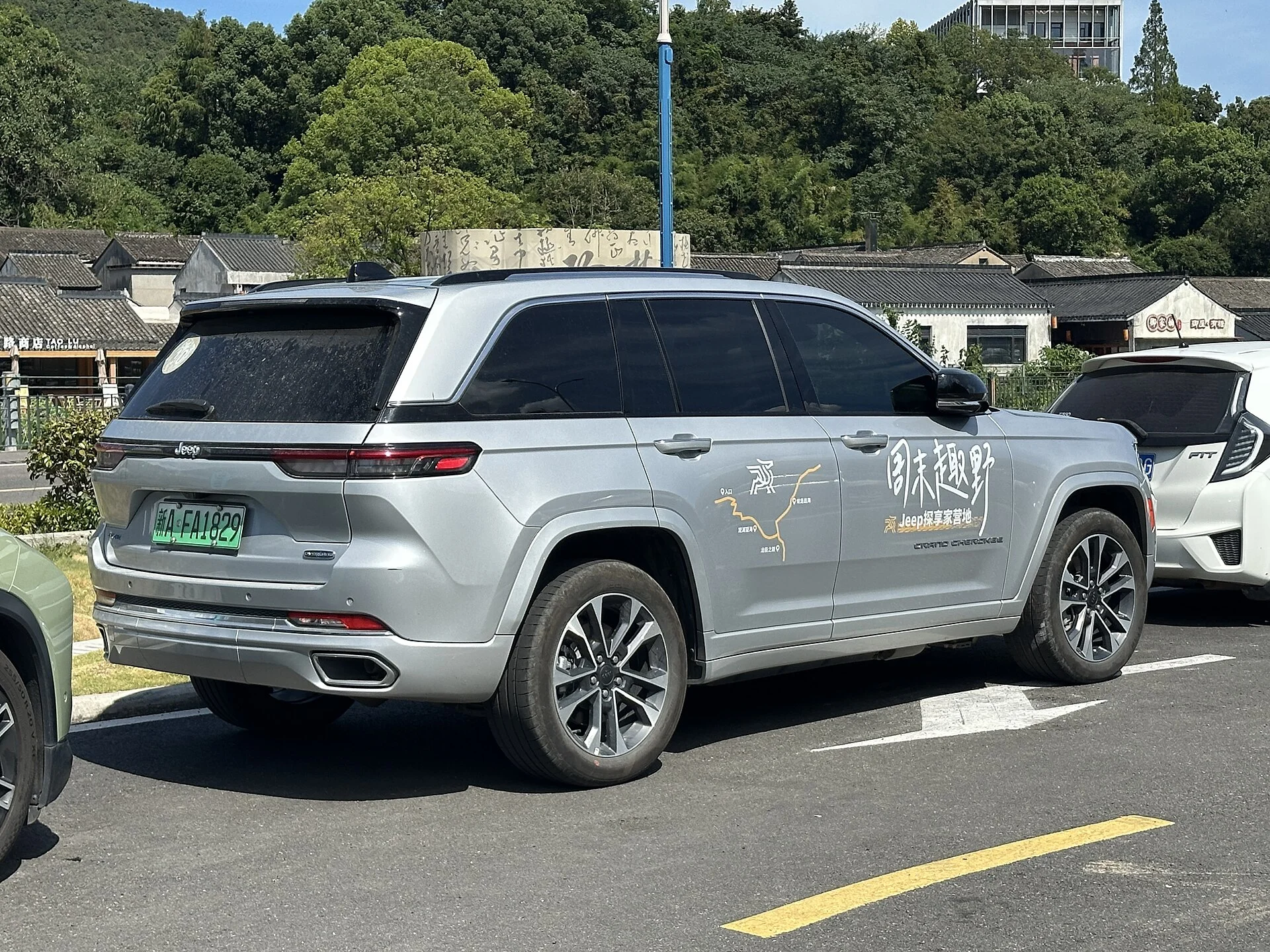
The Grand Cherokee's rear seats fold close to flat, but "close" is the operative word — where the folded seatback meets the cargo floor, there is a seam and a slight step rather than one continuous flat plane.
The same camping build thread that documented the mattress fit also flagged this directly: the owner noted the bend where the seats weren't quite flat with the cargo floor was noticeable once they lay down on it, according to that Jeep Forum build thread.
This is a common car-camping problem across nearly every SUV with folding second-row seats, not a Grand Cherokee-specific defect — folding seatbacks are designed to maximize cargo volume for hauling boxes, not to form a perfectly co-planar mattress surface. The seam typically sits roughly where your lower back or hips would rest if you slept lengthwise with your head toward the tailgate.
- A rigid foam pad or interlocking foam tiles bridges the seam better than an air mattress alone, since air mattresses can pool or dip into the low point of a step.
- Placing the seam under your calves or feet rather than your hips and lower back reduces how much you feel it overnight.
- A plywood or foam sleeping platform removes the seam problem entirely by creating one continuous rigid surface above it.
That last option is exactly what one Grand Cherokee camper did: the owner of a 2015 Grand Cherokee built a dedicated sleeping platform, gaining both a flat surface to sleep on and storage space for gear underneath, per the same Jeep Forum thread.
If you are deciding between an air mattress and a rigid platform, the load-floor step is the deciding factor: a platform costs more setup effort but solves the seam problem permanently, while an air mattress is faster to deploy but will telegraph that seam every time you shift position overnight.
Worth noting: the step is a second-row phenomenon on the two-row Grand Cherokee. On the three-row Grand Cherokee L, a second seam exists where the third row folds as well, discussed in the generation-comparison section below.
Whichever fix you choose, test it before a trip rather than on the first night out — lie down fully clothed in daylight, note exactly where the seam falls relative to your body, and adjust padding or platform placement then, when you can still return gear to a store or rearrange a build.
WL vs. WK2 vs. Grand Cherokee L: Which Generation Sleeps Best
Not every Grand Cherokee on the road has the same cargo area, and the differences matter for sleeping. The current WL-generation two-row model (2022 and newer) is the one with the roughly 68-inch, 70.8-cubic-foot cargo floor described above.
The previous WK2 generation (2011-2021) measures differently. With the rear seats upright, the cargo floor from the tailgate to the seatback runs about 48 inches, the cargo opening is about 42 inches wide, and the opening stands about 31 inches tall, per a cargo-dimensions thread on Jeep Garage.
That same WK2 thread notes that folding the front passenger seat flat as well — in addition to the rear seats — extends the usable diagonal floor length to roughly 96 inches, which is enough for even a tall sleeper lying at an angle, at the cost of losing the front passenger seat entirely for the night.
The three-row Grand Cherokee L takes a different approach: rather than a longer two-row cargo bay, it adds a third row. Behind that third row (seats up) there is 17.2 cubic feet of space; folding the third row alone opens up 46.9 cubic feet; and folding both rear rows reaches a maximum of 84.6 cubic feet, according to Jeep's Grand Cherokee L cargo specifications.
The Grand Cherokee L is also physically longer overall, as covered in the length comparison above, and that stretched footprint does translate into more folded-floor length for sleeping. It also introduces a second seam where the third row folds, stacked on top of the second-row seam every Grand Cherokee shares.
- WL two-row (2022+): ~68-inch cargo floor, 70.8 cu ft max volume — the baseline sleeping setup.
- WK2 (2011-2021): ~48-inch floor with seats up, ~42-inch-wide opening, extending to ~96 inches diagonally if the front passenger seat also folds.
- Grand Cherokee L (3-row): up to 84.6 cu ft max volume with both rear rows folded, on a longer overall body — more room, but two seams to manage instead of one.
For a solo car camper prioritizing simplicity, the two-row WL is the easiest to sleep in: one seam, a known ~68-inch floor, and no third-row complexity. The Grand Cherokee L is the better pick if you regularly camp with a second adult or want to stand gear up behind a still-occupied third row.
Powering a Fan or Small Fridge from the Cargo-Area 12V Outlet
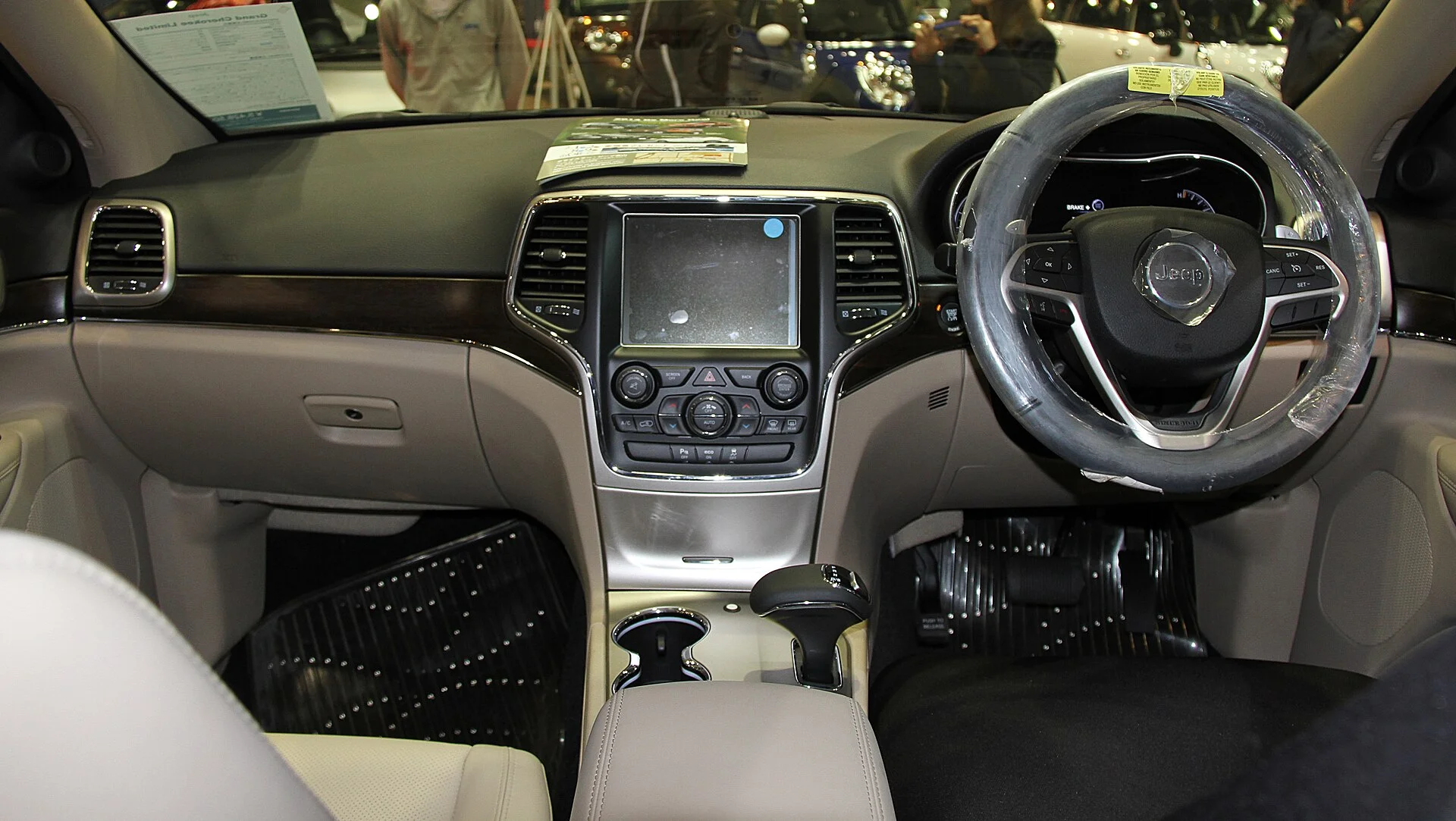
The Grand Cherokee's cargo area includes a dedicated 12-volt power outlet, rated at 12 volts and 13 amps, mounted in the lower right quarter trim panel — enough to run a 12V fan or a small 12V cooler overnight without hauling in a separate battery.
That outlet is protected by its own fuse (labeled M7, a 20-amp yellow fuse in the panel), and it is marked with either a "key" symbol or a "battery" symbol depending on how it is wired, according to the Jeep Grand Cherokee owner's manual.
The distinction between those two symbols matters enormously for overnight use. An outlet marked with the "key" symbol only powers on when the ignition is in the ON or ACC position — meaning it goes dead the moment you turn the vehicle off, which makes it useless for an overnight fan or fridge unless you plan to idle the engine.
An outlet marked with the "battery" symbol, by contrast, is wired directly to the battery and stays powered whether the ignition is on or off — the configuration you actually want for sleeping. Owners can switch the rear cargo outlet's behavior by swapping which position its fuse occupies in the fuse panel, converting a key-switched outlet to an always-on one, per the same owner's manual.
Before relying on the cargo-area outlet for an overnight fan, confirm which symbol is next to it — a key-switched outlet that shuts off the moment you kill the engine will leave you without airflow overnight.
Because the outlet draws straight off the vehicle's starter battery when set to always-on, running a fan or small fridge all night does pull down that same battery you need to start the engine in the morning. Owners who rely on this setup regularly tend to pair it with a battery monitor or a jump-start pack as insurance, rather than trusting the factory gauge alone.
A 13-amp-rated outlet is enough headroom for the low current draw of a single 12V fan or a compact cooler compressor, but it is not intended to run higher-draw accessories like a full-size electric cooler or a space heater — those exceed what the circuit and its 20-amp fuse are sized to carry safely.
For most solo car campers, the practical setup is simple: confirm the outlet is battery-wired (or switch the fuse to make it so), run a single low-draw fan or cooler, and keep an eye on battery health if you use it night after night.
Condensation and Ventilation Overnight
Condensation is a predictable side effect of sleeping in any sealed vehicle overnight, and the Grand Cherokee's cargo area is no exception — a closed metal-and-glass box collects moisture from your breath and body heat with nowhere to go unless you deliberately manage airflow.
One practical option specific to this vehicle: Grand Cherokees equipped with the panoramic sunroof can leave the sunroof's shade open (with the glass itself closed and locked) to add a sight-line to the sky without fully opening a window, an approach one owner used while sleeping comfortably in the cargo area, according to a build thread on the 4xe Forums.
Cracking a window slightly — rather than sealing the cabin completely — is the more direct fix for actual airflow, since a shade-open sunroof with the glass shut does not exchange air the way an open window does; the sunroof approach is about starlight and psychological openness more than ventilation.
Privacy is the tradeoff that comes with any cracked window: a gap wide enough to move air is also a gap a passerby can potentially see or reach through, which is why car campers commonly combine partial ventilation with window coverings on the remaining glass, so airflow and privacy are handled by different parts of the setup rather than the same open gap.
- Crack a window an inch or two on the downwind side rather than relying on the sunroof shade alone for airflow.
- Cover the remaining glass for privacy so the cracked window can stay purely about ventilation.
- Point a 12V fan (see the power section above) toward the cracked window to actively push moist air out rather than letting it settle passively.
Moisture buildup tends to be worse in cold weather, when the temperature difference between your breath and the cold glass causes water to condense directly on the windows and headliner fabric rather than staying airborne — wiping down the glass before you pack up in the morning is a normal part of the routine, not a sign anything is wrong with the vehicle.
None of this is unique to the Grand Cherokee; any hard-sided vehicle with limited airflow faces the same physics. The cargo area's relatively large glass area means condensation shows up visibly on the windows rather than hidden in wall cavities, which is arguably an advantage — you can see the problem and address it, rather than it developing unseen. For a deeper walkthrough of stopping condensation before it starts, see this guide on reducing condensation when sleeping in a car.
If you would rather sleep on air than on a folded pad, a cargo-area air mattress cut for a midsize SUV is the usual first purchase — browse SUV air mattresses on Amazon.

Comfort Build-Out and Who This Vehicle Does NOT Fit
Turning the Grand Cherokee's cargo area into a genuinely comfortable place to sleep comes down to three build-out choices: what you put under you, what you do about the load-floor seam, and how much gear you need to store simultaneously.
On the mattress question, real-world experience points toward a thicker pad than the 3-inch air mattress one owner initially tried — that owner concluded a 4-inch-thick mattress would have been more comfortable, and paired their setup with a 1-inch foam pad underneath for insulation from the cold floor, according to the Jeep Forum camping build thread referenced earlier.
On the seam question, a rigid platform is the more permanent fix. One 2015 Grand Cherokee owner built a dedicated plywood sleeping platform, which both eliminated the load-floor step and created enclosed storage underneath for coolers, bags, and cooking gear — solving the "where does my stuff go" problem that a simple air mattress does not, per the same build thread.
A rigid platform is not free, though: it costs cargo height, it is a fixed installation rather than something you can quickly remove to haul furniture, and it needs to be built or bought to fit the Grand Cherokee's specific wheel-well contours rather than being a universal off-the-shelf part.
The build-out decision comes down to how often you sleep in the vehicle: occasional trips favor a simple foam pad or thicker air mattress you can deflate and stow; frequent car camping favors a permanent platform that solves the seam and storage problem once.
Who should look elsewhere: anyone consistently over about six feet tall who wants to sleep fully stretched out without curling up, based on the forum accounts of six-foot and 6'2" owners finding the space cramped, cited earlier in this guide. Two adults who want to sleep side by side rather than head-to-toe will also find the roughly 44-inch width between the wheel wells tight once two pads and gear are factored in.
Anyone who wants to sit upright inside the vehicle — to cook, wait out rain, or change clothes standing up — will also find the Grand Cherokee's cargo-area height limiting compared with a vehicle built around a taller roofline; nothing in the Grand Cherokee's cargo dimensions is aimed at standing headroom, only at a flat sleeping surface. Getting the vehicle level before you lie down also meaningfully improves sleep quality on uneven campsite ground, as covered in this guide to leveling your car for sleeping.
For everyone else — a solo sleeper under roughly six feet, or two people willing to sleep top-to-tail with a thicker pad and a plan for the load-floor seam — the two-row Grand Cherokee, or the roomier Grand Cherokee L for regular two-person trips, covers a genuine night's sleep without needing a rooftop tent or a separate camper setup.