
The Short Answer: Big Room, Standard-Duty Traction
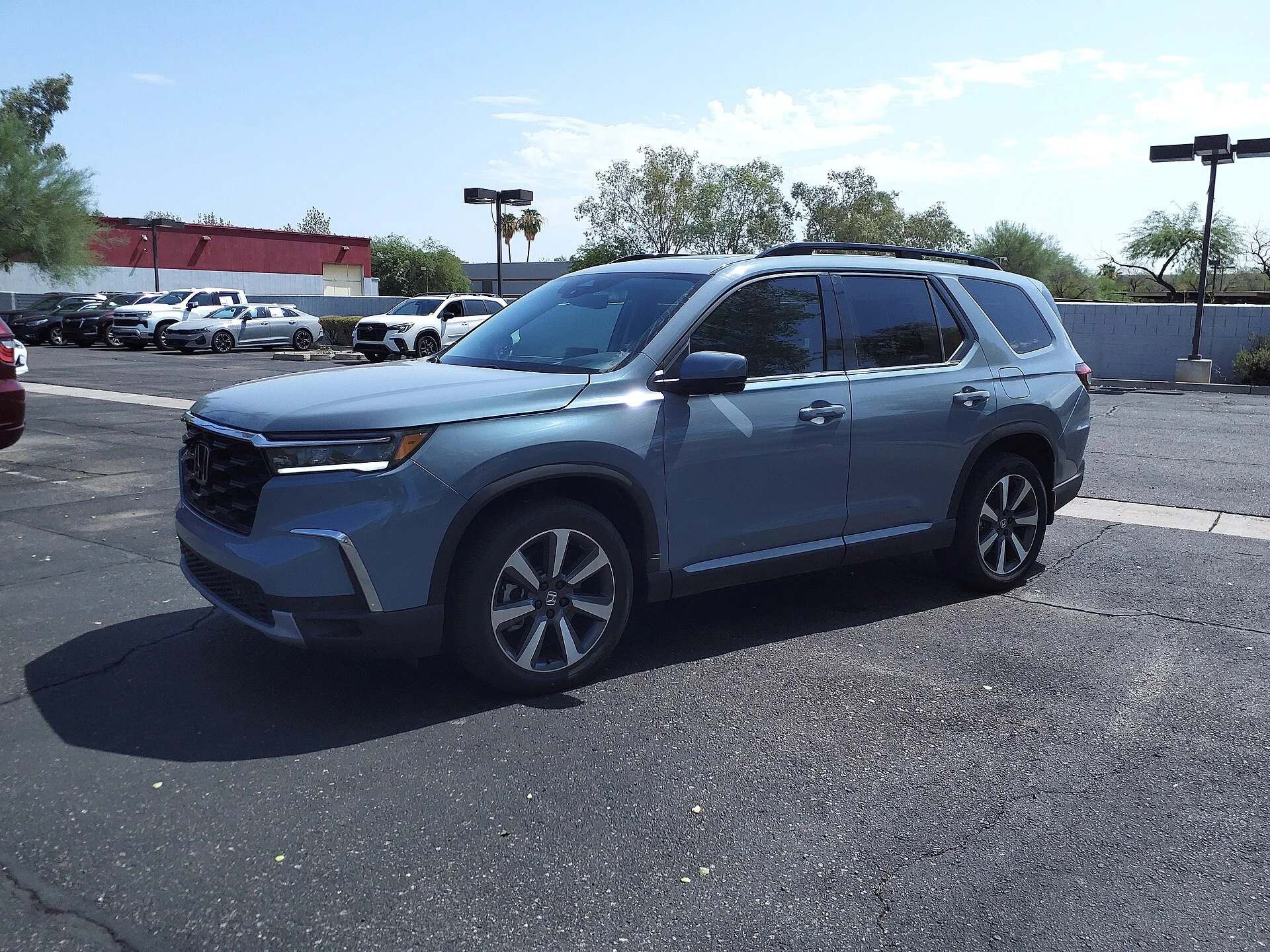
Here is what the spec sheet says and what mile 300 in the cold actually tells you. The Pilot is a strong winter sleeper because it has class-leading cargo volume and genuinely capable all-wheel drive. But the part the reps gloss over is that standard ground clearance is modest, and no amount of AWD makes the engine your heater. Insulation and a good pad do that.
The room is the real headline. The 2023-and-newer Pilot offers up to 87.0 cubic feet of cargo behind the first row and up to 111.8 cubic feet total - Honda's marketing cites up to 114.3 with the second and third rows folded - one of the largest holds in the three-row midsize class. That is a lot of space to build a flat winter bed in.
Traction comes from Honda's i-VTM4 torque-vectoring AWD, which is a good system. The asterisk is clearance: 7.3 inches standard. This guide gives you the honest picture - the room, the traction with its limits, the fuel math for warming, and the insulation and pad work that actually keep you warm - so you go into winter knowing what the Pilot does well and where you plan around it.
The Cargo Reality: Room to Build a Bed
Start with the number that matters, because the Pilot's space is its strongest winter card. You get up to 87.0 cubic feet of cargo behind the first row, with 22.4 cubic feet behind the third row (21.8 on the LX, Sport, and TrailSport) and 48.5 cubic feet behind the second. Fold both rear rows and the near-flat sleeping floor is long enough for most adults to lie flat.
The clever detail is how you get that flat floor. On non-TrailSport trims, the second-row middle seat is removable or stowable, which helps create a continuous surface. On EX-L and above, the outboard second-row seats stow and the middle seat comes out, opening the whole midsection into a flat sleeping platform. That removable middle seat is what turns a good cargo hold into a proper bed - it eliminates the gap that would otherwise sit under your hips.
For a winter camper, that matters more than the raw volume, because a flat, continuous surface is what lets your insulation and pad do their jobs without a cold gap in the middle. Pull the middle seat, stow the outboards, and you have built a level platform in one of the roomiest three-rows sold. The space is genuine, and it is the foundation everything else in the winter setup sits on.
Traction: Good System, Modest Clearance
Now the honest traction picture, because this is where marketing and reality diverge. The Pilot's available i-VTM4 torque-vectoring all-wheel drive is a genuinely good system - it sends variable torque front-to-rear and between the rear wheels, which improves stability and traction on ice and snow. On slick roads it works well, and the TrailSport and higher AWD trims add a Snow drive mode that tunes throttle and AWD behavior for slick surfaces. No complaints about the AWD.
The clearance is the asterisk the reps skip. Standard Pilot ground clearance is about 7.3 inches, which is fine for plowed roads and light snow but not for deep drifts or a rough, unplowed forest track. The off-road TrailSport trim raises it to 8.3 inches for deeper snow and rougher roads, so if your winter camping goes past the plowed pavement, that is the trim to have.
So the honest read: the Pilot has the traction system to handle winter roads confidently, but standard clearance limits how deep into the snow you should push a base trim. Match the trip to the truck. A standard Pilot is a great tool for reaching plowed campgrounds and moderate snowy roads; a TrailSport handles deeper stuff. Do not point a 7.3-inch base trim at a drifted, unmaintained road and expect it to plow through - that is where you get stuck at mile 300.
The Fuel Math for Warming
If you plan to warm the cabin by running the engine periodically, budget the fuel honestly, because cold trips are exactly where range planning bites. Remote engine start is standard on most Pilot trims, via the fob or the HondaLink app, so you can pre-warm the cabin before leaving your sleeping bag. That is a useful feature - just know what it costs.
The numbers: AWD Pilot fuel economy is about 19 mpg city, 25 highway, 21 combined, and the TrailSport runs a bit thirstier at 18 city, 23 highway, 20 combined. Idle-warming does not move the truck but it does burn fuel steadily, so on a multi-day cold trip where the nearest station is far, intermittent warming eats into the tank you also need for driving out. Plan the fuel for the whole trip, not just the miles.
The mechanic's advice is to not rely on the engine as your heater at all. Use remote start for a brief morning warm-up to take the edge off, then lean on insulation and your sleeping system for the overnight hours. Idling burns fuel you may need and, as we will cover, carries a real safety risk in snow. Warm briefly, warm efficiently, and let the insulated cabin hold it - that is how you keep both fuel and safety margin intact.
Window Insulation: Reflectix Plus Foam
The Pilot's big cabin is a double-edged thing in winter, and the windows are where you win or lose. The large cabin, up to 87.0 cubic feet of cargo volume, heats slowly and loses heat through big windows, so full window insulation matters more here than in a compact SUV. Skip it and you are trying to heat a greenhouse in reverse.
The standard fix is Reflectix reflective foil: roughly $18 a roll, it pressure-fits into the window frames with no adhesive and blocks both heat loss and outside views. Cut a panel for every window slightly oversized so it wedges in and holds by tension - no tape, no residue. Silver-side-in panels are field-reported to raise interior temperature about 10 to 15 degrees for a solo sleeper, and more with two occupants. For eighteen bucks, that is the best return in the whole setup.
Be honest about the limit, because Reflectix is only about R-1 per layer. For real cold, pair it with rigid foam board at about R-3.6 to R-4.0 per inch, or window quilts, especially over the Pilot's large glass area. Cut the foam to the same window shapes and layer it with the Reflectix, and you multiply the R-value where the glass would otherwise bleed the most heat. On a big-windowed three-row, that backing is not optional in a hard freeze - it is the job.
The Pad Is the Real Heater
Here is what actually fails first when people try winter camping and get cold: they insulate the air and forget the floor. You lose more heat downward, by conduction into the cold cargo floor, than you lose to the air around you. So the pad under you is the real heater, and it matters more than the cabin temperature or even the window panels.
Set a real target. For insulation from the cold floor, aim for a sleeping pad or mattress R-value of 5.0 or higher, and 5.5 or more for well-below-freezing nights. That is a genuine winter pad - a summer pad's low R-value lets the cold metal floor pull heat out of you all night no matter how warm the air is. Winter pads like the Exped MegaMat reach R-8.1, well into serious cold territory. A proper high-R-value winter sleeping pad is the piece not to cheap out on.
The trick that stacks warmth cheaply: layer a closed-cell foam pad under an air mattress. R-values are additive, so the combination reaches a higher number than either alone, and the foam also forms a moisture barrier against the cold metal floor. That damp-blocking is as important as the insulation, because a wet pad is a cold pad. Build the floor first - it is the piece that keeps you warm when the engine is off, which in winter is most of the night.
Condensation: The Overnight Moisture Problem
Every sealed winter cabin has the same problem, and it is not temperature - it is water. Condensation forms fast when sleeping inside, because an adult exhales a surprising amount of moisture overnight. In the Pilot's big sealed cabin, that humidity collects and freezes on the large glass, then thaws and dampens your gear by morning. Damp gear in winter means cold gear.
The fix runs against instinct: let some cold air in. Crack a window behind the insulation panel, so the panel keeps blocking heat while a small gap vents the humid air, or run fresh-air ventilation to keep the glass from fogging. It feels wrong to open a window in the cold, but a slightly vented cabin sleeps warmer because dry insulation and dry bedding actually hold heat, while damp ones quit on you.
Build it into the setup from the first night. When you cut the insulation panels, decide which window gets the venting gap, so airflow is part of the design rather than a 3 a.m. scramble. The Pilot's large cabin gives you room to move air, and a small steady vent keeps the big windows clear and the bedding dry. Manage the moisture and the whole system works; ignore it and you wake up in a frost-lined, clammy box no matter how good your pad is.
Wet Boots and Snow: The Cargo Lid
Winter camping generates wet, dirty gear - snowy boots, damp jackets - and where that stuff goes matters when you are living in the same space you sleep in. The Pilot has a genuinely useful feature here that the mechanic appreciates: a reversible cargo lid that flips to a hard-plastic surface for wet or dirty gear. That is exactly what you want for snowy boots inside a winter camp.
The practical value is keeping the wet away from the dry. You flip the cargo lid to its hard side, stash the snowy boots and damp gear on it, and keep the moisture off your sleeping surface and your insulation. In a winter setup where everything you own is fighting condensation and melt, a dedicated wipeable surface for the wet stuff is a small feature that solves a real daily problem.
It ties back to the moisture management theme: winter comfort is largely about controlling water, and the Pilot gives you a designed spot to corral the worst of it. Use the hard cargo surface for boots and wet layers, keep your pad and bag on the clean side, and the whole cabin stays drier. Small feature, real payoff - the kind of thoughtful detail that earns its keep on a cold, wet trip.
The Tailpipe Rule
This is the one rule that overrides every comfort decision, and it is not negotiable. The CDC warns never to sleep with the engine idling if snow can block the tailpipe: odorless, colorless carbon monoxide can accumulate in the cabin and be deadly. The better you seal and insulate the Pilot for warmth, the more effectively it will also trap any exhaust that backs up into it.
Snow is the specific killer. Drifting or plowed-up snow packs around a tailpipe you cannot see from inside, the exhaust has nowhere to go, and it seeps into the sealed cabin. That is why the whole warming strategy here is built around brief pre-warms and a good sleeping system rather than running the engine through the night - the overnight idle is the dangerous move, and it is avoidable.
If you do idle for heat, do it safely: clear the exhaust of snow first, run the engine only sporadically - just long enough to warm - crack a downwind window, and keep a battery-powered carbon monoxide detector inside. Better still, build the setup so you never need to idle: insulation, a high-R pad, and a warm bag keep you comfortable engine-off. A CO detector inside is cheap and belongs in every winter camp regardless of how you plan to stay warm.

The Verdict: Roomy Sleeper, Traction With an Asterisk
The Pilot is a strong winter car camper, and its case rests on space and a good AWD system. You get class-leading cargo - up to 87.0 cubic feet behind the first row - and a removable second-row middle seat that opens a genuinely flat sleeping platform, all paired with capable i-VTM4 torque-vectoring all-wheel drive that handles ice and snow well. That combination makes it one of the roomier, more composed three-rows for winter.
The asterisk is clearance. Standard is a modest 7.3 inches, good for plowed roads and light snow but not deep drifts; the TrailSport's 8.3 inches is the pick if you go past the pavement. And warmth is on you, not the engine: insulate the big glass with Reflectix and foam board for 10 to 15 degrees, sleep on a pad rated R-5.0 or higher, manage condensation with a vented window, and use the reversible cargo lid for wet boots.
Respect the tailpipe rule - no idling with snow-blocked exhaust, CO detector inside - and use remote start only for brief warm-ups against the honest fuel math. Do that and the Pilot is a comfortable, capable winter sleeper with room to spare. Just buy the clearance you need for your trips, and remember the pad under you does more to keep you warm than anything with a badge on it.