
Installation and Maintenance Tips for Car Camping Privacy Curtains
My first car camping trip was a $47 experiment in a Honda Civic hatchback in Shenandoah Valley. Mid-October. I had a Walmart foam pad, a sleeping bag rated to 40F, and zero idea that the temperature drops 15 degrees after midnight in the mountains.
My first car camping trip was a $47 experiment in a Honda Civic hatchback in Shenandoah Valley. Mid-October. I had a Walmart foam pad, a sleeping bag rated to 40F, and zero idea that the temperature drops 15 degrees after midnight in the mountains. By 2AM I was wearing every piece of clothing in my bag and still shivering. The fix was a $12 fleece liner from Amazon that turned my 40F bag into a 25F bag.
Three years later I still use that same liner on every trip. Figuring out how to block out the sun or prying eyes without spending a fortune felt like another one of those "learn it the hard way" moments. Turns out, you don't need a custom van conversion to get some decent privacy. My hobbies over the years showed me that.
The Core Answer
Every car camping guide tells you to 'level your vehicle' before sleeping. Nobody tells you HOW. I spent 20 minutes at a state park in West Virginia trying to figure out if my Subaru was level by rolling a water bottle across the mattress. The real move: park nose-slightly-uphill so your head is higher than your feet. That is it. You do not need a bubble level. You need to not wake up with a headache from blood pooling in your skull. For privacy curtains, the honest version is you don't need fancy magnetic shades that cost $200 a set. My first attempt involved a black queen-sized sheet and a bunch of binder clips. It worked, mostly. All you need are a couple blankets or sheets and some clips. This cost me maybe $5 at Walmart. The $50 version is getting some cheap blackout fabric and using Velcro or Command strips. I've seen people use wire strung across the top, like a shower curtain rod, which is pretty clever. Mine are hooked or eyelets via self tapping metal screws, but you can avoid that if you want. What nobody tells beginners is that you're trying to block light and prying eyes, not build a soundproof bunker. For installation, think temporary and non-damaging. Binder clips on the window edges are your friend. This video shows a really easy way to do it. If you're feeling fancy, you can get some reflective insulation material and cut it to size for your windows. It's cheap, effective, and doubles as insulation. I did this for my back window and it made a huge difference on a 40F night. LIFETREE Blackout Window Privacy Film is an option, but you can DIY for way less. The key is to experiment. What works for a Civic might not work for a minivan. Don't overthink it. Your first setup will probably be janky, and that's okay. DIY ideas are everywhere. Maintenance is mostly just making sure your clips haven't fallen off and your fabric hasn't gotten moldy. If you're using fabric, wash it every few trips. If you're using insulation, a quick wipe down is usually all it needs. This is a good example of a simple setup.
Why This Matters for Your Setup
Why does this matter? Because waking up to the sun blasting in your eyes at 6 AM is not a relaxing start to your day. And neither is having random people peer into your car while you're trying to sleep.
Making the Right Choice
Making the right choice for your car camping privacy setup doesn't require a degree in engineering. It's about finding what works for your vehicle and your budget.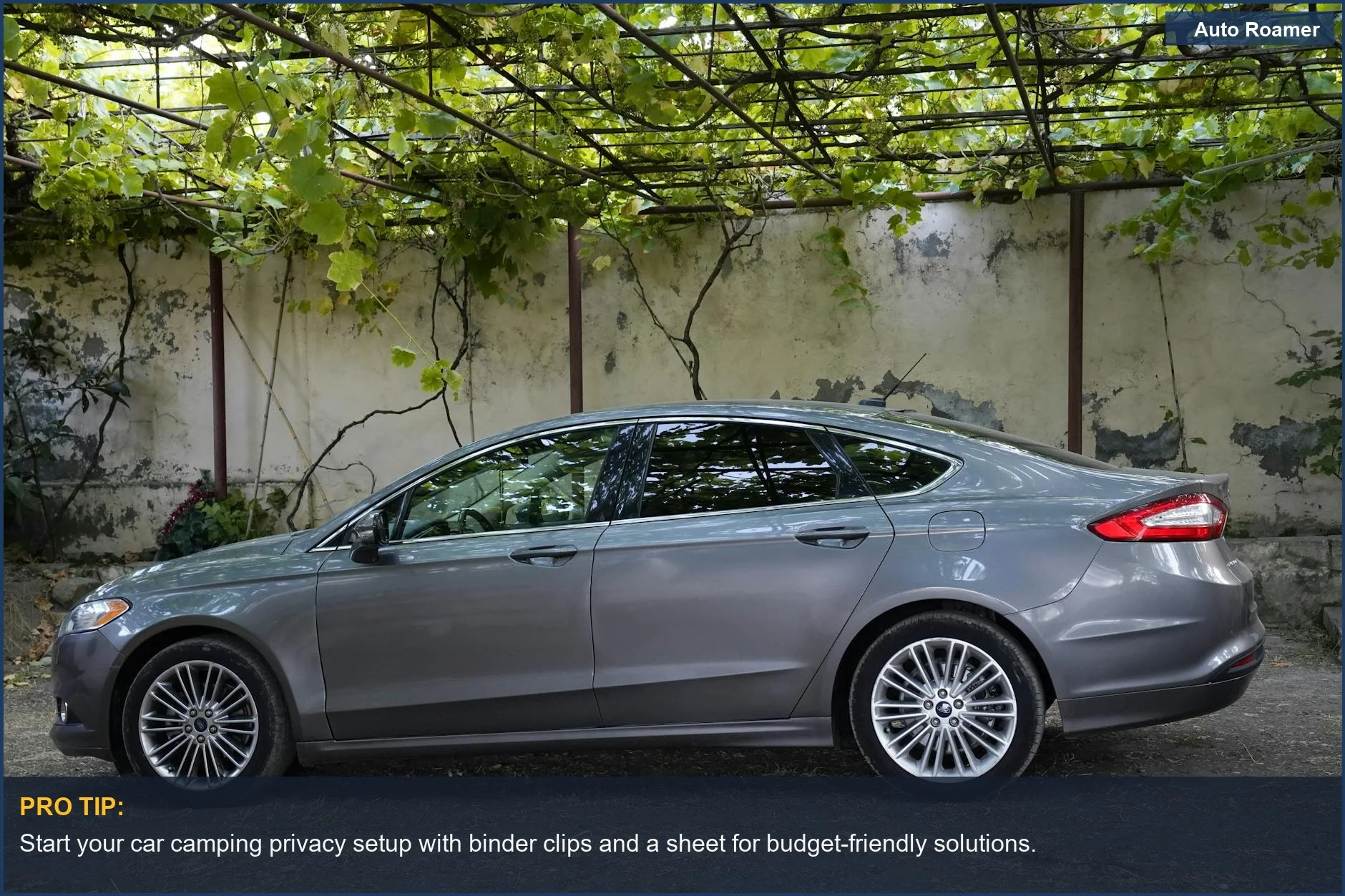
Frequently Asked Questions
I saw some fancy magnetic window covers online for $200. Is it really worth spending $15 on fabric and binder clips instead?
Do I need a special tool to cut the blackout fabric or insulation, or can I just use scissors?
What if my binder clips keep falling off and my DIY curtains sag?
Can using Command strips to attach fabric permanently damage my car's window tint or interior trim?
I heard that reflective insulation can actually make your car hotter inside during the day. Is that true?
🏅 Looking for Gear Recommendations?
Check out our tested gear guides for products that work with this setup:
Sources
- Question for camping in your car— window solutions? - Reddit
- DIY Car Camping Curtains and Privacy Setup - Facebook
- How to set up the Luno Privacy Curtain - YouTube
- Fastest Easiest DIY Car Curtains! | Window Covers for Car Camping
- Simple Easy (Walmart Camping) Privacy Curtains for Your Car!
- Installing fitted privacy blackout curtains, to my DIY camper ...
- How To Build Easy & Cheap Car Camping Curtains For $20 Sleep ...
- Zatooto Car Curtains Installation and First Thoughts - YouTube