Car Accessories

How to Choose the Right Amperage for Your Car Battery Charger

Casey - The Weekend Warrior
4 min read
Includes Video

Picking the right amperage for your car battery charger is like choosing how fast you want to cook dinner. Too low, and you're waiting until breakfast. Too high, and you might burn the whole meal. The real move is finding that sweet spot that gets your battery topped off without turning it into a science experiment gone wrong.

Picking the right amperage for your car battery charger is like choosing how fast you want to cook dinner. Too low, and you're waiting until breakfast. Too high, and you might burn the whole meal. The real move is finding that sweet spot that gets your battery topped off without turning it into a science experiment gone wrong.

I learned this the hard way trying to jump-start my old Civic in a blizzard with a charger that felt like it was whispering sweet nothings to the battery. It took 24 hours. Twenty-four hours! Understanding Amperage and Charge Time is key to avoiding that kind of frozen misery. It's not just about getting juice back into the battery; it's about doing it right.

How to Choose the Right Amperage for Your Car Battery Charger — Key Specifications Compared
Key specifications for How to Choose the Right Amperage for Your Car Battery Charger

The Core Answer

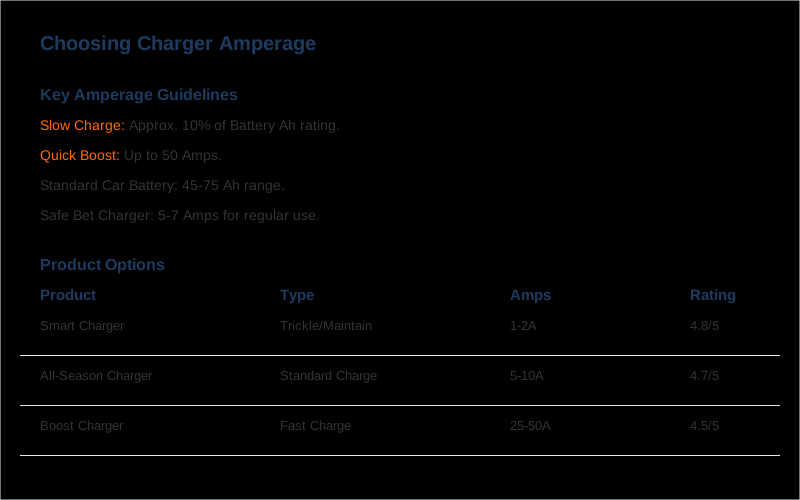
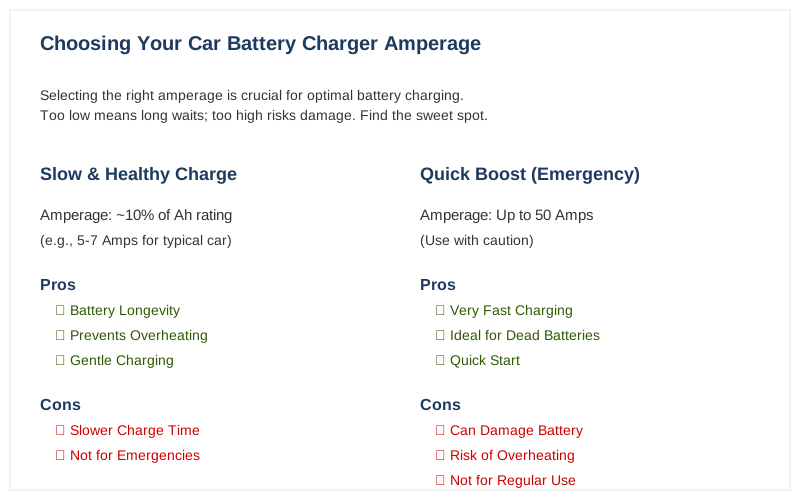
The core answer is that you want an amperage setting that's roughly 10% of your battery's amp-hour (Ah) rating for a slow, healthy charge, or up to 50 amps for a quick boost if you're in a real bind. My first car had a 50Ah battery, so a 5-amp charger was my go-to for overnight top-offs. What Size Battery Charger Do I Need? is the question you should be asking yourself. Most standard car batteries fall into the 45-75 Ah range Check battery label. So, a charger around 5-7 amps is usually a safe bet for regular use. If you're in a hurry, some chargers can go up to 50 amps 20-50 amps. That's game-time stuff when you need to start your car *now*. But be warned, that speed comes at a cost to battery longevity if you do it too often. The real move is to check your battery's label or owner's manual for its specific Ah rating. It's usually printed right there, like a secret code only you and your battery understand. What nobody tells beginners is that a "smart" charger will adjust its output automatically. You don't have to be a rocket surgeon. You just need to know your battery's capacity. A charger rated for 2 amps is great for a motorcycle battery, but it'll take forever for a car battery 2 ampere on whatever small. For a car, you're generally looking at a range of 8-15 amps for a good balance 8 and 15 amps. The honest version? Most people just buy a charger and plug it in. But if you want to avoid buying a new battery every two years, a little knowledge goes a long way.
To ensure you get the best performance, consider how to choose the right battery charger maintainer for your needs.
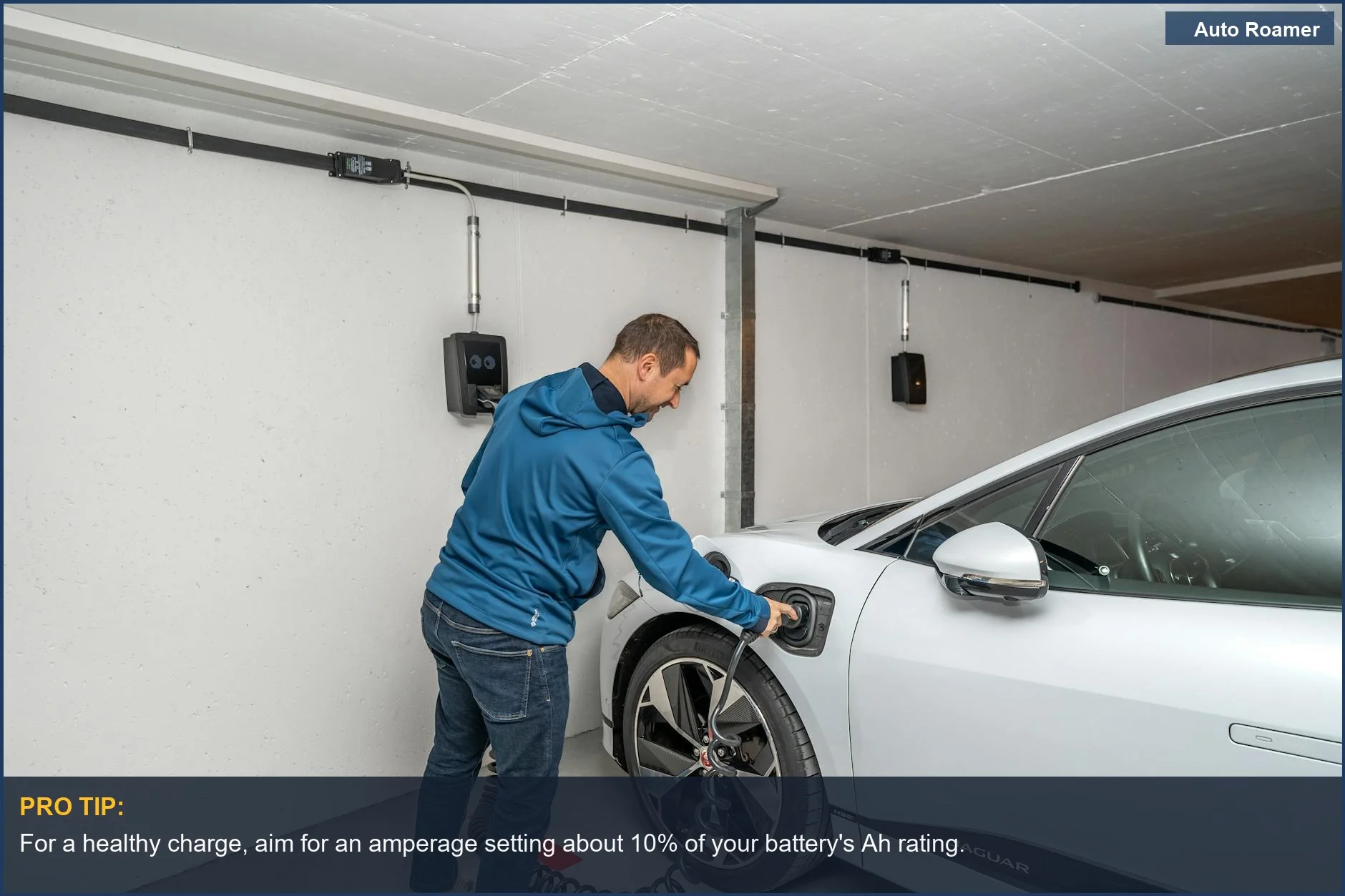
For a healthy charge, aim for an amperage setting about 10% of your battery's Ah rating.
Selecting the right car battery charger amperage is key for efficient charging. A 5-amp charger is ideal for overnight top-offs on a 50Ah battery. | Photo by smart-me AG

Why This Matters for Your Setup

Why this matters for your setup is simple: a charger that's too small will take ages, and one that's too big can stress your battery. I once tried to charge a dead battery in my old pickup with a tiny 2-amp charger I used for my ATV. I think the battery actually lost charge during the process. It was a rookie mistake born of impatience.
  • Slow and Steady Wins the Race (Usually): For routine maintenance or topping off a slightly low battery, a charger with an amperage rating around 10% of the battery's Ah rating is ideal. For a 50 Ah battery, that's about 5 amps. This gentle approach minimizes heat and stress on the battery's internal components, extending its life won't heat up the battery.
  • The "Need to Go NOW" Option: If your battery is seriously depleted and you need to get going quickly, you can use a higher amperage setting, often in the 20-50 amp range 20-50 amps. This is the $50 version of a quick charge, but it's not recommended for daily use as it can shorten the battery's lifespan. Think of it like slamming down a five-course meal in 10 minutes - not great for digestion.
  • Smart Chargers are Your Friend: Most modern chargers are "smart." They monitor the battery's state and adjust the amperage automatically. This takes a lot of the guesswork out of it. You can often leave them connected indefinitely without fear of overcharging remain connected indefinitely. Brilliant engineering, really.
  • Understanding amperage is also crucial when selecting a portable jump starter for emergencies.
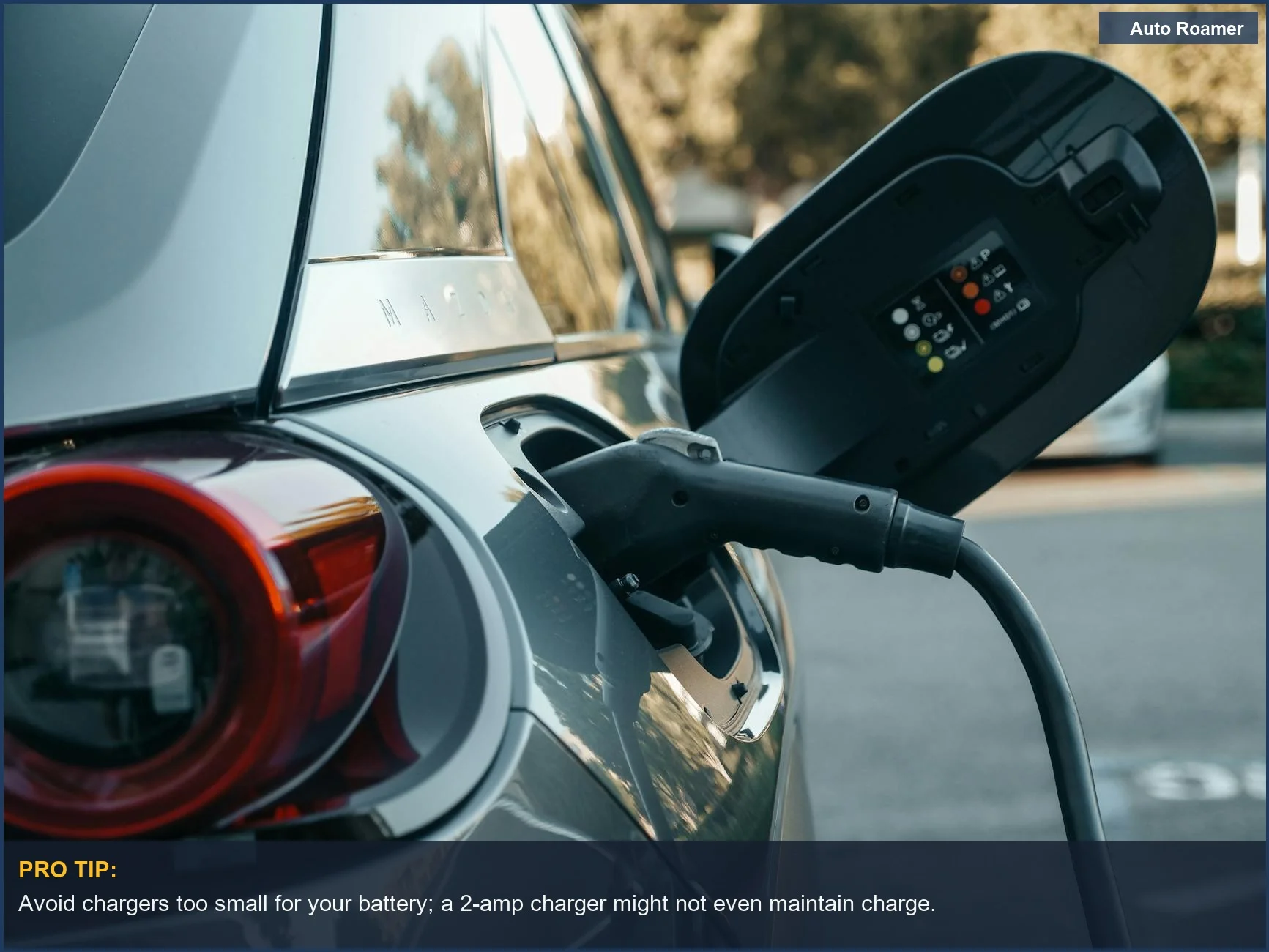
    Avoid chargers too small for your battery; a 2-amp charger might not even maintain charge.
    Understanding charging speed is vital for battery health. A charger that's too small can take excessively long, while one that's too big can stress your battery. | Photo by Kindel Media

    Making the Right Choice

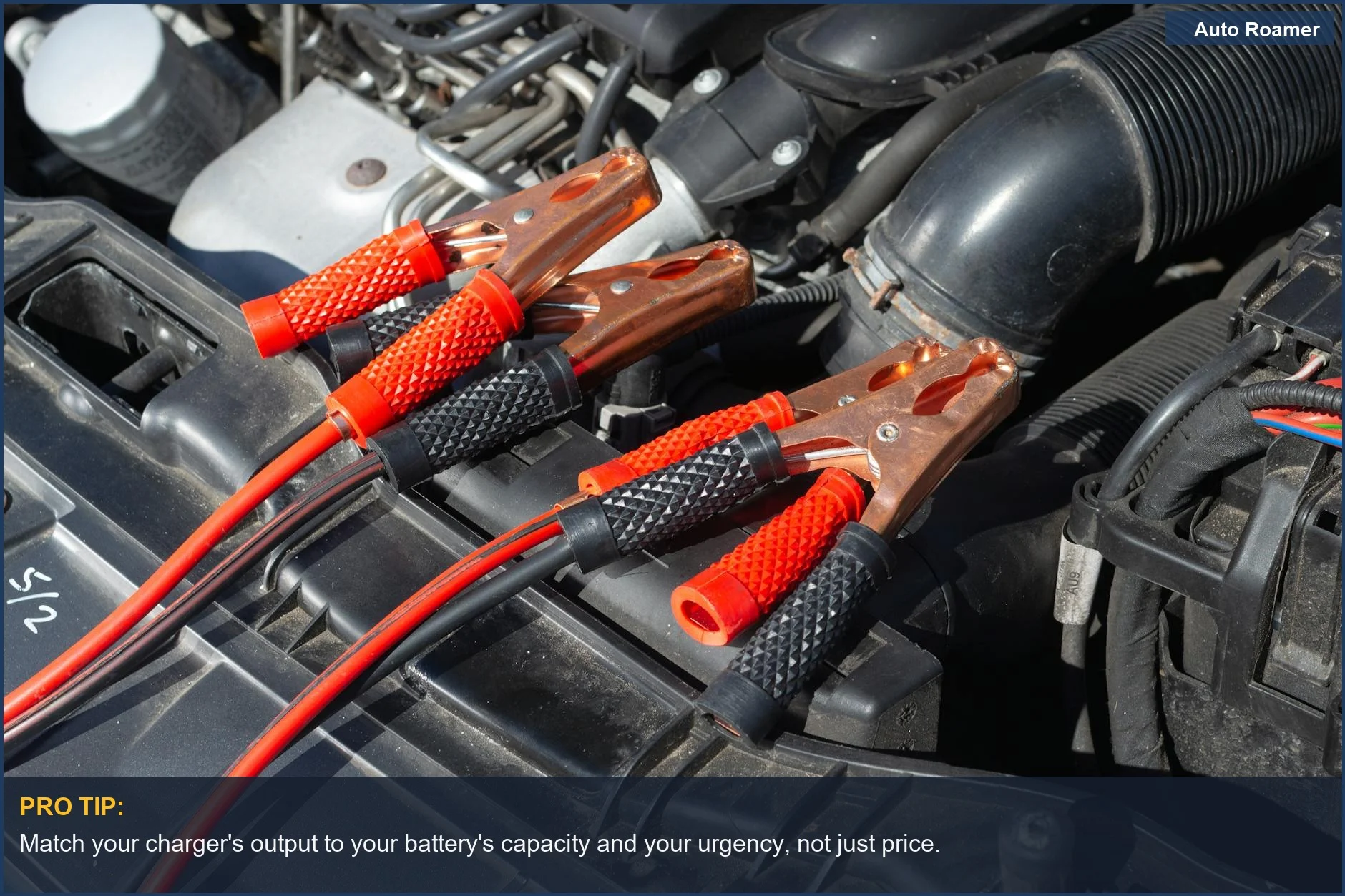
    Making the right choice here is less about having the most expensive gear and more about understanding the basic needs of your car's battery. It's not as complicated as some internet gurus make it out to be. The real move is to match the charger's output to your battery's capacity and your urgency.
  • Know Your Battery's Ah Rating: This is the most critical piece of information. It's usually on the battery itself. A typical car battery is around 45-75 Ah 45-75Ah.
  • Amperage is Speed, but Also Health: Lower amperage (around 10% of Ah) is best for long-term battery health. Higher amperage (20-50A) is for when you absolutely need power *now* fraction of the time. Don't always go for the fastest setting.
  • Smart Chargers Simplify Everything: If you're buying new, a smart charger that can adjust its amperage is your best bet. It's the $100 version of peace of mind, and honestly, worth it if you don't want to become a battery expert overnight.
  • Understanding your battery's needs can also help when selecting the right amperage for a portable jump starter.
    Match your charger's output to your battery's capacity and your urgency, not just price.
    Choosing the right car battery charger amperage is about matching output to your battery's capacity. It's less about expensive gear and more about understanding needs. | Photo by Daniel @ bestjumpstarterreview.com

    Frequently Asked Questions

    My mechanic quoted me $150 to charge my battery, but I can get a charger online for $40. Is it worth the DIY route?
    For a simple battery charge, absolutely. A decent 5-amp smart charger will cost you about $40-$60 online smart battery chargers. If your battery just needs a top-off, doing it yourself saves you a good chunk of change and teaches you something. Just make sure you're not dealing with a battery that needs replacing, or you'll be throwing good money after bad.
    Do I really need one of those fancy digital multimeters to check my battery's voltage before charging?
    Honestly, for just charging, probably not. If you have a smart charger, it does most of the thinking for you. A multimeter is great for diagnosing deeper issues, but if your car won't start and your battery is old, just hook up a charger. The real move is to use the charger's indicator lights, which tell you if it's charging, fully charged, or if there's a fault. Save the multimeter for when you’re feeling extra nerdy.
    What if I accidentally hook up the charger backwards? My hands were numb from the cold and I might have mixed up the clamps.
    Whoops. If you hook it up backwards on most modern smart chargers, nothing will happen because they have reverse polarity protection. If you have an older, dumb charger, you could fry the charger, damage the battery, or even blow a fuse. The honest version: double-check those clamps. It’s better to spend an extra 30 seconds making sure than a few hundred dollars replacing fried electronics.
    Can charging my battery with too high an amperage permanently damage it?
    Yes, it absolutely can. Using an amperage that's way too high for an extended period generates excessive heat, which is the enemy of battery life. It can warp the internal plates and reduce the battery's capacity over time, essentially shortening its lifespan. Think of it like trying to boil water by holding a lighter to the pot – you’ll eventually get there, but you’ll melt the pot in the process.
    I heard you should never charge a dead battery because it's dangerous. Is that true?
    That's mostly an old wives' tale from when chargers were less sophisticated. Modern smart chargers are designed to handle batteries in various states of discharge. While a completely dead battery might take a very long time to recharge, it's not inherently dangerous with the right equipment. The real danger comes from trying to jump-start a severely discharged battery with a running car, which can cause voltage spikes.

    🏅 Looking for Gear Recommendations?

    Check out our tested gear guides for products that work with this setup:

    C

    Casey - The Weekend Warrior

    Weekend car camper and road trip enthusiast. Focuses on practical, budget-friendly solutions for families and first-time campers.

    Sources

    Related Articles