How to Check Tire Tread Depth at Home: The Tests That Actually Work
Auto Roamer
12 min read
Includes Video
The rain hit the highway hard, and suddenly, the car felt like it was floating. Hydroplaning. Even though the tread on the tires *looked* fine from a distance, the reality was starkly different. That quick glance gave a false sense of security, a dangerous gamble when you're miles from anywhere.
The rain hit the highway hard, and suddenly, the car felt like it was floating. Hydroplaning. Even though the tread on the tires looked fine from a distance, the reality was starkly different. That quick glance gave a false sense of security, a dangerous gamble when you're miles from anywhere. We've all been there, relying on visual checks that just don't tell the whole story about your tire tread depth. The old penny test, while widely known, often leaves you guessing. It's a decent starting point, but it can't definitively tell you if you're still safe, especially in wet conditions. The minimum legal tread depth in most states is 2/32 of an inch TireMart.com, and with that little tread, your braking distances can nearly double MotorTrend. That's why knowing how to accurately check your tire tread depth at home is crucial for safety.
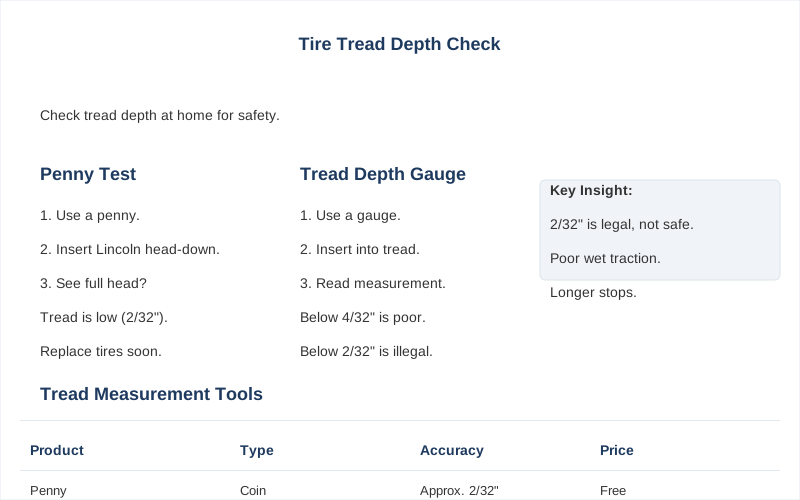
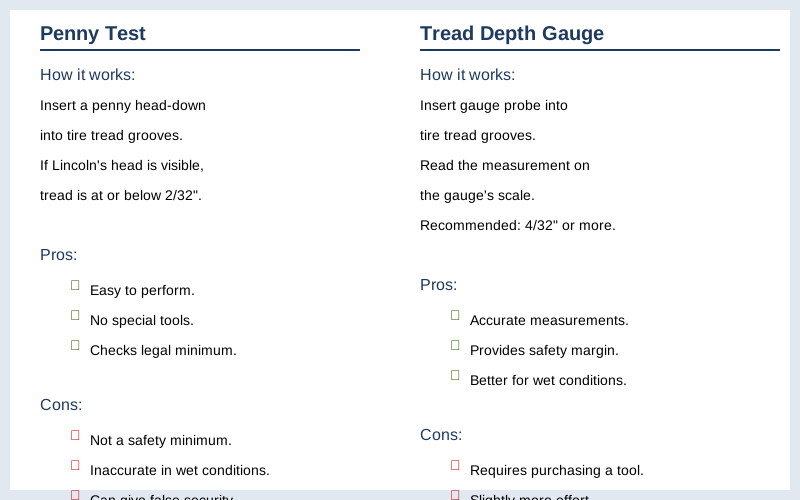
Key specifications for how to check tire tread depth at home using the penny test and tread depth gauge
The Short Answer
The penny test is a legal minimum, not a safety minimum. While 2/32 inch of tread is legally acceptable in most states, it offers dangerously poor traction in wet conditions, significantly increasing stopping distances.
We've all seen the penny test: stick Lincoln head-down into the tread. If you can see his whole head, your tires are at or below 2/32 inch and legally need replacement TireMart.com. This is the DOT standardNHTSA, but it's a false sense of security. Tests show that at 2/32 inch, braking distances from 70 mph can nearly double MotorTrend. That's the difference between stopping safely and a serious accident.
For safe wet weather driving, aim for at least 4/32 inch of tread. The quarter test is a much better indicator for this. Insert a quarter into your tire tread with Washington's head facing down. If you can see the top of his head, your tread is below 4/32 inch Goodyear Auto Service. This is the depth where tires can effectively channel water away, preventing hydroplaning.
A dedicated tire tread depth gauge is the most accurate way to check. These inexpensive tools (Discount Tire) offer precise measurements, unlike coins. Always check multiple spots across each tire's circumference, as wear can be uneven due to alignment or inflation issues.
To ensure optimal safety, it's important to understand the full scope of tire maintenance found in our complete guide.
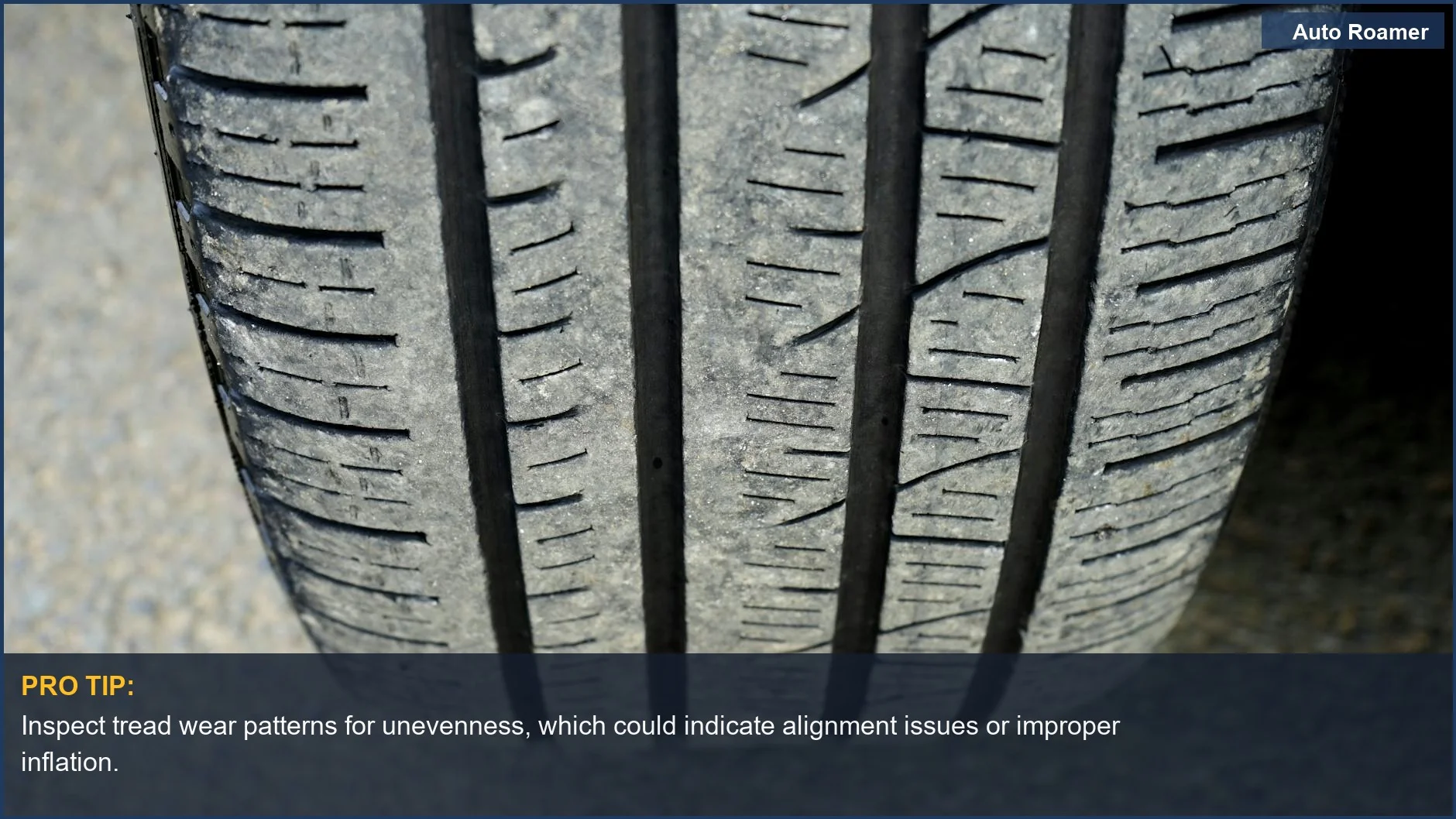
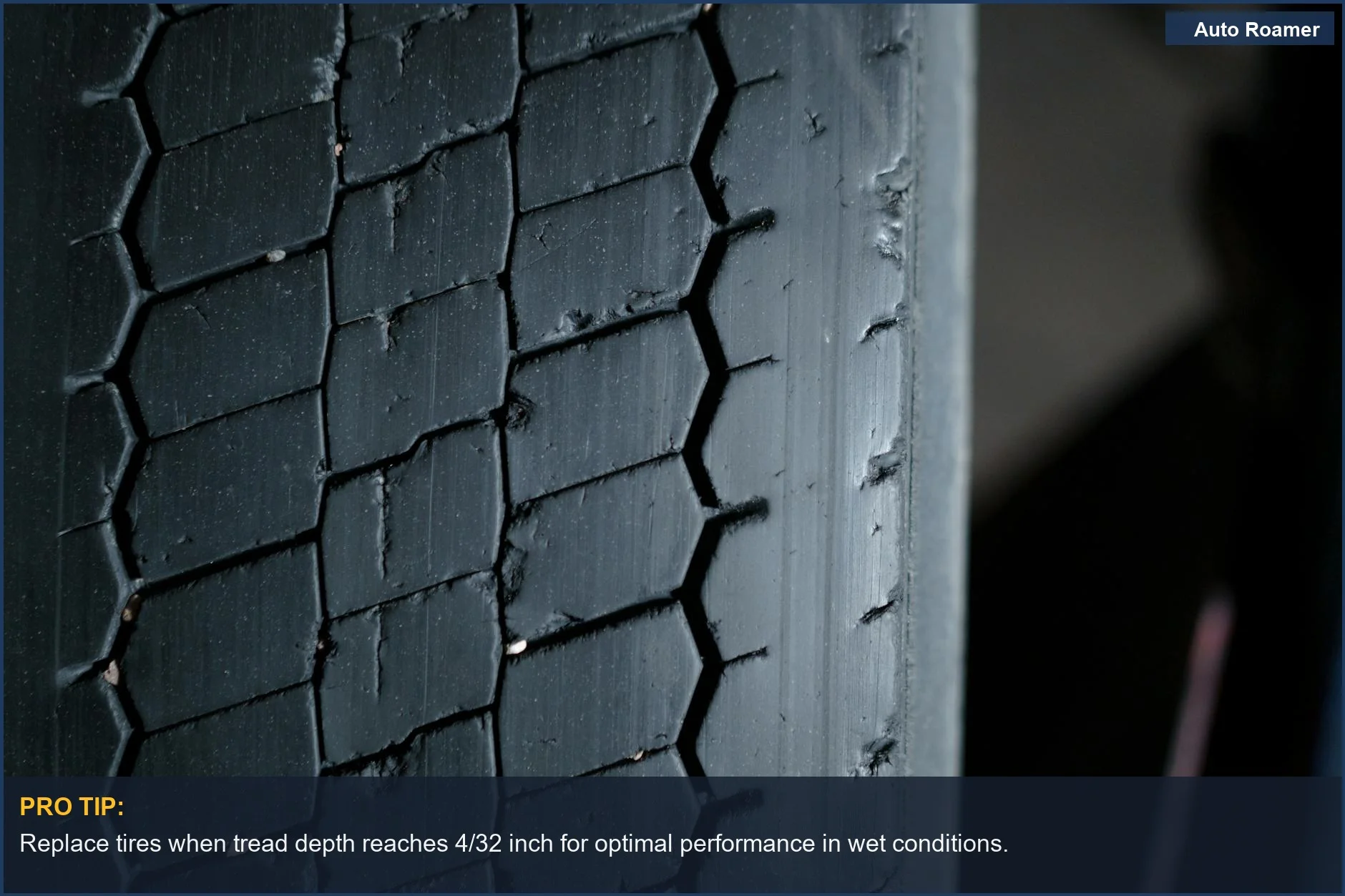
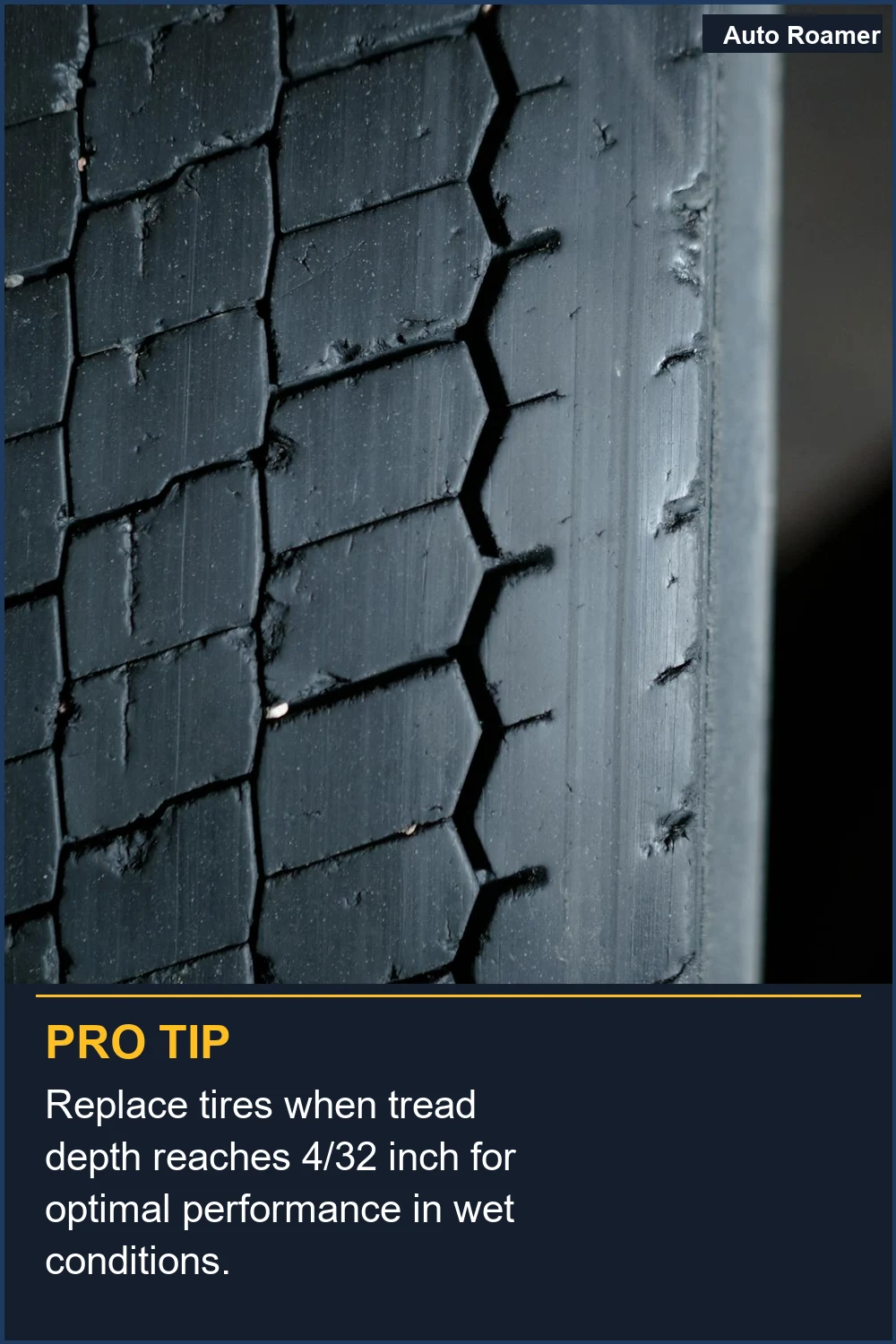
This worn tire tread shows the importance of knowing when to replace tires. Don't wait until it's too late for safety.
| Photo by Mike Bird
This worn tire tread shows the importance of knowing when to replace tires. Don't wait until it's too late for safety.
| Photo by Mike Bird
What You Need to Know
1
Tread depth gauge - A dedicated tread depth gauge is a cheap and accurate tool, costing around $3. It's far more precise than any coin test and gives you a direct measurement in 32nds of an inch. This is the best way to know your exact tread depth.
2
Penny test for 2/32 inch - The penny test is a quick check for the minimum legal tread depth. Insert a penny into a tread groove with Lincoln's head facing down. If you can see the entirety of Lincoln's head, your tread is at or below 2/32 of an inch, the legal minimum in most states Tire Rack. The NHTSA confirms 2/32 inch as the standard for treadwear indicators.
3
Quarter test for 4/32 inch - For better wet traction, we recommend the quarter test. Insert a quarter into the tread groove with Washington's head facing down. If you can see the top of Washington's head, your tread depth is below 4/32 of an inch. Testing shows braking distances nearly double when tread drops from new to 2/32 inch, and are significantly longer even at 4/32 inch compared to new tires MotorTrend. This 4/32 inch threshold is crucial for safe driving in rain.
4
Read tread wear indicators - Look for small raised bars molded into the bottom of the main tread grooves. These are called tread wear indicators (TWIs). When the surrounding tread is worn down to the same level as these bars, your tires have reached 2/32 inch of tread depth NHTSA. This is a visual cue that your tires are legally worn out.
5
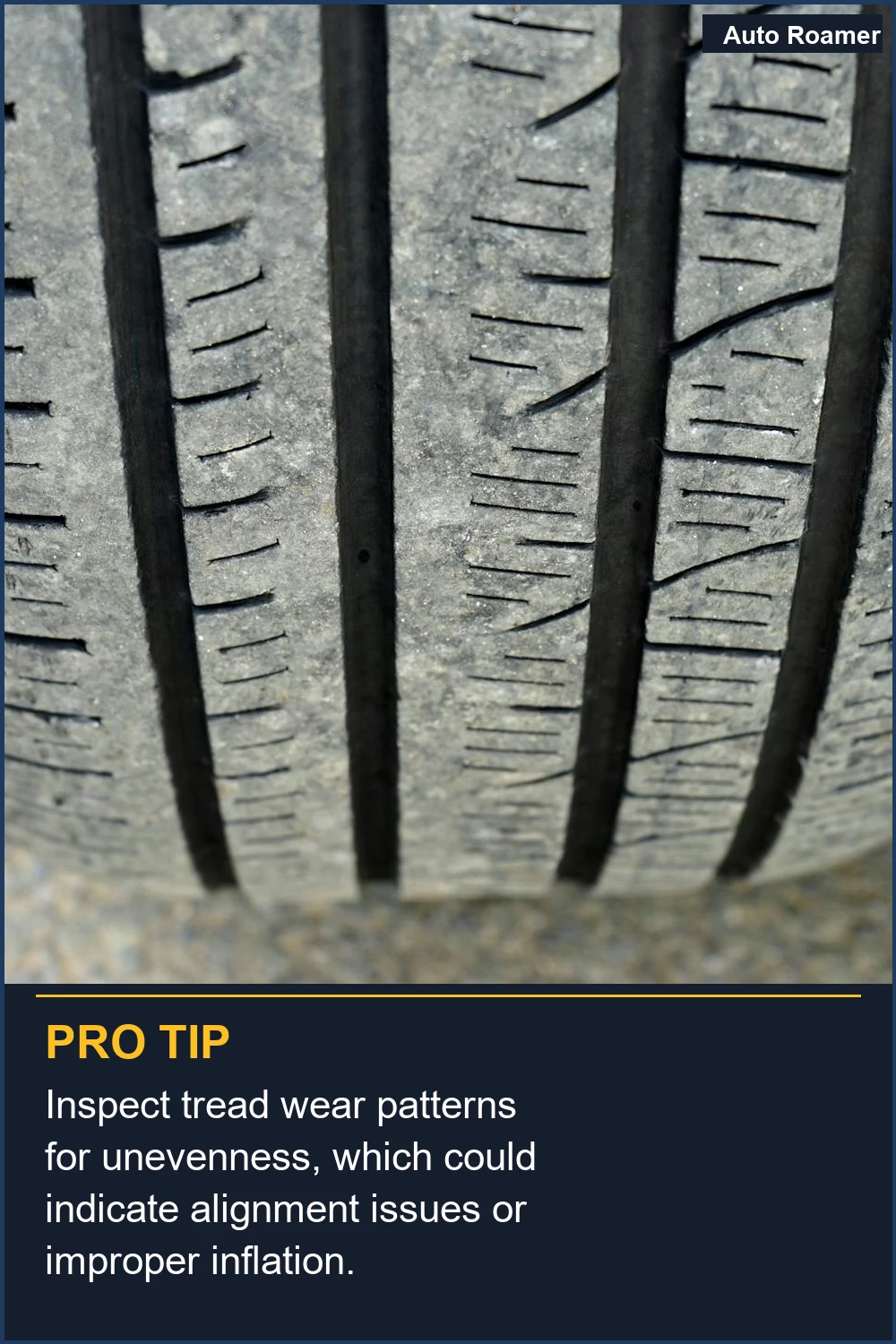
Check for uneven wear - Uneven wear patterns are a red flag. If you see excessive wear on the edges of the tread, it could indicate underinflation. If the center of the tread is worn more than the edges, it might be overinflation. Wear on only one side of the tread often points to alignment issues. SUVs, trucks, and vans can experience different wear patterns due to their weight and suspension systems, so inspect all tires thoroughly. Ignoring these signs can lead to premature tire failure and compromised handling.
6
Winter tire depth matters - While 2/32 inch is the legal minimum, and 4/32 inch is recommended for wet safety, winter tires need more depth for snow and ice traction. Manufacturers and Tire Rack often recommend replacing winter tires when they reach 5/32 or 6/32 inch to maintain optimal performance in cold conditions. Even in states like Texas, where tread wear can be accelerated by heat, maintaining adequate tread depth is critical for all-season tires Tire Rack.
To ensure your tires are road-ready, it's also essential to know how to check tire pressure, which you can learn about here.
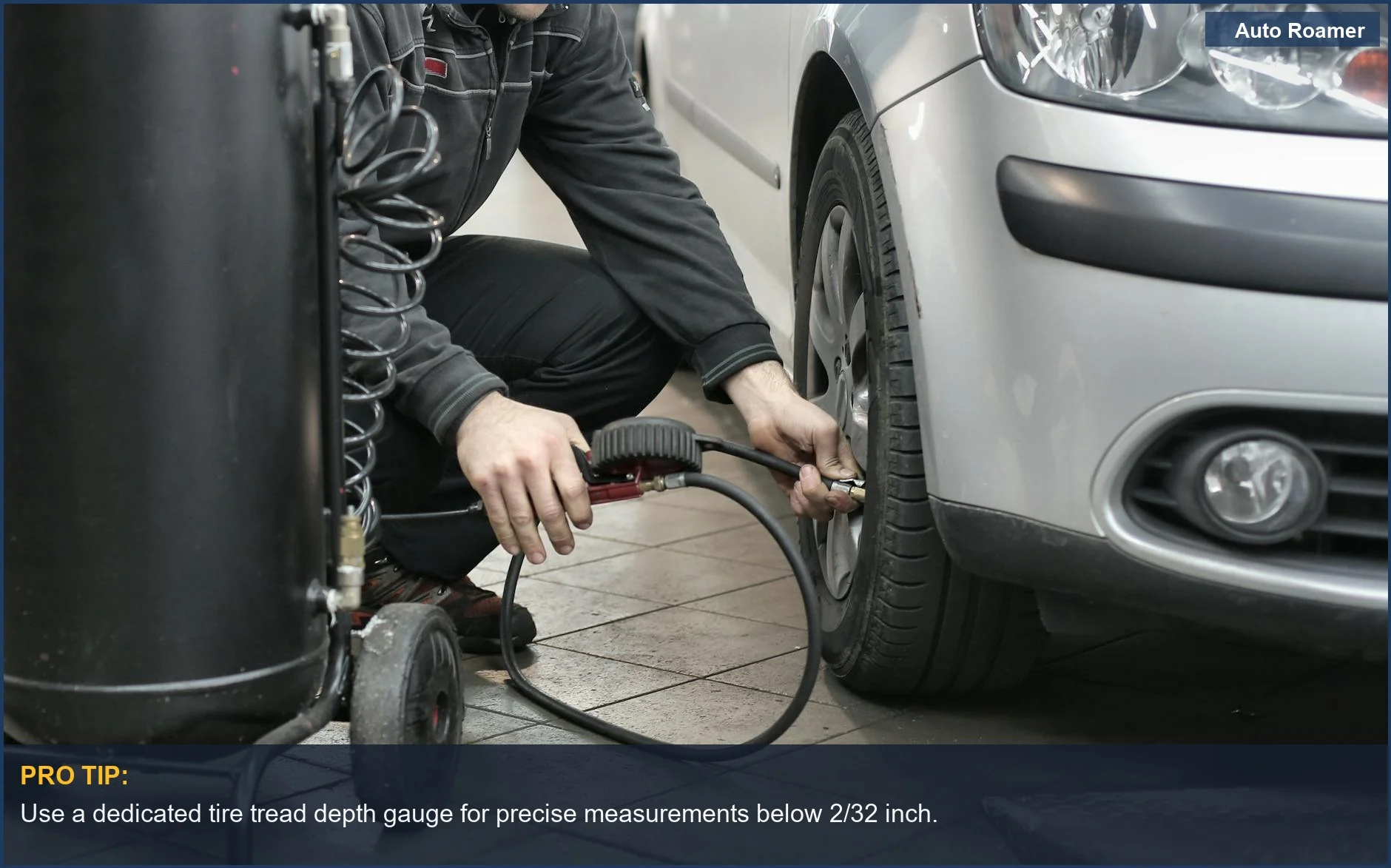
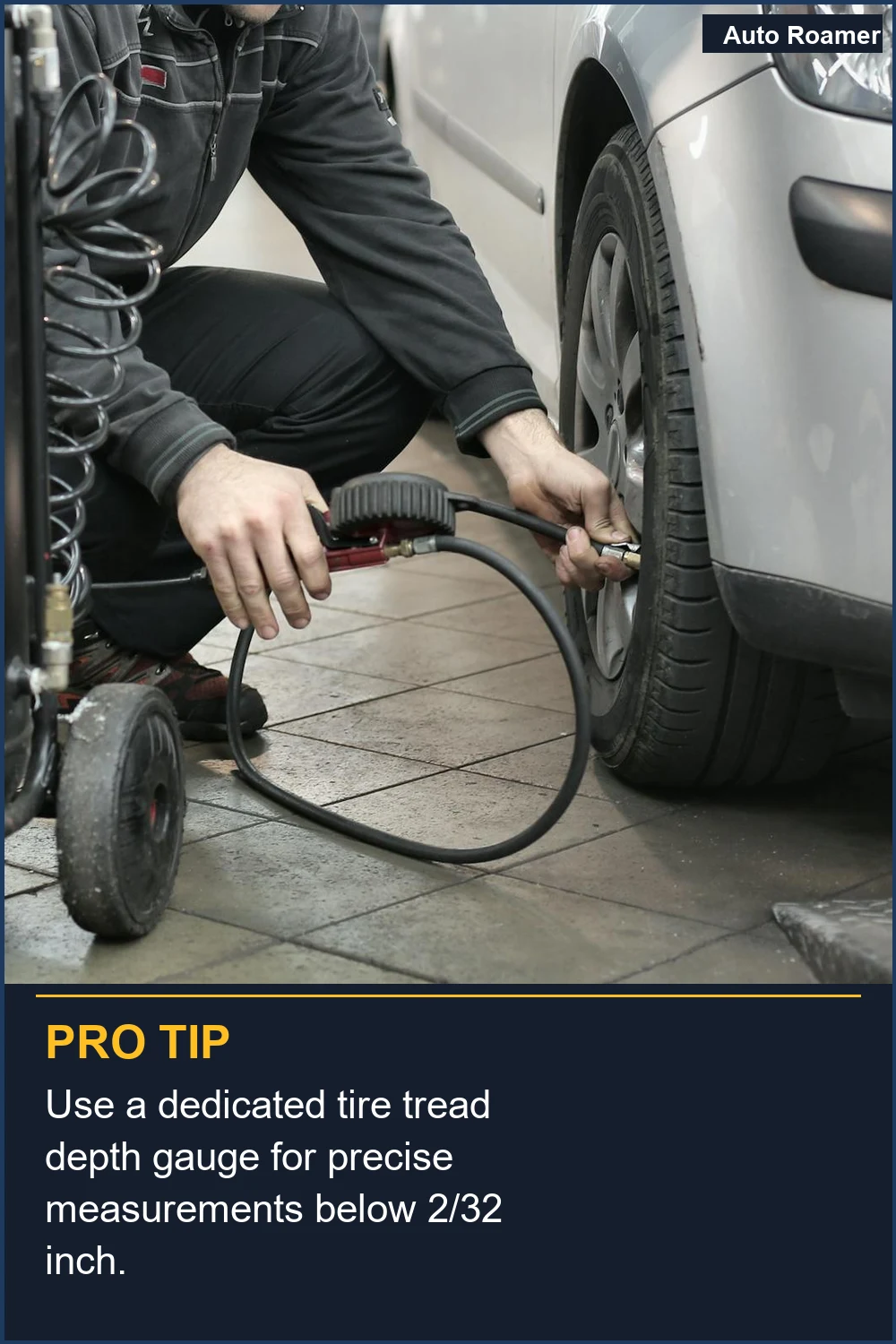
A tire tread depth gauge provides a reliable way to check your tires' condition, ensuring you know their exact wear level.
| Photo by Andrea Piacquadio
A tire tread depth gauge provides a reliable way to check your tires' condition, ensuring you know their exact wear level.
| Photo by Andrea Piacquadio
How to Handle This
1
Check tread depth in three spots. Insert a penny head-down into the tread groove. If you can see all of Lincoln's head, your tread is 2/32" or less, which is the legal minimum in most states TireMart.com. Failing to check multiple spots, especially the outer edges, can lead to a false sense of security. We've seen tires that look okay in the center but are bald on the shoulders, a common issue on front-wheel-drive cars due to steering and engine weight. This uneven wear drastically reduces grip, particularly in wet conditions.
2
Use a quarter for better wet grip assessment. While the penny test checks the legal minimum of 2/32", it's not enough for safe driving in rain or snow MotorTrend. Insert a quarter head-down into the tread. If you can see any part of Washington's head, you have less than 4/32" of tread. This 4/32" threshold is crucial because braking distances nearly double when tread drops to 2/32" in wet conditions, as demonstrated in tests MotorTrend. Skipping the quarter test means you might be driving on dangerously worn tires without realizing it, especially during unexpected downpours.
3
Invest in a tread depth gauge for accuracy. Coins are convenient, but a dedicated tread depth gauge, often costing around $3, provides a precise measurement Bridgestone. To read it, insert the probe into a tread groove and press the gauge's shoulders flat against the tread block to get an accurate reading. Relying solely on coins can be misleading, especially with different tread patterns or wear characteristics. Not using a gauge means you're guessing, which is a risky gamble on the highway, particularly at night or in foggy conditions where visibility is already reduced.
4
Differentiate between rotation and replacement needs. If you find uneven wear, like balder edges on a front-wheel-drive car, it's a sign for alignment and tire rotation. However, if the tread depth across the entire tire, or even in specific spots, consistently falls below 4/32" (using the quarter test), it's time for replacement, not just rotation. Front tires, especially on front-wheel-drive vehicles, typically wear faster due to steering and braking forces. Ignoring this distinction means rotating worn tires to the rear, where they can still cause hydroplaning issues, or worse, delaying replacement and risking tire failure.
Understanding how to check your tire tread can be complemented by learning to decode the information on your tire’s sidewall, as explained in tire sidewall numbers.
The penny test tires method is a quick home check. If you see all of Lincoln's head, your tread is at 2/32 inch.
| Photo by cottonbro studio
The penny test tires method is a quick home check. If you see all of Lincoln's head, your tread is at 2/32 inch.
| Photo by cottonbro studio
What This Looks Like in Practice
Commuter in a Toyota Camry racks up significant annual mileage. We've seen tires on these common sedans start to show considerable wear after just three to four years of service, even with regular rotations. This is especially true if the commuter is driving a substantial distance each year, approaching the mileage where tire replacement is typically considered.
Road tripper with heavy gear and frequent highway miles. Loading up a vehicle like a Honda CR-V with camping equipment and hitting the road for long stretches can lead to faster edge wear. The constant high speeds and added weight put a strain on the tire's sidewalls and outer tread blocks.
Driver in a hot climate, like Texas, pushing their vehicle through extreme temperatures. The intense heat can accelerate the degradation of tire compounds, leading to a noticeable increase in tread wear. This means tires may not last as long as they would in more temperate regions.
Winter driver in a Subaru Outback navigating snowy mountain passes. For safe traction in snow and slush, a tire needs substantial tread depth. The penny test, which checks for 2/32 inch of tread, is the legal minimum but offers minimal grip in slick conditions. For winter driving, having tread that covers more of George Washington's head when using the quarter test, indicating at least 4/32 inch, is far more crucial for safety Tire Rack. If you can see his entire head, it may be time to replace the tire because it has reached the end of its useful life How to Check Tire Tread Depth: The Penny Test.
REAL_SCENARIOS:
The penny test is straightforward: insert a penny into a tread groove with Lincoln's head facing down. If you can see the top of his head, your tread is at or below 2/32 of an inch, the legal minimum in most states Tire Tread Depth for Dummies. For better wet weather performance, use a quarter. Insert it with Washington's head facing down. If the tread touches the top of his head, you have at least 4/32 of an inch of tread remaining Check Tire Tread Depth - Goodyear Auto Service.
A simple tire tread depth gauge, available at most auto parts stores, offers a more precise measurement. Insert the probe into the deepest part of the tread groove and read the measurement on the gauge. Always check in multiple spots around the tire, as wear can be uneven. If any area fails the penny test, it's time to consider replacement, even if other parts of the tread are deeper. Uneven wear can indicate underlying issues like improper inflation or alignment that need addressing How to Check Tire Tread Depth: The Penny Test.
Understanding tire tread depth is crucial, especially when you might need to know how to change a flat tire, so here's our guide on changing a flat tire.
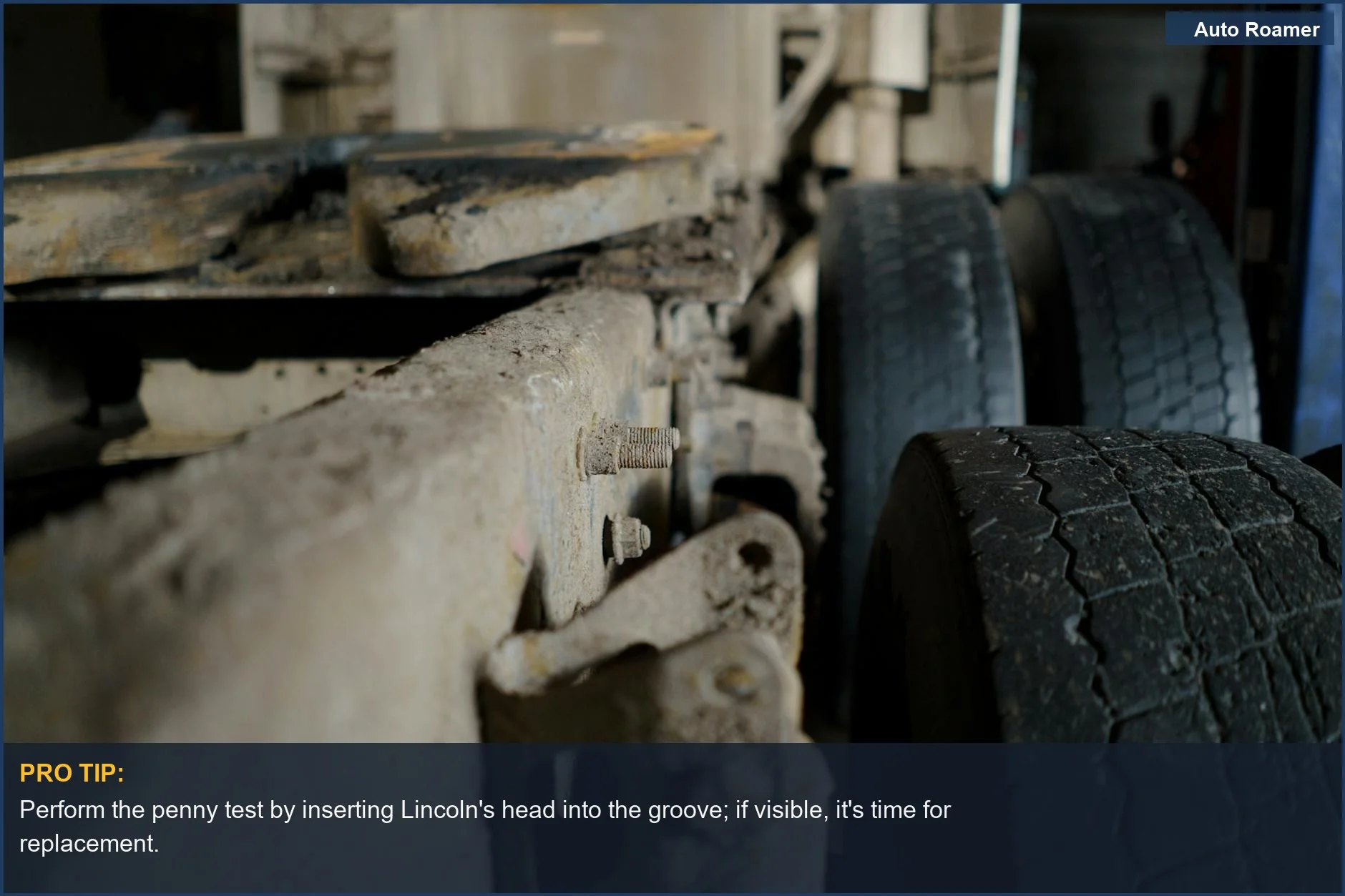
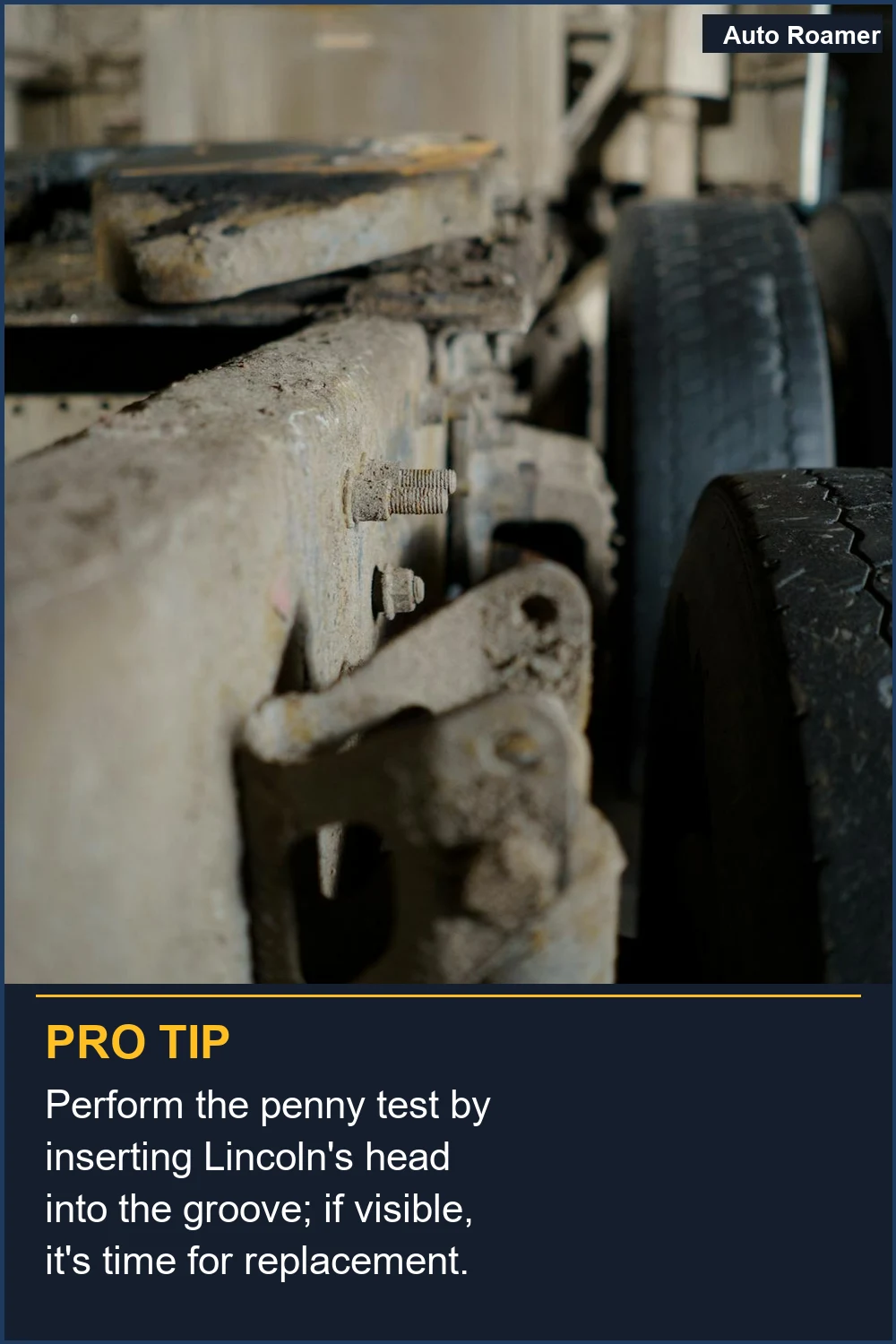
This worn tire tread clearly shows the need to check tire tread depth regularly, especially for high-mileage vehicles.
| Photo by cottonbro studio
This worn tire tread clearly shows the need to check tire tread depth regularly, especially for high-mileage vehicles.
| Photo by cottonbro studio
Mistakes That Cost People
Here are common mistakes people make when checking tire tread depth at home.
Symptom Only checking the center tread.
Signal Visible tread in the middle, but edges look bald.
Fix Always check tread depth in at least three spots across the entire tread width - inside, middle, and outside. Uneven wear can indicate alignment or inflation issues. Bridgestone notes to pay special attention to the most worn areas.
Symptom Relying solely on the penny test.
Signal Seeing Lincoln's head is the only indicator you use.
Fix The penny test only tells you if you're at or below 2/32 inch of tread, which is the legal minimumin most states, Goodyear. However, stopping distances on wet roads are significantly impacted even at 4/32 inch. MotorTrend research shows braking distances nearly double when tread drops from 4/32 to 2/32 inch. Use a quarter for a better indicator - if you can see Washington's head, you have less than 4/32 inch of tread remaining.
Symptom Forgetting to check tread before a trip.
Signal Experiencing a blowout or poor traction in adverse weather conditions miles from help.
Fix Always perform a thorough tread depth check before any significant road trip, especially if you're carrying heavy gear or heading into unpredictable weather. This proactive step can prevent dangerous situations and costly delays.
Symptom Replacing all four tires when only two are worn.
Signal Two tires have significantly less tread than the other two.
Fix Unless your vehicle requires identical tires on all four wheels (check your owner's manual), you can often replace tires in pairs on the same axle. This saves money and addresses the immediate need. However, understand which axle wears tires faster on your specific vehicle (FWD vs. RWD).
Symptom Ignoring the spare tire's tread.
Signal Needing to use your spare only to find it's as worn as your main tires.
Fix Your spare tire is your lifeline in an emergency. Treat it like any other tire and regularly check its tread depth. A worn spare is almost as useless as no spare at all.
Symptom Trusting tire wear indicators on older vehicles.
Signal Relying on the built-in wear bars without further measurement.
Fix While NHTSA standards mandate treadwear indicators at 2/32 inch, these are a legal minimum, not a safety recommendation. Newer vehicles might have more advanced wear indicators, but always verify with a gauge or coin test. The 4/32 inch mark is a more realistic threshold for safe wet-weather performance.
To ensure safe driving, it's also crucial to monitor your tire pressure regularly.
Comparison overview for how to check tire tread depth at home using the penny test and tread depth gauge
Key Takeaways
Buy a $3 tread depth gauge and check your tires monthly. It's far more reliable than guessing with coins.
The penny test only confirms you're above 2/32 inch, which is often too low for safe driving, especially in rain bridgestone.com. A quarter test is better, indicating 4/32 inch when Washington's head is covered Check Tire Tread Depth - Goodyear Auto Service.
The single most important thing to remember is that 4/32 inch is the real minimum for safe wet weather driving. Don't wait until you're at the legal limit of 2/32 inch to replace your tires.
Knowing how to check your tire pressure can be crucial, especially if you need to change a flat tire on the highway, so here’s how to change a flat tire.
Frequently Asked Questions
How often should I be checking my tire tread depth?
Honestly, I check mine every time I fill up with gas, especially before a long haul. It's a quick visual check that takes seconds. For a more precise measurement, I'll do a deeper dive with a gauge once a month or if I've hit some rough terrain, like after that washboard road in Big Bend last spring.
Is that penny test really accurate enough?
The penny test is a decent starting point, but it's really just for the bare minimum. If you stick a penny in with Lincoln's head down and can see his whole head, you're at 2/32" or less, which is legally worn out in most places NHTSA. For anything more serious, especially in wet conditions, I'd trust a quarter or a proper tread depth gauge. The quarter test, with Washington's head down, shows you have about 4/32", which is a much safer threshold for stopping distances MotorTrend.
What's the absolute minimum tread depth I can legally drive with?
In most US states, the legal minimum tire tread depth is 2/32 of an inch. If you can see the top of Lincoln's head when you do the penny test, you're likely at or below this limit Reddit. However, the National Highway Traffic Safety Administration (NHTSA) considers 2/32" to be the point where tires are legally worn NHTSA, and frankly, you'll experience significantly longer stopping distances in the rain at that point.
Do all four tires wear out at the same speed?
Almost never. Front tires, especially on front-wheel-drive vehicles like my old Subaru Outback, take a beating from steering and braking, so they usually wear faster. Rear tires on those can look almost new while the fronts are shot. Even with all-wheel drive, you'll see differences depending on your driving habits and vehicle alignment.
Is it okay to keep driving if my tires have different amounts of tread?
It's not ideal and can be dangerous. Uneven tread wear often signals underlying issues like improper inflation, a bad alignment, or suspension problems that need fixing. Driving on tires with significantly different tread depths can affect your vehicle's handling and braking, especially in wet conditions, so I'd get it checked out sooner rather than later.
🏅 Looking for Gear Recommendations?
Check out our tested gear guides for products that work with this setup: