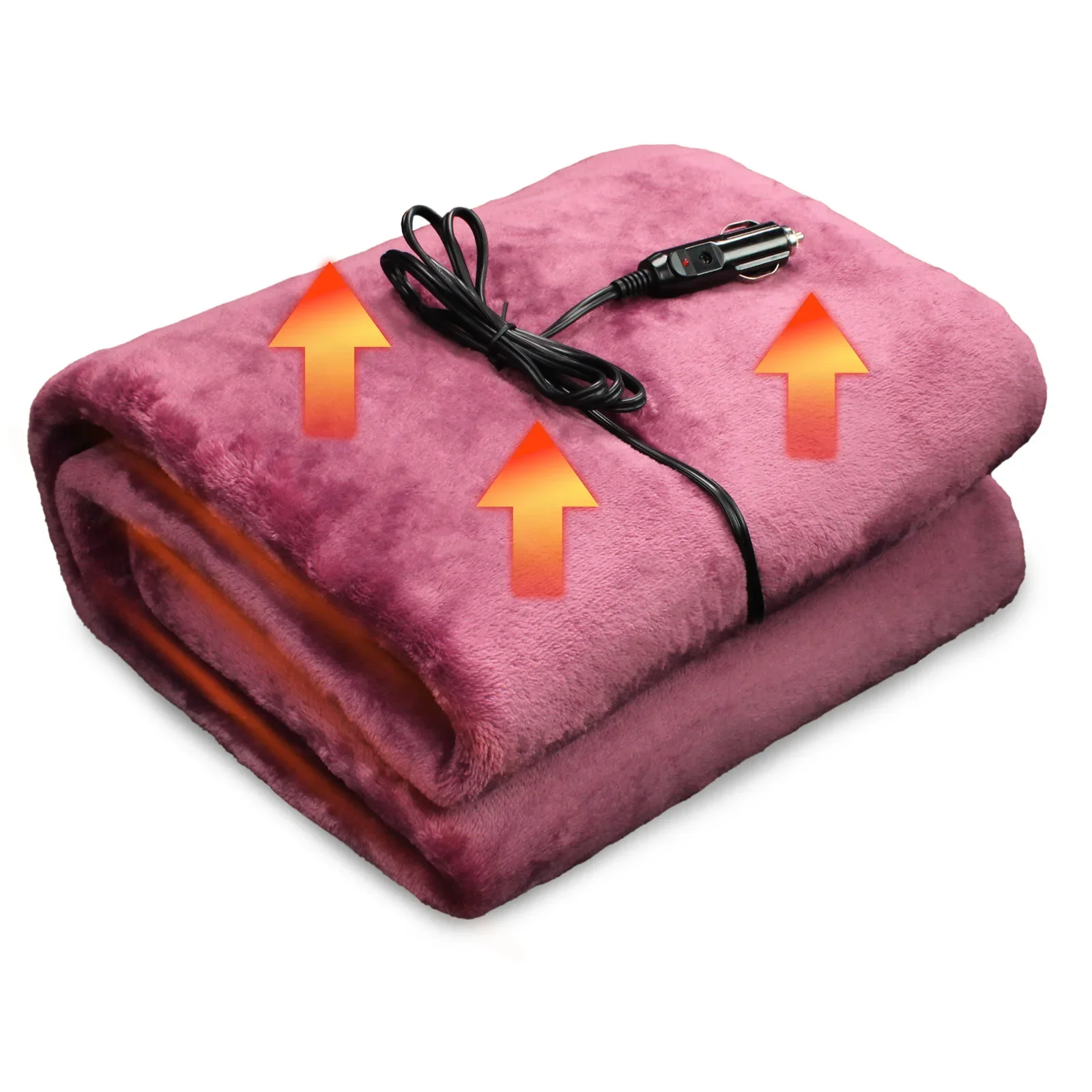
The short version: a blanket drains a battery fast
A 12V heated blanket pulls 35 to 60 watts of continuous resistance heat, so a car's starter battery runs one for only about three to five hours before you risk not being able to start in the morning - roughly nine times faster than the same battery would run a fan.
That's the answer up front, because the marketing never leads with it. A heated blanket feels like a small, cozy thing, but electrically it's the opposite of a fan: where a fan moves air for a few watts, a blanket makes heat, and making heat is the most expensive thing you can ask a battery to do. Engineer it like a system and the trade-off is stark - warmth on one side, your next engine start on the other.
This page works the real numbers: what a 12V blanket actually draws, how much of your battery you can safely spend before you can't crank the engine, a runtime table you can read straight off, why the auto-shutoff timer matters more than the wattage, and where the honest answer stops being the car battery and becomes a deep-cycle reserve. Every figure is source-linked; the runtime hours are arithmetic from published draws, not a number I made up.
Why a heated blanket is the worst overnight load
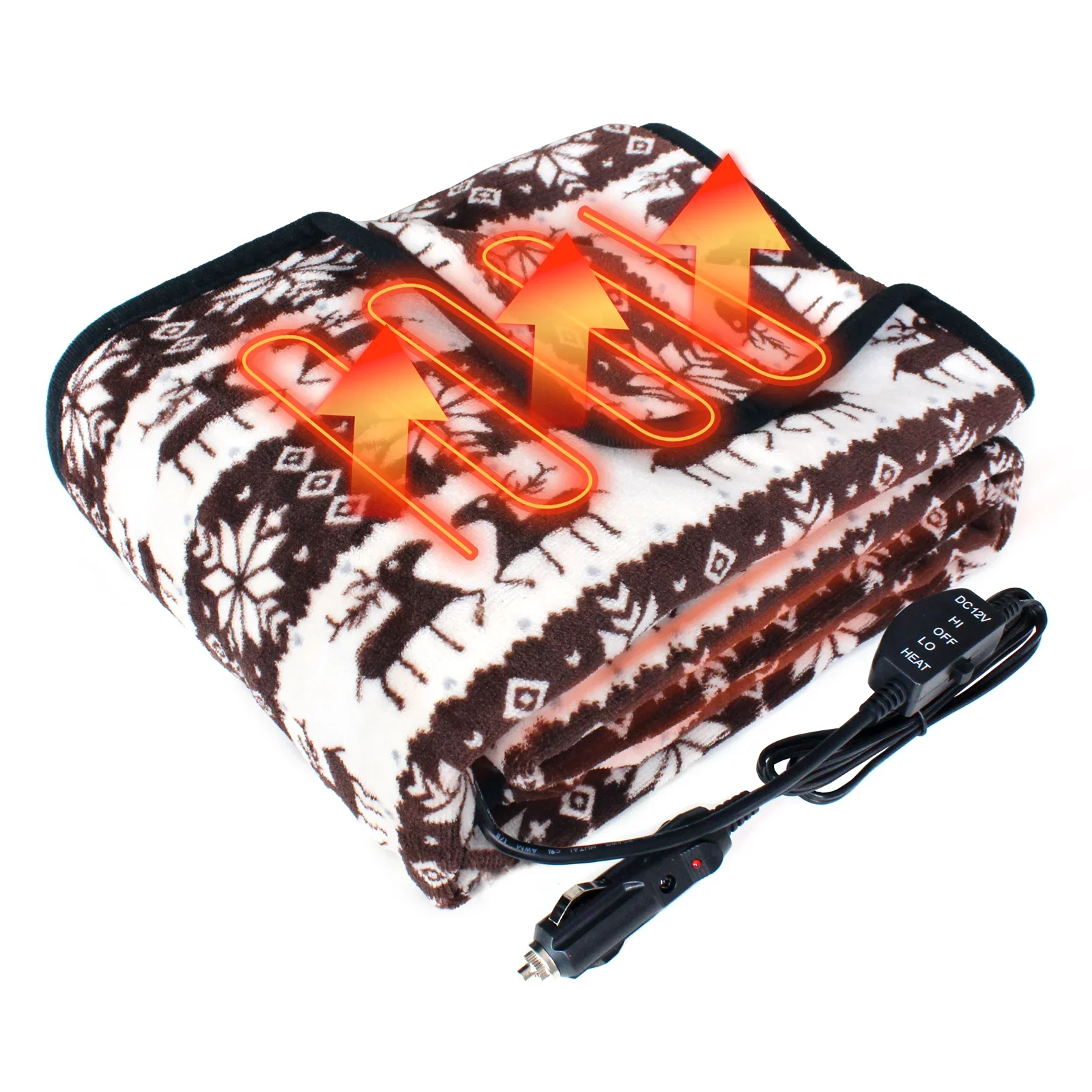
Start with the physics, because it explains every number below. A heating element has no low-power mode the way a motor does - it turns electricity straight into heat, and it draws its full rated wattage the entire time it's on. There's no coasting, no light setting that sips power. That's what makes resistance heat the single worst load to hang on a starter battery.
Compare the two loads a car camper actually plugs in:
- A fan moves air for 2.5 to 10 watts and can run for dozens of hours off a safe reserve.
- A blanket makes heat for 35 to 60 watts and does it continuously - no duty cycle unless a timer forces one.
- Anything with an element - blanket, mug warmer, kettle, seat heater - lives in this same expensive category. Heat is heat.
So the blanket isn't a small load that adds up; it's a big load from the first minute. Understanding that is the difference between planning for a three-hour warm-up and being surprised by a dead battery. The wattage is the spec that decides everything here, and heat is where wattage goes to climb.
Think about where those watts actually go. A motor turns most of its draw into motion and hands a little back as it spins down; a resistance element has nowhere to hide - every watt you feed it becomes heat in the wire, which is the whole point of the blanket and also why it never eases off. There is no efficiency to chase here, no clever setting that does the same warming for less current, because turning current into heat is already a hundred-percent conversion. The only two levers you really hold are the wattage you bought and the minutes you leave it on - which is why the rest of this page keeps circling back to exactly those two numbers.
The draw: 35 to 60 watts of pure resistance heat
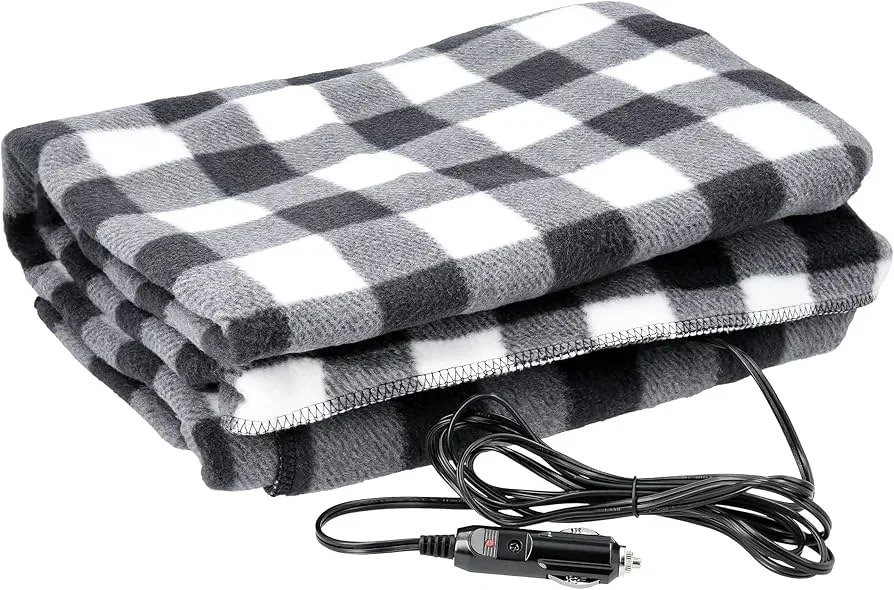
Here's the number to build around, tiered by source. Zonli's 12V blanket guide puts the typical draw at 35 to 60 watts, which lines up with the real products: a common travel throw runs about 45 to 48 watts (3.5 to 4 amps), some pull up to roughly 55 watts (4.6 amps), and a few reach near 75 watts (6 amps) on their highest setting per gear-site measurements.
Rule of thumb: a 12V heated blanket draws about 3 to 5 amps, or 35 to 60 watts. Multiply amps by 12 to get watts if your blanket only lists one - a 4-amp blanket is roughly 48 watts, and that draw is constant while the element is on.
Find your blanket's figure the same way you would any load:
- Read the tag or listing for a watt or amp rating; most 12V blankets print one.
- Assume the high end if it isn't listed - planning around 55 to 60 watts keeps you honest, because underestimating a heat load is what flattens a battery early.
- Remember it's continuous: unlike a fan, there's no energy-saving speed, so the rated watts are the watts, every minute.
Lock in your blanket's watts. The whole runtime table below is just your safe reserve divided by that figure - and with a heat load, that figure is big.
The battery you can actually spend: 30 percent, no more
This is the number most runtime guesses get wrong: you cannot use your whole battery. A starter battery might be rated 50 amp-hours, but its job is to crank the engine, which takes a heavy current burst it can only deliver while it's still fairly full - so you get a thin slice off the top, not the whole thing.
The safe ceiling, per VoltCalcs, is about 30 percent depth of discharge if you still want to start the engine afterward - roughly 10 to 15 usable amp-hours on a typical 50-amp-hour battery, which is about 128 to 192 watt-hours of real fuel.
Use voltage as your gauge in the field:
- Keep the resting battery above about 12.2 volts - that's roughly 60 to 70 percent charge and a safe place to stop.
- 12.0 volts is about half depleted and, per Battery University, near the no-crank line for many engines - worse on a cold night, which is exactly when you'd want the blanket.
- Cold cuts both ways: a chilly battery has less usable reserve and the starter needs more, so winter shrinks your safe window right when the heat load is highest.
So the honest budget is 128 to 192 watt-hours for the night - and against a 35-to-60-watt heat load, that doesn't stretch far. The next section shows exactly how far.
There's a second cost that never shows up on a runtime table: wear. Per Battery University's BU-201 teardown, a starter's plates are thin and sponge-like on purpose, sized to dump a huge current for about a second and then get topped straight back up by the alternator - not to be drained slowly and deeply. Run one down for a heat load and you aren't only borrowing tonight's start; you're aging the battery. At a repeated 30-percent discharge a starter is good for only around 130 to 150 cycles, where a true deep-cycle battery shrugs off a thousand or more. So even the 'safe' nightly warm-up quietly shortens the life of the wrong battery for the job.
The runtime table: hours by wattage and reserve
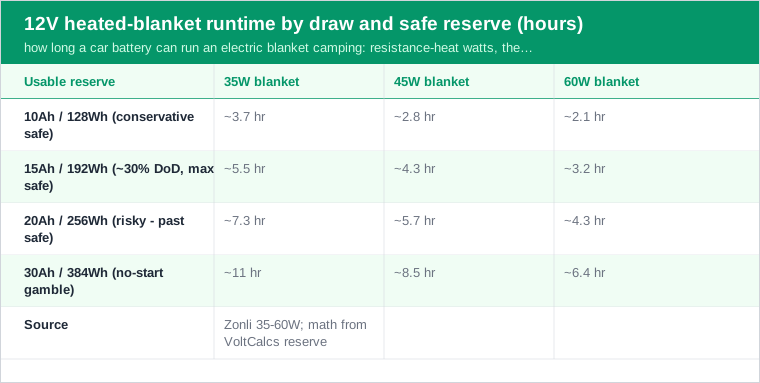
Now the arithmetic - usable watt-hours divided by blanket watts, in hours. I've laid it out across the draws and reserves that actually matter so you can find your case and read the number straight off.
- 45-watt blanket on the safe 192Wh reserve: about 4.3 hours. That's the honest 'do this and still start' figure - a warm-up and an evening, not a full night.
- 45-watt blanket on the conservative 128Wh reserve: about 2.8 hours.
- 60-watt blanket on the safe reserve: about 3.2 hours - the higher the setting, the shorter the leash.
- 45 watts on a deep 384Wh draw (30 amp-hours): about 8.5 hours on paper - but that's 50-plus percent depth of discharge, the 'theoretically all night, realistically a no-start' column. Don't plan around it.
The pattern is the opposite of the fan's: even the best case here is a few hours, not a few nights. A blanket run straight off the starter battery is a way to take the chill off before you sleep, not a way to stay warm until dawn. If you need heat all night, the battery under the hood is the wrong tool, and no clever wiring changes the watt-hours.
One thing the raw division hides: it assumes the element runs flat-out for every minute. If your blanket has an auto-shutoff timer, the real average draw drops and the practical runtime stretches - the next section works that math. If it doesn't, this table is exactly what you'll get, ticking down from full at your blanket's wattage until you unplug it or the engine won't turn over. Read the row for your draw, shave your expectations for a cold night when the reserve shrinks and the starter needs more, and treat anything past the 192-watt-hour line as a number that lives on paper only.
Fan versus blanket: the same battery, nine times the drain
The clearest way to feel how heavy a heat load is: put the blanket next to a fan on the same battery. It's the comparison that makes the engineering obvious, because the two sit at opposite ends of the load scale.
On the same safe 192Wh reserve, a 5-watt fan runs about 38 hours and a 45-watt blanket runs about 4. Same battery, same night - the blanket drains it roughly nine times faster, because one moves air and the other makes heat.
What that means when you're packing:
- A fan is a rounding error; a blanket is a budget line you have to plan the whole night around.
- Stacking heat loads is a trap: a blanket plus a mug warmer plus a seat heater is three elements draining in parallel - the reserve vanishes.
- Warmth from insulation is free: a good bag and a pad cost the battery nothing, so lean on them first and let the blanket be a short top-up, not the heat source.
Frame it that way and the blanket earns a small, deliberate role: a warm half-hour to fall asleep, then off. Ask it to do more off the car battery and the math simply isn't there.
The auto-shutoff timer changes the math
Here's the feature that matters more than the wattage, and it's the one buyers skip past: an auto-shutoff timer. Many 12V blankets - the Sojoy and Car Cozy among them - cut off after 30, 45, or 60 minutes, and several default to 45 minutes if you don't pick a setting.
Why that's the difference-maker for a battery:
- The element isn't drawing continuously. A blanket that heats for 45 minutes and then quits averages far less than its rated draw over an evening, which can roughly double how many nights you get per charge.
- It matches how you actually use it - warm the bed, fall asleep, and you don't need the element running for the eight hours you're unconscious anyway.
- It's a built-in safety floor against both a flat battery and an overheating element left on all night.
The honest caveat: a plain fleece throw with no timer draws until you unplug it, so with those you are the timer - set an alarm or you'll wake to a drained battery. If you're going to run a blanket off the car at all, a timed one is the design that respects the reserve. It's a rare case where the safety feature and the battery-saving feature are the same part.
Two blankets that are kind to a battery
Given the math, the blankets worth running off a car socket are the ones that draw modestly and shut themselves off. Two cover the sensible range.
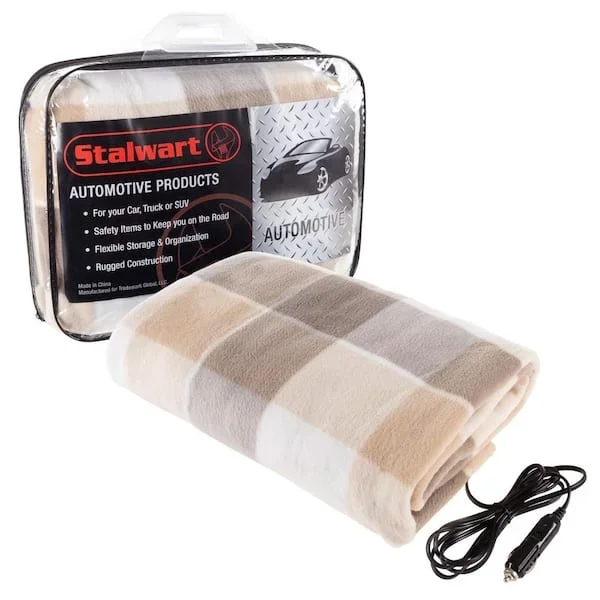
For the lightest draw, a Stalwart 12V Heated Travel Blanket is a compact fleece throw on a standard cigarette-lighter plug with a modest draw - the easiest to power for a short warm-up, and the smallest bite out of your reserve. It's the solo-camper pick when you want the chill off, not an all-night heater.
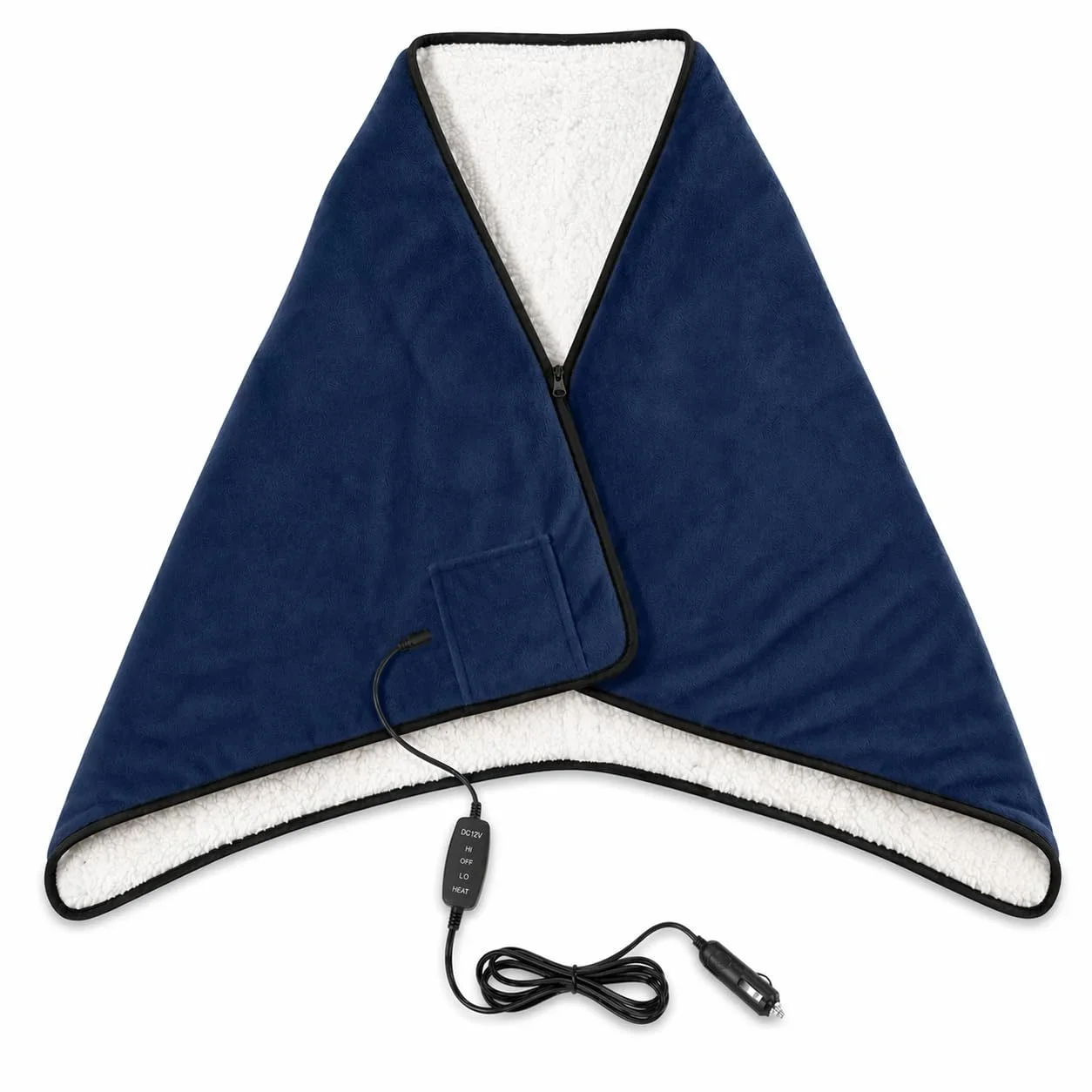
For coverage plus a built-in shutoff, a Sojoy 12V Heated Travel Blanket is larger and plusher with an auto-off timer - the timer is exactly the feature that keeps a heat load from quietly flattening the battery, so it's the smarter choice if you'll drift off under it.
- Both plug into the 12V socket and draw in the 35-to-60-watt band, so the runtime table above applies directly.
- Run either on the safe side - a warm-up off the car, then off - and keep the deep, all-night heat for a bigger battery.
Our full guide to 12V heated blankets for car camping breaks down the draw and features across more picks if you want the wider field.
The real overnight answer: a deep-cycle reserve
If you want heat that lasts past a couple of hours, the fix isn't a cleverer blanket - it's a battery built to be drained. A starter battery uses thin, sponge-like plates tuned for a one-second cranking burst, and per Battery University those plates dissolve if you deep-cycle them, so running one down for a blanket costs you both tonight's start and the battery's life.
The tool built for the job is a portable power station - a deep-cycle lithium battery with outlets - which runs a 12V blanket for its full rated hours because it's designed to be drained and refilled nightly. A 500-watt-hour station runs a 45-watt blanket for roughly ten hours and recharges off the car's 12V socket as you drive, off the wall, or off solar - and running it flat never costs you a start, because the one battery you must not kill, the starter, stays out of it entirely.
- Deep-cycle by design: hundreds of drain-and-refill cycles versus a starter battery's dozen at deep discharge.
- Enough reserve for real heat: a night of blanket plus lights and charging off one pack with a fuel gauge on the front.
- The car stays a car: your engine start is never part of the gamble.
The arithmetic that hurts on a starter battery works in your favor here. A 512-watt-hour station against a 45-watt blanket is roughly ten hours of heat - a genuine full night - and because the pack is built to be emptied, you can spend all of it without watching a voltage gauge. Recharge it off the 12V socket while you drive the next leg, off a wall outlet at a campground, or off a folding solar panel over a slow morning, and the cycle repeats as long as the trip lasts. The starter battery, meanwhile, keeps doing the one thing it's genuinely good at - that one-second crank - and stays out of the heat budget entirely.
That's the upgrade the moment a warm-up isn't enough. For where that line falls against just packing warmer, our guide to the best cold-weather car-camping blankets covers the no-power option too.
The engineer's verdict on blankets and car batteries
Put the numbers together and the answer to 'how long can a car battery run an electric blanket camping' is: about three to five hours of safe runtime for a 35-to-60-watt blanket, not the night. The blanket is a continuous resistance load, the safe reserve is only 10 to 15 amp-hours, and heat spends that reserve about nine times faster than a fan would.
Run a timed, modest-draw blanket off the car for a warm-up, keep the resting voltage above 12.2, and let it shut off - that's the safe play. For heat that lasts until morning, move it to a deep-cycle power station. The blanket won't strand you; a flat starter battery will.
Know your blanket's watts, respect the 30-percent line, lean on the auto-shutoff timer, and warm the bed rather than heat the car all night, and an electric blanket is a genuine comfort without a tow-truck ending. Ask it to run until dawn off the starter battery and the physics says no. For the loads that sneak up on the same battery overnight, our guide to what drains a car battery while parked is the companion read.
Related on Auto Roamer: whether you need a second battery.