
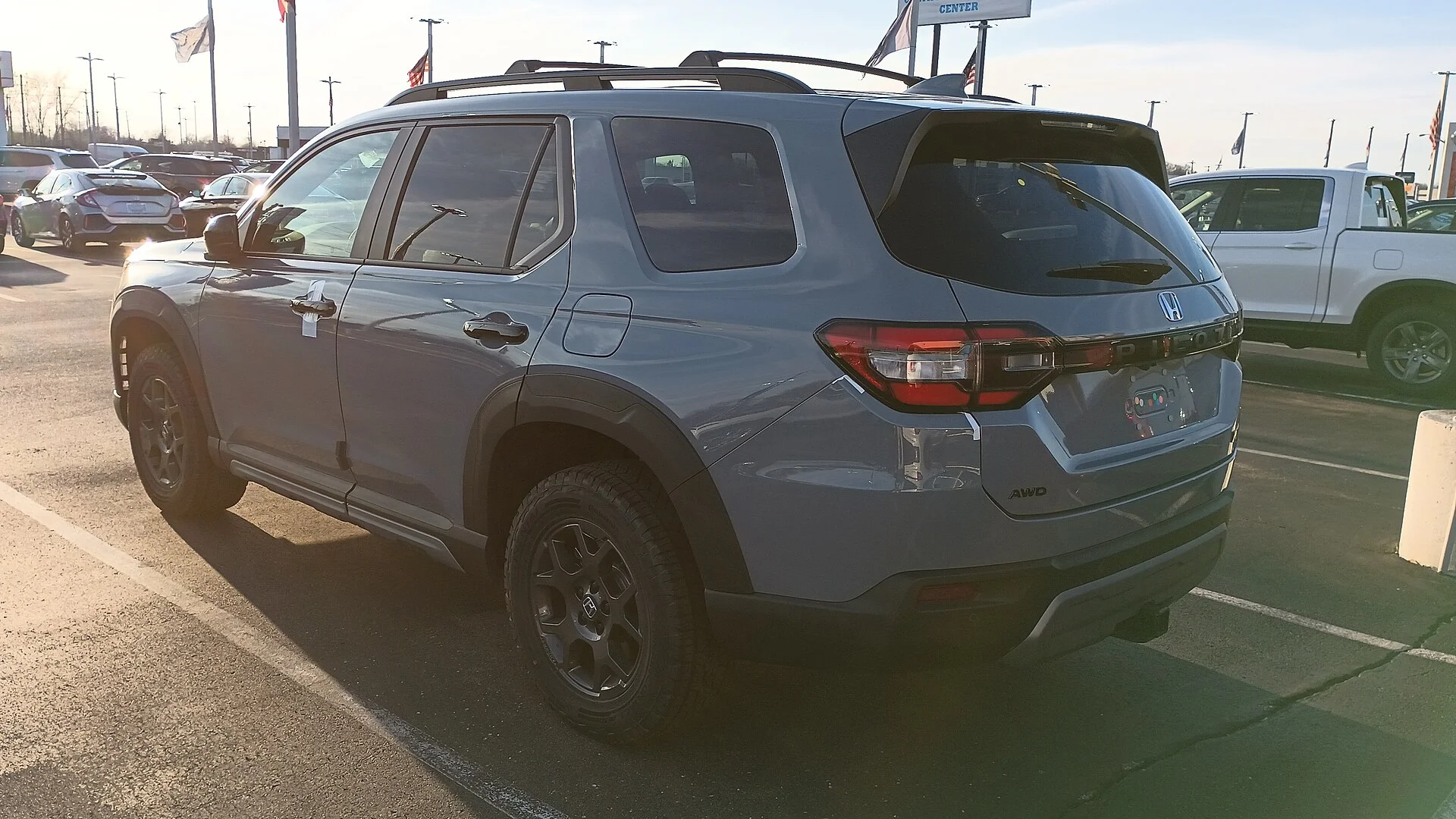
The Camping Problem: A Spare You Can't Reach
Here is a problem that never shows up in a spec sheet but ends trips: on a Honda Pilot built out for camping, the spare tire and the jack live exactly where a sleeping platform, a drawer system, or a loaded cargo bay blocks them. A spare you cannot get to on a dark shoulder is no spare at all, and that is the failure a camper meets when the flat happens far from a shop.
The reason this matters more for a camper than a commuter is access. A daily driver clears the cargo bay in seconds to reach the tools; a camper has a platform bolted in, bins packed, and a bed made up over the exact panels the jack and spare-release hide behind. The retrieval that takes five minutes in a driveway becomes a full unpacking job at a campsite, in the dark, possibly in the rain.
Knowing the layout before the flat is what separates a twenty-minute roadside fix from an hour of frustration. Where the spare hangs, how it comes down, where the jack and tools hide, and what the wheel takes to go back on safely, these are things worth knowing at home, not discovering on the shoulder. A mechanic's habit is to locate the tools before the trip, not during the emergency.
This guide reads the Pilot's spare and jack setup the way you would before building out the cargo bay: where the spare actually is, how the winch retrieval works, where the jack and tools live, what kind of spare each trim carries, and the torque and pressure numbers that make a roadside change safe. Plan the build around this access, and a flat is an inconvenience instead of a trip-ender.
Where the Spare Actually Is: Underbody
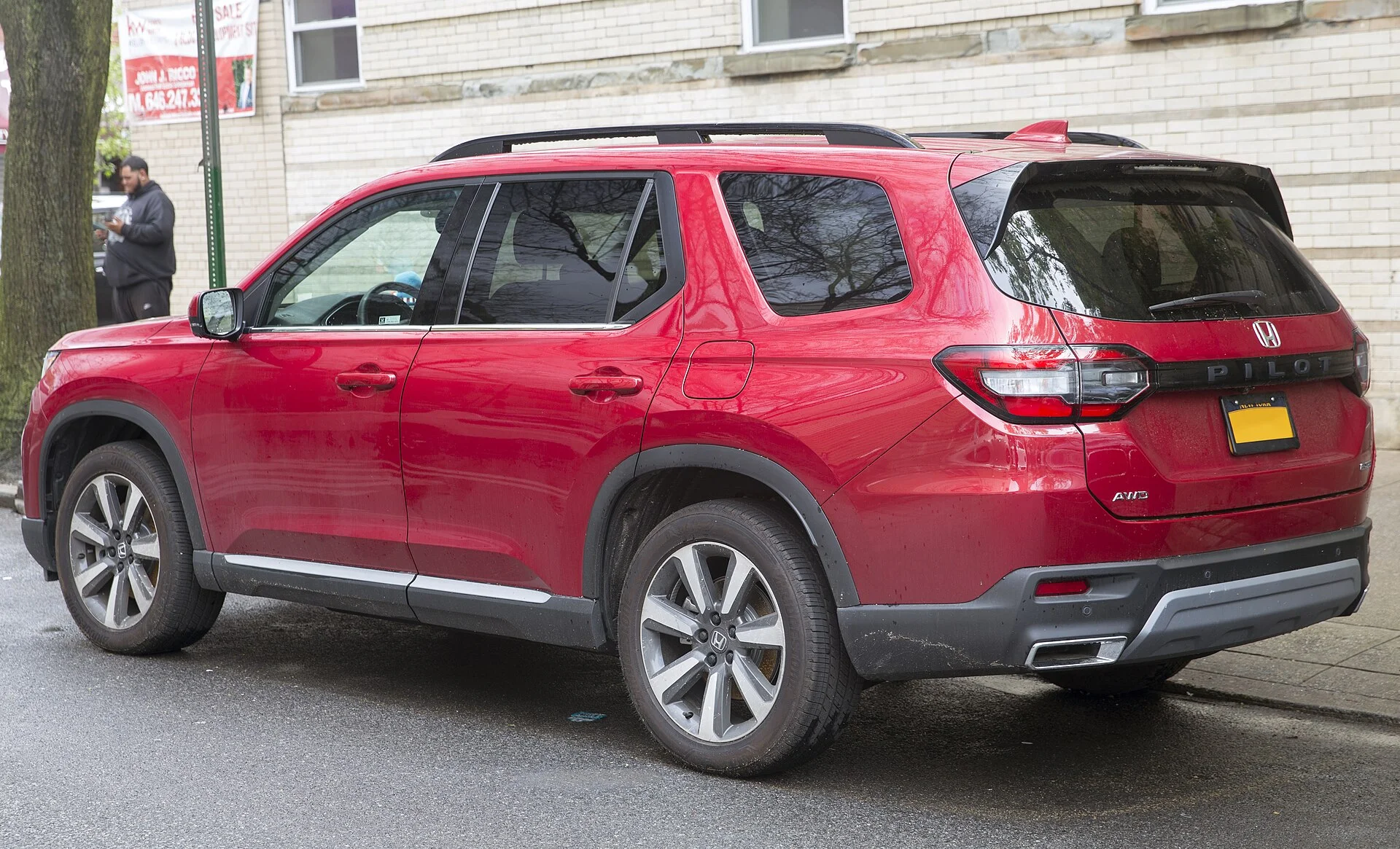
The first fact to internalize is that the Pilot's spare is not in the cargo area at all. The Honda Pilot spare tire is mounted underneath the vehicle body, beneath the cargo area, rather than inside the cargo compartment. It hangs from the underside of the truck, out of sight and, importantly for a camper, out of the space the sleeping platform occupies.
Honda chose that location for good reasons: the underbody mounting helps maximize usable cargo space and improves rear-impact crashworthiness. For everyday use those are real benefits, and for a camper the freed-up cargo space is exactly what makes a sleeping platform possible. The tradeoff is that retrieving an underbody spare is a different, and less obvious, process than lifting one out of a cargo well.
The catch is that while the spare itself is underbody and clear of the cargo bay, the mechanism to lower it is not. The release is accessed from inside the cargo area, through the floor, which means a packed or platformed cargo bay still stands between you and the spare even though the tire hangs underneath. The spare's location solves the storage problem but not the access problem.
For a camper, the underbody location is mostly good news: the spare does not eat into the sleeping or storage space, and it is protected and out of the way. The planning consequence is that the retrieval point, in the cargo floor, has to stay reachable, which shapes how the build is laid out. The tire is in a great spot; the release is the part to plan around.
How the Winch Retrieval Works
Lowering an underbody spare is a winch operation, and understanding it beforehand turns a puzzling task into a simple one. The Pilot uses a hoist mechanism that lets the tire down from its underbody storage when you crank it, and the crank point is inside the cargo area.
The access is specific. To reach the mechanism, a rubber plug or cover in the cargo area floor lining is removed to reach the shaft or winch socket used to lower the spare tire hoist. Through that hole, the spare tire retrieval uses a winch-style hoist accessed from a small cover in the bottom of the rear cargo storage cubby, and the wheel nut wrench and jack handle bar are used together to turn this winch and lower the tire from underbody storage. Crank one way and the tire descends on its cable until it rests on the ground and the cable goes slack.
For a camper, this is the crucial detail: that rubber plug in the cargo floor is the single access point, and if a sleeping platform or a full load sits over it, the spare cannot come down without moving whatever is on top. The whole retrieval hinges on reaching one spot in the cargo floor, which is exactly the spot a build tends to cover.
The design-around is simple once you know it: build the platform with an access hatch or a removable section over the cargo-floor plug, or keep that area clear in the loading plan. A five-minute check at home, locate the plug, confirm the crank reaches it, and note what has to move, means the winch retrieval works at the campsite the same way it works in the driveway. Ignore it, and a flat turns into disassembling the bed before the jack even comes out.
Where the Jack and Tools Live
The spare is underbody, but the jack and the tools to use it are elsewhere, and they have their own hiding spot that a camper needs to know. Reaching the spare is only half the job; the jack that lifts the truck is stored separately.
The jack lives in the cargo side panel. It is stored behind a hinged access panel on the left side of the rear cargo storage cubby, in the trim panel of the cargo area, not under the third-row seats where some owners look first. Behind that panel, the jack comes out of a tool case that also holds the wheel nut wrench, the jack handle bar that doubles as the winch crank, and a box wrench. Everything needed for the change is in that one case on the left side of the cargo area.
That consolidation is convenient, but it creates a second access point a build has to preserve. The left-side cargo panel has to be openable, which means a platform or a stack of gear against that wall blocks the jack just as a platform over the floor plug blocks the spare. A camper needs both the cargo floor and the left cargo side accessible, not just one.
The practical takeaway is to treat the jack case as a fixed reference point when laying out the cargo build. Confirm the left-side panel opens with the platform in place, or plan the storage so that panel stays clear. Since the jack handle bar is also the winch crank, losing access to the jack case means losing the ability to lower the spare too, so this one panel is doubly important. Locate it, keep it reachable, and the tools are there when the flat happens.

Donut or Full-Size: What Your Trim Carries
Not every Pilot carries the same spare, and the difference matters a lot for how far and how fast you can drive on it after a flat. The trim determines whether you get a temporary donut or a real tire.
Most trims get the compact spare. On the Pilot LX, Sport, EX-L, Touring, and Elite trims, the spare is a lightweight temporary, a compact donut spare tire, commonly a T165/80D17 on a 17-inch wheel across recent model years. A donut is a get-you-to-a-shop spare, not a keep-going tire, and it comes with real limits on speed and distance that a camper far from services has to respect.
Most Pilots carry a temporary donut spare. The TrailSport is the exception, with a full-size all-terrain spare, which for a camper heading off pavement is a meaningful advantage.
The TrailSport breaks the pattern. The Pilot TrailSport trim is equipped with a full-size, all-terrain spare tire instead of a compact donut. For a camper, that is a genuine capability difference: a full-size all-terrain spare can be driven on normally, matches the other tires, and suits the off-pavement travel the TrailSport is built for, where a donut would be marginal or unusable on a rough forest road.
The planning consequence is to know which spare a specific Pilot has and route trips accordingly. A donut-equipped Pilot camping far from services is one flat away from a slow, limited limp to the nearest shop, which argues for carrying a plug kit and an inflator as a first line of defense. A TrailSport with its full-size spare has far more margin. Matching the trip's remoteness to the spare the truck actually carries is part of camping smart.
The Pressure and Speed Limits That Keep the Donut Safe
If a Pilot carries the compact donut spare, using it safely means respecting two firm numbers, because a temporary spare is engineered for limited, cautious use, not for normal driving. Ignore them and the donut becomes its own hazard.
The first number is pressure. Compact temporary spare tires generally must be inflated to 60 psi, per Honda's compact-spare guidance, which is much higher than a normal tire and is easy to overlook. A donut that has sat under the truck for years often loses pressure, so checking and topping it to 60 psi before it is needed, or carrying an inflator, is what keeps it from being flat itself when the moment comes. A spare at half pressure is barely a spare.
The second number is speed. When driving on the compact spare, Honda's guidance is to keep vehicle speed under 50 mph. The donut is not built for highway speeds or long distances; it is a limited-duty tire meant to get the truck to a shop at reduced speed. Pushing it past 50 mph or running it for hundreds of miles risks a failure that leaves you worse off than the original flat.
For a camper, these limits reshape the plan after a flat. A donut means a slow, sub-50-mph drive to the nearest service, which can be a long, cautious trip from a remote campsite. That reality is the strongest argument for prevention, carrying a tire plug kit and a portable inflator so a repairable puncture never requires the spare at all. The donut is the backup to the backup; keeping it at 60 psi and staying under 50 mph is how it does its limited job without creating a new one.

The 94-Pound-Foot Re-Torque That Keeps the Wheel On
The part of a roadside tire change that gets skipped most, and matters most, is torquing the lug nuts correctly, because a wheel that is not properly tightened can come loose miles later. This is where a mechanic's discipline earns its keep, and the Pilot has a specific number.
The Honda Pilot's wheel lug nut torque specification is 94 lb-ft for 2009-2026 model-year Pilots, with the earlier 2003-2008 Pilots specified at 80 lb-ft. For the current-generation 2023-2026 Pilots, Honda's official documentation lists a wheel nut torque of 94 lbf-ft, which is 127 N-m. That is the number the lug nuts should be tightened to, and a roadside change done by hand rarely hits it accurately without a torque wrench.
Honda specifies dry torque, meaning no anti-seize or lubricant on the threads, so the threads should be kept clean and dry before torquing to spec. Lubricated threads reach a different clamping force at the same torque reading, which is why the dry specification matters and why greasing lug threads is a mistake. The lug wrench socket size is 22 mm on later-generation Pilots, worth knowing if you carry your own tools.
The step that actually keeps the wheel on is the re-check. A roadside change tightened by feel should be re-torqued to the 94-lb-ft spec with a proper torque wrench as soon as practical, because lug nuts can settle after the wheel takes load and a wheel that felt tight on the shoulder can loosen over the next miles. Carrying a compact torque wrench and re-checking the lugs after a change is cheap insurance against a wheel working loose, which is the kind of delayed failure that turns a simple flat into a serious one. A quality 1/2-inch torque wrench is the tool that makes the 94-pound-foot spec real instead of a guess.
Building the Cargo Bay Around Spare Access
Bringing it together, a Pilot camping build that respects the spare and jack access is one that stays serviceable on the road, and that requires designing the two access points into the build from the start rather than discovering them after a flat. The layout decisions are simple once the locations are known.
The two points to preserve are the cargo-floor plug, over the winch that lowers the underbody spare, and the left-side cargo panel, behind which the jack and tool case live. A sleeping platform should include a hatch or removable section over the floor plug, and the storage layout should keep the left cargo wall openable. Preserve those two, and the entire spare-change process works with the build in place.
The loading plan matters as much as the platform design. Even a perfectly built platform with access hatches is defeated if the heaviest bins are stacked exactly over the access points, so the packing habit should keep those spots reachable, or at least loaded with items that move easily. A flat on a dark shoulder is not the time to unstack a fully loaded cargo bay to find the jack.
The final layer is prevention, which reduces how often the access is needed at all. Carrying a tire plug kit and a portable inflator lets a camper fix a repairable puncture without ever lowering the spare, which for a donut-equipped Pilot far from services is the difference between a ten-minute fix and a slow limp to town. Build for access, pack to preserve it, and carry the tools to avoid needing it, and a flat on a Pilot camping trip stays a minor event instead of a major one.
The Pre-Trip Check That Prevents the Scramble
Everything in this guide points to one cheap habit that turns a potential roadside crisis into a non-event: a short pre-trip check of the spare and its tools before leaving home. Five minutes in the driveway beats an hour on a dark shoulder every time, and a mechanic does this as reflex.
Start with the spare's pressure, because a donut that has hung underbody for years is often low. If the Pilot carries the compact spare, confirm it is inflated to the 60 psi it requires, since a spare at half pressure is barely a spare and there is no way to check it comfortably once it is on the ground under a flat truck. Topping it at home, or confirming the full-size TrailSport spare is at pressure, is the single most valuable minute of the check.
Next, confirm the tools are present and the access works. Open the left-side cargo panel and verify the jack, wheel nut wrench, jack handle bar, and box wrench are all in the case, because a missing crank bar means the underbody spare cannot be lowered at all. Then, with the camping build in place, confirm both the cargo-floor plug and the left cargo panel are actually reachable, not buried under a platform or a load, so the retrieval works when it matters.
Finally, pack the prevention and safety kit: a tire plug kit and a portable inflator to fix a repairable puncture without touching the spare, and a compact torque wrench to bring the lug nuts to the 94-lb-ft spec after any change. A camper who runs this check before each trip almost never has a flat become a crisis, because the spare is aired, the tools are present and reachable, and the means to avoid the spare entirely is on board. The check costs five minutes; skipping it costs the worst hour of the trip.

The Verdict: Know the Layout Before the Flat
The Honda Pilot's spare and jack setup is well designed for daily use and a bit hidden for a camper: the spare hangs underbody, clear of the cargo bay, lowered by a winch cranked through a plug in the cargo floor, while the jack and tools live behind a panel on the left side of the cargo area. Both access points are exactly where a camping build tends to cover them.
Know which spare the truck carries. Most trims, the LX, Sport, EX-L, Touring, and Elite, get a compact donut that must be inflated to 60 psi and driven under 50 mph, a get-to-a-shop tire, while the TrailSport carries a full-size all-terrain spare with far more margin for remote travel. Match the trip's remoteness to the spare, and carry a plug kit and inflator either way.
Respect the torque. Lug nuts on 2009-2026 Pilots tighten to 94 lb-ft dry, or 127 N-m, and a roadside change should be re-torqued to that spec with a proper wrench as soon as practical, because a wheel that felt tight on the shoulder can loosen over the next miles.
Build the cargo bay to keep the floor plug and the left cargo panel reachable, pack to preserve that access, and carry the tools to fix a puncture without lowering the spare at all. Do that and a flat on a Pilot camping trip is a minor stop; ignore the layout and it becomes an hour of unpacking in the dark. Know where everything is before the flat, and the spare does its job when you need it.