Car Camping

What Features Make a Headlamp Ideal for Car Camping?

Casey - The Weekend Warrior
5 min read
Includes Video

My first car camping headlamp was a $15 Energizer from the checkout aisle at Walmart. It had three settings: bright, brighter, and strobe. The strobe setting, I quickly learned at a campsite in the Adirondacks during a sudden downpour, is not for navigating a slippery tent floor in the dark.

My first car camping headlamp was a $15 Energizer from the checkout aisle at Walmart. It had three settings: bright, brighter, and strobe. The strobe setting, I quickly learned at a campsite in the Adirondacks during a sudden downpour, is not for navigating a slippery tent floor in the dark. It's for signaling for help, which I almost had to do. The real move is a headlamp with adjustable brightness and a red light option.

Trust me on this one, I've learned the hard way. REI Expert Advice has lists, but they don't always tell you the rookie mistakes.
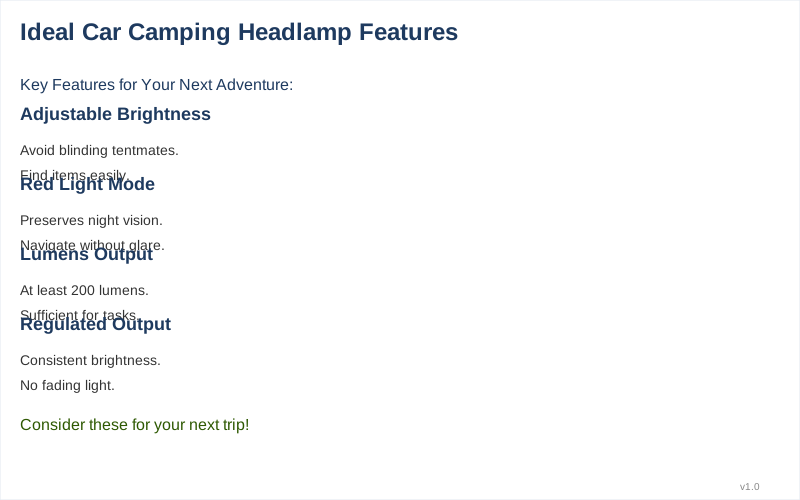
What Features Make a Headlamp Ideal for Car Camping? — Key Specifications Compared
Key specifications for What Features Make a Headlamp Ideal for Car Camping?

The Core Answer

The most important feature for a car camping headlamp is adjustable brightness. You don't want to be blinding your tentmate when you're digging for snacks, but you also don't want to be fumbling around in the dark trying to find your toothbrush. I learned this the hard way at a state park in Ohio; my cheap headlamp only had one setting, and it was like staring into the sun. Stack Exchange agrees, mentioning regulated light output is key. This means it stays at a consistent brightness before dying, not fading like a bad romance novel. Next up: the red light. This is game-time for not ruining your night vision. Picture this: it's 2 AM, you need to pee, and your buddy is already asleep. Shining a bright white light will turn you into a mole person for the next 30 minutes. A red light lets you see enough to navigate without making your eyes hurt. Campmor calls it preserving night vision, and they're not wrong. I use my red light constantly, from setting up camp after dark to reading a book in the tent. Look for at least 200 lumens on the brightest setting. Anything less, and you're basically using a fancy keychain light. My first headlamp was maybe 80 lumens, and it felt like I was trying to read a map with a glow stick. This forum recommends at least 200 lumens, and I've found that to be a solid baseline. It's enough to see your immediate surroundings clearly and even spot that rogue marshmallow bag you dropped. Battery life is also crucial, but not in the way you might think. Most guides talk about hours, but what nobody tells beginners is that some lights just fade over time (unregulated). You want a light that stays bright until the battery is almost dead, then just stops. That way, you're not constantly wondering if it's getting dimmer because you're tired or because the battery is dying. Backcountry mentions flood beams for in-tent use, which is basically just a wide, less intense light - that's where your adjustable brightness comes in handy. I once had a headlamp die mid-hike at dusk in Colorado; that was a rookie mistake I won't repeat.
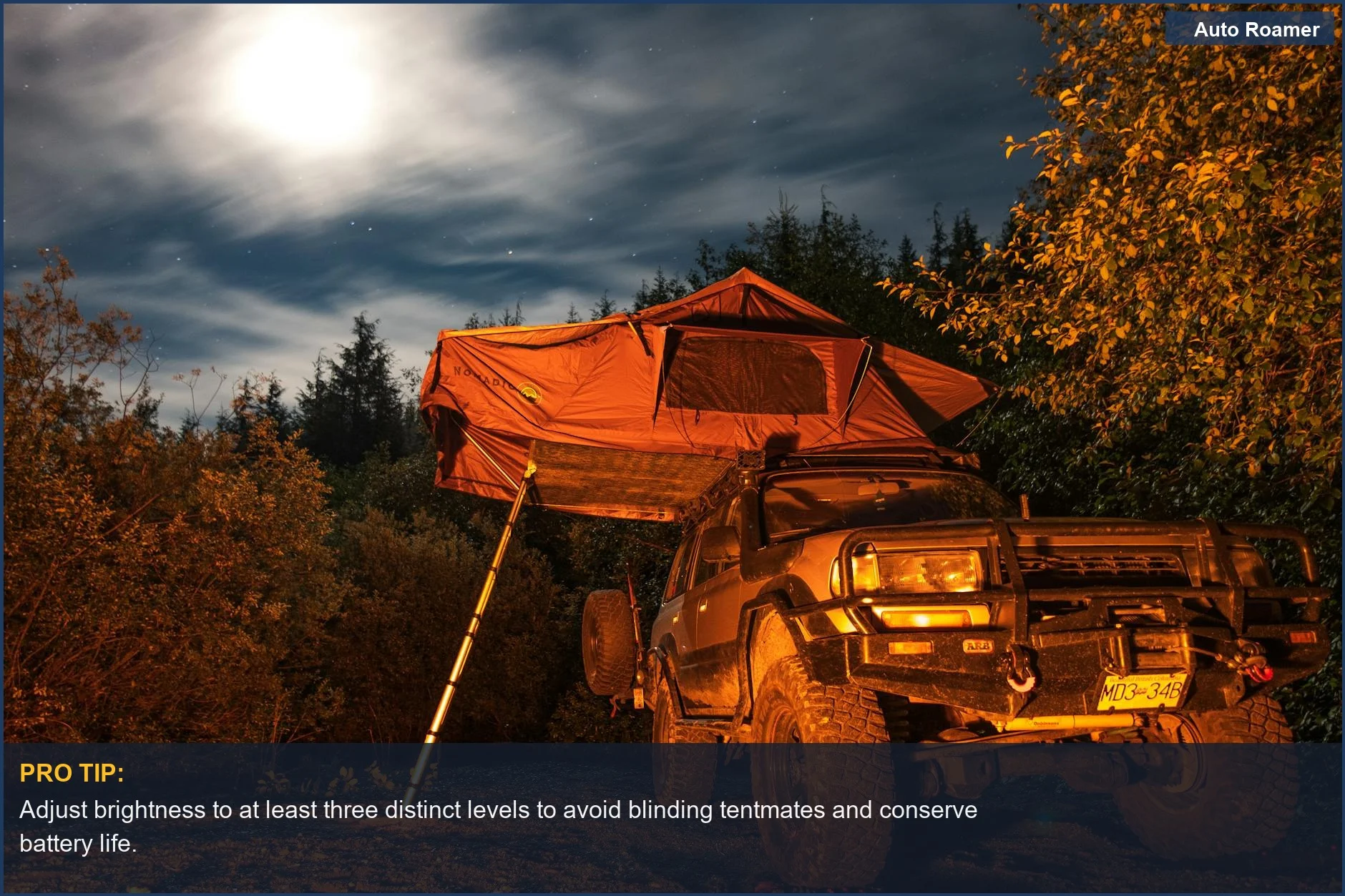
To enhance your campsite lighting, consider the importance of choosing the right brightness for your car camping headlamp.
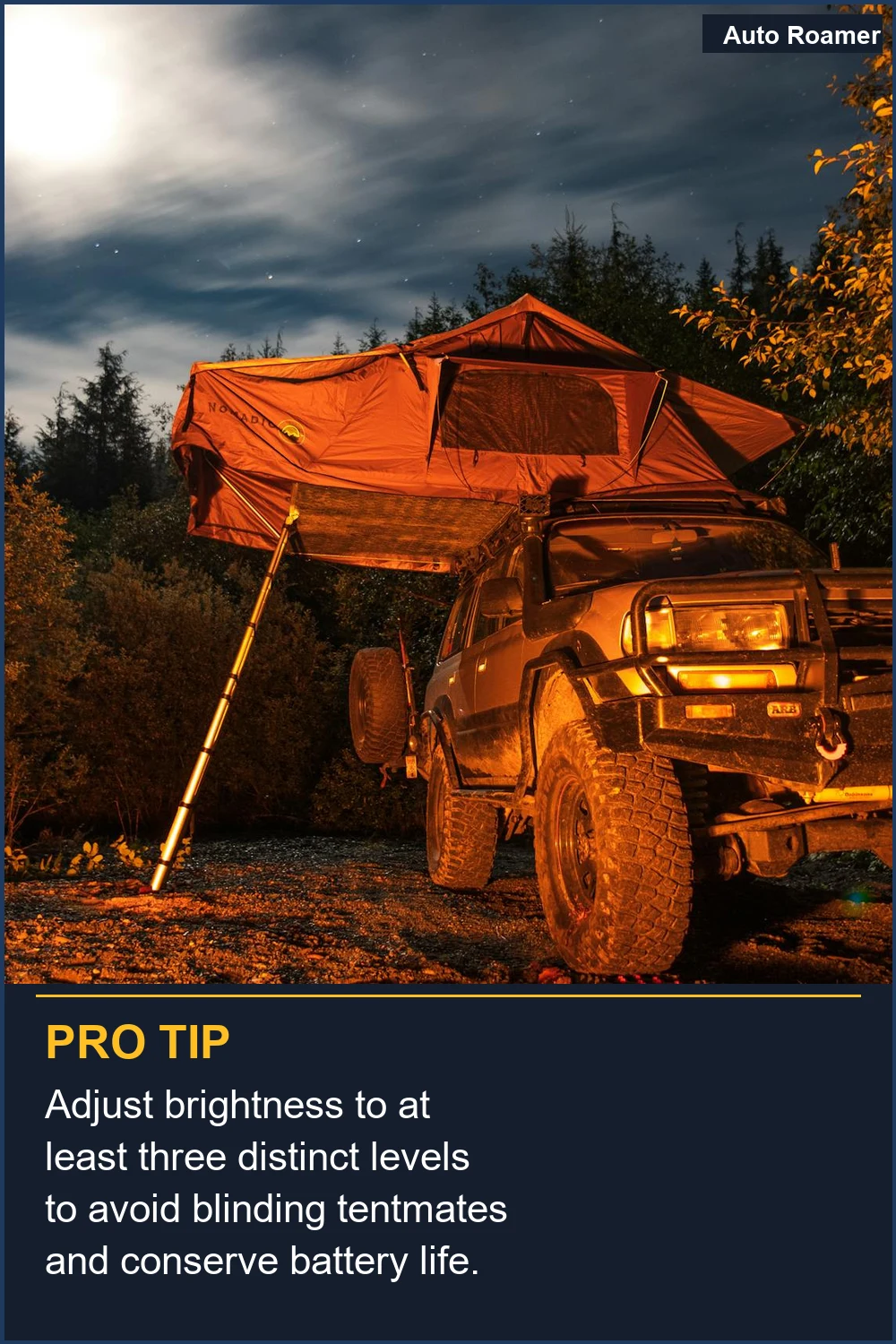
Adjust brightness to at least three distinct levels to avoid blinding tentmates and conserve battery life.
Discover essential car camping headlamp features like adjustable brightness, crucial for tasks from cooking to reading in the dark. | Photo by Rhys Abel

Why This Matters for Your Setup

  • No More Tent Blindness: Adjustable brightness means you can dim it way down when you're inside the tent. My first camping buddy would always complain when I turned my headlamp on, even on the lowest setting. It was like a tiny supernova.
  • Preserve Your Night Vision: That red light feature is not just a gimmick. I've used it to find my way to the car in pitch black and even spot a raccoon rummaging through our cooler without freaking out my dog. Scott Coop even points out how it won't disturb others around camp.
  • Find Your Gear Instantly: A good 200+ lumen beam cuts through the darkness. This means finding that dropped tent stake, locating your water bottle, or even just seeing where the path goes without tripping. I learned this when I spent 10 minutes fumbling for my keys at a crowded campsite in Vermont after dark.
  • Reliable Power: Regulated output means you get consistent light. You won't have that moment of panic when your light suddenly dims because the battery is half-dead. Outdoor Gear Lab tested many, and this consistency is a major plus for car camping where you often need light for extended periods.
  • Weather Resistance: Most decent headlamps are water-resistant. My first one wasn't, and after a night of heavy dew in the Smoky Mountains, it started flickering like a haunted house prop. REI usually lists this, and it's worth checking.
  • To ensure optimal performance, consider the features outlined in our best headlamp guide for your camping trips.
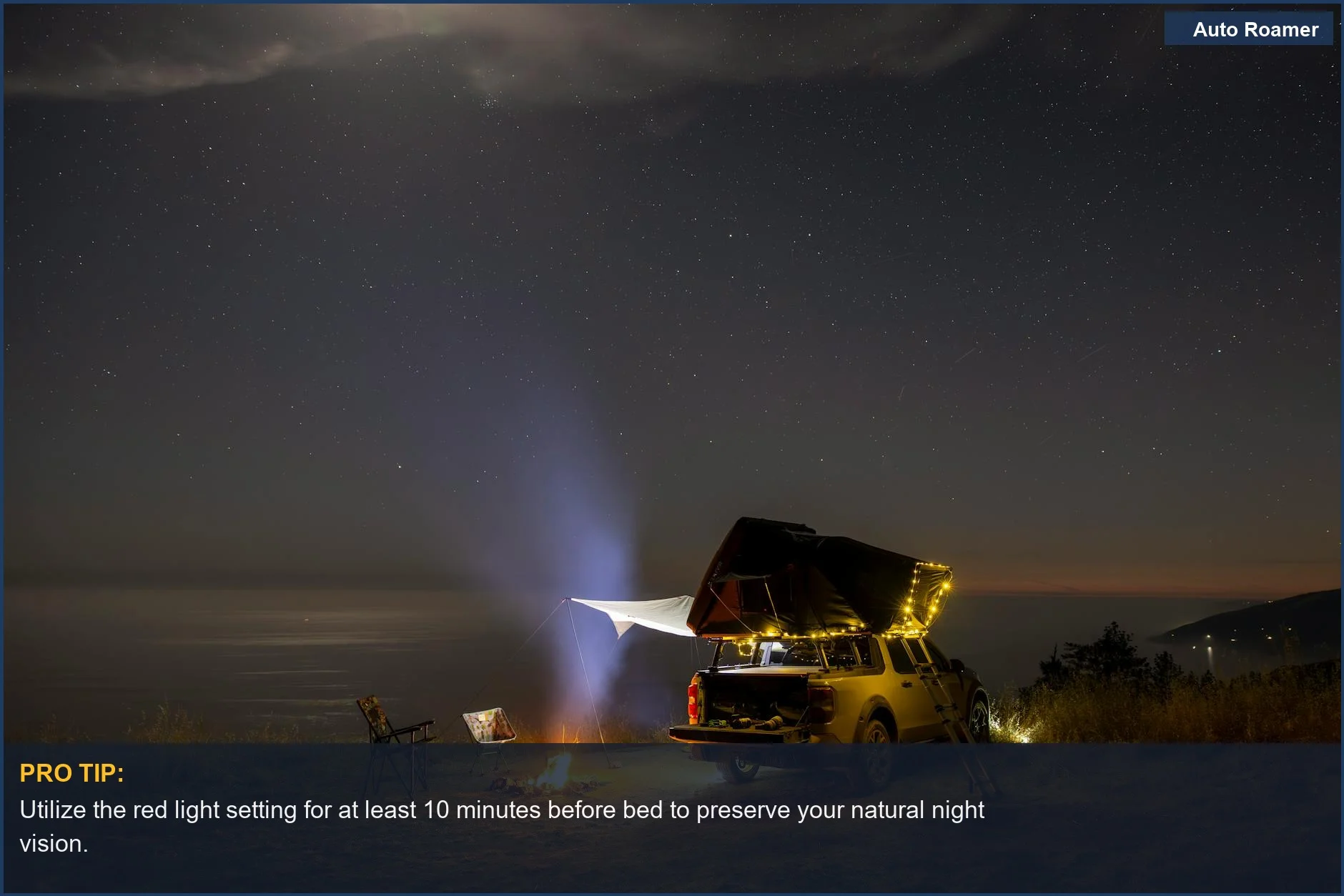
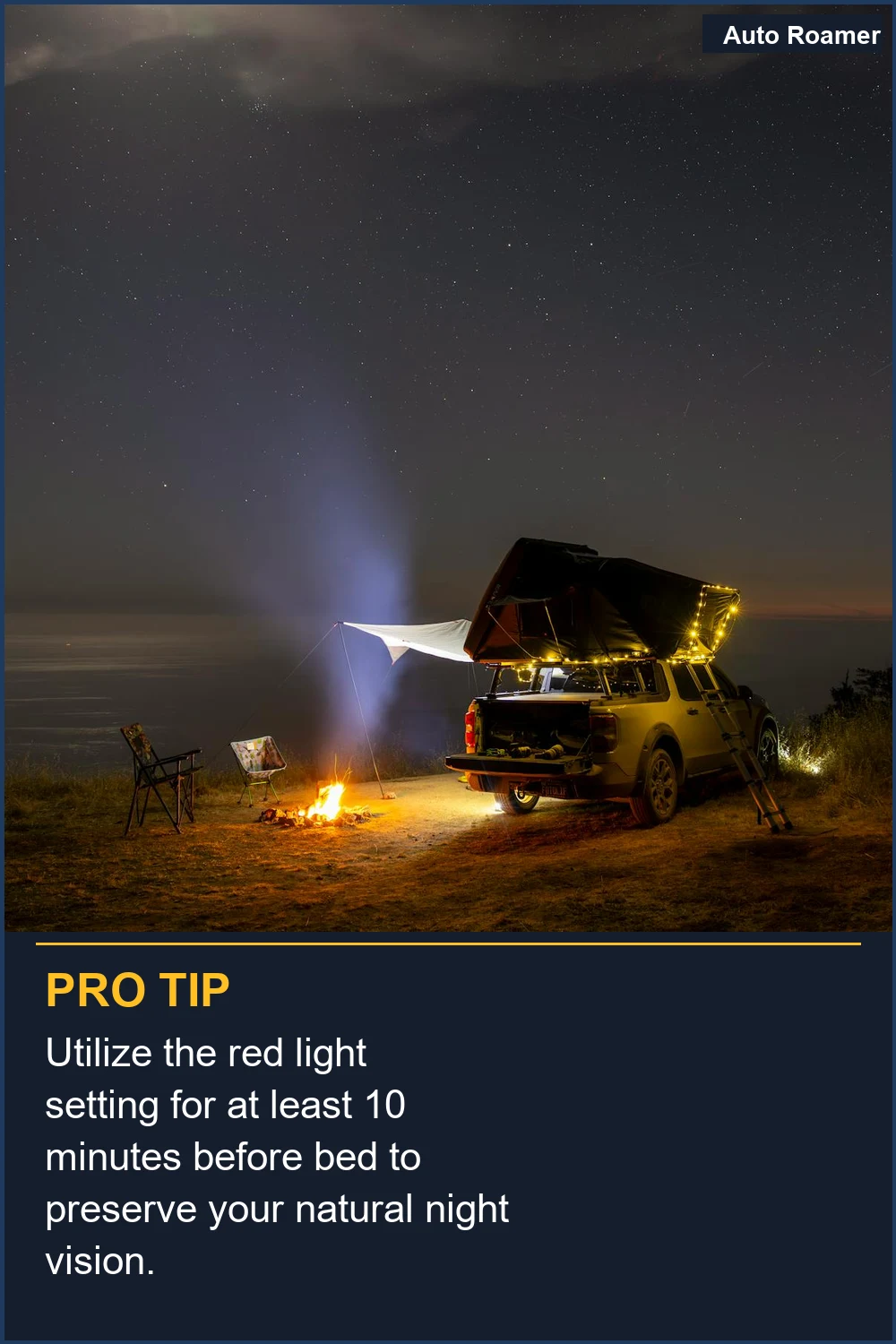
    Utilize the red light setting for at least 10 minutes before bed to preserve your natural night vision.
    Experience serene car camping with a reliable headlamp, featuring a red light mode that protects your precious night vision. | Photo by Stephen Leonardi

    Making the Right Choice

  • Don't Overspend (Initially): You can get a solid headlamp with all the right features for around $30-$50. My $15 Energizer taught me what *not* to buy, but you don't need to drop $100 on your first one. REI has options in this range.
  • Prioritize Red Light: Seriously, this feature alone is worth a slightly higher price tag. It's a comfort and convenience factor that makes a huge difference at camp. I never camp without it now.
  • Check the Lumens: Aim for at least 200 lumens for car camping. It's the sweet spot between being useful and being overkill. Brighter is not always better when you're just trying to find your sleeping bag. Reddit users debate this, but 200 is a good starting point.
  • Think About Power: Rechargeable is convenient if you have a power bank, but I still like having AA or AAA options for longer trips where power might be scarce. Just make sure you have extra batteries on hand. Campmor touches on different power options.
  • Read Reviews (But Trust Your Gut): Look at reviews, but remember what works for a thru-hiker might be overkill for car camping. The honest version: you need light, not a searchlight. Backcountry has some good insights.
  • To ensure your gear is always ready, understanding headlamp battery life is equally crucial for your camping trips.
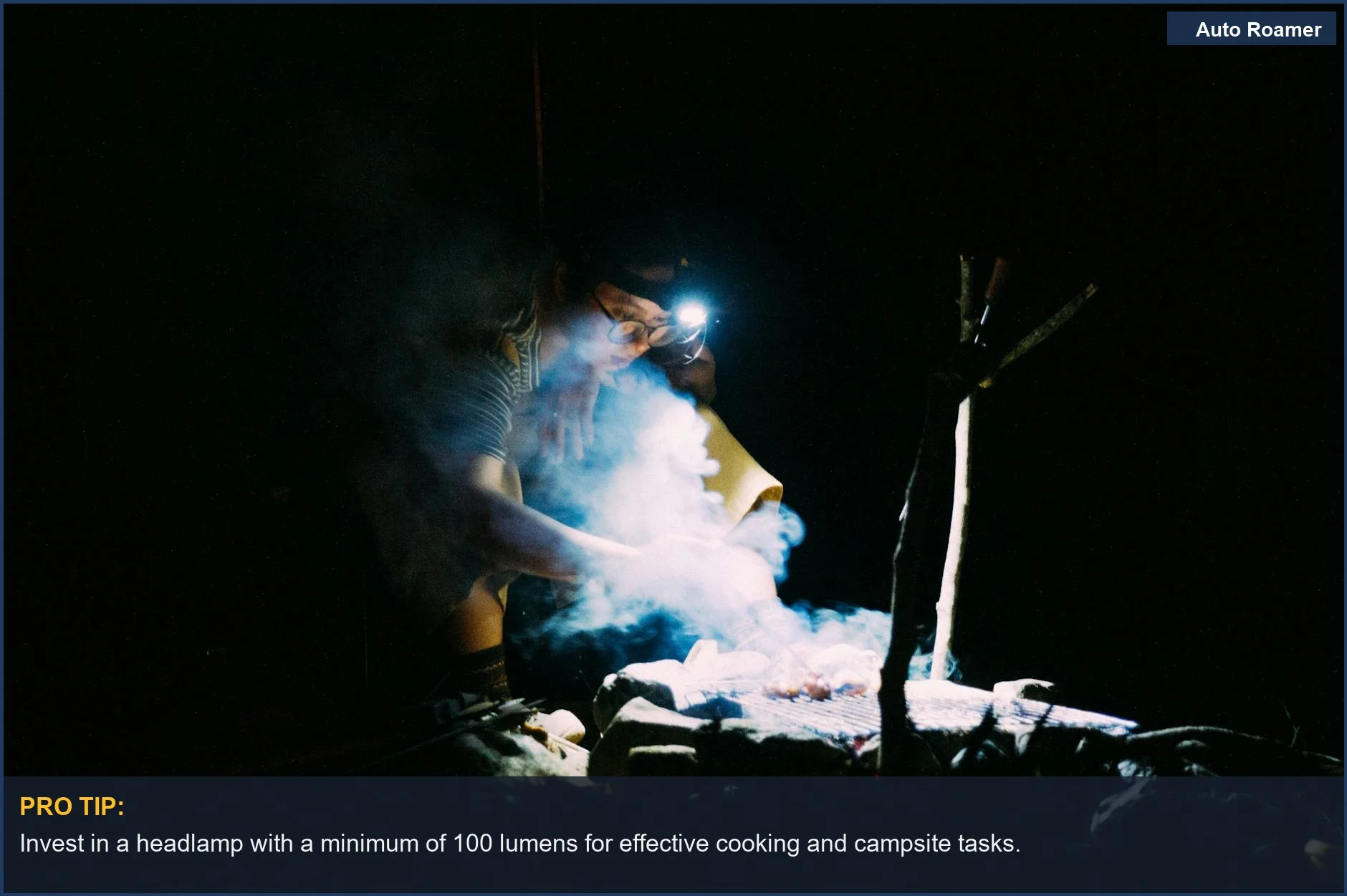
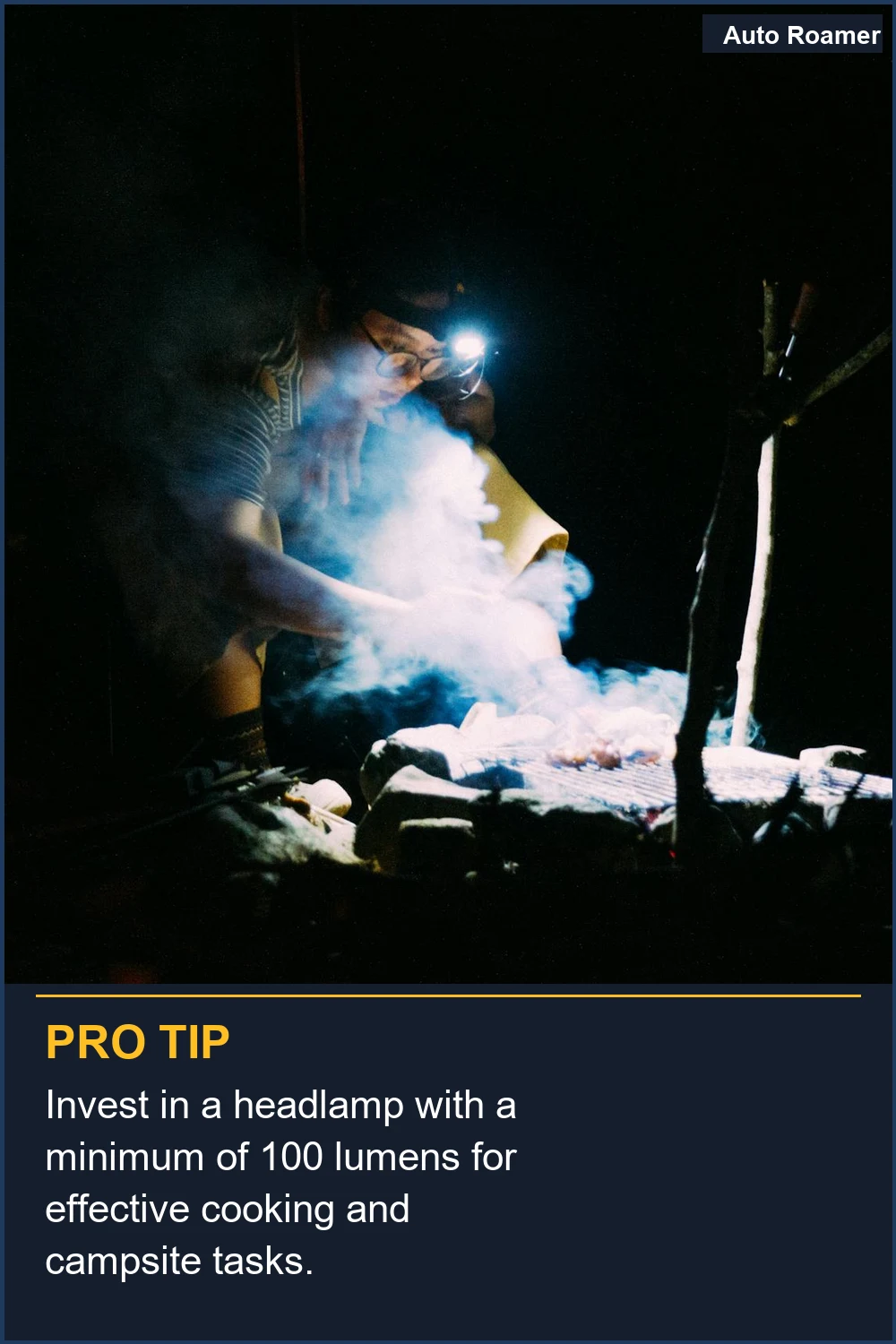
    Invest in a headlamp with a minimum of 100 lumens for effective cooking and campsite tasks.
    When choosing a headlamp buying guide, consider features like lumens and beam distance for tasks like cooking over a campfire. | Photo by Dương Nhân

    Frequently Asked Questions

    My headlamp only cost $10. Is there any way I can make it better without buying a new one?
    Look, that $10 headlamp is probably a glorified keychain light. You can't really 'upgrade' it, but you can manage expectations. Maybe strap a small, cheap LED flashlight to your forehead with some duct tape? That's the $50 version of a DIY fix, but honestly, a decent headlamp for around $30 will be a massive improvement. Save your sanity.
    Do I really need to worry about 'lumens' or can I just get one that says 'bright'?
    Oh, you absolutely need to worry about lumens. 'Bright' is marketing garbage. My first headlamp said 'bright' and it was dimmer than my phone flashlight. Lumens are the actual measurement of light output; aim for at least 200 lumens for car camping so you can actually see what you're doing without feeling like you're in a cave. This forum breaks it down.
    What if my headlamp dies in the middle of the night and I can't see anything?
    That's a classic rookie mistake. Always bring spare batteries, even if your headlamp is rechargeable. If it dies, your best bet is to stay put until sunrise or use your phone's flashlight sparingly if you absolutely have to move. Learn from my mistake at that dark campsite in West Virginia; I spent an hour trying to find my tent poles by moonlight.
    Can using a super bright headlamp damage my eyes permanently?
    No, you're not going to permanently blind yourself with a standard camping headlamp, even a bright one. Your eyes will adjust, and you might see spots for a bit, but they'll recover. The real damage is to your campsite neighbors' patience if you're shining it in their direction. Just use that red light mode when you can!
    I heard red light is bad for your eyes. Is that true?
    That's a myth. Red light is actually the best for preserving your night vision because it has a longer wavelength. It's less likely to disrupt the rhodopsin in your eyes that helps you see in the dark. Campmor explains this well; it's why astronomers and hunters prefer it.

    🏅 Looking for Gear Recommendations?

    Check out our tested gear guides for products that work with this setup:

    C

    Casey - The Weekend Warrior

    Weekend car camper and road trip enthusiast. Focuses on practical, budget-friendly solutions for families and first-time campers.

    Sources

    Related Articles