
One variable, three trucks
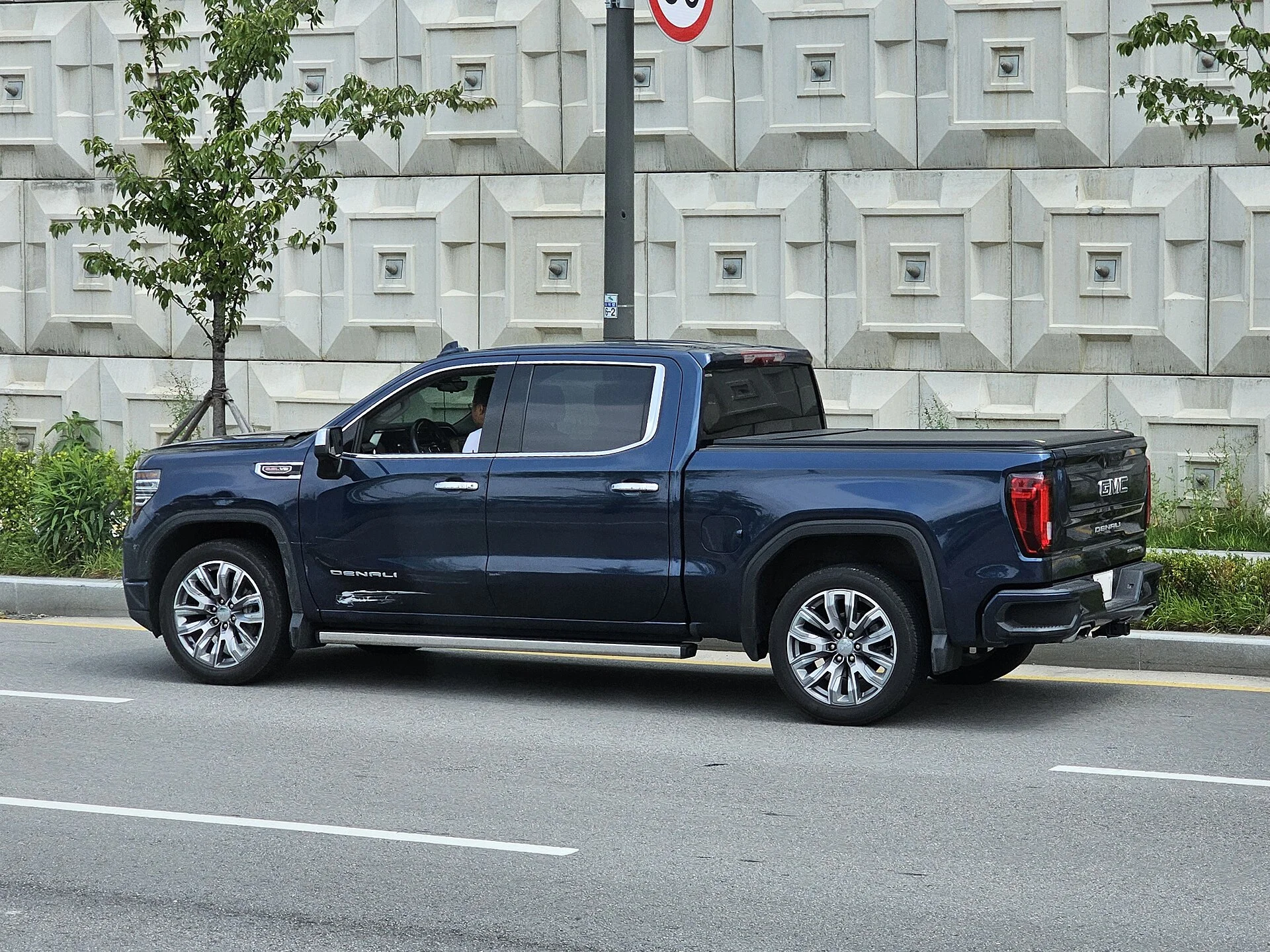
Most full-size pickups make you juggle three or four numbers before you can plan a sleeping setup. The GMC Sierra 1500 makes you juggle one. Its bed is the same width and the same depth whichever box GM bolted on - only the floor length changes, across a 5'8", a 6'6" and an 8' bed.
That single-variable design is genuinely useful, because it means a pad size, a platform height or a canopy you work out once stays correct even if you change trucks within the range. What it does not mean is that all three sleep alike: the length is exactly the dimension your body cares about, and for sleeping these are three different platforms rather than three trim badges.
So this page runs in that order - the two numbers that never move, then the one that does, then where your own height lands on it, then what to do if it lands short. If you want the gear and accessory side instead of the geometry, that's in our GMC Sierra camping accessories guide.
The two numbers that never move: 50.6 wide, 22.4 deep
Start with the constants, because they set the ceiling on what any Sierra can do regardless of bed length.
- 50.6 inches between the wheel wells. That's the usable width down on the floor, where you actually lie - not the wider figure up at the rails. A little over four feet: one generous pad, or two narrow ones side by side.
- 22.4 inches of depth, flat floor. Deep enough that a sleeper sits well below the tops of the sides, with the walls and tailgate acting as a low windbreak. No hump and no ribs to fight, so a pad or a deck sits clean.
The width number carries the most consequence, and it's where the most common full-size mistake lives: a queen mattress is 60 inches wide, so it does not lie flat between the wells on any Sierra bed. Two sleepers means two twin-width pads on the floor, or a deck built level with the wheel-well tops - which reclaims the wider 71-inch rail width above them and turns the wells into storage.
The depth is the quieter advantage, and it's a real one against a mid-size or a unibody truck running several inches shallower. Because it's constant across all three beds, a platform height you calculate once carries over. Build the deck an inch or two below the rail and you keep the low-wall shelter while leaving headroom under a canopy; go higher and you trade the truck's best sleeping feature for storage you could have taken over the wells instead.
Put those two constants together and the practical picture is clear enough to shop from. One sleeper is easy on any Sierra bed: a 20-to-25-inch pad has room to spare across 50.6 inches, leaving a side channel for boots, a lantern and a water bottle without anything ending up under you. Two sleepers is where the width starts making decisions - two 20-inch pads leave about ten inches of margin, which is fine for sleeping and tight for gear, so the gear moves to the cab or over the wells. Anything wider than about 25 inches per person means one of you is on the wells, and that is the moment a platform stops being optional.
The depth pays off in a way that is easy to miss until you have slept in a shallower truck: at 22.4 inches, the sides are taller than a person lying on a pad, so wind crossing the bed passes over you rather than through your sleeping bag. It also means condensation and road spray land on the walls rather than on you, and that a clamp-on cover only has to bridge the gap from the rail up rather than wrap a whole sleeping space.
The one number that moves: 70, 79 or 98 inches of floor
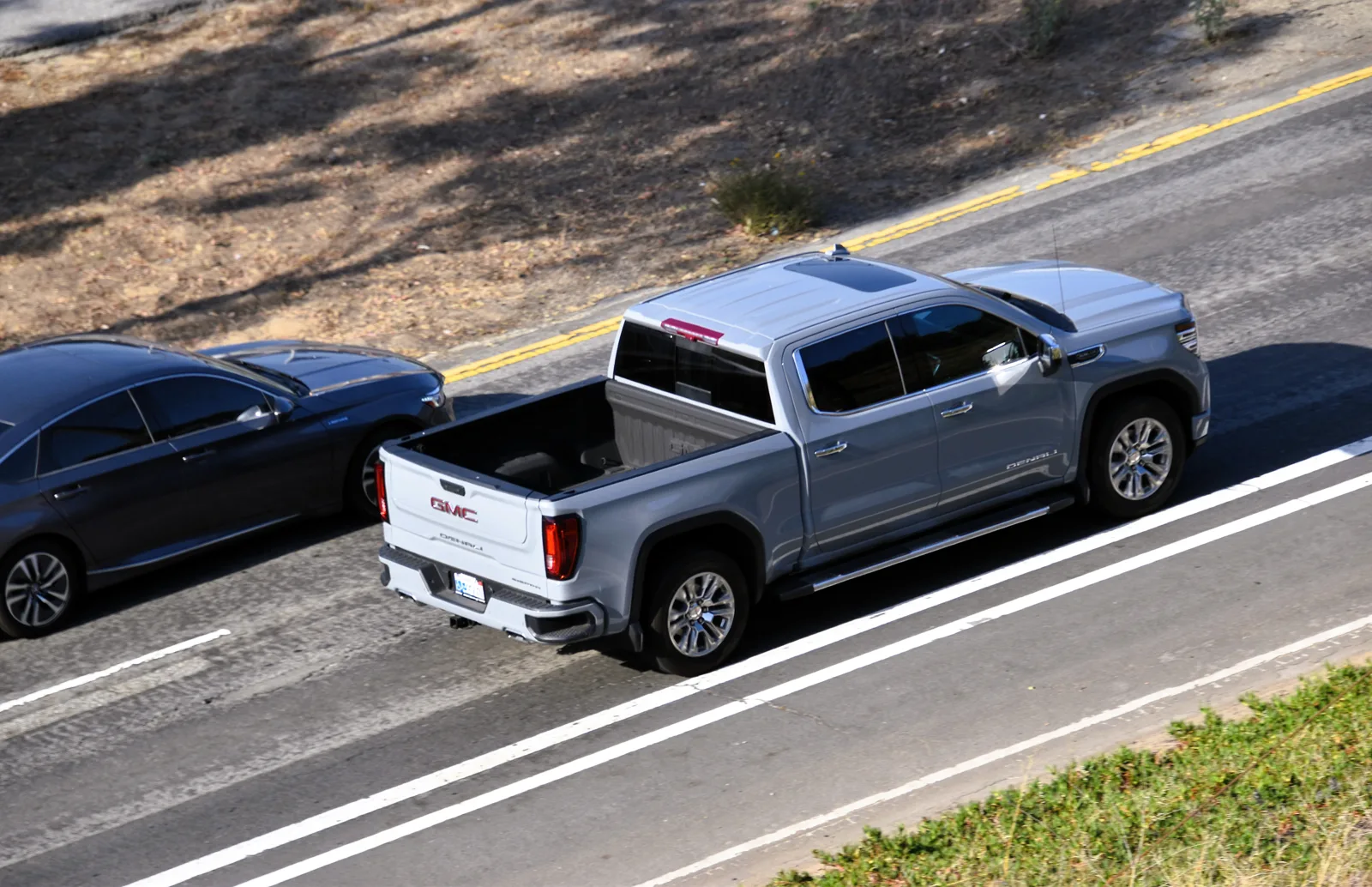
Measured figures put the Sierra 1500's short bed at about 69.9 inches of floor, the standard bed at about 79.4, and the long bed at about 98.2 - measured drawings and dealer spec sheets agree closely. Read that as your straight sleeping length and hold it against your own height.
The nominal names round hard, so use the measured inches rather than the marketing feet: the "5'8"" bed is really closer to 5'10" of floor, and the "8-foot" bed measures about 98 inches, not a clean 96.
You don't pick that length freely, either - GMC pairs it with cab size, so the cab tells you which beds were even possible. Across the sources that agree: Crew Cab with the 5'8" or 6'6" bed, Double Cab with the 6'6", and Regular Cab with the 8'. Most Sierras on the road are Crew Cabs wearing the short bed - the one that makes you work to sleep flat. Pairings shift a little by model year and trim, so confirm your own truck rather than trusting the badge; a couple of inches is the whole question here.
Where your height lands on that scale
A six-footer is 72 inches. Lay that against the three floors and the answer falls out immediately: the 6'6" bed's 79 inches swallows it with room to spare, the 8' bed obviously does, and the short bed's roughly 70 inches does not - you're a couple of inches short of lying flat straight with the tailgate up.
Two or three inches is a small margin, and that's the good news: it's a margin the next section erases completely. But it is a real one, and pretending 70 inches fits a six-footer straight is how you wake up braced against the cab.
One thing that quietly moves the line: every inch of pad you put under yourself steals a little usable length as the surface curves up at the ends. A borderline sleeper on the short bed should run a low-profile pad rather than a lofty air mattress - the same reason the pad choice below is a self-inflating mat, not a tall one.
Three ways a Crew Cab short bed still sleeps a six-footer
If you're on the popular short bed and taller than about 5-foot-9, you have three honest options. None of them is a compromise you discover at midnight; they are choices you make on purpose in the driveway.
- Sleep the diagonal. You don't have to lie parallel to the sides. Corner to corner, the 50.6-by-70-inch floor runs about 86 inches - so a six-footer lies flat with the tailgate closed and the weather locked out. Lay it from the bulkhead corner on one side to the tailgate corner on the other, and check the far corner for tie-down cleats or a bedliner lip your pad has to clear. It fits one person only, and the wheel wells eat the corners, so measure the clear diagonal on the floor rather than at the rail.
- Drop the MultiPro gate. Covered in the next section - it buys roughly another 20 inches but changes your weather plan.
- Build over the wheel wells. A deck level with the well tops gives you the wider rail-height space and a full-length platform, with the wells underneath as storage. It's the most work and the most permanent, and it's the right answer if you sleep two.
For a solo camper, diagonal-with-the-gate-up is the simplest sheltered night the truck offers, and with 22.4-inch walls around you it's a genuinely cosy one. Try it before you commit to a tailgate-down build.
The over-the-wells deck deserves a little more than a bullet, because it is the only one of the three that changes the truck's width rather than its length. Level with the tops of the wheel wells you get roughly 71 inches of usable width instead of 50.6 - the difference between two twin pads with no margin and two people who can turn over. You give up the shelter of the full 22.4 inches of wall, since the deck raises you toward the rail, and you give up simple access to whatever ends up underneath. Because the well height and the bed depth are identical on all three Sierra beds, a deck cut for one length transfers to another with a cut across the middle rather than a redesign.
Which one you choose usually comes down to how often you sleep in the truck. A few nights a year: the diagonal, and nothing to build. Regular weekends solo: the gate-down setup with a canopy. Two people out often: the deck, once, properly.
The MultiPro gate, and the number GMC doesn't publish
The Sierra's MultiPro tailgate is a six-function gate with an inner load-stop and a fold-out step, and it makes the classic short-bed fix nicer than most. But here's the gap I won't paper over: neither GMC nor the aggregators cleanly publish how many inches the open gate adds to your sleeping length.
- What it buys: a pickup tailgate panel is roughly 20 inches deep, so laid flat it adds about that much - enough to turn the short bed into a flat run for a tall sleeper.
- The catch: the gate sits a touch lower than the floor and isn't perfectly load-flat, so bridge the seam with a pad or a board and your hips won't drop into the lip.
- The weather cost: an open gate needs a canopy or topper over it, or your feet spend the night outside in the rain.
Because the added length isn't an official figure, measure your own gate rather than trusting any chart, this one included - a two-minute check that decides whether tailgate-down is worth it for you. The MultiPro's inner gate can also stand up as a load-stop, which is handy for keeping a pad or gear from sliding out the open end while you set up.
It's a Silverado bed with a different badge
Worth saying plainly, because it saves cross-shoppers real time: the GMC Sierra 1500 and the Chevrolet Silverado 1500 are the same truck underneath. They ride on GM's full-size platform and share the bed - the same three lengths, the same 50.6 inches between the wheel wells, the same 22.4-inch depth, the same flat floor.
For a camper that means a pad size, a sleeping layout or an over-the-wells platform built for one fits the other exactly. The differences are trim, tailgate features and options - the Sierra's MultiPro gate against the Silverado's Multi-Flex, the badges, the interiors - not the geometry you sleep on.
People burn time hunting for a separate "Sierra bed size" when the honest answer is that the Silverado's numbers are the Sierra's numbers. If you're weighing the two, our Chevy Silverado 1500 bed breakdown runs the same figures from the Chevy side. Measure once and it's true for both.
Build order: level it, cover it, then measure your own truck
The build itself is short, and the order matters more than the parts list.
- Cover it. A truck bed's weakness against an SUV is that it's open to the sky, though the deep sides already do the low-wind work - a cover only has to close the gap from the rail up. Guy-line it off a stake pocket so a gust can't lift it, and if you're sleeping gate-down, size it to overhang the open end - that's where the weather gets at your feet. A hard or soft topper is the all-weather upgrade if you end up out often.
- Then take your own four numbers. Floor length bulkhead to closed gate; the wheel-well pinch at its narrowest (usually the front face of the well, not the middle); the clear floor diagonal; and the gate-down length, since that one is never published. If you run a spray-in or drop-in liner, measure over it and knock a fraction off everything - a liner quietly steals width and length everywhere it coats, which matters when you're already a couple of inches short. Write them down and take each twice.
The order matters because each step changes the next one's numbers. A pad raises your sleeping surface, which is why you measure after it is in rather than before; a canopy sets how far the gate can open before the cover stops sealing; a liner shifts every dimension you wrote down. Do it backwards and you end up buying a pad sized to a chart, a canopy sized to the pad you did not buy, and a measurement taken on an empty bed you will never sleep in.
Do it in that sequence and the Sierra sleeps one person easily and two with twin pads or a deck over the wells - and whatever you build carries straight over to a Silverado. Buy the bed length to your height if the choice is still in front of you; work the diagonal or the gate if it isn't.