What the Ranger's bed marketing gets right and wrong
Marketing says the Ford Ranger is a do-anything midsize truck with a versatile bed. The spec sheet is quieter, and for a camper the details it leaves out matter. The most important one: the Ranger you can buy in the United States comes exactly one way - a SuperCrew cab with a 5-foot bed - even though the global Ranger offers a 6-foot bed and a SuperCab that US buyers see in photos and forums. Order expecting a 6-foot bed and you'll be disappointed at the dealer.
But here's where the skepticism cuts the other way: the Ranger has one genuinely class-leading number that isn't hype at all, and it's the one that matters most for sleeping. This page checks the marketing against the real spec sheet - the 5-foot-only reality, the 59.6-inch floor, the standout 48.2 inches between the wheel wells, the depth, the outlet trims, and the tailgate-down length nobody publishes - so you build to what the Ranger actually is, not what the brochure implies.
Where does the six-foot confusion even come from? Three places, mostly: the prior-generation US Ranger that did sell a longer bed, the current global-market truck offered in Australia and Europe with a SuperCab and a six-foot option, and reused stock photography that never matched the North American order sheet. None of that is an outright lie, but it's the kind of blur that costs you at the configurator, where only one cab and one bed actually appear.
The US Ranger is 5 feet, SuperCrew, and that's it
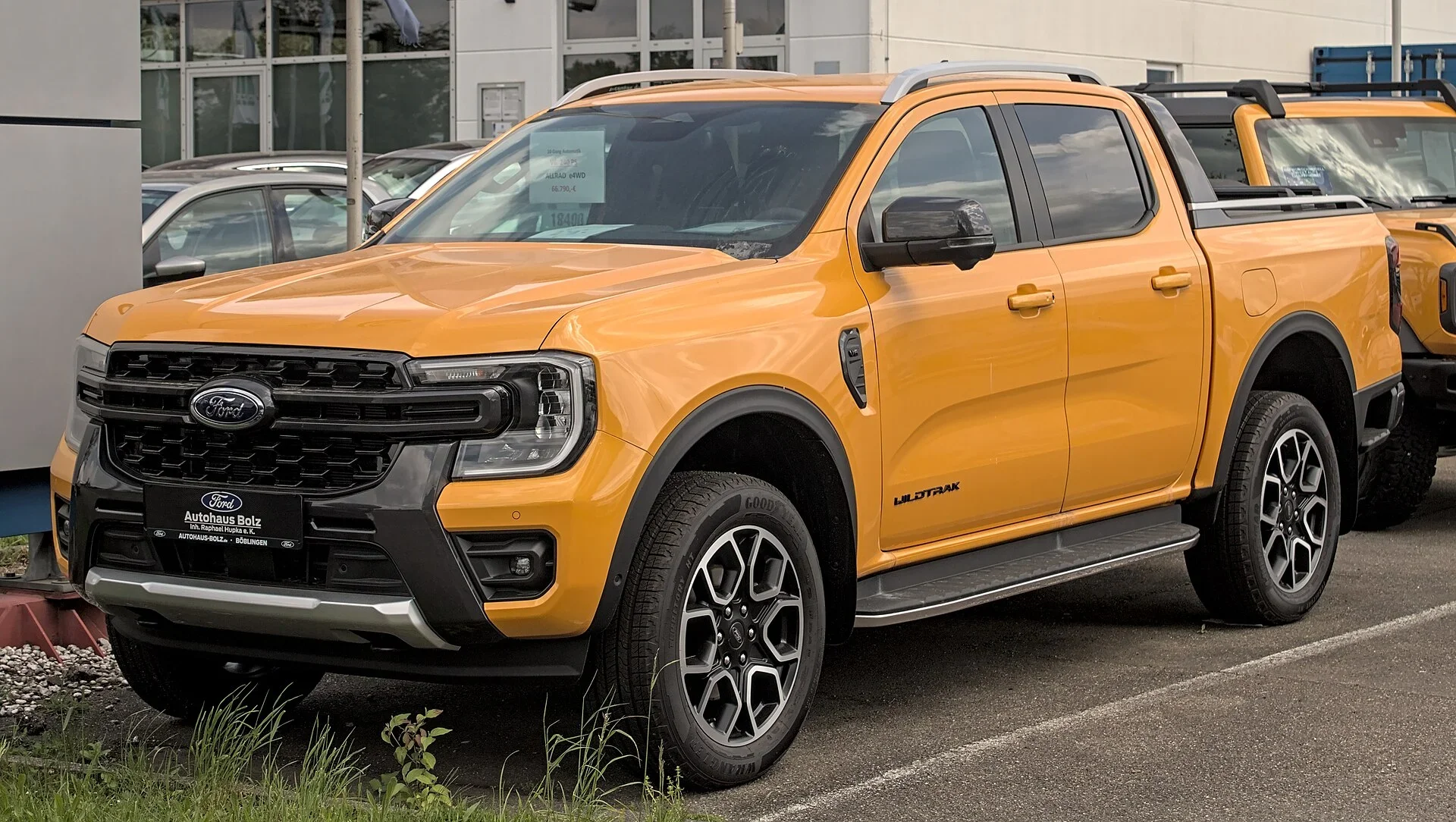
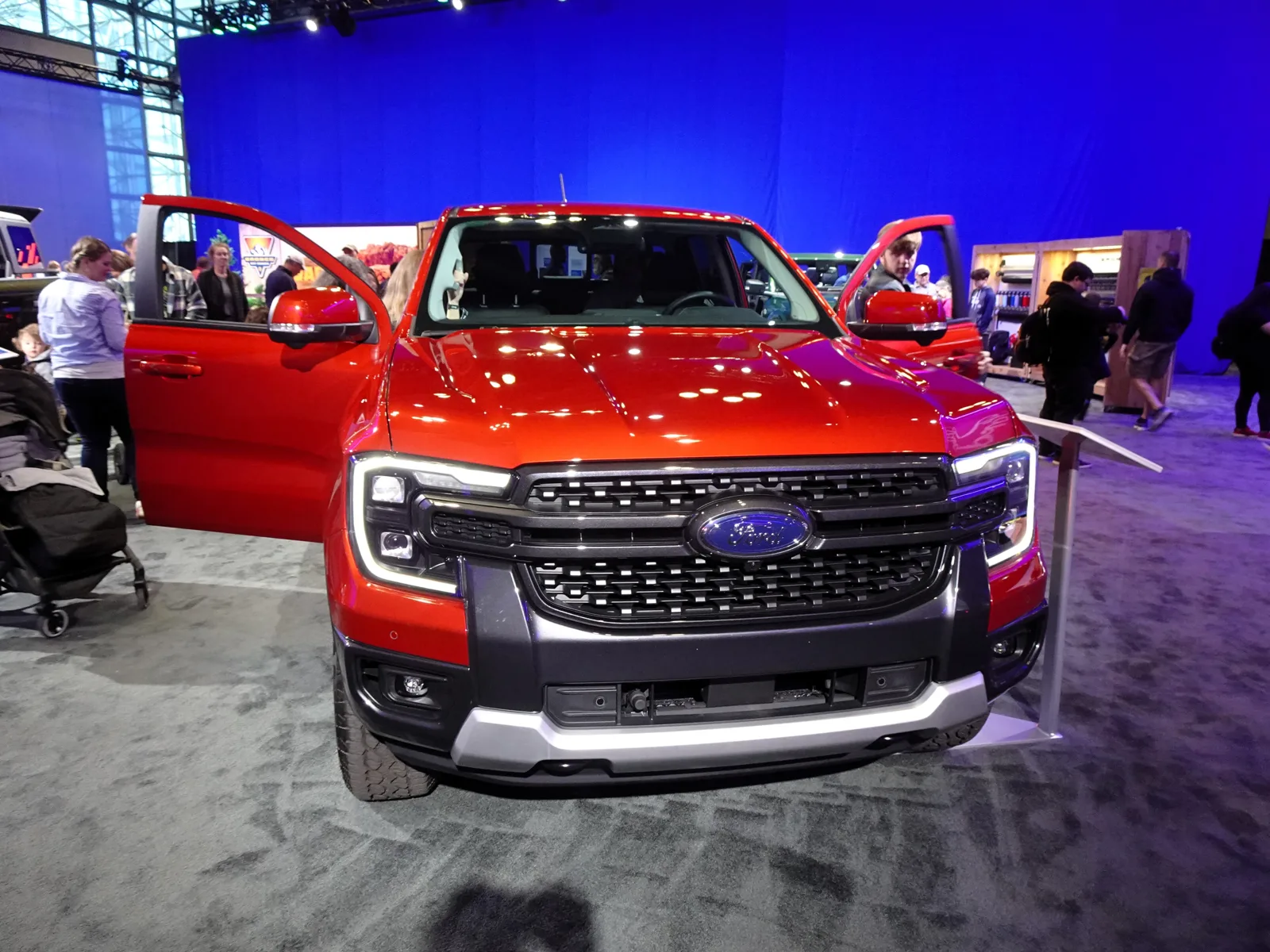
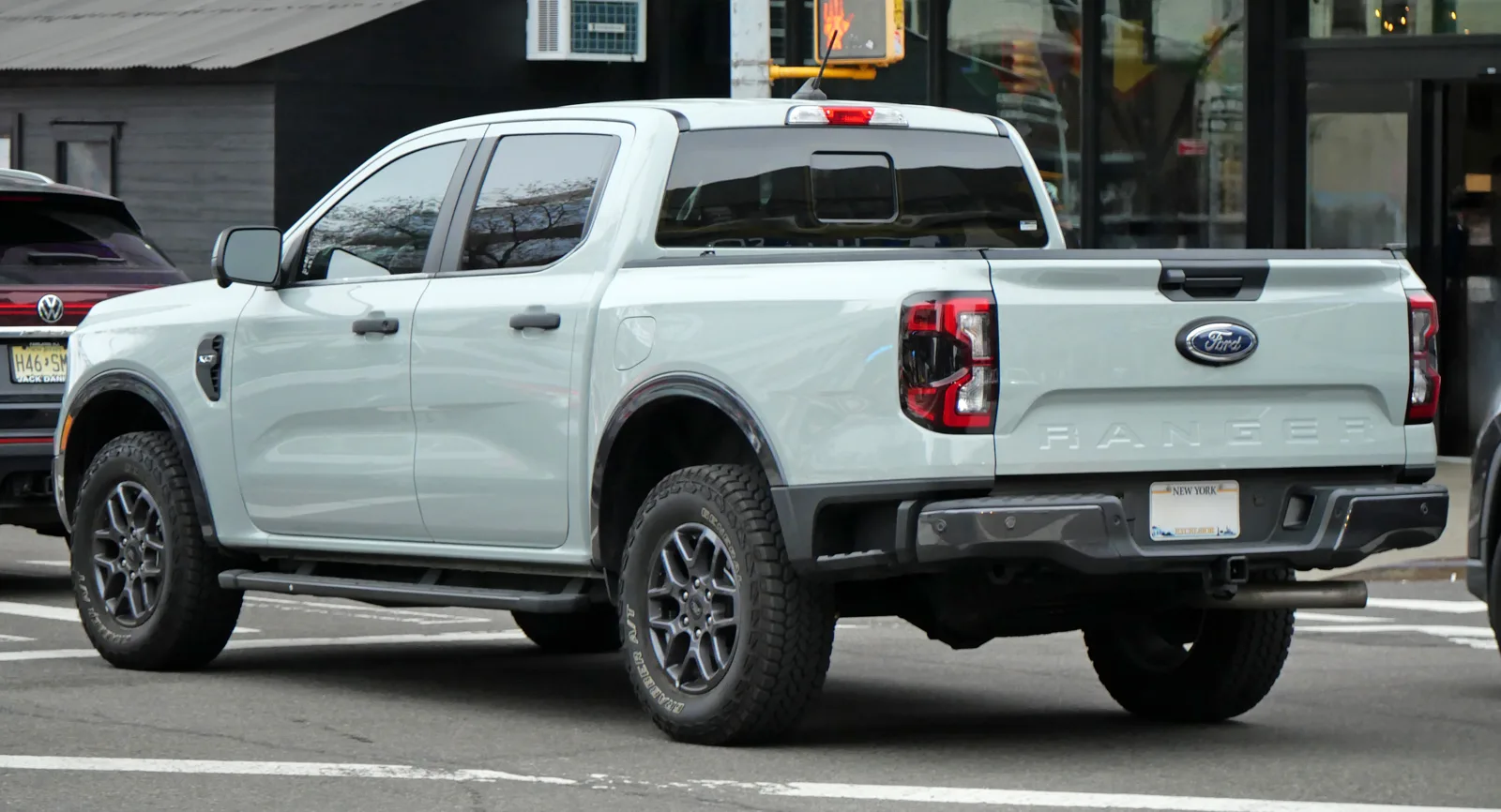
Let's kill the confusion first, because it changes your whole plan. The 2024-and-newer North American Ford Ranger is sold only as a SuperCrew (four full doors) with a single 5-foot bed. There is no SuperCab and no 6-foot bed in the US lineup - that 6-foot bed you've seen was the previous generation and remains a global-market configuration.
Marketing photos and global spec sheets show a 6-foot Ranger bed. The US 2024 Ranger doesn't sell one - it's SuperCrew, 5-foot bed, every trim. Plan your build around 5 feet, not the number on an overseas brochure.
Why the skeptic harps on this: a lot of truck-camping advice quietly assumes a 6-foot bed, and if you follow it in a US Ranger you'll size a platform or a mattress wrong. Every number and every build tip below is for the 5-foot SuperCrew bed - the only Ranger you can actually buy here - so you're not planning around a configuration that isn't on the lot.
One more reason to nail this down before you spend: the SuperCrew's four full doors mean the cab claims length that a stretched SuperCab body would have handed to the box. Marketing frames the four-door layout as pure passenger upside, and it is for people - but the trade is a shorter bed. Reality: the roomier cab and the five-foot bed arrive together, with no option to swap toward the longer bed those overseas photos keep suggesting.
The bed floor measures 59.6 inches
With the config settled, here's the length. Ford's dealer spec sheets - consistent with Ford's Body Builder guide - put the Ranger's 5-foot bed floor at 59.6 inches. That's just under five feet, which means, like most midsize 5-foot beds, an adult doesn't lie flat with the tailgate closed.
- 59.6 inches of floor: a bit under five feet - fine for a shorter sleeper closed up, but an average adult sleeps out the tailgate.
- Tailgate-down is the flat-sleep move for anyone near six feet - drop the gate and bridge it (more on the missing length below).
- The floor is where the Ranger's real advantage lives - not in the length, which is ordinary, but in the width, which is not.
So on length the Ranger is unremarkable - a typical 5-foot midsize bed that needs the tailgate for a tall sleeper. The marketing won't tell you you'll be sleeping partly out the back, but the tape measure does. Where the Ranger earns genuine praise is the next number.
Put 59.6 inches in plain terms: that's about four foot eleven and a half. A sleeper of five-eight or under can stretch out closed up by angling slightly; anyone taller runs into the closed tailgate. The spec sheet won't editorialize about your height, so do the subtraction yourself - your heel-to-crown length against 59.6 inches - before assuming a shut-gate night actually works for your frame.
The number that actually impresses is 48.2 inches
Here's the claim that survives skepticism because the spec sheet backs it up: the Ranger measures 48.2 inches between the wheel wells - the widest floor in the midsize class. For context, the Tacoma and Gladiator sit around 44-45 inches and the Maverick at 42.6. Ford's is the one that clears 48 inches, and owners confirm a 48-inch sheet of plywood lies flat on the floor even with a spray-in liner.
Forty-eight-point-two inches between the wheel wells is the Ranger's real headline - the only truck here that lays a full 48-inch mattress flat on the bed floor, no platform required. That's not marketing; the tape agrees.
Why this matters more than length for a lot of campers: on every other truck here you have to build a platform over the wheel wells to get real width, because the floor pinches to the low 40s. On the Ranger you can skip that build entirely and lay a wide pad or a queen-adjacent mattress straight on the floor. For a couple, or anyone who wants width without carpentry, that's a concrete, verified advantage.
Line the class up and the gap is plain: the Ranger's 48.2 inches beats the Tacoma's 44.7, the Gladiator's 44.8, the Colorado's mid-forties floor, and the Maverick's 42.6 by three to six inches of usable flat width. Three inches sounds trivial until it's the difference between a pad lying flat and a pad climbing the wheel-well humps. Marketing calls every one of these trucks bed-versatile; the tape says only one of them clears a full 48.
Why the Ranger takes a real mattress flat
Let me make the width practical, because it changes what you buy. Most sleeping pads and mattresses are sized in standard widths: a twin is about 38 inches, a full is 53-54, a queen 60. The Ranger's 48.2-inch floor sits right in the useful middle - wider than a twin, and enough for the roughly 48-inch-wide pads and double sleeping bags that other midsize floors can't take flat.
- A 48-inch-wide pad or double bag lies flat on the Ranger floor between the wells - no platform, no build.
- Two narrow pads side by side fit the floor for two sleepers without raising the deck.
- Full-size (53-54 in) still wants a wheel-well-height platform, but you're closer to it than any rival.
The honest caveat a skeptic adds: the bed is about an inch wider at the cab than at the tailgate, so measure before you cut a platform or trust a tight-fitting mattress end to end. But the headline holds - the Ranger is the width champ of the class, and for camping that's worth more than a spec sheet full of average numbers.
The mattress math is worth spelling out, because pad makers don't size to trucks. A standard camping double runs about 50 inches; a self-inflating 'wide' pad is often 30; two 20-to-25-inch pads laid together land near 48. The Ranger floor swallows that pairing flat where a 44-inch floor shoves the outer pads up onto the wells. Check the exact width on the pad's spec page, not the bag's cover art, before counting on a flat fit.
Depth, taper, and the widths nobody explains
The rest of the Ranger's measurements are solid and mostly unremarkable, which is fine - width was the star. The bed is 62.4 inches wide overall at its widest point and 20.8 inches deep, and it tapers slightly, running about an inch wider at the cab than at the tailgate.
- 62.4 inches overall: the widest point up top, useful for a platform built at rail height.
- 20.8 inches deep: a decent wall for wind shelter and platform storage - typical for a midsize.
- The ~1-inch taper: the detail that trips DIY builders - a platform cut square will bind at the narrow end, so measure both ends.
None of this is marketing spin; it's just the honest shape of the bed. The taper is the one that catches people, and it's exactly the kind of detail a brochure never mentions and a tape measure always does. Measure both ends before you build, and the Ranger's dimensions cooperate.
Worth saying plainly what the taper does and doesn't cost you: an inch across five feet is a gentle wedge, not a dramatic funnel, so a mattress dropped on the floor won't feel it. A rigid platform will. Cut plywood to the tailgate-end width, not the cab-end, and let the spare clearance ride harmlessly toward the cab - reverse it and the panel binds. The 20.8-inch depth, meanwhile, hides a low storage drawer under a rail-height deck without stealing sitting-up room.
The tailgate-down length the brochure skips
Here's the honest gap, and it's the one a 5-foot-bed sleeper needs most. Ford does not publish how much length you gain with the tailgate down, and owner threads discuss tailgate height, not extended length - so there's no clean number to hand you. I won't invent one.
The Ranger has no multi-position tailgate in the US, so it's full-down or closed - and Ford never publishes the down length. For a 6-foot sleeper in a 5-foot bed, that unpublished number is the one you actually need, so measure your own.
What you can plan on: dropping the gate adds roughly the tailgate's own length, and a bed extender squares the gap so a pad doesn't sag. Unlike the Maverick or Gladiator, the US Ranger's tailgate doesn't lock at a helpful mid-position, so you're working with fully-down. Measure your extended length with your extender in place before you commit to a mattress - it's a measure-your-own, not a spec you can trust from anyone.
A rough way to plan without a published figure: a midsize truck tailgate usually sits in the 18-to-21-inch range top to bottom, so budget somewhere near that as bonus floor once the gate drops and gets bridged. Treat it as a planning estimate, never a spec - the honest move is a tape run from the closed bulkhead to the tailgate's outer edge with the gate down, done on the actual truck before any mattress lands in the cart.
The 400-watt outlet and which trims get it
The Ranger offers in-bed power, and here the marketing needs a trim check. There's a 120-volt, 400-watt bed outlet plus a 12V outlet - but the 400-watt one is standard on XLT, Lariat and Raptor, not on the base XL. So 'the Ranger has a bed outlet' is true only if you didn't buy the cheapest trim.
- What 400 watts runs: charging, a laptop, a fan, lights - the useful small stuff.
- Trim check: confirm XLT or above for the standard bed outlet; the XL goes without.
- Not an appliance outlet: at 400 watts, heating-element gear is out - that's a power-station job.
It's a respectable outlet, not the Tacoma i-FORCE MAX's 2400-watt worksite. For real overnight power on any Ranger trim, a portable station is the reliable answer and doesn't depend on which trim you bought. Verify the outlet claim against your actual trim rather than the general brochure.
The trim gate is easy to miss on a used lot, where a listing might just say 'Ranger' without spelling out XL versus XLT. Look for the outlet itself in the bed, or read the window sticker - don't take a seller's word that it has the plug. And size expectations to the number: 400 watts is a charging-and-lighting budget, so a 12-volt fridge or a laptop rides along fine while anything with a heating coil trips it on the spot.
Building a bed in the widest midsize floor
Here's the build, and the Ranger's width makes it the simplest of the group. Because a 48-inch pad lies flat on the floor, a lot of Ranger campers skip the platform entirely.
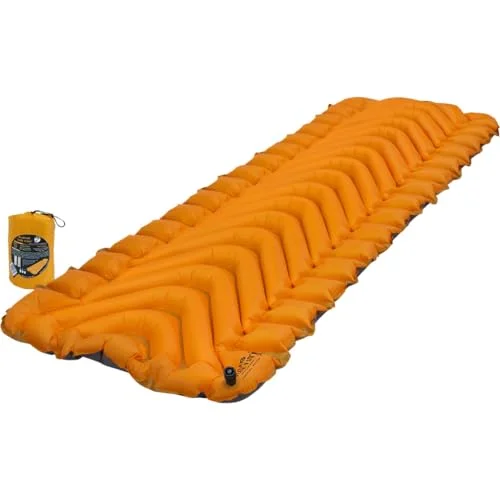
- The no-build option: a wide insulated pad straight on the bed floor between the 48.2-inch wells - an Klymit Insulated Static V Lite pad handles a single sleeper and stops the cold radiating up through the metal.
- The platform option: only needed for full width or under-bed storage - build it at wheel-well height and measure both ends for the taper. The Bed Track cleats anchor it at about 200 pounds per cleat.
- Cover the top: a Rightline Gear tailgate canopy keeps rain and dew off an open or tailgate-down sleeper.
The Ranger rewards the camper who doesn't want to build: its floor width does the work a platform does on other trucks. Pad it, cover it, and drop the tailgate for length, and you're done.
A note on anchoring, since the width tempts a permanent setup: the Bed Track cleats are rated around 200 pounds each, plenty to strap down a platform, a drawer, or gear boxes so nothing shifts on a rough approach. Spread the load across two or more cleats rather than hanging everything on one, and the rating holds with margin to spare. For a pad-only, no-build night, none of that applies - drop it in, and the floor handles the rest.
The skeptic's verdict on the Ranger bed
Check the Ranger against its own marketing and here's what holds. The US truck is 5-foot-bed, SuperCrew only - ignore the global 6-foot bed. The floor is an ordinary 59.6 inches, so a tall sleeper drops the tailgate. But the 48.2 inches between the wheel wells is the real, verified standout - the widest midsize floor, the only one that lays a 48-inch pad flat without a platform.
Buy the Ranger for its width, not a bed length it doesn't have. Its 48.2-inch floor is the class's best, and it lets you skip the platform most trucks force on you - just plan around 5 feet and drop the gate for length.
The one-line filter for a buyer: if width matters more than length to your sleeping setup, the Ranger is the class pick; if you need a flat six-foot floor closed up, no midsize delivers it and you're shopping full-size. Everything else - the ordinary floor length, the trim-gated outlet, the unpublished tailgate math - is a detail to verify, not a dealbreaker.
Don't order expecting a 6-foot bed, do count on the class-best width, measure your own tailgate-down length and the bed taper, and confirm the outlet trim, and the Ranger is a genuinely camper-friendly truck for anyone who values width over a platform build. The full setup lives in our Chevy Colorado truck bed dimensions, and our sleeping in a truck bed without a topper guide covers the open-bed basics.
Related on Auto Roamer: truck bed tent vs rooftop vs ground; Ram 1500 cargo bed dimensions.