Cost of Repairing Heated and Cooled Seats (2026 Complete Guide)
Jake - The Dirtbag Engineer
10 min read
Includes Video
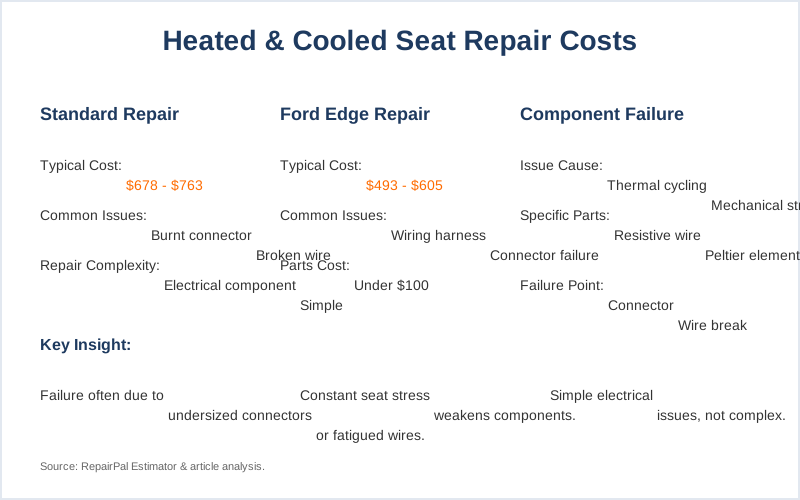
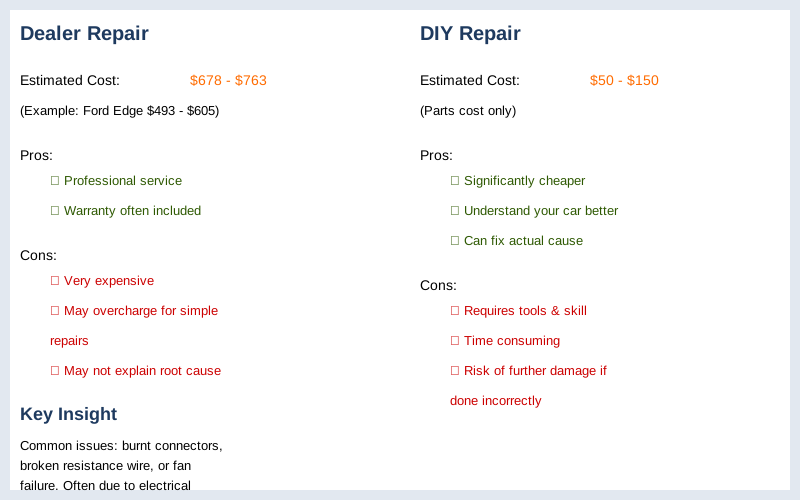
The dealer wants $678 to $763 to fix your heated seat, according to RepairPal's estimator . For a Ford Edge, it's $493 to $605, says another RepairPal estimate . This is usually for a simple electrical component that costs less than $100 and takes an hour, maybe two, if you're slow.
The dealer wants $678 to $763 to fix your heated seat, according to RepairPal's estimator. For a Ford Edge, it's $493 to $605, says another RepairPal estimate. This is usually for a simple electrical component that costs less than $100 and takes an hour, maybe two, if you're slow. They'll tell you it's 'complex electrical work.' It's not. It's often a burnt connector or a broken resistance wire.
Key specifications for cost of repairing heated and cooled seats
The Short Answer
Your heated/cooled seat is dead because a cheap electrical connector or a thin resistance wire failed under thermal cycling and mechanical stress. The system relies on small gauge wires and resistive elements to generate heat, or tiny fans to move air. These components are tucked into a seat cushion that sees constant compression and shear forces.
The most common failure point? The wiring harness connector under the seat. I've seen it countless times, like the burnt connector issue in a Lexus RX Facebook group. These connectors are often undersized for the current draw, leading to localized thermal runaway. The plastic melts, the contact resistance spikes, and the circuit opens. Poof. No heat, no cool.
For heated seats, the resistive element embedded in the seat pad is another weak link. It's a fine wire, sometimes carbon fiber, designed to heat up when current flows. But these wires are subject to repeated bending and compression as people sit, shift, and slide. This causes micro-fractures, eventually leading to a complete break in the circuit. The resistance goes infinite, and your butt stays cold.
Cooled seats use small thermoelectric devices (Peltier elements) or miniature blower fans to move air. The fans are typically brushed DC motors, which have a finite lifespan due to brush wear and bearing fatigue. They vibrate, transfer those vibrations to the seat structure, and eventually seize or get clogged with seat foam dust. No airflow, no cooling. It's not rocket science; it's just cheap components in a high-stress environment. The dealer's solution? Replace the whole assembly for hundreds of dollars.
Understanding the repair costs can help you manage expenses related to other important features, like damaged car comfort features.
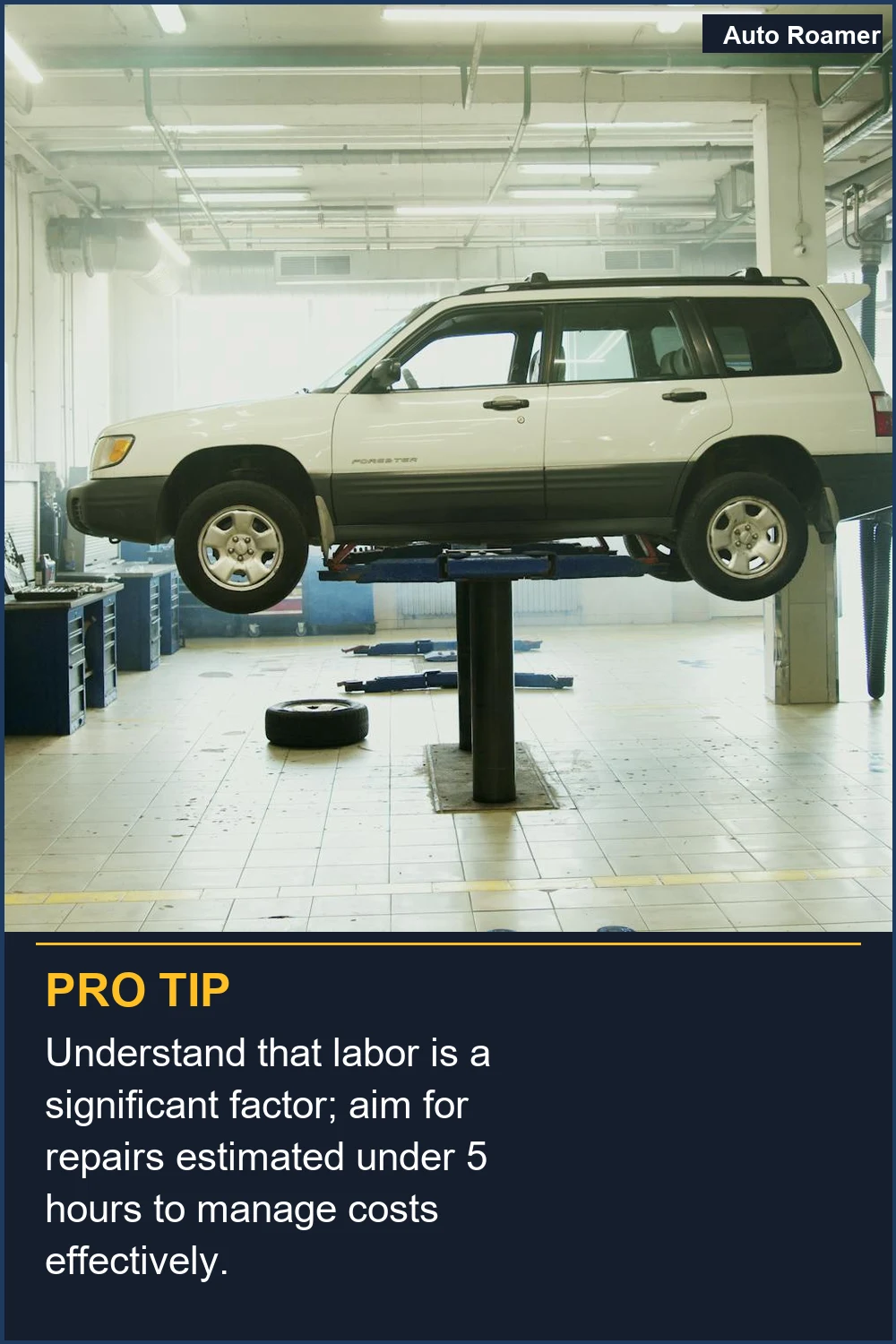
A car on a lift highlights the complexity of auto repairs, often involving delicate electrical components that contribute to the cost of fixing heated and cooled seats.
| Photo by Renee Razumov
A car on a lift highlights the complexity of auto repairs, often involving delicate electrical components that contribute to the cost of fixing heated and cooled seats.
| Photo by Renee Razumov
The Reality Check
The 'reality' of heated and cooled seat repair is that you're paying for labor to dissect a seat. One Quora user mentioned up to 50 hours of labor for luxury models. That's absurd. Most modern seats are modular, but getting to the heating pad or fan often means removing upholstery, which is a tactile, time-consuming process. The foam and fabric are held by hog rings, clips, and sometimes adhesive. This isn't complex, just tedious.
For cooled seats, the issue often isn't the fan motor itself but the ducting getting crushed or blocked. Airflow is everything. If a plastic air channel has a crack from repeated impact, or if the foam compresses to seal it off, the fan can spin all day, but you'll get zero convective cooling. Check for physical deformation of the seat base and backrest internal structure. That's mechanical stress, not electrical failure.
Here's a breakdown of common failures and costs:
Component
How It Fails
Symptoms
Fix Cost
Heating Element (Pad)
Resistance wire fracture from flexure/compression.
No heat, or localized hot spots.
$65 (part) - $300+ (installed)
Wiring Harness/Connector
Thermal degradation, high resistance arcing, pin corrosion.
Intermittent function, no function, burnt plastic smell.
$10 (pigtail) - $150 (harness section)
Blower Fan (Cooled Seat)
Brush wear, bearing failure, dust ingress, motor seizure.
Lights on but no function, incorrect operation, system lockout.
$150 - $800+ (part only, often requires programming)
My buddy's 2012 Traverse LTZ had cooled seats blowing, but no air came from the cushions, as discussed on Traverse Forum. That's a clear mechanical obstruction or a fan moving air into a void. It's rarely the module. The dealer will still try to sell you a module first, like they did for the guy with the 2009 Ford Flex. They replaced the control module, which didn't fix the problem, then wanted another $500 for the heater element.
Total rip-off. Always start with the simplest, cheapest failure point.
To enhance comfort without high repair costs, consider investing in heated car seat covers.
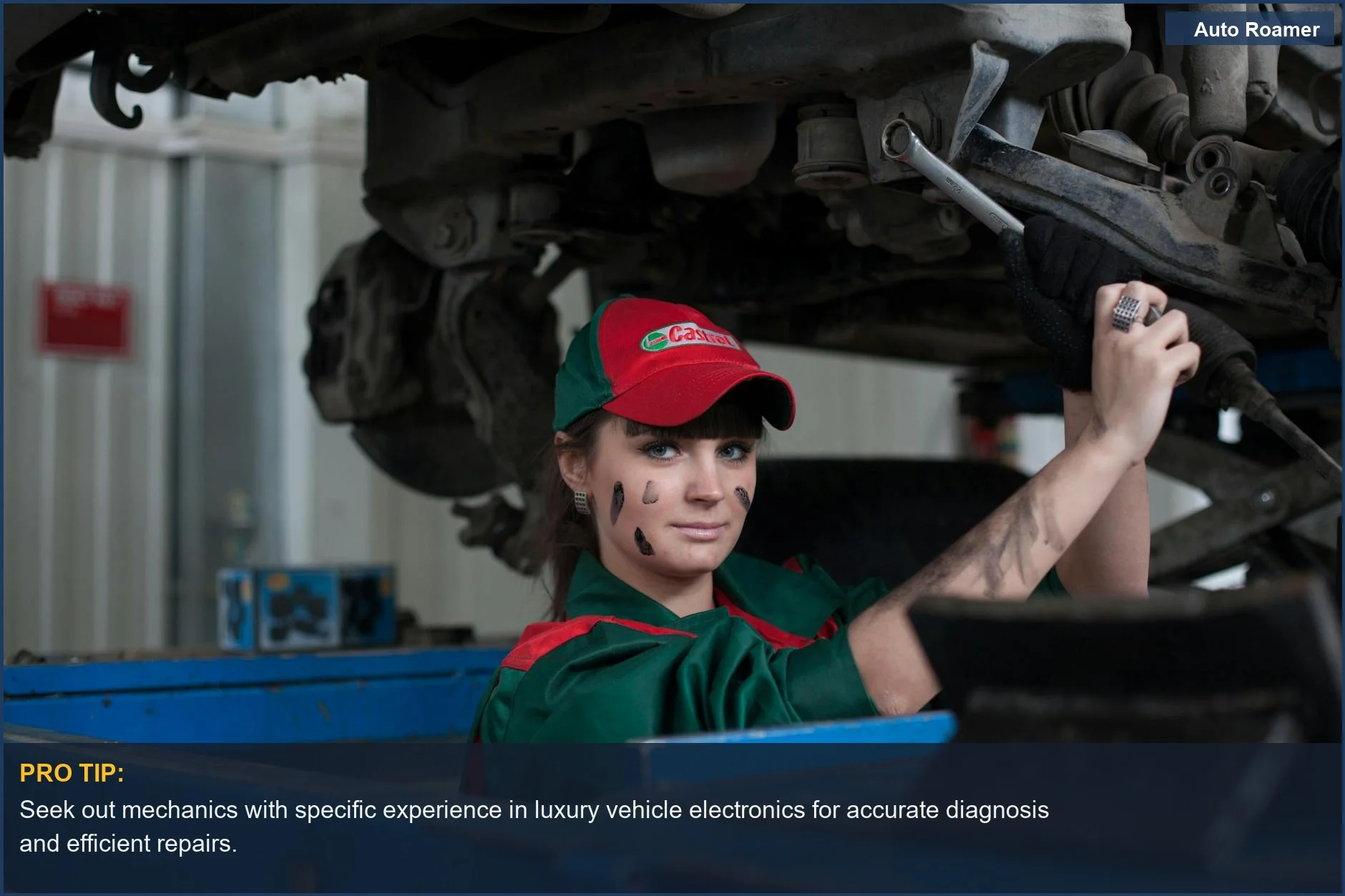
A mechanic's focused work demonstrates the skilled labor involved, a major driver of the overall cost of repairing heated and cooled seats, especially for luxury models.
| Photo by Artem Podrez
A mechanic's focused work demonstrates the skilled labor involved, a major driver of the overall cost of repairing heated and cooled seats, especially for luxury models.
| Photo by Artem Podrez
How to Handle This
1. Verify the Symptom (15 minutes): Confirm the exact failure mode. Does the button light up? Is it truly no heat/cool, or just weak? For heated seats, a simple tactile check is enough. For cooled seats, put your hand on the cushion. If you hear a fan but feel no air, that's an airflow problem, not an electrical one.
2. Check Fuses (5 minutes): Locate your vehicle's fuse box diagrams. Find the fuse for the heated/cooled seats. Pull it and inspect the filament. A $15 multimeter set to continuity mode is faster and more reliable than eyeballing it. If it's blown, replace it with the correct amperage fuse. If it blows again immediately, you have a short circuit, not just a bad element.
3. Inspect Under-Seat Wiring (30 minutes): This is the high-probability failure. Tilt the seat back or remove it if necessary for better access. Look for any loose, pinched, or visibly burnt connectors. The white plastic connectors are notorious for thermal degradation. Tug on the wires gently to check for terminal play. A common fix for F-150 owners is a $13 pigtail, as shown in this YouTube video, to bypass a problematic factory connector.
This usually means cutting and splicing, so make sure you use proper heat-shrink butt connectors, not cheap crimps.
4. Test for Open Circuit in Element (1 hour): If the wiring looks good, you'll need to get to the heating/cooling element. This requires removing the seat trim and upholstery. Disconnect the element's connector and use your multimeter on the resistance setting. A good heating element will show a low resistance value (e.g., 5-20 ohms). An open circuit (OL or infinite resistance) means the element itself is broken. For cooled seats, check for 12V going to the fan motor.
If it's getting power but not spinning, the fan is dead.
5. Consider Element Replacement (2-4 hours): If the element is bad, you can often buy just the pad. Ford sells specific heating pads, like JL3Z14D696H. This is the most involved step, requiring careful removal and reinstallation of upholstery. If you're not comfortable with hog rings and fabric stretch, this is where you might consider a shop. But remember, the part itself is cheap; it's the labor for upholstery work that drives the cost.
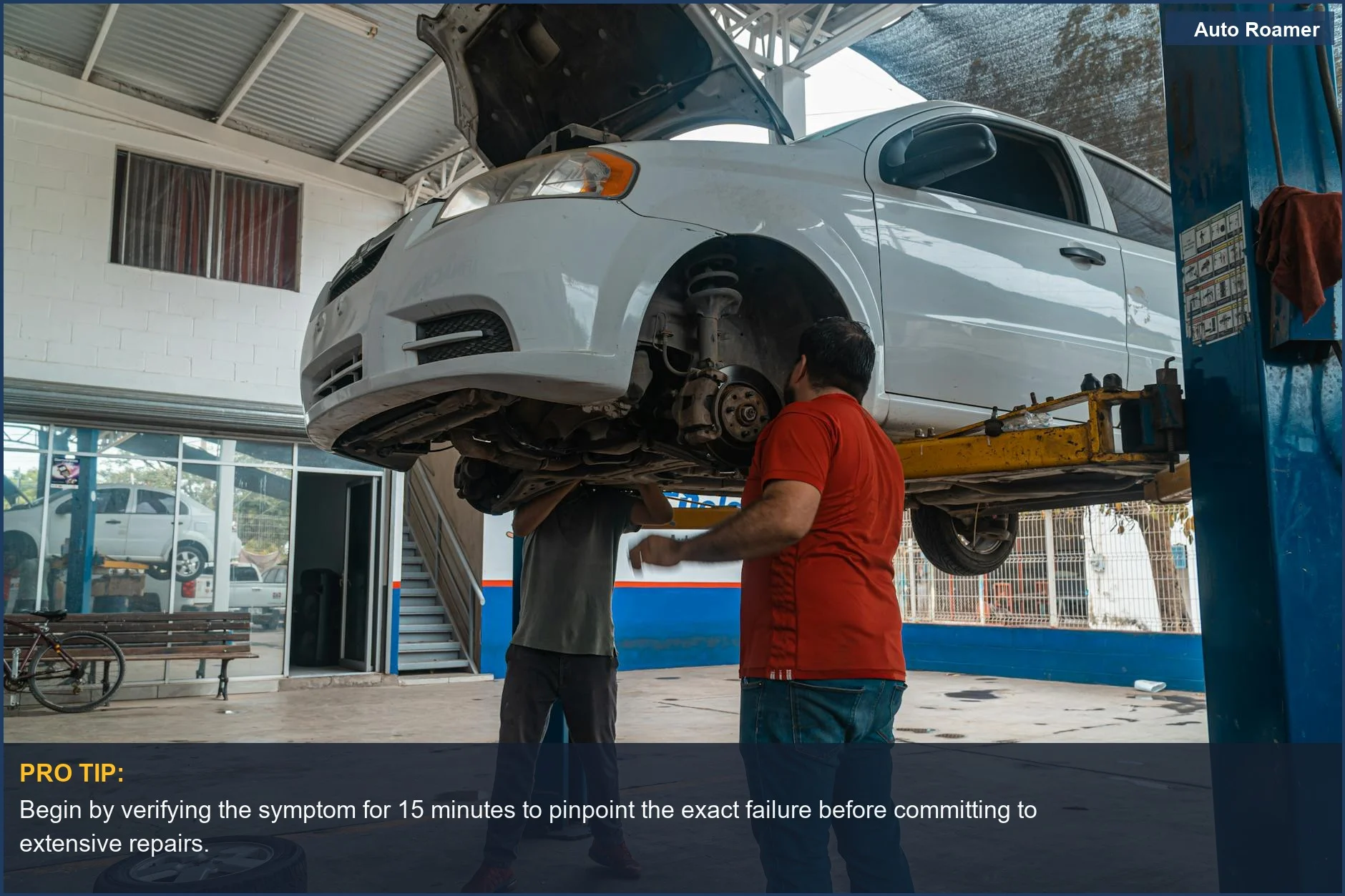
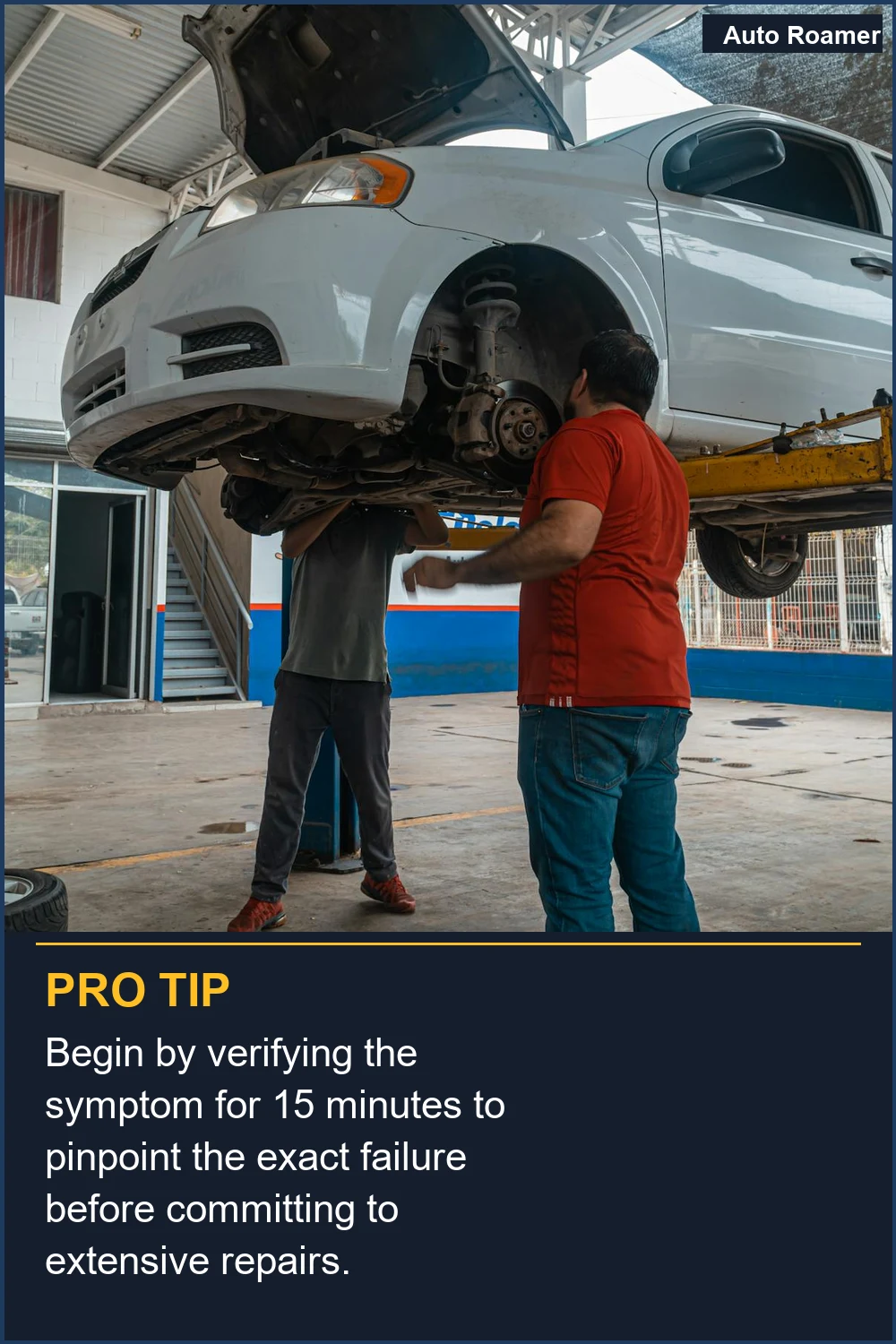
Technicians inspecting a vehicle underscore the importance of accurate diagnostics when troubleshooting heated and cooled seat issues, impacting the final repair bill.
| Photo by Jose Ricardo Barraza Morachis
Technicians inspecting a vehicle underscore the importance of accurate diagnostics when troubleshooting heated and cooled seat issues, impacting the final repair bill.
| Photo by Jose Ricardo Barraza Morachis
What This Looks Like in Practice
Scenario 1: 2015 F-150, Heated/Cooled Seat Button Lights Up, No Function. The red/blue lights on the button illuminate, but the seat doesn't heat or cool, as noted by an F150Forum user. This points directly to the seat's internal components, not the control module. Often a burnt connector under the seat has opened the circuit, preventing current flow to the elements or fans. Simple pigtail fix for $13.
Scenario 2: 2018 Accord, Driver's Heated Seat Only Works Intermittently. The owner complains of inconsistent heating. This is classic high-resistance contact. The connector pins are likely corroded or have lost their spring tension, causing intermittent arcing and heating when the seat shifts. Eventually, it will fail completely. Clean or replace the connector.
Scenario 3: 2010 Mustang GT, Passenger Cooled Seat Makes Noise, No Airflow. A Mustang Source forum member describes this exact issue. The fan motor's bearings are likely failing, causing grinding or squealing. Or, it's packed with debris, increasing mechanical resistance. The motor is still getting power, but its RPM is too low to move significant air. Replace the fan motor, which can be found for about $65 online.
Scenario 4: 2009 Ford Flex, Dealer Replaced Module, Still No Heat. The dealer charged $300 for a control module, then said the element was bad for another $500, according to Car Talk Community. This is a diagnostic failure. The module was likely fine; the element was the original problem. They swapped a working part, then found the real issue. You paid for their learning curve.
Scenario 5: Luxury SUV, Both Front Seats No Heat/Cool, No Button Lights. This indicates a higher-level electrical issue. Check the main fuse for the seat comfort system. If that's good, suspect the main control module that sends signals to the individual seat modules. It's rare for both seats to fail simultaneously at the element level unless there was a massive power surge.
A skilled mechanic's focus reflects the expertise needed to tackle intricate systems, a key factor in the cost of repairing heated and cooled seats.
| Photo by Pixabay
A skilled mechanic's focus reflects the expertise needed to tackle intricate systems, a key factor in the cost of repairing heated and cooled seats.
| Photo by Pixabay
Mistakes That Cost People
Ignoring the Fuse: Thinking it's 'too simple' to be the fuse. A blown fuse often indicates a deeper short, but sometimes it's just a transient overload. Always check the fuse first. It's a 30-second diagnostic.
Blindly Trusting a Dealer's First Diagnosis: Dealers often go for the most expensive, easiest-to-replace part first, like the control module. As seen on Car Talk Community, they might replace a module, then find the actual problem was the element. Demand a step-by-step diagnostic process, not just a part swap.
Using Incorrect Amperage Fuses: Replacing a blown 15A fuse with a 20A fuse because that's all you have. This bypasses the circuit's overcurrent protection, risking thermal damage to the wiring harness or the heating element itself. The wiring gauge is spec'd for a reason.
Improper Splicing Techniques: If you're fixing a burnt connector, twisting wires together and wrapping them in electrical tape is a recipe for high resistance and another failure. Use proper crimp connectors with heat shrink, or solder and heat shrink. You want a robust, low-resistance mechanical and electrical bond.
Not Inspecting for Physical Damage: For cooled seats, assuming it's electrical when it could be a crushed air duct or a fan clogged with lint. Always perform a visual and tactile inspection for mechanical stress or obstructions before diving into circuit diagnostics.
Ignoring Seatbelt/Occupancy Sensor Wiring: These wires often run in the same harness as the seat heaters. If you're pulling the seat or messing with the wiring, you can easily damage these critical safety circuits. This will trigger airbag lights and could disable other safety features. Always disconnect the battery before working on seat wiring.
Buying the Wrong Replacement Part: There are many variations in heating elements and fan motors, even for the same model year. Double-check your VIN and specific trim level before ordering a part. OEM Car and Truck Seats shows just how many options exist, from Recaro Mustang seats at $13,999 to various Denali and Laramie seats around $2,000.
Failing to Disconnect the Battery: Working on any electrical system, especially one with airbags and occupancy sensors, without disconnecting the 12V supply is asking for trouble. You risk shorting circuits, triggering airbag faults, or getting a nasty shock.
If you're considering upgrades, a heated steering wheel can enhance your comfort alongside heated seat features.
Comparison overview for cost of repairing heated and cooled seats
Key Takeaways
Heated/cooled seat repair is often a simple electrical or mechanical issue, not a complex system failure. The dealer's $500+ quotes are usually for labor and marking up cheap parts.
Common failures include burnt wiring connectors due to high resistance and thermal cycling, broken heating elements from mechanical stress, or seized fan motors from wear and debris.
Always start with the cheapest diagnostics: check fuses, visually inspect under-seat wiring for burns or damage, and use a multimeter to test continuity and resistance.
DIY fixes like replacing a pigtail connector can cost $10-$20. Replacing an element pad might be $65-$100. Professional labor inflates these costs significantly.
Beware of dealers who immediately jump to replacing expensive control modules without proper diagnosis.
My dealer quoted me $700 to fix my heated seat. Can I really do this for $15?
Yes, absolutely. A $700 dealer quote often covers a full seat heating element replacement, plus several hours of labor at $150/hour. If your issue is a burnt wiring connector, a $13 pigtail from Amazon and 30 minutes with a soldering iron (or quality crimps) will fix it. The dealer charges for their time, not the actual difficulty of the repair.
Do I actually need a multimeter to diagnose this, or can I just eyeball it?
Eyeballing a fuse is fine for a quick check, but a $15 multimeter set to continuity or resistance is essential for proper diagnosis. It'll tell you if a heating element has an open circuit or if a connector has high resistance, which you can't see. Without it, you're just guessing, and guessing costs more money.
What if I replace the connector and the element, and it still doesn't work?
If you've confirmed good power to the seat, replaced a bad connector, and verified the element has proper resistance (or swapped it), then you're looking upstream. This points to the control module that sends the signal. That's when you might need to consider a more complex diagnostic tool, or, if you're truly stumped, a professional with specialized diagnostic software.
Can leaving a broken heated seat unfixed cause any permanent damage to my car?
Generally, no. A non-functional heated seat won't cause permanent damage. The main risk with an intermittent connection or short circuit is localized thermal damage to the wiring harness itself, potentially melting insulation. If a fuse keeps blowing, that's the circuit protecting itself. Ignore that, and you risk wiring harness degradation, which is a much bigger headache.
I heard that putting weight on the seat can break the heating elements. Is that true?
Yes, repeated mechanical stress from weight and movement is a primary failure mode for resistive heating elements. They're fine wires or carbon fiber traces. Constant compression and flexure, especially with sharp objects in pockets, cause micro-fractures. Eventually, the metal fatigues and the circuit breaks. It's not a myth; it's basic material science.
🏅 Looking for Gear Recommendations?
Check out our tested gear guides for products that work with this setup: