
The Short Answer: Three Sockets and an Inverter Outlet
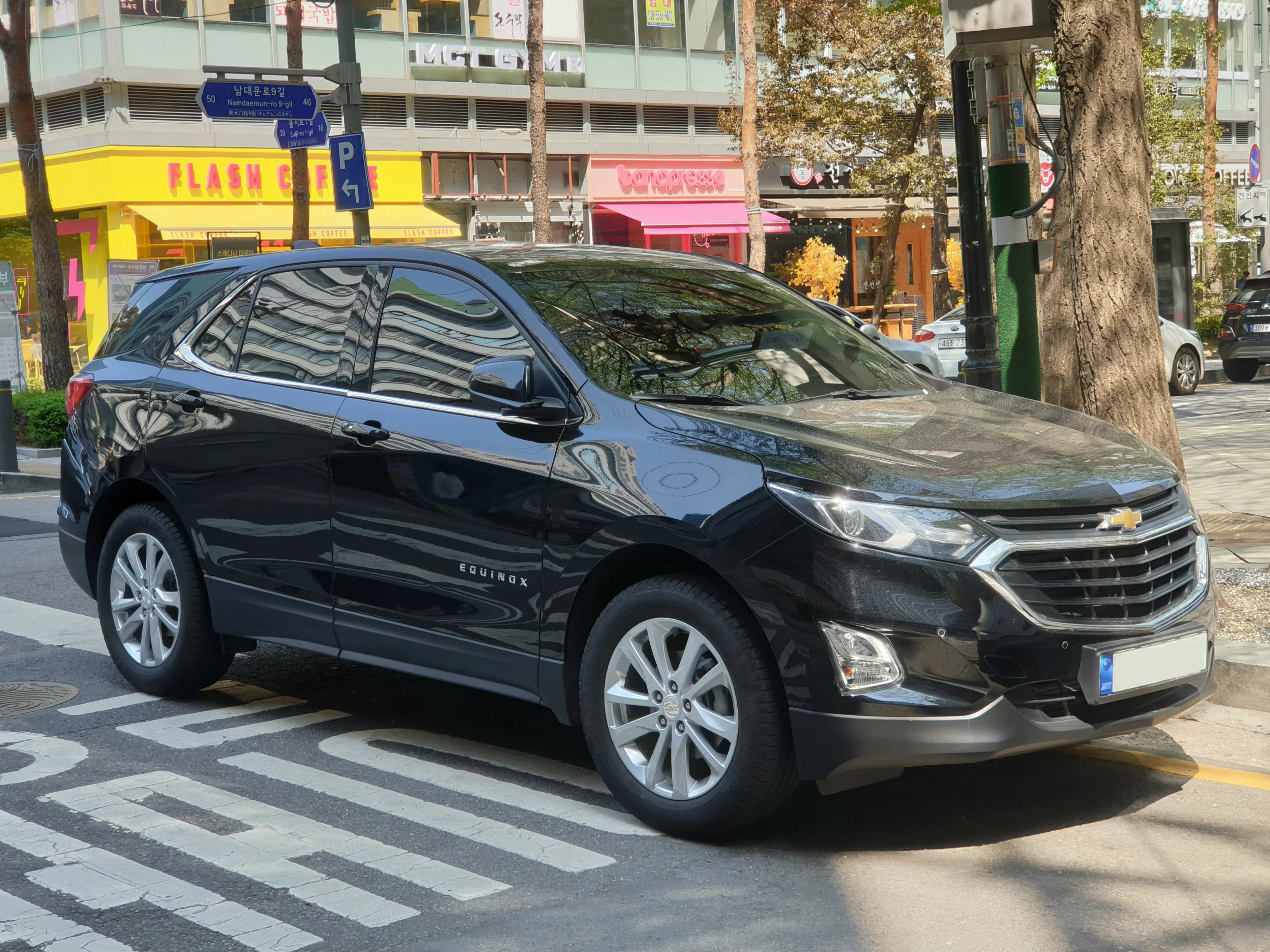
The Chevrolet Equinox is a well-equipped little crossover for camp power. The owner's manual states the vehicle has three 12-volt DC accessory power outlets, so a camper has three independent socket options rather than a single dashboard lighter. On upper trims it adds a 120-volt household-style outlet as well.
Those three 12V sockets are placed usefully. They sit on the center stack below the climate controls, on the rear of the center floor console facing the second row, and in the rear cargo area behind the second-row seats. That cargo socket is the one an overlander reaches for to feed a fridge in the back.
The 120-volt outlet has a firm ceiling worth stating up front. The owner's manual caps it explicitly: the outlet can power equipment that uses a maximum of 150 watts. That makes it a charging point for laptops and cameras, not a wall socket for appliances.
The per-socket 12V limit is the number that shapes a camp setup, and this guide maps it against real loads. The Equinox sleeping setup covers using the crossover as a bed; here the focus is where each outlet is, which fuse feeds it, and how to run a fridge without tripping anything.
The Outlet Map: Three Places to Plug In
Knowing the three socket locations makes wiring a camp simple. The center-stack socket below the climate controls is easiest to reach from the front seats, so it suits a phone mount or a dash-side charger. It is the socket you use while driving and setting up.
The rear-of-console socket serves the second row and the middle of the cabin. It is handy for passengers on the road and for a small load parked centrally, though it is farther from the cargo bay than a trunk fridge really wants. For most camp setups it is a charging point rather than a fridge feed.
The cargo-area socket behind the second-row seats is the overlander's socket. It keeps the fridge cord out of the passenger space and close to where the cooler rides, which is why it is the natural home for the camp's biggest 12V load. Its behavior overnight is worth verifying, as a later section explains.
USB charging is separate from all three, which adds resilience. The instrument-panel USB runs on fuse F39 and the wireless-charger and USB accessory on F36, so phone charging survives a blown accessory-outlet fuse. A dead 12V socket and a dead USB port are different problems on different circuits.
The Fuse Map Behind the Sockets
Each Equinox outlet has its own fuse, and they are not all in the same box. The 120-volt outlet is fed by fuse F1 in the instrument-panel fuse block, tagged DC AC Inverter, which is the high-current cartridge that powers the inverter module. It is the heaviest circuit of the group.
The front 12V socket and the cigar-lighter function share a circuit. Fuse F37, a MICRO2-type in the instrument-panel block, is labeled Cigarette Lighter and protects the front accessory socket. That is the circuit to check first when the front outlet goes dead.
The rear cargo socket lives on a different block entirely. The rear 12V accessory outlet is fed by fuse F21, a MINI-type labeled Rear Auxiliary Power, located in the rear-compartment fuse block on the passenger side of the cargo area. So the cargo socket is on a separate circuit from the front sockets.
Because those three circuits, F1, F37, and F21, live across two different fuse blocks, a dead outlet should be diagnosed at its specific circuit rather than a single shared fuse. The exact MICRO2 and MINI amp values are printed on the fuse-block label, which stays the authority for a given model year.
The 120-Volt Outlet and Its 150-Watt Ceiling
The Equinox's 120-volt outlet is a real convenience with a clearly marked limit. The owner's manual caps it at a maximum of 150 watts, and it is mounted on the rear of the center console with an indicator light that illuminates when the outlet is powered and in use. That light is a handy camping tell-tale.
The 150-watt ceiling defines what it can run. It handles laptop chargers, phone and camera chargers, and small electronics, but it will not run a kettle, hair dryer, microwave, induction cooktop, or any resistive space heater. Those all draw well past 150 watts and simply will not work.
The indicator light is more useful than it looks. If the light is lit but a device is not charging, suspect the device or a tripped inverter over-limit rather than a blown F1 cartridge. It turns a guessing game into a quick diagnosis at the outlet itself.
Reading the outlet correctly keeps the trip smooth. It is a low-watt charging point for the small electronics a camp actually uses, not a source for cooking or heating. Pair it with the 12V sockets for the bigger DC loads and the Equinox covers a sensible spread of camp power needs.
What the 180-Watt Socket Ceiling Means
The number that governs the 12V sockets is the accessory ceiling. GM rates its 12V accessory outlets to a maximum load commonly cited as 180 watts, about 15 amps, for GM cabin sockets. That is the figure to design a camp around, and the precise MICRO2 or MINI amp value is on the fuse-block label.
That ceiling is comfortable for the loads camping actually uses. Fans, lights, device chargers, and a compressor fridge all fit inside 180 watts per socket with room to spare, so a single socket rarely feels tight unless you deliberately stack heavy loads onto it.
Splitting loads keeps everything within budget. Because the front socket, rear socket, and USB ports are on separate circuits, running a fridge on one and charging a phone on another means each stays well within its own rating. The Equinox rewards spreading loads rather than daisy-chaining them.
The one load that breaks the budget is resistive heat, covered later. Everything else a weekend camp needs lives happily under 180 watts, which is why the Equinox, despite being a compact crossover, is a capable little power host for a fridge-and-charge setup.
Running a 12V Fridge From the Equinox
A 12V compressor fridge is the Equinox's ideal camping load. A typical portable cooler draws roughly 4 to 6 amps, about 45 to 70 watts, when the compressor cycles, comfortably under the roughly 180-watt socket ceiling, and it can run from the front console or the cargo socket depending on where it rides.
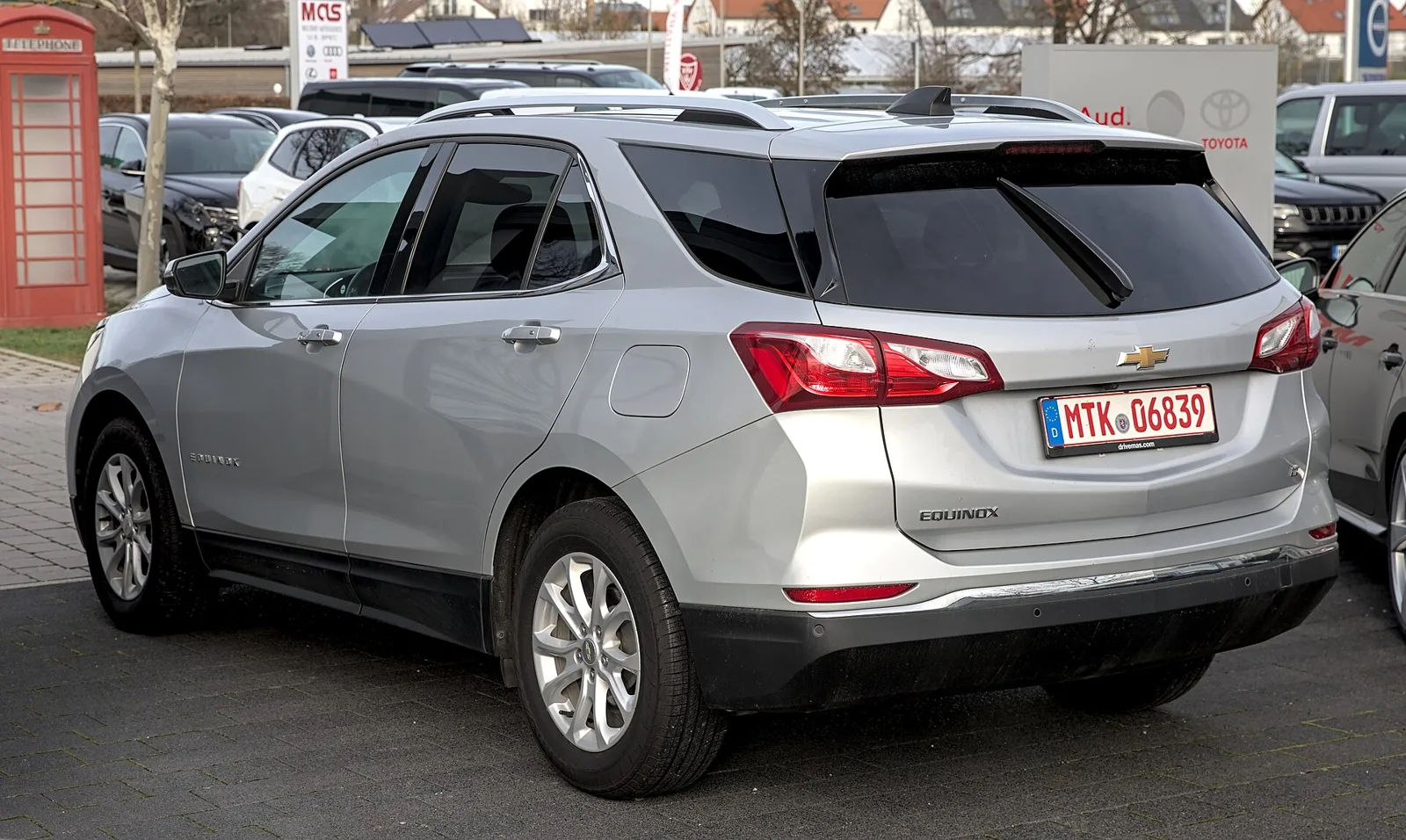
The cargo socket is usually the better choice. The cargo-area outlet on F21 is the most convenient point for a trunk-mounted fridge because it keeps the cord out of the cabin, though you should confirm whether it is switched with the ignition before relying on it overnight. a portable compressor cooler sized to the cargo bay pairs naturally with this socket.
The Equinox handles a fridge and charging at once without strain. Running the 12V fridge while charging a phone via the dedicated USB fuse is safe because those loads are on separate circuits and each is well within its own fuse rating. There is no need to choose between cooling and charging.
The overnight question is which socket stays hot, and it is worth checking. A fridge sips power, but if the cargo socket switches off with the ignition, the fridge stops cooling once you shut the engine down, and if it stays on, it draws on the battery. The next section covers that switched-versus-always-on distinction.
Switched Versus Always-On: The Overnight Question
The detail that decides overnight fridge use is whether a socket stays powered with the engine off. On the Equinox, the front sockets are generally ignition or accessory switched, meaning they are live in RUN and ACC and during retained accessory power, then cut off. That is fine for driving but stops a fridge once you park and sleep.
The rear socket is the variable one. Behavior of the rear outlet varies by year, so always verify always-on versus switched before leaving a load connected with the engine off. A quick test with the key out tells you whether the cargo socket will keep a fridge running overnight or shut it down.
Neither answer is wrong; they just call for different plans. If the socket switches off, the fridge coasts on its own insulation overnight and re-cools when you drive, which is fine for a good cooler on a cool night. If it stays on, watch the starter battery so a multi-night trip does not leave you stranded.
The clean solution for serious trips is a separate power source. A portable power station running the fridge sidesteps the switched-versus-always-on question entirely and protects the starter battery. The best portable power stations for car camping under $500 cover that route for anyone camping more than a night.
Why a 12V Heater Will Not Work
The load to avoid on the Equinox, as on any vehicle, is a resistive 12V heater. A 150-watt 12V heater already pulls about 12.5 amps, and any higher-watt 12V heater would exceed the accessory-outlet rating and blow the fuse, so cabin warmth must come from the HVAC system rather than a plug-in element.
The reason is the same physics everywhere. A resistive element turns power straight into heat, and meaningful warmth needs far more current than a 12V socket can safely pass. The small heaters that stay under the fuse make little usable heat, so they disappoint and strain the circuit at the same time.
Cabin heat has better sources. The Equinox's own HVAC provides real warmth while driving, and for camping the effective strategy is insulation, window coverings, and a warm sleeping system rather than a socket-powered heater. That keeps the fuse intact and the night genuinely warm.
So the sockets are for cooling and charging, not heating. A fridge, fans, lights, and chargers all fit the 180-watt budget; a heater does not. Knowing that saves a blown F37 or F21 and a cold night spent chasing a circuit that was never designed to deliver that kind of load.
Setting Up Camp Power in the Equinox
A tidy Equinox power setup starts by matching each load to a socket. Put the fridge on the cargo socket to keep the cord out of the cabin, charge phones and cameras on the USB ports, and run low-watt electronics on the 150-watt 120V outlet if your trim has it. Spreading loads keeps every circuit comfortable.
Verify the overnight behavior before the first night. Test whether the cargo socket stays hot with the key out, so you know whether the fridge runs overnight or coasts, and plan accordingly. The power stations sized for overlanding loads helps if you decide a separate source is worth carrying.
For multi-night trips, add a power source and stop worrying about the switched-socket question. A power station running the fridge protects the starter battery and gives you AC output beyond the Equinox's 150-watt outlet. Pair that power plan with a sleeping layout that keeps the cargo socket reachable from the bed.
Reviewed as a system, the Equinox is a capable compact power host: three 12V sockets across two fuse blocks, a 150-watt inverter outlet with a helpful indicator light, and a clean 180-watt-per-socket budget. Map the outlets, check the overnight behavior, and it runs a fridge-and-charge camp without drama.
Computed: what is left of each Equinox circuit once the camp load is on it. Arithmetic on the figures this article already states above — watts = amps × 12 V and headroom = the circuit ceiling − the load. Inputs: the roughly 180-watt (about 15-amp) GM accessory-socket ceiling from section 4, the owner's-manual 150-watt cap on the 120-volt outlet from section 3, the 4-to-6-amp / 45-to-70-watt compressor fridge from section 5, and the 150-watt 12-volt heater at about 12.5 amps from section 7. Nothing here is a manufacturer promise; the exact MICRO2 and MINI amp values stay whatever the fuse-block label prints for your model year.
| Circuit (fuse) | Ceiling | Load this page states | Headroom left |
|---|---|---|---|
| Front 12V socket / cigar lighter (F37) | ~180 W (15 A) | compressor fridge, 45–70 W | 110–135 W spare |
| Rear cargo 12V socket (F21) | ~180 W (15 A) | compressor fridge, 45–70 W | 110–135 W spare |
| Any 12V socket | ~180 W (15 A) | 150 W resistive 12V heater, ~12.5 A | 30 W spare — the heater alone eats 83% of the circuit |
| 120V inverter outlet (F1) | 150 W, manual-capped | laptop / camera chargers | 0 W of headroom for a kettle, hair dryer, microwave or space heater |
Read it this way: the fridge is the easy load — it uses about a quarter to two-fifths of one socket, which is why it never needs the outlet to itself. Cross-check the fridge figure both ways and it holds: 45 W ÷ 12 V = 3.8 A and 70 W ÷ 12 V = 5.8 A, which is the 4-to-6-amp draw section 5 quotes. The heater is the load that breaks the budget, not because it trips the fuse on its own but because 150 of the 180 watts are gone the moment it is plugged in. And the 150-watt inverter outlet has no headroom at all for anything that makes heat — that is a different circuit (F1) with its own, lower, ceiling.
Common Equinox Power Mistakes
The first mistake is assuming all three sockets behave the same overnight. The front sockets switch off with the ignition, and the rear socket varies by year, so a fridge left on a switched socket quietly stops cooling when you sleep. Verifying each socket with the key out avoids a warm fridge by morning.
The second is expecting the 120V outlet to run appliances. At 150 watts it charges laptops and cameras and nothing more, so a kettle or heater plugged in simply does nothing. The indicator light confirms the outlet is live; it does not mean the outlet can power a high-watt device.
The third is stacking loads on one socket. With a 180-watt per-socket budget and separate circuits available, running everything off a single outlet risks tripping it needlessly. Spreading the fridge, chargers, and lights across the three 12V sockets and the USB ports keeps each circuit well inside its rating.
The last is trying to heat the cabin from a socket. A 12V heater draws about 12.5 amps for little heat and threatens the fuse, so warmth belongs to the HVAC and good insulation. Keep the Equinox's sockets for cooling, lighting, and charging, and its electrical system stays trouble-free.
Taken together, the Equinox mistakes all come from misreading its three sockets and one inverter outlet. The three 12V points sit on separate circuits across two fuse blocks, so spread the fridge and chargers rather than stacking them; treat the 150-watt outlet as a charging point, not a wall socket; verify each socket's overnight behavior with the key out; and keep resistive heat off the sockets entirely. Do that and the compact Equinox is a genuinely capable little power host.