
What Type of Car Camping Mattress is Best for Side Sleepers?
Choosing the right car camping mattress for side sleepers can feel like navigating a minefield of options. I learned this the hard way during my first few trips where I woke up with shoulders screaming and hips feeling like they'd gone 12 rounds.
Choosing the right car camping mattress for side sleepers can feel like navigating a minefield of options. I learned this the hard way during my first few trips where I woke up with shoulders screaming and hips feeling like they'd gone 12 rounds. A decent mattress isn't just about plushness; it's about supporting your body's natural curves when you're not on a traditional bed.
For side sleepers, this means finding something that cushions your pressure points without letting you sink to the unforgiving ground. My initial $30 foam pad from a discount store was a rookie mistake that taught me a lot about what not to look for. The real move is understanding how thickness and support work together to keep you from feeling every pebble and root beneath you.
It transforms your rig into a mobile home base, and that starts with a good night's sleep.
The Core Answer
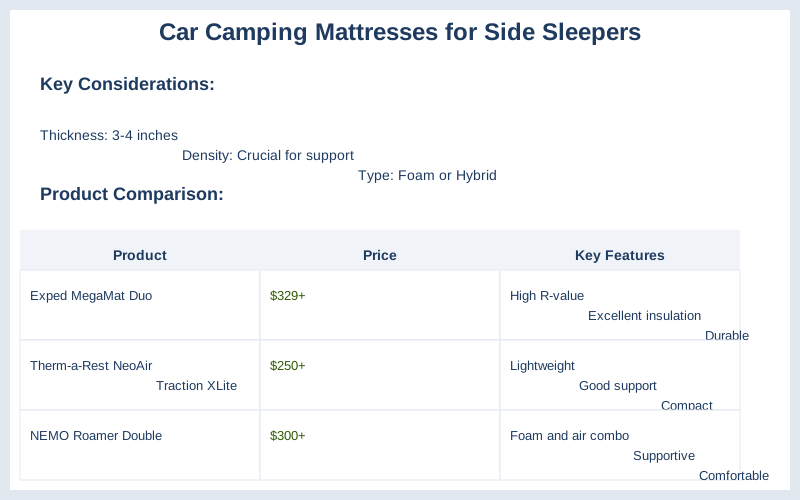
For side sleepers, the core answer boils down to two main things: thickness and density. You need enough cushioning to keep your hip and shoulder from hitting the hard surface below, but it can't be so soft that you bottom out. Think of it like this: your body weight is concentrated on smaller areas when you're on your side. A mattress that's 3 to 4 inches thick is usually the sweet spot. This gives you enough loft to create space between your body and the ground. I once tried a 2-inch thick inflatable pad at a campsite in Joshua Tree, and by 3 AM, my shoulder felt like it was being used as an anvil. The real move is to look for mattresses that use a combination of foam and air, or just a really dense foam. Inflatable options can work, but you need to ensure they have internal support structures or are thick enough to prevent that bottoming-out feeling. A foam mattress, while bulkier, generally offers consistent support without the risk of leaks. Foam mattresses deliver plush, home-like comfort with no risk of deflation. My second trip, I used a self-inflating foam pad that was about 3 inches thick, and it was a game-changer for my side sleeping woes. The key is that the foam needs to have some give but also push back enough to cradle your hip and shoulder. If you're looking at inflatable options, check the R-value, which tells you how well it insulates, but also look for descriptions that mention targeted support or thicker sidewalls. I've seen too many people at campgrounds with cheap air mattresses that feel like sleeping on a balloon. A variety of options exist, but the thickness and density are what truly matter for side sleepers. The honest version: you need something that will absorb your pressure points without letting you feel the ground. My initial $50 foam pad was a rookie mistake that taught me this lesson. A 3-inch thick pad might just fit your needs. It's not about having the most expensive gear, but the right gear for your specific sleep position. Solo travelers might find single-sized options work best.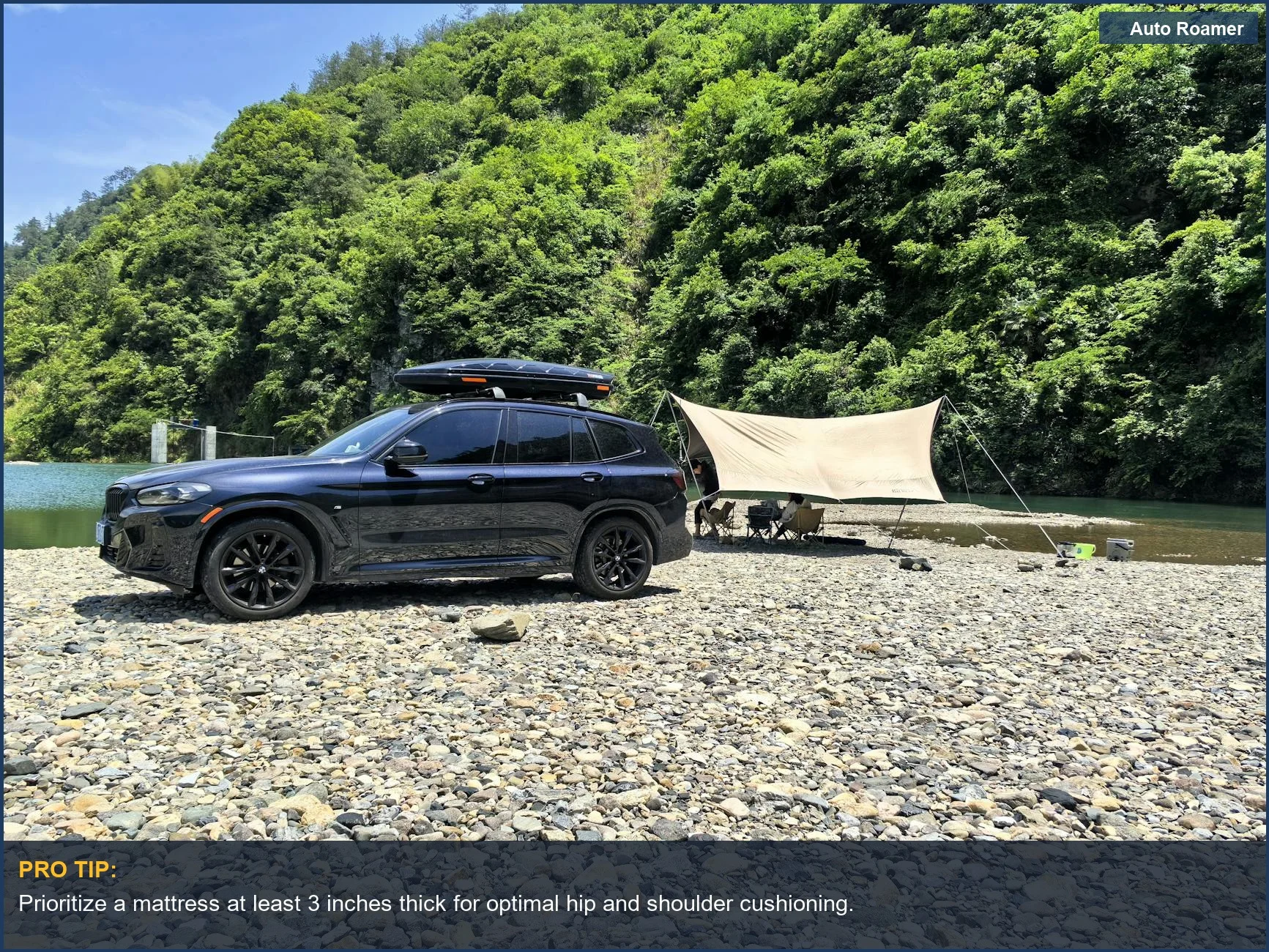
Why This Matters for Your Setup
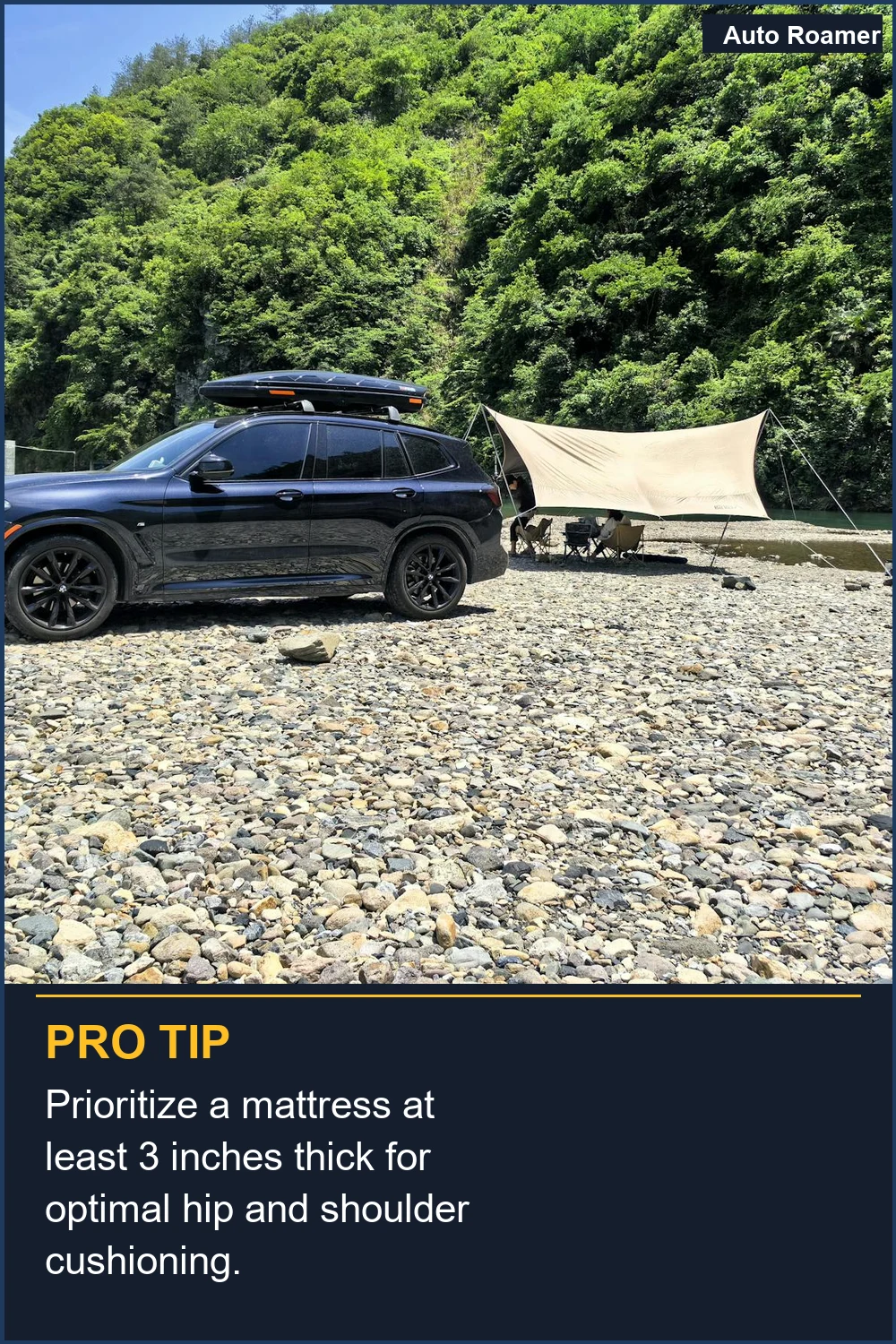
Why does this matter? Because waking up with a sore back or hips can ruin an entire trip. I learned this lesson the hard way on a trip to Zion National Park. I was so focused on fitting everything into my compact SUV that I skimped on the sleeping pad, thinking a thinner one would be fine. Comfort is a highly subjective matter, and for side sleepers, it's directly tied to the mattress's ability to cushion your body. If your mattress is too thin or too soft, you'll experience pressure points that lead to discomfort and interrupted sleep. This is especially true if you're sleeping in a vehicle where the floor might not be perfectly flat. The goal is to create a smooth, supportive surface. Without it, you'll be tossing and turning all night. My $40 sleeping pad from the outdoor store felt like a glorified yoga mat, and my hips paid the price for 3 days straight. The real move is to prioritize a mattress that offers substantial loft. Consider the terrain you'll be camping on, too. Rocky ground requires more cushioning. A 4-inch thick mattress kept testers warm and comfortable. Even a slightly thicker pad can make a world of difference in how refreshed you feel in the morning.

Making the Right Choice
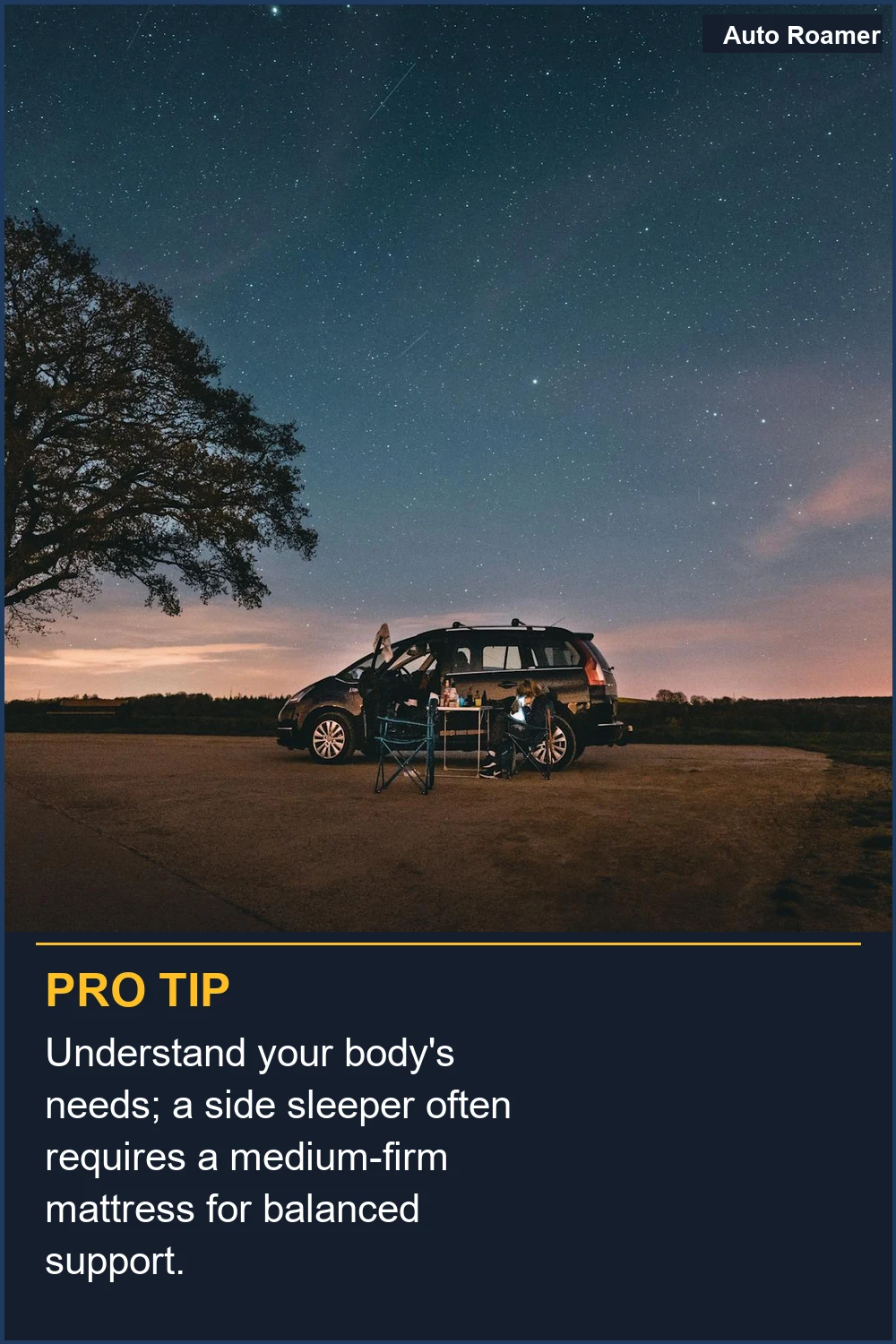
Making the right choice for your car camping mattress is all about understanding your body's needs as a side sleeper. Don't be like me on my first few trips, just grabbing whatever is cheapest or smallest. You should consider what type of sleeper you are. Prioritize thickness and density over just packing size, especially if comfort is your main goal. A few extra inches of loft can be the difference between a miserable night and waking up ready to explore. Foam mattresses deliver plush, supportive comfort. The honest version: invest a little more in your sleep setup, and you'll reap the rewards. Your body will thank you, and your adventures will be way more enjoyable. A more comfortable night sleep starts with the right mattress.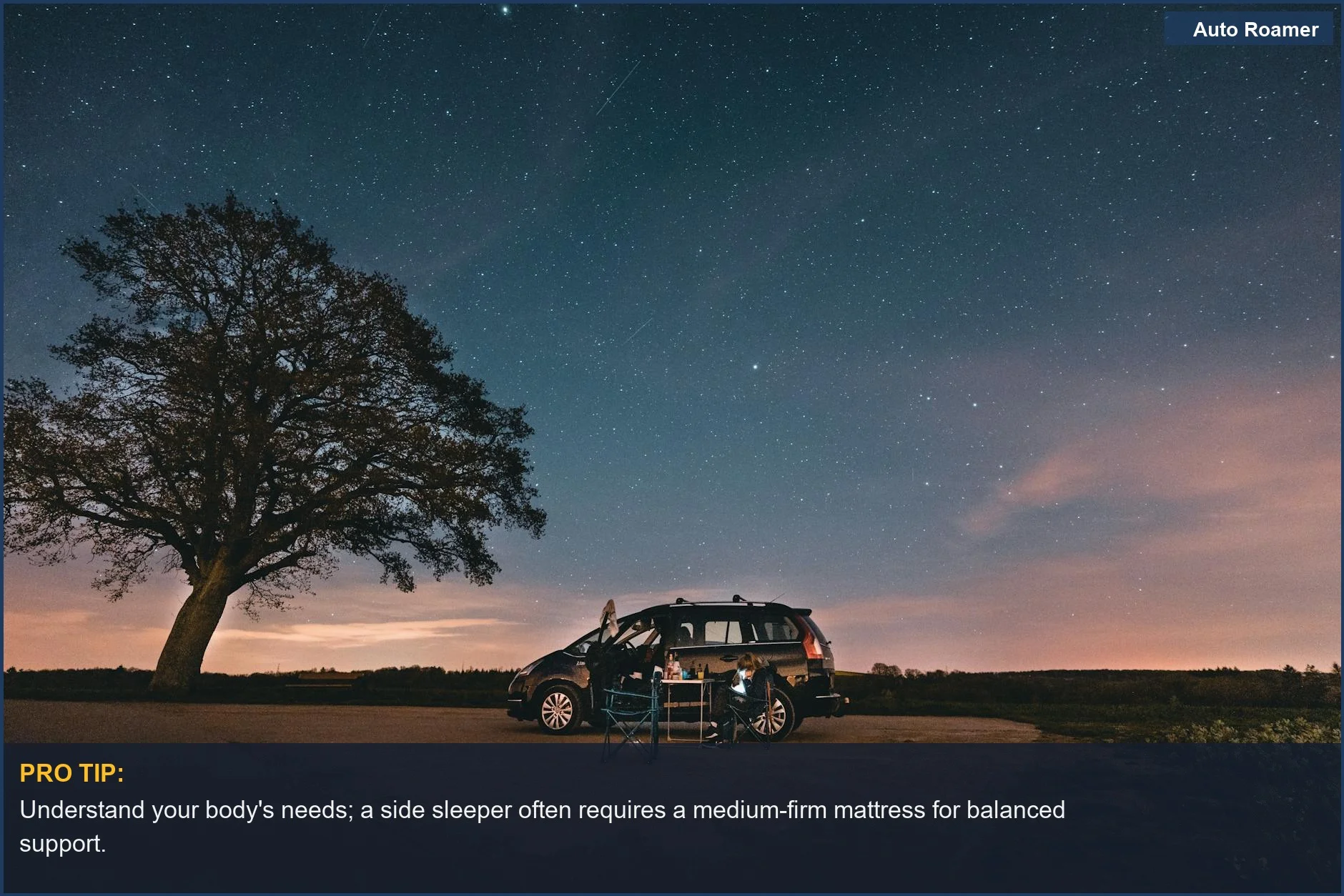
Frequently Asked Questions
If I buy a 4-inch thick foam mattress, is it going to cost me a fortune compared to just a cheap air mattress?
Do I really need to measure my car's cargo space down to the millimeter before buying a mattress?
What if I get a great mattress, but I still wake up sore because my sleeping bag is too thin?
Can sleeping on a bad mattress for a whole camping trip permanently damage my back?
I heard you can just use a bunch of blankets to make a car camping mattress. Is that true?
🏅 Looking for Gear Recommendations?
Check out our tested gear guides for products that work with this setup:
Sources
- How to Pick the Best Car Camping Mattress! - YouTube
- What are the best car camping mattress options for side sleepers?
- Car camping mattress recommendation for side sleeper - Reddit
- 4 Steps to the Perfect Car Camping Mattress | TrunkMate
- best-car-camping-mattresses?srsltid=AfmBOopWtOkFbJsenSzhz-_BCMbeyp_VghaC2mKK-bJhOUzJBZHhf-Bl
- Best Camping Sleeping Pads: Tested | REI Co-op
- The Best Camping Mattress | Tested & Ranked - Outdoor Gear Lab
- 9 Best Car Camping Mattresses | 2025 Hands-on Test - Field Mag