The Part of Car Camping Nobody Posts About
Everybody photographs the sunset and the stove with eggs sizzling. Nobody photographs the pile of greasy pans afterward, and the 1 thing that turns a 10-minute cleanup into a 40-minute fight is showing up with no plan. Most people roll into their first car camping trip and end up scrubbing a skillet with a rock and a bottle of dish soap they grabbed off the kitchen counter. I've been that person. It's miserable, it's messy, and it's the fastest way to turn a nice site into a fly-covered swamp.
Here's the thing I wish someone had told me: cleanup is a system, not a chore you improvise at the end. Get the system right and washing up after dinner takes ten minutes and leaves no trace. Get it wrong and you're dealing with caked-on grease, attracted wildlife, and a cooler that smells like a dumpster by day three. The good news is the whole system costs less than a single tank of gas.
I'm the guy who refuses to pay for gear that a cheaper thing does just as well, so this isn't a list of $80 camp kitchens. It's the handful of cheap, packable pieces that actually solve the problem — a basin to wash in, soap that won't poison a creek, a way to dry, water on hand so you're not hiking to the spigot every dish, and a trash setup that seals. Plus the part most gear lists skip entirely: what to actually do with the dirty water and the food scraps when you're done.
Below I'll walk the whole setup, what to check before you buy each piece, where the few dollars genuinely matter, and the Leave No Trace basics that keep you legal and keep the next camper from arriving to your mess. None of it's hard. It's just the difference between a campsite you leave better than you found it and one the ranger remembers you by.
The Wash Basin: One Cheap Thing That Changes Everything
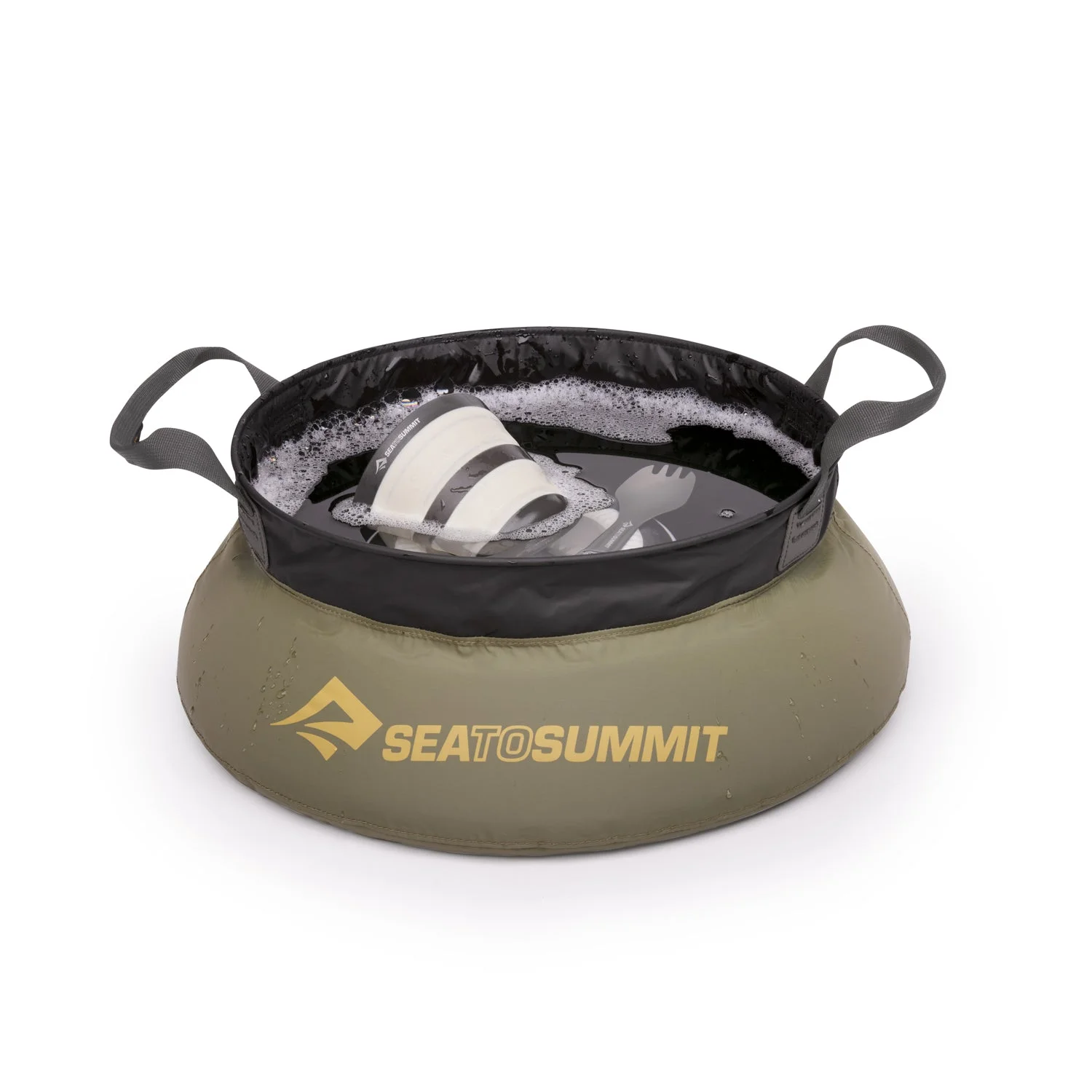
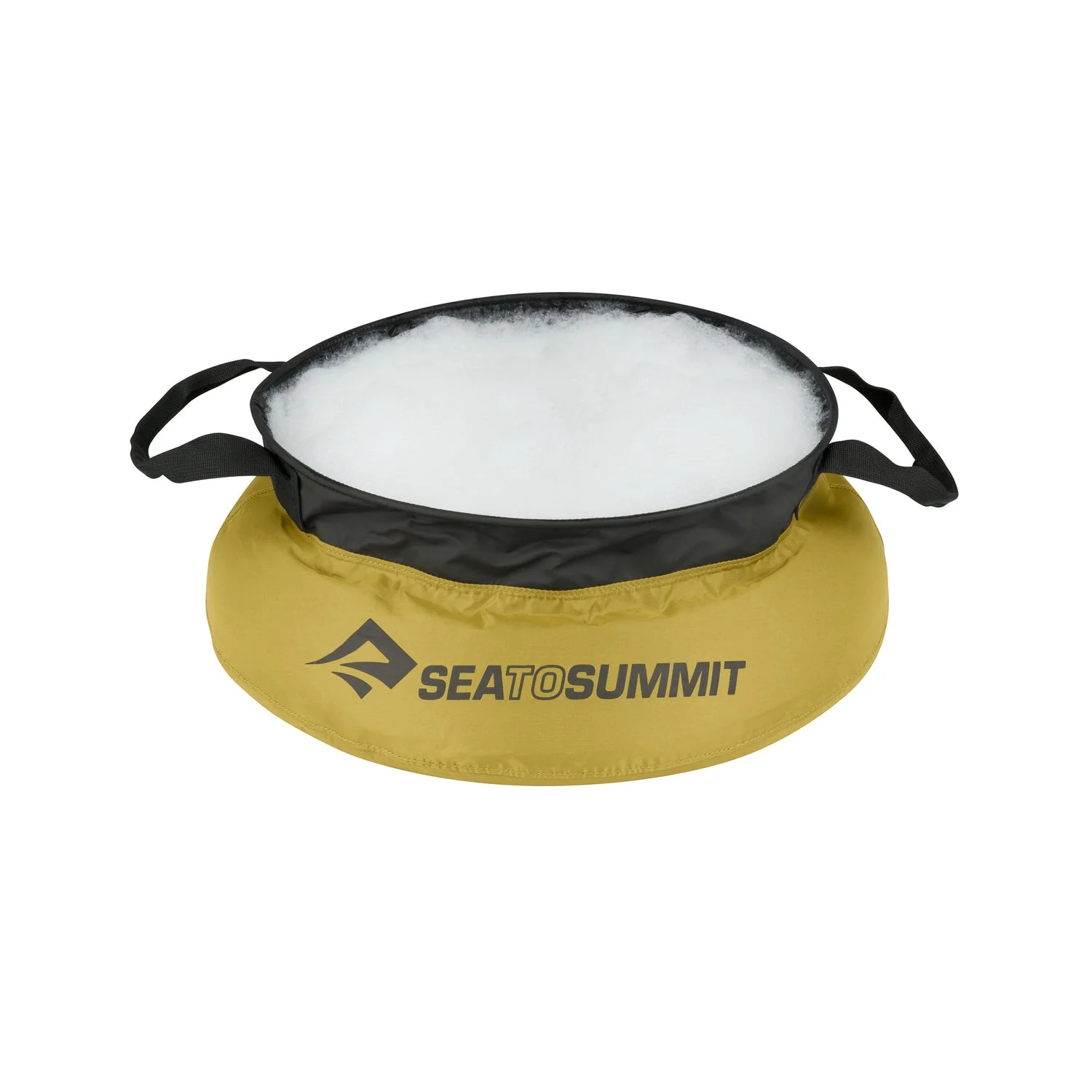
The single piece that turns cleanup from a fight into a routine is a collapsible wash basin. Without one you're washing dishes under a trickle from a jug, wasting water and never actually getting anything clean. With one you've got a real sink: fill it, wash, done. The Sea to Summit Kitchen Sink is the type I keep in the kit — it's a collapsible fabric basin that holds a good volume, folds to the size of a paperback, and weighs nothing.
The argument for collapsible over a hard plastic tub is pure packing. A rigid dishpan works fine and costs less, but it's a fixed cube of dead space in a loaded vehicle, and car camping is a constant fight for cubic feet. A collapsible basin flattens against a wall of the cargo area and disappears. If you've got the room and want to save five bucks, a cheap plastic tub does the same job — this is one where the budget call is totally legitimate.
The actual technique that saves the most water and grief is the two-basin method, borrowed straight from every backcountry kitchen: one basin of hot soapy water to wash, one of clean water to rinse. You can do it with one basin and a rinse jug if you're tight on gear, but two cheap basins beat one every time for getting dishes actually clean without burning through your water.
Scrape first, wash second. The biggest mistake is dunking a food-caked pan straight into the wash water — now your whole basin is greasy soup and everything you wash after comes out worse. Scrape every scrap into the trash first (a spatula or even a tortilla works), then wash. You'll use a quarter of the water and a tenth of the elbow grease.
Get the basin that fits your biggest pot. A basin too small to fully submerge your largest pan means you're washing it in sections, which is slow and never quite gets the rim. Size to the cookware you actually bring, not the cute small one.
Soap That Won't Get You Fined or Poison a Creek
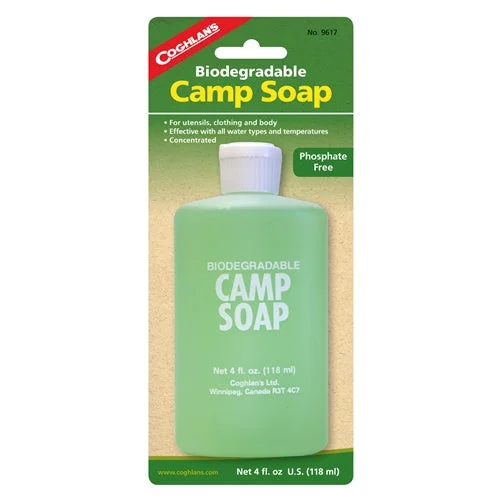
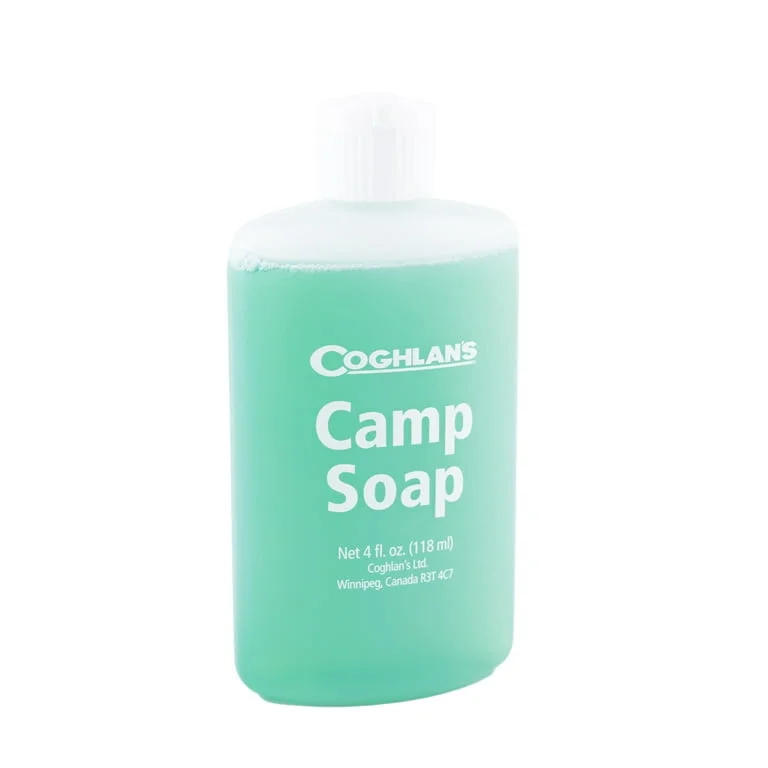
Regular dish soap from your kitchen does not belong in the backcountry. Standard detergents carry phosphates and surfactants that are genuinely bad for water, and dumping that into or near a stream is both an ecological problem and, in plenty of places, an actual violation. Switch to a biodegradable camp soap like Coghlan's Camp Soap or a concentrated castile soap and you've solved the chemistry side of cleanup for a few dollars.
Two honest caveats people get wrong about 'biodegradable,' because the word does a lot of marketing work. First, biodegradable doesn't mean you can wash directly in a lake or stream — it means the soap breaks down in soil, so you still wash well away from any water source and scatter the gray water on land, not in the creek. Second, less is more: a concentrated camp soap needs a few drops, not a glug, and over-soaping just means more residue to rinse and more to disperse.
The frugal move here is concentration. A tiny bottle of concentrated biodegradable soap decanted into a leak-proof travel bottle lasts a whole season of weekends and takes up no space. Don't haul the giant kitchen bottle of the wrong soap; carry a small bottle of the right one. It's cheaper over time and it's the difference between Leave No Trace and leave-a-slick.
One more cheap habit: a drop of the same soap and a splash of water cleans your hands before you cook, too. The soap that does dishes does hands and the basin does double duty as a wash station. No need for three separate products when one frugal one covers it.
What I Check Before I Buy Any of It
Cleanup gear is cheap, which is exactly why people grab the first thing and end up with a basin that doesn't fit their pot and a drying rack that blows over. Run this check before you spend even small money, because cheap gear that doesn't work still wasted your money:
- Basin size vs. your biggest pan. It has to fully submerge your largest pot, or you're washing in sections. Check the dimensions against your cookware.
- Soap is actually biodegradable and concentrated. Look for the word plus a small bottle — concentrated lasts longer and packs smaller.
- Drying rack stability and pack size. A rack that tips in a breeze dumps your clean dishes in the dirt. Collapsible is good; collapsible-and-stable is better.
- Water container capacity and a real spigot. A container without a working tap means two hands on every pour. Seven gallons is the common sweet spot for a weekend.
- Trash system that actually seals. A holder that leaves the bag open is an animal buffet. You want something that closes or a hard container.
The thing people skip: think about your water source at the site before you decide how much water capacity you need. A site with a spigot at your pad needs less than a dispersed site where the nearest water is a quarter mile away. Plan the water around the cleanup, not just the drinking — dishes drink more than you'd guess.
Collapsible Rack vs. a Towel: The Drying Question
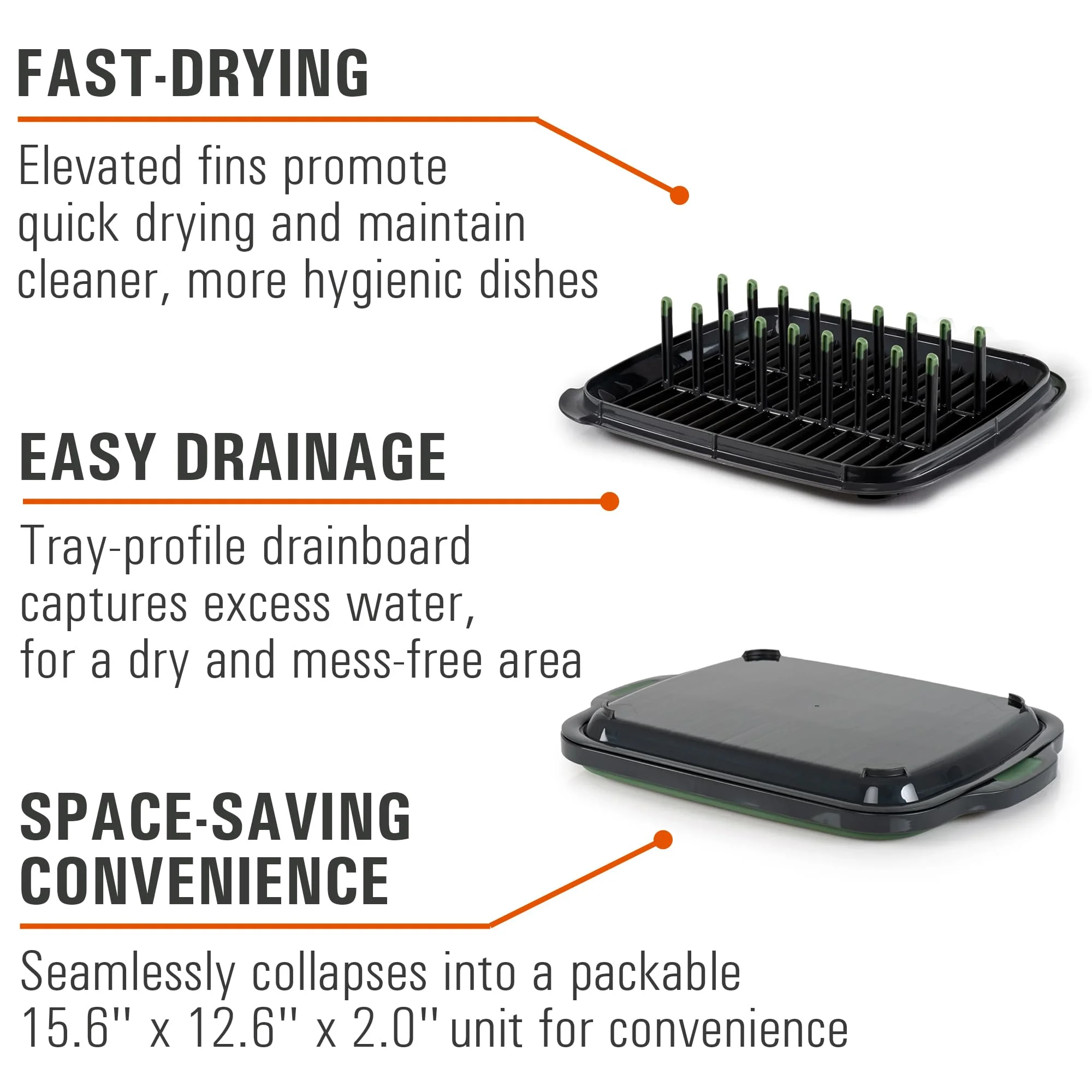
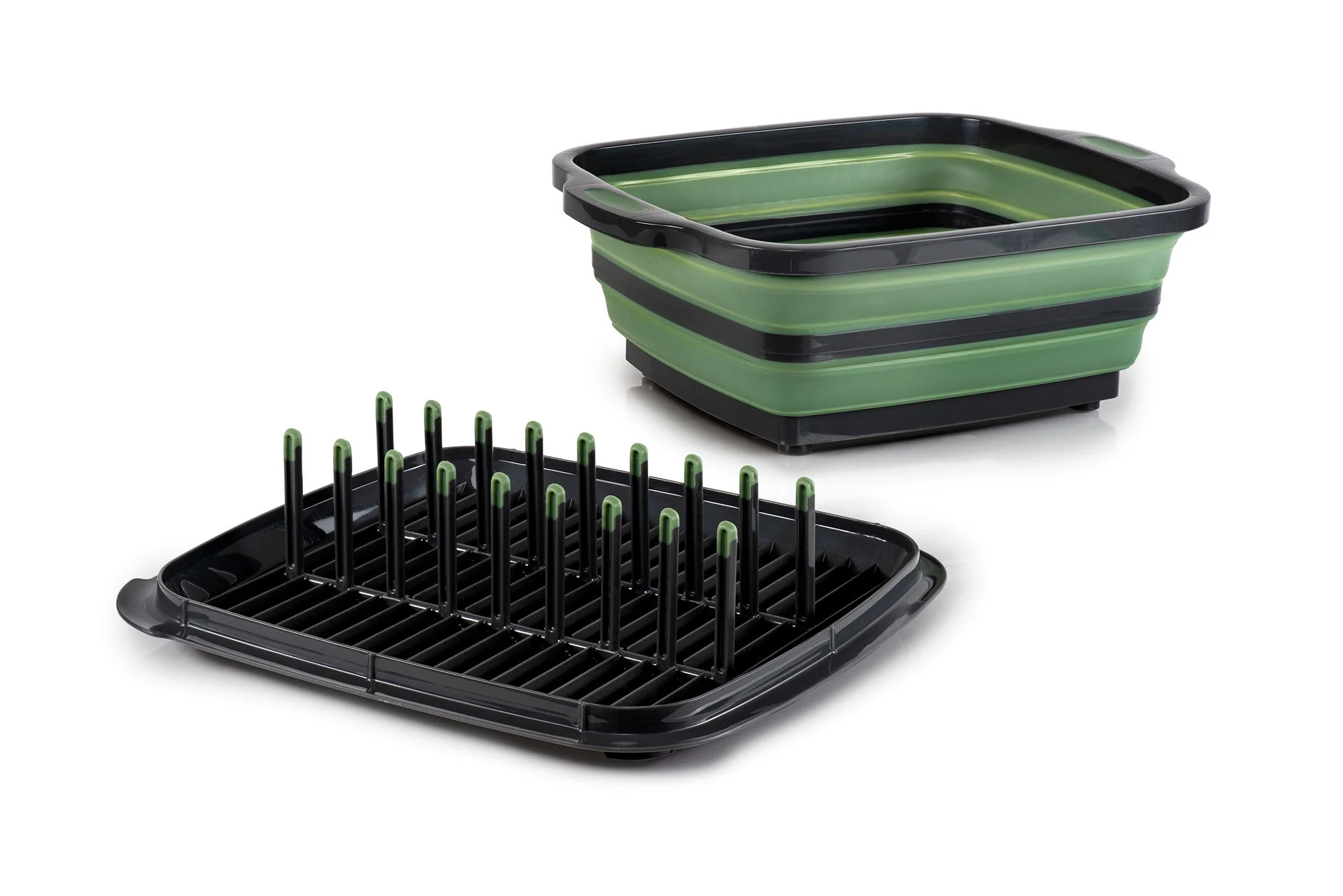
Once dishes are washed, the real fork is whether you bother with a drying rack at all or just towel-dry and call it done, so let me be honest about the trade instead of pretending you need every gadget. A collapsible drying rack like the GSI Outdoors one gives dishes a clean, off-the-ground place to air-dry while you do something else — no re-contaminating a 'clean' pan by setting it on a picnic table covered in last night's crumbs. It packs flat and weighs nothing, so it's not a space cost.
A microfiber towel, on the other hand, is the ultra-budget answer: dry by hand, done, no rack to pack. The catch is a damp towel that's dried a dozen greasy dishes is itself a bacteria farm by the end of a trip, and you're either re-using a grimy towel or packing several. Air-drying sidesteps that entirely — it's actually the more hygienic method, which is why backcountry guidance leans toward it.
So it comes down to space versus hygiene-and-effort. If you're ruthless about pack space and only camp a night or two, a single microfiber towel is the frugal, legitimate call. If you camp longer or cook real meals, the rack earns its tiny footprint by letting dishes dry clean and hands-free while you deal with the rest of cleanup. This is the same calculus I run on every piece of gear — does the thing solve a real problem or just add a step — and the same way I'd rather carry one good collapsible water container than three flimsy jugs.
Where people waste money is buying an elaborate hanging dish system for a weekend trip, or skipping any drying plan and stacking wet dishes in a bin where they sour. Match the drying to your trip length: towel for a quick overnight, rack for anything longer.
Water Logistics: The Piece That Makes Cleanup Sane
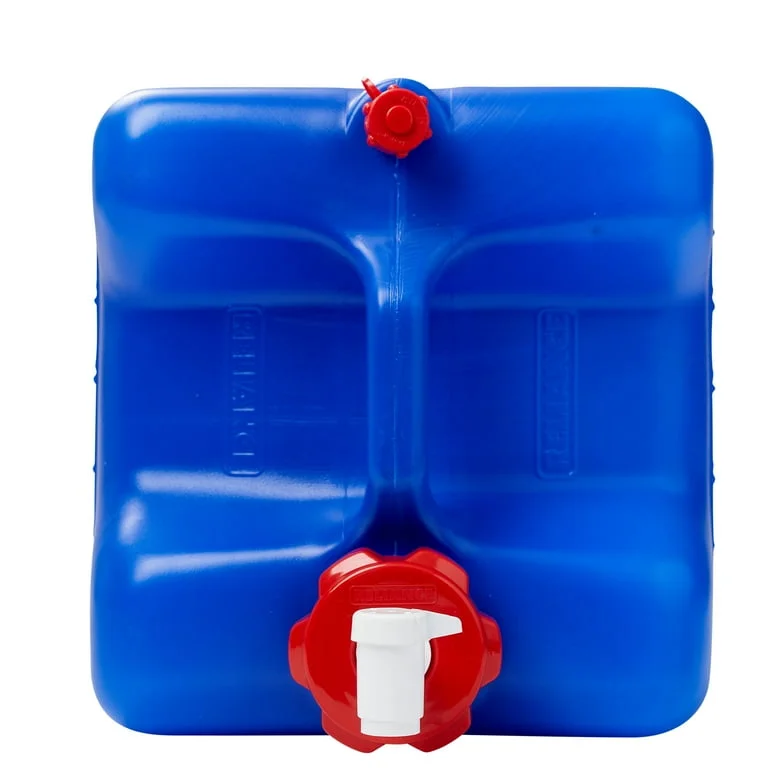
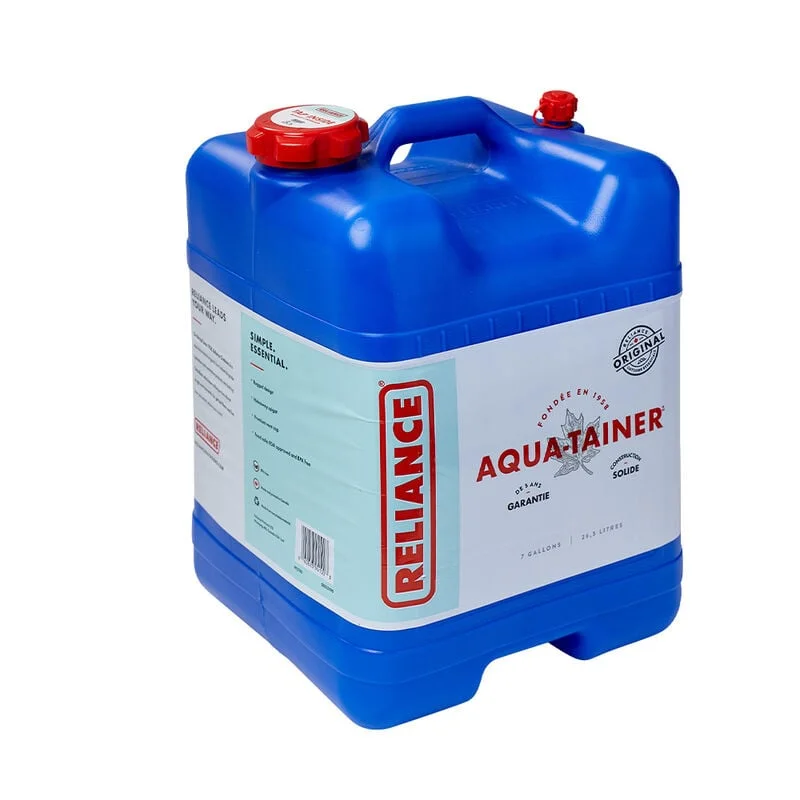
The unsung hero of a clean campsite is having water actually at your kitchen instead of hiking to the spigot for every rinse. A Reliance Aqua-Tainer or a similar 7-gallon container with a real spigot turns your tailgate into a plumbed kitchen — you fill it once, set it on the tailgate, and run the tap with one hand while you wash with the other. That single convenience is what makes the difference between cleaning up after every meal and letting dishes pile up because fetching water is a pain.
The spec that matters is the spigot, not the size. A jug you have to tip and pour two-handed means you can't wash and rinse at the same time, and a leaky or fiddly tap is a daily annoyance. Look for a container with a solid, lockable spigot and a vent cap so it pours smooth. Seven gallons covers cooking, cleaning, and dishes for a couple of people for a weekend; scale up or carry two for a longer trip or a dry camp.
Hang the container or set it high. Gravity is free plumbing — a water container on the tailgate or a table gives you a hands-free stream into the basin below it. Set it on the ground and you're back to bending and tipping. A few inches of height is the cheapest upgrade to your whole kitchen.
Keep your wash water and your drinking water mentally separate even if they come from the same container — fill the basin from the tap, don't dunk dirty dishes near the spout. And if you're filling from a questionable source, the water you wash dishes in matters less than the water you drink, but rinsing eating surfaces with treated water is the safe habit. Cheap insurance against a stomach bug that ends the trip.
Gray Water: The Step Most Gear Lists Skip
Here's the part nobody sells you a product for and everybody gets wrong: what to do with the dirty dishwater. That cloudy, greasy, food-flecked basin of water is gray water, and dumping it carelessly is the single biggest cleanup mistake car campers make. Pour it at the edge of camp and you've drawn every raccoon and yellowjacket in the area; pour it in the creek and you're polluting the water and breaking the rules.
The Leave No Trace method is simple and free. First, strain the gray water so the food solids come out — a cheap mesh strainer or even a bandana over the basin catches the chunks, which go in the trash, not on the ground. Then scatter the strained water widely, well away from camp and at least 200 feet from any stream, lake, or spring. Broadcasting it over a wide area lets the soil filter it instead of concentrating a smelly, animal-attracting puddle in one spot.
- Strain first, always. Food solids are what attract animals and what won't break down. They go in the trash bag.
- 200 feet from water. The standard buffer for any waste. Memorize it; it's the rule that keeps water sources clean.
- Scatter, don't dump. A wide broadcast disperses; a single puddle festers and draws wildlife to your camp.
- Check site rules. Some developed campgrounds have a designated gray-water drain or utility sink — use it if it exists.
This costs nothing and takes a minute, and it's the difference between a campsite that wildlife ignores and one that gets a midnight visit. The gear gets the dishes clean; the gray-water habit is what actually keeps your camp clean.
Trash and Food Scraps: Sealing the Buffet
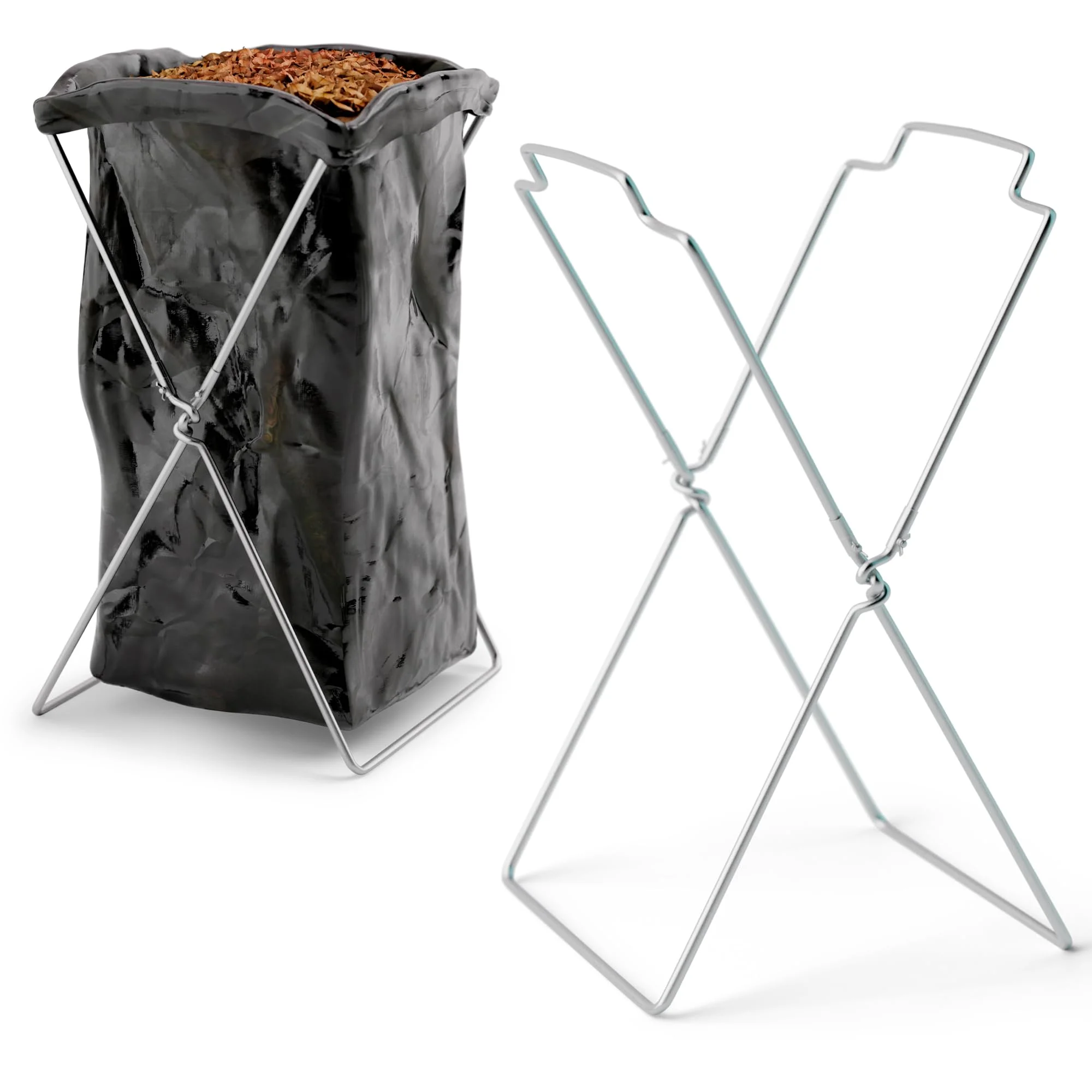
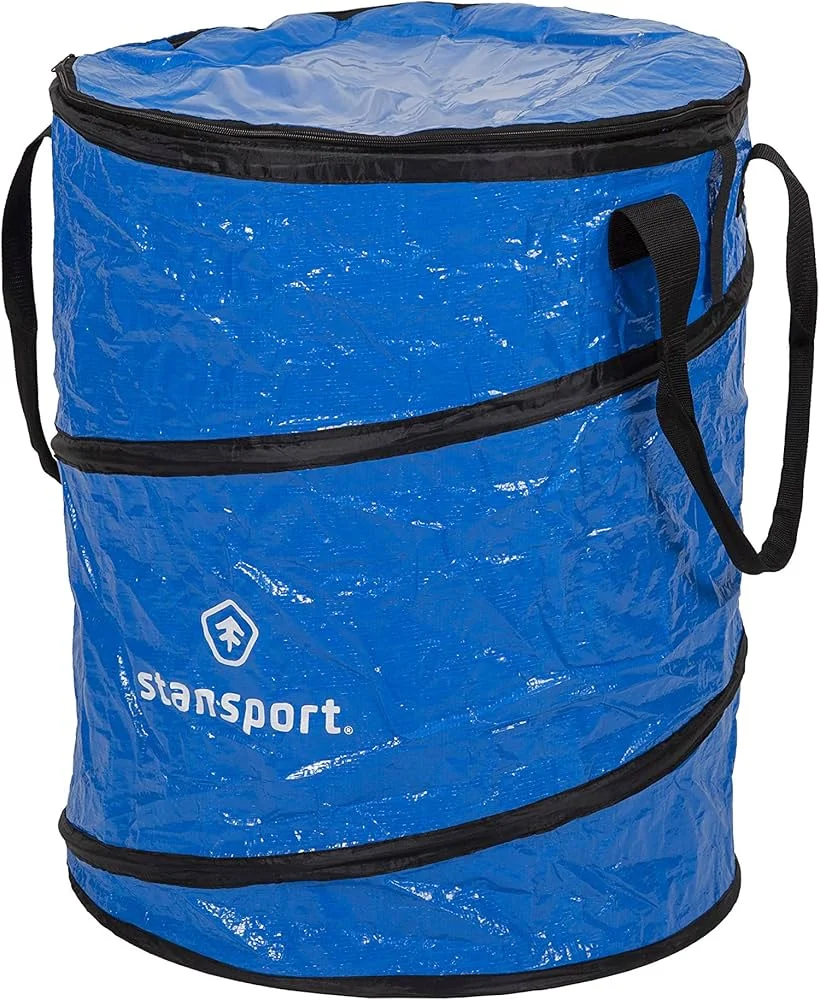
A bag of food trash hanging open on a tailgate is the loudest dinner bell in the woods. The whole reason careful cleanup matters is that food smells travel, and an open trash bag undoes every other thing you did right. The fix is a trash system that seals — a Stansport Collapsible Trash Bag Holder with a closable top, a hard-sided trash container, or at minimum a contractor-grade bag you can knot shut and stash in the vehicle overnight.
The rule that has no exception: nothing with a smell stays out overnight. Trash, scraps, the dish basin, the dog's food, your snacks — all of it goes in the vehicle or a hard container after dark. In bear country that's not a suggestion, it's the law and the difference between a quiet night and a destroyed cooler. The same food-storage discipline that protects your groceries protects you from your own garbage.
Pack out everything, and I mean everything — Leave No Trace means the orange peel and the coffee grounds go home with you too, because 'natural' scraps still take ages to break down and still draw animals in the meantime. The frugal angle is that you already brought the food in; a few extra bags to carry it out is nearly free, and it's the one habit that keeps wild places open to campers at all.
One trick that costs nothing: line your trash holder with two bags. When the inner one's full, knot it and the outer one's still clean and ready. You carry sealed trash instead of a leaking bag, and you're never caught with a torn sack and chili dripping in your cargo area.
Crush and flatten as you go so the trash takes minimal space — a weekend's worth of packed-out garbage fits in surprisingly little room once the air's out of it. Cleanup isn't done when the dishes are dry; it's done when the trash is sealed and stowed.
What Each Price Tier Actually Buys
Good news on the budget: there's no tier in cleanup gear where you have to overspend to get a working setup. But the dollars do buy different things, and as someone who hates paying for a logo, here's where they matter and where they don't:
- Under $20 each (basin, soap, towel): a collapsible basin, a bottle of biodegradable soap, a microfiber towel. This is a complete, legitimate cleanup kit. Honestly, for a lot of campers, this is all you need.
- $20-25 (the water container, the better basin): the real upgrade is the water container with a solid spigot — that one buys genuine convenience that changes your routine. A nicer collapsible basin or a drying rack lands here too. Worth it for frequent campers.
- Above that: elaborate camp-kitchen stations, hanging wash systems, premium everything. Real products, but rarely a cleaner result — you're paying for a tidy all-in-one look, not better dishes.
The false economy is skipping the water container to save twenty bucks and then hauling jugs all weekend, or buying the cheapest no-spigot jug that you can't pour one-handed. Spend the small money on the water logistics — that's the piece that makes you actually clean up after every meal instead of letting it slide. Everything else, buy cheap and guilt-free.
The Cleanup Routine That Takes Ten Minutes
Gear is half of it; the routine is the other half, and a good routine makes cleanup a fast habit instead of a dreaded chore. Here's the sequence I run after every meal, and it genuinely takes about ten minutes once it's automatic. Scrape every dish into the trash first while the food's still loose — cold caked-on grease is the enemy. Then heat water if you can; warm water cuts grease and warm dishes dry faster.
Fill one basin with warm soapy water and one with clean rinse water (or use a rinse jug). Wash from cleanest to dirtiest — cups and plates first, the greasy skillet last — so you're not dragging everything through pan grease. Rinse in the clean basin, then set dishes on the rack or towel to air-dry. While they dry, you handle the gray water.
Do cleanup right after eating, not 'later.' Food wiped off a warm plate takes a wipe; food fossilized on a cold plate takes a scrub and a sour mood. The single biggest time-saver in camp cleanup isn't a gadget — it's not letting the dishes sit. Ten minutes now beats forty minutes and a bad attitude in the morning.
Finish by straining and scattering the gray water well away from camp, sealing the trash, and stowing anything with a smell in the vehicle. Wipe down the table, and your kitchen's reset for the next meal. The whole thing becomes muscle memory by the second day, and a clean kitchen is the difference between a relaxing camp and one you're constantly fighting.
Straight Answers to the Cleanup Questions I Get
The same questions come up whenever someone's setting up their first real camp kitchen, so here are the honest answers. Can I just use regular dish soap? You can in a pinch, but you shouldn't near any water source — switch to a small bottle of biodegradable camp soap and you've removed the one chemistry problem cleanup has, for a few dollars.
Do I really need a basin, or can I wash under the jug? A basin pays for itself in water saved on the first trip — washing under a trickle wastes water and never gets dishes clean. It's the cheapest single upgrade to your whole kitchen, collapsible or a plain plastic tub, your call on space versus a few bucks.
Where do I dump the dirty water? Strain out the food bits into the trash, then scatter the water widely, at least 200 feet from any stream or lake — never in the water and never in one puddle at the edge of camp. That single habit keeps wildlife away and keeps you within the rules everywhere.
What's the one mistake everyone makes? Leaving something smelly out overnight — trash, the basin, scraps. Stow every smell in the vehicle after dark and you've solved the wildlife problem that ruins more campsites than anything else. Get the gear cheap, get the habits right, and a clean camp costs you almost nothing.
Materials and Durability: What Survives a Season of Weekends
Cleanup gear lives a rough life — wet, gritty, packed away damp, baked in a hot trunk between trips. Material is what decides whether your cheap kit lasts five seasons or falls apart in one, so it's worth a frugal minute. Here's how the common ones hold up:
- Collapsible fabric basins (coated nylon/TPU): the good ones shrug off years; the cheap ones crack at the fold lines where the coating fatigues. Dry it before packing and it lasts far longer — packing it wet is what kills the coating.
- Hard plastic water containers: durable, but the spigot is the failure point. A container with a replaceable or well-built tap outlasts one with a molded-in cheap valve that cracks.
- Microfiber towels: cheap and effective but they hold odor — rotate a couple and wash them at home, or one turns rancid by trip's end.
The cheapest way to make any of this last is to pack it dry. Wet gear stowed in a hot trunk grows mildew and breaks down coatings — give the basin and towel a few minutes in the air before they go in the bin, and a $25 kit lasts the better part of a decade instead of a season.
None of this is expensive enough that durability should drive a big spend, but it should break the tie between two cheap options. Between two basins, the one with a better-bonded coating; between two water jugs, the one with the spigot you can replace. Buy cheap, but buy the cheap thing that lasts. — Ray Ortiz
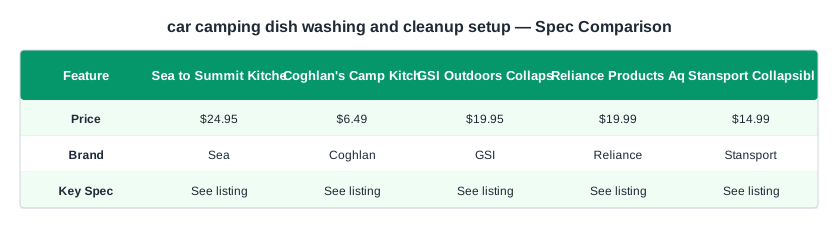
The complete lineup also includes GSI Outdoors Collapsible Dish Drying Rack ($19.95), Reliance Products Aqua-Tainer 7-Gallon Water Conta ($19.99) — each compared on the same specs and reviewer consensus.