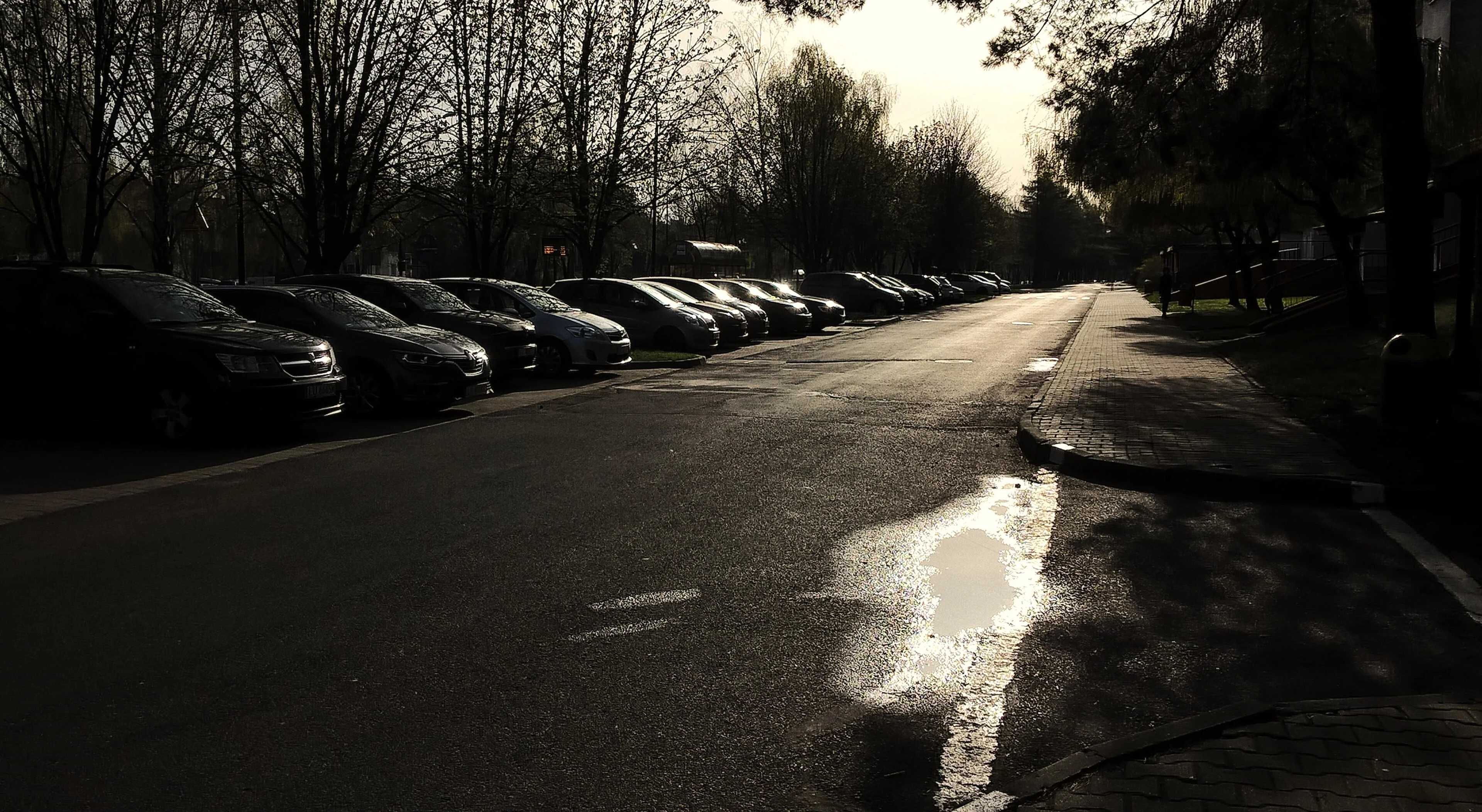
The short answer: it's the city's call, not yours
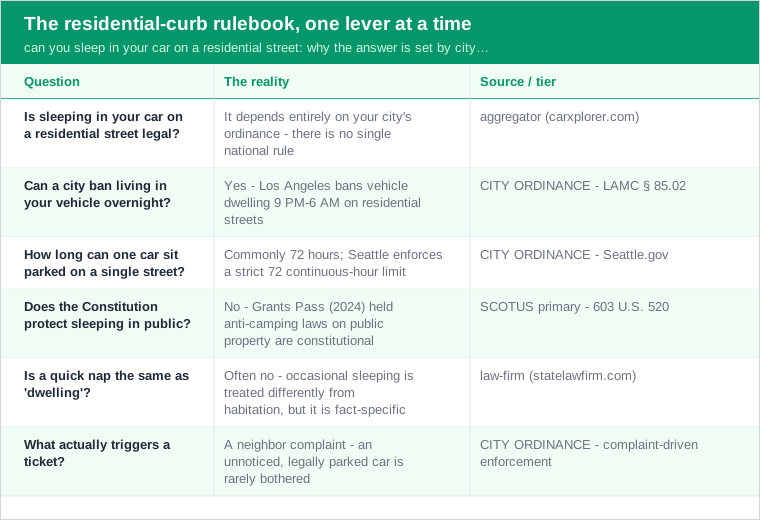
Here is the rule, then the caveat. Whether you can legally sleep in your car parked on a residential street is decided by the city or municipality you are parked in - not by any state law, and certainly not by whether the curb feels public and empty. The street is public right-of-way, and the authority to say who may sit there overnight belongs to the local code - a code that in Los Angeles bars vehicle dwelling between 9 p.m. and 6 a.m., and in many cities caps any parked car at 72 hours in one spot. That is the claim. The caveat is that this code varies enormously from one city to the next, so a habit that is perfectly lawful in one town is a ticketable offense two exits down the highway.
I want to be precise about why this particular question behaves differently from most car-sleeping questions. A Walmart lot or a rest area is private or state-managed property with a single owner who sets one policy. A residential curb has no such owner - it is governed by a written municipal ordinance that any resident can read and any officer can enforce. So the honest answer to 'can I sleep here' is not yes or no; it is 'read the ordinance for this city, because that document, and not your intuition, is the law.'
Throughout this guide I will name real ordinances with real section numbers where I can verify them - Los Angeles and Seattle both publish theirs - and I will refuse to invent numbers for cities that keep their codes harder to pin down. When you see me write 'check your local municipal code,' that is not a dodge; it is the accurate instruction, because the number genuinely differs by city and guessing one would be worse than useless.
Two independent levers do almost all the work in these ordinances, and the rest of this page walks up that ladder rung by rung: the vehicle-dwelling ban, the 72-hour stored-vehicle limit, the neighbor complaint that triggers enforcement, the 2024 Supreme Court ruling that loosened the constitutional brakes, and the fact-specific line between a nap and a residence. Get those in order and you can read almost any city's curb correctly.
Public right-of-way changes the whole question
Start with the framing, because it determines everything downstream. When you park at a Walmart or a Cracker Barrel, you are a guest on private property, and the owner's permission - freely given or freely withdrawn - is what governs your stay. A residential street is the opposite kind of space. It is public right-of-way, dedicated to the passage and parking of the public, and no single neighbor owns the pavement in front of their house, however much it may feel that way to them.
That sounds, at first, like it should work in your favor. If nobody owns the curb, who can tell you to leave? The answer is the city, through its police power - the same authority that lets a municipality set speed limits, restrict parking, and regulate conduct on its streets. A city cannot bar you from a public street arbitrarily, but it absolutely can pass a general ordinance regulating overnight parking and vehicle habitation, and those ordinances are what you are actually up against.
So the mental model to carry is this: on private property the question is 'does the owner allow it,' and on a residential street the question is 'does the ordinance allow it.' The change of frame matters because it tells you where to look. You are not hunting for a friendly manager; you are reading a written code and watching for a posted sign, which under most schemes overrides the general rule wherever it appears.
The two levers a city pulls: dwelling bans and the parking clock
Almost every residential ordinance that touches car sleeping pulls one or both of two levers, and keeping them straight is the single most useful thing on this page. They are independent - a city can have one, both, or neither - and they forbid completely different things.
- Lever one - the vehicle-dwelling / anti-camping ban. This targets what you are doing: using the vehicle as living quarters. It is aimed at habitation, and it is the lever cities reach for when they want to discourage living in a car on the street. Los Angeles Municipal Code § 85.02 is the clean, citable example.
- Lever two - the 72-hour stored-vehicle limit. This targets how long you stay put: it caps how many continuous hours any vehicle may occupy one stretch of public street, regardless of whether anyone is sleeping in it. Seattle's 72-hour rule is the citable example, and some version of it is the most common residential rule nationwide.
Why does the distinction matter so much to a car sleeper? Because you can run afoul of lever two without ever triggering lever one. If you park legally and simply leave the car there for four days while you travel, a 72-hour ordinance can tag it as a stored vehicle even though you were never sleeping in it. Conversely, a single overnight nap might trip a dwelling ban in a city that has one, while a city with only a 72-hour rule may not care about one night's sleep at all.
Treat every city as a combination of these two levers plus whatever a posted sign adds on top. Once you know which lever a city is pulling, the specific ordinance text becomes far easier to read, because you know what it is trying to accomplish. The next two sections take each lever in turn, using the two cities whose codes I can cite by number.
Lever one: what a vehicle-dwelling ban actually forbids
The cleanest citable example of a vehicle-dwelling ban is Los Angeles Municipal Code § 85.02. Under that ordinance, Los Angeles prohibits using a vehicle as a dwelling on residential streets between 9 PM and 6 AM - the overnight window - and prohibits it at any time of day within 500 feet, roughly one block, of a park, school, preschool, or licensed daycare. That is the rule, stated with the numbers the code itself uses.
The crucial word is 'dwelling,' and the ordinance does not leave it to your good faith. Under LAMC § 85.02, using a vehicle as a dwelling is inferred from indicators an officer can observe: sleeping bags and bedding, cookware or food-preparation gear, windows covered for privacy, personal belongings arranged as though someone is living there. No single item is decisive, but a car that visibly reads as a residence rather than a parked vehicle is what the ordinance is built to catch.
The tell of a dwelling ban is that it targets habitation, not presence. It is not asking 'is a car parked here'; it is asking 'is someone living in this car,' and it answers that question from observable indicators - bedding, cookware, covered windows - rather than from your intentions.
Here is the honesty this topic demands: Los Angeles is one city, and § 85.02 is its number, corroborated in the city's own neighborhood empowerment materials. Many other cities - San Diego, Palo Alto, and plenty of others - have their own vehicle-habitation or oversized-vehicle ordinances, but the section numbers vary and I will not print one I cannot verify. For any city other than the two I cite here, the accurate instruction is to check your local municipal code for a 'vehicle dwelling' or 'habitation' section by name.
The 500-foot ring around parks, schools, and daycares
The 500-foot provision inside LAMC § 85.02 deserves its own rung on the ladder, because it behaves differently from the overnight window and it surprises people. The 9-PM-to-6-AM restriction is time-based: outside those hours, the dwelling prohibition on a general residential street eases. The 500-foot rule is location-based, and it applies at any time of day. Within roughly one block of a park, a school, a preschool, or a licensed daycare, using a vehicle as a dwelling is prohibited around the clock.
That combination is easy to trip over. A driver who reasons 'it is mid-afternoon, the overnight window has not started, so I am fine' can still be in violation if the spot happens to sit within that 500-foot ring of a school or park. The two rules stack: the time restriction covers the general residential street at night, and the distance restriction covers sensitive locations all day. In a dense city, sensitive locations are closer together than you would guess, which narrows the genuinely clear parking considerably.
I raise this not to make Los Angeles sound uniquely strict - it is simply the city whose text I can quote by number - but to illustrate a pattern you should expect elsewhere. Cities that regulate vehicle dwelling frequently layer a sensitive-use buffer on top of any time window, precisely because the political pressure behind these ordinances tends to come from parents and park users. When you read your own city's code, look for a distance buffer as a separate clause; do not assume that clearing the overnight-hours rule clears you everywhere.
Lever two: the 72-hour stored-vehicle clock
The second lever is the one you are statistically most likely to meet, and Seattle gives me a clean number for it. Under Seattle's 72-hour on-street parking rule, no vehicle may park on a city street for more than 72 continuous hours. The ordinance is aimed at stored and abandoned vehicles - cars that have been left to occupy public curb space indefinitely - and Seattle invites residents to report suspected violations through its 'Find It, Fix It' app and service request system.
Two features of this lever matter for a car sleeper. First, it is duration-based, not habitation-based: it does not care whether you slept in the car, only how long the car sat in one place. Second, the clock is typically reset by genuinely moving the vehicle a meaningful distance, not by nudging it a few feet - the point is to prove the car is in use, not stored. For one overnight stop, a 72-hour rule is rarely your problem; for a multi-day stay on the same block, it is exactly your problem.
Now the necessary caveat, because this is where aggregator advice gets sloppy. The 72-hour limit is the most common residential parking rule across U.S. cities, but it is set by local code and the exact number varies - some cities use 24 or 48 hours, some use different reset requirements - and a posted sign always overrides the general rule wherever one is present. So '72 hours' is a reliable default to expect, per travel aggregators such as carxplorer.com, but never a substitute for reading the sign on the actual block you are parked on.
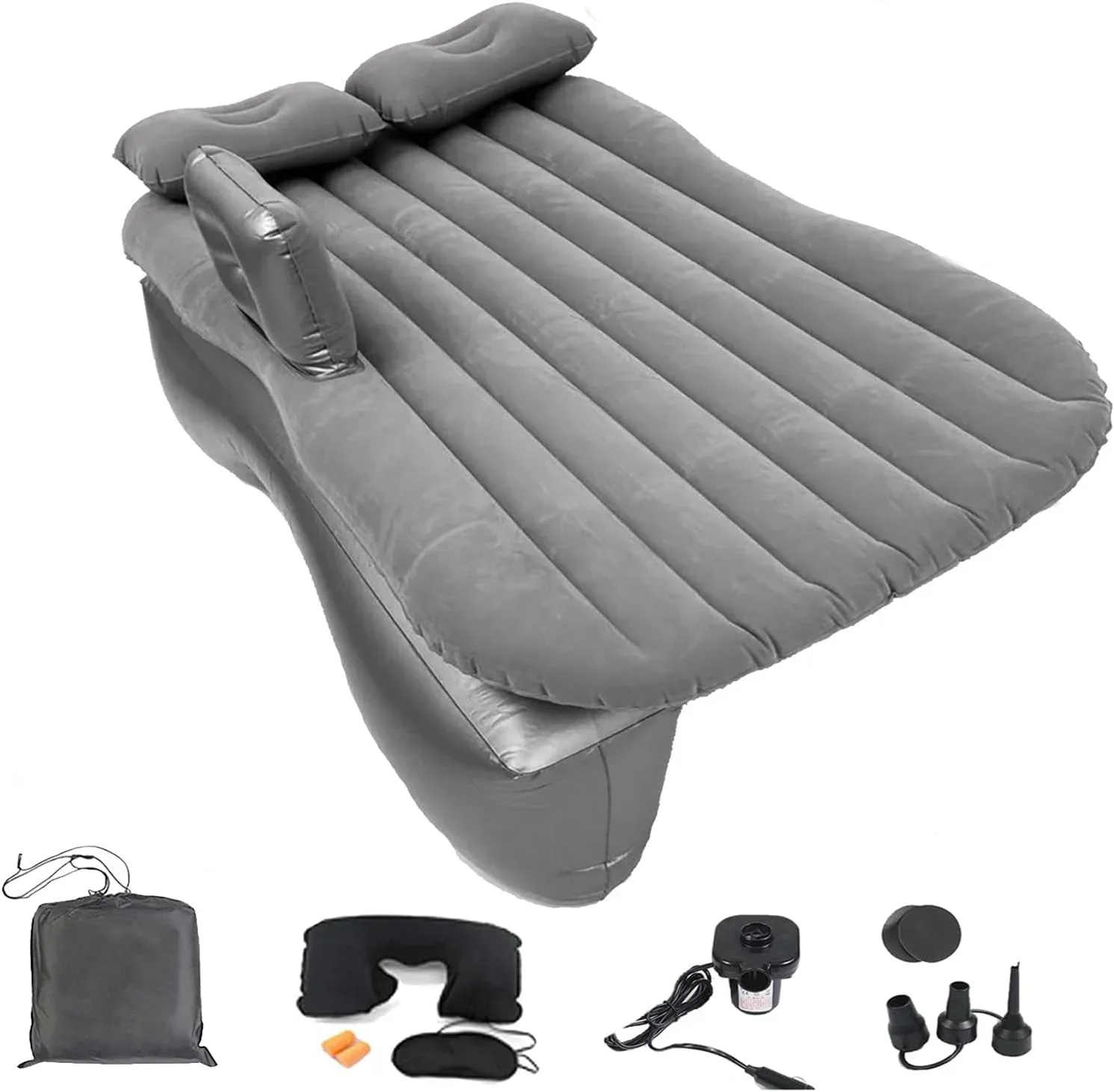
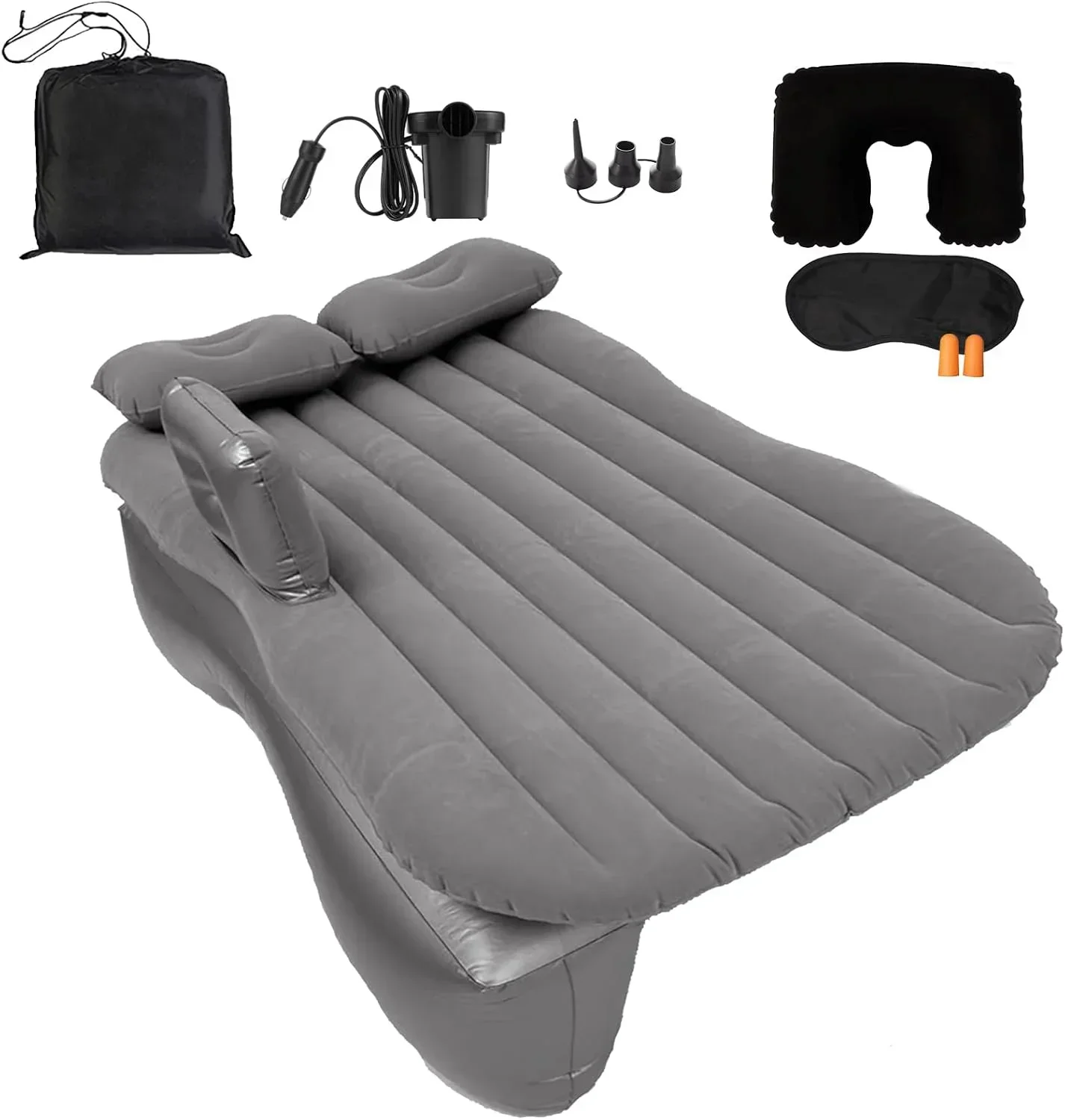
If your plan is a single comfortable night rather than a multi-day stay, the stored-vehicle lever mostly leaves you alone - which is the situation where sleeping quality, not legality, becomes the real question. A flat, level surface makes that night genuine rest: an Onirii SUV air mattress turns a folded back seat into an actual bed in one inflate, so a lawful curbside night is real sleep instead of a stiff neck by morning.
What actually gets you a knock on the window?
Here is the part the ordinances do not print but every officer will tell you: enforcement of residential parking rules is overwhelmingly complaint-driven. Cities do not deploy patrols to hunt for sleeping drivers on quiet streets; they respond when a resident calls or files a service request. Seattle's own model makes this explicit - the 72-hour rule runs largely on 'Find It, Fix It' reports from neighbors - and the same practical reality holds in most cities whether or not they advertise an app for it.
That single fact reframes your whole risk calculation. The legal question is 'what does the ordinance forbid,' but the practical question is 'will a neighbor notice and object,' and the two do not always line up. A car that blends into a busy street, arrives late, leaves early, and shows no outward signs of habitation rarely generates a complaint. A car with covered windows parked in front of the same house for three nights running is a complaint waiting to happen, ordinance or no ordinance.
- Visibility is the trigger. The indicators that define 'dwelling' under a ban - covered windows, visible bedding, a lived-in look - are the same things that prompt a neighbor to call. Low-profile behavior reduces both the legal exposure and the complaint risk at once.
- Repetition draws attention. One night on a street is forgettable; the same car in the same spot night after night reads as someone living there, which is exactly what residents report.
- A posted sign is a standing complaint. Where the block carries a 'No Overnight Parking' or ordinance-citing sign, you have been put on notice in advance, and enforcement no longer needs a caller.
I want to be careful here: 'you probably will not be noticed' is a statement about enforcement, not about legality. If the ordinance forbids what you are doing, you are in violation the moment you do it, whether or not anyone calls. But understanding that complaints are the usual trigger tells you honestly where the real-world risk concentrates, and it is squarely on the behaviors that make a car conspicuous.
Grants Pass, 2024: what the Supreme Court changed
You cannot read this topic in 2026 without accounting for one Supreme Court decision, so let me state its facts exactly. In City of Grants Pass v. Johnson, 603 U.S. 520 (2024), decided June 28, 2024 by a 6-3 vote with Justice Gorsuch writing for the majority, the Court held that enforcing generally applicable anti-camping and overnight-sleeping laws on public property does not constitute 'cruel and unusual punishment' under the Eighth Amendment. The ruling overturned the limit that the Ninth Circuit had drawn in Martin v. Boise.
What that means in plain terms: before Grants Pass, a line of lower-court authority constrained cities from punishing people for sleeping in public when no shelter was available. After Grants Pass, that constitutional brake is released, and cities have substantially more freedom to write and enforce anti-camping and anti-vehicle-dwelling rules on public property - which includes the residential streets this guide is about. The takeaway is direct: cities can now enforce these ordinances more freely than they could a few years ago.
Grants Pass did not create any right to sleep in your car. It did the opposite - it removed a constitutional argument that had been used against enforcement, leaving the ordinance on your city's books as the thing that governs you.
Two honest qualifications keep this in proportion. First, Grants Pass is about the Eighth Amendment and public-property enforcement; it did not mandate any particular ordinance, so it changed the constitutional ceiling, not the specific rule on your block. Second, its practical effect has been to embolden more cities to pass and enforce overnight restrictions, which means the number and strictness of residential ordinances is trending up, not down. If you are relying on a memory of pre-2024 leniency, that memory is now out of date.
Sleeping is not dwelling, and the difference decides your night
This is the rung of the ladder where the law is genuinely gray, and I would rather tell you that plainly than pretend it is settled. Many vehicle-dwelling ordinances draw a distinction between sleeping in a vehicle and dwelling in one, and legal commentary - for instance from firms that write on vehicle-habitation law, such as statelawfirm.com - treats occasional sleeping as different in kind from using a car as a residence. A ban on habitation is not automatically a ban on ever closing your eyes at the wheel.
The trouble is that the line is fact-specific and enforcement-dependent, not a bright rule you can lean on. 'Dwelling' tends to be inferred from the same accumulation of indicators an LAMC-style ban uses - bedding laid out, cookware, covered windows, belongings arranged for living, repeated nights in one place. A single, tired driver reclining a seat for a few hours looks different from a car outfitted as a home, and in many cities that difference genuinely matters. But 'in many cities' and 'genuinely matters' are not 'guaranteed,' and an officer's read of your particular car is where the distinction actually gets decided.
So the responsible way to use this distinction is defensively, not offensively. It is a reason a brief, discreet, one-off nap in a legal spot is far lower risk than setting up camp - not a loophole that makes habitation legal by calling it a nap. If your car reads as a parked vehicle whose driver is resting, you are on the safer side of the line; if it reads as a residence, the fact that you call it 'just sleeping' will not carry much weight with the ordinance or the officer applying it.
Parked legally and just napping - where does that leave you?
Let me answer the most common real-world scenario directly, because it is probably yours. You are legally parked on a residential street - no red curb, no permit zone you lack, no posted overnight ban, well inside any 72-hour window - and you want to recline the seat and sleep for a few hours before driving on. Where does that leave you? In most cities, on reasonably safe ground, with three honest asterisks.
- The parking itself must be lawful first. Sleeping does not cure an illegal park. If the spot violates a permit zone, a street-cleaning restriction, or a posted sign, you can be ticketed for the parking regardless of whether you were asleep.
- A dwelling ban can still reach you at night. In a city with an LAMC-style ordinance, the overnight hours and any sensitive-use buffer apply to you even for one night if your car reads as habitation - so keep it reading as a parked vehicle, not a residence.
- Complaints, not patrols, are the real variable. A discreet nap on a busy street rarely draws one; a conspicuous setup in front of one house often does.
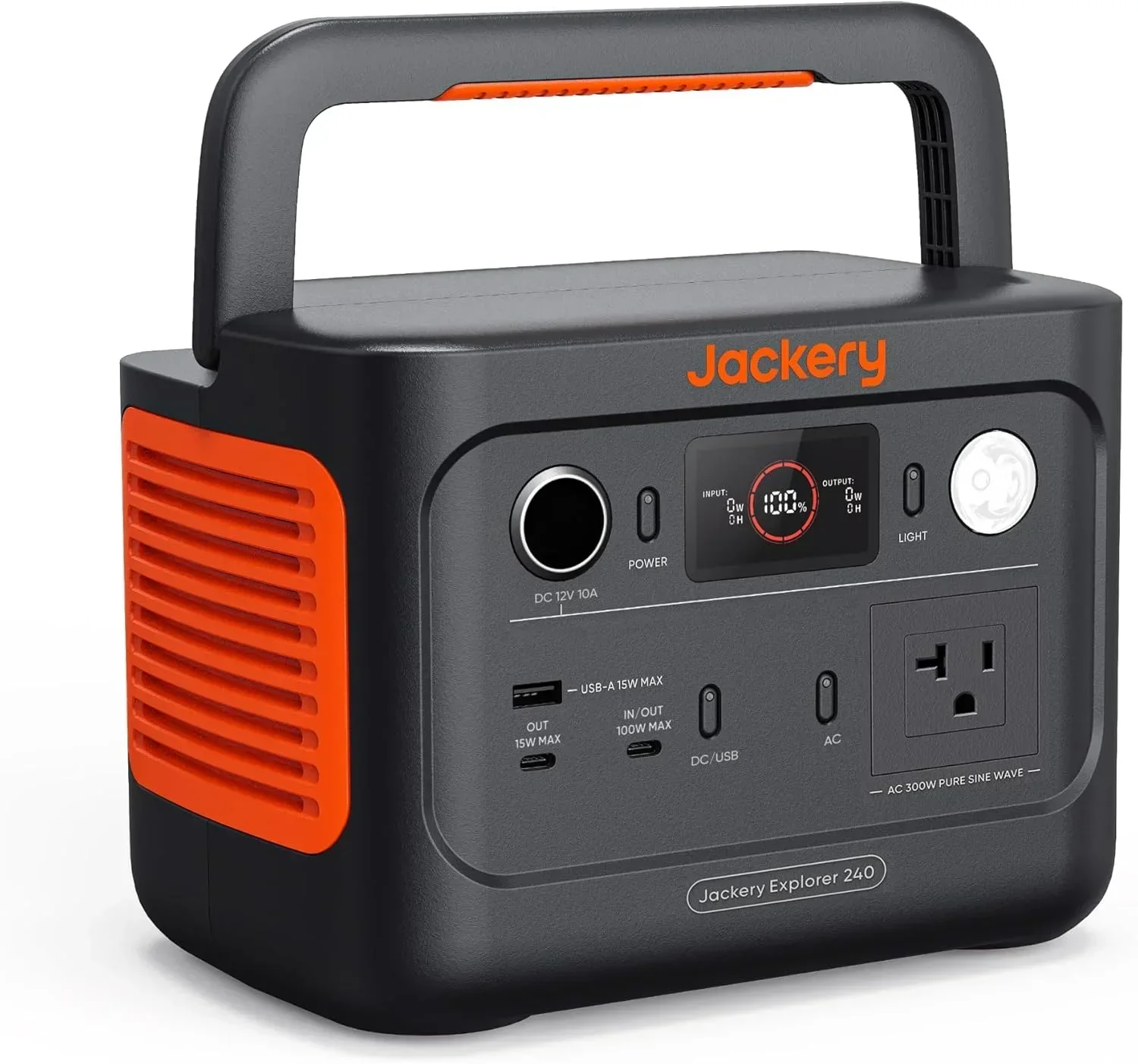
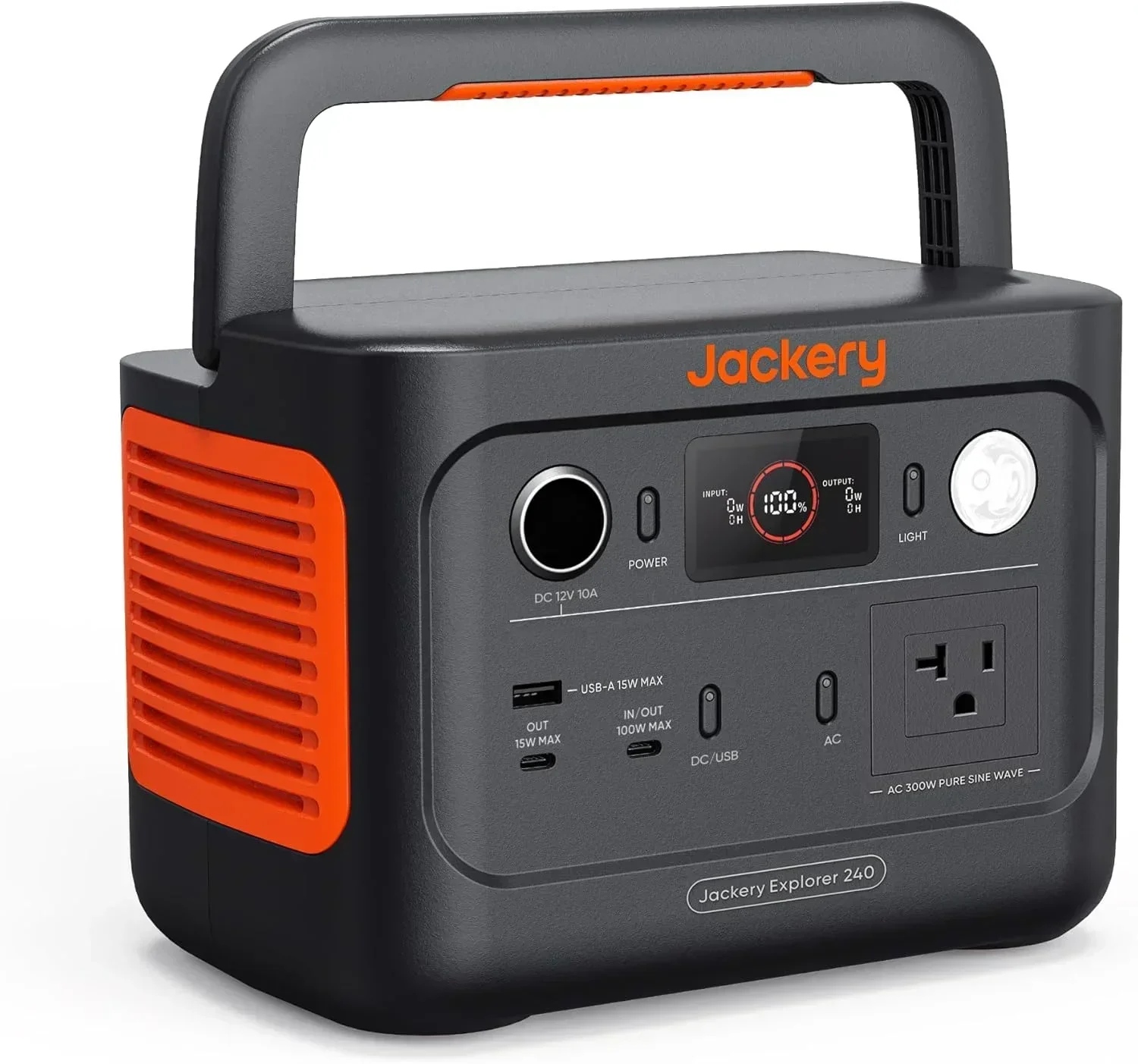
Within those limits, a legal nap is genuinely a legal nap in most places, and the honest advice is to make it brief, discreet, and mobile. Running your accessories off the engine all night is both a fume-and-noise problem and a beacon; a small battery avoids it. A Jackery Explorer 240 v2 power station runs a fan, a light, and phone charging through a curbside night and recharges off your 12V socket as you drive, so you stay comfortable without idling and drawing the exact attention you are trying to avoid.
If you would rather not gamble on reading a strange city's curb at midnight, the better move is to choose a spot whose rules you already know. The where-to-park-overnight guide maps the lower-friction alternatives - lots and areas that welcome overnighters - so a residential curb becomes your backup rather than your plan.
How to read your own city's code before you park
Because the ordinance is the law and it varies by city, the one reliable skill here is reading your specific city's municipal code. It is more approachable than it sounds, and it beats every forum guess. Here is the search I actually run.
- Find the code online. Most cities publish their municipal code on platforms like American Legal Publishing (codelibrary.amlegal.com) or Municode. Search '[your city] municipal code' and open the official codified version, not a summary.
- Search two phrases. Look for 'vehicle dwelling' or 'habitation' to find any lever-one ban, and 'hours' or '72' near 'parking' to find any lever-two stored-vehicle limit. Those two searches surface the vast majority of what governs a residential curb.
- Note the exact numbers. Record the section number, the restricted hours, and any distance buffer, exactly as written - the way LAMC § 85.02 specifies 9 PM-6 AM and 500 feet. Precision here is what keeps you from a surprise.
- Then read the block. A posted sign overrides the general code, so the last step is always physical: walk the curb for any overnight, permit, or street-cleaning notice before you settle in.
If reading code is not how you want to spend an evening, the shortcut is to shift your planning up a level and pick locations whose legality is clearer. The state-by-state legality guide frames the wider legal landscape, and the safe and legal sleeping guide covers the low-profile habits that keep any lawful stop uneventful. Both let a residential curb stay a considered choice rather than a midnight gamble.
If a neighbor complains or an officer taps the glass
Plan for the knock, because on a residential street it is the most likely way your night ends early, and how you handle it matters more than most people expect. Enforcement here is complaint-driven, so the scenario is usually an officer responding to a resident's call rather than a patrol that singled you out. None of it is personal, and treating it that way keeps a minor interaction minor.
- Comply and be brief. If an officer asks you to move, move. A residential street is public right-of-way, but refusing a lawful order to leave turns a parking question into a far worse one. The night is not worth escalating.
- Know the difference between a warning and a citation. Many first contacts are a request to move on, not a ticket. Reading the situation for what it is - a neighbor complaint being resolved - usually gets you a warning rather than a fine.
- Do not argue the ordinance on the curb. If you believe you were legally parked, the place to make that case is a contested citation, not a midnight debate. Note the details, comply, and move.
The deeper point connects back to Grants Pass: with the constitutional brake on enforcement released, an officer applying a valid city ordinance is on firmer footing than they might have been a few years ago. That is one more reason the smart posture is cooperative and mobile - have a backup spot in mind before you park, so that 'you need to move' is an inconvenience rather than a crisis. For the public alternatives that come with clearer rules, the rest-area overnight guide and the roundup of overnight parking at Walmart are the two options I would reach for first when a curb does not work out.
The bottom line: legal, gray, or forbidden by your ZIP code
Put the ladder back together and the picture is coherent, even though the answer is 'it depends.' Sleeping in your car on a residential street is governed by city ordinance because the street is public right-of-way, and two independent levers do the governing: a vehicle-dwelling ban that targets habitation, and a stored-vehicle limit - commonly 72 hours - that targets how long you stay. Los Angeles (LAMC § 85.02) and Seattle (the 72-hour rule) are the two cities whose numbers I can cite; everywhere else, the accurate instruction is to read your local code, because the section numbers genuinely vary and I will not invent them.
The researcher's checklist for any residential curb:
- Confirm the parking is legal first - no sign, no permit zone, no cleaning restriction; sleeping never cures an illegal park.
- Check both levers - search your city's code for a 'vehicle dwelling' ban and for a stored-vehicle hour limit, and note the exact hours and any distance buffer.
- Keep the car reading as parked, not lived-in - the indicators that define 'dwelling' are the same ones that draw a neighbor's complaint.
- Stay brief, discreet, and mobile - and have a backup with clearer rules ready, because after Grants Pass cities enforce these ordinances more freely.
Do that and a legal residential nap is a reasonable, low-risk option in much of the country. But it is a curb governed by a written code you can read, not a right you carry with you, and the difference between a quiet night and a knock on the window usually comes down to whether you read that code first. For the wider legal map before you ever pull over, the state-by-state legality guide is where I would start.