
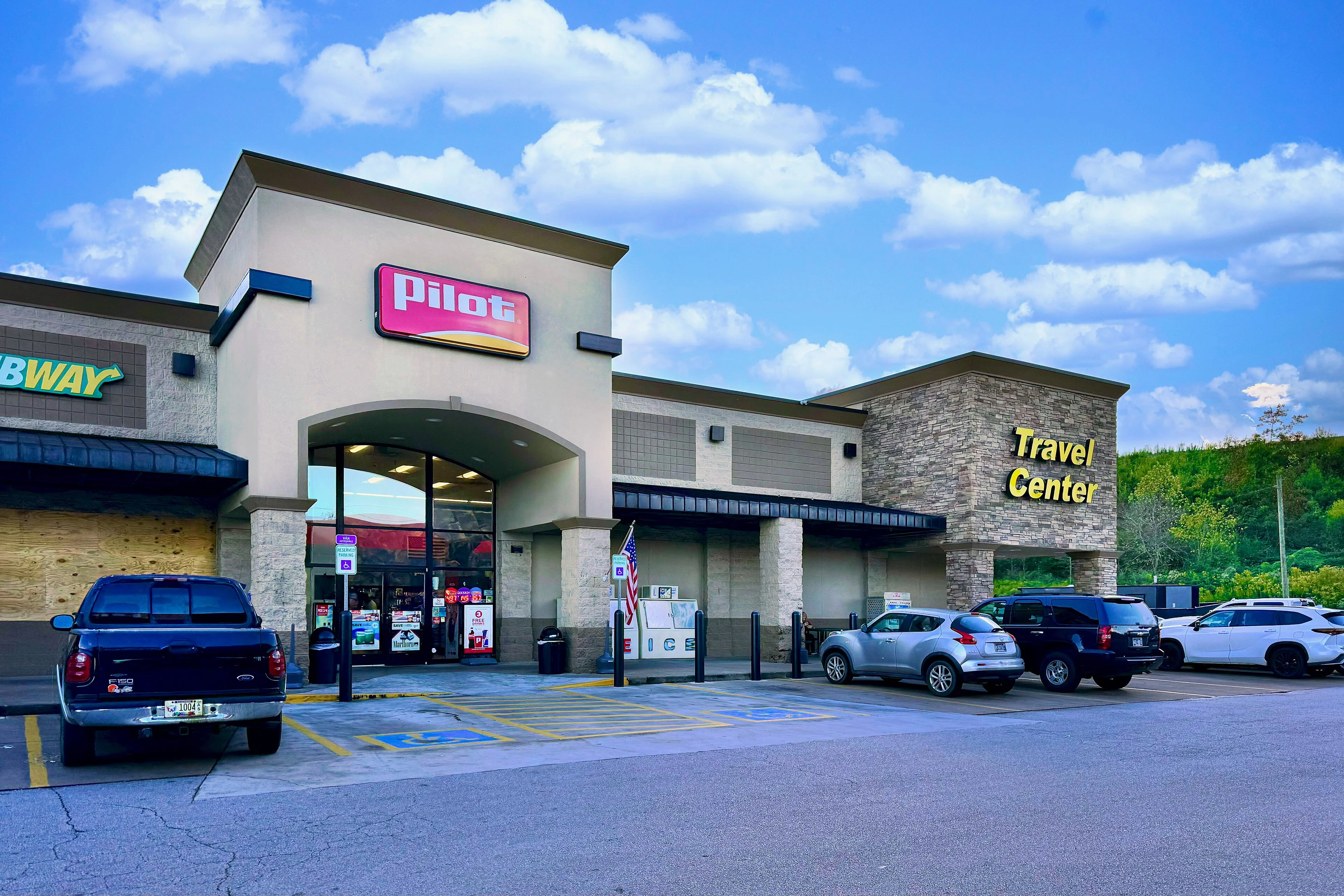
Pulling in past midnight with the truck lanes already full
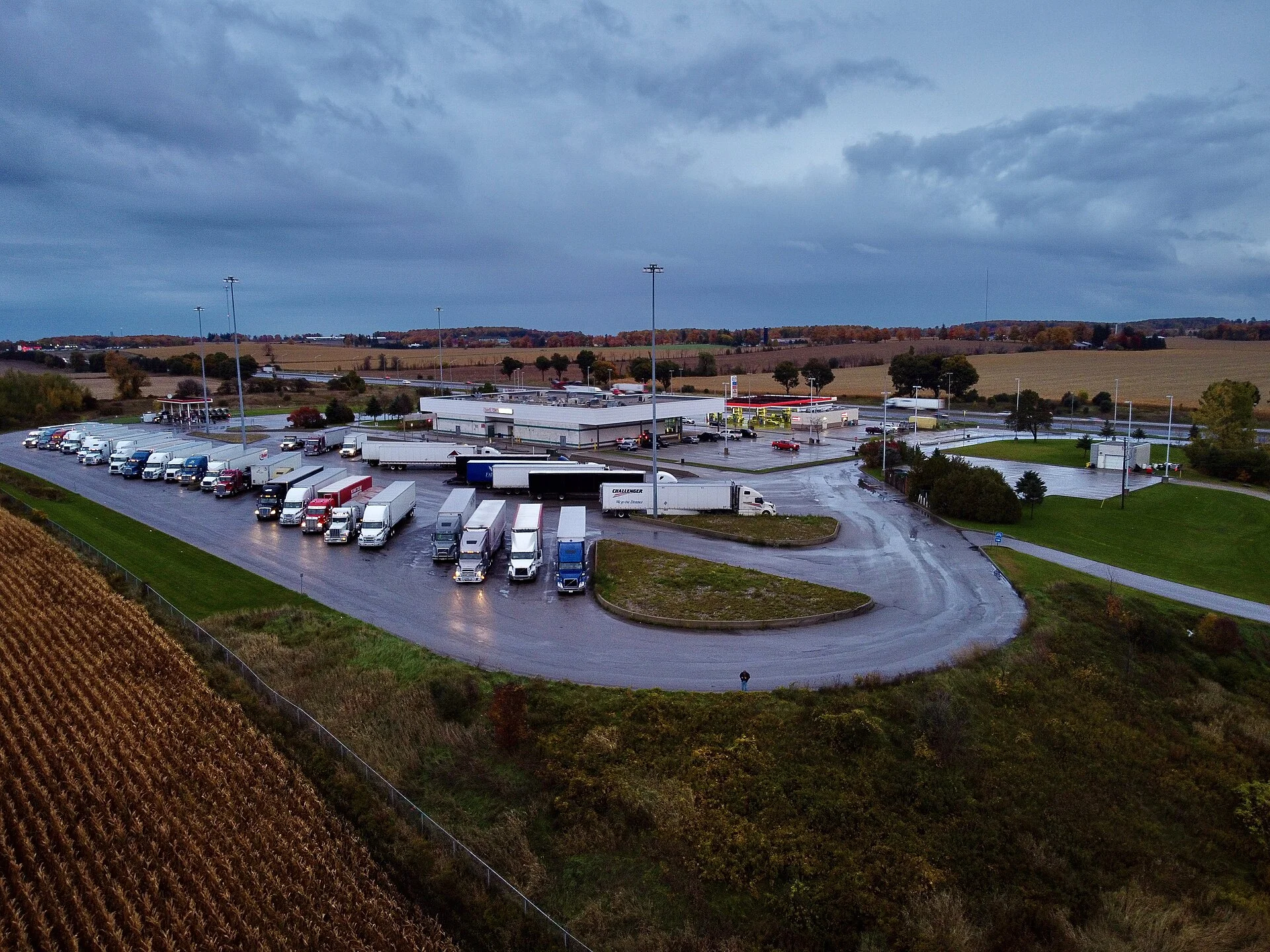
It's 12:30 a.m. on a long haul across the interstate, eyes grainy, and the Pilot Flying J at the exit is lit up like daylight. Pull in, and the first thing you see is the row of tractor-trailers packed nose to tail on the far side of the lot, engines idling, every truck spot taken. That row is not for you, and knowing that is the whole difference between a good night's sleep here and a knock on your window at two in the morning. Swing left, toward the fuel islands for four-wheelers and the smaller spaces near the store, and you find your spot on the auto side.
So can you sleep in your car at a truck stop overnight? For a car sleeper, the honest answer is usually yes - the big chains run 24/7 and a car or campervan is reportedly tolerated overnight - but that 'yes' comes with one rule that outranks all the others. You park on the auto and RV side, and you stay out of the truck lanes. Those lanes are a working part of a working facility, and a car parked in one is the real faux pas here, the thing that turns a friendly lot against you.
It's worth being straight about where that tolerance comes from, because it matters for how much you lean on it. The idea that cars are welcome overnight is an RV-travel aggregator and forum norm - the kind of thing you read on weretherussos.com or roadtrippers.com - not a published corporate welcome you can point to. The chains don't advertise a car-sleeper policy. You're a tolerated guest on private property, and the rest of this page is about earning that spot the way the drivers around you have already earned theirs.
Done right, coast to coast, the nights that go smoothly all have the same shape: park on the auto side, be a quiet paying patron, and treat the truck parking as what it actually is - somebody's legally-required bedroom. Get that framing right and a truck stop is one of the better places on the interstate to close your eyes. Get it wrong and you're the reason a manager starts posting signs.
Why the truck lanes are a driver's legally-required bedroom
Here's the thing most car sleepers never quite absorb, and it's the thing that makes a good guest out of you: that row of parked trucks isn't convenience parking. Commercial drivers run on federal Hours-of-Service rules, and when a driver's clock runs out, they are legally required to stop and rest - often ten hours before they can legally roll again. The truck lanes are where that mandated rest happens. It is, in a real sense, a bedroom the law requires them to use.
Truck parking is genuinely scarce, too. A driver who can't find a spot when their clock expires is stuck choosing between an unsafe shoulder and breaking federal rules - so every truck space matters to someone whose livelihood and safety ride on it. When a four-wheeler takes one of those spots to sleep, that's not a small etiquette slip. That's taking a bed from a person who is legally required to be in it.
The single rule that outranks every other tip on this page: park on the auto/RV side, never in the truck lanes. Those lanes exist for commercial drivers on federally-mandated Hours-of-Service rest, and a car parked in one is the real faux pas - the thing that gets you woken up, reported, or asked to leave.
Once you see it that way, the courtesy runs itself. Think of a truck stop as two overlapping facilities sharing one lot: a working truck yard on one side and a convenience-store-and-fuel operation for the rest of us on the other. The drivers extend a quiet tolerance to car sleepers as long as they stay on their side of that line. Respect it, and you're a neighbor. Cross it, and you're a problem - and this is a crowd that talks on the CB and notices everything. That's a tier note worth keeping straight: the auto-side rule is a reported aggregator norm, but the reason behind it - federal HOS rest - is real regulation, and drivers treat it as such.
So where do you actually park a car for the night?
Assume the lot tolerates you. Where does the car actually go? The reported norm - carried by RV-travel aggregators like weretherussos.com and roadtrippers.com, not by a corporate rulebook - puts you on the auto and RV side, near the store and the four-wheeler fuel islands, well clear of the commercial truck lanes.
- Auto/RV side, always. Look for the smaller spaces near the convenience store or a marked RV row. That's where a car sleeper belongs - not the long pull-through lanes built for semis.
- Off to the edge, not the front door. A quiet corner of the auto side keeps you out of the busy fuel-and-shop traffic and reads as 'resting patron,' not 'camp.'
- Not the fuel lanes or the scales. Those are active all night. Park where you can sit still for hours without being in anyone's way.
If the auto side is jammed and the only open spaces are in the truck lanes, that's your signal to move on rather than squeeze in. Pulling back onto the interstate and taking the next exit is the right call for exactly that reason. A tolerated guest doesn't get to bend the one rule that keeps the tolerance alive. When a lot can't place you cleanly on the auto side, the where-to-park-overnight guide lays out the next options down the road.
What do Pilot, Love's, and TA actually publish?
Now let's do the thing most articles skip and check what the chains themselves say - because the gap between the forum norm and the corporate page is the whole story here. Go looking for an official 'yes, cars can sleep here overnight,' and it does not exist.
Take Pilot Flying J. Its only official parking page is a program called Prime Parking (on pilotcompany.com/park), and that's a paid, reserved parking product for commercial trucks only - semis and bobtails, booked with a hang-tag. It says nothing about cars, campervans, or overnight car sleeping. That tier label matters: it's OFFICIAL, but it's trucks-only, which means Pilot has no published car-sleeper policy at all. The car tolerance you've read about lives entirely in the forums, not on Pilot's site.
- Pilot Flying J. Official page = Prime Parking, a paid reserved program for trucks only. No published policy on car overnights either way. [tier: OFFICIAL, trucks-only]
- Love's. Its official overnight product is paid Love's RV Stop hookup sites, commonly around $43 to $57 a night. That's a paid service, not free car tolerance - free car sleeping is reportedly tolerated but not published. [tier: official product vs. aggregator norm]
- TA / Petro. Like the others, open 24/7 and reportedly tolerant of cars on the auto side, but with no published car-sleeper welcome you can cite. [tier: aggregator]
So what do you actually do with that? You stop expecting a corporate permission slip and start reading the specific lot. The chains built 24-hour facilities and quietly tolerate car sleepers on the auto side; they just never wrote it down as a promise. Anyone who tells you 'Pilot allows overnight car parking' as a flat fact is filling in a blank the company left empty - better to know that than get surprised by it at midnight.
How long can you stay, and do you have to buy anything?
Two questions come up constantly, and both have answers that are norms rather than rules. On the clock: the commonly cited window is somewhere around 12 to 24 hours, but that number comes from van-life and RV forums like goodsam.com and promasterforum.com, not from a posted chain policy. The reliable move is to confirm through the chain's own app or by calling that location - a thirty-second call beats a guess every time.
On buying something: yes, always do, but understand what kind of rule that is. Buying fuel, a shower, or a meal is a patron-courtesy norm, not a stated requirement anyone will quote you. It's etiquette. A truck stop that sees car sleepers fueling up and grabbing breakfast has every reason to keep tolerating them; one that sees the auto side treated as a free campground starts posting limits. Your receipt is, in a real sense, what keeps the welcome alive.
- Confirm the time norm locally. The ~12-24 hour figure is aggregator-reported - check the chain's app or call the store to be sure.
- Buy fuel or food. It's a courtesy, not a posted rule, but it's the cleanest way to be a patron instead of a freeloader.
- Don't set up camp. No chairs, no awnings, no cooking in the lot. You're resting between legs of a trip, not camping.
Keep the whole thing in proportion. The reason the reported etiquette caps you around a night and asks you to buy something is the same reason the truck-lane rule exists: a truck stop is a high-turnover working facility, not a destination. Roll in, rest, refuel, roll out, and you'll be the kind of guest these places barely notice - which is exactly what you're going for.
Running your own power so you never idle in the lot
Here's a car-sleeper habit that keeps you welcome and keeps you safe: don't run the engine all night. It's tempting when you want heat or a charger, but idling in a quiet corner of the auto side is noisy, it's fumes, and it reads as exactly the kind of camping a lot doesn't want to encourage. The fix is carrying your own power instead of borrowing it from the engine.
Idling reads as camping and burns goodwill. Carry your own overnight power, keep the engine off, and you stay the quiet guest the auto side barely registers.
There's a safety angle too, and it's not small. Running the engine to sleep with the windows up is a carbon-monoxide risk, especially if you're packed in near other idling vehicles. Off-engine power sidesteps that entirely. More on these low-profile habits is in the safe and legal sleeping guide - they're the difference between an uneventful night and one you'd rather forget.
The legal reality: private property and implied permission
Let's be precise about what you're standing on, because a lot of the confidence online skips the part that actually matters. A truck stop is private property. Any right you have to be there overnight is permission the owner extends, not a legal entitlement you carry with you - and permission that's implied can be revoked.
The way the law generally treats it: your permission to be on a private lot is implied-until-revoked. You're allowed there right up until staff or an owner tells you to leave. The moment they do, that permission is gone - and refusing to leave private property after being asked is criminal trespass. That's not a gray area. Per law-firm guidance such as shouselaw.com, in California that falls under Penal Code 602, a misdemeanor that can carry up to six months in jail and a $1,000 fine.
On private property, permission is implied until it's revoked. When staff asks you to move on, the friendly answer and the legal answer are the same one: you go. Staying is criminal trespass - in California, Penal Code 602, up to six months and $1,000 (law-firm tier, shouselaw.com).
Two practical things follow. First, a tow is always on the table - it's a private lot, and an owner who wants a vehicle gone can have it removed at your expense, no ordinance required. Second, when a truck stop tolerates you, treat it as the favor it is: park where you're supposed to, stay quiet, and if anyone asks you to leave, thank them and go without argument. The night isn't worth a trespass charge. For how this same logic plays out on public land instead of private lots, the rest area overnight guide is the companion piece.
How does a truck stop differ from a rest area or a store lot?
Car sleepers tend to lump every interstate stop together, but a truck stop plays by its own logic, and knowing the differences helps you pick the right one for the night in front of you. The defining trait here is that you're sharing space with a working commercial operation, which is exactly what a rest area or a retail lot isn't.
- Versus a public rest area. A rest area is public land with posted time limits and no commercial-driver bedroom to respect. A truck stop is private, open-ended in a fuzzier way, and organized around those HOS rest lanes you must avoid.
- Versus a Walmart or store lot. A retail lot's tolerance is store-by-store manager discretion. A truck stop's tolerance is more consistent - the places run 24/7 - but it's gated hard by the auto-side rule.
- Amenities. This is where truck stops shine: 24-hour food, real restrooms, paid showers, fuel, and steady lighting and foot traffic all night. For a solo traveler, that ambient activity is a genuine safety plus.
That amenity list is the reason many car sleepers choose a truck stop over a darker, emptier option when tired and alone - a lit, busy, staffed facility is a comfortable place to close your eyes. But every one of those perks is wrapped around a working truck yard, and the price of admission is staying out of it. If you want the fuller comparison across every kind of lot, the state-by-state legality guide maps how the law treats each one before you commit.
The through-line is simple: the more a lot is somebody's workplace, the more your job as a guest is to stay invisible in it. A truck stop is the clearest version of that. You get first-rate amenities in exchange for disciplined courtesy, and on a long haul that's a trade worth taking almost every time.
Reading a truck stop before you settle in for the night
Say you didn't call ahead and you're rolling in at eleven at night. Here's the read to do from behind the wheel before committing, because the lot answers most of the question if you look. It takes about a minute and it can save you from a bad night.
- Signs first. Loop the perimeter and read every posted notice. 'No overnight parking' or a car-specific restriction settles it - you move on.
- Find the line between the sides. Locate the truck lanes and the auto/RV area, and make sure there's a clean spot for you on the car side. If the only openings are in the truck lanes, that's a no.
- Read the crowd. A few RVs and campervans already settled on the auto side is a good omen. A lot with zero four-wheelers parked overnight is a weaker bet worth a second thought.
- Trust your gut on safety. Well-lit, busy, staffed store beats an isolated dark corner of the lot - park where the light and the foot traffic are.
If the read comes back mixed and the store is staffed, the tie-breaker is free: walk in and ask the person behind the counter whether it's okay to rest in a car on the auto side overnight. Ninety seconds turns a guess into a real answer, and it's the same move that keeps you clear of the implied-permission problem - a yes from a person on-site is worth more than any forum post. When a lot doesn't feel right, don't talk yourself into it; there's another exit and another stop up the road.
Being the guest the drivers don't mind: quiet, clean, gone by morning
The whole arrangement at a truck stop rests on car sleepers being nearly invisible, and that's genuinely within your control. The drivers aren't asking for much - they're on their own mandated rest and they'd like the same quiet you would. Give it to them and the tolerance holds for everyone who pulls in after you.
- Keep it quiet. Engine off, music off, doors closed. The people around you are legally resting - noise from the auto side carries straight into the truck lanes.
- Leave no trace. No trash, no dumping, no setup. The space should look untouched when you pull out.
- Be gone in the morning. Roll out reasonably early rather than lingering into the next day. You're resting between legs, not staying.
- Say thanks if you can. A word to the counter staff and a fill-up on your way out is how a tolerated guest becomes a welcome one.
Hold to this even on nights when the lot is half-empty and nobody would notice, because the habit is the point. Every car sleeper who treats a truck stop well makes the next one's welcome a little more secure - and every one who treats it like a free campground is why some lots now carry restrictions they didn't a few years ago. You're borrowing goodwill built by the people who came before you. Pay it forward.
If a truck stop can't host you on a given night, that's not a dead end - it's a cue to know your alternatives cold. The habits and the mindset carry over to a Walmart lot, a rest area, or wherever the road puts you next, and the overnight parking at Walmart guide is a good next stop for the retail-lot version of the same courtesy.
The bottom line for a night on the auto side
Put it together and a truck stop is one of the better overnight options on the interstate for a car sleeper - lit, staffed, stocked, and awake all night - as long as you treat it for what it is. It's a working facility for commercial drivers where you're a tolerated guest, not a campground you have a right to use.
An overlander's checklist, earned mile by mile:
- Auto/RV side only - never the truck lanes; those are a driver's federally-required bedroom, and that rule outranks all the rest.
- Confirm the details locally - the ~12-24 hour window is an aggregator norm; check the chain's app or call, and don't expect a published corporate welcome (Pilot's only official page is trucks-only Prime Parking).
- Buy fuel or food, run your own power - patron courtesy keeps the tolerance alive, and off-engine power keeps you quiet and safe.
- Know it's private property - permission is implied until revoked; if staff asks you to leave, you leave, because staying is trespass.
Do that and you get a genuinely restful stop for the price of a fill-up and a little discipline - which, on a long haul, is hard to beat. Park on the auto side, respect the drivers' bedroom, be quiet and clean and gone by morning, and the truck stop will be there for you the next time the day runs long.