The short answer: yes, with three hard rules
Yes, a healthy dog can sleep in the car overnight safely - but only when you are in the vehicle managing the temperature, and only if you respect three risks that kill dogs in parked cars every year. This is not the same question as leaving a dog alone in a car, which the American Veterinary Medical Association says you should never do at any temperature for any length of time. Sleeping beside your dog on a car-camping trip is a different and manageable situation.
The three rules come straight from the veterinary and kennel-club guidance, and every one of them is a number you can plan around: heat, cold, and carbon monoxide. Get those three right and an overnight in the car is genuinely safe and comfortable for most dogs. Get any one of them wrong and the margin for error is measured in minutes, not hours. So let's take them one at a time, with the sources, so you know exactly where the lines are before your dog spends a night in the vehicle.
The heat math: why a parked car turns dangerous in minutes
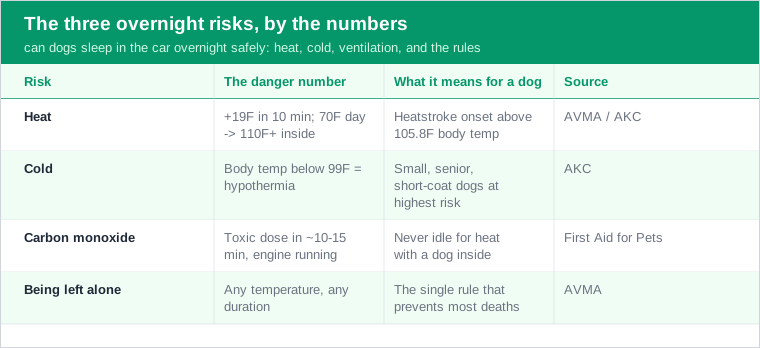
Heat is the risk that gets dogs killed, and the numbers are worse than most owners think. According to the AVMA, a parked car's interior climbs about 19F in the first 10 minutes, 29F within 20 minutes, and 43F after an hour - so even a mild 70F afternoon can push the cabin past 110F. The American Kennel Club puts the same 70F day at 100F inside within 20 minutes and up to 140F in under an hour on a hot day.
Two things every owner gets wrong:
- Cracking the windows barely helps. The AKC, citing the AVMA, reports that a car with windows cracked heats at almost exactly the same rate as one sealed shut. A 1-inch gap is not ventilation.
- Dogs overheat well before you'd guess. The AKC puts heatstroke onset above a body temperature of 105.8F - against a normal of about 101 to 102.5F - and above 106F the signs escalate to gray or purple gums, seizures, and collapse. In an enclosed car that can develop within minutes.
The takeaway for overnight camping: daytime is the danger window, not the cool night. Never let the dog nap in the car alone while you hike, and on a warm night keep real airflow moving, because a car with the doors shut behaves like an oven long before dawn.
And know the response if you ever see the signs. The AKC's escalation list - heavy panting that won't settle, bright red tongue and gums, thick drooling, weakness or wobbling - means move the dog OUT of the vehicle immediately, into shade, with cool (not ice-cold) water offered and cool water on the belly and paws, and a vet on the phone. Heatstroke moves fast in dogs; the minutes you spend deciding whether it's serious are the minutes that decide it.
The cold math: the other way an overnight goes wrong
Cold is the quieter risk, and it matters more overnight because that's when temperatures bottom out. A car is an uninsulated metal box; once the engine's off it holds almost no heat, and by 3 a.m. the inside is close to the outside air. The American Kennel Club puts mild hypothermia in dogs at a body temperature below 99F, moderate at 82 to 90F, and severe below 82F, where cardiac and respiratory failure become real.
Not every dog handles a cold night the same way. The AKC flags the dogs that lose body heat fastest:
- Small and toy breeds - high surface area, little mass to hold warmth.
- Senior dogs and puppies - weaker temperature regulation; newborn puppies can chill even at normal room temperatures.
- Short-coated breeds - a greyhound or a boxer has none of the insulation a husky carries.
For those dogs, insulated bedding off the cold floor and a dog-safe layer are not luxuries. Build the cold-night bed the way you'd build your own: something with loft between the dog and the metal floor - a foam pad or folded blanket under the dog bed, per the AKC's bed-and-towel advice - then the familiar bed on top, positioned away from the window glass where the cold radiates hardest. A dog curled tight, tucking its nose, or shivering is telling you the bed isn't warm enough yet. The AKC's plain advice bears repeating: in truly extreme weather, hot or cold, the safest choice may be to leave the dog home rather than have it sleep in the vehicle at all.
The invisible risk: never run the engine for heat
Here is the rule that surprises people and saves lives: do not idle the engine to warm the car with your dog inside. Running an engine in an enclosed or poorly ventilated space produces carbon monoxide, and First Aid for Pets warns that small animals are more sensitive to it than humans - CO binds to their hemoglobin with roughly six times the affinity of oxygen, so a dog can be poisoned in the 10 to 15 minutes it takes you to notice anything is wrong.
Carbon monoxide is colorless and odorless. Your dog cannot tell you it's happening, and by the time symptoms show - lethargy, unsteadiness, bright red gums - the exposure is already dangerous. Warm the dog with insulation and body heat, never with a running engine in a closed cabin.
If you genuinely need engine heat on a brutal night, that's the signal the night is too cold for the car - move to a heated space or, per the AKC, don't bring the dog on that trip. Passive warmth is safe; combustion in a sealed box is not. The same logic covers fuel-burning tent heaters and camp stoves: nothing that burns runs inside the cabin while anyone - two-legged or four - is sleeping in it.
Alone versus with you: the one rule that changes everything
Almost every dog-in-car tragedy shares one detail: the dog was alone. The AVMA's guidance is unambiguous - never leave a pet alone in a parked vehicle regardless of the outside temperature or how briefly you expect to be gone, because the cabin can reach lethal temperatures in minutes. That single rule is the difference between safe car-camping and a headline.
Draw the bright line: a dog sleeping in the car WITH you overnight is safe and manageable - you feel the temperature change, you hear the panting, you act. A dog left in the car ALONE, even for a quick errand, is never safe at any temperature - that is the situation the AVMA and 28-plus state laws exist to prevent.
The AKC's camping guidance echoes it from the other direction: keep your dog with you at all times, day and night, and never shut it in a closed vehicle. If your plan requires leaving the dog in the car alone at any point, the plan needs to change, not the dog. And since you'll be sleeping in the vehicle too, get the human half of the plan squared away as well - our guide to sleeping in your car safely and legally covers your side of the same night.
Setting up a genuinely safe overnight
With you present and the engine off, a safe overnight comes down to four things: airflow, water, warmth off the floor, and a way to watch the temperature. None of it is expensive, and all of it follows the AKC's camping-with-dogs guidance.
- Real cross-ventilation. Open windows on opposite sides a few inches with bug screens, so warm, humid air actually moves - remember a 1-inch crack alone is not enough on a warm night. A small battery fan such as the Treva battery crate fan keeps air moving without running the engine.
- Fresh water at all times. The AKC is explicit: water always available, not just at meals - a spill-resistant bowl belongs in the sleeping area.
- Insulated bedding. The AKC recommends bringing a dog bed and a towel to lift the dog off the cold metal floor; familiar bedding also helps a nervous dog settle.
- Watch the cabin temperature. Keep a thermometer where you can see it, and treat the daytime hours - not the night - as the moment to get the dog out and into shade.
Where you park shapes all four. A shaded, level, quiet spot keeps the cabin cooler, keeps a light-sleeping dog from barking at foot traffic, and keeps you both out of the tow-away conversation - our where to park overnight guide walks the options. Do a first-night dry run in the driveway, too: a dog that has slept one calm night in the parked car at home settles far faster a hundred miles from it.
Crate or loose? Securing a dog that sleeps in a vehicle
Where the dog sleeps in the vehicle is a safety choice, not just a comfort one. A loose dog can wake, panic, and bolt the moment a door opens at 2 a.m.; a contained dog stays put and settles faster. For most car-campers a crash-tested travel crate is the better answer - it doubles as the dog's secure bed and as protection if you ever have to drive unexpectedly.
The honest trade-offs:
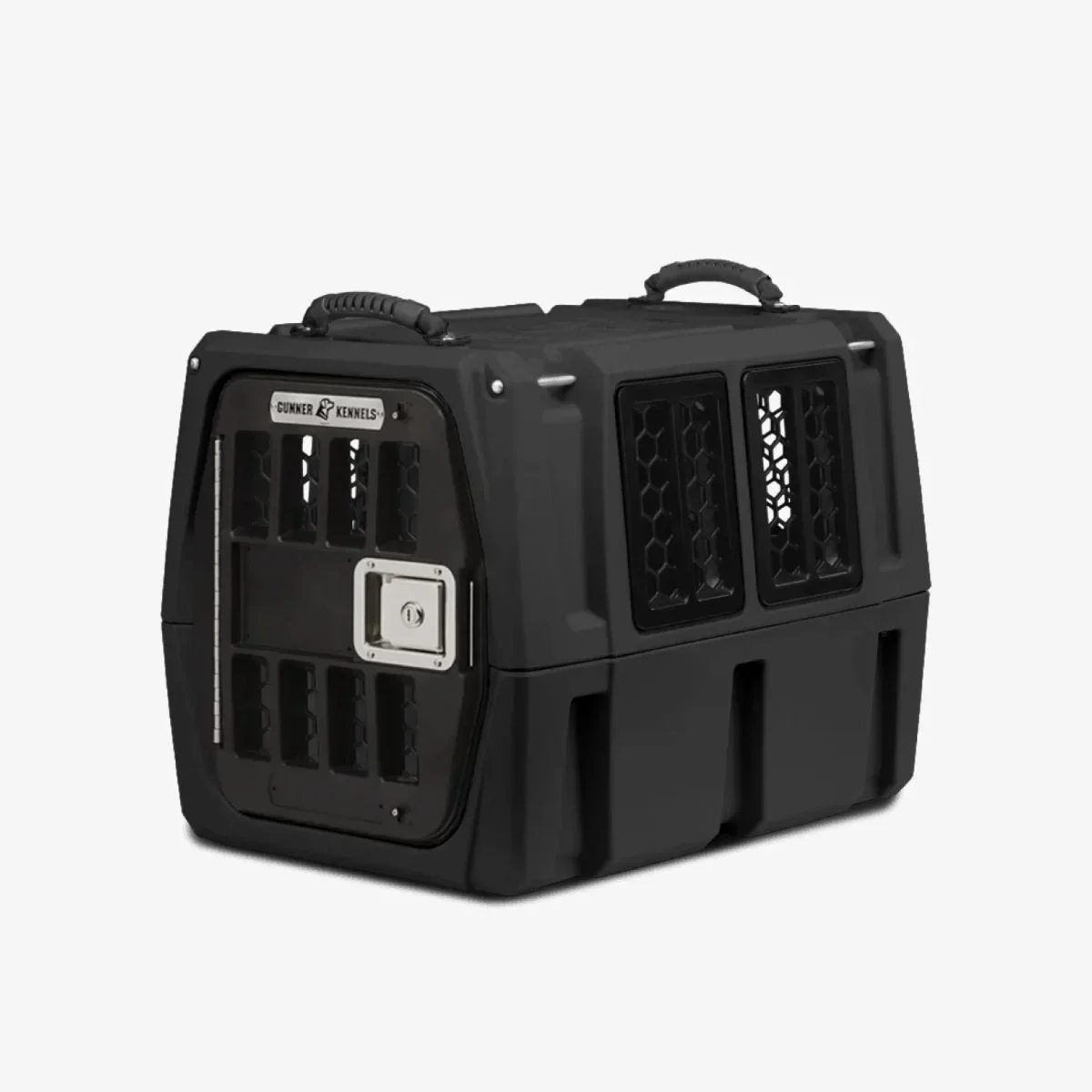
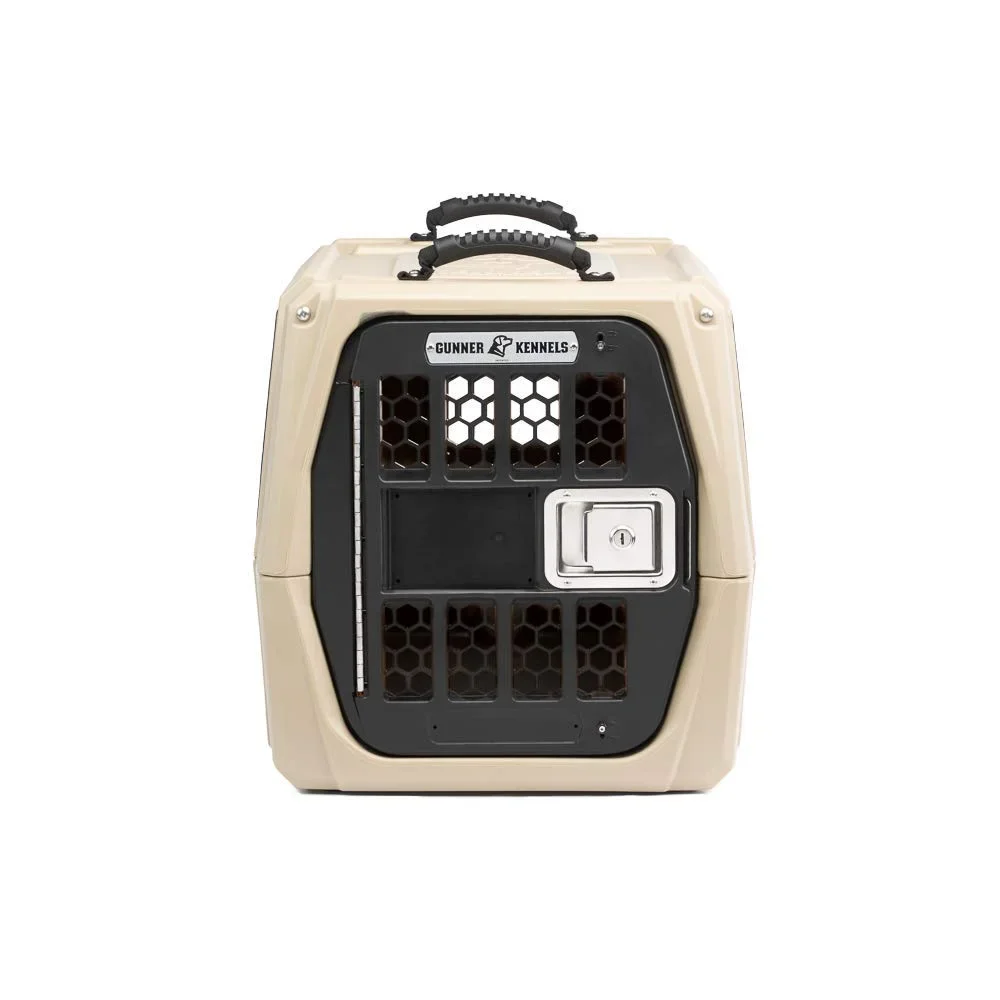
- A rigid travel crate like the Gunner G1 Kennel crash-tested crate gives a den-like space a dog relaxes in and stays crash protection for the drive - the strongest option if it fits your cargo area.
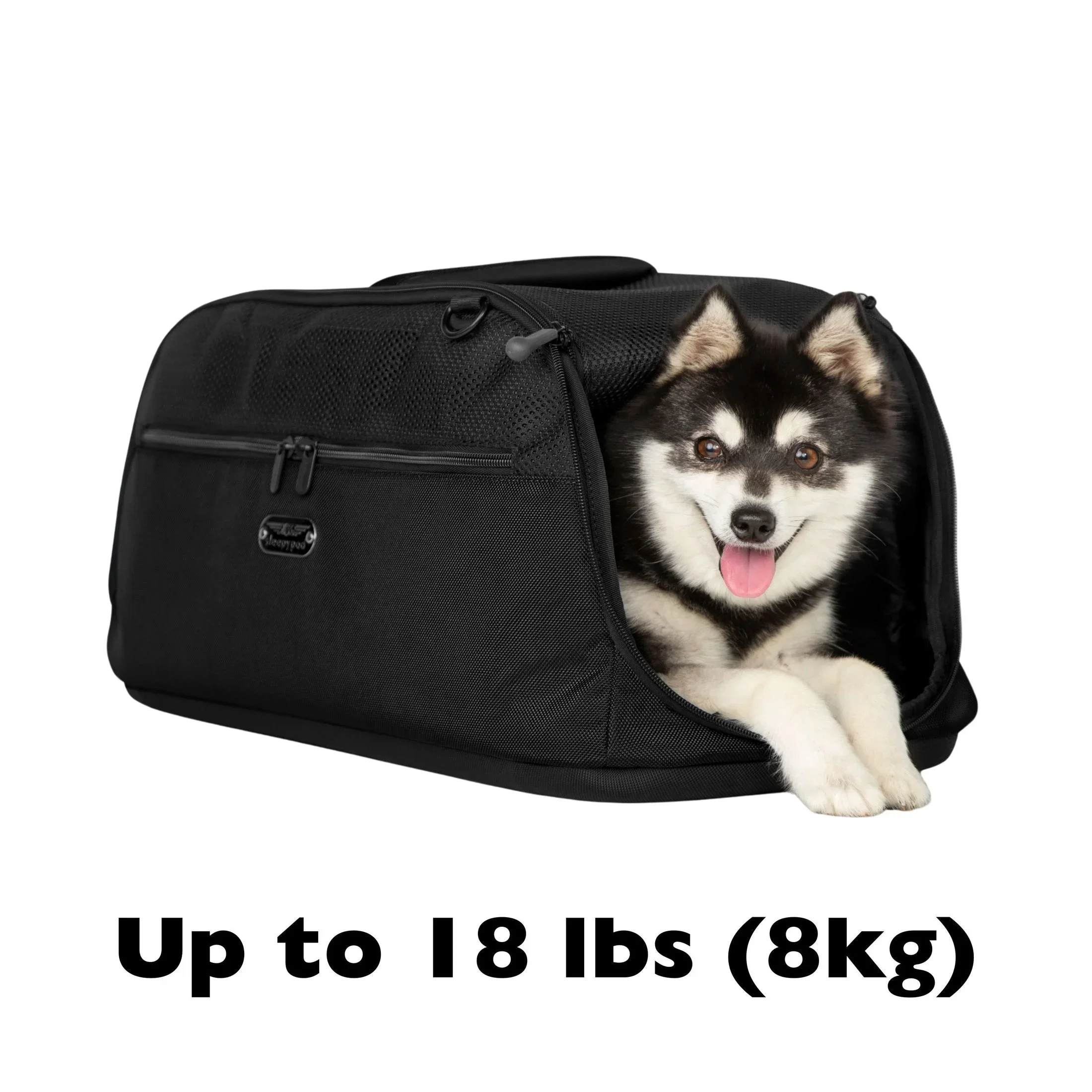
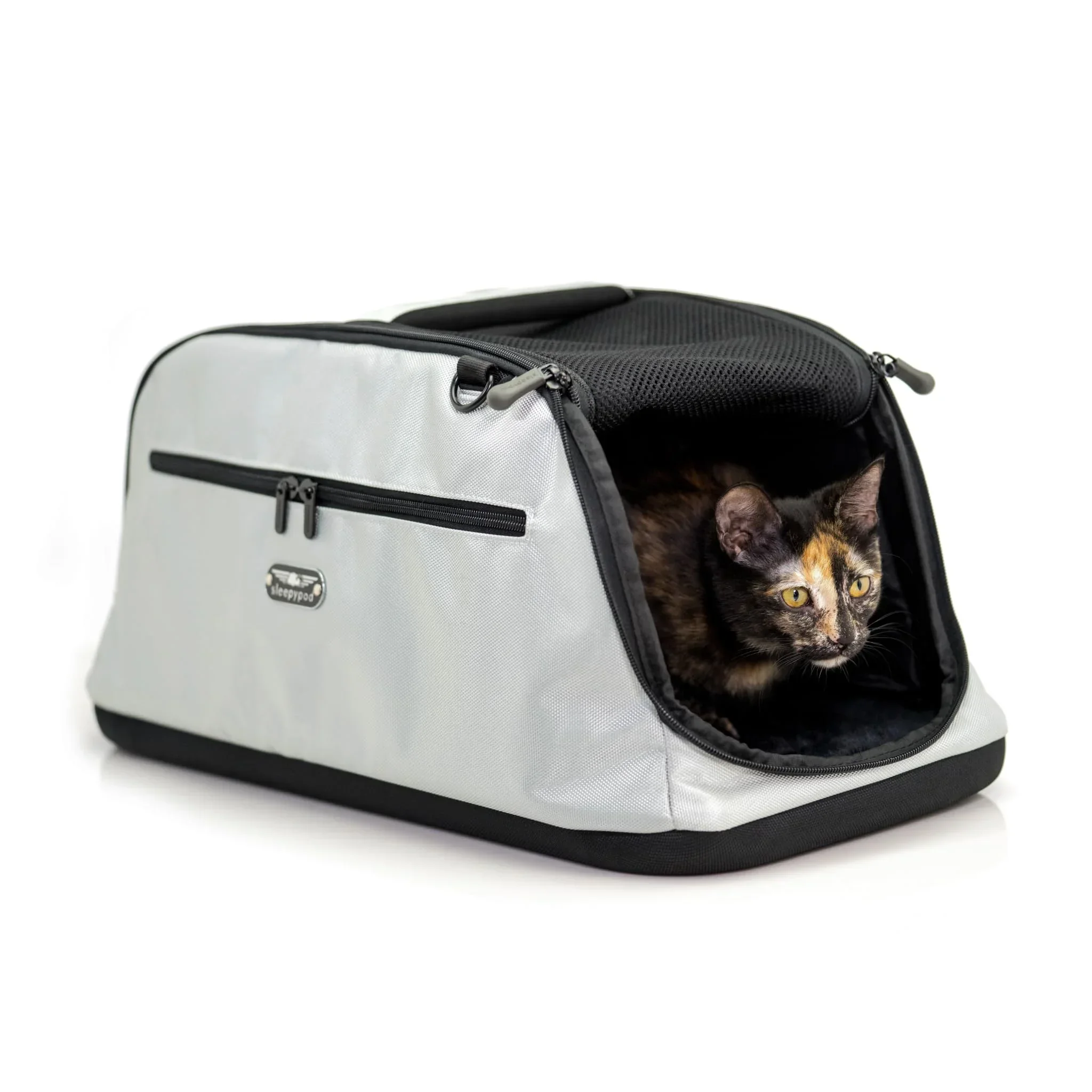
- A soft-sided carrier bed like the Sleepypod Air works for calm small dogs up to about 17.5 pounds - a crash-tested bed-and-carrier in one that packs down small.
- Fully loose is fine only for the most settled dogs, and never while the vehicle could move.
Whatever you choose, the dog should have room to stand, turn, and lie flat. A dog that can't get comfortable won't sleep, and neither will you. For a small dog that rides up front by day, a proper dog car seat for small dogs handles the driving hours; the overnight setup above takes over when the engine goes off.
Dogs that shouldn't do it - and honest exceptions
Not every dog is a candidate for an overnight in the car, and a good owner sorts that out before the trip, not during it. Based on the AKC's hypothermia and heat guidance, be extra cautious with very small, very young, or very old dogs - their temperature regulation has the least margin in both directions.
Short-coated and flat-faced breeds carry their own risks: the short coats chill fast in cold, and brachycephalic dogs like bulldogs struggle to cool themselves in heat. And for any dog with heart, breathing, or thermoregulation conditions, ask your vet before planning a night in a vehicle at all.
For those dogs the AKC's advice stands: in extreme conditions, leaving them home is the kinder call. A healthy, medium-to-large, appropriately coated adult dog, sleeping beside you in a mild-weather cabin with airflow and water, is a completely different and safe picture - that's the dog the yes in this article is written for.
Know the abort signals for any dog, too: heavy panting that doesn't settle after the cabin cools, shivering that doesn't stop under bedding, restlessness that lasts past the first hour, or refusing water. Any of those means the night in the car ends - move to a tent with better airflow, a heated room, or the drive home. The dog can't opt out of the plan; watching for those signs is how you let it.
The legal side: hot-car laws and unattended pets
The rules aren't only about safety - in much of the country they're about the law. PETA's tally puts roughly 28 to 31 US states plus Washington, D.C. with laws prohibiting leaving an animal unattended in a vehicle under dangerous conditions, and the number has been climbing as states add statutes. California and Florida, for example, both make it illegal to confine an animal in a vehicle in a way that endangers its health, and both grant Good Samaritans some legal protection for rescuing an animal in distress.
Two practical points for a car-camper:
- Leaving your dog alone in the car can be a crime where the temperature endangers it - another reason the alone-versus-with-you rule matters.
- A bystander may legally break your window in Good Samaritan states if your dog appears to be in danger, and you can't count on them being wrong about the risk.
The Animal Legal and Historical Center at Michigan State keeps a state-by-state table if you want your own state's exact statute before a trip. And if your travels put the dog in a pickup instead of a cabin, that's a separate body of law with its own state list - our dogs in truck beds legality guide covers which states flatly ban it and what 'secured' actually means.
The honest bottom line for you and your dog
Can a dog sleep in the car overnight safely? Yes - for a healthy, appropriately built adult dog, sleeping beside you, in mild weather, with cross-ventilation, water, insulated bedding, and the engine off. That's the safe version, and thousands of car-campers do it well every weekend. The danger isn't the overnight itself; it's the daytime car, the dog left alone, and the running engine.
Remember the three numbers: a parked car gains about 19F in 10 minutes (AVMA), dogs overheat above 105.8F body temperature (AKC), and a running engine can poison a dog with carbon monoxide in 10 to 15 minutes (First Aid for Pets). Stay under those lines and the night is safe.
If you wouldn't sleep in the car in those conditions yourself, don't ask your dog to. Match the trip to the dog, keep it beside you, watch the temperature, and an overnight in the vehicle becomes exactly what it should be - two tired campers sleeping it off, together and safe. The gear list is short and cheap - screens, a fan, a bowl, a bed with loft - and every item on it exists to hold the three numbers above where they belong. Get those right and the hardest part of the night is convincing the dog the sleeping bag isn't also for them.