
How to Calculate Your Power Needs for Overlanding
My first car camping trip was a $47 experiment in a Honda Civic hatchback in Shenandoah Valley. Mid-October. I had a Walmart foam pad, a sleeping bag rated to 40F, and zero idea that the temperature drops 15 degrees after midnight in the mountains.
My first car camping trip was a $47 experiment in a Honda Civic hatchback in Shenandoah Valley. Mid-October. I had a Walmart foam pad, a sleeping bag rated to 40F, and zero idea that the temperature drops 15 degrees after midnight in the mountains. By 2AM I was wearing every piece of clothing in my bag and still shivering. The fix was a $12 fleece liner from Amazon that turned my 40F bag into a 25F bag.
Three years later I still use that same liner on every trip.
Now, let's talk about powering your overlanding adventures. It's not as complicated as the fancy charts make it seem. You just need to do some homework before you leave. Think of it like packing for a weekend trip; you wouldn't just throw stuff in a bag and hope for the best, right? You figure out what you need, and that starts with knowing how much juice your gadgets suck up.
REDARC lays out the basics, but we're going to cut through the jargon. You need to know what your gear draws in amps or watts, and for how long you'll run it each day. This isn't rocket science, it's just good old-fashioned planning. If you skip this, you're basically overlanding blindfolded. And nobody wants that. Vanlife Outfitters agrees, it's all about knowing your daily consumption.
The Core Answer
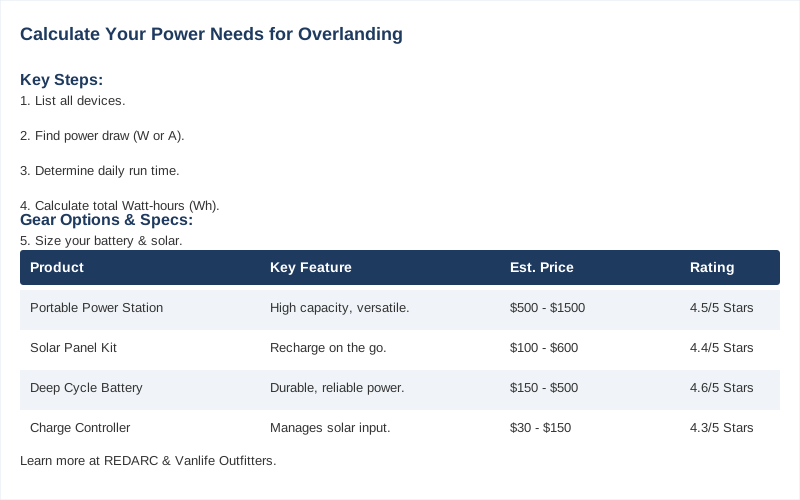
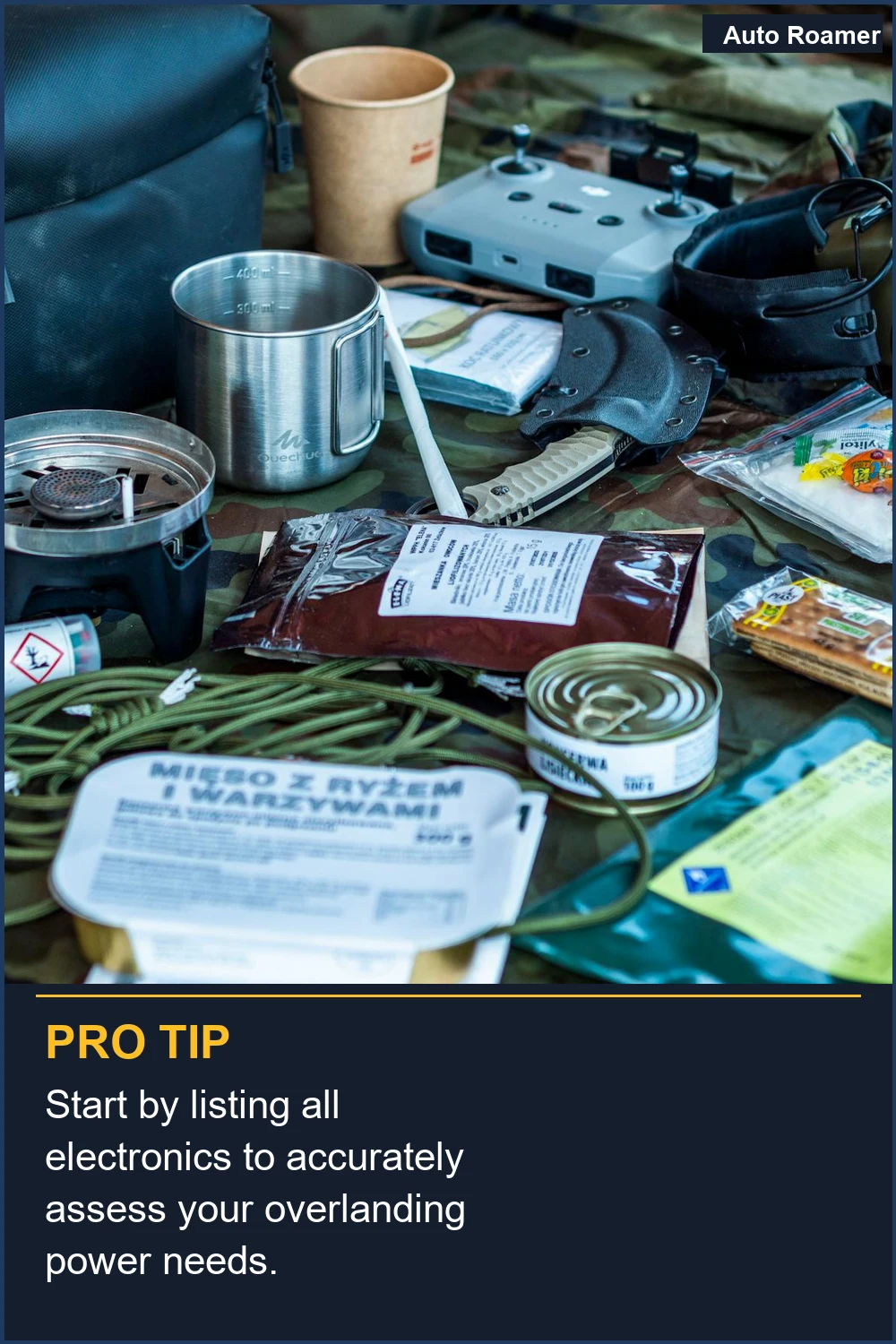
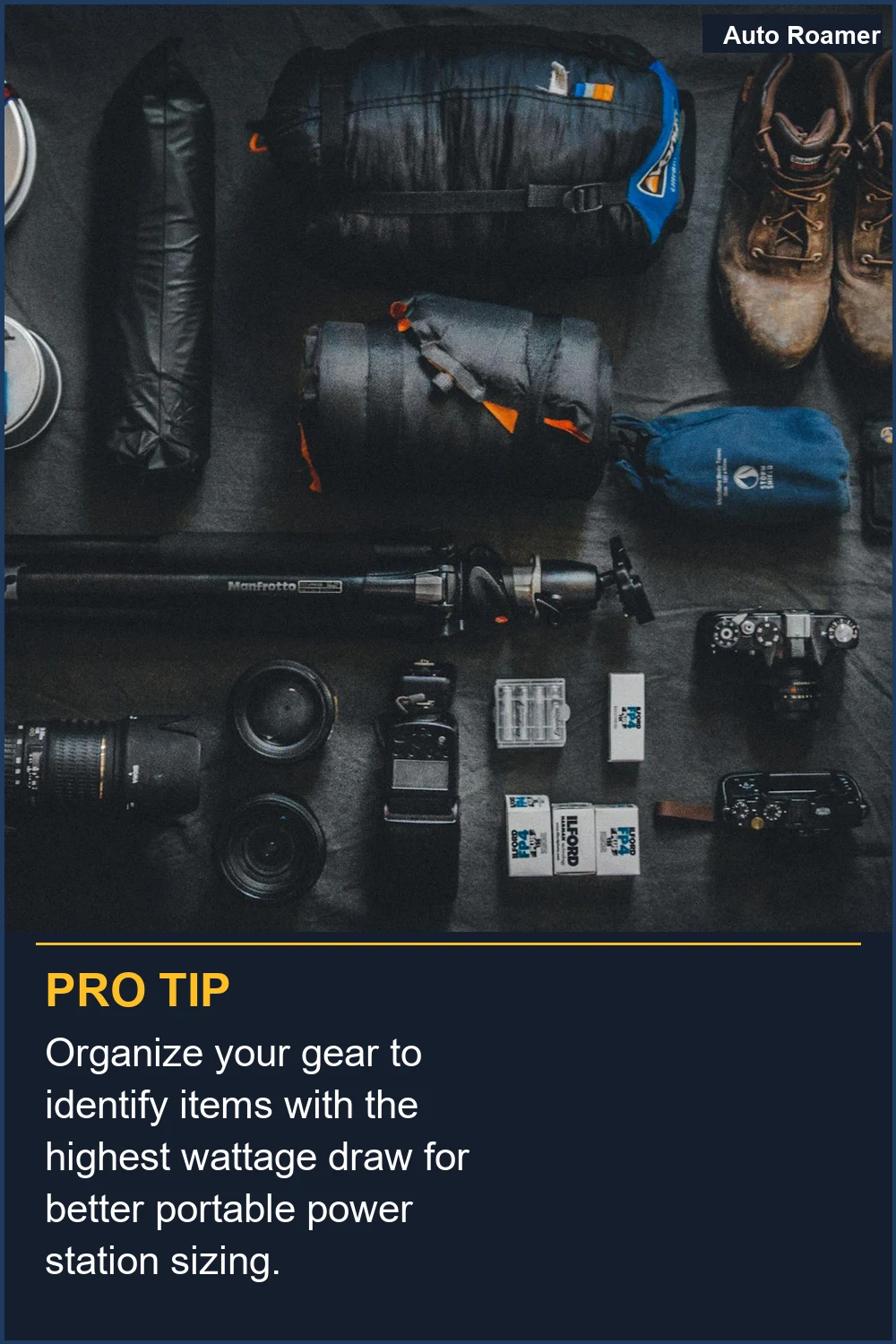
The real move here is to create a simple list. Grab a notebook, a spreadsheet, or even just a note on your phone. List every single electronic device you plan to bring: your phone, your headlamp, a portable fan, a laptop, a camera, that tiny fridge you saw on Instagram. For each item, find out its power draw. This is usually listed in watts (W) or amps (A). If it's in amps, and you know your system voltage (usually 12V for car camping gear), you can figure out the watts by multiplying amps by volts (A x V = W). For example, a 5W LED headlamp is easy. A 12V portable fridge might draw 5 amps, so that's 60 watts (5A x 12V = 60W). Tesota Overland has tools for this, but you can do it manually. Next, estimate how many hours per day you'll actually *use* that device. Be honest. Your phone might be on standby most of the day, but you'll probably charge it for 2 hours. That portable fridge, though? It's probably running almost 24/7. So, for each device, calculate its daily watt-hours (Wh) by multiplying its wattage by the hours you'll use it (W x Hours = Wh). So, that 60W fridge running 24 hours a day is 1440 Wh (60W x 24h). Your phone, maybe 10W charging for 2 hours, is just 20 Wh (10W x 2h). This Reddit thread shows a great spreadsheet approach. Add up all those daily watt-hours for every device. That's your total estimated daily power consumption in watt-hours. For instance, if your fridge is 1440 Wh and your phone charging is 20 Wh, and you have a few other things adding up to another 100 Wh, you're looking at around 1560 Wh per day. Power Republic reminds you to sum up all your gadget watt-hours. Now, here's the game-time decision: how many days do you plan to be out *without* recharging from your vehicle or solar? If you're going for a 3-day trip and want a buffer, multiply your daily total by 3, and then add maybe another day's worth for a safety margin. So, that 1560 Wh per day x 4 days = 6240 Wh. This number is your target battery capacity. You'll want a power station or battery bank that can hold at least this much juice. Overlander Community posts often discuss battery capacities in Ah, which you can convert to Wh (Ah x Voltage = Wh). Don't forget inverter inefficiency. If you're running 120V AC devices through an inverter, they're not 100% efficient. Add about 10-20% to your total power need to account for this energy loss. So, that 6240 Wh might actually need to be closer to 7000 Wh. Brilliant engineering. Tesota Overland suggests adding this margin.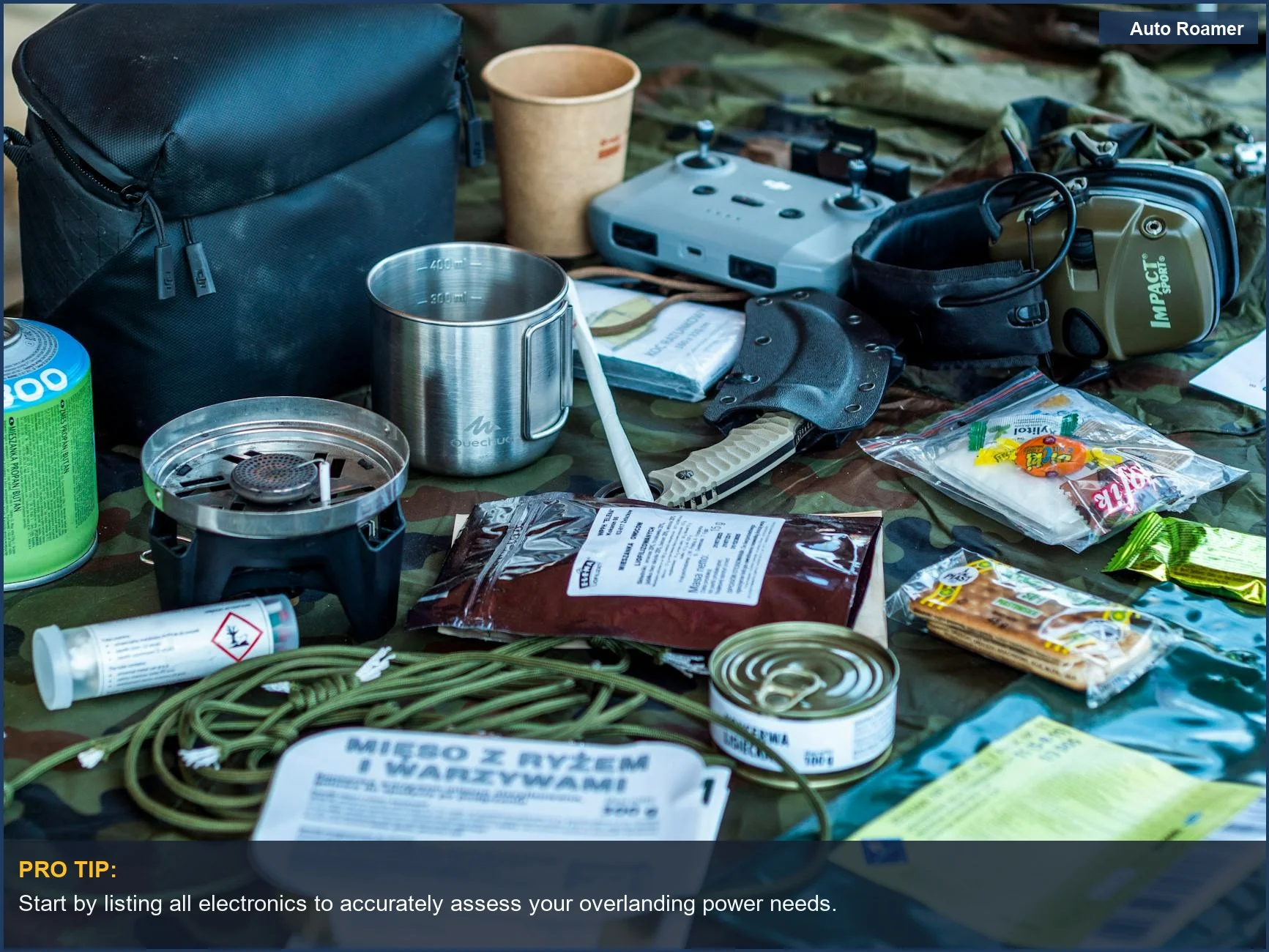
Why This Matters for Your Setup
Making the Right Choice
So, the honest version is you need to do this calculation. It sounds like a pain, but it's way less painful than sitting in the dark with dead electronics. Grab your gear list, find the specs, and do the math. It's the difference between a relaxing weekend and a frustrating one where you're rationing battery power like it's the last water on Earth. Think of it like this: your power needs are specific to *your* trip and *your* gear. There's no magic number that works for everyone. The $50 version of this advice is to just bring a car charger and a power bank. The $500 version is to actually calculate your needs and buy a portable power station that fits. Power Republic emphasizes finding the ideal unit. Don't get bogged down in endless tech specs. Focus on the core calculation: Watts x Hours = Watt-hours. Then multiply by the number of days and add a buffer. This one simple step will save you headaches, money, and make your overlanding trips way more enjoyable. REDARC simplifies the process for you. My first few trips were a constant battle with my power system. Once I finally sat down and did this calculation, everything clicked. It was like finally understanding how to set up a tent without it collapsing on me. Expedition Portal discussions often highlight this planning phase.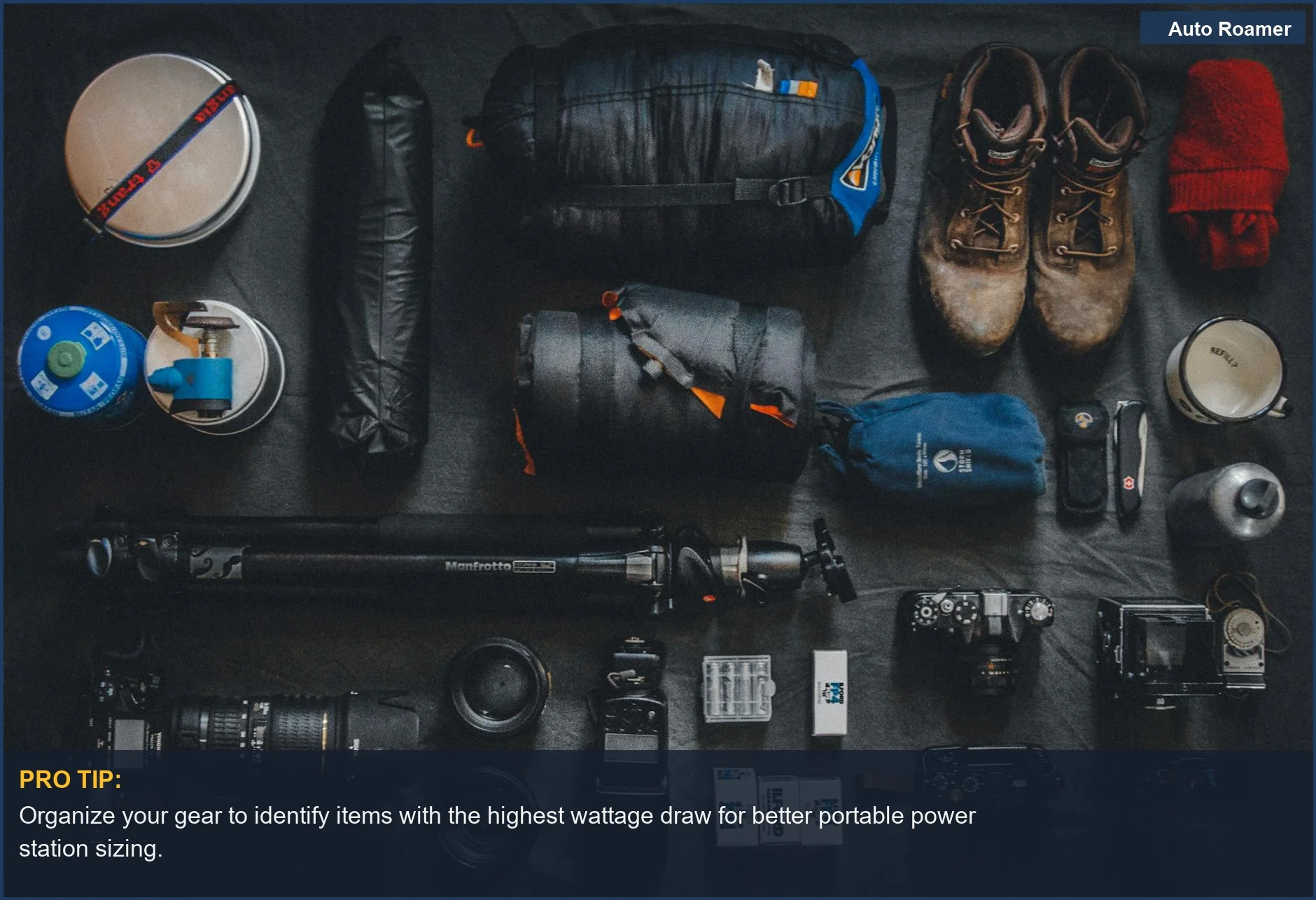
Frequently Asked Questions
Is it cheaper to buy a pre-made portable power station or try to build my own battery system?
Do I really need a fancy multimeter to figure out what my gear draws?
What if I calculate my power needs, buy a power station, and I *still* run out of juice?
Can running my devices constantly from a portable power station permanently damage the power station itself?
I heard you should always multiply your daily needs by 3 for a safety buffer. Is that always true?
🏅 Looking for Gear Recommendations?
Check out our tested gear guides for products that work with this setup:
Sources
- How much power do you need for overlanding? Talking about how ...
- Battery System Current and Power Calculator - Tesota Overland
- Sizing Your Electrical System & Load Calculations - Vanlife Outfitters
- How to calculate power requirements for overlanding - REDARC
- How to Find The Ideal Portable Power Station For Your Needs?
- r/RVLiving on Reddit: How can I actually calculate my power needs ...
- Power System Requirements: Determining Capacity